

 Passport








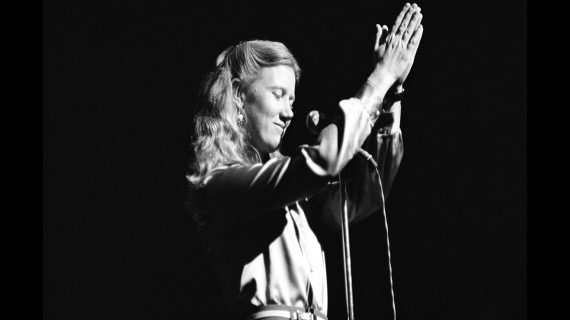
Sister Rosetta Tharpe: The Godmother of Rock & Roll
Next on "American Masters"... Look down, look down that lonesome road When we saw Rosetta Tharpe playing the guitar and singing, that was the greatest thing we'd ever seen in our lives. I want a tall, skinny papa
MAN
It was like a bomb had dropped on gospel music. "That's Sister Rosetta Tharpe. She's not supposed to be singing that kind of music." Now, maybe I'm wrong Maybe I'm wrong Then maybe I'm right Maybe I'm right Meet the Godmother of Rock-and-Roll. Didn't it rain... Sister Rosetta Tharpe on "American Masters." She could play a guitar like nobody else -- nobody. Let's do that again. I think Rosetta was a hugely important figure. Let's party!
BOYD
You know, she was really unique, as a guitar player. She had a big influence on somebody like Chuck Berry, who was one of the most influential guitar players in the world.
STOKER
She did incredible picking. That's what really attracted Elvis, was her picking. And he liked her singing, too, but he liked that picking first because it was so different. Don't you know now, this train is a clean train Everybody riding in Jesus's name because this train is a clean train this train She had a major impact on artists like Elvis Presley. When you see Elvis Presley singing early songs in his career, I think, if you imagine that he is channeling Rosetta Tharpe. It's not an image that I think we're used to thinking about, when we think about rock & roll history. We don't think about the black woman behind the young white man.
HEILBUT
All the kids who grew up in the '40s and '50s knew of her as a superstar and so I think it's very fair to say that there's a bit of her snuck up in all of rock & roll. Go go go go, this train is a clean train this train hey!
Whistling and applause
HEILBUT
Sister Rosetta Tharpe.
PAULINE BLACK
Sister Rosetta Tharpe was born close by the mighty Mississippi on March 20, 1915, in Cotton Plant, Arkansas.
"Precious Memories" plays
THARPE
Pre... ...cious memories oh oh, how Her parents, Katie Bell and Willis Atkins, were cotton pickers. Yeah, yeah how mmm
WALD
We don't know too much about Rosetta's father. What we do know about the father is that Willis Atkins could sing and so it's possible that some of her gift of singing came from her father. Her mother was an evangelist for the Church of God in Christ. Her mother was incredibly passionate about the church.
TUCKER
Rosetta's mother, "Miss Katie Bell" is what we called her. She was a very traditional person and, basically, she was what we called a "stompdown Christian." I mean, that's one that enjoyed stamping her feet and patting her hands and celebrating what she believes in. Draw me nearer to thee yes! And the reason that I think that Rosetta really became such a strong woman was because of her mother. Because her mother, again, was the same type of person -- she had no fear. She would take her guitar, she would take her tambourine, she would take her chair, and she would sit outside and play for people and try to convert them and to get them to go to church. Draw me nearer to you, Lord yes! Each day, draw me nearer Each day, He seems a little clearer
BLACK
In 1921, Katie Bell left Rosetta's father to become a traveling evangelist for the Church of God in Christ. Taking the 6-year-old Rosetta, she left Cotton Plant and joined the exodus of poor black Southerners heading north. There was work in the great city of Chicago
and also something even more crucial for the young Rosetta
the migrants brought the blues from the Mississippi Delta and jazz from New Orleans.
HEILBUT
Rosetta is often seen as a country singer, but that's a fallacy. Her major development occurred very early. She moved to Chicago when she was six. She and Mother Bell joined Roberts Temple Church of God in Christ and the Chicago Sanctified Church was bubbling with musicians and new songs and so she was exposed to something that was new. It was not rural. It was an urban kind of religious singing.
WALD
It was at that church where she first really started performing, where she was the main attraction. There's a great story that has her being put, when she's six years old, on the top of the piano, holding a guitar, being put there so that she could be seen by the congregation and playing and singing and charming everyone with her talent and her precociousness. That something within me just holding the reins
HEILBUT
She told me that, when she was a girl, not even 10, she was immediately seen as an all-purpose musician. She'd go to a revival and she'd play her guitar and, if the people would get happy afterward and shout, she would drop the guitar and run to the piano and accompany them with her piano chords and then she might get up and cut a couple of dance steps herself. She was a phenomenal showwoman. On life's battlefield when without pleading my poor heart did yield all I can say praise God, there's something within
BLACK
All through her teens, Rosetta was taken by her mother from city to city, to perform in churches, tabernacles, and revival meetings, winning the hearts of thousands with her demure looks, angelic voice, and unique guitar style. Oh, have you that something? that burning desire She soon became a nationwide celebrity within the church. that never does try And this Philadelphia church is one of the first she performed in, back in the 1930s. Those who heard the young Rosetta were inspired for life. When I saw Rosetta, I was about maybe 10 years old. Oh, she had the most beautiful voice and the way she could speak to you, It made you feel different. You knew something was going on, even if you didn't understand, really, what it was. And that's the way it was with me because I was a child.
HARGROVE
Many of the hymns were expression of suffering and wanting to survive, many of them. And when she came and they saw the expression of her, the freedom that she expressed in her singing and dancing, it woke up the congregation. It focused them on something that was on the inside, that they never gave expression to. Rosetta would start looking up. She didn't look at anybody. She looked up, as if she saw God and as if God was in her and she was communing with him, rather than with a human being.
BLACK
In 1934, when Rosetta was just 19, her mother married her off to a preacher, the Reverend Tommy Tharpe. For the next four years, she and Tommy worked for the Church of God in Christ. Her job was to draw the crowds, while he preached from the pulpit. But, in spite of her mother's good intentions, the marriage was not working out.
"Lonesome Road" plays
BLACK
Look up look up and seek your maker before Gabriel I met Sister Rosetta in the summer of 1937. She seemed a little bit glad that she was married, but she didn't seem to be very happy and that's the reason I took to her, because, you know, I wanted to just make her happy, make her feel as special as she really was. But I didn't have any idea that she and Tommy wouldn't make it.
TUCKER
He was a tyrant. From what my parents used to say and talk about, he seemed to come out of the real, real sub-old school and believed in the kind of almost cavemanlike attitude towards women. I found that he really wanted her because he figured that he could use her to make money, to help him make a living, and that's the truth. I hate to say that, but that's the way it turned out to be. She was just a meal ticket. She was a performer and he used her to bring people to his churches and he would put her up to sing. And after a few years, she had enough and she said "You know what? I'm going to leave all of it" and she made that big jump.
BLACK
Let down by the first of several men in her life, Rosetta left her husband and took her mother to New York, to forge a new life for herself.
MOORE
My husband and I, we separated a little later, too, so she said, "Well, Sister, why don't you come to New York "and stay with me and Mama for a little, until you decide what you want to do." So I did; I went there. We would sit up all night long and sing and she'd pick the guitar softly and we'd both sit up there and cry.
Laughs
MOORE
We would cry because, you know, we didn't know where we were going from there.
BLACK
In a city full of nightclubs, Rosetta's talent was soon noticed. She was offered a spot at the prestigious Cotton Club, singing to an upmarket white audience. But the songs she was given by the men in charge made no mention of God, just pleasing her man. Four or five times four or five times It's my delight, doing things right four or five times Now, maybe I'll sigh and maybe I'll cry but if I'll die, I'm gonna try to do it four or five times I said, four or five times four or five times Oh, four or five times four or five times Now, he's my king, he makes me sing four or five times yes, indeed I confess I confess He's the best He's the best Stands the the test and kills that myth four or five times
TUCKER
It was like a bomb had dropped on gospel music when she flipped. It was like "What?!" You know, "I can't believe. "That's Sister Rosetta Tharpe. She's not supposed to be singing that kind of music."
MOORE
Oh, she was criticized and ostracized. I mean the churchpeople just, you know, just thought that she had just gone way off. Four or five times, four or five times Oh, four or five times, it's my desire to set the world on fire four or five times I hear you talking, Sister! Now, maybe I'm wrong maybe I'm wrong Then maybe I'm right maybe I'm right But right or wrong, I'm gonna swing this song four or five
TUCKER
Actually, it was hurtful to a lot of people because they felt as though they had lost something. They had something and it was great, but, now, it's gone and they viewed it almost like a death. You know, "Rosetta, she's gone. She went over. She's in, like, another world." And maybe I'll sigh and maybe I'll cry but if I'll die
BLACK
But having discovered that she loved God and nightclubs, Rosetta decided to sing gospel in church and join the secular world of show business. No longer the good little girl from church, she was happy to defy convention. 1, 2, 3, 4 oh, four or five times The offers poured in. She was wanted by all the big bands of the day. She decided to go with the bandleader Lucky Millinder and manager Moe Gale. In October 1938, she signed a contract with Decca Records, which was keen to capitalize on the novelty of a gospel singer with a racy new style. This was not the path that her devoted mother, Katie Bell, had chosen, but she stuck by her daughter. Now, won't you hear me singing hear the words that I'm saying
HEILBUT
Her first hit was a song called "Rock Me" and the lyric is "Jesus, hear me praying". She sang "Won't you hear me praying", so when she came to the chorus, when she sang "Rock me!" and growled "Rock!", it sounded, really, to many people, like an invitation, and not to the altar. In the bosom 'til the storm of life is over, oh rock me! in the cradle of our love
WALD
Recording the song in that particular way marked her as someone who was having the nerve to reinterpret a spiritual song for a secular audience. I think there was also a piece of her that was just rebellious. I want a tall, skinny papa
MEN
Yeah! I want a tall, skinny papa Yeah! She does some very risqu\ material with Lucky Millinder -- most notably, a song called "Tall Skinny Papa," which was a big hit for Millinder's band and she was the lead singer on that and she sings "I want a tall, skinny papa." There's not way of misinterpreting "I want a tall, skinny papa" for anything that has to do with spirituality. Tall, tall, tall skinny papa I want a tall, skinny papa that's all I'll ever need
MOORE
The next thing I heard was this recording out of Rosetta with the "Tall Skinny Papa." So I said, "It can't be Rosetta," so I went and bought the record. And after I listened to it, I said "Oh, my goodness, Sister's out there, singing that stuff." So when I saw her, I said, "Sister, "I heard you tell Lucky Millinder that you weren't going to sing that stuff." She said, "When I saw that contract, "he had a clause in there that I had to sing whatever he gave me to sing," she said, "and I didn't know it and I had a 7-year contract with him," she said, "and I had to do it". It's unclear, I think, how much agency she had in making a recording like "Tall Skinny Papa." She was under contractual obligations to Lucky Millinder. She was a young woman without a lot of experience in show business. She may not have been very comfortable with that material. Nevertheless, it's on record and it was a big hit. Look down, look down that lonesome road before you travel on Look up, oh, look up
BLACK
Following the controversy of "Tall Skinny Papa," Rosetta resolved to stick with the songs she knew best, gospel songs, while giving them her unique, upbeat interpretation. Reaching down that lonesome road Look down that lonesome road before you travel on She had hit the bigtime. Her loyal followers back in the church got over the shock and stayed with her, while she gained new fans who just loved her music. It was not an easy trick to pull off, but, somehow, she did it. She could go there and come back anytime she wanted to because people loved her. And they loved her, no matter what she sang. They loved her. Come on and look down that lonesome road before you travel on By the age of 25, Rosetta was rated among the finest popular musicians of the day. Why don't you sit down? I can't sit down Here she is, jamming with Duke Ellington at the piano and Cab Calloway on the right. Because I just got to heaven and I can't sit down In less than five years, she had established herself in a tough, male-dominated industry, singing the songs she chose to sing, in her own distinctive way. Who's that yonder, dressed in white? I just got to heaven and I can't sit down She was rich, she was famous, and she was loved by her fans. She was gospel's first superstar. She used to sing this song called the fishes and three loaves of bread. and anywhere you went, down in the South, it was on the radio. That was a big hit. Throughout the '40s, she spent much of her time on the road, playing to packed houses, accompanied by different gospel quartets.
TUCKER
The Dixie Hummingbirds started with Sister Rosetta in the '40s. They never made records together, but they toured and Sister Rosetta was always the headliner because it was her show and she had the choices of picking who she wanted to go out with her and, for many years, she chose The Dixie Hummingbirds. It was a very good mix. People enjoyed the styles because her style was kind of fiery with the guitar and the Hummingbirds would come out and then they would jump down in the audience and start singing and really relating to the people. So it was a good mix and promoters loved it because it always filled houses.
CARROLL
Sometimes we'd do things we'd never done, just playing around with it until "That sounds good. Let us try that again," and that's the way we created a lot of stuff, you know? I'm holding up the bloodstained I'm holding up the bloodstained Banner for my Lord
BLACK
In a highly segregated society, black and white musicians performing together was taboo, however, Rosetta was happy to defy convention.
STOKER
She was more or less a pioneer in asking us to even perform with her. She called us her four little white babies and I thought it was so cute, you know, that she referred to us as that way. I thought that was something I'll never forget. And we just loved to sing with her because, when she started snapping her fingers, man, and started singing on a tune, you could not help but sing. I'm going up to heaven, O Lord to get my reward, ooh! Well, I'm working on a building I know the first time we worked with her, they booked us, we went to the stage door and some man came to the door and one of us said, "We're The Jordanaires" and he said "Hmm, you're The Jordanaires?" "Well, he said, "this is going to be a surprise to our audience." Sister Rosetta didn't tell them that we were white.
Laughs
STOKER
She booked us, but she didn't tell them we were white. And when we first went out on the stage, they didn't really know how to take us, but then we started singing "Working on a Building." From then on in, we were in. I'm going up to heaven to get my reward my reward
Whistling and applause
THARPE
Listen, everybody, to the precious word. I'm gonna do some chirping and I ain't no bird.
"Shout Sister Shout" plays
BLACK
Throughout World War II, America's segregated black soldiers not only adored Rosetta, but could claim her as one of their own.
MAN
And now, we want y'all cats to brush up your fur and be seated while we dish out and dig the andante right out from under y'auntie. And here's the girl who's going to do the chirping for you, Sister Rosetta Tharpe!
Applause
MAN
Sister Tharpe, say hello to Joe, way, way out there. Hello, Joe, way, way out there.
Laughs
MAN
And what are you going to sing, Sister? "Down by the Riverside."
BLACK
No films of Rosetta performing traditional gospel songs during the '40s exist today, but this '60s television recording captures the powerful stage presence and unique guitar style that she had developed back in her heyday. Down by the riverside To study war no more
HEILBUT
Everything she had learned from her mother, everything she had learned from growing up in the Sanctified Church, had stayed with her. She was mesmerizing. Well, well, well, well study war no more To study war no more Yeah, I ain't gonna My sister and I thought she was the greatest because we had never met a popular singer, only gospel singers. When we saw Rosetta Tharpe playing the guitar and singing, we thought that was the greatest thing we had ever seen in our lives. Well, well, well, well study war no more No no no no no no, study study war no more
TUCKER
The audiences that Sister Rosetta performed in front of were average people. They were people who worked, people who were trying to better themselves, and this music was their inspiration. So when it came to a show that brought in people like Rosetta Tharpe, there were lines three or four times around the block. Study war no more
CARROLL
Just to call her name, people would go crazy and the people just really loved her. All she had to do was walk out onstage, but they knew they was gonna get a good performance. And before she left there, the public was part of her and she was part of the public and it was like family. Rosetta had a one-on-one with everybody. I mean, there could be 800, 900, 1,000 people, but she had a one-on-one with you because she could make that music and make that guitar talk just like you were there with her, like you helped to write the song. I'm gonna meet all of my brethrens down by the riverside Don't you know? down by the riverside I said down by the riverside I'm gonna meet all of my brother men Down by the riverside ain't gonna study war no more Yeah! I ain't gonna study Thank God almighty, study Don't you know now? study study war no more war no more Hey! study study war no more Well, well, study study war no more No no no no, study war no more
Applause
"Strange Things Happening Every Day" plays
BLACK
The biggest hit in Rosetta's entire career was "Strange Things Happening Every Day," a song that reflected some of the stark contradictions of the times. Oh, we hear churchpeople sing they are in this holy way There are strange things happening every day It was recorded at the end of the war, when prosperity and freedom were being proclaimed as the right of all Americans. The song expressed some of the sad ironies she was experiencing on the road. She was a star, but she was also black. Every day
MEN
Every day There are strange things happening every day Sister Rosetta had a bus. She was the first person that ever had a bus with her name on the side of it, that I knew. The back section was beds to sleep in and that was always something that I thought was really very unusual. If you want to view the climb
HENRY
We couldn't stay in some hotels. We had to sleep on the bus, so the bus was really a good idea. Every day Being on the road with Sister Rosetta was very exciting because sometimes we met opposition and sometimes we met gladness.
TUCKER
Food and hotels, restaurants, all of this, they were all the same. Water fountains, bathrooms -- everything was segregated. They had to, as my father used to say, "Make do." Jesus is the holy light turning darkness
STOKER
We would go in and eat and we knew that she didn't have food on the bus, you know. Maybe she had crackers or cheese or, you know, peanut butter, or something like that. But we would take what we ordered, we would get her the same thing and take it to her. Woh, every day Every day Yes, every day
HENRY
Sometimes you found someone that took a chance and said, "Come around to the back door" and they would serve us, but we had to bring it back to the bus, still, we couldn't eat it there. Up above my head
KNIGHT
Up above my head I hear music in the air I hear music in the air Now, up above my head Up above my head
BLACK
By the age of 30, Rosetta had survived two brief and unhappy marriages and had had numerous affairs with men and women. The only constant person in her life was still her mother, Katie Bell, however, in the spring of 1946, she encountered a young singer called Marie Knight. She was so impressed by her, she suggested they team up and, together, they recorded a hugely popular version of the gospel classic "Up Above My Head." Trouble in the air And I really do believe, yes, I really do believe that there's a heaven somewhere Heaven somewhere
WALD
One of the things that made Marie and Rosetta so special as performers is that they were two women who could go on the road without any accompaniment but themselves. Marie was a piano player and percussion player. Rosetta performed on the piano as well as the guitar, and so the two of them together had their entire band with them. Up above my head Up above my head! I hear music in the air I hear -- in the air Up above my head Up above my head! I hear music in the air I hear trouble in the air Up above my head Hey hey hey! I hear music in the air Oh oh oh oh and I really do believe oh, yes, I really do believe there's a heaven somewhere Heaven somewhere
BLACK
In 1950, while Rosetta and Marie were performing in California, Marie's mother and two small children were killed in a fire. Traumatized by the loss, Marie drifted away, leaving Rosetta to carry on alone.
Organ plays "Here Comes the Bride"
BLACK
Less than a year after breaking up with Marie, Rosetta took the most outrageous decision of her life when two concert promoters came up with an audacious publicity stunt. Their plan was to stage Rosetta's third wedding in Washington's huge Griffith Stadium. They would sell tickets to her fans and the recording rights to Decca. Rosetta agreed to go along with the plan, but there was just one problem -- she had no one in mind to marry. But, just weeks before the big day, she found Russell Morrison, a minor player in the music industry who offered to be both her third husband and her manager. Tell the truth, I was surprised when she said she was getting married
laughs
BLACK
and Russell was going to be the groom. So she records her wedding ceremony and a concert that follows it in 1951. 25,000 people come out and pay admission prices to attend her wedding. They bring wedding gifts for her. They bring crystal. They bring dishes for her. Someone even buys her a television set. It's a total showbiz move. And, at the same time, it's a wedding ceremony conducted by a minister -- a real wedding ceremony.
"Here Comes the Bride"
TUCKER
Rosetta was standing on the pitcher's mound and they had everybody around her, and all of the matrons of honor and all these other people who were probably folks that the promoters got together. But they were all there and it was just a wonderful, wonderful show.
MAN
I'd like to take this opportunity to welcome you to Griffith Stadium, where you're about to be guests at the wedding of Sister Rosetta Tharpe, after which there'll be a great spiritual concert, followed by fireworks.
WALD
And it was nice to see that a lot of her friends had stuck with her and were part of the wedding party. Lucky Millinder is there, Marie Knight is there, and The Rosettes are there.
HENRY
That stadium was packed.
MAN
You know, somebody said it's a fake. It was packed. I don't see how they could get anyone else in. It was like a circus.
Laughs
MAN
Rosetta, will you have this man to be thy wedded husband, to live after God's audience in the holy state of matrimony?
TUCKER
I mean, it resonated throughout the entire country. It was in newspapers. People talked about it. My parents were so excited about it. I mean, for a month, in my house, before that wedding, it was just crazy. Take him by his right hand, Rosetta. Hold it. "I, Rosetta..." I, Rosetta... Take thee, Russell... Take thee, Russell... It was like she was Cinderella, you know, and Russell was Prince Charming and it was a storybook thing. Kiss the bride. Man and wife. I didn't go to Sister's wedding to Russell. I just figured it was another something that she had gotten herself into. After meeting Russell, I figured that he just wanted an easy living and I said to myself, "Oh my goodness, she's doing it again."
laughs
TUCKER
Don't you know he's so So high, you can't get over him So low So low, you can't get under him So wide You can't get around him
BLACK
Sadly, the misgivings shared by Rosetta's friends proved all too accurate. While the wedding did boost her record sales briefly, Russell the manager was out of his depth. My sisters, how you walk on the cross Russell just, like a cool breeze, just came right in, took over. He wasn't really a manager. He thought he was a manager and, of course, so many times, when they think they are, they aren't, and that's bad. It was very clear that he was living off her talent and it was very clear that he was two-timing her. Many people, especially people close to her, like Marie Knight, were furious with him. In spite of all the criticism, Rosetta remained married to Russell for the next 22 years. Meanwhile, back in the Mississippi Delta of Rosetta's childhood, young white musicians were just beginning to discover the raw energy and complex rhythms of African American gospel. There was a hip thing happening in Memphis at that time. There was a little church and it was a cool thing to do on Sunday nights only. You would go there and there would be Elvis and some of the other guys from the area. And it was unusual because, back in those days, white people had to sit in the back and it was roped off and we would sit back there and we would watch these black spiritual singers sing on Sunday night. Of course, this was the music that Sister Rosetta had brought out of the church and into the wider world nearly 20 years earlier.
KLEIN
The thing that gospel spiritual music brought to popular music was feeling. Gospel spiritual music put the guts and the feeling and the real soul into it. And people like Elvis and Johnny Cash and Jerry Lee Lewis and Carl Perkins, and those guys, Buddy Holly, if you will, they saw that and they adapted to that and that, really, was the essence of rock & roll. Thinking about it, Sister Rosetta Tharpe, she had this great feeling and that's what Elvis was looking for, feeling, because that's where it all came from. She gave a lot of people ideas of how to perform. The way she performed a song, the way she picked a song, the way she presented it, was an inspiration to anybody who stood around and watched her -- and they all watched her.
"This Train" plays
BLACK
By the early '60s, her influence was continuing to spread as yet another generation fell under her spell. This train Here is a recording of Bob Dylan speaking about Rosetta on the radio -- Sister Rosetta Tharpe was anything but ordinary and plain. She was a big, good-looking woman, and divine, not to mention sublime and splendid. She was a powerful force of nature, a guitarplaying, singing evangelist.
THARPE
Is a clean train Everybody ride it, if you can You know, she travelled to England with Muddy Waters and a whole bunch of other blues performers in the early '60s and I'm sure there are a lot of young English guys who picked up an electric guitar after getting a look at her. It's standing in the station This train is waiting on all of you Come on and let's go, this train Whoo! Ah! Whoo! Whoo! Whoo! Whoo! Whoo!
BLACK
In the summer of 1964, Rosetta was booked by Granada television to perform in a folk, blues, and gospel special. The musicians were American; the audience, English students; the venue, a disused railway station, Chorlton-cum-Hardy, just outside Manchester.
BOYD
The Manchester gig was a curiosity in the middle of the tour for us. It was kind of bizarre, but, you know, we were all new to England and we were aware of all this interest in blues and gospel. We all thought it was strange, the setup with the audience on one platform and the musicians on the other. Ah! Whoo-whoo! Whoo-whoo! Whoo! Whoo! Whoo! And she rose to the occasion. She loved the drama of the situation and sort of trying to bridge that gap between the platforms and sell the whole thing across the track to the audience. Whoo! whee-whoo-oh!
BLACK
By now, Rosetta was 49 years old and she had been on the road for more than 40 of those years. But, even in cold, wet, and windy England, the magic was still there. I take great pleasure in bringing to you one of the greatest, one of the world's greatest gospel singers and guitar virtuoso, the inimitable Sister Rosetta Tharpe.
Whistling
Band plays "Didn't It Rain"
BLACK
Oh, the sweet horsey. Oh, the sweet horsey. Oh, this is the wonderfulest time of my life. And the people are so sweet, to stay here. Oh, ain't they sweet? And I come in on a -- Let me tell you what I come in on. Oh, yeah! Give me the key. Didn't it rain children? Rain? Oh, yes Didn't it? Yes Didn't it? You know it did Didn't it? Oh, oh, yes, how it rained I said it rained!, children Rain? Oh, yes Didn't it? Yes Didn't it? You know it did Didn't it? Oh, my Lord, how it rained Some at the window, some at the door Some cried, Brother Noah, can't you take on more?! But Noah cried out, Unh-unh, my friends the angel's got the key and you can't get in I know it rained, you know it rained rained too long, all night long Rain all day, rain all night rain, rain, rain, rain, rain rain, rain, rain, rain, rain rain!, children Rain? Oh, yes Didn't it? Yes Didn't it? You know it did Didn't it? Oh, my Lord, how it rained!
Cheering
Whistling
BOYD
Sister Rosetta was a huge success in the tour. I mean, she did great. Audiences loved her. She was very happy. Everybody was happy. Oh, I love you so, my English friends, forever and ever, until I leave this world.
BLACK
While Rosetta was away in Europe, her mother was becoming increasingly frail. In 1968, Katie Bell died. For 53 years, she had stuck close by her daughter, through good times and bad, as the one constant figure reminding Rosetta of her faith in God. And my soul get lost it's nobody's fault but mine The loss took a heavy toll on Rosetta. She became increasingly depressed and, to make matters worse, she was diagnosed with diabetes. I'm going to sing a song that maybe you wouldn't understand it and maybe you do, a song that I love so dearly. And I have so many friends here in Copenhagen. For many, many years, I've been coming here and then, sometime my friends -- Made in 1970, in Denmark, this is the last known recording of Sister Rosetta performing. -Maybe you wouldn't understand that, but someone died who they dearly love and mine did, too, my mother died two years ago and left me alone. But, nevertheless, I have you. I went to see her and she had this black spot on her foot. I said, "Sister, what is that?" and she said, "I don't know." I said, "Sister, go see about that, please." -Their arm hurt them, that's going to happen, but there is a divine power. I believe it. I don't know about you, but I got to believe it because I was raised that way. I sing this song. Precious Lord take my hand lead me on and let me stand I'm tired You know I work so hard and I'm weak My body is worn woh oh oh, yes but I got to go, anyhow Through the storm
MOORE
She wouldn't listen to anybody. So the next thing, the foot started turning black. Then she did have to go to the doctor. Then they found out they had to cut her leg off. Just the same Sometimes she would call me and say, "Sister, please come, please come to see me," and I would say, "All right, I'm coming," but the last few months, I didn't go because, you know, Russell was acting like he didn't want nobody taking over from him. When I went over to see Aunt Sis, she was in the bed and she would say, "Where's Russell?" I'd say "Downstairs" and she would say, "He's asking you about shows, right?" and I'd say, "No, he didn't say anything." "Yes he is. He wants to know if I'm going back," she said. "And I'm going back, but I'm not going to tell anybody when I'm coming back, but I am coming back." But she never did. My body is old suffering, in pain woh oh oh, yes I got no one to call on Hear my cry hear my call please hold my hand lest I fall mmm Take my hand woh oh oh! precious Lord lead me on Rosetta's funeral was very quiet. It wasn't any big thing. It was no elaborate funeral, I can tell you that. The church was half-full and Rosetta looked the best I had seen her in years. Marie Knight, her old partner, she made Rosetta up. She took care of her coiffeur, of her makeup, of how the fabrics looked, and made her as glamorous as possible. She looked a star. I think I said, "She would sing until you cried, "and then she would sing until you danced for joy. She kept the church alive and the saints rejoicing." Down at the river! I'll stand Guide my feet please, hold my trembling hand mmm and take my hand O precious Lord lead me home
BLACK
In 2008, some 35 years after Rosetta's death, the governor of Pennsylvania declared that henceforth the 11th of January will be known as Sister Rosetta Tharpe Day.
"Up Above My Head" plays
BLACK
Up above my head
KNIGHT
Up above my head I hear music in the air I hear music in the air Now up above my hea Up above my head You know I hear music in the air I hear music in the air To learn more about Sister Rosetta Tharpe and other American masters, visit pbs.org/americanmasters or find us on Facebook. Up above my head Up above my head I see trouble in the air I see trouble in the air Up above my head Up above my head I see trouble in the air I see trouble in the air Up above my head! head! head! Up above my head I see trouble in the air I see trouble in the air And I really do believe, yes, I really do believe That there's a heaven somewhere Heaven somewhere
Search Episodes
Related Stories from PBS Wisconsin's Blog





Donate to sign up. Activate and sign in to Passport. It's that easy to help PBS Wisconsin serve your community through media that educates, inspires, and entertains.
Make your membership gift today
Only for new users: Activate Passport using your code or email address
Already a member?
Look up my account
Need some help? Go to FAQ or visit PBS Passport Help
Need help accessing PBS Wisconsin anywhere?

Online Access | Platform & Device Access | Cable or Satellite Access | Over-The-Air Access
Visit Access Guide
Need help accessing PBS Wisconsin anywhere?
Visit Our
Live TV Access Guide
Online AccessPlatform & Device Access
Cable or Satellite Access
Over-The-Air Access
Visit Access Guide




Follow Us