







PBS Wisconsin Passport
Watch this video with
PBS Wisconsin Passport
Become a member of PBS Wisconsin, support your local community, and get extended access to PBS shows, films, and specials, like this one.
Mary Oliver: Saved by the Beauty of the World
08/25/26 | 1h 22m 55s | Rating: TV-14
Celebrate the life and career of Pulitzer Prize-winning writer Mary Oliver. Shaped by a solitary childhood and rising literary fame, Oliver published more than 30 collections of poetry and essays on nature, beauty, and love.


Copy and Paste the Following Code to Embed this Video:
Mary Oliver: Saved by the Beauty of the World
-I send this poem to my children the first day of summer every year.
-"The Summer Day."
-I don't know if I can read this.
It's not gonna get better later.
"The Summer Day."
"Who made the world?
-"Roses, Late Summer."
"What happens to the leaves after they turn red and golden and fall away?
What happens to the singing birds when they can't sing any longer?
What happens to their quick wings?
Do you think there is any personal heaven for any of us?
Do you think anyone, the other side of that darkness, will call to us, meaning us?"
-"Maybe."
"Sweet Jesus, talking his melancholy madness, stood up in the boat and the sea lay down, silky and sorry.
So everybody was saved that night.
But you know how it is when something different crosses the threshold -- the uncles mutter together, the women walk away, the young brother begins to sharpen his knife.
Nobody knows what the soul is."
-"Beyond the trees the foxes keep teaching their children to live in the valley.
So they never seem to vanish, they are always there in the blossom of light that stands up every morning in the dark sky."
-She was a brilliant poet from the beatnik years.
I think she was always a beatnik.
-Mary Oliver's poems are, for me, a balm in the storm.
They speak the language of my soul and I think multiple souls around the earth.
[ Cheers and applause ] -"I wouldn't mind being a rose in a field full of roses.
Fear has not yet occurred to them, nor ambition.
Reason they have not yet thought of.
Neither do they ask how long they must be roses, and then what.
Or any other foolish question."
-She was our most famous poet for a long time, very famous, and yet completely elusive.
-I think of her as a mystic.
-She's radical.
-What do you think you have done with your one wild and precious life?
-What I have done is learned to love and learn to be loved.
And that -- that didn't come easy.
[ Birds chirping ] Ohio, where I grew up, was important to me, it being the initial place where I learned to love the earth.
The two things I loved from a very early age were the natural world and dead poets.
I was a kind of solitary kid, and dead poets were my friends.
I have a kind of joke answer to who do I read, but I mean it.
I read Whitman... ...and Whitman... ...and Whitman.
-Walt Whitman created this new voice that was riding on the waves of American speech.
-Mary Oliver was one of the first poets that pointed to Whitman as an important influence.
The tumbling down the page of those long, lush sentences became part of her education.
-I started writing probably when I was about 13.
I saw some poems I liked, and I was trying to imitate them.
You don't think at 13 about career or profession or stuff like that.
I just started doing it.
It was shocking.
I was a girl in Ohio, and I wanted to write poems?
Unheard of.
Even boys didn't do that.
-Just to be a poet in America is already queer enough.
It's hard to grow up feeling invisible, feeling that you don't fit in the culture around you and come out of that with a strong sense of self.
[ Birds chirping ] -I felt different.
I went to school because I had to.
The only record I had broke in high school was truancy.
-When you say you felt different, how did different feel to you?
-Not belonging.
I had two or three very good friends during that time, but I was always trying to get them to go to the woods.
I very much wished not to be noticed and to be left alone.
"My mother was the blue wisteria.
My mother was the mossy stream out behind the house.
My mother, alas, alas, did not always love her life.
Heavier than iron it was, as she carried it in her arms from room to room.
Oh, unforgettable!
I bury her in a box in the earth and turn away."
It was a very dark and broken house that I came from.
I escaped it -- barely.
That was my strength.
But I wasn't all strength.
"My father was a demon of frustrated dreams, was a breaker of trust, was a poor, thin boy with bad luck.
He followed God, there being no one else he could talk to.
He swaggered before God, there being no one else who would listen.
Listen, this was his life.
I bury it in the earth.
I sweep the closets.
I leave the house."
-When she was 17, she left that house, and she hid out in the woods for a week.
-"I mention them now.
I will not mention them again.
It is not lack of love, nor lack of sorrow.
But the iron thing they carried, I will not carry.
I give them -- one, two, three, four -- the kiss of courtesy of sweet thanks, of anger, of good luck in the deep earth.
May they sleep well.
May they soften.
But I will not give them the kiss of complicity.
I will not give them the responsibility for my life."
-You know, forget it.
Set it down.
Walk on.
It's an amazing poem, and you think that's being written at a time in the culture when there was so much emphasis on investigating childhood abuse, on the kinds of traumas that might have shaped us.
And Mary is saying... "You don't need it.
Bury them and leave."
-When Mary Oliver was beginning, there weren't that many paradigms for what a woman poet was supposed to be like.
-Edna St.
Vincent Millay moved to this small village in upstate New York after her celebrated youth in Greenwich Village.
It was here on the 700-acre estate called Steepletop that she wrote the main body of her work.
And it was here, too, that she died.
Now living at Steepletop is Millay's youngest sister, Norma Millay Ellis.
-In her senior year of high school, she wrote to Norma Millay to ask if she might come to Steepletop.
And she left the day after she graduated from high school.
-One visitor came to Steepletop for an afternoon and stayed four years as Norma's secretary.
-She spent some time living at Edna St.
Vincent Millay's house with Millay's sister, helping her to catalog and organize Millay's papers.
-She was the scandalous and celebrated young woman who was liberated and flouting all kinds of conventions.
Between Edna St.
Vincent Millay and Anne Sexton and Sylvia Plath, there's this aura of problematic sexuality and living on the edge and that that's where feminine genius was supposed to reside, like it was supposed to be risking itself in every sense, like risking shame, social death, actual death, insanity.
-"Miss Millay is an artist of considerable accomplishments.
She is also a woman.
She therefore fascinates the male reviewer, but at the same time horrifies him, too."
-Mary attended college for two years, one year at Ohio State, one year at Vassar.
And when she left Vassar, she once again was between Ohio and Steepletop until, in 1959, she moved to Greenwich Village.
[ Jazz music playing ] She enjoyed being part of the culture in that moment.
Many of her Vassar classmates were in the Village.
It was a very alive time.
But I do think it was deeply uncomfortable for her to be that removed from the natural world.
-Mary Oliver moved to New York City, but continued visiting Steepletop.
One day when she was visiting, Molly Malone Cook also was there.
And Mary described falling head over heels in love with her.
[ Fire crackling ] -"If you suddenly and unexpectedly feel joy, don't hesitate.
Give in to it.
There are plenty of lives and whole towns destroyed or about to be.
We are not wise, and not very often kind.
And much can never be redeemed.
Still, life has some possibility left."
-Molly was 10 years Mary's senior, just this charismatic, stylish, sophisticated person.
She's just appeared in her life.
-"Perhaps this is its way of fighting back, that sometimes something happens better than all the riches or power in the world.
It could be anything, but very likely you notice it in the instant when love begins.
Anyway, that's often the case.
Anyway, whatever it is, don't be afraid of its plenty.
Joy is not made to be a crumb."
-"M had will and wit and probably too much empathy for others.
She was quick in speech, and she did not suffer fools.
When you knew her, she was unconditionally kind.
But also, you had to be brave to get to know her."
-Molly had been a staff photographer for The Village Voice at its inception, and she was still living in the Village and really taking photographs quite seriously.
-"When Anne was a small child, someone asked her what she wanted to do when she grew up, and she answered, 'I want to see every face in America.'
She was born in 1925 in San Francisco.
It was not the most fortunate beginning.
Years later, she searched for and found her parents.
But for many years, she was moved through various temporary homes, a childhood of mystery and insufficiency."
-Molly was a very strong character, so Molly gave her the belief that she was a great, great talent and was gonna succeed in everything and -- "Stick with me, baby."
-"Watching M when she was taking photographs and no less watching the intensity and openness with which she dealt with friends and strangers, too, taught me what real attention is about.
Attention without feeling, I began to learn, is only a report."
"I was in my late 20s and well filled with a sense of my own thoughts, my own presence.
I was eager to address the world of words, to address the world with words."
[ Sea gulls squawking ] -Provincetown is probably the most beautiful small town in America, a wonderful cluster of white clapboard houses with shingled roofs next to the harbor.
-Provincetown is at the literal, like, end of the country, where the light is so gorgeous when you get in the harbor.
No wonder so many people come here and find a new life.
-I came to Provincetown with a book of poems in one pocket and a bottle of wine in the other.
It was a healthy environment for the creative soul.
The bars were full of writers and artists.
There was a lot of drugs and alcohol and promiscuity, which was fine with me.
[ Mid-tempo music plays ] -It has been an artist colony for 150 years.
That came about because the Portuguese community, the fishing community that had settled there, had a very welcoming kind of culture.
They were happy to rent rooms, to take people in, and they really weren't too concerned about their sexual orientations.
-Our Provincetown was pretty much a Portuguese neighborhood.
So we had Portuguese superstitions.
My mother couldn't sweep the floors if it was dark because it would bring the dead up.
We still heated with coal.
We cooked on a kerosene stove.
But we had roomers in our house.
And these people were from another world.
And they were colorful, and they knew things And there was something magical about it.
-I hitchhiked to Provincetown.
This long ago, I had a girlfriend.
And we hitchhiked to Provincetown because somebody just said, "It's a weird place.
You'll like it."
It was.
I did.
-In June of '64, with Molly, she went to Provincetown for the summer, and they just didn't leave.
-"Previously, M had gone back to New York for the winter, but that long fall, we kept lingering, feeling our roots settling in to that magical and beautiful town."
"M was taking and printing her own photographs, I was writing poems at the kitchen table, and we were young."
-Molly had one of the first photo art galleries ever.
-It's really this electric moment in photography.
When you look at the roster of people that she was showing, they're just titans.
This was really at the very beginnings of photography as fine art, and there just was not the market.
Eventually, the gallery became a bookstore, and someone who comes through the bookstore in those days is John Waters.
-It was called East End Books, and I nagged them every day if I could work there.
And I had long hair and looked freakish and everything.
But Molly liked me, and she said, "When it rains, you can work."
'Cause that's when it got crowded.
So, wherever I was, I'd have to run in when it rained and work there.
Mary then -- well, she'd be in the back in a pea coat in the middle of the summer.
I mean, I think she was going through a lot of adjustment there.
[ Indistinct conversations ] -Ohio and Steepletop had a similar landscape -- streams and meadows and forests that she was very familiar with.
And so to come to Provincetown, it was like going to the moon.
She had never seen anything like that before.
[ Sea gulls squawking ] The period from 1964 until 1979, Mary left Provincetown rarely.
And what she was doing was just working and getting to know this place that was her home.
-I call it primary sources.
Some people go to the library.
But I went to the woods.
-She went into the woods with her questions, which is exactly what the great proponents of her tradition in American poetry encouraged her to do.
Emerson, Whitman, Thoreau say, "You don't need a spiritual teacher.
You need to go out into the world and look."
[ Insects chirping ] -I drive people crazy 'cause I could sit for two hours and look at the clouds and be very silent and I'm having a nice time.
And sometimes I'm with people who say, "This is kind of nuts."
-[ Chuckles ] I would say to Mary, "I know you're crawling around the woods talking to animals.
They're gonna put you in a mental institution."
And then she got bit once by a badger.
I said, "That's what you get!"
She was down there, you know, helping him build the dam.
Get out of there!
[ Birds chirping ] -My own nature is to like to walk the same path every day to see what I missed the day before.
-There's a poem called "The Clam," which is about how a clam is like us and how we are like a clam.
She takes this clamminess and she finds all of the common denominators without ever imposing human assumptions on what a clam must be experiencing.
And all she does is look at the things that a clam has that I also have.
It breathes.
It has a stomach like me.
It has this.
It has that.
And then at the end, she just backs her way into the cathedral.
It tries very hard not to die.
It just opens me up.
And how do you do that with words?
Because what words do, by nature, is name things and close them off.
And yet she does it.
Before I know it, I'm suddenly a clam.
-If you love something, you give it a lot of attention.
And if you give something a lot of attention, you very often learn to love it.
And that spiritual investigation requires that you pay attention to the world.
And paying attention to the world often leads you to love the world.
[ Birds crying ] Years ago, a reviewer surmised that I must have a private income of some substance since all I ever seemed to do was walk around the woods and the dunes and the long beaches of my town.
It was a silly surmise.
Looking at the world, whatever shape my finances were in, was the important part of my life.
Indeed, I had almost no income at all.
-She was broke.
So she was working both as a writing adviser and secretary.
At the same time, she was working at the marine specialty store, and she was doing typing for many different people.
She was doing what you need to do to be a working artist.
[ Telephone ringing ] -Is it a bad time for you?
-No.
I was coming in with some animal food.
-Oh, God.
[ Chuckles ] Oh, how's Mary's father?
-Not well at all.
-Oh, dear.
-It's real bad.
She's got to stay for a while.
-First through Mary, actually, they started working for Norman Mailer because Mary started doing some typing.
And then Molly stepped in to say that she could take on more of the enormous work that was managing Mailer's career in those years.
-'Cause I'm worried.
What I'm worried about is, I'm not sure how long I can keep doing this.
With every other responsibility I have on my mind, there's you two, you know?
You know, the money may just run out.
I want you to pay first the people who work for me -- to wit, you, Mary.
People who work for me come first and tradespeople second and then the wives last.
-Okay.
-Okay, beautiful.
Bye-bye.
[ Phone hangs up ] -If you want to be a writer, I would say give your second best energy to your boss.
Writing is a really hard taskmaster, and if you do not want to do it as well as you can do it, it's sort of like a piano player.
I mean, who wants to listen to a piano player who just wants to play a little bit?
-"It is 6:00 a.m., and I am working.
I am absent-minded, reckless, heedless of social obligations, et cetera.
it is as it must be.
The tire goes flat, the tooth falls out there will be a hundred meals without mustard.
The poem gets written.
I've wrestled with the angel and I am stained with light and I have no shame."
[ Clock ticking ] -I am very disciplined about working.
You do not accomplish anything without the discipline.
The creative part of your mind is ready all the time.
And if you say to it, "Hey, let's have a date tomorrow at 7:30 in the morning, I'll be there," it will be there.
[ Waves crashing ] -She was frustrated.
She was turning 40 and, like all poets, looking for a break.
What I observed in her was this humbleness.
But it wasn't humbleness like an artist often experiences, which is to say, "I'm no good.
I should just give this up."
She was sure of her work, and never once to me expressed any doubt in what she was here to do.
-She was writing poems and sending them everywhere and seeing who would take them.
One of the most important places where she was publishing during that period of time was The New York Times.
What was important to her was, who can open the newspaper and find a poem that might change their life?
-What about people who are gonna get a nice magazine and read a business article?
How do you attract them to poetry?
I was of the opinion that most anybody who starts a sentence will finish that sentence.
And so quite a number of these poems are 36 lines, but they're one sentence.
-That was the spine of how she was living -- because she had a personal loan that was for $25 a month, and that's how much she was paid by The Times.
-She was seeking the support of some publisher who saw in her work what she knew was there.
-"The Night Traveler" received a review from Joyce Carol Oates, and that really changed everything.
-"She sees the true terror of the country as nature's pitiless disregard for the individual, whether prey or predator.
She cannot divide the world into victim and oppressor."
-She learned what a really considered review could do, and it began really selling.
-"I thought the earth remembered me.
She took me back so tenderly, arranging her dark skirts, her pockets full of lichens and seeds.
I slept as never before, a stone on the river bed, nothing between me and the white fire of the stars but my thoughts, and they floated light as moths among the branches of the perfect trees."
-"All night I heard the small kingdoms breathing around me, the insects and birds who do their work in the darkness.
All night I rose and fell, as if in water, grappling with a luminous doom.
By morning I had vanished at least a dozen times into something better."
I wrote for many -- I wrote for about 30 years before I ever gave a reading.
I mean if you start when I was a kid.
Trying to find my own voice took a long enough time, and I didn't want to read till I did that.
And the first book I did that I felt was my own voice was "Twelve Moons."
-Reading that book, I was so enamored.
Even though we were separated by gender, even though there was at least 33 years difference between us, I took to her because the deep kind of lyric presence leapt off the page for me.
I can hear that sense of rapture in her work.
-People have forgotten to be ecstatic.
I mean, you could get ecstatic over a box of matches.
They're kind of, you know, amazing.
And it's the balance with the rage, I suppose, that will -- and the emptiness.
Emptiness is never gonna get us to get up and do anything.
But ecstasy might.
I think you have to be in the world to understand what the spiritual is about and you have to be spiritual in order to really be able to accept what the world is about.
We're all gonna be something else, part of something else someday.
I mean, I certainly believe, for instance, stones are alive.
-You believe stones are alive?
-I believe everything is alive.
-The move to a kind of delicious deep dive into the natural world can be read as a certain kind of escapism.
So, when people are sort of not down with nature poetry, one way they can sort of be like, "Ugh, you know, really?"
is like, "Hey, are you noticing what's happening there in the cities?"
[ Siren wailing ] -I was snarky.
I was a New Yorker.
I lived in the world of cement.
I was so sarcastic about Mary when I was younger because I was so sarcastic about the earth.
I was so detached and disassociated.
And so poetry about the earth I actually made fun of.
-She did not fit in.
Her poems, probably to editors, felt antique because they seemed like late romantic poems of 100 years before.
-She had her grievances.
She really disliked being categorized as a nature poet.
-She just thought it was a silly idea.
I mean, my God, what's a nature poet?
You know?
-Why the great interest in nature?
One of the great concerns, I think, is the fact that we are moving so thoroughly to an urban environment, and without experience with the natural world, you cannot appreciate the body of literature which you have inherited because all the figurative language, all the metaphors have to do with the natural world.
And so there is a rift now between people who wake up and it's daylight -- They don't wake up and see the sunrise.
And how can they understand a line which says, "It is the East, and Juliet is the sun?"
-She made me see the beauty that she saw, definitely.
And that's really great because I'm not naturally -- That's not my scene, really, you know?
I would say nature is planning to kill you from the day you're born.
I don't know what's so great about it.
[ Birds chirping ] -Mary wants to empty the self out, as if she could go into the woods without having a history, without having a biography, to allow the reader to step into that space and be her.
-Once you find the language to describe the natural world, it's hard to degrade it.
It's hard to pollute it.
But "nature poet" can be a box that one does not want to merely be confined in.
-I've heard many stories about her not wanting to participate in certain anthologies and not wanting to be labeled.
-I do refuse to be in women's anthologies.
And people wonder why, and they take offense.
I'm certainly for equality, but the tendency of the feminist point of view to separate -- I can see nothing for it except one thing -- it'll sell.
-Look, Mary was a feminist.
Of course she was a feminist.
She was an independent woman who loved who she wanted to love, who wrote the poetry she wanted to write, who lived where she wanted to live.
I mean, come on.
What is more feminist than that?
-When I go and I talk about Mary as a lesbian, it is true -- I still have a lot of people come up to me and say, "I never knew that about her, and I've read all of her books."
And I'm like, "Okay," you know?
But... her love for Molly, her love for female bodies, like, her love for love and eroticism was always present.
And yet it did also seem to me that she talked about it in a way that was pretty different than a lot of the other people that I was reading at that time.
-Part of that really has to do with extremely complicated feelings about privacy and romantic love.
I think that we live in a time where it's really hard for us to not connect privacy and shame.
But she was a deeply romantic person who felt that love was like a close-to-religious experience.
[ Birds chirping ] -"We were talkers, about our work, our pasts, our friends, our ideas ordinary and far-fetched.
We would often wake before there was light in the sky and make coffee and let our minds rattle our tongues."
"We would end in exhaustion and elation.
Not many nights or early mornings later, we would do the same."
[ Tea kettle whistling ] -They were definitely a complete out couple, completely everywhere.
But they weren't lesbian activists in any possible way.
-When I think about the civic duty of a writer, there's immediately a part of me that hates the word "civic" and hates the word "duty."
And I know that's funny because I'm the Poet Laureate, but I really believe in the resistance of an artist to be fully an artist.
-She lived a life like St.
Francis.
She wasn't interested in going to the world.
She was interested in opening up a space in herself and going deep enough so that you meet everybody else.
-She had someone in the formative part of her life in Molly Malone Cook who took care of her.
That's a huge deal.
-Molly ran the show, definitely.
-You have time.
You have space.
You might be so broke, but this is the work of your life, and you and your partner have decided everything is going to be done to protect it.
-These were still really lean times.
She was 48 years old.
She had had various visiting teacher positions.
She really was still struggling.
-I was at that time going out to the dump most mornings to buy shingles.
I was shingling the house.
And a friend of mine came by and she said, "Ha!
What are you doing?
Looking for your old manuscripts?"
-The winners of the 1984 Pulitzer Prizes were announced today.
They included Mary Oliver for her book of poetry "American Primitive."
-It was a big surprise, you know, to her and to everyone who knew her.
-Mary won the Pulitzer!
So deserving and so exciting.
-And you didn't know?
-I knew, but my job of the morning was to go find some shingles.
-[ Laughs ] -Molly was very happy about it and very happy to talk about it.
Mary, you know, typically, just sort of, "Yeah," and shrugged it off.
-"American Primitive," because it does win the Pulitzer Prize, is when Mary Oliver launches into her celebrityhood.
-And I'm sorry we don't have enough chairs for everybody.
I have the opportunity this evening of presenting to you a really exciting poet.
[ Applause ] -Thank you.
I have to get used to this.
-Mary Oliver has won the Pulitzer Prize for her book "American Primitive" and, in 1992, the National Book Award.
-Mary Oliver won the National Book Award for Poetry.
-So, I am a scribbler.
I am a catcher of whatever is given.
-It took Mary Oliver more than 27 years of scribbling, writing, and revising to complete the works in her award-winning book "New and Selected Poems."
-Think about it.
Not many poets' careers blast off, but hers sure did.
-In the wake of those two major prizes, it was more like, "This is what I'm doing.
It has a home.
It's going to be published."
-There is nothing to me so exciting as the fact that somebody who's not even born yet will be able to have a whole set of emotional reactions.
-"The Summer Day."
"Who made the world?
Who made the swan and the black bear?
Who made the grasshopper?
This grasshopper, I mean, the one who has flung herself out of the grass, the one who is eating sugar out of my hand, who was moving her jaws back and forth instead of up and down, who is gazing around with her enormous and complicated eyes.
Now she lifts her pale forearms and thoroughly washes her face.
Now she snaps her wings open, and floats away.
I don't know exactly what a prayer is.
I do know how to pay attention, how to fall down into the grass, how to kneel down in the grass, how to be idle and blessed, how to..." -"How to stroll through the fields, which is what I have been doing all day.
Tell me, what else should I have done?
Doesn't everything die at last, and too soon?
Tell me, what is it you plan to do with your one wild and precious life?"
It's great every single time.
It almost -- I'm almost -- I'm kind of like verklempt.
Which is wild.
How -- How... I don't know how it all works.
Whatever that life, whatever that energy is, whatever the intangible, inexplicable energy is that makes us go, you can feel that, and, uh... that's power.
-"Who made the world?"
Ohh.
Who made you?
What would you -- What do you forgive the world for its beauty?
Everything.
Can you forgive yourself?
For your own beauty?
[ Insects chirping ] -When I read Mary's poetry, I assent to every line.
I say, "Yes, yes, yes."
[ Laughter ] And besides, her text itself is full of huge, imponderable, unanswerable questions, like... "What am I supposed to do?"
[ Laughter ] -If you grow up writing poetry, you don't really expect that anybody's gonna pay attention to it, you know?
Whoever thinks that someone might write you a fan letter about a poem?
-People come over to me and start crying and saying, "You saved my life."
I'm sure she gets a thousand more of that kind of thing.
And I'm sure she did.
She really spoke to people.
-I don't think a poet like her comes along very often, and I think that poet does get found by the people who need her.
[ Applause ] -I love the way that you all love Mary.
-I mean, it was like flies to flypaper.
Let's just be honest.
Let me be the person to say it, that people were turned on by Mary Oliver.
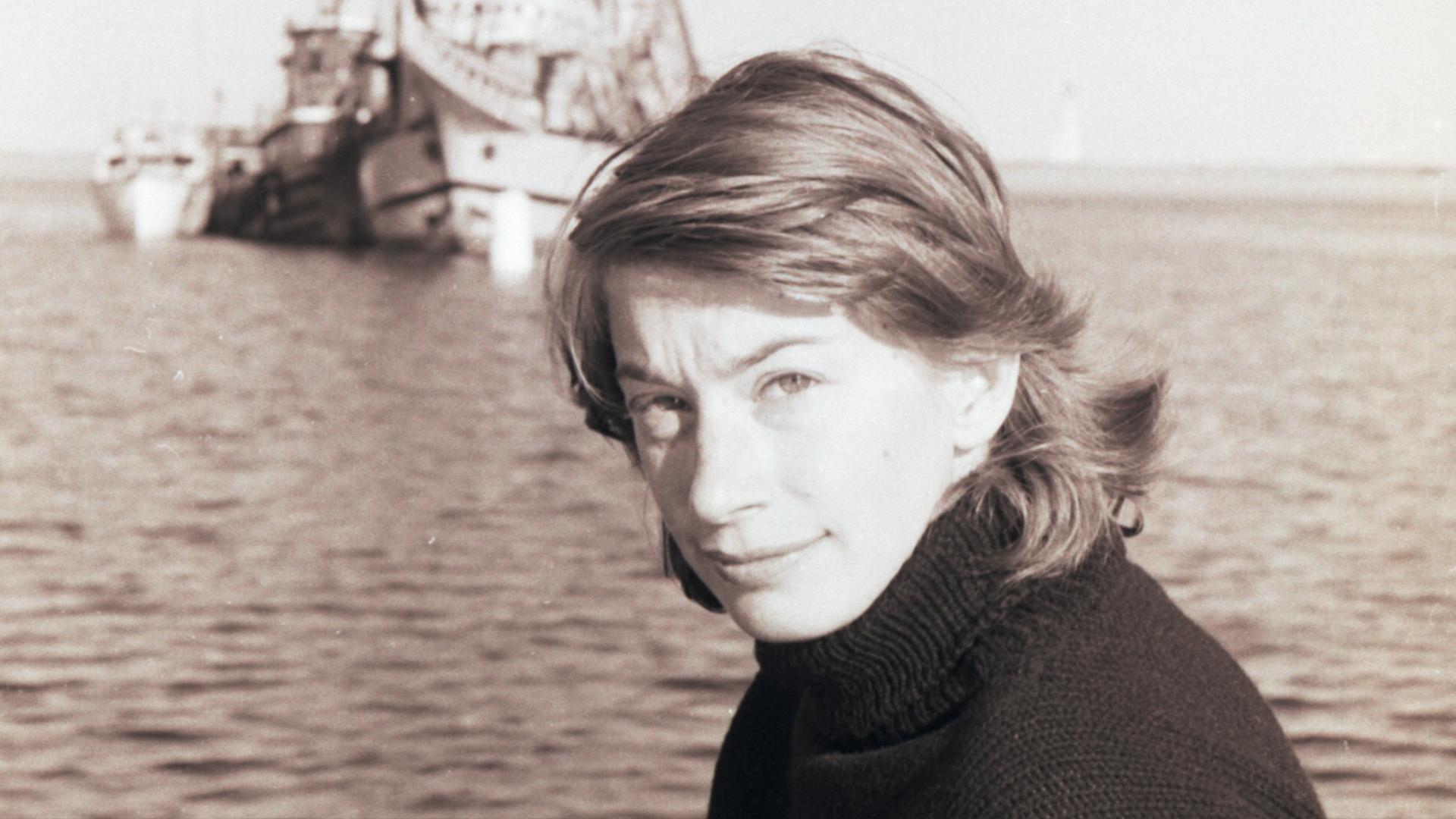
[ Applause ] -There was that famous picture of her sitting on a sea wall somewhere with her sleeves rolled up.
It's like the Walt Whitman picture of him in his loose pirate shirt.
-When I saw this photo of Mary Oliver, the way, like, she's looking out... Like, she's a little bit cruising you in that photo.
Or a lot.
I looked at this person just looking out at me, and I was just like... "Oh, my God.
Like, I want that."
Not even in, like, a sexual way.
Like, I want to be able to do that.
When we talk about queer family, one of the things about family is that you just have someone to emulate.
-It was then Mary's career was what this couple was about.
-Molly was like a police dog if a tourist came and tried to knock on her front door.
-And Molly always was "no" to everything.
-Molly wouldn't let them get anywhere near her.
-She was a very tough agent, but I think she certainly looked out for her.
-Really, nothing in the outside world got to Mary unless it got to Mary through Molly.
-It's weird.
The more accepted and famous and more she sold, the less critically good the reviews were.
And I always wondered if people were mad she was the number-one poet.
It seemed like they were.
-"Lots of poets are in love with the ordinary.
But should the ordinary seem so ordinary?
It's as if you've been promised a miracle.
Yet all that lies on the tablecloth before you is a dead mouse on a garbage can lid."
-You know, Molly would just get really -- would fume about something like that, and Mary would just kind of... She'd go, "Huh."
-The conundrum with poetry is that sometimes, when you gain the people, you can lose the poets."
[ Cheers and applause ] -I was having a conversation with some poets about Mary Oliver some years ago now, and one of them said, "If you've read one Mary Oliver poem, you've read them all."
Which was a wild statement to me.
I was -- I -- [ Stammers ] That felt like a -- like a perfect kind of dismissal.
[ Ducks quacking ] For some people, that simplicity is suspicious.
But also so many of us know we can't do it.
-I think at a certain point, I was like, "Okay, I want to see more with Mary."
Like, I really did want to see more.
And also knowing a little more about her, I'm like, "I know there's a lot more to her life than just waking up in the morning and going out for a walk."
Like, what is the storm?
But, again, like, I haven't read all her work.
I read a lot at the beginning, and then I was like, "Okay, I get this."
You know?
I'm getting a little critical now.
-I was shocked researching that New Yorker piece.
I was shocked to discover that Mary Oliver had never received a full-length book review in The New York Times.
And that struck me as such an indication of the ridiculously low level of respect that she was getting from the poetry establishment.
-It's not just that people said, "Oh, her poems aren't good."
It was like teaching a student a Mary Oliver poem would, like, somehow ruin poetry because, like, then people might start writing like Mary Oliver.
First of all, you wish.
Like, try it.
[ Insects chirping ] -On the surface, it looks awful easy, what she was doing.
But it's -- it's not easy.
She's going to the deepest, most contradictory places where life and death usher from the same source, and then she's speaking with clear language about that mystery.
-"The first fish I ever caught would not lie down quiet in the pail but flailed and sucked at the burning amazement of the air and died in the slow pouring off of rainbows."
"Later, I opened his body and separated the flesh from the bones and ate him.
Now the sea is in me.
I am the fish.
The fish glitters in me.
We are risen, tangled together, certain to fall back to the sea.
Out of pain and pain and more pain, we feed this feverish plot.
We are nourished by the mystery."
[ Waves crashing ] -People think of her walking the beaches of Provincetown without troubling anyone or having troubles herself, and that certainly wasn't the life that she led.
-Everybody thinks Mary was this little earth mother.
Mary did not suffer fools.
And she caused trouble.
She was a [bleep] stirrer.
You wouldn't think she would chain-smoke.
You'd think she's this healthy person that's in the woods breathing the frogs' air or something, but no.
-She smoked cigarettes like she ate turtle eggs off the beach, you know?
She would take one with great care and smoke that cigarette, which I begged her to stop.
-I remember when she brought me to Sweet Briar College, where she taught for a while, to do my spoken-word show and worked in the word "ass [bleep]" into her introduction of me in front of her horrified poetry purists.
[ Laughter ] -Teaching young writers has also become a passion for Oliver, and she's decided to extend her stay at Sweet Briar for at least another year.
-I don't think I've read a single poor student response.
They're extraordinary.
-In the early 1990s, Mary Oliver published one of the great poetry craft books, and that's the "Poetry Handbook."
And it's still a best-seller.
-I'm Natalie, I'm a published poet, and this is "Books That Changed My Life: Part 4."
-I just picked up this book on the advice of a friend.
-This is a good introduction to the different styles and the different forms.
-It has a really good tips for beginners.
Just wanted to shout that out.
-You've got to know what words sound like.
-Have you ever wondered what's the difference between a stone and a rock?
-The K.
-What advice would you give to upcoming poets as myself?
-Be interested in the whole world and not just writing.
Read a whole lot.
Really, most important, set yourself a schedule of writing every day.
I've written everything I know in that little book 'cause I didn't want to teach anymore.
-She joked, saying the hope was that the books could go out and do the teaching and she could stay at home.
-We had a conversation once about teaching, and she told me, "You know, it might be better for you if you quit your job and moved to the woods and wrote poetry."
-"In all our time together, we were rarely separated.
Three or four times I went away to teach, but usually M would come with me, and we simply made our home temporarily somewhere else.
And while I always loved the stillness I found in the fields and the woods, our house was a different thing, and I loved that, too."
-"Dear Paulus, thank you for your Christmas greetings.
On Christmas morning, cold and windy, I ran to the beach to fetch home an injured gull.
I expected him to slip the latch and leave this world pretty quickly.
He's pretty bashed up.
Yet he is still here.
Can't fly, can't walk, but utterly responsive and altogether receptive to our attentions."
-"In the morning, when I came downstairs in the half-dark, he was eager for me to lift the shade and turn him around so he could begin looking.
He would swing his head slowly from east to west and back and again, gazing slowly and deeply."
"During the colorful winter sunsets, the descent of the light, he also turned his attention entirely from us and into the world."
-"Dear Paulus, Molly has a developing lung tumor."
"She waits patiently and without argument.
Molly looks out at the harbor and says cheerfully, 'I'm home.
Bring me some toast and a peach, sliced.'
And, with great care, I do."
-The feeling was, "No, I mean, that can't happen to Molly."
-Molly was suffering from emphysema and was not spending much time out of bed.
And she said, "This is the way it is with great age."
-I used to go out at night with a flashlight and sit on a little bench right outside the house and scribble poems.
I was so busy during the day.
-"The broken part of the wing hung now by a single tendon.
We clipped it away.
One withered foot literally fell from him along with the first section of leg bone.
So he was a one-winged one-legged gull, but still patient, attentive."
-I would go over there every day.
I lived, you know, half a block away, basically.
-She did not have Alzheimer's, but if you can't get enough oxygen in your brain, it's just about the same thing.
I was sitting on the couch in her room with a wonderful friend and very helpful during that period of time -- John Waters, the filmmaker.
And Molly looked at John Waters and said, "Where's Mary?
Where's Mary Oliver?"
-"He was, of course, a piece of the sky.
His eyes said so.
This is not a fact.
This is the other part of knowing something when there is no proof, but neither is there any way toward disbelief.
Imagine lifting the lid from a jar and finding it filled not with darkness, but with light.
Bird was like that -- Startling, elegant, alive."
-"She was style.
She was an old loneliness that nothing could quite wipe away.
She was vastly knowledgeable about people, about books, about the mind's emotion and the heart's.
She lived sometimes in a black box of memories and unanswerable questions and then would come out and frolic, be feisty and bold."
"Many years ago, we did not have much income.
We had love and work and play instead.
We were talkers.
It was a 40-year conversation."
-The winters were -- They were tough.
-I spent like three or four winters there over the years.
But then I couldn't stay there forever.
So desolate.
-Did she change?
Well, everybody changes when their partner dies for the whole life.
-Mary spent some time feeling... ...a little unmoored, I would say.
-My question is of a personal nature.
Please tell me if it's too personal.
I, too, am a grieving widow of a partner, and I didn't know if you felt comfortable talking at all about your grieving process.
-Well, first you're crazy for about a year and do everything in excess.
You know, I'm not -- I'm not over it.
-The amount of alcohol and cigarettes.
-The drinking was crazy, too.
But she was headstrong.
Nobody told Mary what to do ever.
Ever.
Except Molly.
- Praise God From whom all blessings flow -How did her death change your life?
-Very, very lonely.
I tried the church, and that did not work.
-Mary did not do well with groups.
[ Laughs ] She turned to the church in the direct aftermath of Molly's death, but it was not a lasting relationship.
-Joining the church.
She joined the church 'cause she was after the woman preacher.
That's why she joined the church.
And the poor preacher thought she was saving a soul of a Pulitzer Prize-winning poet and then realized she had the hots for her.
That's what happened.
That's -- Everybody knows that.
-This is from a letter to her friend, the poet Pat Fargnoli.
"Dear Pat, exhaustion leads one to unexpected places, and I'm going to AA.
Do you know anything about that?
Many people show up that I wouldn't have expected.
Not that many people here in town would have expected me.
Lesson in humility."
People in the program here in Provincetown all knew who she was.
But anonymity is anonymity.
But then, uh, I don't know what happened.
She stopped coming to the meetings.
-She made startling choices how to follow up on Molly, who was un-toppable, in my book.
-She went through a hard time.
And she looked around for someone to be a lover.
That was when Anne started coming around.
-Right from the beginning, everyone in town who was part of the AA program, who knew Mary's situation and knew Anne, was saying, "This is not good."
-It was a bad vibe.
Molly, I do think, built a life with, but also for her.
And that was not my sense about Anne.
It really wasn't.
And I think that in that way, Mary is also a good cautionary tale.
You can be the most famous poet in the world, everybody can love your poems, and you can be involved with someone who's really bad for you.
-You could hear the truck coming down the road.
You know, it was... Anne wanted to have a house in Florida.
So I flew out, and I spent -- I don't know -- maybe a week with Mary.
We were packing, you know?
And I couldn't read her emotionally.
She was resolute.
I did not see any joy.
But I don't want to try to speak about them too much.
Mm-hmm.
Very much so.
We talked about it a lot.
As a matter of fact, some of our later conversations down in Florida, she said, "I -- I made a big mistake."
-I don't know that she regretted it.
I think she missed it.
-Mary wrote in a book of prose, "I don't know whether I'm going to heaven or hell, but I've been... I've been in heaven for the last 50 years.
Thank you, Provincetown."
[ Insects chirping ] -That was one of my frustrations with Mary's poems.
She was just presenting herself in the light.
Everyone's entitled to reveal what they want to reveal, but not acknowledging or wrestling with one's own shadow feels somehow false.
It's like it's not a full picture of a life.
-"My father, for example, who was young once and blue-eyed, returns on the darkest of nights to the porch and knocks wildly at the door, and if I answer, I must be prepared for his waxy face, for his lower lip swollen with bitterness.
And so, for a long time I did not answer, but slept fitfully between his hours of rapping."
-One of the things that's really hard about writing about traumatic experiences is that you have to look at it.
And if one is a poet like Mary Oliver, you have to go in earnestly to look at it.
I do know from my own experience that that pressure does become inexorable.
You know, you can sort of have your defenses up and at a certain point... you know, it comes calling.
It's due.
-"But finally there came the night when I rose out of my sheets and stumbled down the hall.
The door fell open, and I knew I was saved and could bear him, pathetic and hollow, with even the least of his dreams frozen inside him, and the meanness gone."
-There's something about art.
It takes a lot of energy, and some of that energy, unfortunately, is from wild suffering.
That energy pushes something through a person into the world.
-"And I greeted him and asked him into the house, and lit the lamp and looked into his blank eyes in which at last I saw what a child must love, I saw what love might have done had we loved in time."
-Here's how I first met Mary.
When I was First Lady in California, I kept trying to get her to come and speak at this women's conference that I was doing.
I had discovered her like anybody discovers her -- through her poetry.
And then I started hounding her to come to the women's conference.
Every time I would call her, she would say, "No."
And I said to her, "Lookit, you know, 'The Journey' just upended my life.
It's the most incredible thing I ever read.
My life has never been the same."
And she was like, "So?"
Then I'd ask her again.
I was like, "But, Mary, I guarantee you you'll sell 30,000 books."
She said, "I don't care.
No."
And she always just said to me, "I don't travel.
I don't leave home.
I don't speak in conferences.
I don't do that."
And I said, "Yes, you do.
Yes, you can do that."
I think I spent six years trying to get her to come.
-I know Mary Oliver's poems very well, but on the night before my cancer surgery, my dear friend asked me to pick a poem out of her deck of poem cards that would be the guide for my operation.
And the card was "The Journey."
And I thought I knew this poem.
The first day I came out of my cocoon of cancer, I spoke at this huge mega conference in California.
I was still bald.
I had just finished my last chemo.
And I had agreed to speak.
And I get there and there's 20,000 people and I'm like, "What am I doing?"
And I just got up, and I gave a speech about cancer and about sexual abuse and about the journey of what the cancer had done.
And when I walked off stage, I was walking downstairs and I saw this woman walking up towards me who was weeping.
And it was Mary Oliver.
And she threw her arms around me and she said, "Thank you."
And I was like, "No, thank you.
You set me on my path.
Like, you were part of me living."
And she goes, "No, no, no, you have set me on a path."
[ Birds chirping ] -If I close my eyes and think about that day, there was just so much laughter.
I had developed a friendship with her.
-Yeah.
-Oh, my God.
Look.
Look.
I would have walked right under this and by it... -I'm sure people do.
-...and never have seen it.
How do you know she's not dead?
I was the guest editor of this O Magazine edition on poetry, and she was the poet that I admired the most.
And I wanted to interview her for the magazine.
So I flew down to Florida, where she was living.
-[ Chuckling ] That's great.
Mary.
[ Camera shutter clicking ] Gorgeous.
-Oh, what a shame the weather's like this.
I'm gonna have to smoke a cigarette.
-Okay.
Then we can pause.
[ Both laugh ] I felt that she was very comfortable with me, which is perhaps why she said what she said.
And then you started this new book of yours, "What can I say that I have not said before?"
-Yeah.
-Is that something that you worry about?
And I don't even think she probably thought it through.
-I want to be a little braver and more honest about my own life and -- and the difficulties there.
And, you know, I was sexually abused.
There's a lot of damage.
You know, that's the first time I ever said that out loud, but that's -- you know, that's why -- -Tell me about that.
-Well, that's why I wanted to be invisible, I'm sure.
-I had been interviewing people at that point for 30, 40 years, so I knew well enough not to go, like, "Oh, my God, what?"
-But -- But I was abused.
-You were sexually abused as a child?
-Very, very little.
And it wasn't until I was in my 40s that I was able to figure out that it wasn't a giant.
I was very little.
Children forget.
I mean, they don't forget, but they forget the details.
They just don't know why they have nightmares all the time.
-Just think about that, how scary that is, that your body is going through something that you can't even remember.
When you're young, you block it out, particularly if it's your father, because you can't remember.
It's so long term.
It's so multi-layered.
-It would have been a very different life Whether I would have written poetry or not, who knows?
But I did find the entire world in looking for something.
I got saved by poetry, and I got saved by the beauty of the world.
[ Birds chirping ] -Mary was very clear that it wasn't gonna define her.
The fact that she really didn't address it till her 70s, she'd already determined who Mary Oliver was.
-Mary, I always tell you that "The Journey" is my all-time favorite poem.
It's hard to craft your own journey when voices are trying to pull you back.
I read it as though it had been written for me.
And I'm sure millions of other people did, too.
-[ Voice breaking ] Like, um, many of your fans -- sorry, my voice is a little -- the one poem that I was really hoping that you might read was "The Journey," which means a lot to my family and my brother, who couldn't be here, but... -I will read it.
-Thank you.
-Thank you for asking.
Of course I will.
"One day you finally knew what you had to do, and began, though the voices around you kept shouting their bad advice -- though the whole house began to tremble and you felt the old tug at your ankles.
'Mend my life!'
each voice cried."
-"But you didn't stop.
You knew what you had to do, though the wind pried with its stiff fingers at the very foundations, though their melancholy was terrible.
It was already late enough, and a wild night, and the road full of fallen branches and stones.
But little by little, as you left their voices behind, the stars began to burn through the sheets of clouds, and there was a new voice which you slowly recognized as your own, that kept you company as you strode deeper and deeper into the world, determined to do the only thing you could do -- determined to save the only life you could save."
[ Wind chimes tinkling ] -You know, she said, "I had two choices when Molly died."
-I would either go buy a little cabin in the woods and go inside with all my books, write poems, and see nobody and -- and shut the door, and that would be that.
"Or," I said, "I will unlock all the doors."
-And so she really accelerates her public readings in the wake of Molly's death.
-It is a wild and precious privilege to introduce to you tonight... -For a singular and heartfelt experience... -Please welcome our national treasure and the guardian of earth, Mary Oliver.
[ Applause ] -You know, she never became impossible to criticize, but she became super impossible to ignore.
[ Applause ] -Thank you.
[ Cheers and applause ] Thank you.
-Here you have someone who is very close to living a hermit's life, who then goes out to these auditoriums and fills them up.
Mary became a kind of icon for the hermit within each of us.
-You know, Mary was a genuinely humble person, and so this is a little bit difficult to say, but I don't think that she was surprised by her popularity.
-People who don't know anything about poetry -- and who don't need to know -- when they are in a state of being torn open by life, and they need someone to speak to that state of the soul, it's Mary Oliver.
-What is the meaning of life?
Where can I go for solace?
How do I find happiness?
How do I cope with sorrow?
-It's a Mary Oliver poem that people find themselves held by, and they don't need a critic to explain to them why.
-"Mary Oliver's first book of poems was reviewed in this publication by James Dickey, who dumped all over it.
The last laugh has been Oliver's.
42 years after Dickey's review, she is far and away this country's best-selling poet."
Dwight Garner, The New York Times.
-You have said what a poem is not.
You say a poem is not the world.
-Oh, I'm -- I'm changing my ideas about that.
I'm in trouble.
I went a little crazy at one reading a few months ago and -- and started shouting that I wanted my poems to be inflammatory.
We're all better people for literature.
Meanwhile, the world burns.
Our enjoyment of the natural world is, in the long run, political.
-The poem that I think about the most is "Was It Necessary To Do It?"
And it's a poem about an ant being stepped on.
"I tell you that ant is very alive!
Look at how he fusses at being stepped on."
The reason this poem matters so much to me is because so many people that I know know what it is to be the ant.
Whether it's people of color in this country, whether it's women, whether it's folks from the LGBTQIA+ community, whether it's disabled people.
And the assumption is that either the ant does not exist because it is not seen or that the ant is easy to kill.
And so what she does in the poem is says you can tell by how the ant fusses at being stepped on, which means the ant is not dead.
The ant is fighting for its life.
-The thing I'm most worried about, actually, is what I consider a most serious ongoing devastation of the earth, which we need both spiritually and materially, and we're not dealing with it -- I worry about little children.
Are they gonna know what the earth looked like?
[ Siren wailing ] [ Fire crackling ] -And as I was leaving, she kind of blew kisses and said, "I love you," and, "Goodbye."
But the last thing that she said was, "No moping, no moping," to me.
You could look at every poem that she's written and say, "Is the underlying message here 'No moping'?"
Meanwhile, the world goes on.
Meanwhile, everything is happening.
"Meanwhile the wild geese."
-"You do not have to be good.
You do not have to walk on your knees for a hundred miles through the desert, repenting.
You only have to let the soft animal of your body love what it loves.
Tell me about despair, yours, and I will tell you mine.
Meanwhile the world goes on.
Meanwhile the sun and the clear pebbles of the rain are moving across the landscapes, over the prairies and the deep trees, the mountains and the rivers.
Meanwhile the wild geese, high in the clean blue air, are heading home again."
"Whoever you are, no matter how lonely, the world offers itself to your imagination, calls to you like the wild geese, harsh and exciting -- over and over announcing your place in the family of things."
-You can read it a hundred times and hear it differently every time.
Who is the "you," and what does "good" even mean?
-[ Laughs ] -It's a wild goose.
It's the wild geese.
We think of wild as chaotic, but wild is harmonious with the wilderness, which is where we all came from.
We're born wild.
-I think people feel a lot of pressure to be good by external metrics.
One of the things she learned by being dedicated to nature was that that question doesn't follow deer and it doesn't follow bees.
Why are we putting this on ourselves?
-How many people here love dogs?
Yay!
[ Cheers and applause ] Yay!
Aren't they something?
Who needs language?
-What I get from her poetry is a sense that you belong here in this world.
And the evidence is how you are compelled by the beauty of it.
That beauty of the world is an accusation that you are withholding your own beauty by being good, as opposed to being yourself.
-Mary kept finding the light and realizing she did not have to be good.
You could not contain her any more than you could contain the season outside.
The cycle continues.
-The fear of death, as long as death is understood to be a cessation, is quite logical.
But if one understands it to be a change, then it becomes quite interesting.
-How do you know when a poem is done?
-[ Sighs ] Well, I don't know that you ever know, but -- but in some way you have made a completion of a thought or a mood or whatever you're doing, and it's time to go on.
[ Birds chirping ] -A cottage of darkness.
The concept of death is one that is so impenetrable, but for the poet to shrink it down to a cottage makes it something we can emotionally handle.
-Here's a poem for today by Mary Oliver, entitled "When Death Comes."
"When death comes like the hungry bear in autumn, when death comes and takes all the bright coins from his purse to buy me, and snaps the purse shut."
-"When death comes like the measle-pox, when death comes like an iceberg between the shoulder blades, I want to step through the door full of curiosity, wondering: what's it going to be like, that cottage of darkness?"
"And therefore I look upon everything as a brotherhood and a sisterhood, and I look upon time as no more than an idea, and I consider eternity as another possibility, and I think of each life as a flower, as common as a field daisy, and as singular, and each name a comfortable music in the mouth, tending, as all music does, toward silence.
-"And each body a lion of courage, and something precious to the earth.
When it's over, I want to say: all my life I was a bride married to amazement.
I was the bridegroom taking the world into my arms."
-"When it's over, I don't want to wonder if I have made of my life something particular, and real.
I didn't want to find myself sighing and frightened, or full of argument.
I don't want to end up simply having visited this world."
-What a preparation, what a freedom to not go into fear.
"Eternity as another possibility."
Some reader, someone is facing this moment right now, and I feel as though there's such consolation in thinking about a passage, and thinking about this moment right here while we are alive and breathing.
-And a major American poet, Mary Oliver, has died.
Oliver authored more than 15 poetry and essay collections.
-She died today of lymphoma at her home in Florida at 83 years old.
-Her work will live on.
We know she believed we all will, just as a beloved buried dog will sprout a rosebush next spring.
-There are these talismanic artists who, as much as they meant to us while they were alive, as they're leaving the planet, we turn toward the fullness of their living in this new way and we see, "Oh, you've offered us a way to be.
You've never demanded that we respect you.
You weren't shoved down our throats at school.
You were just there, shining."
[ Insects chirping ] -The world is just waiting, waiting... for you to pay attention.
Poetry -- especially Mary Oliver's poetry -- invites you to pay attention to the beauty of the world and to see in that you're not divorced from it.
You're your own grasshopper.
Do you know what I mean?
[ Birds chirping ] -There are a lot of stories that I could -- I could tell you that you didn't know to ask me about.
-She was very private, and I really protect my conversations with Mary.
-If I thought of something that she wouldn't want me to tell you, I wouldn't tell you.
-One more thing.
When she went into the woods during that week when she was on the lam, she met somebody in the woods whose name was Lenny.
And he was also on the lam.
He was like she was -- 17-year-old, 18-year-old kid.
Something had happened.
He got into some kind of trouble, and he was afraid to go back into town.
And they were there together, two very different people.
Years later, she said, "I wonder what happened to Lenny."
And I said, "You know, Mary, there's a machine where we could find that out fairly quickly."
He had died only a few days before.
He had gone back to town and lived his life there.
He had been in the service.
He had many grandchildren.
He went back into the world after spending that week in the woods with her.
And she went off to live her destiny.
For Mary, the woods are neither good nor bad.
The woods are just the place where we gain the space to consider what it is that we want.
-My wife sent me this the other day.
We send each other Mary Oliver.
-Oh, what'd she send you?
-I'll show you.
She put her on the family chain.
Here it is.
"Teach the children."
You know this?
"We don't matter so much, but the children do.
Show them daisies and the pale hepatica.
Teach them the taste of sassafras and wintergreen.
The lives of the blue sailors, mallow, sunbursts, and the moccasin flowers.
And the frisky ones -- inkberry, lamb's-quarters, blueberries.
And the aromatic ones -- rosemary, oregano.
Give them peppermint to put in their pockets as they go to school."
[ Laughs ] "Give them fields and the woods and the possibility of the world salvaged from the lords of profit.
Stand them in the stream, head them upstream, rejoice as they learn to love the green space they live in, its sticks and leaves, and then the silent, beautiful blossoms.
Attention is the beginning of devotion."
She was pretty good.
Search Episodes
Related Stories from PBS Wisconsin's Blog


Donate to sign up. Activate and sign in to Passport. It's that easy to help PBS Wisconsin serve your community through media that educates, inspires, and entertains.
Make your membership gift today
Only for new users: Activate Passport using your code or email address
Already a member?
Look up my account
Need some help? Go to FAQ or visit PBS Passport Help
Need help accessing PBS Wisconsin anywhere?

Online Access | Platform & Device Access | Cable or Satellite Access | Over-The-Air Access
Visit Access Guide
Need help accessing PBS Wisconsin anywhere?
Visit Our
Live TV Access Guide
Online AccessPlatform & Device Access
Cable or Satellite Access
Over-The-Air Access
Visit Access Guide




Follow Us