- God has given me a rare gift that I am here to share with you.
[Organ melody] - She was so bold and she never thought that there was anything unattainable.
- I don't need your input, thank you.
[Laughter] - With her mouth she's signing.
- Wow.
- Beautiful handwriting.
[National Anthem melody] - The direction that she took, it could have been art, but she wasn't that kind of person.
She was a music person.
- Alright!
[Tender piano] - One in four American adults have a disability and I'm one of them.
I'm Lachi, I'm a recording artist and disability culture advocate, and I'm here to introduce you to disabled renegades.
I face each day as a renegade [Cars honk] [Lachi]: Philadelphia, otherwise known as the City of Brotherly Love and Sisterly Affection, is where we'll be discussing Celestine Tate Harrington, an early champion of disabled parents.
- I was born in a Philadelphia hospital on October 15th, 1955, with my left arm and both legs folded backward in a reverse lotus position.
- First she led with love, unapologetic.
- She was very clever, and it seemed like in everything she did.
- You would leave a conversation with her feeling like you could conquer the freaking world.
[Lachi]: A true rebel, she redefined what people thought was possible for a quadriplegic.
- Celestine's diagnosis was arthrogryposis congenita, and what that means is that her bones in her arms and legs never developed appropriately.
In some cases they grow in an abnormal manner, and so they end up curving the limbs or making the limbs unusable as a result of that.
[Celestine]: By the age of three, my awareness of being handicapped increased steadily.
This was probably due to my sister, Aggie.
I remember Aggie playing, running, skipping, and jumping.
I remember wondering, why can't I do the same?
[Lachi]: In 1972, at age 16, Tate Harrington was admitted to the children's unit of the Moss Rehabilitation Hospital.
Until now, lack of accessibility at educational institutions prevented her from attending school.
Moss Rehab helped remove these barriers, and thanks to physical and occupational therapy, Tate Harrington became mobile with minimal assistance.
- The device that she was sitting in, some people might say it's a modified wheelchair.
I've heard other people say it was a tub.
What I actually remember calling it was a chariot.
Tina exploded on the world.
[Vocalizing] Once she had the interface capability to those instruments, her talent really showed through.
[Vocalizing] - I cannot wait to go down memory lane with you.
- Oh, and I can't wait to take you on this journey.
- It's so funny, I feel like I already know you from all the research I've done.
- Mmhmm.
- And I got like this kind of cousin vibe!
You know?
[Laughing] - First of all, I'm everybody's cousin.
That's just how it is.
I'm either everybody's cousin or everybody's auntie, but that's what it is.
- I love it.
Alright, well, where are we off to first?
- So we are going to my childhood home.
This place to me represents family.
My mother was a hugely family-oriented woman.
And it was because of that motto, "I am my brother's keeper."
This was my village.
[Lachi]: Yeah.
- Like these, these are my people.
[Crowd chatter] - And a family that prays together, definitely stays together.
[Crowd]: Amen.
[Applause] [Speaking indiscernible] [Nia]: We are in Center City, Philadelphia, the corner of 13th and Market.
[Lachi]: Okay.
- Right behind us is City Hall.
- Okay.
- And this corner is so monumental because this is where my mom first started.
People would come up and talk to her and she would just, like, give advice to just strangers.
They were watching her go through all of the things that she was going through, and they just wanted to learn more about it because everybody's going through something.
- Yeah, through something, exactly.
Tate Harrington became pregnant and gave birth to her daughter Nia in 1975.
Nia was an infant when the Philadelphia Department of Public Welfare removed her from the family home, claiming Tate Harrington was physically incapable of caring for a child.
- In order for your child to be removed, somebody made a secret phone call and then that happened.
They didn't do an investigation.
The only cause was that her arms and legs was folded, because the house was always clean and the family was close-knit.
- It was just a devastating event.
It was three generations coming up in that house at the same time.
And their motto was never to lose a child to the system.
[Sirens wail] You have to find a way to get this baby back.
Nia's gone and it was just an uproar to the whole block.
Yeah, it was tough.
[Low instrumental beat] - You give birth to this baby and somebody comes and tells you that you're not worthy or you're not capable.
They take this baby from you.
And she had to figure it out.
And she called all of the news, media, and radios.
She said, "Oh, y'all want media?
I'm going to use you guys to get my baby back."
[Celestine]: Now I have to go to court because they don't believe I can take care of my baby.
The Department of Public Welfare declared me unfit to be a mother because of my disability.
But they failed to realize my mental capacity.
When you are born without the use of your limbs and you have the will to overcome, you learn to improvise.
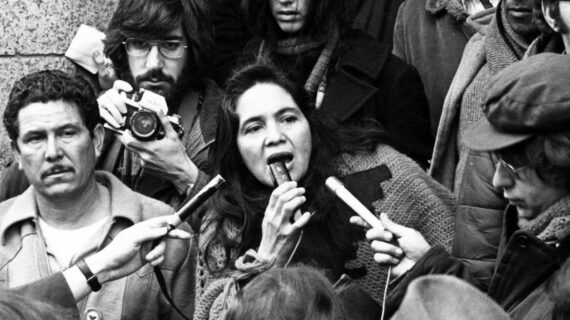
[Lachi]: Papers wrote that she may have won her own case when she used her mouth and tongue to change her daughter's clothes in a dramatic demonstration atop a conference table.
Everyone stood up in excitement as she undressed and dressed the baby, and that she lifted the child and turned baby Nia over with gentleness and care.
She said it was just instinct.
- She really showcased how she could perform the physical tasks of being a parent.
Being able to change a diaper or feed her kid.
She managed to prove that she was able to do it.
[Nia]: One of my earliest memories is just like of the comfort of her mouth on me.
[Lachi]: The judge overruled the welfare department, and Tate Harrington got to go home with her daughter.
When asked if she was nervous, she said, "I was cool as a cucumber.
I feel beautiful."
[Robyn M. Powell]: A recent study did find that about 19% of children in the U.S. foster care system have a parent with a disability.
42 states and the District of Columbia include parental disability as grounds for termination of parental rights.
But research shows that having a disability does not have any sort of per se correlation to parenting ability.
That is just because one has a disability does not mean that they will abuse or neglect their children.
[Lachi]: Tate Harrington went on to have a second child, Coronda, born in 1979.
[Celestine]: Nia is my right arm.
And now, I have a left arm.
- Her most important thing was to live life, and live it unapologetically.
And no matter what we had to face, that was one of her mottos, for us to live life.
She put a smile on our faces.
There was joy in her atmosphere.
- Now that you're married, Nia, Western Union stops there.
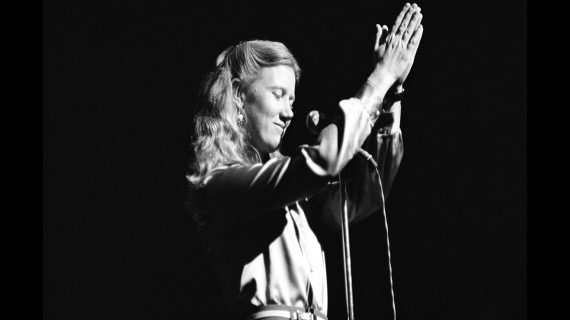
[Laughter] [Calm instrumentals] [Lachi]: In 1983, she moved to Atlantic City, New Jersey, where she became a staple for her boardwalk performances as a street entertainer.
Tate Harrington would perform songs like "Stormy Weather," "Amazing Grace," and "Somewhere Over the Rainbow," all while using her portable electric organ.
[Gentle organ melody] - This is where she went to work every day.
After some time, they wanted her off the boardwalk.
They felt that she was violating some type of panhandling rule.
Police would harass us, I can remember as a little girl, them physically removing us from the boardwalk.
[Lachi]: In 1986, Tate Harrington was convicted of eight counts of violating the boardwalk's anti-begging ordinance.
[Celestine]: The Atlantic City officials kept charging me and saying I was breaking the anti-begging ordinance.
I didn't beg anyone, I was trying to earn an honest day's living.
[Lachi]: Soon after, she was exempted from the law and earned about $1,000 a day playing the organ.
[Crowd cheering] - Where is she?
There she is!
Alright, Celestine!
[Lachi]: Tate Harrington learned early that all publicity is good publicity.
- Now, Celestine, this is the first time we've ever met, right?
- Yes, it is.
I didn't know you looked so weird!
- You know, the Howard Stern interview, what she was doing was setting her own stage.
- Celestine's an amazing woman.
She hangs out on the boardwalk in Atlantic City and she plays the piano with her tongue.
- She wanted to get her story to multiple people because she knew.
She knew that people needed to hear her voice.
- And Celestine, now you've written this book.
Now, how did you write the book?
You didn't literally type it with your tongue, did you?
- Yes, I did.
- Now get out of here, you're kidding me.
- Typesetting, everything.
- But you have no arms or legs.
- I have them.
I just can't use them.
I brought you a book and I'm going to sign it for you!
- Boy, you know how to work a room.
[Lachi]: Tate Harrington continued to play her music on the boardwalk until tragedy struck.
- My sister called me in Atlantic City and she said, "Nia, Mom's been in an accident."
I just remember us getting there and she was fighting so hard.
To the end, to the end.
And she just, she left with me right there.
I feel like part of me went with her.
I know it did.
[Solemn piano instrumentals] [Nia]: I am the representation of a war that was won.
The court system, they never thought that I would be a success because of her.
But it's because of her that I am.
"Here I lay again, Watching people walk up and down the street, Some look happy and some look sad, Some look worried, and some look mad.
They all look at me, I wonder what do they see?
Do they see me happy, Or do they see me sad?
Or do they see me handicapped, Locked up in my own shell?
I'd like to tell you some things about me, What kind of bird, What kind of tree, What kind of world I'd like to see.
I love God, He sees me.
He tells me how he sees me, So people, people everywhere, Tell me, if you really care."
- The beauty of, just, me learning of Celestine's story, I personally find Celestine to also actually be one of my ancestors.
In disability, in music.
And so standing here with, like, direct descendants, with direct family, I just feel like this is my family.
I feel like y'all taking care of her was y'all taking care of me.
[Tender instrumentals] I live my life My rules, my way I have no fears I face each day as a renegade [Clap]


 Passport
















Follow Us