

 Passport




This video is no longer available.
Carole King: Natural Woman
02/19/16 | 53m 11s | Rating: NR
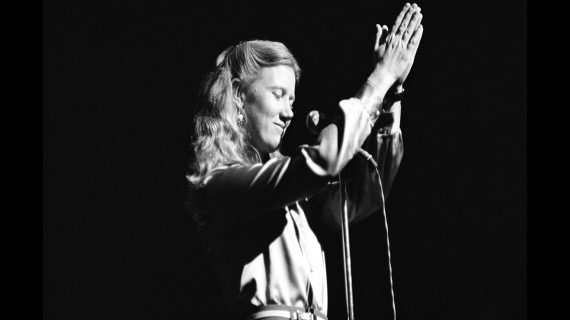
King tells her story in the new documentary American Masters – Carole King: Natural Woman that weaves previously unseen and rare performances and home movies with a new, exclusive interview with King, friends, fellow songwriters Barry Mann and Cynthia Weil, Tapestry producer Lou Adler, drummer Russ Kunkel, guitarist Danny “Kootch” Kortchmar, and more. How a 16-year-old songwriter became a star.


Copy and Paste the Following Code to Embed this Video:
Carole King: Natural Woman
KING
You've got to get up every morning with a smile on your face And show the world all the love in your heart Then people gonna treat you better You're gonna find, yes, you will That you're beautiful as you feel I think I was kind of innocent. And I had the notions of the world and what being a girl was from the '50s. We were all brought up to be cute and popular and marry the nice boy who was going to make a lot of money. And there wasn't an emphasis on what we were going to do.
I was brought up to know that I was probably going to be a teacher. I had teachers in my family. I feel the earth move under my feet I feel the sky tumbling down I feel my heart start to trembling Whenever you're around I became Carole King, and I was confident about what I could do. I liked the idea of writing songs so that I would be recognized and respected by the people who sang them.
And that's really what drove it. I can do that. And I did. You just call out my name And you know wherever I am I'll come runnin' To see you again
PRESIDENT OBAMA
By the age of 4, Carole was already mastering the piano. By 15, she'd already conducted her first orchestra. By 17, she'd already written her first number-one hit. To date, Carole has written more than 400 compositions that have been recorded by over 1,000 artists, resulting in over one hundred hits.
KING
You've got a friend
Cheers and applause
Applause
KING
Tonight you're mine completely You give your love so sweetly Tonight the light of love Is in your eyes But will you love me Tomorrow? My mother had a piano, you know, right from before I was born. And so I was able to play it and work on it by ear and write little ditties. But my mother also had been trained in piano, so she trained me.
She loved music and conveyed that to me, and I was born with the receptive gene. So she would be the single most important influence. She had a great record collection. She loved show tunes, so early on I got familiar with, you know, "South Pacific," "Oklahoma," the great Rodgers and Hammerstein musicals.
Raindrops on roses and whiskers on kittens Bright copper kettles and warm woolen mittens Brown paper packages tied up with strings These are a few of my favorite things And I would even sing commercials. Winston tastes good, like a cigarette should I had no idea what I was singing about. My dad was a good father. He nurtured in me that sense that I could do anything, and I'd better do it with excellence.
My parents -- they never made me think I couldn't do anything because I was a girl. I played with the boys on the street. I was kind of tomboyish. In high school, I was the girl who the guys wanted to be friends with.
I wasn't the one that they wanted to date.
Rock-'n'-roll music plays
ZWICK
Every high school in Brooklyn during the '50s had a rock-'n'-roll group. They were all over the place, they were proliferating. Danny and the Juniors were singing in the Bronx and Neil Sedaka, at that time with the Tokens, was singing out of Lincoln High School.
KING
I think I was 15 when I formed my first group, which was the Cosines. It was, you know, we had math books. Ah, cosines. So whatever year I took trigonometry.
We performed at school dances and parties -- anywhere we kind of had a chance or you know, school shows.
ZWICK
She was the singer, she was the writer, she was the piano player for the group. And, uh, she -- she wanted this. She wanted this as a career.
KING
I was inspired by the Alan Freed shows. saw these shows, and I'm like, "I can do that." And I didn't ever want to be a singer. I didn't want to be famous. Fame didn't appeal to me.
I liked the idea of writing songs so that I would be recognized and respected by the people who sang them.
McGRATH
In those days, you could be a kid, as Carole was, 16 years old, coming from Brooklyn, and go into 1650 Broadway or into the Brill Building. One of the two buildings that people think of when they're talking about the Brill Building sound, in Times Square, that used to be where the Tin Pan Alley songwriters came in the '20s to sell their songs. You could walk in and they had a piano in the room and you'd sit down and you'd play, and they'd go, "That's great kid." I'll take that song. Here's $25.
MANN
And I was in the waiting room, and there was this kid there. She looked like she was about 15 years old, in jeans. And I started to talk with her. And I thought to myself, "God, this girl is so confident." And I said to myself, if this girl has talent, she's going to be a huge star.
And it happened to be Carole.
ZWICK
She was simply being paid to write songs for top groups that needed songs, 'cause in those days, there were very few singer-songwriters. That phenomenon had not yet really occurred.
DeCURTIS
It was made-to-order songwriting. You know, you were either writing for a specific artist or you were writing a song that the publisher you were working for would go out and shop to various singers. You know, there was a breakdown in those days between who wrote the song and who sang it.
KING
I don't remember just exactly how it started I just saw him, and I was like, "Oh, my God, he looks like the picture of a boy I've been carrying around in my wallet that was a drawing in a magazine. He was very handsome. It doesn't make a bit of sense to me Why should two people in love have to be Like little children
McGRATH
They were married very young, very very young, when they were teenagers because she got pregnant.
KING
...Just can't help but fight Why should two grown people... He definitely came at a time in my life when I needed somebody to write better lyrics than "Baby, baby."
MANN
Aldon Music was a music publishing company that was started by two fellows, Don Kirshner and Al Nevins. So the Aldon is Al and Don together. And they built up such a great reputation. Don Kirshner was the best publisher that I've ever come across.
And the company became so powerful that he would get record companies to promise him the backside of a record just to get our material.
WEIL
In those days, records had two sides.
MANN
That's right -- there were things called records, too.
I forgot. -WEIL
Yes, they had two sides.
MANN
Right, so it really became the publishing company in New York City.
ADLER
Donny Kirshner, who was a great publisher, who had a really good ear... That group of writers -- Barry Mann, Cynthia Weil, Howie Greenfield, Neil Sedaka, Carole, Gerry, and some others in that group, they had 36 top-10 records in three years. You know, it's historic.
THE CHIFFONS
One fine day You'll look at me And you will know our love was meant to be One fine day You're gonna want me for your girl
ASHER
All of us then were fans of American music and would study every detail of the label. And of course, the names Goffin and King kept occurring in those little brackets under some of our very favorite songs.
DeCURTIS
Goffin and King wrote songs to order. It was like, "Okay, somebody needs a hit, you know, you write the song."
MANN
Now, I hate the word "factory." I really hate it. It was a songwriting school. You went in in the morning and you went to your cubicle or, you know, your little office. There was a piano there, and one of you sat there and the other one, you know, jotted down some words and you both sang or one of you sang.
And you tried to come up with songs.
GOFFIN
Like that, yeah, but it's got to be harder. You know, when we write the lyric to it, it'll be different.
Vocalizing
MANN
On the right side of the main room, there were about four different cubicles, and the cubicles would have, like, an upright piano and a piano stool and one chair and an ashtray because everybody smoked like crazy back then. And it's amazing that we didn't get cancer. Um, and, uh --
WEIL
There's still time.
MANN
Yeah, thank you!
KING
Cynthia Weil and Barry Mann, who was her husband, and Gerry Goffin and I were a pair of writing teams that wrote for Don Kirshner.
WEIL
"Up on the Roof" for them, "On Broadway" for us, "You've Lost That Lovin' Feeling" for us.
MANN
"Walking in the Rain" for us, "Blame It on the Bossa Nova" for us. What else?
WEIL
"Natural Woman" for them.
MANN
"Hey Girl" for them.
WEIL
Yeah.
MANN
"Don't Say Nothin' Bad About My Baby" was them.
KORTCHMAR
They'd start and finish, and there was no, like, "Well, let's work on it for a few days and see what we can come up with. There was none of that. It was like, they'd start, they'd finish. And some of the best songs you ever heard, done in 20 minutes.
MANN
Carole always said if they didn't write it, we wrote it.
DeCURTIS
The thing that is incredible and the thing that I love about Carole King coming out of this world of kind of factory songwriting is that she managed to both create songs that have this deeply personal feeling and that are so idiosyncratic and interesting, but also were mass pop hits.
KING
What should I write? What can I say? How can I tell you how much I miss you? The weather here has been as nice as it can be Although it doesn't really matter much to me For all the fun I'll have while you're so far away It might as well rain until September At that time, one child, it was in '61.
That was Louise. Sherry wasn't born until '62. Gerry was working as a chemist to support the family. I was at home with the child.
The traditional male/female roles. We were also writing, you know, to try to make it to free ourselves of the 9-to-5, except I was still taking care of the child and the house, as well. But that was fine. It worked out fine.
McGRATH
On the day Carole wrote "Will You Love Me Tomorrow," Gerry was at work 'cause they didn't make enough money yet for them to live off their writing. He worked as a chemist. She was at home. She wrote the song.
He doesn't get home till later. She leaves the song on the piano, and she goes out to play canasta with her mother's friends. That's how hip she was. You know, she said to me, "You'll find out that even when I was a teenager, I was an old Jewish lady.
That's what I was right from the beginning." And once you hear the canasta story, you can kind of believe it.
KING
We would be trying to write the follow-up for a hit artist, right? Barry and I are both musical and receptive to what it was that made that first song a hit.
MANN
It would be very competitive, like, with Carole and Gerry, we ended up being really good friends, but at the same time, we'd be jealous of each other if the other team got the record. Um, and that was very confusing to us because as friends, we loved them. But if they got the record, we hated them.
KING
"Will You Love Me Tomorrow" was the follow-up to a hit by The Shirelles. Their hit was "Tonight's The Night." And in writing "Will You Love Me Tomorrow," we tried to write "Tonight's The Night" sideways and upside down, so it had some of the same feeling and yet was a new idea.
THE SHIRELLES
I'd like to know that your love Da da da da Is love I can be sure of So tell me now and I won't ask again Will you still love me tomorrow?
DeCURTIS
Gerry Goffin wrote those words from a woman's perspective. But Carole wrote this incredibly beautiful music that has this drama of that moment of, you know, making your sexual passage.
THE SHIRELLES
So tell me now and I won't ask again Will you still love me tomorrow?
KING
It went to number one, and we were delighted because then we could devote ourselves to working on songs full time.
DeCURTIS
There's a reason why that song has lasted and why people keep coming back to it. You know, there's an extraordinary beauty in it and a kind of emotional texture that you might not ordinarily, you know, hear in something that you would think of as a pop hit.
SAGER
There's a simplicity to her melodies not unlike Richard Rodgers in his time. And the words just belong to those melodies.
McGRATH
Carole's melodies are sometimes more joyful than Gerry's lyrics. The lyrics can sometimes have a lot of darkness in it that she sets off with a more optimistic melody.
VEE
Oh, take good care of my baby Now don't you ever make her cry Just let your love surround her Paint a rainbow all around her Don't let her see a cloudy sky Once upon a time that little girl was mine Oh, if I'd been true I know she'd never be with you So take good care of my baby Be just as kind as you can be And if you should discover That you don't really love her Just send my baby back home to me
KING
It got to the point where we were spending a lot of time in the studio making demos. And I used to bring Louise to the studio in her little playpen. And, you know, it got to be kind of hard to do both, so Little Eva came to stay with Louise. And people had the impression that she was pushing a broom around the kitchen one day and he heard her sing and said, "Stop, we must record that voice." But the fact of the matter is we knew that she could sing when she came to work for us, and it was just a matter of time before we were going to have her sing on some of our demos.
LITTLE EVA
Everybody's doing a brand-new dance now Come on, baby, do the Loco-motion I know you'll get to like it if you give it a chance now Come on, baby, do the Loco-motion My little baby sister can do it with me It's easier than learning your ABC's So come on, come on, do the Loco-motion with me There never was a dance, "The Loco-Motion," until after it was a number-one hit record and everybody says, "How does this dance go?" So Little Eva had to make up a dance.
KORTCHMAR
This is pre-Beatles. So a lot of pop music was bubble-gum music and a lot of it was, I don't know. There wasn't a lot going on in pop music. And they stood out completely.
THE COOKIES
Chains My baby's got me locked up in chains
KING
The original image was, you know, that old
Snapping fingers
KING
street-corner music -- you know, three people standing there and just doing it in harmony, which we do in concerts sometimes. Chains My baby's got me locked up in chains And they ain't the kind that you can see Whoa, these chains of love got a hold on me, yeah
ASHER
When the Beatles started to write songs, I've no question they looked to Goffin and King. And they overtly spoke of Goffin and King as among their inspirations.
HARRISON
I want to tell you, pretty baby I think you're fine I'd like to love you But, darling, I'm imprisoned by these chains My baby's got me locked up in chains And they ain't the kind That you can see
KING
I thought it was really neat when the Beatles did my song, "Chains," because they were this big phenomenon in this country, and everybody was going, "Oh, wow." And they're great songwriters. And Gerry and I had written "Chains" for the Cookies and had a record with it here and then they went and did it.
DeCURTIS
I sort of feel like I'm still learning things about Carole King. I mean, this woman wrote so many amazing songs.
HERMAN'S HERMITS
I walked her home and she held my hand I knew it couldn't be just a one-night stand So I asked to see her next week and she told me I could I asked to see her and she told me I could Something tells me I'm into something good Something tells me I'm into something Something tells me I'm into something good Something tells me I'm into something good Something tells me I'm into something Something good, oh, yeah
KING
I remember making a suggestion about writing something about a secret place, someplace somebody goes, you know. Where do you go? And in New York, where we lived at the time, one of the few places you could go at the time to get away was up on the roof. When this old world starts getting me down And people are just too much for me to face I climb way up to the top of the stairs And all my cares just drift right into space On the roof's the only place I know Where you just have to wish to make it so Let's go up on the roof Up on the roof
McGRATH
She wanted to live in the suburbs. And the reason they lived in the suburbs is she was always like, "Let's move to the suburbs. That's where it's happening.
MANN
We would never think of, like, moving to the suburbs. This wasn't a thought in our mind. We lived in Manhattan. We were just so hip, and they weren't.
McGRATH
So, she wanted a house and the tree and the yard and the kids and the dog, the cat.
KONDOR
She just wanted to be a normal housewife. So all I remember is this house in West Orange, New Jersey, and having these two kind of weird-ish parents, compared to the other parents on the street.
DeCURTIS
"Another pleasant valley Sunday here in status symbol land." You know? Lyrics like that, that are a comment. Goffin is trying to say something.
KING
He wanted to be cool and live in the Village or something. You know? Um, so he hates it.
THE MONKEES
Rows of houses that are all the same And no one seems to care
WEIL
I think he felt that he was trapped in suburbia, and "Pleasant Valley Sunday" was his anthem of rebellion.
THE MONKEES
See Mrs. Gray, she's proud today Because her roses are in bloom Mr. Green, he's so serene He's got a TV in every room
MARV
Morning, Frank.
FRANK
Hiya, Marv.
THE MONKEES
Another Pleasant Valley Sunday Here in status symbol land
KONDOR
I remember being so impressed when my mom and dad had a song on The Monkees album because The Monkees were all that then. And I do remember that Davy Jones came over to our house one time, which just floored me. At six years old, Davy Jones was, you know -- He was the perfect height for a six year old.
Laughs
KONDOR
But he was just the whole -- the whole world to me.
DeCURTIS
Those songs are -- I mean, to my mind, they're masterpieces, you know. I think that, you know, without the self-consciousness of like, you know, Dylan or something like that, you know, you can go back and revisit those songs and, uh, you know, really enjoy them and find a lot of meaning in them. Carole was writing music that, you know, had a sophistication that elevated it. And you know, Gerry Goffin also was writing lyrics with a sophistication that elevated the songs at the same time as, you know, these were pop songs.
ADLER
"Natural Woman" -- That's a Gerry Goffin lyric. That's a man writing about what a woman feels, which is, you know, incredible. That's how great he was as a lyricist. "When my soul was in the lost and found, you came along to claim it." Those words, how he packed all that emotion in those words, is a miracle.
FRANKLIN
When my soul was in the lost and found You came along to claim it I didn't know just what was wrong with me Until your kiss helped me name it Now I'm no longer doubtful of what I'm living for 'Cause if I make you happy Do I need to do more? Because you make me feel You make me feel You make me feel like a natural woman Woman
DeCURTIS
Aretha Franklin's version is peerless. I mean, there's an extraordinary kind of passion and intelligence to her delivery of what that song was. When Carole revisited it later, you know, it was, in a sense, more timely, where it wasn't just about going off and getting married and having the kids. I mean, it was about, like, I think women wanting to find somebody who got them.
KING
Looking out on the morning rain I used to feel uninspired And when I knew I'd have to face another day Lord, it'd make me feel so tired Before the day I met you Life was so unkind But your love was the key to my peace of mind 'Cause you make me feel You make me feel You make me feel Like a natural woman
DeCURTIS
Carole's voice is so personal. Um, it really seemed as if you were reading, you know, something written in someone's soul.
KING
You make me feel so good inside And I just want to be Close to you You make me feel so alive You make me feel You make me feel You make me feel like a natural Natural woman You make me feel You know you make me feel You know you make me feel like a natural woman You make me Feel like a natural woman Natural woman
McGRATH
There's a lot of forgiveness in her music. There's a lot of compassion in her music. But forgiveness is a key thing. She goes through a real breakup in her life.
Her husband has been unfaithful to her more than once. She loved him a lot. He loved her, too, but it couldn't work. And that infidelity came out of a real frustration that they'd been married for four years and Gerry was still only 23.
You know, he was a very handsome guy. There were a lot of beautiful women around all the time, and he told Carole about it before he did it. It's one of the interesting things about the story. He kind of asked for her permission.
There was a point where I just went, "I deserve to have a better treatment than this. I deserve to have a husband who is faithful."
KONDOR
I remember the divorce happened simultaneous with the move to L.A. They were splitting up and moving into separate houses as we moved to L.A. from our house together. And I just thought, "Oh, cool, we're going to have two houses.
That's going to be so cool." It didn't hit me, like, "Oh, my God, my parents are splitting up."
WEIL
It was like part of our family was being taken away from us. It was very disturbing for us. And I worried about her and I worried about the kids and I worried about him and what was going to happen to everybody.
KING
I moved to California in about 1968, and James Taylor was just in the process of coming over with Peter Asher.
ASHER
When a year ago, you were cycling home from school
in London at 4
00 in the afternoon and it was raining and dark, and suddenly you're in a Mustang convertible and it's not raining, it's not dark, and there's beautiful blondes everywhere, you kind of go, "This is probably an improvement." You know? I think this is a good move.
KING
It was a very exciting scene at the time. We were all friends and liked to play the same music. And before too long, I found myself teamed up professionally and personally with Charles Larkey.
KONDOR
Charles Larkey -- he moved in with us. He was my stepdad. And he moved into Wonderland with us.
KING
Can we just go over the first part again so I can get some continuity of how it's going to feel?
LARKEY
How about if I come in in the second half of the intro there?
KING
Oh, okay, all right. That would be better. So when the sun Goes down on the city Don't give in To feeling self-pity Your lover may be knocking on the door And it may be like knowing Someone you never met before
ADLER
I was contacted by Carole when she moved out here from New York. She didn't know a lot of people out here, or a lot of people in the music industry for sure. And she had gotten together with Danny Kortchmar and Charlie Larkey as a group called The City. And that's the first thing that I recorded with Carole on the West Coast.
STERN
Carole had just divorced from her husband. And we just got along well. And I remember feeling good about it. And obviously she did, too.
She became my writing partner from that night on, and we worked together for around five years. I would write the lyric first. I would give it to Carole. And she would write the melodies to my lyrics in an hour......including the arrangement.
ADLER
The first thing that I envisioned with Carole, after The City album, which I had to treat as a group, was a solo artist that you always felt she was sitting at the piano and singing to you.
KING
By then I had met James, and I was starting to sing on his album. I think he was recording "Mudslide Slim" by then. He had already had "Sweet Baby James." I had played on that.
TAYLOR
It was great. And we played on each other's records. We, we just had a common mind. You know?
He just made it look so easy. So I did "Tapestry" in the same spirit.
CICALO
The Carpenters were in Studio A. Joni Mitchell doing "Blue" in Studio C. Carole was here. We were making a good record.
And that's all we knew then. And it was a simple record. Records like "Tapestry" could be overproduced in a minute. You know, "Oh, let's add more guitars, let's add more this, more that." Lou and Carole wanted that simplicity.
They wanted it to be just nice and warm and a very comfortable record for people to enjoy.
KING
I feel the earth move under my feet I feel the sky tumbling down I feel my heart start to trembling Whenever you're around
ADLER
I wanted to stay that simple and always have that feeling that Carole was singing to you.
CICALO
We turned all the lights down in the room. All the lights that we're seeing, we're seeing, and all of the background lights down and all that stuff. And after a while, they got so comfortable with that that they were like they were playing in their living room.
ADLER
"Will You Love Me Tomorrow" -- Joni and James sang background on. James was on a lot of "Tapestry." If he wasn't singing, he was playing.
CICALO
They were all friends. To Joni and James, they were all real friendly. And it was fun, you know. They would come in, and Carole knew what she wanted.
KORTCHMAR
We were doing two or three tunes a day.
Chuckles
KORTCHMAR
It's hard to imagine now.
ADLER
It took us three weeks to make "Tapestry." $22,000.
KUNKEL
She got involved in every single part. I mean, she had specific ideas of what she wanted me to play. Specific ideas for the bass player to play. Carole just said, "You play a solo here." And I did.
Laughs
"It's Too Late" plays
KING
Vinyl used to have two sides. There used to be a logical place for a pause. And we as the creators of that product had to build in a place for that pause. It would be like the intermission in a play.
ADLER
Sequencing at that time was very very important. You go through one side, you turn it over. And all of that was based on one person listening to it.
KING
As I watched in sorrow, there suddenly appeared A figure gray and ghostly beneath a flowing beard In times of deepest darkness I've seen him dressed in black Now my tapestry's unraveling He's come to take me back He's come to take me back
DeCURTIS
"Tapestry" was one of those albums that it came out and it was everywhere immediately.
ADLER
'Tapestry' hit a nerve with people at that time. This became their soundtrack of their life.
WEIL
It was the right songs at the right time for the audience that was ready for them. They said everything that people were feeling and couldn't really express.
DeCURTIS
Here, you know, the Vietnam War was still raging. You know, there were 550,000 American troops in Vietnam in 1969. Vietnam's not that big a country. It's half a million troops.
Talking indistinctly
MANN
There were still the after-effects of the assassinations, you know, Robert Kennedy and Martin Luther King. And there still was still a lot of anger in the atmosphere.
DeCURTIS
The great '60s ambitions, great Utopian hopes, clearly weren't going to materialize. So people began looking inward. And that was the singer-songwriter movement.
SAGER
It was the moment of the singer-songwriter in America. in its purest and most magical form.
KING
Stayed in bed all morning just to pass the time There's something wrong here, there can be no denying One of us is changing or maybe we've just stopped trying And it's too late, baby, now it's too late Though we really did try to make it
STERN
This is a song about disappointment. But the ever youthful optimism of youth, and I'm an optimistic person, so the last verse addresses that -- That we both have a future, though not with one another.
KING
There'll be good times again for me and you But we just can't stay together Don't you feel it, too? Still, I'm glad for what we had And how I once loved you
WEIL
I think it really hit home for so many people, especially women.
SAGER
It was my go-to record for any time I wanted to feel better. It was like a friend.
KING
There was a lot of luck involved -- right place, right time. I mean, picture a nice Jewish girl from Brooklyn coming out in today's market without the, you know, the body, the costumes, the whole thing.
KORTCHMAR
She was reluctant to go out on the road for months and leave her daughters and to be gone. So she was very reluctant to go out. She didn't want to tour.
KING
I've always had confidence in the fact that when I played music, it touched people in some way. And the place I didn't have confidence was as a performer. That's where you came in.
ASHER
It was James and me saying to Carole, "Look, would you sing some of them, open the show?" And she agreed to do so. She was very nervous. She was scared.
MANN
She got over her -- her --
BOTH
Stage fright...
MANN
Very quickly 'cause she had an incident happen when she was performing at the Troubadour.
STERN
So she sits down and she plays, I don't know, one song, one and a half song, and then Doug Weston, who owns the Troubadour, says, "I'm sorry, we're going to have to empty the building. We've had a bomb threat." So we walked out and then we came back in. Carole sat down at the piano. They cleared it.
And she said, about the bomb, she says, "As long as it's not me."
MANN
And that cracked the audience up. And from then on, she was not nervous.
TAYLOR
Turned out we spoke the same language. We sat down and we slipped back into the mother tongue, really. It was great.
KING
So far away Doesn't anybody stay in one place anymore? It would be so fine to see your face at my door
TAYLOR
What's your take on how difficult it is for a woman to have a career in the performing arts and also maintain a family?
KING
Very difficult. Very difficult. The only time, I guess, when I had really young children that I ever was on tour was with you. And I remember we were, I think, away for six weeks, home for two weeks, and then away for another six weeks.
And that six weeks, it was very difficult.
KONDOR
I remember crying, listening to "So Far Away" like she was singing it to me.
KING
But you're so far away Doesn't anybody stay in one place anymore? It would be so fine to see your face at my door Doesn't help to know you're so far away Leaving California was something that didn't come easy. But I don't think I was running away. I was running to something.
I was running to a simpler life. I was running to a place where I could be on the land, grow a garden. I know you can do that in L.A., too, but it's not the same.
KONDOR
I'm pretty sure I was 14 when Rick Evers met my mom and quickly took us to Idaho.
KING
Rick was from Idaho. And I saw him as my interpreter, the person who would bring me to Idaho, the person who would show me what it's like to live out there. And, you know, I fell in love with him. I fell in love with the idea of him.
I fell in love with what that meant to me. And when he -- he just hit me one day just out of the blue. I'm like, what?
KONDOR
He had a really scary temper. When he would get angry, I would feel scared. I would like, run in a room and lock the door. Even though he'd never hit me, I felt like he was going to.
KING
Sometimes he actually fist -- hit me with his fist.
ADLER
One point, he hit Danny Kortchmar coming offstage and hit him hard.
KORTCHMAR
He was obviously a troubled -- deeply, deeply troubled, screwed-up individual and was making Carole's life miserable.
ADLER
They hated him. And they had every right to. And as a person, they didn't like him. And they didn't like the way he treated Carole.
KING
I'd go down and be, you know, crying or whatever. He -- "Oh, I'm sorry, I'm sorry, I'm so sorry, I'm so sorry." Now I have the power. That is a dynamic that happens sometimes. And then the making up.
KONDOR
My mom just said, "I've had enough. I'm leaving. Sherry, come on." And we flew to Hawaii. And when we got to Hawaii, we got a message that Rick died.
He killed himself. He actually shot up too much drugs and he did it to himself. It's not like, you know, some tragic thing happened to him. He just -- He just was stupid.
KING
Snow is cold, rain is wet Chills my soul right to the marrow
KONDOR
She fell in love with Idaho.
KING
I won't be happy till I see you alone again Till I'm home again and feeling right
KONDOR
She fell harder for Idaho than she fell for Rick Evers.
KING
'78, after Rick Evers died, I decided that I was definitely going to go back to Idaho with my two younger children, Molly and Levi.
KONDOR
She's still in love with Idaho. She loves the mountains. She loves the air.
KING
Living in Idaho, which is part of the Northern Rockies ecosystem, and what it means in my area of the country is that a bear doesn't get to a state line and say, "Oh, that law in this state means I'm protected here, so I better not go into the next state where I'm not protected."
CORRIGAN
I think the wide-open spaces were calling to her. This is where she wanted to, I think, have her sort of life.
KING
We treat the Northern Rockies as an ecosystem, and there's a piece of legislation that I work on called the Northern Rockies Ecosystem Protection Act.
CORRIGAN
She's come to Capitol Hill just not to get the door open. She understands the landscape. She understands the politics. She's telling them about the science.
She's talking about what the habitat destruction is doing. She understands the economics of it.
KING
This is my other life, my other world. So I don't know. I could go on much longer than anyone wants me to. But I'm going to keep working on that until it is signed into law.
KONDOR
She's happiest with a quiet life in Idaho. She will still tour and play shows. And she records from time to time. But if she could, she'd be there all the time.
KING
You've got to get up every morning With a smile on your face And show the world all the love in your heart Then people gonna treat you better You're gonna find, yes, you will When I first heard about the idea of the show that is now "Beautiful: The Carole King Musical," I was like, "I don't want that to be made. I don't want a Broadway show about me." But then to read this great book by Doug McGrath, in which he does tell the story so compellingly...
MANN
The idea started of making a musical based on all four of us, based on our friendship and our competition with each other in the early '60s.
McGRATH
I thought, "These are four interesting people I've met, Carole, Gerry, Barry, and Cynthia. And they were really interesting -- charming and funny and smart.
WEIL
After the first reading, the feedback that they got was, "Well, you're stopping before "Tapestry."
Right. -WEIL
You can't do that. We feel cheated. We want to hear those "Tapestry" songs.
MANN
So it switched.
WEIL
So the focus became more on Carole, and we became supporting players. We used to joke that they were Lucy and Desi and we were Fred and Ethel.
KING
You've got to get up every morning With a smile on your face And show the world all the love in your heart Show the world Then people gonna treat you better You're gonna find, yes, you will That you're beautiful So beautiful So beautiful So beautiful So beautiful So beautiful As you feel As you feel I think "Beautiful" is a hit because the music is the soundtrack of people's lives, and younger people. It's been the soundtrack of their lives, but they didn't realize that, you know, it was attached to me, necessarily, or attached to the writers.
Applause
KING
When I was told that I was going to win the Gershwin prize, I was floored. First of all, I was the fifth recipient. I was going to be the first woman, which in itself is amazing. And I was going to be presented with the award by President Obama.
PRESIDENT OBAMA
As Carole tells it, the secret to her success is that, "I try to get out of the way and let the process be guided by whatever is driving me." So tonight it is my great pleasure to present America's highest award for popular music to a living legend.
KING
The coming together of my two worlds of the political world and all the people I knew in Washington, that was a different kind of amazing to me. I would tell people, not just in music -- I would just say to anybody, if you want to do something, go for it, try. Don't tell yourself you can't make it. Don't let your parents tell you you can't make it.
Let the world tell you if you can't make it, after having tried. Or maybe let the world discover you. But don't fail to try because if you don't try, you can't succeed.
STERN
Her legacy may be like a Gershwin legacy or a Rodgers and Hammerstein legacy because there's a generation now that just adores her stuff.
KING
When you're down and troubled And you need some love and care And nothing Oh, nothing is going right Close your eyes and think of me And soon I will be there
SAGER
Her songs will last, which is really the test of time. That's all we have, really, is what songs remain and which fall away. And I think Carole's songs will be here for a long time.
KING
You just call out my name And you know wherever I am
McGRATH
Her singing is not -- It doesn't have a lot of artifice in it or ornamentation. It's pure. It's like, "Here's who I am." And I think people, I think that's what they love about her.
ADLER
The emotion that's in "Tapestry" is not foreign to people now. I mean, women are still thinking about, "Will you love me tomorrow, the next day, you know? It's just such a universal language for the human heart.
KING
Okay, now. Now, ain't it good to know that you've got a friend?
WEIL
I would think honesty is the prevailing emotion of Carole as a writer and a performer.
MANN
She said exactly what I was going to say.
WEIL
Yeah, but I'm the lyricist, so I said it.
Chuckles
McGRATH
If 'Tapestry' never existed, Carole King would still be among the handful of most important songwriters in pop-music history. So let's just say that.
KING
I've had hopeless times in my life about different things, and you just have to persevere because one day that door does open and if you don't persevere, you won't be there when it does. Oh, yes, I will To see you again, see you again and again Winter, spring, summer, or fall All you got to do is call And I'll be there, yes, I will You've got a friend You've got a friend Ain't it good to know, yeah, yeah, yeah, yeah You've got a friend I'll keep waiting and someday, darling You'll come to me when you want to settle down Oh! One fine day, we'll meet once more And then you'll want the love you threw away before One fine day...
NARRATOR
To learn more about Carole King and other American masters, visit pbs.org/americanmasters or find us on Facebook, Twitter, and Tumblr.
KING
One fine day
NARRATOR
"Carole
King
Natural Woman" is available on Blu-ray and DVD. To order, visit shopPBS.org or call 1-800-PLAY-PBS.
KING
You're gonna want me for your Girl
Search Episodes
Related Stories from PBS Wisconsin's Blog



Donate to sign up. Activate and sign in to Passport. It's that easy to help PBS Wisconsin serve your community through media that educates, inspires, and entertains.
Make your membership gift today
Only for new users: Activate Passport using your code or email address
Already a member?
Look up my account
Need some help? Go to FAQ or visit PBS Passport Help
Need help accessing PBS Wisconsin anywhere?

Online Access | Platform & Device Access | Cable or Satellite Access | Over-The-Air Access
Visit Access Guide
Need help accessing PBS Wisconsin anywhere?
Visit Our
Live TV Access Guide
Online AccessPlatform & Device Access
Cable or Satellite Access
Over-The-Air Access
Visit Access Guide




Follow Us