When does a photo become an act of resistance?
This tranquil studio portrait of Alex and Carrie Manly and their infant son, Milo, doesn't look defiant.
But its very existence flies in the face of a white supremacy campaign that nearly cost Alex his life.
Five years before this photo was taken, in 1898, Alex was the editor and publisher of The Wilmington Daily Record, a newspaper in Wilmington, North Carolina.
It was a publication of the Negro, for the Negro, and by the Negro.
Representing African American life was Alex's mission.
And during Reconstruction, Wilmington was a place where Blacks were thriving.
But at the same time Alex was putting out The Record, other North Carolina newspapers were promoting a very different version of Blackness.
The Raleigh News and Observer was the largest and most powerful newspaper in the state.
Its publisher Josephus Daniels was working with a cartoonist to create racist propaganda.
These images depicted African Americans as clownish... ...and dangerous.
And showing them as inferior justified not only denying Blacks rights, but built a case for violence against them.
That violence came looking for Alex in November, 1898.
Wilmington's white leadership and an estimated 1000 citizens met and demanded that Alex shut down The Daily Record and leave town.
More than 450 men signed a petition in support of his banishment.
Outrage grew at the meeting, with calls for Manly to be lynched.
A friend warned Alex and he escaped with his life.
But The Daily Record was destroyed by a white supremacist mob that took proud photos in front of the ruins.
Alex reunited with Carrie in Washington, D.C., and the couple eventually moved to Philadelphia, where they had their first son, Milo.
So when the family went to a portrait studio in 1903 to pose for this photo, it was an act of celebration, and quiet defiance.
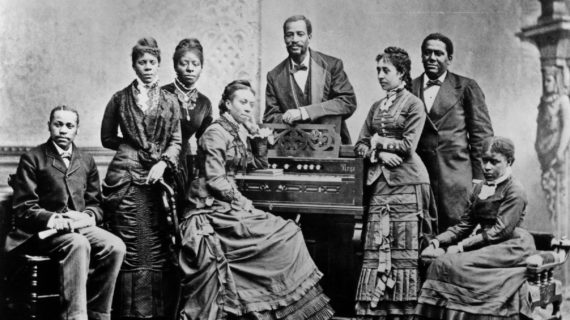
Other African Americans in the late 19th century took pictures for the same reasons to keep a record of what theyd achieved in the short time since Emancipation.
For families that just decades earlier were regularly torn apart by chattel slavery, being photographed together was proof of their resilience.
In these images, they could authentically reflect their own lives, unlike the caricatures that robbed them of their humanity.
While Manly never again owned a newspaper, he continued fighting for the dignity of African Americans.
The negro is passing through a crucial part of his history, Alex said in a speech after his close brush with death.
And still he will sing My Country, Tis of Thee. To learn more watch American Coup, Wilmington, 1898 from American Experience.


 Passport
















Follow Us