

 Passport






The Eugenics Crusade
10/16/18 | 1h 53m 12s | Rating: NR
The Eugenics Crusade tells the story of the unlikely –– and largely unknown –– campaign to breed a “better” American race, tracing the rise of the movement that turned the fledgling science of heredity into a powerful instrument of social control.


Copy and Paste the Following Code to Embed this Video:
The Eugenics Crusade
NARRATOR
On August 18, 1934, 20-year-old Ann Cooper Hewitt, heiress to one of the largest fortunes in the United States, was admitted to a San Francisco hospital for an emergency appendectomy. She later learned the surgeons not only had removed her appendix, but also a length of her fallopian tubes - rendering her incapable of ever becoming pregnant. The story of the "sterilized heiress" hit the papers just after the New Year in 1936, when Ann filed a half- million-dollar damage claim against the surgeons and her own mother for sterilizing her without her knowledge or consent. Ann's mother denied any wrongdoing. She'd done what she'd done for "society's sake," she insisted, because her daughter was "feebleminded." It was the sort of bizarre, high-society scandal that would have captured the national imagination under any circumstances. But that one word, "feebleminded," struck a familiar chord for Americans and linked Ann's plight to a decades-old campaign to control human reproduction, known as eugenics.
MAN (on newsreel)
What is the bearing of the laws of heredity upon human affairs? Eugenics provides the answer.
PAUL LOMBARDO
Eugenics was proposed as the scientific solution for social problems. It was a combination of hope and aspiration on one side and on the other side, it was about fear, and in some cases about hate.
MAN 2 (on newsreel)
They are identified early, categorized feebleminded, imbecile, idiot.
MAN (on newsreel)
It would have been better by far if they had never been born. (crowd pledging in German)
DANIEL KEVLES
People tend to think that eugenics was a doctrine that originated with the Nazis, that it was grounded in wild claims that were far outside the scientific mainstream. Both of those impressions are fundamentally not true.
ADAM COHEN
It was almost a mania that sort of swept through the country. And there was that kind of nave, optimistic vision of eugenics, like, "Hey, let's all get together and make better people."
ALEXANDRA STERN
The eugenics movement was about having healthy children, about having a stronger society. There's nothing wrong with that. You have to look at the underbelly of what was implemented in the name of eugenics to see what was so problematic about it. (ship horn blaring) (horses whinnying, hooves clomping) (ship horn blaring)
NARRATOR
In the fall of 1902, an American biologist named Charles Benedict Davenport arrived in London on a sort of pilgrimage. He was 36, Harvard-educated, and like many biologists of his generation, absorbed with the study of evolution. He'd been traveling in Europe with his wife, collecting seashells for research on species variation,
but this was to be the highlight of the trip
a meeting with the world- renowned gentleman scientist Sir Francis Galton. A pioneering statistician,
Galton had lived his 80 years by a single motto
"Whenever you can, count." His obsession with measurements and patterns had led him to create the world's first weather maps, establish fingerprinting as a means of identification, and set data-backed parameters for the perfect cup of tea.
Charles Davenport had come to discuss another matter
Galton's work on heredity.
SIDDHARTHA MUKHERJEE
Francis Galton was a great quantifier. He liked to quantify height, hair color. You know, what is the chest size of an average man? What is the thigh length of an average man? Even things like intelligence.
JONATHAN SPIRO
Galton had a theory that talent, as he called it-- what we would call intelligence-- seemed to run in families. And so it quickly occurred to him, "If we can get people with high talent "to mate with each other, "prevent people with low talent from mating with each other, "we will, within a few generations, create this race of supermen."
NATHANIEL COMFORT
Francis Galton was borrowing ideas and kind of riffing off of the work of his half-cousin, Charles Darwin.
KEITH WAILOO
Darwin believed that evolution was this natural process that was inevitably leading towards what they called the "survival of the fittest." Galton really turns that idea on its head and says, "You know, natural selection isn't working very well. "We need to do a form of selection. We need to intervene."
NARRATOR
To name the effort, Galton had coined the term "eugenics" - a hybrid derived from two Greek words meaning "well" and "born." Charles Davenport believed, as Galton did, that selective breeding could transform the human race. What was needed was a scientific understanding of how heredity actually worked-- and over dinner at Galton's home, Davenport declared his intention to get to the bottom of it.
COMFORT
Davenport said, "I'm going to create a new kind of institution, "a station for experimental evolution, "not Darwinian natural selection "that you just go out and observe, "but can we figure out how inheritance works, "can we do experiments and find the patterns of heredity?" (ship horn blaring)
NARRATOR
When Davenport sailed for home in December 1902, he carried with him not only a letter of recommendation signed by Galton, but also, he later wrote, "a renewed courage for the study of evolution."
THOMAS LEONARD
Davenport and Galton really did imagine that the idea of improving human heredity was of almost religious significance, of profound moral importance. They also believed they were qualified to breed a better race, because they believed that they were the best and the brightest. (clucking)
NARRATOR
Scarcely more than a year later, with funding from the Carnegie Institution, Davenport opened his research station on the north shore of Long Island, at Cold Spring Harbor. Situated on ten acres along Oyster Bay, the place had been purpose-built for the breeding and analyzing of plants and animals-- complete with sprawling garden plots, an aviary, and a half-dozen tidy enclosures housing chickens, goats, and sheep. By mating organisms with unusual characteristics-- a tailless Manx cat or a rooster with a black comb-- and then studying their offspring, generation after generation, Davenport hoped to unlock the mystery of evolution.
COMFORT
Davenport wasn't yet thinking much about humans. He was just absorbing all these different theories of heredity and trying to figure out which ones applied when and under what conditions.
NARRATOR
After scores of experiments,
one theory seemed to stand out from the rest
the recently discovered work of an Austrian monk named Gregor Mendel, who'd spent a decade in the mid-19th century experimenting with peas.
LOMBARDO
Mendel learned that there was a pattern to how pea plants passed down certain traits. And you could come up with certain ratios to predict how likely it was that a pea plant would look one way or another.
SPIRO
Davenport took that and ran with it. He goes about breeding all kinds of animals, looking for the Mendelian ratio, and in trait after trait, he seems to find the Mendelian ratio.
COHEN
Suddenly, they're beginning to see a mathematical, scientific explanation for things that had been merely conjectural before. It's becoming obvious that in fact there are these things called genes. These units are being transmitted from parents to their offspring, and they're giving rise to physical traits.
NARRATOR
By 1906, the work at Cold Spring Harbor had caught the attention of the press-- and established Charles Davenport as a rising star in the new science of genetics. Thanks to Mendel's laws of heredity, Davenport told one reporter, agricultural breeders could now precisely select for desirable traits-- to develop a strain of protein-rich wheat or a chicken that laid more eggs. The same methods would one day lead, he predicted, to a "rapid and thoroughgoing improvement of the human race."
KEVLES
Davenport was tantalized by the possibility that you could take charge of human evolution. And then along comes Mendelian genetics, which seems to offer a very powerful tool. So extrapolating from the work that the breeders were doing in animals to the breeding of better human beings was a natural step.
NARRATOR
In 1909, Davenport informed his funder, the Carnegie Institution, that he'd shifted his focus from the breeding of cats and roosters to an investigation of human traits. Having already found the Mendelian ratio in early studies of eye color and hair color-- and convinced he was on the right track-- he now began to collect data on a wide range of other human characteristics. He sent out a family history questionnaire to hundreds of individuals and solicited prisons, hospitals, and educational institutions for their records.
SPIRO
You can't really do breeding experiments with human beings. Aside from the ethics, you just can't live long enough to see generations and generations. So it was Davenport's genius to realize if he could collect family pedigrees, he could trace family inheritances and try to prove that evolution works for human beings the way it works for animals.
NARRATOR
Davenport's plan was to analyze the pedigree charts for Mendelian patterns-- and to identify the desirable traits human beings might encourage through careful breeding-- and the undesirable ones they could breed out. (horse whinnying)
LOMBARDO
"Wouldn't it be a better world "if we could wipe out poverty? "Wouldn't it be a better world if we didn't have criminals? "Wouldn't it be a better world "if everyone behaved themselves? "And if the reason we have poverty and crime "is something that's determined by our genes, "if we can change that and make it "so that the people who have those bad traits "don't pass them down, wouldn't that be a better world?" (whistle blowing) (machinery clanking)
NARRATOR
Among Americans of Charles Davenport's class and generation, there was perhaps no word that had more currency at the turn of the century than improvement. They had come of age in the midst of a revolution-- a seismic shift that had made the United States the most prosperous and powerful nation on Earth-- and, in the eyes of many, had simultaneously plunged it into chaos.
SPIRO
It's the beginning of the 20th century, and we have rampant urbanization, rampant industrialization, rampant immigration. The old order is passing, and wherever you look, society seems to be deteriorating.
NARRATOR
More and more farms were giving way to factories, and the cities were overrun with newcomers, many from the countryside, many hundreds of thousands more from abroad.
COMFORT
There was impure water, and the schools were awful, and the disease was rampant, and immigrants were pouring in.
KEVLES
People were apprehensive about rapid change, about the kinds of people you saw on the streets-- slums, crime, alcoholism, prostitution. Native white Protestants felt that they were losing control of American society.
NARRATOR
Determined not only to meet the new challenges, but to master them, a veritable army of educated, middle- and upper-middle-class Americans had launched a crusade to remake society-- to eliminate corruption, stamp out disease and vice, assimilate the immigrant, and uplift the poor-- all in the name of progress.
LEONARD
The world had never seen invention as powerful and remarkable and as influential as the last three decades of the 19th century. This fueled an already existing American optimism about what can be improved and it directed it into a particular track, which was scientific improvement.
COMFORT
There was a great belief in science. There was a great belief in government, in bureaucracy as a tool for solving social problems, and also a belief in collectivism, that the population needs to work together to improve society.
CHRISTINE ROSEN
The progressive movement said, "We can use state power and expert advice and knowledge "to solve things like poverty, to solve things like alcoholism." So that was an incredibly hopeful and optimistic idea. Eugenics was part of that. (birds crowing)
NARRATOR
When the letter from Charles Davenport arrived in 1909 at New Jersey's Vineland Training School for the Feebleminded, the staff hadn't known quite what to make of it-- a mere two-line note requesting hereditary information, one of hundreds Davenport had sent.
COMFORT
Davenport investigated any and all traits-- eye color, weight, mood, habit, temperament, diseases-- anything. And then he finds this psychologist in New Jersey, and he begins to zero in on low intelligence, something known as feeblemindedness.
NARRATOR
Psychologist Henry Goddard, Vineland's director of research, had no family histories to share. But what he lacked in data, he more than made up for with enthusiasm. Not only was Goddard interested in the new science of heredity, he asked Davenport to guide him in making his own study of feeblemindedness.
LOMBARDO
Like lots of people who are working in institutions, doctors or social workers, Henry Goddard was interested in identifying the kinds of conditions that were passed down in heredity and preventing them.
NARRATOR
Henry Goddard was 42 and a one-time teacher in Quaker schools. It was, in part, an interest in education that had brought him to Vineland in 1906. He'd spent the three years since trying to parse the many varieties of feeblemindedness, an all-too-common mental deficiency associated with anti-social behavior. Some of Vineland's 300 inmates were violent or deranged, others unruly, still others merely slow. Hoping to improve their individual care and training, Goddard had pioneered the use of an "intelligence test," which purported to measure a person's mental abilities in relation to that of so-called normal people of the same age. The scores enabled him to sort his charges into categories. To the existing classifications of "idiot" and "imbecile," which long had been used to describe debilitating mental impairment, Goddard had added a third - a higher-functioning group he called "morons."
WENDY KLINE
That was actually a diagnostic term and not just an insult. Henry Goddard argued the high-grade moron is high-functioning enough to act normal, but they're kind of stuck in this evolutionary phase, and they don't emerge as true adults. What's missing is moral judgment. So Goddard constructs that term, "moron," and "mental deficiency" and "immorality" become basically interchangeable.
NARRATOR
Now, with Davenport's tutoring, Goddard began to survey the family histories of 35 of his students at Vineland. What he found made him an instant believer in eugenics. Not only did morons seem clearly to pass on their feeblemindedness to their offspring, their family trees often were rife with alcoholics, prostitutes, criminals, and paupers. As Goddard put it to the New Jersey State Conference of Charities and Corrections in 1910, "Feeblemindedness is at the root "of probably two-thirds of the problems that you have before you." The cause was "defective ancestry."
COMFORT
Henry Goddard puts forward this idea that if you got rid of feeblemindedness, you would get rid of all of these problems, or at least greatly reduce them. And we love explanations like that. It's so simple. "Oh, it's just feeblemindedness so let's, you know, that's the fix."
NARRATOR
Goddard reasoned that if the test he'd devised to better care for the feebleminded instead were used to identify them, the contagion could be halted-- and future generations spared the scourges of mental deficiency.
ROSEN
Henry Goddard said, "You know, it takes an expert "to identify the true menace of feeblemindedness. "So someone you're sitting next to "at a restaurant or in a theater "could look perfectly normal to you, "and it only takes one feebleminded person "marrying another one, "even someone who's not feebleminded, to create generations of feeblemindedness." What it did is up the stakes of feeblemindedness by claiming that it was a hidden menace that was more difficult to pinpoint than people might think.
NARRATOR
By early 1910, Charles Davenport was convinced that certain human traits were passed down in a predictable way and that American society could be dramatically improved if only reproduction were controlled. Anxious to spread the word, he began to lay plans for a new institution dedicated to eugenic research and education. (carriages rattling, trolley bells ringing) In February, in search of a patron, Davenport traveled to New York to lunch with Mrs. E.H. Harriman, widow of a recently deceased railroad magnate.
ROSEN
Davenport's pitch to Mrs. Harriman was to say, "Right now you give your money "to all kinds of good organizations. "They feed the poor, they clothe the poor. "They do many wonderful things, but it's never-ending. "With eugenics, "we eventually won't need your philanthropy and charity, "because we'll solve the problems that right now you're just throwing money at." He persuaded Mrs. Harriman that the future of the country was at stake and that only a eugenic project could save it.
SPIRO
Charles Davenport says, "All you people who think that if we just educate the poor, "if we just give them charity, "if we just reform their environment, "even the poor can rise to our level, "forget about it. "That's just sentimental hogwash. "It's not the environment that makes you what you are. "It's your genetic inheritance from your parents. "So now, yes, let's regulate the matings of human beings, "eliminate the bad genes from the population, and keep the fittest genes in the gene pool."
WAILOO
By limiting the birth of people who were deemed to be unfit, you were by definition enhancing the stock of human society. And so there was this social mission of really fighting dependency, fighting crime, through eugenics. The idea was that eugenics would solve all of these broader social problems if enacted in a robust way.
NARRATOR
Mrs. Harriman was a great believer in the importance of proper matings. She credited her late husband's interest in horse-breeding for that, and she enthusiastically pledged to finance Davenport's eugenic enterprise. It was, Davenport later wrote in his journal, "a red letter day for humanity."
MUKHERJEE
The impulse to perfect humanity is an ancient aspiration. The idea that, somehow or the other, that you can get the best humans by selectively breeding the best, most fit, hardiest, most beautiful-- it's an ancient desire. You find it in Sanskrit texts. You find it in Greek texts. The trouble is that only some human beings can dictate or decide what those... what the correct features might be. Who decides?
SPIRO
Charles Davenport thought, "By breeding a superior race of people, we can bring about the millennial kingdom on Earth."
COMFORT
The problem with utopias is that they set a set of aspirations that then blind you to a certain set of consequences. And that can be dangerous. (birds chirping)
NARRATOR
In October 1910, on a 80-acre plot adjacent to the Cold Spring Harbor campus, Charles Davenport opened the doors of his new institute.
It was a modest structure built for a grand purpose
to house hereditary information on American families and use it to guide the reproductive choices of the nation. He called it the Eugenics Record Office.
COMFORT
Eugenic ideas were very much floating around as early as 1880. But Davenport gave eugenics teeth. He was institutionalizing eugenics. He was marshaling people around a research program.
NARRATOR
Davenport already had assembled a prestigious board of scientific directors, among them prominent scientists, physicians, and famed inventor Alexander Graham Bell. Day-to-day operations, meanwhile, would be overseen by Harry Laughlin, a high school superintendent from the Midwest with a lifelong passion for poultry breeding.
ROSEN
Laughlin was a very zealous proponent of eugenics, and in that sense, he got along well with Davenport. They both believed in the mission, they believed in the cause.
COHEN
For Davenport, a lot of it was about what you could do in the laboratory and how you can analyze the data. For Laughlin, a lot of it was about, "Well, how are we going to get out there in the world and change the direction of history?"
NARRATOR
To gather new disciples to the cause-- and to aid in the collection of data-- Laughlin and Davenport launched an academic program, which offered training in eugenic field-research techniques. Over the course of six weeks each summer, recent college graduates-- from Vassar, Harvard, Oberlin-- were taught how to investigate family histories; how to conduct interviews and make eugenically useful measurements; and how to chart family pedigrees and analyze them. Then, at a salary of $75 a month, came a year's work in the field. Armed with the official Trait Book, which assigned numerical codes to a broad spectrum of human characteristics,
the newly minted researchers fanned out
to study delinquents in the Juvenile Psychopathic Institute of Chicago; the insane at the New Jersey State Hospital at Matawan; albinos in Massachusetts; circus families at Coney Island; the Amish in Pennsylvania.
COHEN
They would go into some holler in Virginia and find some family that seemed to have a lot of alcoholics and criminals, and, you know, other ne'er-do-wells, and they would go, "Aha. We've found a family with terrible genes." And they'd interview someone, and they'd say, "Oh, yeah, you know, "John seems a little slow, but I knew his uncle, and his uncle was a big drunk." And they'd write that down, "Uncle a big drunk." So they would come back with all this evidence of the way in which human traits were inherited.
KEVLES
Of course the reliability of the data was not questioned, even though it was based on interpretation, impression, recollection by the living members of the family with whom they spoke. No checking.
NARRATOR
Year by year-- as trainees rotated out of the summer program and into positions at universities, hospitals, and mental institutions-- Davenport's assumptions and methods of fieldwork gained currency all across the country. And year by year, the data accumulated. Stored in fireproof cabinets and intricately indexed, it comprised, as "Scientific American" noted, "A sort of inventory of the blood of the community" and supplied grist for a multitude of books, pamphlets, lectures, and press releases regarding the danger of so-called "inferior germ-plasm."
SPIRO
They're using the family records that are stored in the fireproof vault to prove that all these traits, not just physical but mental traits, moral traits, are caused by genes. There's nothing you can do about it. This is cold, hard, pure science.
NARRATOR
"Just as we have strains of scholars, of military men," Davenport told "The New York Times," "we have strains of paupers, of sex offenders... "strains with strong tendencies toward larceny, "assault, lying, running away... The cost to society of these strains is enormous."
WAILOO
Davenport took this basic idea, applied it far more widely than it had ever been before, and really promoted this probabilistic idea as if it were a deterministic one. That is to say, it's not just likelihoods, but in some ways, we're dealing with certainties. And that idea really sold.
NARRATOR
By the time the Eugenics Record Office issued its first official report in 1913, many Americans had begun to see the wisdom in eugenics. "I agree with you that society has no business to permit degenerates to reproduce their kind," former president Theodore Roosevelt wrote Davenport that year. "It is really extraordinary that our people refuse "to apply to human beings such knowledge "as every successful farmer is obliged to apply to his own stock breeding."
LEONARD
If you're going to be in the business of breeding, you're going to have to convince thought leaders and politicians, most especially the government, to begin a kind of unprecedented program. So they understood from the beginning that they needed to persuade those who were in a position to do something about it that it was possible, indeed, desirable.
COMFORT
The eugenicists thought that people's base interests are just self-serving, selfish, right? And if you just leave them to themselves, they're going to evolve in all these random, dumb directions.
NARRATOR
The Eugenics Record Office recommended both widespread eugenic education
and aggressive government intervention
laws that would keep defectives out of the country, prohibit them from marrying, and prevent them from becoming parents by segregating them in asylums throughout their reproductive years. Also recommended was a new and somewhat controversial surgical procedure known as sterilization. By cutting and sealing organs involved in reproduction, both men and women could be made infertile. So far, the technique had been used primarily on criminals-- particularly sex offenders-- and it was thought to have a curative effect.
Harry Laughlin envisioned a broader application
as a eugenic tool that would eliminate defective germ-plasm once and for all.
COHEN
Harry Laughlin really has this political vision of what we can do with eugenics. And he said, "In order for eugenic sterilization "to really do what had to be done, 15 million Americans would have to go under the knife." The idea was that eugenics was for the common good and by implementing the science of heredity, they could protect America and strengthen America.
KEVLES
They thought of it as the beginning of a revolution, of a religious movement. You have to start with a few converts, and then you try to grow it into a bigger movement. All that seemed exciting and full of possibility, and they were going to create a new world.
NARRATOR
The eugenics movement that Charles Davenport had launched rested on Mendel's laws of inheritance, which assumed each trait was governed by one gene and was passed down in predictable patterns. But for all of Davenport's certainty about the gene, there remained open questions-- about the gene's physical properties and its location within the cell, and the means by which it accomplished its function. All over the world, scientists looked to fast-breeding organisms in search of clues. Some focused their experiments on the sea urchin, which turned out a new generation each year; others on the even speedier meal worm, with its larva-to-larva cycle of four months. For zoologist Thomas Hunt Morgan, the organism of choice was the fruit fly, which was capable of reproducing in just ten days.
MUKHERJEE
The organism breeds so quickly that Morgan is able to see things that the eugenicists cannot, because he's watching mutations move across multiple generations.
NARRATOR
By 1913, Morgan had been studying fruit flies for so long that his laboratory at Columbia University was known simply as "the Fly Room," and his assistants "the Fly Boys." For nearly a decade, they'd been holed up there, on the sixth floor of Schermerhorn Hall, breeding flies in half-pint milk bottles pilfered from the campus cafeteria. Thousands upon thousands of mutants were crossed
and the results meticulously recorded
white-eyed, bristled, red-eyed, short-winged. When the data was collated,
Morgan made a startling discovery
the mechanism of heredity in flies was far more complex than in Mendel's peas.
MUKHERJEE
Gregor Mendel thought that every gene was its own unique, discrete entity. Morgan showed that, in fact, that's not the case. That, in fact, genes live, genes have a physical entity. They live in chromosomes. Because they live in chromosomes, often they travel in packs. Morgan's work complicates the idea of simple eugenics, because you don't just pick one thing out of one drawer, a second thing out of another drawer, until you get your ideal child. It's not so easy to pick and choose what your next generation might be.
ALONDRA NELSON
It makes sense in pea plants, it makes sense in cattle, it should make sense in humans, but there were no experiments that really could support Davenport's theory.
NARRATOR
Thomas Hunt Morgan was a believer in the transformative power of eugenics. He had served on the board at the Eugenics Record Office since it opened. But based on the lessons he'd learned in the Fly Room, it seemed clear that eugenic science, such as it was, had no business informing American laws. "If the eugenicists want to do this sort of thing, well and good," Morgan wrote a friend, "but I think it is just as well "for some of us to set a better standard and not appear as participators in the show."
LOMBARDO
Morgan writes a letter saying, "I'm going to ask to be taken off this letterhead. "I study fruit flies, "and I can't figure out how their eyes work. "I can't figure out which one's going "to inherit certain kinds of wings, "and you seem to be saying you can understand "who's going to inherit something as vague as criminality or pauperism." So he backed away, but privately.
NARRATOR
Morgan's withdrawal from the Record Office was regrettable; but Davenport was undeterred. At this point, the eugenics movement would not be stalled by the minutiae of science.
MUKHERJEE
What genes are is a great biological and biochemical question. But there's kind of a Yankee practicality
about eugenics
"Let's get this job done." And so they move right along. (marching band playing, crowd cheering)
NARRATOR
When the Panama-Pacific International Exposition opened in San Francisco on the morning of February 20, 1915, 100,000 people streamed through its turnstiles. Over the next nine months, the number would reach more than 18 million. Billed as "an encyclopedia of modern achievement," the fair offered a dizzying array
of diversions and curiosities
a 23-minute ride over a functioning replica of the recently completed Panama Canal; an assembly line that turned out 18 Model Ts a day; a 57-tier tower built entirely of Heinz condiment products.
STERN
The Panama-Pacific Expo was a celebration of science, efficiency, engineering. It was an opportunity for the United States to demonstrate the power of science and technology, and also a utopian vision looking towards the future.
NARRATOR
Nowhere did the future look brighter than from the Race Betterment Exhibit. Housed in the Palace of Education, the display featured imposing plaster casts of Atlas, Venus, and Apollo; a collection of medical instruments used to gauge human biological capacity; and a welter of charts, graphs, and lists that outlined the way eugenics would better the human race. All of it was the work of Dr. John Harvey Kellogg, a fierce proponent of what he called, "biologic living."
COMFORT
John Harvey Kellogg was an incredibly energetic man. He was a health reformer, and a physician, and an amazing entrepreneur. And he developed all these regimens and invented different medical instruments, had a whole dietary plan.
SPIRO
He was obsessed with cleanliness, with purity, and he believed that the key to reforming society is to cleanse our bowels on a regular basis. He invents something called Corn Flakes to help cleanse your bowels. And he had a spa in Battle Creek, Michigan. Lots of eugenicists came to the Battle Creek Sanatorium to have their bowels cleansed and to talk about eugenics.
ROSEN
For Kellogg, eugenics made perfect sense. It was about health. He linked these views about heredity, which were difficult to change, with these ideas about what human beings can do to improve themselves.
LEONARD
John Harvey Kellogg believed that the environment can affect the gene, that consuming alcohol or consuming meat could lead to genetic inferiority in offspring. So there was more than one way to improve heredity.
NARRATOR
At the Expo, Kellogg sought to usher his brand of eugenics onto the national stage. With assistance from Charles Davenport-- who had supplied him with both data and contacts-- Kellogg had organized not only the Race Betterment Exhibit, but also a major eugenics conference at the fair. (murmuring) The turnout exceeded expectation, drawing reform-minded medical professionals, university presidents, conservationists, and business leaders from all over the country and across the political spectrum.
LOMBARDO
Eugenics had a little bit of something for everyone. So if you're a social hygienist, you're interested in wiping out prostitution, eugenics is interested in that, too. If you're a prohibitionist, and you want to get rid of alcohol, because alcohol breaks up families, it makes men unemployable-- eugenics wants to get rid of all those things, too. So it manages to match up with the concerns of many other different kinds of reforms.
WAILOO
What led people to get behind the eugenics campaign wasn't just their ardent belief in the science or in heredity. It was a fundamentally broad and sweeping social and political agenda to try to recreate society, one might say, in their own image.
KEVLES
They're almost all white, they're almost all Protestant, middle-to-upper-middle class, and they tended to equate human worth with the qualities that they themselves possessed.
NARRATOR
Over five days in August, the 60-odd conference delegates delivered talks on everything from proper toothbrushing to eugenic sterilization. "Unless we weed out the weaklings," one speaker warned, "we will reach a point "where many of those born and helped to survive will be a burden to the race." All told, the Race Betterment Conference drew an estimated 10,000 people and generated more than a million lines of press. "Your efforts on behalf of eugenics are certainly beginning to bear fruit," Kellogg told Charles Davenport. "The public is beginning to understand better and appreciate more." The Panama-Pacific Expo was really a defining moment for the American eugenics movement. The eugenics movement was coalescing. It was solidifying.
COHEN
These elites are all saying, "Yes, you know, we believe in progress, and this is progress." Eugenics gave them a way to view the world and to say, "Okay, you know, "all these vague anxieties I have about the present and particularly the future, this is what the problem is. Well, let's get to work on solving that."
NARRATOR
In May 1917, as new converts spread the eugenic creed in cities and towns across America, a half-dozen psychologists gathered at the Vineland Training School for the Feebleminded to meet with Henry Goddard, by now considered the nation's leading expert on mental deficiency. His groundbreaking 1912 study, "The Kallikak Family," had awakened the public to the menace of the feebleminded, with its true-life tale of an old-stock American, a feebleminded tavern girl, and a fateful tryst that over several generations had spawned more than a hundred mental defectives, among them one of Goddard's own patients at Vineland, a girl he'd diagnosed as a moron.
SPIRO
"The Kallikak Family" was a huge best seller for many, many years. References to the Kallikaks were in the speeches of politicians, books, scholarly journals, popular magazines. Everyone knew what the Kallikaks meant. "You have to watch out who you mate with "or your descendants could turn out to be feebleminded, criminals, alcoholics, and so forth."
NARRATOR
Goddard was eager to demonstrate the value of intelligence testing as a diagnostic tool-- and he'd spent the years since his book's publication administering tests to scores of institutional inmates, immigrants, school children. Now, with his colleagues, he designed a program to carry out intelligence testing on a mass scale. Just seven weeks earlier, the United States had plunged into the First World War-- and the draft ultimately would swell the Army's ranks by nearly three million men. The aim of the testing program was to classify them for service and to identify the mental defectives lurking among them. They began in late September 1917 at Camp Lee and Camp Taylor, Camp Devens, and Camp Dix. First, new recruits were sorted according to their level of literacy and then administered one of two tests.
KEVLES
They had one test called the Alpha Test for draftees who were literate in English and another called the Beta Test for draftees who were not literate in English or illiterate completely. One of the questions on the Alpha Test was, "The Knight engine is used in the Ford, the Pierce-Arrow, or the Lozier car?" Now, tell me, is that known to you?
NARRATOR
While the literate testers puzzled over multiple-choice questions, the others attempted to draw their way out of mazes and sketch in the missing bits of simple pictures. One Sicilian recruit, a Catholic, considered an image of a house and drew a crucifix where a chimney might be. He was marked wrong. "It was touching to see the intense effort put into answering the questions," an Army examiner later recalled, "often by men who never before had held a pencil in their hands."
KEVLES
The tests were by no means measures of intelligence, whatever that may mean. How well you did on them depended upon your degree of education, how many years you'd been in school, and also how attuned you were with middle-class culture.
NARRATOR
Administered to 1.7 million Army personnel over the course of the conflict-- officers and enlisted men, black soldiers as well as white-- the tests led to a shocking conclusion. Roughly half of the draftees were considered to be morons.
LOMBARDO
The Army's experience became a headline, "America is degenerating. We have to somehow interrupt this swamp of defect."
COHEN
There was a movement to institutionalize more people at this time, driven by eugenics. You can see how an IQ test can really grease the wheels. If you're going to start moving people into institutions, if you're going to start sterilizing them and all that, you need some numbers, and the IQ test provided that.
NARRATOR
By 1919, intelligence testing was a full-fledged craze. An adapted version of the Army test, the National Intelligence Test, sold half a million copies in one year. Businesses administered mental tests to prospective employees; schools and universities evaluated their students; and ever more paupers, prostitutes, drunkards, and delinquents found themselves suddenly with pencil in hand.
COHEN
Feeblemindedness was a big fear in that era. There was a thought that there were a lot of these people out there who were deficient, who were morons, and they were not only out there, they were reproducing much more rapidly than other people.
MUKHERJEE
The trouble is that in practice the word "moron" could be anyone who was not part of the, you know, the so-called social norm. So the word "moron" begins as a scientific attempt to classify intelligence, but very soon becomes usable as a means of social control.
NARRATOR
By 1920, the vast majority of those committed to institutions for the feebleminded were classified as morons.
COHEN
To some extent, humanity's always been about othering and about, you know, "There's us, and there's the other." The eugenics movement really gave this scientific, you know, punch to this idea that, "There are us, and there are the others, "and we're the right people. "We're the people that it's important "not only to favor now, but we're the people who have to own the future." Suddenly eugenics comes along and gives them a scientific basis for believing that.
LEONARD
Eugenics is easy to accept, because it preserves existing hierarchies. It doesn't seek to overturn them. What it did was lend new weight to established hierarchies.
LOMBARDO
I don't think there has ever been a time when people didn't think that some people simply better than others. The eugenics movement, like a chameleon, took on the colors of those attitudes which existed before the word "eugenics" was coined and certainly exist today. (whistle blowing)
NARRATOR
They'd been swarming the ports of entry since 1890-- as many as a million of them a year, in flight from poverty and oppression, lured by the promise of equality and opportunity. The Great War had staunched the flow; but with the armistice, the tap had been opened once more. By 1920, some 75,000 new immigrants were landing at Ellis Island each month. That May, at Cold Spring Harbor,
Charles Davenport penned a letter to a friend
"Can we build a wall high enough around this country," he wondered, "so as to keep out these cheaper races?"
COHEN
Charles Davenport was born into a very fancy, old-stock family. So he was someone brought up to believe that family mattered and that, you know, good qualities ran in good families like his.
ROSEN
Charles Davenport was very focused on wanting to maintain the traditional American stock. And he wasn't alone in that. There was this fear that the right sort of American wasn't having enough children. And the race as it existed was being diluted and polluted by incoming waves of immigrants.
SPIRO
Most immigrants used to come from Northern and Western Europe, from the British Isles, from Germany. And then all of a sudden in the 1890s, immigrants started coming here from Eastern Europe, from Southern Europe. These are Catholics, these are Jews, these are peasants. And Davenport feels correctly that his race is losing the demographic game.
NARRATOR
On the receiving end of Davenport's letter was Madison Grant, a zealous convert to the eugenics cause with a sterling American pedigree and an abiding preoccupation with endangered species.
SPIRO
Madison Grant was a very wealthy lawyer. His ancestors are traced back to the original Puritan founders of the United States. Some of his ancestors signed the Declaration of Independence. He was a committed conservationist. He saved the redwoods from extinction. At some point he realized, "I'm spending all my time and effort "trying to save our nation's flora and fauna while my own race is dying out." When Madison Grant walks out the door of his Wall Street law office, he is accosted by thousands of foreign-speaking peasants. They don't know and they don't care that Madison Grant's ancestors signed the Declaration of Independence, and he is offended.
NARRATOR
Grant had sounded the alarm for old-stock Americans in 1916 with "The Passing of the Great Race," a 476-page elegy for what he called "The white man par excellence."
STERN
His vision is one of America as a country wrought by great men who ventured from Europe, and an America that is facing an onslaught from the undesirable hordes from most of the rest of the world.
SPIRO
He invents this race called the Nordics, this tall, blond-haired, blue-eyed race. According to Grant, the Nordics are the most recently evolved of all the races. That means their genetic traits are still fragile. They're not fully formed. And so if a blond-haired, blue-eyed Nordic mates with a more primitive race-- a Mediterranean, a Jew, certainly a Negro or an Asiatic-- the more primitive genes of the inferior race will actually overwhelm the superior but not yet stable genes of the Nordics.
COHEN
So this is a threat, and a threat not just, you know, "Hey, I look around the city, and it looks a little different." This is a genetic invasion.
NARRATOR
As Grant saw it, the threat from the Negro race was mostly neutralized by laws already on the books in many states that forbid marriage between blacks and whites. The threat posed by the foreign-born, however, was at once more insidious and more pressing. "We Americans must realize "that the altruistic ideals and the maudlin sentimentalism "that has made America 'an asylum for the oppressed' are sweeping the nation toward a racial abyss," Grant declared. "This generation must completely repudiate "the proud boast of our fathers "that they acknowledged no distinction "in 'race, creed, or color,' "or else turn the page of history and write,'Finis Americae.'"
SPIRO
Madison Grant takes eugenics, which had hitherto been concerned only with survival of the fittest individual, and he says, "We need to be concerned "with the survival of the fittest race. We need to preserve the Nordic race."
NARRATOR
Grant's mission in 1920 was to rally his fellow eugenicists and convince the federal government to drastically reduce immigration. He began with a charm offensive directed at Congressman Albert Johnson, the chairman of the House Committee on Immigration and Naturalization, inviting Johnson to New York, plying him with whiskey and cigars, and gradually persuading him of the urgent need for eugenics. Once Johnson was in the fold, Grant suggested he bring Harry Laughlin, the superintendent of the Eugenics Record Office, to Washington, DC, to testify on the so-called "biological aspects of immigration." Johnson was so impressed with the presentation, he named Laughlin "expert eugenics agent" and commissioned him to make a study of the foreign-born. In the meantime-- amid a rising anti-immigrant clamor from labor unions, social workers, conservationists-- Congress curbed the influx with the Emergency Quota Act of 1921.
SPIRO
This was supposedly a one-year temporary measure. But in 1922, the bill is renewed for another two years, and that gave Madison Grant and the eugenicists time to launch a massive propaganda campaign convincing Americans that immigration restriction must be permanent.
NARRATOR
In September 1921, at New York's American Museum of Natural History, Grant convened an international eugenics congress to whip up support for the cause. Organized in tandem with Charles Davenport, the weeklong event drew some 300 delegates from 28 foreign countries. Numerous members of the Senate and House immigration committees were in attendance, as was actress Lillian Russell-- who now informed her legions of fans that the American melting pot was a catastrophe. "If we don't put up the bars and make them higher and stronger," she warned, "there no longer will be an America for Americans."
SPIRO
There are all kinds of exhibits at the Congress showing that Negro fetuses have smaller skulls, Italians have a higher level of criminality than other people. And at the end of the Congress, the exhibits are packed up and shipped to Washington, DC, where they are prominently displayed in the committee rooms so that congressmen could not help but, consciously or not, imbibe all the latest scientific findings of eugenics.
NARRATOR
But it was Harry Laughlin's return to Capitol Hill-- and the reports on his study-- that convinced many on the House committee of the perils of unchecked immigration.
COHEN
He had numbers that purported to show that rates of insanity were different among immigrants from different countries, that certain nationalities were much more likely to have their immigrants become prison inmates. And he also argued that just biologically, because we were largely a Nordic, Northern European country, it was harder to assimilate immigrants from other parts of the world.
NARRATOR
Citing data from the Army intelligence tests, Laughlin claimed that foreign-born whites-- and in particular Jews-- were intellectually inferior to native-born Americans and therefore likely, over time, to diminish the intelligence of the nation.
SPIRO
The Jews on the immigration committee object. They claim correctly that the eugenicists have first come up with their theory that Jews are inferior and then found the data to back it up. But Congress is converted to the cause of eugenics. The "Congressional Record" is filled with congressmen reading excerpts from "The Passing of the Great Race," Madison Grant's book, on the floor of Congress. And so the restrictionists win the day, and Congress passes immigration restriction legislation.
NARRATOR
On May 26, 1924, President Calvin Coolidge signed the restriction act into law. Madison Grant hailed it as "one of the greatest steps forward in the history of this country."
LEONARD
They shut the door and reduced immigration to the United States by 97%. The door was shut, and it didn't open again for 40 years. And in a very real sense, this was a political, policy victory for eugenics.
NARRATOR
The new policy would help the nation to remain, as one congressman said on the House floor, "The
home of a great people
"English-speaking, a white race with great ideals, "the Christian religion. One race, one country, one destiny."
STERN
It was really a reversal of, you know, "Give us your tired and your huddled masses," and it sends a message that the open arms of Ellis Island are now closed.
NARRATOR
For many of those across the Atlantic who would pin their hopes on America in the years to come, the consequences would be dire.
COHEN
Congress passed this law and closed the door on Jews in Eastern Europe and Germany who were trying to flee the Nazis. Otto Frank wrote to the U.S. State Department, trying to get visas for his family. And he wrote repeatedly, and he had connections, and he was turned down, because of this law. We think about Anne Frank dying in a concentration camp because the Germans thought the Jews were genetically inferior, but to some extent, Anne Frank died in a concentration camp because the U.S. Congress believed that, as well. We believe that married people who have transmissible diseases should not have children. No couple who has the disease of feeblemindedness or insanity or epilepsy should have children. Babies should not be brought into the world when the father's income is obviously inadequate to provide for its food, clothing, or shelter.
NARRATOR
On August 5, 1926, a crowd gathered at Vassar College to hear a lecture given by Margaret Sanger, the controversial founder of the American Birth Control League. Sanger's reputation preceded her. In her dozen years as a crusader for contraception and family planning, she'd been denounced, jeered, and jailed repeatedly. Now, she'd undertaken a cross-country speaking tour intended to bolster her cause by linking it to eugenics.
LEONARD
Margaret Sanger was laser-beam-focused on promoting birth control, which she saw as a liberatory agent for women. It was a hard push, reproductive rights, contraception. Her embrace of the eugenicists was a way of getting some influential and powerful allies behind her cause.
NARRATOR
"The question of race betterment," Sanger told the Vassar audience, "is one of immediate concern. "And I am glad to say "that the government has already taken certain steps "to control the quality of our population "through the drastic immigration laws. "But while we close our gates "to the so-called 'undesirables' from other countries, "we make no attempt "to discourage or cut down the rapid multiplication of the unfit and undesirable at home."
WAILOO
Margaret Sanger is struggling to open a conversation at a time when public discussion of birth control, let alone access to birth control, was illegal. But her views are fairly persistent with regard to issues of biological inferiority. You could argue that they're strategic, but the difference is not that significant from the standpoint of those listening to her words.
KLINE
Once birth control is packaged as a way of improving the human race, it seems more manageable. And there are a lot of people that were on the fence that she convinced to embrace birth control, because of its eugenic potential. It was being labeled a birth-control activist that was truly controversial. Being a eugenicist was far more acceptable.
NARRATOR
Amid the many American enthusiasms of the 1920s-- skimpy dresses, dance marathons, mahjong-- breeding a better human race was perhaps the most unlikely. But by the middle years of the decade, the notion was everywhere. Included in the curriculum at more than 350 American colleges and universities-- among them Harvard, Northwestern, and the University of California at Berkeley-- eugenics also was preached from pulpits, promoted on lecture circuits, and appropriated to sell everything from newfangled beauty treatments to children's toys. Disseminated by a host of popularizers, and at times diluted, distorted, or both, the eugenic creed filtered down to the masses through magazine articles, advice manuals, even a movie called "Are You Fit to Marry?"
COHEN
This was really something that permeated the culture. It was really a craze. It was something people were excited about.
ROSEN
Eugenics starts to trickle into mainstream popular culture in the 1920s. And it says to individual Americans, "If you want your society to improve, "you have to marry the right person. "You have to have healthy children. "You have obligations to the human race and to your country."
NARRATOR
As one newlywed confessed
in a letter to his local eugenics society
"My wife and I are both extremely tall, "and this worries us, "as we do not wish to bring abnormally tall children into the world." (oinking) At state and county fairs across the country-- in Massachusetts, Kansas, Georgia, Texas-- a human stock contest known as "Fitter Families for Future Firesides" drew throngs. Sponsored by the American Eugenics Society, a propaganda organization run by the movement's evangelists, Harry Laughlin and Madison Grant, the competition offered a primer on eugenics, disguised as wholesome family entertainment.
ROSEN
What the American Eugenics Society realized is that if you're going to spread a message about eugenics, you have to get people involved in more than just reading something in a popular magazine.
SPIRO
Eugenics is an all-encompassing creed. It's a faith, it's a religion. Harry Laughlin and Madison Grant understood, "We need the people to be converted to this religion, "so that everyone will understand, "'If I am eugenically superior I cannot date "'and certainly cannot mate with a eugenically unfit person.'"
NARRATOR
Fitter Families contestants came from miles around, often dressed in their Sunday best, and submitted themselves to a rigorous three-hour inspection. Straight, healthy teeth earned them high marks, as did musical talent or a family history of longevity. Disease or disability-- even a lame grandmother or an epileptic uncle-- was a demerit. "While the stock judges are testing the Holsteins, Jerseys, and Whitefaces in the stock pavilion," one contest organizer said, "we are judging the Joneses, Smiths, and the Johnsons."
SPIRO
Just as they would have a contest who had bred the best cows, who had bred the best sheep, who had bred the best children. And at the end of the state fair, the eugenic winning family, the fitter family, would be driven down the midway and wave to the people and show off their ribbons.
LOMBARDO
By the 1920s, eugenics was a household word. A generation of people grows up thinking of this word as a aspiration, healthy babies, and as a warning. They've read it in school, they've heard it at church, it has become part of the consciousness of the country.
NARRATOR
So pervasive was the impulse to human improvement, even prominent African-Americans took up the theme. W.E.B. Du Bois, one of the founders of the National Association for the Advancement of Colored People, maintained that the "best" of the black race-- what he called "the Talented Tenth"-- was the hope for the future. "The Negro," Du Bois declared, "must begin to breed for brains, for efficiency, for beauty."
WAILOO
Du Bois's ideas are fundamentally about combating prejudice, but at the same time, he talked about and embraced the notion that not all blacks were equally gifted and equally talented, and that the future of African-Americans should hinge on the future procreation of the talented. Those ideas really are resonant with eugenic ideals of the time.
KLINE
Eugenics became a really powerful ideology, because it made sense to a lot of different groups who were concerned about disparate things. Part of the draw is how science can make us better human beings, that we can engineer ourselves into being even better than we are. And viewing that as a source of progress.
NELSON
The eugenics movement of the early 20th century got traction because the slogans were simple, things like, "Better babies and happy families." On the face of it, you know, better babies, healthier babies, what's not to like? It would have taken considerable effort to demonstrate to people what that simple slogan was actually hiding.
NARRATOR
In September 1924, at the Virginia Colony for the Epileptic and Feebleminded, the colony's board of directors met to discuss the case of patient 1692, a 17-year-old named Carrie Buck. She'd been admitted to the colony several months before, at the request of her foster parents, who claimed that they could no longer "control or care for her."
COHEN
Carrie Buck had been raised by a foster family, not a nice family. She is rented out to other people in the community to do house cleaning, and she's pulled out of school after fifth grade, even though she's doing very well and is a perfectly good student. Then, a nephew of her foster mother rapes her, and she gets pregnant, and they want to get rid of her.
NARRATOR
By the time her daughter was born, the state had labeled Buck "morally delinquent" for having given birth out of wedlock, diagnosed her a "middle-grade moron," and confined her to the colony.
KLINE
Sexual delinquent, sexually immoral. These terms are intentionally vague. Immoral tendency could be that a woman had been sexually abused. It could mean she was going out late at night. It could mean she's a prostitute. If you're morally deficient, that's evidence that you're mentally deficient and vice versa. So the state needs to intervene.
NARRATOR
The question before the colony's board of directors now was whether or not to sterilize Carrie Buck.
COHEN
She lands at the Colony for Epileptics and Feebleminded right when Virginia has passed a eugenic sterilization law, and the lawyer for the state hospitals really wants there to be a test before sterilizations occur. So the superintendent of the colony basically needs an inmate that he can say, "I'm going to sterilize you," have that person challenge the law, and then hopefully prevail against her. So he's looking for someone, and Carrie Buck checks a lot of boxes.
NARRATOR
From the board's perspective, the menace posed by Buck's own feeblemindedness was doubled by her lineage. Her mother, who was alleged to have engaged in prostitution, was likewise an inmate at the colony. "By the laws of heredity," the board concluded, "Carrie Buck is the probable potential parent of socially inadequate offspring." It was recommended she be sterilized for both her own welfare and the good of society. (gavel bangs) Then Buck was assigned an attorney friendly to the eugenic cause, who would appeal her sterilization-- ideally, all the way to the Supreme Court of the United States. Across the country, eugenicists would be watching-- to see if the Virginia test case could create a national consensus on sterilization.
LOMBARDO
Sterilization was a radical procedure. Between 1915 and the mid-1920s, you have a dozen or more states that pass laws that allowed for mandatory sterilization of people in institutions. Some of them were used actively. Many of them were just on the books, but nobody was being operated on. Some of them had been struck down by state courts. So it wasn't at all clear what was going to happen to eugenic sterilization.
COHEN
There was a hope among eugenicists, "If we could just get a case "that goes up to the Supreme Court, "one ruling from the Supreme Court, "and suddenly we've got a national legal standard that eugenic sterilization is acceptable." So that became high on the wish list of the eugenics movement.
NARRATOR
No one was more interested in the Virginia test case than Harry Laughlin, who had spent much of the previous decade promoting sterilization as a cheap, effective way to rid the nation of what he called "the socially inadequate classes."
COHEN
Harry Laughlin believes that to really move the needle on the national genetic pool and really improve things, sterilization was the answer.
LOMBARDO
Eugenical sterilization was Laughlin's life work. He published a book in 1922, a compendium of every law that had been passed, of every case that had been brought, excruciating detail about the history of eugenical sterilization. And it became the bible for people who wanted to pass sterilization laws.
NARRATOR
It was only a matter of time before Laughlin was asked to serve as an expert witness in the case against Carrie Buck-- and though he was unable to appear in person, he was more than happy to help.
LOMBARDO
Laughlin never met Carrie Buck. Laughlin never traveled to Virginia to see her. His testimony was read into the record of the Carrie Buck case as a deposition.
NARRATOR
The Buck family, Laughlin argued, was "mentally defective"-- members of what he described as the "shiftless, ignorant, and worthless class of anti-social whites of the South." As such, Carrie was certainly likely to give birth to defective children. No doubt, with her infant daughter Vivian, she already had. Laughlin's testimony proved persuasive. As the eugenicists hoped, first the county judge, then the State Supreme Court upheld Virginia's sterilization law. (gavel banging) The next-- and final-- ruling would come from the Supreme Court of the United States.
COHEN
Poor Carrie Buck, there's no weaker person perhaps who's ever come before the Supreme Court. She is poor, and she is alone, and her mother is an inmate, and she has a lawyer that's been chosen by her enemies to not represent her. And she's asking the font of justice in our society, "Don't let them forcibly operate on me so I can't have children." And they say, "Go ahead, sterilize her."
NARRATOR
In May 1927, the court's majority opinion was rendered by the venerable Oliver Wendell Holmes, who, at 86, was widely regarded as America's most brilliant legal mind. "It is better for all the world," Holmes wrote, "if instead of waiting "to execute degenerate offspring for crime, "or to let them starve for their imbecility, "society can prevent those who are manifestly unfit "from continuing their kind. Three generations of imbeciles are enough."
KEVLES
Justice Holmes says, "If she is allowed to reproduce, "or if the Carrie Bucks of the world in general "are allowed to reproduce, "this will be deleterious to American society. "And so therefore the government has the authority "to step in and, in pursuit of the greater public good, to suppress her individual right to reproduce."
NARRATOR
Carrie Buck was sterilized on October 19, 1927. Less than a month afterward, she was paroled from the colony. Thanks to Carrie Buck, a jubilant Laughlin declared, eugenical sterilization's "experimental period," had come to an end. Over the two decades that preceded the Carrie Buck case, only about 6,000 sterilizations had been performed nationwide. In the six years that followed it, as states across the country rushed to enact sterilization laws, that number would more than double.
LOMBARDO
If you look back at all the sterilization laws passed, the easiest way to sum up who their targets were is, "Round up the usual suspects." You are generally going to be dealing with poor people, people who are part of a disfavored minority, people who were on private charity or public welfare, people who had disabilities, mental or physical, and people who were generally considered somehow on the margins of society.
WAILOO
The conceit of eugenics was that scientists understood what traits were associated with health and well-being over the long term. But hereditary science in the early 20th century was still emerging. Eugenics led the public discussion, promoted the science of human heredity in a time when hereditarian scientists were themselves developing their craft. And I think for a period of time they saw this as a positive development, society taking interest in the kind of science that they were doing. And then I think by the '20s there's a problem.
NARRATOR
It was the fall of 1926, and geneticist Hermann J. Muller, a former Columbia University Fly Boy, was looking for ways to speed his experiment along. He was still working with flies, though now on his own, at the University of Texas in Austin. So far, he'd been using the technique he'd learned
in the Fly Room from Thomas Hunt Morgan
hunt for naturally arising mutations, then track across them across generations. Breed a generation, peer at its members one by one through a jeweler's loupe, repeat. But at this point, Muller had lost patience.
MUKHERJEE
It took an enormous amount of time to generate these mutants. You had to wait until you basically found one. It was a process of, of discovery. So Muller began to wonder whether he could actually create mutants de novo, from scratch, by doing something to the genes.
NARRATOR
One night, on a whim, Muller switched on the X-ray machine and began irradiating male fruit flies. Once they'd been exposed, he slid them into glass bottles with a roughly equal number of female flies. Then he waited. When the larvae began to appear on day five, it was clear the whim had worked.
MUKHERJEE
Muller, by using the exact right dosage of X-rays, finds that he can make dozens of mutations, mutations that would have taken months or years to find. He becomes a mutant maker. He can't do it in a predictable way. But the principle that human gene material was malleable, was changeable, is an idea that Muller understands and embraces.
NARRATOR
If an insect's genes could be altered by a blast of radiation, Muller realized, human genes one day might be manipulated, as well-- and heredity would no longer be the prerogative, he said, of "an unreachable God playing pranks on us." The idea of controlling human heredity had captivated Muller since his earliest days in Morgan's lab. He'd been aware of the flaws in so-called "eugenic science" for nearly as long, and his doubts about the American eugenics movement had been steadily mounting.
MUKHERJEE
Muller began to think that you couldn't have a eugenics movement without asking questions about equality. What was the criteria for judging, you know, a better human being than a worse human being and thereby sterilizing the, the worse human being or selectively breeding the better human being? Who would ensure that the eugenics movement was selecting the best features, when the, when the best features were dictated by the elites?
NARRATOR
Concerns about the eugenics movement had been raised before-- but they'd come mainly from lone voices, shouting into the wind. Now, increasingly, hereditary scientists began to speak as one.
LOMBARDO
More and more, scientists are realizing that heredity's not something that you can understand simply like Mendel understood his pea plants, that some human traits are really complex, and you can't predict whether they're going to appear, or reappear, that some conditions that we think of as hereditary are really about social issues. Nobody really discards the idea that heredity is important, but there is a growing chorus of scientists who are being more careful in the way that they talk about heredity.
NARRATOR
Even the father of the intelligence test, Henry Goddard-- who had done so much to stoke fears of hereditary feeblemindedness-- disavowed his earlier conclusions. In particular, he regretted having coined the term "moron." With proper education, he now believed, such individuals were perfectly capable of managing their own affairs.
KEVLES
Eugenic scientists were doing what they understood to be reliable science, and it turned out that, in many cases, their science was mistaken. Science is a process. People make claims, they advance evidence for it. And then others come along who have a more sophisticated understanding of the methodological problems. And they say, "Hey, prostitution may result from a woman's having no other choice economically," or, "Alcoholism may arise from all sorts of stresses in one's life." You don't need genetics at all to explain these things.
NARRATOR
As the 1920s came to a close, and the Great Depression radically rearranged American society, the dogma of the eugenics movement rang ever more hollow.
COHEN
25% of the country's unemployed. People's life savings have been wiped out by both the stock market crash and the bank failures. The person who's now on the bread line might have been a lawyer who graduated from Harvard. And this was a clear indication that poverty was not biological. (honking)
NARRATOR
When, in 1932, yet another eugenics congress convened in New York, most in the scientific community declined to attend.
SPIRO
They hold this conference to propagate the idea of eugenics. All the same guys are there-- Madison Grant, Charles Benedict Davenport, Harry Laughlin-- espousing the same ideas. Their ideas have not changed in 25 years, and almost nobody comes. Because among scientists, eugenics is now viewed as the purview of a bunch of old, white cranks whom science has passed by.
NARRATOR
Improbably, Hermann Muller did turn up at the congress, though only to deliver a scathing ten-minute speech. "There is no scientific basis for the conclusion "that the socially lower classes have genetically inferior intellectual equipment," he insisted. "Certain slum districts of our cities "are veritable factories "for the production of criminality "among those who happen to be born in them. "Under these circumstances, it is society, "not the individual, "which is the real criminal and which stands to be judged."
WAILOO
The problem of eugenic thinking was an utter ignorance of social causes of social problems, a tendency to over-biologize, to think through the biological lens about everything in society.
NARRATOR
Eugenics might yet perfect the human race, Muller told the audience, but only in a society "consciously organized for the common good." (crowd chanting in German) In July 1933, in Germany, Adolf Hitler came to power... (Hitler speaking German)...and immediately enshrined eugenics in state policy, with a law that mandated the sterilization of men and women suffering from any one of nine presumably heritable conditions. It had been based on a model law written by Harry Laughlin.
KEVLES
Before Hitler, there was a German eugenics movement. But it did not have a sterilization law. The sterilization law was ultimately enacted with the inspiration of what American states had been doing. (man speaking in German)
COHEN
Harry Laughlin is corresponding with German scientists all along and encouraging them. He's proud of the fact that when the Nazis adopt a eugenic sterilization law, it's strongly modeled on his own law.
SPIRO
The United States has the reputation of being on the forefront of scientific endeavor. When Adolf Hitler was in prison, he read Madison Grant's "The Passing of the Great Race," wrote Madison Grant a fan letter saying, "This book is my bible," and when he wrote "Mein Kampf," his autobiography, he said, "We Germans must emulate what the Americans are doing."
NARRATOR
Nazi officials estimated no fewer than 400,000 Germans would be sterilized-- roughly 25 times the number sterilized in the United States so far. The more zealous American eugenicists applauded the Nazi law, which applied to all people, whether institutionalized or not. As one Virginia sterilization advocate put it, "The Germans are beating us at our own game." But for many Americans, the news from Germany was accompanied by an uncomfortable revelation. "Many interviewed about the Hitler proposal expressed shock," the "Daily News" reported. "They were surprised to find out "that 27 of our 48 American states "have laws permitting the performance of sterilization upon the feebleminded."
COMFORT
The 1930s was the peak of eugenic sterilization. And that was after geneticists-- professional, scientific geneticists-- had largely abandoned the eugenic program.
KEVLES
There was this trend that discredits the doctrine on which eugenic sterilization is based. At the same time, paradoxically, sterilization rates shot up in the United States, because of the Depression. It costs money to keep people in homes for the feebleminded. So if you want to reduce the costs of keeping people, you sterilize them, and that's what happened. I'd like to know just what sterilization is. So would I. Just how do they do it? Well, I'll tell you.
NARRATOR
As public awareness of eugenic sterilization spread, a controversial Hollywood film opened in theaters, a cautionary tale about good intentions gone dangerously wrong. And do you mean they're going to stop me from having children ever? Exactly. Released in 1934, "Tomorrow's Children" told the story of 17-year-old Alice Mason, the sole functional member of an otherwise drunken, crippled, feebleminded family, who is slated for sterilization along with her parents and siblings... Three generations of unfit are enough....and saved from the scalpel only by the revelation that she'd been adopted. Look at me. Can't you see that I'm well and strong? And I'll be a good mother, too, judge, honest, I will.
LOMBARDO
"Tomorrow's Children" raises the question of whether or not you always get it right when you sterilize someone. How much can you really know about someone's background? Without getting into the details of "How much do we understand about genetics in 1934?", it simply says, "Sometimes people make mistakes with these things, and so maybe we should be more careful."
NARRATOR
"Tomorrow's Children" was still playing on screens across the country when, in 1935, a committee of scientists turned up at Cold Spring Harbor. They'd been sent by the Carnegie Institution, which had sponsored the Eugenics Record Office since 1918 and had long been embarrassed by its political activities. Now, Carnegie's board of directors had ordered a review of the work being done there.
The visiting committee's report was decidedly unfavorable
from a scientific vantage, they concluded, the thousands of heredity records stored in the famed fireproof vault were useless for the study of human genetics.
COHEN
They rightly saw that this eugenics fieldwork was largely ridiculous and was not scientific. But they also were troubled by the degree to which clearly Harry Laughlin was acting not as a scientist, but as a evangelist for eugenics. And this was a clear indication that the tide was really turning against eugenics.
NARRATOR
For the movement's faithful,
the message was plain
if they were going to continue to cull the unfit, they would need a new justification for it. (car horns honking)
NEWSBOY
Extra! Extra!
NARRATOR
From the moment the case of the "sterilized heiress" first hit the news, in January 1936, Americans were enthralled by it. First, there was the girl, Ann Cooper Hewitt-- a San Francisco socialite who stood to inherit two-thirds of her late father's vast estate--
and her shocking claim
that her mother had had her sterilized to gain control of that inheritance.
KLINE
Ann Cooper Hewitt is sent to the hospital for an emergency appendectomy, and she comes out sterilized. And when she discovers it, she is understandably horrified, and she sues both her mother and the two surgeons. She claims that her mother has done it because her father's will stipulates that if Ann should die childless, the inheritance would go to her mother.
NARRATOR
Equally intriguing was the claim of the mother, Maryon, that her daughter Ann was feebleminded-- a diagnosis based on an intelligence test she'd been given just hours before her sterilization.
KLINE
Ann says that she's writhing in pain, and then a woman walks in the room, and the woman starts asking her all these questions. "What's the longest river in the United States?" And "How many years is a presidential term?" And Ann's reaction is, "Why are you asking me these asinine questions? What does this have to do with appendicitis?" And she doesn't answer most of the questions.
NARRATOR
Although her score identified the girl as a high-grade moron, a court-appointed psychiatrist at a preliminary hearing found her to be well-read, fluent in French and Italian, and "perfectly normal in every respect."
LOMBARDO
The Cooper Hewitt sterilization case was one of those cases that people call "the trial of the century." Headlines all over the country. And if you weren't paying attention to what sterilization was by then, you would have heard in that story.
KLINE
Ann Cooper Hewitt is not emblematic of the typical sterilization patient. And for that very reason, she gets a lot more attention.
NARRATOR
By eugenics standards, Ann was the very definition of well-born.
She was the scion of the successful
white, wealthy, seemingly sound in both body and mind. On what grounds, then, those following the case may well have wondered, could her sterilization possibly be justified? Attorney I.M. Golden, who represented the surgeons named in the suit, wondered much the same-- and he decided to solicit the opinion of an expert. In May 1936, he composed a letter to one of California's leading eugenicists, Paul Popenoe, and laid out for him the details of the case-- among them, the reasons Maryon Cooper Hewitt had given for wanting her daughter sterilized.
KLINE
Maryon makes three charges about her daughter's behavior that she sees as indicative of someone who is mentally defective. The first is that she becomes infatuated with a chauffeur. The second is that she is infatuated with men in uniform. And then finally that she has plans to run off with a Negro porter on a train. These are not people that probably Maryon believed her daughter should be associating with. Not somebody she should have children with.
NARRATOR
"In your opinion," Golden asked Popenoe, "was it proper to sterilize her as a matter of medical and scientific procedure?" Paul Popenoe long had been a proponent of eugenic sterilization. But the argument that an immoral, oversexed girl would pass on those traits genetically could no longer plausibly be made. So Popenoe offered another rationale, one that had been recently formulated and recommended by the American Eugenics Society. Heredity, Popenoe told Golden, is "not particularly the issue in this case. "But I suppose we should all answer negatively "the question whether a young woman such as you describe would be a desirable mother."
STERN
In the '30s, the eugenic rationale for sterilization begins to morph into a kind of more generalized understanding that this person isn't fit to be a parent.
KLINE
That turns the whole argument about eugenics on its head, because the determining question was not, "Will she spread her genetic defect?", but, "Will she make a desirable mother?" (gavel bangs)
NARRATOR
When the trial of the two surgeons got underway in San Francisco, Ann's questionable capacity to mother was the centerpiece of the defense. The girl's sexual behavior alone, Golden argued, cast grave doubt on her ability to provide good moral and intellectual training to her offspring. In the end, the argument had little effect on the judge, who, after six days of listening to testimony, abruptly called a halt to the proceedings and dismissed the case on the grounds that sterilization was legal in California. But in the public mind, sterilization had been effectively recast as a preventative measure against inept parenting.
LOMBARDO
This not a story that happens in an institution. It's a story about a socialite. Nevertheless, the same themes of needing to sterilize people for their own good come up. "Forget about heredity. "These people will be unable to take care of their children, so the humane thing to do is not to let them have any."
WAILOO
Eugenics simply becomes part of the machinery of how these state institutions function. Hereditary defect is no longer part of the conversation, and it's simply a question of a state attempting to use all the tools available to limit the number of people who were seen to be a social and economic burden.
NARRATOR
By the close of the 1930s, more than 30,000 Americans had been sterilized nationwide.
COHEN
I think eugenics appeals to some real strong elements in the human psyche. One part of that, the positive part, is that there is a desire among people to perfect things. The negative side is, we're also a species that is very prone to tribalism. We're very prone to believe that, you know, our people are the right people, and other people are a threat. (artillery fires)
NARRATOR
For a time, the enemies within American society were eclipsed by those without, and the nation's attention diverted by a conflict that consumed much of the world. Then came the liberation of Buchenwald and Dachau and the chilling evidence of eugenic policies carried to a monstrous extreme.
MUKHERJEE
By the mid-1940s, the full horror of what happens in Nazi Germany becomes apparent-- the movement from sterilization to extermination, the killing of several millions based on this kind of idea of the betterment of human race. And it creates a vast embarrassment for the American eugenics movement.
KEVLES
People were repelled and began to turn away from eugenics, and "eugenics" became a dirty word.
WAILOO
The Holocaust, being tied to a wide range of eugenic practices, is a blemish on humans as a species, and it undercuts any notion that eugenics was a positive force in American society.
PROSECUTOR
Surgical sterilization was thought to be too slow and too expensive to be used on a mass scale.
COHEN
After the war, when the Allies put the Nazis on trial at Nuremburg, one of the charges was eugenic sterilization, and the lawyer for the Nazi who was charged said, you know, "How can you charge my client "with the crime of eugenic sterilization when your own U.S. Supreme Court said this was okay?"
NARRATOR
By the end of the 1940s, the eugenics movement had faded from the mainstream of American life. But the laws that had been passed in the name of eugenics would remain on the books for decades-- barring some people from entering the country and others from marriage, and subjecting thousands to forced sterilization at the hands of the state. By the time such practices finally came to an end, in the 1970s, the total number of sterilized Americans would exceed 60,000. And no matter the cost or the casualties, the scientific betterment of humanity would remain an irresistible aspiration-- tempting generations to come with the promise of perfection.
COMFORT
We believe in science. We want science to solve social problems, and we want to make ourselves better. I think everybody wants to do that.
LEONARD
There is this idea that remains a kind of hope that if we just get the science right, if only the right people are put in charge, that we can engineer our way to a better world.
NELSON
Some of the greatest social changes that have ever been accomplished have occurred because people were really willing to imagine impossible things. But the future that American eugenicists imagined was only a future for some.
KEVLES
And so now the debate is, "Are we going to use technology "to try to fulfill Galton's dream, if you will, of taking charge of our own evolution?" Of course, it was a pipe dream, but nevertheless it is a dream that persists. We have reason to be apprehensive about this, and the test tube bears watching.
ANNOUNCER
Coming soon to "American Experience."
WOMAN
He was an artist. His medium is electricity.
ANNOUNCER
He powered the modern world.
WOMAN
Many of the things that Nikola Tesla predicted are being brought to reality.
ANNOUNCER
But his visionary genius would lead to his downfall. "Tesla," coming soon to "American Experience." Made possible in part by Liberty Mutual Insurance.
Search Episodes
Related Stories from PBS Wisconsin's Blog

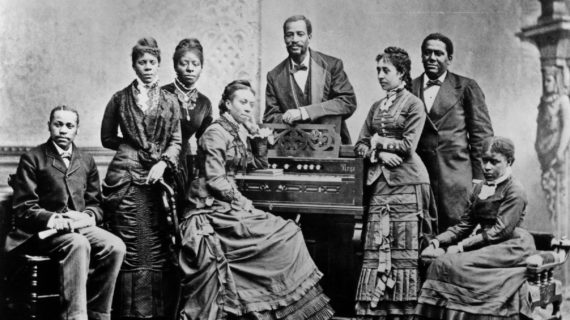

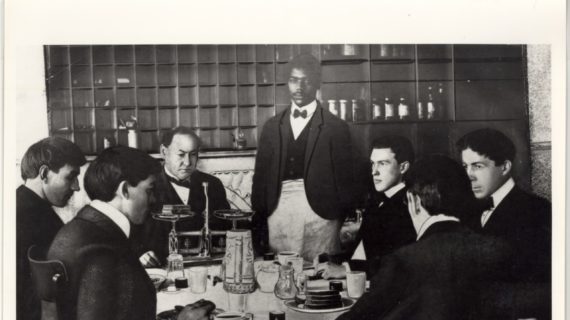

Donate to sign up. Activate and sign in to Passport. It's that easy to help PBS Wisconsin serve your community through media that educates, inspires, and entertains.
Make your membership gift today
Only for new users: Activate Passport using your code or email address
Already a member?
Look up my account
Need some help? Go to FAQ or visit PBS Passport Help
Need help accessing PBS Wisconsin anywhere?

Online Access | Platform & Device Access | Cable or Satellite Access | Over-The-Air Access
Visit Access Guide
Need help accessing PBS Wisconsin anywhere?
Visit Our
Live TV Access Guide
Online AccessPlatform & Device Access
Cable or Satellite Access
Over-The-Air Access
Visit Access Guide




Follow Us