

 Passport






Rushing Waters
02/26/15 | 26m 45s | Rating: TV-G
Join Kyle Cherek and crew on a visit to Rushing Waters Fisheries in Palmyra, Wisconsin. Meet Rushing Waters president Peter Fritsch, get a tour of the fishery and watch Kyle make a noble attempt at catching his own dinner. Follow the fish from the pond to the kitchen and learn about one of chef Zachary Combs' favorite recipes, trout almondine.


Copy and Paste the Following Code to Embed this Video:
Rushing Waters
>> This week on Wisconsin Foodie... >> About an hour outside Milwaukee, in Palmyra, Wisconsin is Rushing Water Trout Farm. There was a lot of production out there. Rainbow trout grown for quantity, We wanted to be quality. The first thing that we did was, "Let's try to do it without chemicals. All natural." People thought that we were a little bit crazy, but you know what? This is a little different farm. We did that, and honestly, we haven't looked back. You want to give it a shot? >> Yeah. That's why I came. >> Nice one! >> Oh, yeah! It's the rush of rushing water catching your first trout. So, we' re going to dress the fish, or.... as the fish might be feeling, undress one. >> Yeah! >> You can cook trout 101 different ways. You can cook salmon 101 different ways. It's all in the eye of the beholder on how you want to actually have your fish. >> Oh, yeah! It's such a delicious, flavorful fish. It's cooked so well! >> Wisconsin Foodie would like to thank the following underwriters for their support; Wisconsin Milk Marketing Board and the dairy farm families of Wisconsin; Society Insurance, small details, big difference; Outpost Natural Foods Co-Op; Potawatomi Hotel and Casino; Illing Company, creating packaging solutions for you; Fab Wisconsin, the regional food and beverage industry cluster; The Wisconsin Milk Marketing Board and the dairy farm families of Wisconsin are proud to support Wisconsin Foodie, helping viewers celebrate our state's vibrant food culture. With nearly 11,000 family dairy farms, the Wisconsin dairy industry generates more than $26 billion annually for the Wisconsin economy, and brings recognition to the state for producing award-winning cheeses. >> I've had Society Insurance for my restaurant from the beginning, because I know they understand my business and how it's evolving, and how the industry is evolving. You're going to have the coverage and support you need for your unique operation. >> The Milwaukee region has the highest concentration of jobs in food, beverage and ingredients manufacturing in the nation. From production to processing, right down to our plates, our regional food industry offers career opportunities to fulfill your dreams and feed the world. >> About an hour outside of Milwaukee in Palmyra, Wisconsin is Rushing Water Trout Farm. It's 56 beautiful ponds of farm-raised rainbow trout. It started in the 1930s, but was really re-enlivened in the 90s by Peter Fritsch. I'm here to meet with them, catch some fish, to see the process, and have a great meal. >> Hi. My name is Peter Fritsch. I the president of Rushing Waters Fisheries here in Palmyra, Wisconsin. When I came on board in 1997, we were looking for a way to really differentiate ourselves and create a niche. There was a lot of production out there. Rainbow Trout grown for quantity. We wanted to be quality. The first thing that we did was, "Let's try to do it without chemicals. All-natural." People thought that we were a little bit crazy, but you know what? This is a little different farm. We did that, and honestly, we haven't looked back. Yet another great thing is just seeing people fish. Honestly, there's a a lot of people who have gotten away from fishing. You've got grandsons with their grandfathers, catching their first fish. Last week, we had a retirement home, people in their eighties catching their first fish. To see everyone having a good time, and spanning those generations, it's pretty neat to see. My family plays a pretty big role, putting up with me and the business. We live on-site. My daughters love to fish. Two daughters growing up on a farm. They're-- I don't know if "Tomboys" is the right notion, but, yeah, they like to fish and they're not afraid to get their hands dirty. >> Peter! >> Kyle! >> Hey, buddy! >> Welcome to Rushing Waters! >> Thank you, it's a real pleasure to be here. >> Well, great! Glad you're here. So, you're going to do a little fishing today? >> Yeah, that's a good-looking case of smoked fish and other things, but I know that they don't come in here that way. >> They don't come in here that way, but when they're done, they leave here that way. So, tell you what, let's head to the farm and maybe catch a couple. >> That's a great place to start! >> All right. Let's grab some poles. >> Poles! Poles! >> So right down here is where the fishing pond is. >> So how many fish do you have at any one time in these 56 ponds? >> Usually, about 750,000 in the Valley, all sizes. >> Whoa! So, the likelihood of me catching one is pretty good? >> It really is. Before we do that, let me show you how we actually harvest them for the restaurant. >> Oh, cool! Oh, cool! >> We'll just put our poles over here. So, here's our farmers. We've got Justin, right here. >> Hey, nice to meet you. >> And Luke >> How are you? >> Hey, Luke! How are you man? >> So, Luke and Justin are going to show us how we actually corral up our fish, with a sane, and harvest them for our restaurant. >> Corral them up? I've helped corral cows, but I've got to believe that trout are a little more challenging. >> They make it look easy, though. >> All right. Now this, I've got to see. >> So Justin and Luke are seining the pond, or, as I said, corralling them up. And basically on each side. They're going to hook it, as we call it. And they're back to our side of the pond here. Hopefully, they've got a few thousand trout to go through for market. They're caught, basically, in the net. Luke's to bring a box in, and these boxes are how we size the fish. As you can see, there's the bars in the bottom. >> Ok. >> So, there's the length to weight ratio between the bars, that when they put the trout in, they gently lift the box up in the pond. Small ones will actually wriggle through, back into the pond. The big ones stay in the box. Then it's time to go out to the plant. >> it's is like they're sifting flour. >> Sifting flour. >> Sifting trout. So, this is really labor-intensive. >> This is very labor-intensive. >> I mean, there's no other way for you to harvest, really. >> There's some fancy pumps you can get, but a lot of those mechanical devices have pros and cons. It's fast. It's quick. But it can be damaging to the animal. >> I don't want my fish pumped through a machine. >> And that's how we feel. So, then, they do that, through. Then, they double-check the bigger ones, and then they go into that cage, waiting for an order. >> The way that they do it, that's the way that it's been done for hundreds of years. Right? >> One of my joke is that people ask, "How did you come up with this scenario?" I joke that we found it on cave drawings. There's nothing new about this. >> Tell me about the quality of the fish. 'Cuz you guys use this term "chemical-free." How does that work? >> Well, one of the philosophies we have is that everything is quality-based, not quantity. So naturally, we don't use any chemicals. We allow the algae and the weeds to be in the pond. It's Mother Nature's way of cleaning the water. >> So, the weeds you have are not how we think of weeds. These are good weeds and these are good bugs. >> They are. Exactly. It's part of the natural ecosystem. We want the weed to be in there to filter the water. It's a place for the bugs to live and it's a good food source for the trout. >> Wild trout would have them so your farm trout has them. >> Exactly. Yeah! >> Want to give it a shot? >> Yeah! That's why I came. >> Hold it in, then flick, and then let go when you point to where you want to go. All right. Yeah, just hold the button in, and ssscchhiiiccctt! >> Some are better than others. There's a chance it's not the operator. Hold on. All right, this will work great. >> This will be the one to get the big one, I bet. >> We lost a worm in that process. >> You're releasing the button, right? Now you got it! >> So, There's literally no fish store in these ponds, though, because you said that you don't let them get this big? >> There's a couple that will surprise you. We had a 6-pounder caught this year. >> oh, I can feel it! >> Yeah, when that bobber goes down, just give it a nice little jerk on the pole and that's the hook set. There, just let it set for a second. Nice one! >> Oh, yeah! Whoo-hoo! It's it's the rush of Rushing Water, Man! Catching your first trout! >> So, these are the beauties that you raise to one pound, you ship off all over the place to great restaurants, to stores, we pan fry up at home. >> This is it. This is what makes Rushing Waters famous. >> This is a gorgeous fish. Just a gorgeous fish. >> Growing up in this natural setting, you can see they have nice fins on them, they keep that nice color. They're just a very, very healthy trout. >> And this is a Midwestern delicacy. I mean, you can fish Pacific Fish, but you can have them flown in. But this, just a day or two out of your ponds, and still arguing! I don't blame you, buddy! You're not the one that got away, except for now! Come on! Reeling 'em in! In the sink hole. All right. Oh, he's trying to run. He's trying to run! Not today my friend. Not today. >> Bring him up. >> Nice, in the net! >> All right! >> That is a Rushing Water Rainbow Trout, Ladies and Gentlemen. Look at that beauty! >> it's got to be really rewarding to do this job. >> It is. This goes back to our roots. It's hunting and gathering. It is. It's fun. >> And it's part of our state heritage. >> It is. It's heritage. >> Nice fish! >> Nice fishing! >> Back to the top of the hill. Something new that we've created here at Rushing Water Fisheries is to really take advantage of the Local Food movement, and the Farm-to-Fork. We now have an on-site restaurant called the Trout House. And we've linked that with our fishing pond, where you can actually catch your own fish, and we will serve it to you. We call it the "Hook and Cook." A lot of local restaurants you go to for local food, they show you the purveyor and everything else. You know, "From Madison. Or, grapes from here. Or, tomatoes from here."
We have on our thing up there
"Rushing
Waters Fishery
100 yards down the hill." >> Here's the processing plant. We'll put our fish right here in this bucket of ice. >> A literal "bucket of fish." >> So, we're going to dress a fish or, as the fish might be feeling, undress one. >> All right. You can take one, and you can take one. >> Start right there. >> Right. Keep the blade kind of flat. >> How deep do I go? >> Just slide it in there, and then all the way to the top, until you come into the back of the jaw there. >> Like a little hinge from the tail on up. >> That's it. Then come in through the gills. At the top of the gill, right here. You should be able to slide it through all the way, and then come out the other side. >> So, knife facing down. Top of the gill. Hey, hey! >> And then you kind of roll around. There you go. You've done it. >> It's like splitting a chicken. >> Then, you're just going to pull the guts out. >> Pull them straight out? >> Yeah. Then rip out the gills here. Get your finger behind the gills, and rip those out. >> These gloves are kind of hard to grab with. >> Yeah, you get used to them. >> Probably better to have them, right? >> Yeah. And then, I put my thumb in the back here. >> This is so profound because that's the vein that provides the blood for everything for the fish. >> That's right. So then you just push your thumb all the way along and push the blood vein out. >> God, this is so poetic. That's life force right there. >> Yeah. >> How'd I do? >> Pretty good. A little bit at the bottom there, but you know, you pretty good. >> Get my thumb in there. I kind of feel bad about it. I'm not going to kid you. So, this is a dressed trout? There's a rumor that I'm going to be eating these and I'm hoping that it's true. How often do you eat trout? >> Quite a lot. Quite often. >> Do you ever look at a fillet and think," You know, I could have cut that better?" >> Probably. Sometimes. >> This one is a little miserly, a little thin. I could have done that better.
laughter
Waters Fishery
>> Speaking of, to the kitchen. See you later! >> Absolutely, buddy. You're welcome! >> See 'ya! >> Here's the kitchen. Here's our chef, Zachary Combs. >> Hello, Chef Zach! Nice to meet you. >> Nice to meet you, Kyle! >> How are you, buddy? >> Doing well! How are you? >> Good! >> Good! This is the kettle of fish kitchen? >> Absolutely. Absolutely. While you're here, what we're going to do for you is we're going to make rainbow trout almandine, using our own Rushing Waters Rainbow Trout. So what we have, this is nice -- head-on. Our first step, heat pan. You don't want it too hot and you don't want it too cold. Sort of gray zone. >> So not screaming-hot, just medium hot. >> Nope, you just want to get a nice medium to medium-high heat. You notice that I'm warming it up without any oil in it. >> Yes. >> You don't want to deep fry fish. If I put the oil in now, it's going to get too hot. You're going to end up deep-frying your fish. >> You want a nice crispy skin. >> Yep. Absolutely. So, now we've had the pan on for a couple of seconds there. >>
What do you use
grape seed, something high-smoke? >> Nope. This is just vegetable oil, canola oil. It's got a higher flash point than your olive oil and a lot of other oils. So it allow you to get that nice crispy edge without burning. >> And if you don't have a fancy French pan like this, you can use any old stainless? >> Any saut pan will work. >> The biggest misconception in cooking is that over-seasoning is always going to make something taste better. Salt and pepper is all we use to season. >> I thought that the biggest misconception in cooking is that your grandmother is the only one that could make it perfectly. >> Well, no. Grandmother is always right. So, then we're going to go. Put our fish in there. Nice and simple is what you want. you want a knife in there. >> Meat side down? >> Yep. And you always go away from your body. >> Right. And it doesn't matter if it stares back at you? >> Well, no. It's good company when you're working in the kitchen. >> Yeah, for sure! >> You know, it's the little things that are going to help you. >> So, this is sea salt, but that's even a bigger, chunky variety than-- >> Yeah. It's very coarse sea salt. >> Yeah, it's bigger than the grain that we use at home. >> It soaks into the fish a lot better. It allows you to use less, while getting more. >> Wow! Look at that artful flip. Look at that gorgeous browning. >> That's canola oil. You know, it gives it a little golden-brown without getting too dark. You can see the salt and pepper, seared into it. >> And you want that popping under the skin because it's going to resist the heat a little bit more. >> Absolutely. >> So, correct me if I'm wrong, but, just as with a great steak, the fish should only be flipped once? >> Absolutely. >> Anything more than that, you're just messing with it. And that's salmon through delicate, skinny little trout. >> Absolutely. Absolutely. You can cook trout 101 different ways. You can cook salmon 101 different ways. It's all in the eye of the beholder on how you want to actually have your fish. So what we're going to do as our next step is we're going to make our brown butter. So, what we're going to do is get a pan. Put it on medium-warm heat. Never really cook with a searing hot pan. You're just going to wind up burning everything. What we're going to do, we're getting our pan nice and warm. >> Is it a seasoned butter you have there, buddy? >> Yes, it is. We have a nice compound butter. >> Uh-huh. >> And what I'm going to do, on top of that, while it's browning up, I'm just going to add a little bit more of what we have in the butter. A little bit of garlic. >> Explain-- I know what it is-- but explain for people what compound herb butter is. >> Compound butter is, we start with unsalted butter. Then we spice it up ourselves. Remember, I just added in there fresh thyme. >> Mm-hmm. >> So we whip it up. We add in garlic. We add in fresh thyme. We add in salt, pepper, a little bit of white wine. And then, that make a compound. >> Oh, yeah. Look at how gorgeous that is. >> we've got our fish there. We've got our herb butter. It's nice and brown. You've got a nice brown color. You can see it starting to bubble up there. Now, we're going to add our almond in. >> Little almond slivers, you can get those anywhere. >> Yep. And what we do, we toast them in the pan here. And it's going to absorb a lot of the butter into the nuts at the same time it's going to be releasing the oil from the almonds. >> Right. >> So, you're just going to get get flavor spread out throughout. >> Which is a good thing! >> Absolutely. >> Great American almonds brought to you by the American honeybee. >> Now we're going to add this, right in there. >> Aw, yeah. Come on. >> Like that. Take our fish spatula. Slide it back over the top. >> It's like a present. >> And now, for the finishing touch. We're just going to go to the oven. I have it set at 350 degrees. >> How long in there, my friend? >> It's going to about, depending on the size of the fish, it's going to take anywhere between four to six minutes in the oven, after a nice saut like that. So, what we can do in the meantime then is make a little side dish for you. >> Zach, let me stop you so I understand. So, you've already got this sauted trout. It's it's cooked all the way through. It's in that luscious butter. It's in the almonds and they've broke down because they were in your compound butter. You wrap it all up. Why, then, put it in the oven instead of letting it rest in all those juices? >> Because it was actually not cooked all the way through. You cook it to about 80% cooked. Because then it gives it time that it's in the oven, all that butter, all that oil that we talked about in that compound, is going to start to soak into the fish. >> Yeah >> So that when you're taking every forkful, it doesn't matter whether you have a forkful of almonds, a forkful with the butter. You know, everyone wants to eat a forkful of butter now and then. You're going to get those flavors even if you don't have it anyway. You're going to have.... I'm going to make a little saut green beans in this oil I got up to a nice heat. I add in some garlic. You're going to be able to watch that oil roast up as you're doing the green beans. You got the green beans that are coming fresh out of Wisconsin. A little bit of salt and pepper on there, and then we can even go one step further on this. Let's say we got a couple leftover almonds. >> Oh, now you're just getting crazy. >> Well, green bean almandine. >> Toasted off with the green bean. >> Now, I'm going to need to sneak off to the oven for a bit. Oh, look at that! >> Whoa! Look at that beauty. All that brown butter did its job. It's browned on the outside now. >> Mm-hmm. >> Oh, Zach, now I get it! >> And what we have here, a couple of potato pancakes. >> Come one, it's Wisconsin. Of course you do. >> It's Wisconsin! >> Yeah. >> Add our green beans on Throw those almonds on top. >> Look at that beautiful? Tell me that you're not going to waste all that. Tell me that you're going to-- >> No >> Oh, yeah! >> There is your rainbow trout almandine. >> Gorgeous! Gorgeous! >> I'm going to let you, a little bit extra is not going to hurt. >> It's your kitchen. >> Not going to hurt. >> It's your kitchen. >> And then, top it off with a little fresh-squeezed lemon juice. >> How nice! Bring that brightness in. And that's going to actually tighten up the skin, just a little bit in those proteins. >> Yeah. >> Very good. I love it. Do you ever just think, "Man, I kind of want a chicken sandwich after all of this fish?" >> I don't really go for a chicken sandwich. I go for Lucky Charms.
laughter
What do you use
>> Thanks, bro! >> Kyle, thank you very much! >> Happy to be in your kitchen! >> Happy to have you!
frying sizzle
What do you use
>> There is your trout almandine. That's your batter-fried potato pancakes. Can I grab anything for either of you? >> We have everything we need. >> You're all set? >> Yeah. >> Well, enjoy! >> So, I got the fancy and you got the fry. Mm-mm! This is one of my favorite dishes. We make a version at home. You're a chef and it's great. Your fish is even better. Like, I'm at an almost-tears moment. This is one of my favorite dishes. It's so good! You know, Peter, I don't want this to get weird, but I'll trade you some trout almandine for some of that fish fry. >> I'm in for it. >> Its Friday in Wisconsin. You know? >> You gotta try the house-made potato pancakes, too. Go ahead and stab one. >> Sure. Here, buddy. All right. I'm bringing that over. >> Stab a chunk. Let me just-- Here, bro. Here is a "perfect fillet!" >> Nice! >> You want some veggies? Your mom could be watching. I don't know. >> She's probably watching. Thank you! >> Oh, yeah! It's such a delicious, flavorful fish. It's cooked so well! >> It's really good! Even for me, every time I have it I'm almost amazed. >> I mean, I think about food. I write about food. I film with food. I get great meals whenever I want. This just fills me with delight. It's so good! >> Glad to hear it! That's why we do it. It really is! >> So, Peter, this day I mean the weather was gorgeous the trout were hitting. Thank you! You're the perfect, consummate tour guide. I love what you guys have done with this place. It's just so crucial for Wisconsin. So,
my fishing skills
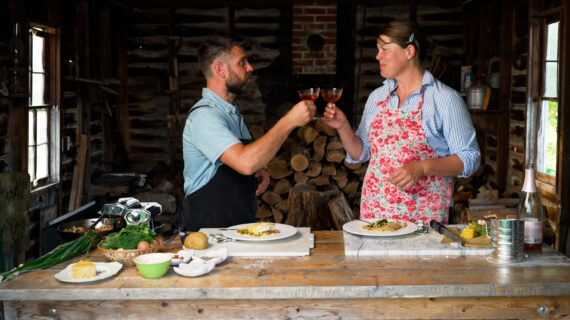
what do you really think? >> You know, you struggle. You got it. Keep the day job. But, we got it done. Obviously, the plate speaks for it. >> Here's to honesty, good fresh trout, and beautiful summer nights!
glasses clink
my fishing skills
>> Wisconsin Foodie would like to thank the following underwriters for their support; Wisconsin Milk Marketing Board and the dairy farm families of Wisconsin; Society Insurance, small details, big difference; Outpost Natural Foods Co-Op; Potawatomi Hotel and Casino; Illing Company, creating packaging solutions for you; Fab Wisconsin, the regional food and beverage industry cluster; the Wisconsin Department of Natural Resources. WMSE 91.7 FM Frontier Radio The Wisconsin Milk Marketing Board and the dairy farm families of Wisconsin are proud to support Wisconsin Foodie, helping viewers celebrate our state's vibrant food culture. With nearly 11,000 family dairy farms, the Wisconsin dairy industry generates more than $26 billion annually for the Wisconsin economy, and brings recognition to the state for producing award-winning cheeses. >> I've had Society Insurance for my restaurant from the beginning, because I know they understand my business and how it's evolving, and how the industry is evolving. You're going to have the coverage and support you need for your unique operation. >> The Milwaukee region has the highest concentration of jobs in food, beverage and ingredients manufacturing in the nation. From production to processing, right down to our plates our regional food industry offers career opportunities to fulfill your dreams and feed the world. >> We have a nice picture here of Bill Graham, our owner and founder, who bought the farm in 1994. I still talk to him every day. He was into local food before it was cool. >> He got it way before anybody! >> Way before. >> Saw the vision. >> Saw it and believed in it. And here we are today. >> Without Bill there would be no Rushing Waters. >> It's pretty great. Wisconsin guys, we're lucky for them.
Search Episodes
Related Stories from PBS Wisconsin's Blog






Donate to sign up. Activate and sign in to Passport. It's that easy to help PBS Wisconsin serve your community through media that educates, inspires, and entertains.
Make your membership gift today
Only for new users: Activate Passport using your code or email address
Already a member?
Look up my account
Need some help? Go to FAQ or visit PBS Passport Help
Need help accessing PBS Wisconsin anywhere?

Online Access | Platform & Device Access | Cable or Satellite Access | Over-The-Air Access
Visit Access Guide
Need help accessing PBS Wisconsin anywhere?
Visit Our
Live TV Access Guide
Online AccessPlatform & Device Access
Cable or Satellite Access
Over-The-Air Access
Visit Access Guide




Follow Us