

 Passport




Morel Hunt
01/05/12 | 26m 47s | Rating: TV-G
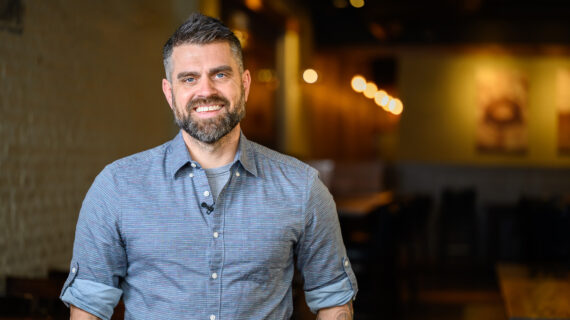
Visit Kettle Moraine with chef David Swanson from Braise Restaurant and Culinary School to hunt for spring morels. Also meet publisher and editor-in-chief of Fungi Magazine, Britt Bunyard. Britt serves as our foraging guide, maneuvering us through the forest and pointing out what is edible and what is not. Later, chef Swanson uses only foraged items to cook a completely local and seasonal meal.


Copy and Paste the Following Code to Embed this Video:
Morel Hunt
You've heard of farm to table, but this is forest to plate. It's foraging for the mighty morel, this week on Wisconsin Foodie. We're here with mushroom expert Britt Bunyard, who has a PhD in something called mycology, which basically makes him an expert 'shroomer. We're also meeting up with Chef David Swanson, and his uber-popular traveling culinary school, Braise on the Go.
We're going to cook some of the great things that we find in the forest today, between the tree stumps. When Chef David Swanson started his traveling culinary school, Braise on the Go, he wanted to take people a little further than farm to table, but he had no idea that when he put out the word that you got to walk through woods and pull up something that looked prehistoric, so many people would actually come out in rainy weather. I'm David Swanson from Braise on the Go. We are on our annual morel hunt.
This is our fourth annual hunt. We come out here to Northern Kettle Moraine, hopefully find some morels, and then do a little cooking demonstration at the end of it. Step right up, grab a scone, pour some coffee. It's neat to see when people are starting to learn about local food, you know, I eat from the farmer, or things of that nature.
But when they start learning that there are other options to getting local food, you know, there are so many edible things out there, so it's just so much easier for them to say, oh, really, I can go out there and pick something and make a dinner out of it? That's kind of the neat thing about it, is you know, you're not required to go to the grocery store to find dinner, there's, you know, tons of different things you can forage here in Wisconsin. Oh, a lot, lambs lettuce, cattails, garlic mustard, you know, morels, ramps. It's good foraging for eight or nine months out of the year.
My name is Britt Bunyard. I'm the editor-in-chief of Fungi Magazine. I first met Dave Swanson, probably through the Wisconsin Mycological Society. We're both members.
We probably got interested in moreling together, and I don't know, maybe he cooked up some sort of a snack, and that's pretty much all it took. I've been after him forever to do morel and other mushroom events since then. We first met in the club, though. Good morning, folks.
I'm David Swanson from Braise on the Go. This is our fourth annual morel hunt. Hopefully, we'll find some morels. We'll probably go out for a couple hours or so, then come back here, and we'll cook a few things up to sustain you on your foraging.
But the idea of this class is basically to show you what grows around here in the edible woods of Wisconsin. There are things out there, that don't need to come from the supermarket. And to show you quickly, good ways of preparing these things, very simple, very straightforward. So, thanks folks, for coming out.
We appreciate it, and Mr. Britt. Hi, so yeah, my name's Britt Bunyard. I'm the editor-in-chief of Fungi Magazine.
This is the sort of thing we publish, exciting magazines on mushrooms and other fungi. As Dave said, we've mushroomed before. We've found morels here before. I hope we find some today.
The season's getting started a little bit late this year, a lot late in fact. So if we find any today, we should find some today, but they'll be small. You know, at this time of year, they're often quite large. We'll go out and I'll point out trees and terrain and habitat where you can find morels.
Enjoy your time out there and we'll see you in a couple hours. See you later! Start checking all along here. We'll move up here to where some dead elms are, and then we'll head down over the hill.
So there's an old adage that when you go into the woods, you should either have a good map, some bread crumbs, or a really good guide. Mine is Britt Bunyard, who has a PhD in mycology, which is the study of mushrooms. He's going to take me on the great morel hunt. I skipped the red jacket and the hounds, but he's got one.
Let's go. So basically, the Midwest, if I understand, is the hotbed for morels. I mean, they grow everywhere but a desert on the planet, correct? That's pretty much true.
They even grow in Africa, and in Asia, the Himalayas. Most people don't know that, but that's true. So what Alba is for truffles in Italy, basically right here, Wisconsin and some surrounding states, is for morels. Yes, but should we be telling people?
Because we already get enough out-of-state people coming here. We love their tourism dollars. Okay. Yeah.
When did you first get the morel or the mushroom buzz? I mean, were you one of those kids that at six or eight was out in the woods and finding these things and trying to figure out what they were? Yep, exactly. That's in fact when I got into mushrooms, because my family lived in southwestern Ohio, and other relatives in Indiana, and we always were out moreling.
Back then, they called morels mushrooms. They didn't look for any other mushroom in the woods. They didn't go foraging, really, for too much wild, maybe berries. Foraging is something that used to be, I mean, basically, there was a generational drop-off somewhere around the '80s, or '70s, because it's something that, if you lived anywhere near a wilderness, people did, whether it was an open field or a forest.
As we were preparing for this episode, so many people said, oh, I did it with my parents, I did it with my grandparents, I did it with my aunts and uncles. They would list off all the things, way beyond mushrooms, that they would forage for. Now it's this massive trend in culinary circles again. It's going back.
Yeah, I think before, people foraged just because you had to. You were living off the land. Then people got away from it, probably in the '70s, when everything was made convenient, you know, in boxes and frozen. Right.
Now, people are going back. A lot of our plants that are commercially grown have been bred so that they're pest resistant, or whatever, but a lot of the flavors have dropped out. Now, you know, onions and leeks are tasty, but wild leeks, you know, ramps that are out right now, are much superior. I'm sure David will even be cooking ramps.
Wild asparagus compared to the stuff that you get with the rubber bands around, it's a completely different vegetable. Oh, yeah. It's amazing. It's sort of like, you know, bad imitation crab and then lobster.
both laugh
That's pretty much it, yep. So, right through here is great looking habitat for morels, even though there's some dead elms up along the top, but right along through here is terrific. There's ash trees. There's aspens, a true poplar.
Morels, unlike other mushrooms, are not going to be in deep, large, old forests. Morels are usually on the margin of forests, where some sunlight gets in, or young areas of the forest, or even waste areas and ditches. Skinny trees. Skinnier trees, yep.
I love coming into the forest with you, because it's like this story on 50 levels, that keeps unveiling itself as you describe what's going on. You see such a language, and such a structure happening. I just walk through and see the grandeur and the beauty. But I would think when you're not here with a big group, and cameras, and hosts, that it's got to be pretty meditative.
Oh, yeah, it's terrific. You know, I have a job and kids, and everything else, but I'm always itching to get into the woods. When you do, all of that. Drops away.
It slows down. It's quiet, and other features are out. So morel season, the spring, the so-called holy trinity of cooking, you know, is wild ramps, wild morels, wild asparagus. How do the Catholics feel about that?
I think they're okay. They're okay? Yeah, they'll eat those things and then go to church. Yep, and you can eat them on Friday, too.
Yeah, nice! Super. That's a morel. It is?
Yeah. Right through here, this is exactly the morel I was looking for. This is a good sign for several reasons. First of all, most people would see this and not think it's a morel, and pass it by.
This is the earliest of the morels. This is the half-free morel. A lot of people don't even know it's morel, because instead of the cap or top part, it's not really a true cap, instead of being fused to the stem, it's actually loose underneath, about halfway down. If you're keeping score at home and want to impress your friends, this is Morchella semilibera.
"Semilibera," it's half-free. How you can tell without a doubt, the difference between a true morel and a half morel, when you get home, you'd cut off that bottom part with the dirt, before you put in your basket, and then when you get home, you're going to fry it up, or put it in whatever dish, you'd slice it in half. This will be hollow all the way through the stem, top to bottom. It's one big hollow cavity.
The false morels are never like that, and don't really look like this, either. So, wow, super find! Whoo-hoo! Super find indeed.
Really, this is a super lucky find. This is a ramp, but it still has last year's inflorescence the flower of it. Right here? Yep, that.
It takes about ten years before they start having their flower and reproducing. So, people digging them up, if you dig up a lot, and maybe are selling for market, you'll definitely deplete the population. So at a restaurant, a whole bunch of these on a plate would probably cost you $15. Here in the woods, they're just good and fresh and delicious.
This is amazing. Mm-hmm. I'm not just saying that. This is really good!
I'm going to order ramps the next time I go out. This is a fairly well gone, dead, small elm tree, maybe a slippery elm. But this has been dead probably too long to support morels. They typically come up the year, or two, or three, or four years after the tree dies.
After two or three or more years, the bark starts falling off, and that tells you that they're probably not going to be coming up around that elm anymore. What I wanted to point out is what killed the tree. What killed the tree are these bark beetles that bore in through the bark, the female does, ate a tunnel through the phloem, which is the vascular tissue of the tree. Then she bored a hole back out.
The eggs of the grubs hatched, and each grub munched its way through the bark, and left these tunnels radiating away from the main one. It's like the supposed canals of Mars. Yeah, and the fungus that killed tree was an alien to North America, so there you go. Basically, forests are beautiful, sublime and serene, but also grounds for chemical warfare.
Oh, yeah. On a daily basis, correct? Oh, sure. Yeah.
It's nature, red in tooth and nail. It's a dog eat dog world, or a grub eat tree world. This is really cool. It's a little bitty one.
They get much bigger. This black guy here, yeah, this is a so-called Devil's Urn. It's in an allied family of the family of morels, so it's fairly closely related. This guy, up very early with the morels, and is considered poisonous.
I don't know if people have really ever tried it. But it's definitely, all guide books say "inedible," and should be avoided. It's really pretty. Urnula craterium is the species of this guy, a little baby one.
I see probably one or two of these a season, so they're fairly uncommon. But it's a really pretty, whole black, bizarre looking, you know, alien life form. Then again, somewhat related to morels, this guy maybe was just getting started and there'll probably be more coming out later. Which way on the path did we come?
This way? Britt, have we found the holy grail? We have found it.
laughter
The wild morel. This is pretty exciting. They really, really, really blend in. Yeah.
I mean, I could see how you could walk for hours and hours, if you didn't know what you were looking for. They're just camouflaged. Yeah. So this is sort of a baby one, right?
This is early in the season? Pretty early in the season. You see how it's still gray. When they mature, they become more yellow, tan, brownish.
But when they first come up, they're rather gray looking. It's probably been up a few days. That big soaking rainfall we had just a couple days ago, they were probably sitting here waiting to go, and the rain did it. They just need to get, like, the thumbs up, basically.
They need a little bit of rain, a nice soaking, and then a bump of warm weather, then it's game on for morels. Exactly, it's game on. Let's go see if anybody else found some. Then, I hear Dave really knows how to cook these.
Yeah, let's go. Whoa! That is a Wisconsin harvest. This is the heart of the traveling culinary school.
We're standing underneath a pop-up tent, on the side of a van. You've got your little stove. You've got your ingredients here. We're basically in a parking lot on the edge of a Wisconsin forest, and we're about to make two courses.
Exactly, yeah. And 90%, maybe more, was found right out there. Yeah, exactly. What are we, what are you, and me watching you making?
laughter
Well, we're just getting prepped up here for a little frittata, with some ramps and some morels in there. We start out with the sorrel pesto. Then we're going to do
a little spring salad. A lot of foraged items
watercress, sorrel, garlic mustard, ramps. We kind of do a saut of ramps and morels. When we were looking for morels, we saw a ton of ramps out there. Yeah.
Basically, 90% of the meal this morning is going to be foraged. Exactly, we just try to get people, like, you know, it's great to support your farmers, and all that, but there are other edibles out there. Yeah. And the thing to be mindful of that is just don't take everything.
If you see a ramp area, don't just totally annihilate it. Right. Because you want to make sure it comes up next year, as well. Have you always been cooking this way, or was there a paradigm shift as you learned about this sort of thing?
I've always been cooking this way, especially with the French chef that I was trained under. But when more and more people are getting used to that, then it makes it easier. Because you know, whether one guy in the middle of a parking lot waving, hey, let's go find morels, and nobody comes, that's hard to grow a business around. But when all of a sudden, just you know, say, hey, let's go find morels, and all of a sudden, 25 people want to show up, and you've got a waiting list as well, then it's like, okay, there's something behind this.
They look prehistoric, but they're really good when they're sauted in butter with some bread crumbs, or cooked to a couple of different levels of erudition. Yeah, exactly, yeah. Well, I found some. Let's eat.
That's fabulous.
both laugh
a little spring salad. A lot of foraged items
I want to show you my find. Whoa! What's your favorite thing, once this bounty starts unleashing itself in this part of the country? What's your favorite in-season thing of, you know, you just listed a bunch.
I love ramps, because you can do so many things. Ramp salt, ramp jam, you know, ramp butter. You can bathe yourself in ramps, if you wanted to!
laughs
a little spring salad. A lot of foraged items
It's like Bubba Gump Shrimp. There's like a thousand things you can do with shrimp. Exactly. It's one of those things that I like.
It's so versatile. You can saut with it. You can use it raw in a salad. You can use, there are some ramps, as well, that this gentleman has.
So these are wild ramps, just recently unearthed. Those are the bulbs, the dirt. I tried one of these in the forest before. They're fantastic.
Yeah. They are fantastic. We're getting a lot of our ramps from the western part of the state right now. Our ramps are like, in that part, they're really fully mature, so the stem has a lot of red and pink to it.
The leaves are very large. Actually, I have some here. I'll bring them out in a second. Does the bulb have a distinctive taste, too?
Yeah, it's something that, you know, the bulb in here, like you see in here, the white part is the bulb and the green parts are the leaves. So we'll separate it. I'll dry it differently and then mix it with salt. That's something that we can use for a number of different items.
It really makes it-- I should've brought some ramp jam, too. I made some ramp jam, but I forgot to bring it though. I want to like, just...
imitates chomping
laughs
a little spring salad. A lot of foraged items
But I won't, because I didn't pick them. You'll get them back, sir. These are the ramps. Whoa!
Those are huge! Yeah, they're coming from the western part of the state right now. This is a sorrel pesto. This is celery roots, a slaw, made with sungold preserves, which are on the table over there, and just a little mayonnaise.
We have some garlic chives, as well. These are actually from my garden. So, what Stacey is dishing up, folks, is a goat cheese frittata with a little sorrel pesto. The sorrel is from my garden.
We didn't go forage for that, unfortunately. Basically, it's made with a lot of ingredients from Wisconsin. We used a hazelnut from Hazel Valley Farm in Eagle, Wisconsin. The cheese is a sheep's milk Pepperino.
The eggs are coming from Jeff Leen Farm. The oil, not olive oil, it's sunflower oil. It's coming from Driftless Organics. The only thing that's not local is the salt.
Everything else, the garlic and everything else is local. We've got a Wisconsin-ingredient made frittata with a Wisconsin-ingredient pesto. Instead of having pine nuts that were flown 2,000 miles, we're using hazelnuts. We've got a great little celery root slaw.
I couldn't be happier to eat it. It's a darn good, a darn good lunch on a chilly spring day after a lot of mushroom hunting. It takes more energy than you think. Oh, man!
Well, with the sharp-- and the salt, this is a great, like with the creamy, really nice. Yeah. It's good. It is very good.
It more than hits the spot. It actually tastes good. The celery roots are...
indistinct talking
a little spring salad. A lot of foraged items
What I'm doing in this pan over here is starting to render some pancetta. This pancetta is actually from Bolzano Meats. It takes a special person to get out of bed on a really chilly fall/spring day, and say, yeah, I want to walk around the woods and look for things that blend in. He said he foraged these.
I don't know, did he? This time of year, we have a lot of things that are preserved from the last harvest, and also stored as well. So this is, when you work with all the food, you've got to kind of think, you've got to work with all the seasons. You just don't start automatically thinking I'm going to cook food starting in May, okay, what am I going to use?
Because right now, because it's been so cold, there's a lot of things that are late. Asparagus is not up yet. Rhubarb is not up yet, and things of that nature. So, then what you try to do, is find things that are up, morels, find things that are growing, ramps, and things like that, but then augment that with things from the last harvest.
Celery roots, things that are preserved. So last year, we made ramp salt here. We have some sungold tomatoes that we preserved. We have those.
We have some dilly beans from last year's harvest. Then we're going to, you know, incorporate that into the meal today to show how everything is local, but then it's in different stages. Well, here's some stuff from last year merging with some of the stuff from the springtime, and that's how we make dinner. That's something you've got to think year round.
It's not something just, oh, I want to use local food, and now, I'll just go out and find some stuff. Here are the things we have in here. We have some large spinach leaves. There's some garlic mustard.
We see garlic mustard in your woods and cut it down, and we use it. We have some watercress, foraged watercress from Wisconsin, and some sunflower sprouts, as well, from Kinkoona Farm. These are all local Wisconsin, from Kinkoona. As you can see, I don't know if you can see in this cauldron of steam, but basically what you have is-- See how much liquid is coming out of the morels?
Oh, wow. That's why you really don't want to have-- We really shouldn't have done that, to just kind of cool the pan down drastically. But this is show and tell, so that's why we did it. That's why we want you to have a hot pan, because if you put it into just a medium-high pan, or something like that, what will happen is, you'll just be basically boiling the morels in their own liquid, which you don't want to do.
These are the ramp leaves. Add those right to the morels. It's amazing how many products that we can use and have from Wisconsin.
no audio
a little spring salad. A lot of foraged items
We are going to just warm some of these greens up a little bit, and make that a nice little warm salad. See how the salad just kind of wilts down a little bit? Let me check the seasoning of a couple items here. A little salt, just a little.
Add a little sorrel pesto, as well. Even in the salad? In the salad. It all goes well.
It's a great salad dressing. It's a great sauce for a meat, grilled meats with that is great. This is Hidden Springs. It's a sheep's milk cheese.
Driftless Region. Yep. So I've got this great salad. Basically everything was either foraged, raised, or aged in Wisconsin.
It should be a beautiful spring day, but instead it feels like fall. But all the same, it's going to be tasting twice as good. It's not often I eat a warm salad outdoors on a cold day. This is a good way to eat.
Morels should never be underestimated. They are great. Sauted, in a salad, on a pizza, in an omelet. I can think of 1001 uses for them.
They are really, really, really good. Don't ever be scared to go out. One of the wonderful things about morels in this state is if it's public land, and it's the right time of year, and now you know how to choose them, go get them for yourself. Major underwriting support for Wisconsin Foodie  isprovided by the Dairy Farm Families of Wisconsin and the Wisconsin Milk Marketing Board.
For more information or recipes, visit eatwisconsincheese.com When you cannot find morels, you go after the polypores, which you don't want to eat, at least not these two. Can you identify these? Not really. This is kind of-- You probably know this one.
Yeah, I don't know. We've stumped the PhD. It has algae on the top. It's very woody.
Yeah, they're old. It was growing at the base of the tree. You know, not really an appealing fungus to most people, but we like all the oddball stuff. When we can't find the edibles, we go after everything we can find.
Be sure to follow Wisconsin Foodie online at
WisconsinFoodie.com There, you'll find articles and recipes, and specific segments of the show, and anything else you might want to know about Wisconsin Foodie. You can also, for more up-to-date, live content, check us out on Facebook, or follow us on Twitter.
Search Episodes
Related Stories from PBS Wisconsin's Blog





Donate to sign up. Activate and sign in to Passport. It's that easy to help PBS Wisconsin serve your community through media that educates, inspires, and entertains.
Make your membership gift today
Only for new users: Activate Passport using your code or email address
Already a member?
Look up my account
Need some help? Go to FAQ or visit PBS Passport Help
Need help accessing PBS Wisconsin anywhere?

Online Access | Platform & Device Access | Cable or Satellite Access | Over-The-Air Access
Visit Access Guide
Need help accessing PBS Wisconsin anywhere?
Visit Our
Live TV Access Guide
Online AccessPlatform & Device Access
Cable or Satellite Access
Over-The-Air Access
Visit Access Guide




Follow Us