

 Passport






Working Smarter Not Harder in an Apple Orchard
01/25/16 | 39m 5s | Rating: TV-G
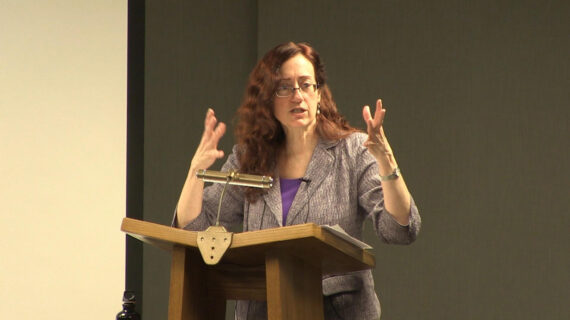
Mario Miranda Sazo, Extension Associate at the Cornell Cooperative Extension Lake Ontario Fruit Program, offers strategies for apple growers which could help maximize their crop output. Sazo suggests staying organized, prioritizing your tasks and creating a vision for the future of your orchard.


Copy and Paste the Following Code to Embed this Video:
Working Smarter Not Harder in an Apple Orchard
-
Voiceover
Our next speaker is Mario Miranda Sazo. He's the fruit extension specialist at the Cornell Cooperative Extension in the Lake Ontario Fruit Program, and he's here to talk to us about working smarter, not harder, in a modern apple orchard. Okay, thank you Sara. Thank you for the invite. I really appreciate the invitation that I got for this year. It's my first time in Wisconsin, so I'm very excited to be here, being able to travel anywhere with all the weather situations that we have. It's a great room, I don't know how many growers do we have here today, but hopefully this kind of title is gonna excited you at the end of the talk because this is just kind of a philosophical talk that we have been giving to our growers the last three, four, five years. To introduce, perhaps, to the next talk that we're gonna have in the afternoon, okay, that is a more technical talk. This one is a more philosophical talk just to kind of hopefully make you think about the things that you are doing in the orchard, and how you can perhaps benefit by adopting or just start thinking about one of these things that we are gonna introduce in the apple industry. So, again, originally from Chile. I'm sorry for my strong accent. I have been in California. From California I moved to New York and but I consider myself a very applied field scientist, so I am very lucky to be working or joining academia, mainly the academia in Geneva, in Ithaca the main company that we have with our fruit growers in our region. If you don't know Cornell University, it's located kind of five hours from New York City. That one is our main campus there, but in reality we have a lot of research going on at the Geneva Research Station, and from there we try to transfer that technology to our industry. 67% of the apple production in New York state is in this area, okay. We have 13 and 8% in those kind of small regions in New York, but more than 65% of the apple production is just in the Lake Ontario fruit region, in that are where we are, where I am showing you. So, let me start talking. I ensure each of you, even though you can be a neighbor, or whatever place on the earth are you coming, you're gonna be different in the way how you work or perform or do things, I ensure. Not everybody is created equal, okay? But some growers, it's amazing to see how efficient they are, okay, and how on time every time they do things, regardless of that kind of system that you choose to grow. But others similar apple growers struggle and are less efficient, for whatever reason. We have a bunch of reasons there behind, but sometimes they are less efficient. So let me compare this stuff. Let me see, for example, operations from the Northeastern and from South America, that I know those operations very well also. In South America, in Brazil, in Argentina, or in Chile, those fruit operations are very big, huge, okay? But here in the Northeast I am talking about mainly Michigan, mainly New York, I don't know this area, to be honest with you, but it's smaller fruit acreage. It's a lot smaller operation. Fewer family-controlled business in South America because of corporations and here are mainly more family-controlled business, I don't know if that is the case here in Wisconsin. In New York, our area fruit farms are run from 60 to 80 to 87 acres, okay? The owner in this operation is less involved in the day-to-day operations. Most of the guys, they are running the account, the business, the NPAs, they are running those big business, they are not driving the tractors, they are not working in the orchard, they don't know anything about what is really happening in those orchards, they have a lot of support, they have a lot more technical support. But here, the owner is more fully involved in the day-to-day operations. That is amazing how you guys work in New York, or in Michigan. The work ethic is amazing, they are resilient about anything, it's amazing how you guys work. More consultant and boss, huge industry behind there. A conference like this one for a consultant in Brazil or in Chile, Argentina is gonna be 2,000 or 3,000 dollars just to attend for something like this. And here, through the school, at least in New York, we charge 15 or 20 or 60 dollars at the most, so it's something that still to me amaze me how Extension provide this amount of knowledge for so little. So here we have very little or none consultants involved, we have very few compared with those operations, so hand labor is more available and cheaper here, there, sorry, hand labor here is less available, more expensive, I don't know how difficult it's here to maintain a group of people coming every year, but for us we suffer a lot in New York, it's very difficult to continue bringing those groups that we train year after year, so the list, they have less picking efficiency, two bins per person per day, it's kind of the average, and here we have more picking efficiency. We have five or six bins per person per day. I don't know if that is the picking efficiency of working here in these orchards in this area. So, those guys there, they are less ready to be efficient, okay? They are not thinking to be efficient. Or they're just starting to think. But here, we should be more ready to be efficient. We should start thinking at least three or four or five years, we should start thinking, especially from the owner and now the employee point of view because took us three, four, five years to start thinking at this level, and now we are trying to transfer the same level of commitment for the orchard to the Spanish-speaking employees, at least in New York. We have also people from Jamaica, but if you don't train or you don't motivate your labor force, you are gone. (laughs) You need them. You need to train them very well. They need to understand even more than you. So, what about a grower from South Tyrolean? And here I wanna ask you guys, what about the European fruit growers? Have they been ready to be efficient before than us? Or after us? Or they are not ready to be efficient. Who can give me one answer? Hmm? Before. Before, they have been ready to be efficient for so many years already, guys, okay? They have been working with this level of efficiency for forty or fifty years already, you know? It's amazing. They have very little amount of land, very expensive, they don't have people. After World War II things were very different for them, especially South Tyrolean and Germany and Switzerland, okay? So, we have so much to learn from these growers, how efficient they are. You know that one of these plantings that they have there where you've seen logs as poles or trees as poles, but they are using concrete poles. So when they start that orchard, that orchard is gonna be there for two or three consecutive plantings, and it's a huge commitment, and the investment so they're gonna replant again in that area, and they're committed, married with that piece of land for two or three consecutive seasons. So, it's a huge investment. It's more than one hundred thousand, one hundred thirty thousand dollars per acre, just the piece of land, just to start that kind of business in Europe. Especially in South Tyrolean. And what about these guys? (laughs) You know? These guys, these guys are pushing very hard in the last five years, just see what has happened with Honeycrisp. These guys are not gonna try to lose money. I always say this, they are eating each other at this moment. Kind of five years ago there were more than 18 growers or 20 growers who bought ten thousand acres there are like 12 or 11 or 10. So every time there are less and less and less because these operations are competing with each other and they are trying to be very efficient with the light, with the labor and with the time that they have available for this kind of orchards. So they have come out with this kind of planting seed that this is a (mumbles) that have been producing 80 or 90 bins per acre very consistently. These are amazing growers that I have had the opportunity the visit. So they are thinking in that direction. We haven't been going, or we are not planning to go in that direction, at least here in the Northeast, or at least in New York. We are not asking the growers to this kind of detail and since I'm gonna be talking about that in the afternoon, we are kind of trying to grow a different kind of tree but those are examples of how things are moving. So, what is the challenge? In my opinion, you're going to have to balance two conflicting but equally important demands for success. One is that you have to be efficient in some way, you're gonna have to start thinking how to be efficient in those orchards. And then the other one is that you're gonna have to start thinking about flexibility. Even though you have been doing the same things perhaps for a long time and you think that is the status quo and you have to keep going in that direction, you need to be a little bit flexible, not with yourself but perhaps with your grandchildren, okay? If you don't wanna change, give them the opportunity to plant at least two or three or four rows of a different planting system, a different training system. Let them learn at least because you have only one, two and three growing systems. You cannot deliver a baby like a doctor thousands of time per year. You have only one growing season in your lifetime. So how you can do it right 28, 29, 30 times, okay? So don't let those kids, the next generation of fruit growers in the U.S. without the flexibility to start adopting new technologies. And since it's an opportunity out there for the next generation. That is just one example. Because apple fruit growing is something that most of us, and including me, live and breathe every day. It's something that is very intense, that is done with family and is one of the few industries in the U.S. without a roof so it is very very risky to run or to be in fruit in business, or horticulture in general. So you have to start asking yourself some very tough questions. What do you wanna do, okay? You wanna be the best fruit grower producer from this area. Or do you wanna grow, pack and sell your own fruit, and perhaps to have your own nursery trees? Or perhaps you wanna be fully vertically integrated. I don't know if we have that kind of operations here, but perhaps you want to be fully vertically integrated. Or perhaps you wanna just cut costs and not maximize fruit, but you wanna produce fruit cheaper than other growers. Or perhaps you wanna be a profit-maximizer, where you really are trying to increase pack per box return by producing high quality fruit. Those are the growers that we really love. If they are thinking in that direction, oh my God they start doing great with this kind of new business, they are really thinking the things that they need to in the orchard to maximize my profit, okay? Regardless of what I'm going to spend in some cases. So, once you define your strategy you can avoid wasting time. You know, start avoiding time, time is very precious here in America. Time is the most limiting factor for me since I came here. Keep your desk, your truck, your shop and ultimately, your orchard, well organized. That says everything about you. The orchard, guys, the orchard. Knows how many trees you have per row, okay? Do a map. How many tree mortality do you can the second limb, the third limb. Have you replaced those trees? Are you really producing what you should be producing? Prioritize a list of the tasks to carry out through the day, the next week, the next month, the coming season and even the next year, okay? So today in western New York if a grower wants to plant an orchard and that guy didn't talk with Bill Pitts in our main nursery that we have, that Wildfin nursery. And didn't talk with them two advance, they're not gonna get those trees. Those trees are all sold out, at least in New York. I don't know in Adams County, but I imagine it's the same situation. But this thing is happening at least two or three years in advance. It's mandatory. Envision where you and your family want to be in the next five or ten years, you know? Try to design a strategy, and I know in family business it's very difficult to envision this stuff because for whatever reason we think, oh my God, for this position, for a key position I have to bring in a family member, but sometimes it's the worst decision, you know, sometimes you need to bring in somebody else from outside to your family business to make different kinds of decisions. And sometimes you have a lot easier, sometimes you have to bring somebody else from the industry just to help you to figure out how we can work together and how we can transition. You know, we have a bunch of growers trying to figure out how to do it because they are reaching that age that they need to make decisions. And some kids are waiting and waiting, and some of them are leaving because they cannot wait for five or ten years. And this is something kind of, we have growers who attend many regional, national and even international educational conference and tours, and this is something, it's an ambivalence in some moments. I have growers, at least in New York, who don't attend many meetings and who are the early adopters and then doing everything right are very good growers, and I have growers who are going like a bee from one meeting to another meeting and going to IFTA meetings and going to there and going there and there and there. But you go to their orchards and they're not doing many things. They spent all the times in board meetings, in going to stuff and conference and tour and traveling, but you go to their orchard, no man, you are not showing me what you are listening and listening to those talks or those conference or in this kind of networking. I don't know what is going on. So when define your strategy, whatever that is strategy. Be smart and strategic when shopping for variety clubs, new technologies, the next big idea, got to be something out there that is gonna feed you. Try working in a team. This is very key. Allot tasks to co-workers, family members and other helpers, if possible. This is very important, have effective communication. Bring your guys and try to change the focus of that communication from the top-down distribution of information of orders, to a bottom-up exchange of ideas with your key employees. So you need to talk with your key employees. So you need to talk with your key employees, you know. We have been learning this, that our best growers are talking with their key employees, and they're having Monday meetings. We call that Monday meeting, where everybody gets together and they try to lay out the idea of what we're gonna try to accomplish this week. So everybody's in the same boat, that is the idea, to be very efficient. And you plan very well to make sure that those bows, that those trees, that that by union above the ground, that those feathers, that that irrigation, that that nutrition, that that trellis is done properly the first time around. So it's not re-engineering or the orchard, of the trellis like we have been seeing the last five years in New York. We haven't been really using the things that we should have been using at the beginning, and later have to start kind of changing things in the orchard. So, I don't know, with our situation in 2000 we have kind of the first innovators, that sometimes are one of the first ones, perhaps, to fail because they race so much. We have the early adopters, the early majority, the late majority, but then still we have some laggards in or industry that are not gonna change, you know? They're not gonna change. They're gonna do something different but still we can show our growers what is still adopting or changing or transitioning their profit and their business has been able to change, okay? I have even our Mennonite community that is very strong in the Finger Lakes and in Orleans County, those growers are adopting medium to high density orchard systems. So, in a very small piece of land, you are able to produce high-quality fruit or high-yielding blocks, okay? So, this is not saying that it's only for the big growers. Sometimes fit the middle and the small growers in different situations. So, what is the production system for efficiency? Without even mentioning, hopefully you're gonna get it right away, without even mentioning a production system for efficiency. The more complicated you make the tree in terms of making decisions, the harder the system becomes for you and your workers. Okay? So, just that, just to be able to write something like that took us a lot of time, to understand what we are trying to engineer. So we have to do things very simple for the grower and for the employee. Because with a very simple training system, those workers have to make few decisions, very few decisions. You don't have to be an expert in this business. So a very simple training system also makes the fruitlets, the branches and the fruit very accessible and very easy to work for hand thinning, for pruning and even for harvest. So don't hesitate to try new things and start getting the benefits of using simple rules. And here I start moving a little bit about orchard management, by having a training system that is simple and how you can benefit. So how we can use this simple rule for fruit growers? Simple rules are more useful when you want to maximize the job performance of your orchard workers. Let me move forward. Because they are easy to put into practice, simple pruning rules can induce action without unnecessarily limiting options. Let me give you an example. For example, if you have a very complex tree architecture, it's gonna create many possible courses of action for pruning and in some cases, in some cases, that is gonna confound the workers. It's gonna be too complex. How many do I have to make, you're asking me to do this and this. When workers are faced with a superabundance of pruning cut alternatives, workers are afraid of making the wrong choice. They're afraid, because what you wanna keep there in that tree. What you wanna keep there? You wanna keep the wood (laughs). You wanna keep the wood. Many times you just wanna keep the wood because you fall or you have fallen in love with the wood. Sounds hard guys, sorry about that. Sounds so hard. But you start falling in love because you have been growing that perennial system for so long that in some moment you start falling in love with the wood, you know? And that bring a lot of issue. As a result, workers delay the pruning cut decision, default to the safest obvious cut or avoid choosing altogether. Those are the options because they are afraid, especially the new guys. You are getting new guys every year, every year, every year, every year it's gonna be worse. You're not gonna be able to train your guys, okay? So, your pruning crew ended up being less efficient, okay? And they work harder not smarter. So that is the title of the talk. And what happened with you? You ended up growing wood, not fruit, because they start working harder, not smarter. You know, so that's why I'm telling you this kind of very philosophical concept that for us has been very hard, and still we are in the process to try to understand this and trying to transmit this kind of concept to our employees. So, some growers in our industry they just growing, they say Mario, you said for your presentations because we feel you are trying to help us so we are trying to put this sticker in our machines, in our platforms, in our orchard, kinda trying to remind the growers and the employees that we wanna grow, that we are trying to grow fruit, not wood, that that is our business. So, a simple pruning rule, and this is very well-established, is just you go with that machine on top of those trees and you just do one thing, or two things at the most, but you're gonna cut at that dimension, the tree at that height with that cut, cut, cut, cut, cut, cut, cut, cut. And you're gonna stop. No acreage per day is linear feet per day, okay, so it's a different way to work for us. In Italy we were kind of bringing those toys that we call in 2009, in 2008 from Europe that those are for small orchards, you know? Those orchards, they are three, four acres or seven acres or ten acres average. So they can really move around with those little machines, but for us we can build those machines here. I am sure you can start building your own machines here, okay? And you can significantly reduce the amount of money like this grower who decided to start building these are the first platforms that he begun to build just for his crew to go through the tops, to start managing those fruit. This is Paul Walter, if you know Paul in Walcott in New York. He is an amazing grower that we have. We are very lucky to have him and he's already today with harvest mechanize with the machines that he has already. So let me show you, how we hammered these trees. So, we're pruning the tops and we remove the big wood from the top, especially from the tops. And sometimes very hard, sometimes you have to use your hands, sometimes you don't have time to do kind of a lot manicure, but you remove the shade, you remove the leaves. You try to keep those shoots, I don't know what he's gonna do there, he gonna do there, he kept that one. That is very thick for the top. He's gonna go from the base and leave the stuff and keep the top. So you really need to see the spurs. You cannot see even big wood at the top. He's managing from there, ouch, that big branch there, but always leaving the stuff at the top. I don't know what he's gonna do there. Gone, okay? So, So, once we prune the tops in the winter, early spring, by the end of February, we're gonna prune the bottoms to try to keep these trees with the amount of spurs that we need. But sometimes we are pruning the tops, and the way how I was showing you, and I have somebody else, in this case Jaime, guys with the chains cutting the big wood at the bottom. And sometimes another crew perhaps is gonna go doing a simple thing, just working with the loppers trimming the bottoms at the end of the winter. This is another platform built by Phil Brown in Michigan, the same grower you seen also in New York. To try to do this very efficiently. This is something very, very interesting perhaps to see how simple the machine. This is a big trailer that the grower built and he put that base, wooden base, just to start using the base, to start doing the containing in peaches, kind of simple, helping him do the kind of work. That is a Jamaican crew that we have there. So it's simple. That's what I'm trying to say, just simple. I don't know if somebody using the wire-stabilizer here, it's a kind of, we have this very very high density. This is two by eleven, so we have two wires. One there, another there. And we are just kind of putting the wires to the top and later gonna be moved to the base there. So we're doing four rows at once with this machine. So it's highly-mechanized, these systems, with four rows of super spin though, so are 2,000, more than 2,000 trees per acre. So this is just simple, the trees they are putting the conduit by one single wire. We have like seven different systems to support the trees. This is still very popular and it's still the most expensive, okay, so we are using three wires or two wires or four wires, five wires, six wires and this one is still very popular, it's more than four thousand dollars per acre. This another machine built by this grower. This is a grower who planted the trees in the fall. This is something that he put in the wire now in the spring, but in the fall it's a lot more planting being done now in New York and at least we put one wire just to support the trees there during the winter with the snow. And that is another machine that he built also, Scott Vanderbilt. So this is another concept, the concept this one began in 2010, 2011 when we start to realize that we can really start using our tractors. And why we don't put a platform on top of our tractors, we thought. As soon as we are able to really move the frame of that platform to go to the engine, and being able to use it, perhaps it's gonna be a lot cheaper. This machine cost like $12,000. Against to bring a machine from Europe that is gonna cost us 58 or $60,000. So that give us right away, and we can really self-steer with a self-steering mechanism, so we can really be on top of the machine and it start pruning our tree, we can start doing some thinning, we can do trellis construction, we can do a lot of things with this kind of new idea on top. And the same concept later we start seeing that we can have, we can have the platform mounted on top of the tractor and if we wanna go on the other side with a loppers we can start going above those rows to try to remove, to be more efficient. So let me See how the system works. This a big machine with only one grower, but it's with the same manufacturer that is building the platforms on top of the tractor. And how we have been building the machine in 2013 to 2012, now it's a self-steering mechanism and it's a movement in 2009 we were thinking how we could start kind of harvesting the apples, and this is an idea, a prototype, early prototype of a grower Paul Wafler, you should know Paul, some of you perhaps know him. He has been kind of giving a lot of ideas to our industry, and he came out with this amazing machine that we are using today with five bins at once That is by far, we believe, the most efficient apple-picking system. We compared this machine against several machines that are out there in the country and it's an amazing thing to see. So, you have the bins, the machine fill the bins with five bins, empty bins. You are moving in that direction. Later, you are gonna be filled with the fruit, and they are gonna empty those bins like there. So let me show you something here. These are very old videos. We are emptying the bins, the new bins are coming from the top. And this is bad site. So we have the pickers working, that is Paul. Guys from behind, we are feeding the machine, it's moving in that direction. That one is gonna go up and it's gonna get the new bins like this here is filled with the new bins, and you're gonna start picking. So you're gonna stop most of this, most of this picker, they continue picking us and we change the empty with the full bins. So, I just wanna finish, and this is very important, perhaps I'm gonna say to another moment now to mention all these things but, I don't wanna use the track of what is the pyramid of improved efficiency and profitability. I see so is the key, to be able to really go to the top of the pyramid, you have to have the right variety and rootstock, okay? So that is the key. And sometimes you have to wait. If you don't have the right rootstock for that particular cultivate that you wanna grow in 2019 or 20 you have to wait sometimes. Sometimes you have to wait. Okay, don't just jump like many growers did with (inaudible) and B9 in western New York. It's still, we never were able to fill the space with Okay? So that was a big mistake. Came here and start seeing trying to grow the tree, we couldn't fill the tree, we couldn't fill the space, was very difficult. You have the write planting density, so you have to use something that is very simple, okay, that is something that perhaps we are gonna be talking in the afternoon. You have to have the right tree architecture, and by tree architecture I talk about that removal of big wood and keeping the fruiting wood that is gonna make the most of your, those sure that are going to be three or four years old, where we can really keep high-quality in that area of the tree. And, just at that moment when you have the right canopy and it's not the opposite, you can start incorporating the right technology for improving the labor efficiency. So it's no different. Like, some growers start investing right away from the get go, okay, with a new platform and still they don't have the acreage or still they don't have the right canopy to really benefit by using this technology, okay, because now it's a big boom. Everybody, it's a lot of marketing out there but you need to start really building the right canopy, the right architecture for those trees and for those crews to be fully mentalize how to use this new equipment that is out there, that are gonna help you but that not gonna solve all the problems, all the things. So you have to engage with your employees. You have to foster this cultural norm that instills a conversational environment. You have to have that better communication that they have in kind of talking, and have that effective communication, not from the top but from the bottom up with your key employees, hopefully. And have those Monday meetings with your key employees. And don't forget, please don't forget that at the base of this pyramid, at the base of this pyramid, the most important thing is you and your people. Don't forget that, please. You have to train your employees, communicate with them and let them know understand what you are trying to do, if you really wanna try to be more efficient and more smart with the new plantings. Thank you so much. (applause) So we have time for questions?
Search University Place Episodes
Related Stories from PBS Wisconsin's Blog





Donate to sign up. Activate and sign in to Passport. It's that easy to help PBS Wisconsin serve your community through media that educates, inspires, and entertains.
Make your membership gift today
Only for new users: Activate Passport using your code or email address
Already a member?
Look up my account
Need some help? Go to FAQ or visit PBS Passport Help
Need help accessing PBS Wisconsin anywhere?

Online Access | Platform & Device Access | Cable or Satellite Access | Over-The-Air Access
Visit Access Guide
Need help accessing PBS Wisconsin anywhere?
Visit Our
Live TV Access Guide
Online AccessPlatform & Device Access
Cable or Satellite Access
Over-The-Air Access
Visit Access Guide




Follow Us