

 Passport






Wisconsin Responds to Avian Influenza
07/21/15 | 51m 21s | Rating: TV-G
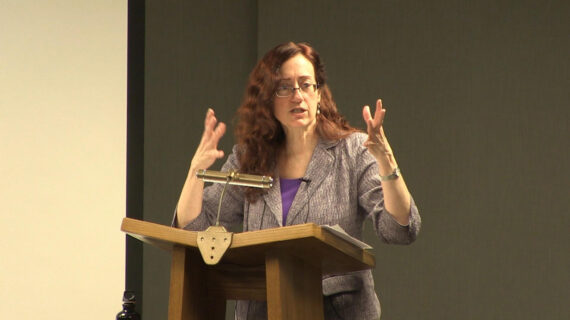
Darlene Konkle, Assistant State Veterinarian, Department of Agriculture, Trade and Consumer Protection, discusses the state and federal responses to the avian influenza in Wisconsin. Konkle shares the timeline of events, the elements of an emergency animal-disease response and the lessons learned in dealing with this highly pathogenic incident.


Copy and Paste the Following Code to Embed this Video:
Wisconsin Responds to Avian Influenza
>> Welcome, everyone, to Wednesday Nite at the Lab. I'm Tom Zinnen. I work here at the UW Madison Biotechnology Center. I also work for UW Extension Cooperative Extension, and on behalf of those folks and our other co-organizers, Wisconsin Public Television, the Wisconsin Alumni Association, and the UW Madison Science Alliance, thanks again for coming to Wednesday Nite at the Lab. We do this every Wednesday night, 50 times a year. Tonight, it's my pleasure to introduce to you Darlene Konkle. She's an Assistant State Veterinarian with the Wisconsin Department of Agriculture, Trade and Consumer Protection. She was born in Freedom, Wisconsin, and went to Freedom High School. She came here to UW Madison for her undergraduate degree. She also got her DVM, doctor of veterinary medicine, here at UW Madison. And then she went to Missoula, Montana, which is a pretty nice place to be, and then she went to Kentucky and worked on horses, and then she came back here for a residency fellowship at the School of Veterinary Medicine on large animals. And she's been with the Department of Agriculture, Trade and Consumer Protection for about the last 10 years. Tonight, she gets to talk with us about high pathogenicity avian influenza, Wisconsin responds. Please join me in welcoming Darlene Konkle to Wednesday Nite at the Lab.
APPLAUSE
>> Thank you very much, everyone, for being here tonight, giving up that nice, warm, sunny evening Tom was talking about. And thank you, Tom, for having me tonight. As Tom mentioned, I'm the Assistant State Veterinarian, and part of my duties are to help the state prepare for animal disease emergencies. And I've been involved with that for about the last seven to eight years with the Department of Agriculture, Trade and Consumer Protection, and now I get to speak with you tonight about our first major emergency, disease emergency, that I've been involved with with the State of Wisconsin. So we've had a time of it this spring, and I wanted to just relay with you some of the more interesting aspects of our response to high path avian influenza in Wisconsin. Just a little bit about the virus, an introduction. This is a generic sort of graphic of an influenza virus, and you'll notice the title slide said H5N2. That is the variety of avian influenza that we had in Wisconsin, and the major one that was circulating around the United States this spring. And the H and the N refer to proteins on the surface of the virus, and they tend to be markers that we can use to help identify different viruses. So, the N stands for neuraminidase, and the H stands for hemagglutinin. They can mix and match in different varieties, and thus we come up with different strains of high path avian influenza, and actually low path as well. Many of these diseases circulate, these viruses circulate normally in the wild bird population. We try very hard to keep them out of our domestic birds and our domestic poultry, but they do circulate out there in the wild. And the main ones we're concerned with for poultry are the H5s and the H7s. Those are the ones that tend to be more apt to mutate into a high path form. They're also the ones that we're a little more concerned about with potential ability to transmit to human beings. Over the past 10 years, there's been an H5N1 virus, as many of you know, circulating in Asia and parts of Africa. That is infectious to people and can kill people, and we've been preparing for that in similar virus introductions in the United States for a long time. So we've been very fortunate with this particular virus that it has shown no signs of being able to infect people. This is the current situation nationally. You see Wisconsin sitting at the eastern edge of the main findings for avian influenza across the country. It began in December of 2014, where the first detection was reported on the west coast, Pacific northwest in backyard birds, and, actually, one finding in a captive wildlife bird, a captive falcon. And then we had a little lull between December and January. In February, no new cases. And then in the beginning of March, we had the first detection in the Midwest, which was in Minnesota. So, overall, to this date, there's been nearly 50 million birds affected by this disease, and over 223 detections reported across the country. So, what's at stake for us here in Wisconsin? Why do we care? In Wisconsin, agriculture is a very big industry for us, and I'm not just saying that because I work for the Department of Agriculture here in Wisconsin. Agriculture generates $88 billion for Wisconsin annually, and over 350,000 jobs in this states are related to agriculture. So it's a big business for us and supports a lot of our economy here in Wisconsin. For poultry, Wisconsin ranks 22nd in the US. So we're not one of the major heavy hitters for poultry here in Wisconsin, but we've got a really diverse poultry industry in this state. We have several big corporations, some of which are based here in Wisconsin, and some who have their parent companies elsewhere in the Midwest. But we've got laying egg facilities, both cage-free and caged layers, as well as organic layers. Some of these facilities are large enough they have two to three million birds on a single premises We've also got meat type chickens called broilers in the western part of the state, and also turkey growers in the northwest part of the state. We also have a really varied game bird industry in this state, birds raised for hunting and birds raised for release as game birds. And some of those producers actually export a lot of those birds overseas. So it's a big market for them. And then we have many, many, many very small poultry flocks, backyard flocks. Do any of you have poultry of your own here in Madison or elsewhere? I see a couple hands. Madison has allowed poultry within city limits now for quite a few years, and many other cities are following suit. It's become a very popular hobby to have your own chickens or even turkeys and other birds to produce eggs or just for enjoyment. For Wisconsin, over $65 million is related to being able to export poultry and poultry products, and when we get a disease incursion like high path avian influenza, many of those export markets are shut off. So that becomes an economic factor for us too. And I realize you can't read the legend on this, but it really doesn't matter. Here's a screen shot of our registered poultry premises in Wisconsin. And, as you can see, it's kind of a blue haze. We have almost 19,000 registered poultry premises across the state of Wisconsin. And, as you can see, they're scattered throughout the state. There isn't one area for us to concentrate on. They're pretty much everywhere. Many of the dots on this map are small backyard poultry producers. And Wisconsin does have mandatory premises registration. So it is the law that if you have any sort of livestock or poultry, you need to register your premises with the state. And the good news for that is it's free. Absolutely free, and it's easy. You can do that online, you can do it in person or over the phone, or you can send that registration in by mail. And, really, the main information we need is the location of the premises, what kind of species you have, whether it's poultry, whether it's cattle, whether it's horses, and we don't necessarily need to know how many or the individual numbers. We just want to know where those locations are so we can locate them quickly is there is a disease event and locate neighboring premises quickly and easily to inform those folks if there is something happening in the area. So here's a little bit of a review of the high path avian influenza situation in the US over the past few months. Again, first detection was in December, just before Christmas. And originally in North America, British Columbia had the first identification, followed fairly shortly after in Washington and Oregon in backyard flocks We had been preparing for avian influenza actually for many years. We've done annual exercises. We've done tabletop exercise, which, for those of you who aren't familiar, it's kind of just like it sounds. People sit around a table with a scenario and talk through what might happen and what might your response actions be. And then there's a recorder who gathers all that valuable information, and then if you are able and it's ideal to take that template and go out in the field with it and do a functional or a full scale exercise, see if your initial plan is going to work when you're faced with some fairly real life conditions. So we've been preparing for that for quite a few years, up to 10 years, and we knew high path avian influenza was in the western states, and began ramping up our preparations, and then we really ramped up when, in the beginning of March, Minnesota reported their first detection in a poultry flock in the west central part of Minnesota. That was maybe a little surprising because Minnesota is not that different from Wisconsin, and we're all hardy northern Midwesterners. Not much open water anywhere beginning in March in Minnesota or Wisconsin, so not much waterfowl moving through that many people see. So still work ongoing on where that first introduction may have come from and how the other introductions came to be. So we did ramp up our preparations, began having additional meetings. We have really good relationships with out industry partners and with other agencies. Ramped up our preparations, got out our plans, looked at them with more scrutiny, and looked at our staff preparations, made sure we had enough supplies on-hand to mount a response and that our staff had medical clearance to wear respirators, which was going to be important on our response, and I'll talk about that a little bit more later. So then, post-March 4th and the later parts of March, other Midwestern states starting having more detections as well. So we were not surprised when we got an initial notification at the beginning of April. April 10th was our first case here in Wisconsin. It was confirmed on Monday, April 13th, as an H5N2. It does take a couple of days to actually confirm the type of virus. The initial notification can come much earlier, which is good news for us. We can prepare and respond then more quickly. It happened to be a cage-free layer facility in Jefferson County with 200,000 birds on that premises. And their story was they saw a slight increase in their mortality rate starting on the Monday, April 6th. Most of these places, commercial turkey and chicken flocks, they're keeping daily and sometimes multiple time a day records on feed consumption, water consumption, egg production, mortality rates. They're keeping pretty accurate records there. So when they see any slight uptick, they are paying attention, especially when they know high path avian influenza is in the vicinity. Over the next two or three days, they saw more slight increases, and they sent samples into a Missouri veterinary diagnostic laboratory. So that Missouri lab received, tested those samples, got what they called an AI matrix positive. That just means they know they have an avian influenza virus, a type A avian influenza virus. They don't know whether it's H5 or H7 or what type it is yet. But at that point, they notified our state veterinarian, happened to be in the evening, always is, and he happened to be out of town. That's the other thing that always happens when you get a response is your boss is out of town.
COUGHING
Excuse me. So we received that on April 9th and began ramping up. Our incident management team had already been meeting and discussing our plans. So on that Friday morning even before we knew what type we had, we got together and began planning. This was maybe a little bit different than we had practice and that we had planned for. As I said, we do exercise and plan each year and look at those plans. First of all, most of the flocks that have been affected up to that point were commercial turkey premises in Minnesota and these other states, and they were seeing massive mortalities almost immediately. They were seeing hourly increases in mortality rates. Over an entire barn, over the course of a day, entire barns would die from this virus. This is how pathogenic this particular strain was to turkeys. We didn't see that in this case. We saw definitely increased mortality, but not this extreme mortality that we thought we might see. We happened to be the first state that had high path avian influenza in a commercial layer chicken facility. So, as it turns out, the chickens react just slightly different than the turkeys did. So this is what the exterior, it's actually a Google Earth shot, of one of these premises might look. We've got poultry barns. See if my mouse works here. Oops, I'm going to go backwards here. The long structures are the poultry houses. The one on the left is actually a double decker. There's a poultry house on top of another poultry house, which is why it looks a little different. Each of those are about 700-some feet long. So they're really big. The building on the top, you can barely see there's a semi truck trailer backed up to it, is the egg collection facility. So these were shell eggs being produced at this facility. So, large facilities. This happens to be 200,000 birds. There are many such flocks, some in Wisconsin and many in Iowa and Minnesota, that are potentially more than 10 times that big. So they're large, complex facilities. This is what the inside looks like. You can see that, again, the building is quite long. You're looking from one end to another, about 700 feet. And what you're see from right to left is the nest boxes and perching areas for these birds. And then there's a system of conveyor belts and so forth underneath to convey the eggs, and then also the waste off to their respective buildings What you probably can't appreciate is there's a lot of infrastructure in that building. There's a lot of metal parts. It's all welded in place. There's nothing that can really be removed easily, and that alleyway is about three feet wide. So there's not a great way to get any equipment in there. It's designed to be closed in, and it's not designed to get heavy equipment through there. So that'll be important to us later on when we're trying to figure out how to manage this facility. So our response actions, we work under what's called the incident command system. All state and federal, and local agencies too, work under that for emergencies. It allows you to organize quickly. It allows for an efficient span of control and for communication among the different functions that are needed for an emergency response. So it's a little big different than our day to day way we operate. So we practice it too. And we have a great incident management team for animal health that jumped right in and began working. And our major goal is, of course, to control the spread of this disease. We don't, first of all, we love to prevent it's introduction entirely. That didn't happen in this case. We did get our first case. But from here, we want to control its spread. High path avian influenza is very contagious from bird to bird, and the birds become little virus factories. The virus is taking advantage of the infrastructure in those birds, and it's replicating and it's producing millions of virus particles. So in a premises with 200,000 birds, we want to try to control the spread of that virus as much as we possibly can. Our first goal is always to maintain the health and safety of our own responders and of the public. As I mentioned, this particular virus, so far at least, doesn't show any signs of being able to infect people, which is very good news. So, to control the spread, what we immediately do is quarantine that infected premises and make sure that no animals or animal products are moving on or off. We notify those surrounding premises within 10 kilometers. Anybody that has poultry, we notify them, and we did send out notifications through other channels to poultry producers and our commercial flocks when we knew we had that first positive. So our premises registration system really helps us out in this case. We can get data pretty much immediately from our geographic information services staff. They can produce maps from that premises data. We've got great contact information there that's complete, and we can get out to those other premises and test birds if we need to really quickly. One of the other first steps is an indemnification process. Through USDA, these infected premises are eligible to get indemnity for the birds that do need to be destroyed to control the spread of this disease. There's an assessment process there. The poultry industry, in particular, seems to have a good one. There are differences in classes and ages of birds, and there's also indemnification for eggs and egg products that would need to be destroyed. So it's a fairly quick calculation and inventory process that can get that process moving pretty quickly. And, unfortunately, the control method we have those most effective at controlling the virus is to depopulate the infected birds. So to find the best way to humanely and safely and quickly get in there and depopulate an infected flock. They'll also need to dispose of those infected carcasses Can't just take them down the road because even though they're dead, there's still some virus remaining. The virus can only survive and replicate in a live animal, but there's still residual that could be tracked around on equipment or on truck tires, things like that. So our major method of disposal for this premises was composting, and that worked out pretty well for us. Then there's a process of cleaning and disinfection of an infected premises to wash everything down, get rid of all the organic matter, clean and disinfect so it's as spick and span and spotless as we can make it, and then a period of waiting and some cases drying and heating to, again, all these different steps to make sure we kill the virus in question. And the reason we go through so many steps is there's no one perfect way to kill all the virus, especially when you have a large premises and lots of virus being produced. Our next task, and this is all kind of simultaneous, is we need to do area surveillance over a 10 kilometer area around an infected premises. We need to demonstrate that there's no other virus in the area. That's one to kind of do our due diligence. If the virus managed to make its way into especially a commercial premises, which are pretty biosecure, are we seeing it in some of these other backyard flocks too? So we go out there and actually test and see whether it's there or not. And that's also important for our trading partners as well. They want to know if there's evidence of virus in the area. And for the first time during this outbreak across the nation, we implemented one of what's called the secure food supply plans. The secure egg supply. This plan was developed over a period of years and had never been implemented yet. It's a plan that will insure safe and biosecure movement of eggs and egg products on to production and on to the consumer without too many interruptions in flow so that some commerce can be maintained and product can stay on the grocery shelves. So here again is an interior shot of a cage-free layer facility. And, as I mentioned before, there's not much room to move around in there, and that became an important consideration for us. How to depopulate 200,000 birds on a premises that's infected with high path AI when you can't get any heavy equipment in there. The method that can be used for turkey flocks or other flocks where the birds are primarily at ground level and they don't fly readily is to use a foam. Foam product similar to what firefighters use. Quickly and humanely euthanizes those birds so that they are disposed of in a manner that will control the spread of the virus. In this barn we can't do that. We have to actually physically remove birds, and we used carbon dioxide, CO2, as the method of depopulation. But it was a time intensive, labor intensive process. And we'd like to find a way to humanely depopulate large houses more quickly than that. One, we feel that it would be more humane to euthanize birds quickly rather than have them die of virus, and, two, it prevents spread of the virus the more quickly we can do that. So this shows you an example of that surveillance area. The inner circle is three kilometers and the outer is 10. It happens to be around an infected premises in Jefferson County. And in this particular instance, we had 88 other premises within that 10K area. There's not much that's magic about the 10 kilometers other than it's an accepted benchmark for how that virus might be able to travel outside of an area. >> Is that radius or diameter? >> Radius. It is radius around an infected premises. As I said, our mapping folks can get this type of information for us quickly. Actually, within minutes they could have a map like this generated for us with those dots on the map identified so that our operation section chief could develop a list for his folks to go out and begin testing. And, again, we did have a couple of commercial premises within this area, and since they were within a control area, still were operational, they weren't infected, they wanted to still move products. So we developed, used those protocols in secure egg supply to allow them to move on to processing. Here, again, is an exterior shot. Just shows how big these buildings are. And those show a conveyor belt. That's actually for a manure holding facility. And then those large fans at the outside of the buildings. So that becomes a concern as well. At this point, the standard is to humanely depopulate those birds without shutting off the ventilation in the interior of the building. So those buildings are still being ventilated, viruses potentially escaping through that ventilation system So we're trying to shut this down as much as we possibly can. And this is our disposal method. Those are compost piles within one of those exterior buildings on the premises. These look, as far as I'm told, about as pretty as compost piles can. Nice dark carbon material there. If you look really closely, and if you could see a closeup, there are some feathers and some other materials there. As it turns out, it's relatively easy to compost poultry. They're the right size. They're the right composition. They compost relatively rapidly if you have the right conditions and you have enough carbon material. And that is a good way to dispose of them. You can keep a fairly compact pile. You don't have much leachate if it's done correctly. So no runoff that could potentially have virus. And those piles need to come to the right temperature to kill virus over the right period of time, and then they can be turned for another cycle and eventually removed from that building, and then they're free to land spread it or send it off or whatever else they want to do with that material. And you can see here too, it's an interesting note, the person in the white Tyvek coveralls is one of our staff. So he's in personal protective equipment for a couple of reasons I'll go over later. So, we've got our hands full, as you can imagine, with this premises from all I've described. We've got many different tasks we need to accomplish, some simultaneously, but we still knew Minnesota, at this point, was getting daily introductions of new cases. And I think Iowa at this same time was starting to break with new cases. So knew there was still virus in the area. We didn't let our guard down. And sure enough, a few days later on April 15th, we received word that we had actually two more premises. We had two more right on top of each other. One was a commercial turkey operation up in Barron County with 126,000, and the third was a backyard flock in Juneau County that had 33 birds, mixed species. They had some chickens and they had some domestic waterfowl. Interesting note on this backyard flock, they had what some of our staff called feral domestic waterfowl. They had birds that they purchased or received last fall, and then over the winter those waterfowl, they just kind of disappeared. Juneau County has got a lot of wetlands, a lot of marshlands. Those birds just took off for somewhere else they wanted to be, and then came back in the spring to nest. So, obviously, we don't know where they were in the meantime. Very possibly they could have pick up high path avian influenza. And in both these cases, we were notified promptly of the veterinarians involved. The turkey operation has, their parent company happens to be in Minnesota, but they have a Wisconsin corporate veterinarian who we've got a great relationship with, and she notified us immediately when they had the first inclination that they might have a problem. And then the other veterinarian was a practicing veterinarian in central Wisconsin, a mixed animal practitioner, who was concerned when she saw clinical signs or was notified of clinical signs in these birds. So she notified our office right away as well. So that's how we like it to happen. This is a shot of the turkey, one of the turkey flocks actually. This is a relatively typical, I think, turkey barn. On the sides, those are curtains. They get natural air coming through these turkey barns for ventilation, and they raise and lower the curtains to control the temperature for these birds so these birds stay comfortable. This is a relatively good looking flock. I apologize for the graininess and the little bit of fuzziness in the picture, but there's a reason for that. I'm pretty sure this shot was taken with a cell phone through a Ziploc bag. The veterinarian that was on-site wanted to maintain biosecurity and not have to destroy his phone via decontamination. So he took the shot with the phone in a Ziploc bag so he could decontaminate it on the way out. So all these shots are a little bit grainy on this area. So, again, those are pretty good looking birds. These birds potentially have the beginnings of illness. You can see these birds in the center and the one on the right, they are slightly floofed up. Feathers look a little bit floofed, if you can see that. The coloring on the waddles and on the head and neck may or may not be significant here. I can't really tell. One of the hallmarks of avian influenza and some other viral diseases of chickens and turkeys is the birds get cyanotic because it is a respiratory disease. So they'll get that blue coloring. I think that here is probably more of a just camera. Camera artifact. But definitely they're squatting a little bit, feathers are fluffed up. That's a sign they're not so comfortable. And here is somewhat later. You can see some of these birds have succumbed Other ones aren't looking so hot. They're definitely looking sick. Minnesota showed some interesting shots at a small meeting I was able to attend a couple of weeks ago. Over a period of hours, that virus can go through a barn of that size and kill all the birds. Highly pathogenic is a good name for it. Again, more compost. You can compost the turkeys as well, and composting is a science. I'm not a compost scientist, and I'm glad there are people who are because we utilize those people. We actually were able to request and received a composting expert from Cornell University to come and help us out with designing the compost piles and training out staff to monitor those piles effectively and get the timeline down for what we could do with those. So we all, in the animal health field, know a little bit more now, more than we thought we would, about terms like leachate, compost, things like that. So here's the Barron County detection as well. You can see there's a couple highways that run pretty close by to that infected premises, and towns nearby as well. Important part about this slide, and you won't be able to see this identified here, but this was our major foray into the permitting world. This Barron County premises had surrounding commercial flocks that were also contract growers for the turkey corporation. They also had their hatchery, which was really important for them. That's their genetic stock, their eggs, that get sent out to all their flocks, and that's within this 10K control zone, and also they had their processing plant in here. So the eggs, or, rather, the turkeys that were being processed for consumption was in this control area as well. The processing plants inspected and regulated by USDA's Food Safety Inspection Service, so all that went on. Definitely human health standards were maintained there. But because it's in a control area, we don't want virus being spread around on truck tires as these products are being moved from place to place. So, in each case, we developed a permitting system where the farm would request permits, and this is all part of the secure food supply plans as well, and agree to maintain biosecurity standards for cleaning and disinfecting these trucks, exterior and interior, testing any live birds and the source birds for any eggs before movement. As recently as 24 hours before they moved they needed to obtain a negative test so we knew they were negative birds being moved from place to place. So that all helped reduce the spread, but it became its own arm of our organizational chart. In Minnesota, they employed upwards of 25-30 people just to do the permitting of all these products and birds that were moving. In our case, it would have honestly overwhelmed our incident management team. We didn't have enough people to perform that task. So USDA at the time had just set up a permitting group that we could refer to. So we could have them do the permitting for us once we established the conditions, and that really helped us a lot. Here's the control area for Juneau. You can see it's a little more sparse There's military installation pretty close by here, Volk Field, and there's also a lot of wetlands. Interestingly, the International Crane Foundation is not far from here. It wasn't part of the control area relatively nearby, and we'd had meetings prior to our first introduction of avian influenza with different zoological facilities that have birds as well. So they were aware of what's going on and really clamped down on their own biosecurity as well. So all in all this was our timeline. We ended up with 10 infected flocks. Six positive turkey flocks in the northwest Wisconsin area, that one backyard flock in the middle and three infected egg layer facilities in Jefferson County. And overall we had nearly two million birds affected on those 10 premises. And here's what it looks like on a map. There were some people who considered, the highway is right there, passing through the middle of Wisconsin diagonally. We did not find any relationships between these flocks, and there is a large epidemiological study going on through USDA to look at relationships between the infected flocks. We do have some evidence nationally that each one of these was not an individual introduction from contact with wild birds. There probably was some spread between flocks because there's a lot of interrelationship between flocks as far as moving feed, moving bedding material, getting products back and forth between these flocks. So we all need to learn how to control that better and control spread of virus. I wanted to talk a bit about some aspects of our response that are above and beyond just the control of the disease but that are also really important. Our incident management team, we were fortunate to have a really great safety officer, and she's the health and safety officer for our whole department as well. And, again, this strain was not a public health threat, but we still worked really closely with state public health and with local public health to determine what do our responders need to wear for personal protective equipment in case the virus would mutate, in case there's other strains out there that might be a public health threat. And we also want to outfit them so that they've got enough protective equipment they're not going to spread virus outside of an infected premises. So we coordinated quite a bit through out incident management team. Each of our responders had to have medical clearance to wear a respirator. It happened to be an N95, which is the kind that fits over you nose and mouth tightly, and they had to be fit tested to wear that. And then there was also a monitoring period for anybody who was on an infected premises, including farm workers who were helping with the response. So they were monitored by public health. They had to report in every day with how they were feeling, and they also had to take temperatures for a period of time afterward. There were people who got sick on this response There were people who got sick in Minnesota and Iowa. It was March, April, and May, which is prime season still for seasonal flu and other maladies So there definitely were people who reported in and were sick. None of those individuals tested positive for this strain of influenza. So, we also had extensive training for the use of the personal protective equipment. It's not all that easy to put all that one, to don up in the Tyvek coverall, boots, gloves, some sort of hairnet or bouffant, and then that respirator, and then, more importantly, to take it all off efficiently when you're done and ready to exit a premises so that you're not contaminated anything when you do. So our safety officers trained folks on that as well. Then we had other health and safety issues pop up through the period. Weather related hazards, storms. Our people were out on the road and in areas where there sometimes wasn't an underground shelter in case there would be a tornado warning. So they had plans in place for that of where to go if there were tornado or severe weather warnings. And then also, kind of an analysis of the disinfectants that were used, the facilities, protection against trips and falls, etc. So, health and safety is a big component of any response. And here's a shot, a little better shot. This is from one of our exercises back a few years ago. A team of responders helping each other don and off. You can see they're standing in garbage bags. That helps when you're disinfecting each other to capture the water, the liquid disinfectant that's running off. So you can bag all that up into a garbage bag and get it out of there so that you're not contaminating your area surrounding. So it's a process, and people need to train on it so they're efficient at it. Another critical aspect for us is biosecurity, and that'll be a really ongoing factor for us going forward. It was a standalone objective for our incident. We made a separate objective in our incident objectives beyond depopulation and controlling the disease. We wanted critical biosecurity measures to be in place, especially on an infected premises so we didn't drag virus outside of there. So that, we found, was critically important to stop the spread, especially on that first introduction, on that Jefferson County premises. We actually enlisted help from Wisconsin's National Guard to help clean and disinfectant vehicles because there was heavy equipment going on and off that premises, to help clean and disinfectant those vehicles and keep biosecurity in place. There's a lot involved with biosecurity as well. We have a person in our office, one of our veterinary program managers, Dr. Patton, who's our biosecurity chief. She's our biosecurity expert, and she was able to help look at our protocols and ensure that biosecurity was in place. And, again, this involved more training for farm personnel who may not have been as familiar with it as well as our responders. And biosecurity concerns go all the way from begin on the premises but also to handling your samples in the surrounding areas. Every sample that was taken, and these were basically throat swabs of birds, that's how to sample for avian influenza, but those samples go in a tube of media, they get placed in a Ziploc bag, they get sprayed off with disinfectant, they get placed in another Ziploc bag, and they go on to the lab. So, lots of different barriers to prevent contamination. And, also, for premises, we had biosecurity information on our website and passed that out to producers and backyard flocks in the area, encouraging people to try to mitigate their access to either rodents, wild birds in the area, things they could do on their own farms to enhance their biosecurity. Another thing that the commercial flocks can do is do periodic audits of their biosecurity. Have either farm personnel or a third party come in, and there are companies that actually do this service for the commercial flocks, go in an audit their biosecurity and rate it so that they can do better. And here's just a shot, an example of cleaning and disinfecting one of the dump trucks that was delivering carbon to one of the facilities. You can see the responders are decked out in personal protective equipment and brought in, the National Guard was able to buy in more high powered power washers for us that did a more complete job of biosecurity. And then there's the runoff from that effluent as well that we worked with DNR with that to control the runoff and dispose of any wastewater containing disinfectant. So there were a lot of moving parts to the cleaning and disinfecting as well. Public information was another big aspect of our response. We had fantastic public information officers at DATCP that we're really privileged to work with, and they did just a fantastic job of maintaining public awareness, of working with local departments of emergency management and local public health to get information out to try to alleviate any misinformation or rumors and to try to alleviate any concerns for public health and just get good information out there. So we released a press release once we first had confirmation of the positive, and we coordinated that with USDA. Any press release or information we had was put on our website for Department of Ag, Trade and Consumer Protection, along with some fact sheets that were developed, frequently asked questions, methods for biosecurity, links to USDA's website and so forth. Our public information officer also put together daily briefings during the height of this. So, she sent those out to over 5,000 recipients, from poultry industry people to fellow state agencies to public recipients. Anybody who wanted it got one, and they were posted on the website as well. So it was a daily briefing on what was going on, and that really helped to keep people informed and also helped, honestly, keep the phone calls down to our office so we weren't generating a lot of phone calls there as well. People felt like they were getting good information. Also, presentations like this one and several radio and TV interviews during this session as well. We also, in Wisconsin, had what I think was our first governor's declaration of a state of emergency related to an animal disease incident So we had a template for that mocked up in case of other emergencies, and we were able to work with Wisconsin Emergency Management and with the Governor's Office to get the governor to sign a declaration of emergency for our event. And what that did was help free up some state resources that we could use to help us. The declaration was statewide, but it focused in on the affected counties, which were Barron, Chippewa, a little corner of Chippewa, Juneau, and Jefferson. The way that declaration was written may have helped us out, I'm not sure, to get our trade back more quickly than not because we wrote it statewide, that gave us some leeway if we had additional cases, but it also focused on the counties where we were actually working. And when trade partners see that, they see some limitation to what's going on. They don't see an emergency that's out of control. So, other states had declarations of emergency that they actually rescinded because it impacted their ability for those trading partners. And, again, the main focus was it authorized deployment of Wisconsin's National Guard troops. We were able to get a specific unit that was proficient in cleaning and disinfection and had all the equipment and training to do that. They were a major help to us, particularly at that first Jefferson site where there was a lot of heavy equipment moving out to that area where it was difficult to get inside the barns. So we really wanted to lock that premises down. The contract grower in that case did not have a lot of resources to bring to bear for that, did not have a lot of employees or equipment. So National Guard came in and really helped to keep that site secure and keep the cleaning and disinfection that we needed in place. They also were able to do some tracking of personnel for us. And they were just great partners to work with. Another aspect to this that was a little unique, our state veterinarian issued an order, a summary special order, that would ban any swap meats associated with poultry or poultry at swap meets. And he also banned any open shows for poultry unless they were part of a county, district, or the state fair. So fairs that were not a county or district fair could potentially show poultry if they applied to our office for an exemption to this, and, in any case, any exhibitor with poultry to one of these open shows has to sign a statement before bringing birds certifying that they've had no death loss within the past 10 days in their flocks. So that allowed a couple of things. It allowed some of the so-called show to go on, that we could still have our county and state fair poultry exhibits this summer, but it gave us some measure of assurance that some of the unregulated fairs maybe were not going on and that our county fairs and state fair going on during the summer is a less risky time for us. In the summer, it's hot enough, the virus, we haven't had any new introduction since May, May 5th. So we've got a bit of a lull here that we hope we can enjoy for the next month or two before we may get the virus back in fall. So we had that discrete area where we were comfortable enough to allow fairs and poultry exhibits to go on with that assurance of no death loss. And our liaisons and partnerships with other agencies were really important during this time as well. We worked with our own staff, of course. And I should mention that our Division of Animal Health, our state veterinarian is our leader there. We have 45 employees in our division. About half of us are in the office; the other half our out in the field in different areas of Wisconsin. And 45 is not enough people to manage a large scale disease response, and we knew that going in. So we partnered with other agencies, received help from USDA Veterinary Services, USDA APHIS. They sent in one of their incident management teams on our request, the end of April, for a three-week rotation through right about when we were getting pretty tired. We'd been at it nonstop for three or four weeks and were up to seven premises. USDA was able to send us the team with backups that we could integrate with, and they were very professional. We also partnered with the poultry industry. We'd done exercises and meetings and outreach with them for several years. And many of these companies brought a lot of their own resources to the table in dealing with these outbreaks. They had their own employees employed in depopulating birds and in cleaning and disinfecting, and also their own resources. We also worked really closely with the counties involved, with their emergency managers, keeping them informed. And a lot of times they had good input for us on what other resources might be available in that county that we could tap into. And we worked really closely with state and local public health agents and with Wisconsin DNR. We have not yet had a chance to sit down with DNR on this. We're going to be doing that next week, to go over kind of a debrief of this incident. I mentioned compost. DNR has some experts that helped us out there with monitoring the compost. They also had their water division experts that helped us with ways to dispose of any water effluent from the cleaning and disinfection, and also some of the products that needed to be disposed of. There was egg and egg products that needed to go to disposal, and DNR was able to help us find outlets for those and go through permitting process that they already regulate. I mentioned Wisconsin National Guard and also Wisconsin Emergency Management opened up the State Emergency Operation Center at level four, and that meant they opened what's called their E-sponders site, which is a SharePoint site that all the agencies can have access to to monitor our situation. We were just able to have a sit down debrief with most of these agencies and several others as well. Just yesterday, as a matter of fact. Sat around the table in DATCP's board room and talked through the incident, identified ways we might be able to do better next time and what went well this time. And one of the things we very well may do if a similar incident or a larger one comes up in the future is have Wisconsin Emergency Management open up that Emergency Operation Center at a higher level, bring people actually in there to coordinate so we can get resources more quickly. This, again, is kind of a summary map of the national situation That dark purple in the center is kind of the epicenter of the Midwestern high path AI outbreak. You can see Wisconsin is kind of on the fringe. We were kind of on the eastern fringe there. I don't have a time lapse of it, but there's not a real clean east to west or west to east or north to south progression of this. It was individual, a lot of individual introductions over this period of time. USDA is looking at mountains of data that's been supplied by each of these farms to look at any linkages, try to make predictions for the future, and look at how this disease possibly could have spread farm to farm and how many might have been individual introductions. So they're doing a lot of work there, some of which is already posted on their website. Some of those investigations, some of the preliminary information is already up there. So, impacts. What did it mean for us so far? We're still compiling a lot of this information, but trade bans were one of the major ones for us. Immediately, and actually even before we officially announced our first case, Canada imposed restrictions on poultry products from Wisconsin. They caught wind of it, they knew it was happening on other states, and other countries followed suit as a matter of course. So, really, the minute a state or country declares a foreign animal disease like high path avian influenza, our international exports stop. Usually USDA's international staff is able to do a terrific job in negotiating these trade agreements and are able to mitigate that as much as possible. But the poultry industry exports about 18% of its profits. So when that 18% goes away, it impacts them quite a bit. Also, there was a direct cost to industry. I mentioned they got indemnified for poultry and poultry products. They also were reimbursed for some of the work they did, some of the time and the personnel that contributed to their response. But there's still lost revenue, lost genetic material from these hatching eggs and from the genetic stock that they have, and also, at least in Minnesota, there were layoffs associated with this, with plants closing. The response costs for us we haven't tallied yet. We do have a significant cost to us in terms of outright supplies and also personnel time and materials. For USDA, the last number I've seen approaches $700 million. There were just $300 million appropriated from the Commodity Credit Corporation funds to again assist with this response. There was also a cost to you and me, as consumers. We saw price increases at the grocery store, saw some supply impacts on certain products, and also we found out some of our limitations in resources for depopulating and disposing of these large flocks. And, again, this was the first implementation of these secure food supply protocols, which we hope to be able to use with little or no risk to spreading disease, for not only future high path AI outbreaks, but also for something like foot and mouth disease or another disease impact in the future. So, what's next? What are we planning for next? Tom keeps asking me if it's coming back in the fall, and I keep saying I do not know. I wish I had the crystal ball. But we have to plan for it. We have to assume it's coming back when these birds start migrating back in September, October, and November. So we are planning for that. We're trying to plan for the worst case scenario. USDA just had an invitational meeting a couple weeks ago with state veterinarians in which they laid out some scenarios that would impact multiple areas across the country and really stretch resources, and then where do we gain additional resources. So we're working through the numbers there. Analyzing the epidemiology information we already have, trying to identify where our gaps are and where we can plug those or gain additional resources. One of our big lessons learned in Wisconsin is that even though we responded quickly and efficiently, we know that we're going to run out of steam after about three or four weeks, and we need to plan for that right at the beginning. We need to make plans to get other teams in, other responders in, even when we start responding so that we can have an efficient roll-over of personnel and keep everybody up to speed. And we're developing our standard operating procedures for biosecurity in response as well. So we've begun the process. We still have these premises still under quarantine. We're just about at the point that they've gone through enough time, gone through all their cleaning and disinfection, been empty of birds for a long enough time that according to the guidance and the protocols we have in place, we're sampling them, the environment, and those samples are coming back negative. Some of these premises are getting ready to restock in the next couple of weeks. So that will be a big milestone for us. So we're still identifying our lessons learned and moving towards the future here for other introductions of high path AI or other diseases, like foot and mouth, that might affect our other industries. So, with that, I'd like to thank you all very much for being here tonight and for your attention, and have a great rest of your week. Thank you again.
APPLAUSE
Search University Place Episodes
Related Stories from PBS Wisconsin's Blog







Donate to sign up. Activate and sign in to Passport. It's that easy to help PBS Wisconsin serve your community through media that educates, inspires, and entertains.
Make your membership gift today
Only for new users: Activate Passport using your code or email address
Already a member?
Look up my account
Need some help? Go to FAQ or visit PBS Passport Help
Need help accessing PBS Wisconsin anywhere?

Online Access | Platform & Device Access | Cable or Satellite Access | Over-The-Air Access
Visit Access Guide
Need help accessing PBS Wisconsin anywhere?
Visit Our
Live TV Access Guide
Online AccessPlatform & Device Access
Cable or Satellite Access
Over-The-Air Access
Visit Access Guide




Follow Us