

 Passport






Wisconsin Folk Art
09/15/14 | 36m 30s | Rating: TV-G
Richard March, Folklorist, Author, explores the cultural landscape of Wisconsin’s ethnic, occupational and regional traditions. Groups that settled in the state retained many of their cultural traditions, creating a distinctive folk heritage.


Copy and Paste the Following Code to Embed this Video:
Wisconsin Folk Art
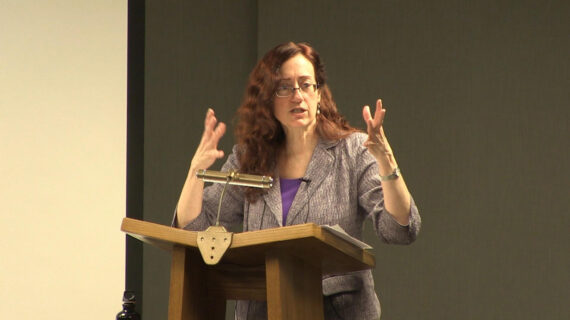
cc >> Today we are pleased to introduce Rick March as part of the Wisconsin Historical Museum's History Sandwiched In lecture series. The opinions expressed today are those of the presenter and are not necessarily those of the Wisconsin Historical Society or the museum's employees. Rick March is the former folk and community arts specialist for the Wisconsin Arts Board, a position he held for nearly 30 years. He was also the long-time host of Wisconsin Public Radio's Down Home Dairyland program and is the author of the recent University of Wisconsin Press book The Tamburitza Tradition. Here today to discuss Wisconsin's rich folk art heritage, please join me in welcoming Rick March.
APPLAUSE
>> Well, hello. I think the mic is on. Yes. Good, well, anyway, I'm glad to be here. When Katie contacted me about speaking here, I pondered what would be a good topic, and it dawned on me that almost exactly 30 years ago I worked on a proposal to get an exhibit of Wisconsin folk art developed. And after its opening in Sheboygan, the very first place it traveled to is right here at this building. So more than 25 years ago, actually 1987, there was an exhibit here that we're going to take a little retrospective look at today. And the occasion was that in 1983 I had started the folk arts program at Wisconsin Arts Board, and I noticed that a number of my colleagues in other states had utilized a survey of who were the folk artists in the state in order to present their works in an exhibit as a way of finding out, well, who's out there. A good one had been just done in Iowa, and their exhibit had been called "Past to the Present." So I went to my director and I said, I think we should do a folk arts exhibit of this sort to kick off the program, get it rolling. And I was informed at that time, he said, well, we at the Arts Board never do that. We don't produce any arts activities ourselves. We fund other people to do it. So I knew I had to go somewhere else and find a partner. So the place I went to was the John Michael Kohler Art Center. They have a fancy new building now, but here's a picture of the old original building, what it looked like back then. And I spoke to this person, Ruth DeYoung Kohler. She had just recently rotated off the Wisconsin Arts Board, and I knew that she was interested in a type of art that frequently gets called folk art. One of the things I'm going to try to clarify in this talk is that folk art is used in at least three different ways, but I'm going to emphasize the way that I've tended to use it through my career. So anyway, this is the Concrete Park in Phillips, Wisconsin, Fred Smith's work. And the Kohler had been involved in an effort to restore those deteriorating concrete sculptures. I knew that Ruth was also interested in things like this. This is Ernest Hupeden's work. There's a little town, Valders, Wisconsin, up in the Upper Baraboo River Valley, and in a Woodmen's lodge hall this itinerant German painter had painted murals that represented the various kind of rituals that things like the woodmen had developed. Well, so I got together with Ruth, and we worked on developing a proposal to the National Endowment for the Arts. And I knew that two folklorists with Wisconsin connections were living in Kentucky at that time and interested in making the move back to Wisconsin. It's Janet Gilmore and Jim Leary who have since had illustrious careers here in Wisconsin as with the University of Wisconsin. And so the proposal was written. We received the funding, and in October of 1985 Jim and Janet began doing the statewide fieldwork. And indeed the big bulk of all of the work was done by them plus some other people and myself to identify literally hundreds of folk artists in almost all of the counties of the state. Their year of research ended in the fall of '86, and then from the fall of '86 until the spring of '87 we worked on putting together the exhibit. And the title of the exhibit is "From Hardanger to Harleys." And actually, I forgot a little something here. I'm going to go back. One of the things about these photos is that compared to the digital photography we have nowadays, they're going to look really kind of a little blurry. And when I did the radio program, Down Home Dairyland, whenever I was going to play an old 78 RPM disk, I would warn people that now you're going to hear something like this.
scratchy recording of music
So in order to have a window into the past, you have to put up with that surface noise and that low fidelity that we're hearing on this little 1920s recording of some Swiss yodelers, the Moser Brothers.
MUSIC PLAYING
And the visual equivalent of that is what I'm going to do today showing some old slides. We'll listen to them yodel for just a second.
YODELING
A fun band. Okay. So "From Hardanger to Harleys" is what we wound up deciding to title the exhibit. The reason being that we had old forms such as Hardanger lace and Hardanger violin, they're from, of course, the province so named in Norway and continued by Norwegian Americans in this state, and we also have things like contemporary traditions that also are passed on in some type of a folk group. So the definition of folk art that I'm using is an expressive form that grows out of a particular community of people who share an aesthetic about something and figure out ways to, based on that aesthetic, make artistic artwork. So that includes such things as a customized motorcycle. Some people found that pretty shocking, actually, when we did it. But I remember Ruth was pleased that this was one of the rare exhibits that people dressed in their Harley riders outfits came into the art exhibit to see. So we're going to just zap through a little tour of the exhibit just like you might have done if you were here in 1987. Now, there's a little bit of a difference in orientation between what I and Jim and Janet as folklorists had and what Ruth Kohler had as an arts professional. She was in the fine arts, and it was her opinion that the artwork needs to stand on its own. You ought to be able to put it on a plain blue background and people look at it for its worth. We had a little different orientation, and we felt that because these were created in a cultural context, that it would be good to show, to have some photographs of the artist and how the things are used and have information about that type of context. But it was her gallery, and so we did it that way. And it is interesting now to just take a look after we've done other exhibits that have used the cultural context to take a look back and see, well, here they are. Let's look at the objects just on their own. So these are a couple of Ho-Chunk black ash baskets. They were made by Florence Whitewing, who lived up in the Wittenberg area in northeastern Wisconsin. And this is a tradition that was very widespread among especially the Ho-Chunk and the Oneida tribes, and it's still going on. There are still a few makers but decidedly fewer. It's a lot of work. You have to pound an ash log for hours. Then you have to strip the splints and split them yet another time and then smooth them. Before then, you're ready to start dye some of them and then you're ready to start weaving the baskets. There is a substantial Latvian community, Latvian American community, in Milwaukee, Wisconsin. It's one of the largest Latvian settlements in the US. And -- from the Milwaukee area made these Latvian knitted mittens. Okay, now this is an example of what had been an occupational tradition becomes an artistic expression. Some Finnish Americans from up in Hurley, Wisconsin, Iver --, Duane Stenroos, and Eugene Stenroos, made these bucksaws in a bottle. So these are the older type of tools that they would have been using in their woodworking, and now it's become art and put into a bottle as a sign of virtuosity they could actually put that together. In Milwaukee there is the largest African-American community with a majority of them coming out of the south, particularly the states of Arkansas, Mississippi, Alabama, and Louisiana, and Tamer Givens made this. She calls this a bow tie quilt. Also, this type of quilt with the vertical stripes is often called a strip quilt. We had woodcarving by a fellow named Adolph Vandertie from Green Bay. Adolph was combining and articulating the standard woodcarver's trick of carving a ball in a block or carving a wooden chain. He combined them in just an amazing array, and he also liked to, there are these people that get together for these hobo gatherings. He had traveled a bit on trains when he was a young guy, so he would go out to Iowa and when they had the big hobo gathering and he called himself the hobo whittler. There's an Amish community in the area to the east of La Crosse. This is Alvin Hershberger's double rocker. He's from Westby. The woodworking traditions using hand tools has remained very strong among the Amish people. And Alvin improved on a standard design by making this a double rocker, and he had also recessed the seats for more comfort and made some more of his own variations on the standard bent wood rocker. And then going straight north from there up to Barron County and Barronett, a Norwegian American guy named Phillip Odden, who had gone to Norway and studied woodcarving at a folk school in Norway and at that school he met and married Else Bigton, another Norwegian folk artist except she was born in Norway. He was born in Wisconsin. And every since, they have maintained a partnership in building and carving things. This is called a Kubbestol. It's carved out of a stump of tree. And their type of carving is very much sought after by Norwegian Americans all over the country. They're also called on to do carvings of things like portals around the doors of Norwegian Lutheran churches and so forth. Now, this is a real good example of community being represented in an object of folk art. This is a quilt by Allie Crumble from Milwaukee, she's African-American, and she called it her necktie quilt. She asked each of the male members of her church to donate a tie. And so on each quilt block she has embroidered the name, starting up at the top with the pastor's and then the deacon's and then brother, brother, brother through the rest of them. So a beautiful visual representation of her community. Here's a fantastic example of a rag rug. This is by Edith --. Edith was an immigrant from Finland. She actually lived just the other side of the border in Ironwood, Michigan, but we just had to let her in this exhibit. This is called the big lake wave pattern. Although it's an old traditional folk art, it almost looks like some sort of really modern art, doesn't it? And here's the first of the Hardanger examples. This is Hardanger lace. Selma --, a Norwegian American from Mount Horeb, was a fine maker of this type of cut work and then sewn lace. You can see tremendous amount of detail that's involved. And this one, this is bobbin lace in the process of being made. A nun in Milwaukee, Sister Mary Crucifix, who was originally from northeastern Wisconsin, from the Belgian community there. Belgian are very big on making bobbin lace. And she made it often for alter cloths or for vestments for priests and so forth. Now, this was one of the more controversial items in this show, but I thought it was really important to have it in there. These are canned fruits and vegetables, believe it or not, by Anna Wickers from Rice Lake, Wisconsin. One of the things that is important to note is if you entered your canned good in the county fair, yeah, they'll taste them to make sure if you're competing for a blue ribbon, but they have to look good. They need to. So you can see that they're placed in there, not just smushed in any old way. This is a good example of how the folk arts reminds us that aesthetics pervades everyone's lives, and we like to put something of beauty even in such ordinary circumstances as when you walk into your pantry and you look at your canned goods. People that can a lot of tomatoes and can a lot of beans, they don't, like, put a bean next to a tomato and then three beans. There'll be this shelf all the way across red, then this shelf all the way across green, right? So the aesthetics invades. This is a detail of a bunad, a Norwegian folk costume, by Oleanna --. This is called a -- doll costume. And Oleanna was a wonderful narrator who was great at telling Ole and Lena stories and so forth. She worked for many years at Little Norway and was a great kind of hostess there. This is a detail from a vest by Gerald Hawpetoss. And Gerry is a member of the Menominee tribe. And these particular symbols represent mythical figures, three serpents that symbolize the bridge between this world and the next. And Gerry was recognized for his abilities as a moccasin maker by receiving the National Heritage Fellowship from the National Endowment for the Arts. One of three of the artists in this particular exhibit who received that very high and very rare award. This is an Ojibwe dance bustle by Charles Connors. He's a member of the Bad River Ojibwe band. And at the time of this exhibit he was living here in Madison. So there's German silver, otherwise called nickle silver, with the feathers and beadwork. In Stevens Point there was a concertina maker, Antoine Wolf. It's interesting, he bought the templates and tools and materials from a Chicago based concertina maker, Joe Potak, and then when Antoine Wolf, who has passed away, retired from it, he wound up selling it to a guy name Jerry Minar up in Montgomery, Minnesota. So the concertina making has move from Chicago to Stevens Point up to Minnesota. So it's moved from the north to the west, but it is still going on with Jerry making these fine instruments. And every part of it is fabricated by the maker. This is a Greek instrument, a bouzouki, made by --. He was an immigrant from Greece. He had been an officer in the Greek Air Force and was sent to the United States for further training and wound up staying and living in Milwaukee. And he used his skills as a machinist to try out making the most characteristic Greek folk instrument, the bouzouki. And although we only have one shot of almost everything in this exhibit, the Kohler photographer couldn't resist also getting the back side of this instrument because, again, it's such beautiful work. And here's the other Hardanger item. This is a Hardanger violin or fiddle made by Ron Post from Black Earth, Wisconsin. He is one of only three active Hardanger fiddle makers in the United States. And he says that the other two always call him up for advice. So I don't know what that says. But Ron is the second of the artists in this series that won a National Heritage Fellowship because his work is so outstanding. This is an egg cloth by Maria -- from Sheboygan. She's Ukrainian American. And this particular embroidered cloth would be used at Easter to bring Easter eggs to church and cover them over in a basket and then have them blessed before they were taken home. These were the ordinary kind of eggs that you would actually eat. But another Ukrainian America, Betty Christensen from Neenah, Wisconsin, made what are called the pysanky. They are dyed using a wax resist technique so that you wind up progressively going from the lighter to the darker colors covering over the parts that you don't want the dye to get with wax, beeswax, that you put on using a tiny little thing called a kiska, which is like a little metal funnel that is stuck through a pencil-sized piece of wood. And here's an Easter egg by Stephanie Lemky from Mazomanie, Wisconsin. Stephanie is an immigrant from Croatia, and this particular technique of using embroidery floss to weave around an egg for Easter is particular to her home region in northwestern Croatia. Since the time of this slide, she went wild and made a bunch of more complicated designs. This is actually the very basic one. And wheat weaving by Sidonka Wadina, she's from Lyons, Wisconsin, which is over in the Whitewater area. She calls this a harvest cross. She's Slovak American, born in Milwaukee, and became interested in this particular tradition. She said that she always was able to get a good supply of wheat to weave because she would offer the farmers in her area a woven wheat decoration in exchange for letting her cut some of the raw material to make more items. This is an icon of Saint George slaying the dragon by Nicola Mulanovich from Milwaukee, Wisconsin. He is an immigrant from Serbia, and he carved icons for use in people's home religious alters that they will have. Typically a family will have a particular patron saint. His particular medium for doing it all more common is painting. His is woodcarving. This is called a ketubah. It's by Simcha Prombaum, a rabbi from La Crosse. He made this traditional type of marriage certificate that people would have to commemorate their wedding and display, many Jewish people display a ketubah in their home. So it was beautiful Hebrew calligraphy is what he excelled at. Now, a lot of the folk arts were for very practical and useful purposes. Here is a feed basket. It's also made of black ash, just as the Ho-Chunk baskets were, but this one is big. It is over 30 inches tall. It's to put some fodder in or something, if you need to carry some on a diary farm to feed a particular animal. And it's by Joe Buresh from Luxemburg, Wisconsin. Farming is represented, though, in more of a symbolic way in this item by Carl Vote from Madison. It's a miniature Case traction engine made out of copper and silver soldered with steel and brass. The whole thing is about 10 inches by 22 inches by eight inches wide. So Carl grew up on a farm, and to acknowledge that heritage, people make symbolic representations of it. He was also involved in actual restoring of large things like you see up at the steam engines shows in places like Baraboo. Dennis Hickey from Baileys Harbor was a commercial fisherman on Lake Michigan, and these are marker buoys. And you can see they have their own artistic shape to them. They're made out of wood and metal rods and tubing to mark where they left the nets when they go back to fetch them. And if those were big items for fishing, these are small ones. Delbert Richardson, from Madison, was an expert tier of fishing flies. And I understand, I'm not the greatest ichthyologist, but I understand that fish are mostly colorblind. So you wonder who the beautiful colors on there are for, for the people or the fish?
LAUGHTER
These are decoys for, they're representing perch but they're aimed at getting a muskie or a northern pike. They were carved by Ben --, who was from the Lac du Flambeau reservation. Actually, I went out on the ice with Ben and got out on his little ice fishing teepee. I think there may be, in the exhibits upstairs, a representation of how that's done. And you jig that in the water, and he has little metal fins. They're weighted with lead. The tails are curved and the fins are set in such a way that if you jig it, the fish swims in the water in a circle and looks very realistic and a muskie just has to come over there and get himself speared. The aesthetic and practical concerns mixes is demonstrated here again. Sam Rust from Rice Lake would do carved gun stocks for people there who wanted to have them. So here he has kind of an oak leaf pattern on a hunting rifle. Now, these are working duck decoys. Working in the sense that these are the kind that you actually take hunting. There are a lot of decorative carvers who compete, like with the Audubon Society and so forth, and make very, very elaborate duck decoys. But that isn't the kind you're going to throw in the lake some place. This is that kind by Rich -- from Oconomowoc. He spent many, many years working on trying to have an example of each of the different duck species that goes up and down the Mississippi River flyway. So he carved quite a lot of different ones over the years. And then occasionally there's artistic renderings of what was the results of the hunting. A guy named Eddie Hinkelman from Merrill, Wisconsin, was a taxidermist, and he found objects to make this little squirrel band and dancers. Some of you may remember the Moccasin bar in Hayward that had a bunch of dioramas of animals taxidermied like that. Now, one of Eddie's relatives, John Hinkelman, also from Merrill, was commemorating a more realistic part of their heritage, which was logging. And so he created this model of loading logs on a log sled and being pulled by a team of horses. Then, of course, chainsaw carving is another great Northwoods tradition. This was a muskie carved by Art Moe from Stone Lake, Wisconsin. And he made everything from the typical bears and he made elk, I believe, and this muskie. Evan Bombich is an immigrant from Slovenia to Milwaukee, and he made whirligigs that were from his memories. He worked in a blacksmith shop, among other things, when he was in the old country. So you have the bellows going up and down, and the guy pounding on the anvil. And we just have a few more. This is a sampler of desilado lace. It was made by Hotencia -- from Waukesha. There's a community that came originally to work in foundries there from Mexico, and this is a type of cut work lace. And each of these different patterns has a name. One of them, and I'm not sure which one, one of them is called tomato peel.
LAUGHTER
And the third of our National Heritage Fellows from this exhibit is Ethyl Qualheim. She was from Stoughton and was honored not only by the National Endowment for the Arts but by King Olaf of Norway, and she received many, many recognitions as being one of the key people, one of the key students of the revitalizer of the rosemaling tradition in the United States. And the last slide from the exhibit is -- or paper cut art, Polish paper cut art, by Rasharda --. She was an immigrant from Poland and was an expert at making this particular kind of paper cut art. So, anyway, that's our little tour through the exhibit. And I just want to comment that a majority of these traditions are still being practiced, like, for example, Bernice -- has continued on and is teaching. Most of these particular traditions are continuing. There are a few that are no longer practiced, but the folk arts at Wisconsin seem to have a lot of longevity and being sustained into younger generations. So I hope you had a good time looking around at the 1987 exhibit that was right here 27 years ago.
APPLAUSE
Search University Place Episodes
Related Stories from PBS Wisconsin's Blog




Donate to sign up. Activate and sign in to Passport. It's that easy to help PBS Wisconsin serve your community through media that educates, inspires, and entertains.
Make your membership gift today
Only for new users: Activate Passport using your code or email address
Already a member?
Look up my account
Need some help? Go to FAQ or visit PBS Passport Help
Need help accessing PBS Wisconsin anywhere?

Online Access | Platform & Device Access | Cable or Satellite Access | Over-The-Air Access
Visit Access Guide
Need help accessing PBS Wisconsin anywhere?
Visit Our
Live TV Access Guide
Online AccessPlatform & Device Access
Cable or Satellite Access
Over-The-Air Access
Visit Access Guide




Follow Us