

 Passport






Why Belief in Miracles is Unjustified
03/11/14 | 56m 36s | Rating: TV-G
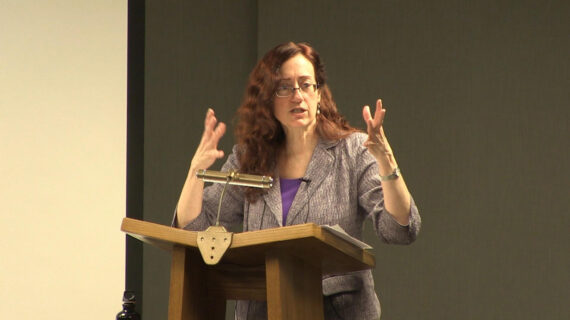
Larry Shapiro, Professor, Department of Philosophy, UW-Madison, introduces two arguments against believing in miracles. He focuses on the kind of inference on which believers rely and reframes David Hume’s famous argument against believing in miracles.


Copy and Paste the Following Code to Embed this Video:
Why Belief in Miracles is Unjustified
cc >> It's my great pleasure to provide an introduction for the next speaker in our UW Philosophers Tackle Contemporary Issues series, Larry Shapiro. My colleague Larry Shapiro has been at UW for 20 years and as a sign of his prowess he was at the tender age of just 40 made department chair. Sorry Larry. Larry doesn't have any gray hair, look at all the gray hair I've got as a result of being department chair. Larry has been a fellow at the institute of research in the humanities here. He's been with Sydney University. He has won the prestigious Kelett Mid-Career award and the Vilas associateship here. As well as being the president of Phi Beta Kappa. He's the author of two books In Philosophy of Mind and the editor of two further collections In the Philosophy of Mind. He's the author of 35 articles, he's given over 75 talks in 13 different countries, so he's got lots of stamps on his passports, and he's written a book manuscript
called Wonder of Wonders
A Common Sense Guide to Miracles from which tonight's talk is excerpted. Please join me in welcoming Larry Shapiro.
applause
called Wonder of Wonders
>> Thank you Ross. Thank you for all coming out on the last cold night of the year. The last time I spoke, there was so many people I was introducing an important philosopher. It's my turn to shine today. I'm going to talk to you about miracles and I'm going to try to convince you that if you believe in miracles and care about reason, you should stop believing in miracles. Because belief in miracles is not justified, that will be my thesis. Let me start with a miracle, a reported miracle. The shrine of Our Lady of Good Hope. Maybe some of you have been there, it's just a few miles outside of the Green Bay. It's the only church in North America at which a Vatican certified miracle has ever occurred. It wasn't a church when it occurred, it was a church because it occurred. A young Belgian woman named Adele Brise saw visions of Mary and in 2010 the Reverend and a Bishop decreed the authenticity of the Marian apparitions. He says as 12th Bishop, the deities of Green Bay and the lowliest of the servants of Mary. He declares with moral certainty and in accord with the norms of the church that the events, apparitions and locations given to Adele Brise in 1859 do exhibit the substance of supernatural character and I do hereby approve these apparitions as worthy of belief. Well they're not obligatory by the Christian faithful. What I'd like to highlight in this decree is the use of the concept supernatural. Also his mention of worthy of belief. Both of these ideas, the existence of something supernatural and the importance of having a belief be worthy will be important themes and the talk to follow. Let me first talk about the idea of supernatural. How was that weird, supernatural thing. What can we say about supernatural events? I think one thing we should say is that supernatural events ought to be far and few between. We don't regard the sun rising every day as a supernatural event. In large part because it just happens all the time and we think if something happens all the time, there's probably a naturalistic explanation for it. Another thing we might say is that we regard the event is potentially supernatural only if it's somewhat inconsistent with everything we know about how the world ordinarily operates. If my coffee is bitter this morning, I don't regard it as supernatural because it's perfectly consistent with the way I know the world will operate that coffee tends to taste bitter. Also and this will be important for the first argument against justified belief in miracles that I make. We have to be prepared to deny that any unknown natural cause might explain the event. I think this is a very tough challenge for believers and miracles to meet. All the time in the history of science we find ourselves being able to explain things that earlier generations might have found mysterious. It might have said there's no way nature can explain this. That woman must be possessed because that's the only way we could possibly explain the seizure she's experiencing and then lo and behold we discover diseases like epilepsy. If you're really going to believe that some event is supernatural, you have to be in this kind of position where you think science can never possibly provide us with an explanation of that kind of event. Okay, so much for the supernatural. Now let me talk about the passage in the decree about the Marian apparitions that concerns the worthiness of belief. When is it belief or in other words, when are we justified in believing something? I think worthiness conveys the idea of justification to say that this belief is worthy of my holding it is to say something like I've got adequate reason to believe it. I think we want to say that an event is worthy of belief when there exist reasons for thinking that it's true. Justification is this kind of existence of reasons for thinking that something is true and I think that justification stands in contrast to faith. There's a real difference between saying I believe something because I'm justified in believing it. I have reasons for believing it versus I believe something simply is a matter of faith. Seems to me, what justification when you care about whether your belief is true. If someone asks me why I think it's true that the Badgers will make it to the second round of the NCAA and then away with them. I'll give some justification. Well that's what happens every year. Something like that. It's not that I want it to be true but I care whether my belief is true and that's why I'm offering justification. To accept something on faith is just to say that you really want it to be true. This doesn't give you reason to think that it's true. I might have faith in my Badgers that they'll go all the way to the finals and beat, I don't know, Kansas. Simply wanting it to be true doesn't make it true. If you want to know whether what your believing has a good chance of being true then you're in the game of justification. Now we get to my thesis tonight. No one's ever been justified in believing in miracles. By that I mean, if you believe in miracles, you can't say your belief has enough support for thinking that it's true. Of course you might say, well I believe in miracles because I really want them to be true and that's fine. I've got nothing to say about that other than it's something that philosophers don't like to hear. That's okay, however if you want to say something like I'm pretty confident that my belief in miracles is true. Well then you better be thinking about justification. Here's what I'm not going to be arguing tonight though. I'm not going to argue that miracles are impossible. My thesis is about whether you're justified in believing them. Not whether they're possible. I'm not even going to say that there's no circumstances under which we might have justification for belief in miracles. I can't imagine circumstance where we do but, well I can actually, no I don't know if I can. It doesn't really matter. I'm not going to be saying no one can ever have justification for belief in miracles so I'm just saying that today no one is ever justified in believing in miracles. I'm also not going to be arguing that there's no God. This is what my claim does entail though. Belief in miracles is irrational, given the evidence today, it's irrational if you think that you need reasons to believe in miracles. You're irrational to believe in them because you don't have the reasons that you need. Also, if you believe in God because you believe certain miracles have occurred that are evidence for God's existence then also I think you're being irrational because you can't ground the belief in God and belief in miracles without inheriting the rationality of that belief in miracles. That's what I'm not arguing. What I'm simply arguing is that you're not justified in believing in miracles. The argument is going to follow, I'm going to talk a little bit about belief and justified belief, say more about this ideas. They don't say just a very little bit about the nature of miracles. Mainly to say what I don't have in mind when I'm talking about miracles. Then I'm going to give two arguments. First argument I think is pretty demonstrative. It suffices to show that belief in miracles is unjustified. Second argument, I think can probably be challenged in certain ways but I also think it's good enough to show that miracles isn't justified. Then I'm going to close the talk considering this question about whether you should care that your belief in miracles if you do believe is unjustified. Let's begin. What's justified belief? I'll say evidence justifies a belief when it makes the truth of the belief more probable. We're asking whether we should believe something, someone offers us evidence. If this evidence makes more probable the truth of what we're wondering whether we should believe then that evidence serves as justification. A belief is justified when evidence suffices to make it more probable than not. You can have a justified belief. That's a cookie jar, it's empty and we're going to come to the reason for that in a minute. Before we get there, let me just talk about the relationship between justification and truth. Here, there is a movie made not too long ago called Elvis found alive or something like that. That's a picture of Elvis talking to Ronald Reagan. Elvis died in '74? '77? I didn't know there was so many. You do think he died?
laughter
called Wonder of Wonders
If you believe on the basis of seeing this movie that Elvis is alive. Your belief is unjustified because the movie was made by a bunch of whack jobs who, I mean, that's what they were who thought the evidence is overwhelming that Elvis actually exist but they did not have good reasons for thinking Elvis exist. If you came to believe that Elvis's existence is a result to seeing this movie, you now have an unjustified belief. Also your belief is false because Elvis is not alive. Sorry. On the other hand, this didn't come through, here's a fortune cookie, the fortune says, you will die alone and poorly dressed.
laughter
called Wonder of Wonders
Suppose one day I open up this fortune cookie, that's what I read, I think, look at me, that's not going to happen right? Suppose I die alone and poorly dressed. Suppose that fortune is true. Still, the source of the fortune, a fortune cookie is no grounds for justification. I shouldn't believe something because a fortune cookie tells me to believe it. We've got two kinds of unjustified beliefs. False ones and true ones. We also have two kinds of justified belief. Here's a prominent Chicago newspaper declaring Dewy defeats Truman. Ordinarily a newspaper of that caliber is trustworthy. You read something in that newspaper, you read the date, you read the sports scores and you're justified in believing these things and what they say are true. Sometimes a source that normally provides justification like this newspaper ends up saying something false, in which case your belief is justified. If I believe that Dewy defeats Truman because I picked up this prominent Chicago newspaper and read the headline then I'm justified in holding that belief. It so happens however that that belief is false. On the other hand, reliable sources can also say two things. In this box we have a belief that's justified and a belief that's true. When we think about miracles, we could be asking two questions. Is my belief in miracles justified or unjustified? Is it true that miracles occur or is it false that miracles occur and as far as I'm concerned, I'm not concerned with the true and false rows. My thesis is just that belief in miracles falls in this column and I'm going to remain officially neutral about whether miracles have actually occurred or miracles can occur. I have an opinion about it but my purpose here tonight is simply to argue that any belief in miracles falls in this unjustified column. You can't have a justified belief in miracles. Good, let's get going. What do I mean by miracles? We use this term a lot and we use it in very colloquial ways, but what I don't mean when I'm talking about miracles are events that are awe inspiring or majestic or fortunate or surprising. The miracle of birth, not a miracle, right? When we say that, what we mean is this is just so wonderful. We look at the mountain in the distance and we think what a miracle but it's not. It came about through natural causes. The miracle in ice is not a miracle. Miracles as I'm understanding them for the purposes of tonight have to have a kind of supernatural component. They have to be somehow inconsistent with the laws of nature. Moses parting the red sea right? If that happened, maybe we should think it was a miracle because why should the red sea part just when the Hebrews need to escape from the Egyptians. When Aaron turns his staff into a serpent. This is kind of weird, you don't see that happen often. Shoot, my photo didn't turn out. This is a photo of, that's really too bad, it's my best joke. I've searched for pictures of Jesus coming out of the empty tomb and they all looked like Andy Gibb. Actually Andy Gibb, he's the one who is still alive I think. Now I'm going to get to the arguments. First argument for why your belief in miracles if indeed you do believe in miracles is unjustified. This is an argument that turns on kind of inference that's probably most commonly used to justify belief in miracles. What I'm going to be arguing is the inference does not actually serve that role. The kind of inference that most people appeal to to justify their belief in miracles can't do it. Here we go. We use this inference to the best explanation when we're trying to make a hypothesis about some cause that we haven't observed. We see some observations, we wonder what in the world can explain these things. What's the best explanation for these observations? We start with these observations then we try to make an inference about what might have caused these observations of the sort that we're seeing. Now we're back to the cookie jar. The cookie jar's empty. Someone has stolen the cookies. That's the observation. An empty cookie jar. Now we have to wonder what explains this empty cookie jar? We start inspecting the scene a bit more carefully and we notice some crumbs on the counter. Then we keep inspecting, we break out our Sherlock gear and we notice a fingerprint on the empty cookie jar. We come up with some hypothesis. Originally the name Sally and Nancy were the names of my daughters but I say some not nice things about one of them. Since one of my daughters is here tonight, I didn't want to create that kind of family dynamic in this context. We got two hypothesis, we can infer that either Nancy stole the cookies from the cookie jar or, I said your name. Sally stole the cookies. Which one, what do we infer. You can't answer that question, you can't answer that question given the information available to you. You have some observations and I've thrown out two names. Why should you prefer one hypothesis to the other. What we need are some background assumptions. Here are some background assumptions that will help us make an inference to the best explanation. Sally's kind of sloppy, Nancy's pretty neat, cookies leave crumbs, we have to assume that. We didn't assume that cookies leave crumbs, we'd be mystified by the presence of crumbs in the counter. Chocolate leaves smudges. They're all in the background, these assumptions but given these assumptions and those observations, I put a star next to Sally because it seems like those are the only two viable candidates and we have those background assumptions. Sally, she's the one. Okay. Suppose we change the background assumptions a little bit. I tell you that yeah Sally, she's sloppy but Nancy, she is cunning and it would be just like Nancy to spread some crumbs on the counter and put a finger print on the cookie jar. To frame her sister because that's what sisters do right? I'm calling these purely equivalent hypothesis. They're purely equivalent in the sense that both hypotheses lead us to expect those observations. One side out of those background assumptions, we're sort of back to where we were before I showed you any background assumptions at all. We now have no reason to think Sally took it and no reason to think Nancy took it. We perhaps know that one of them took the cookies but given the evidence and given the background assumptions, we simply don't know. We're unjustified in believing that it was one or the other. How do we come to terms with the predicament? One thing we might do since it's easy to do and possible to do is look for some more observations and consider more background assumptions. Suppose we notice that the chocolate smudges are six feet above the floor. Sally's four feet tall and Nancy's four and a half feet tall. Now given additional observations and additional background assumptions, we're back in the game. We're now prepared to draw an inference to the best explanation. Notice to that, these background assumptions are all easily testable, we can measure Sally, we can measure Nancy. All the observations allow us to then, given these observations. We look at these background assumptions and we now are in a position to say it was Nancy after all that cunning daughter. Now let's talk about a miracle. Here's a miracle I like. Let's use inference to the best explanation to try to justify our belief in supernatural causes. You know the story, Aaron and Moses present themselves to the Pharaoh and the Pharaoh says, why should I believe that God favors you. Aaron says you know, look at this. He turns his staff into a serpent and Pharaoh says, big deal. All his court throw their staffs on the ground and they all turn into snakes. Aaron says, I'm not done yet. His serpent eats all the other serpents. That's a miracle. Why do we think it's a miracle? If it's really a miracle then we ought to think that somehow God is behind it right? It's a miracle and the virtue of the fact that Aaron's staff turned into a snake eating snake because of God's supernatural intervention into the situation. Now we face a pretty big problem I think. Why, when we're thinking about the hypotheses to consider here. Our observations are Aaron's snake, serpent ate the serpents that the court sorcerers had produced. We think what best explains it. God must have intervened in the situation. Why not think, no, it's actually very powerful green Martians. Green Martians are up there thinking this would be a good opportunity for us to turn some staffs into some snakes and they have the power to do it. Maybe it's just a really good magical trick. We've all seen magical tricks that we can't possibly explain and maybe Aaron was just a super good magician. Maybe God doesn't exist but there are these near godlike entities and these near godlike entities decided, here's an opportune moment to put the Pharaoh in his place and one thing led to another and there's Aaron's snake eating the sorcerer's snakes. Maybe beings from the future figured out how to turn rods into snakes and transported themselves into the past where upon they gave these rods to various people. These are a bunch of hypotheses. They all make sense of the observations. Any one of these will explain the observations and what do we do? That's Morgan. Here's the problem, we have, as our hypothesis something like, well supernatural being must be working through Aaron or maybe it's some unknown natural cause. Maybe there is something in the air that day that turned staffs into serpents? Maybe it's these extra-terrestrials who are focusing their staff into serpent beams on to the staffs of these people in the Pharaoh's court. These are empirically equivalent hypotheses. We need some way to say it's one of these and not another of them. Just as we needed some way to say it's sloppy Sally and not cunning Nancy. What we have to do is make some background assumptions. Say something like well supernatural being has desires, intentions, expectations etc. The sort that are consistent with the observations and by the way nothing else can explain the observations. Without this background assumption, I don't see any way to distinguish one of these hypothesis from another. The problem is this background assumption can't be tested in the way that we're able to test and confirm the background assumptions about Sally and Nancy. We measure their heights, we determine whether one of them is sloppy, whether one of them is cunning. We determine whether one of them likes cookies. All of these things we do, all these operations we can take to help us discriminate one hypothesis to another are things that we can do but how do I go about, first problem, how do I go about testing whether there's really a supernatural being with the sorts of desires, intentions and expectations of the sort that are consistent with those observations? I have no way to do that because I have no access to that supernatural being. Moreover, you can't simply assume that a supernatural being is the only thing that could explain those observations because there you're assuming exactly what it is you're trying to infer on the basis of those observations. As I see it, this argument is enough to defeat anyone who thinks they have justified belief in miracles because the burden then falls on the believer to say why it is they think that the cause of this unusual event is extremely improbable occurrences is God rather than Martians, unknown natural causes, time travelers, magicians, what have you. I said at the very beginning of the talk that if you're going to believe in the supernatural, you have to be prepared to deny that there might be unknown natural causes capable of explaining this unusual observation. What we find here is sort of an instance of that kind of problem. Why should we think when we come across an extremely improbable occurrence that the best explanation is divine intervention of some kind. We have other explanations that are no less good. Okay, that's my first argument. Let's now talk about second argument which involves some technical stuff which I'm going to make easy I hope because it deals with these things called probabilities and these things are very counterintuitive. The argument takes inspiration from David Hume. Philosophy's bad boy. David Hume was a skeptic of sorts, an atheist of sorts. Had lots of deflationary views about all sorts of things and he wrote a chapter of his inquiry called of Miracles and what he says here is that no testimony is sufficient to establish a miracle unless the testimony be of such a kind that it's falsehood would be more miraculous than the fact which it endeavors to establish. This is convoluted but I'm going to explain what he means. Think about a vastly improbable event. Most of us have never experienced a vastly improbable kind of event. We hear about them from others. We hear a testimony about some improbable event like Adele Brise telling us about seeing Mary in the Wisconsin woods. When is it appropriate to form a belief on the basis of this testimony? When does testimony justify a belief in a vastly improbable event? One thing we might want to say is that testimony must come from a very reliable source right? If it's the town liar telling us that she saw Mary in the woods, we'd say I'm not justified in believing that because the town liar tends to lie. Also, the more witnesses, the better, assuming that these witnesses are all independent right? Why do we think that Lincoln was assassinated? Well we have numerous reports from different sources. That makes the evidence for his assassination stronger than of all of these newspaper reports were based on the account of a single witness. Right? We get numerous witnesses, they're all reliable and we think, this is an improbable occurrence, the assassination of a president but I now have enough testimony of the right sort to believe this improbable occurrence. Now let's think about what Hume is trying to convey. Hume says, when anyone tells me that he saw a dead man restored to life, I immediately consider with myself whether it would be more probable that this person should either deceive or be deceived. Or that the fact which he relates should really have happened. I weigh the one miracle against the other and according to the superiority which I discover. I pronounce my decision and always reject the greater miracle. If the falsehood of his testimony would be more miraculous than the event which he relates, then and not till then can he pretend to command my belief or opinion? Here's the idea. We want to talk about weighing our surprise. We hear a testimony about a miracle. Someone has seen Mary, someone has seen a staff turn into a snake. We have to now weight two sorts of things. On the one hand, it would be kind of surprising for someone to be giving us testimony about a dead person coming to life again. If the testimony were false, why would people say false things? That's kind of surprising. Most of the time we can count on each other to say true things. This is a surprise. Testimony is false and we have to weigh that against a different kind of surprise. The surprise that the event really happened. Two surprises to think about. One, someone's saying something false, reporting something that didn't happen, another kind of surprise, that thing really happened. Once we weigh the surprise, what humans are going to say that he said is that in every case of reported miracle, it's always more surprising to think that that miracle actually happened. Than it is to think the testimony was false. For whatever reason. It could be that the person testifying to the existence of the miracle was hallucinating, was drunk, didn't understand what she was seeing, was lying. Whatever the reason, Hume's observation here is that it's always more surprising when something vastly improbable happens then it is that someone's testimony to that effect might be wrong. Here is a way to formalize and then I'll deformalize the kind of reasoning that Hume's argument depends on. It's a formalization that comes from a reverend, Thomas Base. I'll talk more about that in a minute but here's an example that I wanted us to think about. Suppose that you take a diagnostic test for some disease and we can think of the test as providing testimony. Just as someone might say I saw Mary or I didn't see Mary. A test for a disease we'll say you have this disease or you don't have this disease. The test provides testimony of a kind. Let's imagine now we have a test that's diagnosing whether you have disease D which is a terrible disease to have, it will kill you, painfully and slowly. Well not too slowly, it will take 23 days then it will kill you painfully. Let our test be very reliable. By which I mean, if you have that disease, if you're one of the poor people who has disease D. The test is going to be right 99% of the time. Test says you have that disease. Well, if you have that disease and the test says you have it, you can trust that test right? Sometimes this test goes wrong, maybe in order to make a really good test, we had to make a test that will result in false positives that it will say of some people who don't have the disease. Hey you've got that deadly disease. Let's say this test is 99% accurate in detecting that disease among those who have it. Of those who don't have it, it says a 5% of them that they do. It seems like a pretty good test and the question is now, you've tested positive for this disease, do you want to take the cure? Let's suppose that the cure is your worst nightmare. It causes scales to form on your skin, tentacles to grow up from your head. You develop severe flatulence, it's just awful. Do you take the test? You've tested positive, it's 99% reliable among those who have it and it makes false errors only 5% of the time. You think, of course I'd take the test, the cure. I'm married, I don't have to worry about that stuff.
laughter
called Wonder of Wonders
Here's how the reverend Thomas Base represented this problem. This just says, what's the probability of having the disease, given that the test says you do? What's the probability that you're really sick given that the test gives you a positive result? The only really important part of this equation for our purposes of the things in read were probability of D, that's the probability of having the disease. This is a point about what's called the base rate. What I didn't tell you in my initial scenario about this disease is. How common it is among the general population. That makes a huge difference. Let me explain why, plug in the numbers, turns out that test is right only one time in 5,000. If you think that the frequency of the disease in the general population is say one in 100,000. Here's how we get to that conclusion. Here are a 100,000 individuals. I'm stipulating that the disease affects only one in 100,000 individuals. Whose got it? This poor person is sick okay? Let's suppose we're really worried about this disease mutating and becoming common so we're going to test everyone in the population. The test is 99% reliable, if you have that disease, the test is 99% accurate in telling you yeah, you've got that disease. We test everyone, this person has a disease and we say yeah, sorry you've got the disease. Remember, the test goes wrong 5% of the time in the sense that others who do not have the disease that tells them that they do. Now we've got 100,000 people we've tested all of them and it's going to say that 5% of them, they have the disease when they don't. It's going to say that 5,000 people which is 5% of 100,000 that they're sick. This test which seems very reliable to us is wrong 5,000 more often that it's right. That's kind of surprising, that's why I said probabilities are hard to think about, you get really surprising results when you think about large numbers and stuff like that. What does this say about miracles? Here's how I want to apply this to our discussion in miracles. There is Adele Brise, our witness of Mary on those cold Wisconsin afternoons in Green Bay. Incidentally, one of the times she saw Mary, she was with her sister and another woman and they had no idea what she was talking about. Let's now apply the reasoning I used to talk about that test to a case of a miracle. Let's suppose that when Brise reported seeing an apparition of Mary, her testimony's really reliable. She's a miracle detector. If she's a miracle, she's the one you want to consult. Yeah, she'll tell you, that's a miracle. She's almost never wrong about identifying miracles when they're really miracles. That's like our test right? If you have the disease, the test is almost sure to give you the correct answer. Maybe she might make a mistake every once in a while. Just like our test might say of a healthy person every once in a while. Hey, you're sick. Adele might say of some none miraculous thing. Yeah, I think that's a miracle. She was like our test. She'll be good at some things and not so good at some things. Now what made our conclusion about whether you should take that cure for this disease, kind of surprising. The fact that it was a one in 5,000 chance that you're genuinely sick, given the test result was the fact that the disease was so rare in the population. If the disease affects only one in 100,000 people. Then the test that's wrong 5% of the time is wrong about 5,000 people. Now let's suppose that miracles are even less common than one in 100,000. How often is it an event result of a supernatural intervention? I bet it's one in a billion times? When was the last time you saw someone raise from the dead, or the last time you saw a snake that had been a staff. If we think that the base rate for miracles is really low, then the obvious conclusion is that when Adele reports seeing Mary, the chance that Mary was actually present is much smaller than the chance that she said Mary was present when Mary was not present. The same kind of reasoning leads us to reject other kinds of miracles like Mary's testimony to seeing Jesus. Maybe she was really good at spotting miracles but she'll make some errors. Now we ask, how often does a dead person rise again, very seldom. The base rate for rising from the dead in the general population is really tiny. The conclusion is we should just, probability tells us the chance of her being wrong is much greater than the chance that someone really rose from the dead. Your belief is unjustified. Here's what the argument doesn't show yet. It doesn't say miracles are impossible, it's about justification, it doesn't say that we can never be justified in our belief about miracles. In fact Hume says something which I won't discuss. He thinks it is possible with enough witnesses, independent that we might think that something like darkness fell on earth for eight days but he's cagey about it. I've been talking about Hume's argument as having two parts. I've only illustrated the first. The first part concludes that chances are pretty good that any reported miracle is wrong. Now you might say suppose the witnesses are super reliable? Suppose that test for a disease we had wasn't 99% right and only wrong 5% of the time in false positives. It was like 99.9999% accurate and false positives happened only.0000001% of the time. Then, should we take the cure? Yeah, probably then we should, given the base rate. Maybe we should think Mary and Adele are super good witnesses. If that's true then we've got a point of leverage against Hume's reasoning. That's why Hume adds a second part to his argument. Hume is going to cast doubt on the reliability of people who testified to the existence of miracles. Hume says, there have never been sufficient numbers of trustworthy and unbiased observers of miracles to warrant belief in their reports. He points out that people tend to believe what they want to believe especially with regard to the fantastic. He points out that reports of miracles seem most numerous among barber superstitious and ignorant people right? What he's doing is he's causing us to face up to the fact that witnesses of miracles aren't super reliable people. They tend to be in fact backwards people in some way. Where we don't have enough of them to justify our belief. People just sort of get taken in by wanting to believe in the fantastic. We might ask, well what about our sources for belief in Jesus's resurrection? Is that a super reliable source? In fact it's not. We look at the gospels where we're given the account of Jesus's resurrection and we learn that there are written 30 to 50 years after the reported resurrection. We don't know who wrote them, it's not like Luke wrote Luke and John wrote John. These names were just assigned to the gospels, there was no Luke, there was not Matthew. We have no original copies of the gospels, only copies of copies that were made centuries after the originals. Produced or oral recounting and the work of scribes who were sometimes illiterate. Sometimes the scribes had religious agendas and they would redact the gospels to say what they wanted to, we know all of these is true to the gospels. We know that they're riddled with errors and inconsistencies and bias. That's Mark VI. Look at these inconsistencies right? Here's the story of the empty tomb. Mary Magdalene according to John are two Marys according to Matthew where Mary Magdalene and Mary mother of James and Salome according to Mark are women who followed Jesus to Jerusalem according to Luke. Came to the tomb where they found the stone that had already been rolled away according to Mark. Saw an angel roll it away according to Matthew and they saw a young man at the tomb according to Mark or two men according to Luke or no one according to John. They were told to tell the disciples to go to Galilee according to Mark or to remember that Jesus had told them while in Galilee that he would rise again according to Luke. The women then were instructed to tell the 11 disciples what they saw according to Matthew or too afraid to tell anyone according to Mark. Or to tell the 11 plus some others according to Luke or to tell Simon, Peter and another anonymous disciple according to John. If you put the gospel side by side and try to read them, you'll soon discover that they're not the same. What Hume would say had Hume been a scholar of the New Testament. He would say, this is exactly what I'm talking about. When I want to call into doubt, the veracity, the reliability of the witnesses on which miracle reports are often made. Moreover, we can supplement that point by asking this kind of question, what else did the followers of Jesus believed if we want to focus on new testament miracles. This is relevant because we know that people who lived long ago had lots of beliefs that we know today to be false. It's no surprise that they might believe some things that were consistent with their beliefs then. We're now in the position to judge as being false. If they believe a lot of things, believed a lot of things we know now to be false, this gives us reason to doubt some of the claims they make about miracles. Jesus' disciples would have been poor and uneducated and illiterate, they would have believed in the stories of Homer in the Hebrew bible. They would have believed that Asclepius had raised the dead and Elijah and Elisha and Heracles and Empedocles. The idea of being raised from the dead was not a big deal. This is my, I did some research which I've uncovered some bizarre facts about our biblical ancestors. They would have believed such things as that. Saying the word two will prevent the scorpion from striking. Cutting hair on the 17th and 29th days of the month prevent it from falling out. Fasting saliva, saliva when you're fasting can keep in check leprous boils and when applied with the right hand to the right knee and the left hand to the left knee, it can prevent neck pains. Spitting into the hand that dealt a blow will soften the resentment of the victim. A woman's monthly flux can turn new wine sour, cause gardens to dry up. Dull steel edges kill beehives, cause bronze and iron to rust, drive dogs mad and give them poisonous bites. These are the people that we're relying on when we are supposed to accept their testimony on behalf of Jesus' resurrection. This is the kind of stuff they believed and Hume would have said, see what I'm talking about? What's more likely? That they're wrong about the resurrection or that the resurrection actually occurred? Notice it's not just that they believe crazy things, it seems like the idea of testing beliefs was beyond them. How hard would it have been to know that a woman's flux doesn't really dull steel blades? It would have been easy to figure this one out right? I want to conclude asking whether you should care whether your belief in miracles is justified. Suppose you're thinking well, so what. I have now heard from a philosopher that my belief in miracles is irrational but should I really care whether I have justification from my belief? Here's the idea I want to suggest. Let's talk again about someone sick. Your doctor tells you, you have strep throat. Do you bother with a second opinion? No you probably don't. The doctor says, here's some amoxicillin, you take it, you're done, you don't give it a second thought. Now suppose that your doctor tells you you've got pancreatic cancer and you have about a year left to live? I think here you do want to bother with a second opinion right? You want to be sure of that doctors right? Why? When you're told something that it's a huge consequences for how you're going to live your life. You want to be sure you have sufficient justification for believing. That's why you go to the second doctor, you want to justify your belief that you're really dying. Now we can take that line of reasoning and apply it to our belief in miracles. Many people believe in miracles like 80% of Americans do according to a pew poll. Must probably don't give it a second thought. Their life, the way they've lived their life doesn't really engage with the fact that they have these beliefs in miracles. It's like being told you have strep throat. Yeah, okay. No need for a second opinion. Suppose for some people, their belief in miracles is some way foundational to how they live their life. If they found out there were not miracles and they'd no longer gone on missions or they had no longer tied. They had no longer surround themselves with a certain community. If that's the kind of life you live and that life is based on a belief in miracles, it seems to me that's exactly when you want to know whether your belief is justified just as it's when you have that terminal diagnosis that you want to know whether you're really sick. Moreover, some people's beliefs in miracles have a prominent role not in how they live their lives, not only in how they live their lives but how they think others should live their lives right? Here it seems, especially acute that you want justification for your belief. If I'm going to tell you how you should live your life on the basis of my belief in miracles. I'd better well have justifications. So far as restrictions in other lives rest on beliefs about miracles. We want justification. There are some religious groups that assign women an inferior status on the basis of their religious beliefs which are in turn based on their belief in miracles. Faith healing, some people think that they should cure their sick children through prayer. Some people are opposed to abortion for religious reasons that are in turn derived from their belief in miracles. Same with opposition to gay marriage. My concluding point is just that you should care about whether your belief in miracles is justified if you care about miracles basically. Let me conclude now. I've shown two arguments that I think suffice to show that beliefs in miracles is unjustified, the first inference of the best explanation can't lead us to the conclusion that there is some divine intervention rather than some other explanation for the improbable event we're witnessing. Second argument, weighing of probabilities reveals a miraculous event to be less likely than the falsity of the testimony on its behalf. Then I said something like this you should care about these conclusions in proportion to the significance you attach to miracles in your daily life. You shouldn't care at all about what I said if you don't believe in miracles or if you think yeah, miracles, big deal. Thanks for listening.
applause
Search University Place Episodes
Related Stories from PBS Wisconsin's Blog












Donate to sign up. Activate and sign in to Passport. It's that easy to help PBS Wisconsin serve your community through media that educates, inspires, and entertains.
Make your membership gift today
Only for new users: Activate Passport using your code or email address
Already a member?
Look up my account
Need some help? Go to FAQ or visit PBS Passport Help
Need help accessing PBS Wisconsin anywhere?

Online Access | Platform & Device Access | Cable or Satellite Access | Over-The-Air Access
Visit Access Guide
Need help accessing PBS Wisconsin anywhere?
Visit Our
Live TV Access Guide
Online AccessPlatform & Device Access
Cable or Satellite Access
Over-The-Air Access
Visit Access Guide




Follow Us