

 Passport






Viskonsin! Yiddish Radio in Badgerland
07/14/14 | 39m 1s | Rating: TV-G
Henry Sapoznik, Director, Mayrent Institute for Yiddish Culture, UW-Madison, shares the history of how Yiddish radio came to Wisconsin in 1929. With an offer from William Paley to join the Columbia Broadcasting System (CBS), WISN in Milwaukee signed on to air Yiddish programming from New York City.


Copy and Paste the Following Code to Embed this Video:
Viskonsin! Yiddish Radio in Badgerland
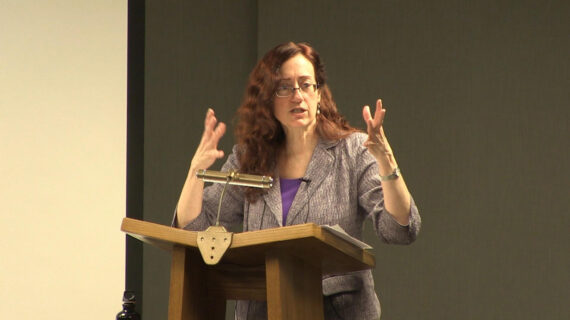
cc >> Today, we are pleased to introduce Henry Sapoznik as part of the Wisconsin Historical Museum History Sandwiched In lecture series. The opinion expressed today are those of the presenters and are not necessarily those of the Wisconsin Historical Society or the museum's employees. Henry Sapoznik is the Peabody Award winning director at the Mayrent Institute for Yiddish Culture at the University of Wisconsin-Madison. Henry is also the curator of the Sapoznik collection, an archive documenting Yiddish American radio at the American Folklife Center at the Library of Congress in Washington, DC. Here to share the story of Wisconsin's first brush with nationwide radio, please join me in welcoming Henry Sapoznik.
APPLAUSE
>> Thank you. >> You're welcome. >> Thank you. Thank you all for coming this afternoon. This is a real treat to be able to bring you up on perhaps one of the great semi-hidden stories about Wisconsin's great past in terms of American broadcast history and also the diversity of Badgerland. When it comes to the history of American broadcasting, Badgers are second to none. We own the bragging rights on perhaps the most important moment in American broadcasting. That is the establishment of the first licensed radio station right here in Madison. Originally with the very supersonic name of 9XM. It sounds like a foreign spy. But 9XM started in 1917, eventually became WHA. You can always tell the older stations by the three-letter names they have. And that was in 1922. But like a nesting doll, the history of Wisconsin broadcasting appears deeper inside of that obvious story. And that has to do with the ability of Badgers to be reached through modern technology in broadcasting in terms of ethnic diversity. Of course, we know the high visibility ethnic communities, Polish and German and Scandihoovian, and again, but tucked away deep in there, there is yet another story, and that is of the minority minority broadcasting in Wisconsin. And as so many stories which do not reveal themselves willingly, that you have to go in with a trowel and time and just dig at it, the story of Yiddish radio in Wisconsin is one that happened almost by chance and through the machinations of a great broadcast visionary whose name was William Paley. Paley was the founder of the Columbia Broadcasting System, attempting to go mano a mano, toe to toe with his great rival, David Sarnoff, who had started NBC just a couple of years before. Paley began his broadcasting career in Philadelphia doing sales for his father who ran a cigar store. So Paley was pretty savvy about sales. So, how do Badgers come to be connected to Paley? In his desire to establish a brand new network, he sought out unaffiliated independent stations around the country and linked them into a brand new network, the CBS network, starting in 1929. 1929 is pretty early for the establishment of networks. And here was his great deal. He went to 49 stations from coast to coast and said you can be hooked into the great, fabulous culture and music and art of New York City, and dancing around like sugarplum fairies in the heads of the various station managers were the kind of fancy nightclubs that one sees in 1930s movies with betuxed men and women in gowns dancing to sophisticated nightclub orchestras. So, who, of course, wouldn't want to be connected to the great popular culture of New York? And this was William Paley's ballyhoo. It was a terrific ballyhoo. There was only one small problem. That is not what he was offering. He was offering New York City programming, that's for sure, but what he was giving his unsuspecting affiliates around the country, all 49 of them, was broadcasting that was already happening on a station that had started in New York City. A little tiny station, little vest pocket station, a little station whose power of dissemination of broadcasting was so small, it was so modest that the station could probably have been heard better had they just shut off the equipment, opened the window, and just yelled into the streets. It was station WABC, and not the ABC we know now. It was started by a radio inventor, a genius named A.H. Grebe. Lost in today's history. But he was more interested in his technology than in programming and was willing to sell this station to this brash young man from the city of brotherly love who came up and wanted a flagship station for his new network. And what a station it must have been because in the sales figures for the station there was not only the technical equipment, there was not only music stands, but there was an undetermined amount of live poultry that was passed on in the sale. So god knows what was actually going on there. Grebe, in attempting to create a really grassroots station in New York, decided to create a kind of open mic. He reached out to minority communities and offered them the opportunity to use his little radio station to reach into the various communities. So within a couple of years, he had programs, Greek programming, Christian Science programming, and a weekly program founded by a very popular Yiddish newspaper called The Day. And this was an interesting moment because the idea of connecting radio stations and newspapers was an idea that was fully coming into its own at this time. In fact, as we will see, the station which ended up being the carrier station for these programs was also affiliated with the newspaper in Milwaukee. What Paley was doing is that he was merely taking the programming that was already at little WABC, not adding to it, not enhancing it, just letting it go through. Unsuspecting to the broadcasters, they would be getting all of these programs. So, why did he think that any of these stations would be happy with demographic programming that did not reflect, seemingly, a Wisconsin constituency. No one knew. No one knew because this was a brand new moment in sales and in broadcasting. The local station, the Milwaukee station, WISN, which is still on the air, became the carrier of programming in Wisconsin to carry over this material. Well, they began in 1922. It was a Hearst affiliate, William Randolph Hearst. If you've ever seen Citizen Kane, that's about him. And WISN very openly accepted all of this programming, but within a very short amount of time they began to sense something was not right because this programming was aimed at such a different constituency, but they had signed on. And so all of these stations had to take this programming because that's what he had sold, Paley had sold to his nationwide sponsors. I can give you 49 stations who will carry your programming all the time. WISN was an unwilling recipient of the programming. And how do we know this? Because they weren't exactly doing back flips over advertising the programs. An examination even within the pages of the Milwaukee Sentinel, which was the newspaper, the purse newspaper, which carried the programs, listed the programs with as little information as possible. In fact, this programming broadcast from New York was listed in the very almost zen-like Jewish program. What does that mean? And so we really, from the listings, from the actual primary research materials, we don't know what it was. The other thing which was a problem in early broadcasting is that these were, for the most part, radio was on the air, literally. It was a moment in time. It was not recorded. It was all live. So the program, heard once, never heard again, disappeared into the ether. So, how do we know what was happening on the program, what were they broadcasting and how long they broadcasted? Fortunately, the original station, the original sponsor of the show, the Yiddish newspaper The Day back in New York, was quite proud of their program, the first Yiddish newspaper to ever broadcast programming. So in the great, in the annals of sales where one is told tell them what you're going to say, say it, and then tell them what you said, the tug, The Day program, did just that. A program aired on Sundays. On Friday they would have a big ballyhoo of what the program would be the following Sunday. On the Sunday edition they would say on today's broadcast and would list everything, and, of course, on Monday they would always, coincidentally, have an enthusiastic review of the fabulous show that just aired. Of course, completely objective review.
LAUGHTER
So what we actually do know about the program is the detail of content of the various performers who were thrilled, thrilled to be on a New York station and ballyhoo their wares. So what we end up getting is an amazing insight into the diverse, athletic, very, very muscular Yiddish culture that was going on in New York City in its golden age. But if there was no broadcasting recording, how do we know what these programs sounded like? Fortunately, the art and science of discography comes to the fore. Discography, which is the listing and historiography of commercial recording, something that I do in my not so much spare time, is listing of all of the sound recordings that were made commercially in the United States from 1895 to 1955 on the old 78 RPM format. A moment of silence for the 78 format. A terrific record. What was interesting, and by compiling the thousands of titles of the great performers who were then in the Yiddish theater, in the synagogue, in various programming, is that we could now compare the listings in the pages of the Yiddish newspaper, The Day, and compare them to the recordings made by the exact same artists made around that same time for record labels like Columbia, like Victor, like Edison, all of the major record companies. So, amazingly, what we have though we don't actually have, the broadcast that came out of that period, we have access to these thousands of records that were made at the same time by the same artists of the material which they were then broadcasting on the air as a kind of product placement, if you will, of these great old recordings. The collection that we have here in the Mayrent Institute at the University of Wisconsin at the Mills Library is the single largest collection of historic Yiddish recordings anywhere. Over 9,000 of Yiddish 78s are part of the collection. So we're incredibly fortunate that we have this deep reservoir of materials with which to, coincidentally, track a nearly lost moment of Wisconsin broadcasting. There is a PS to the history of Wisconsin Yiddish radio, which I will get to in a bit because the story has a coda which even the original founders of the stations really had no sense. So what I thought we would do is just take a little, a quick sonic tour of some of the great artists and some of the sounds that were not only part of the Yiddish Renaissance in New York but were shared by Badgers in this same time. Interestingly, and this has to do with WISN and other stations mostly coming out of Milwaukee. In fact, there were five radio stations in the history of Wisconsin which carried Yiddish programs over the years. And that kind of surprised me when I was doing because, again, we deal in received stereotype. We begin to think, oh, well, when you think of large Jewish populations, you'll think of New York or Boston or Philadelphia and so forth. We didn't realize that there was an active and very, very culturally conscious community here. The great thing about the carrying of a nationwide network programming was the power of these stations. WISN in 1922 had about 2,500 watts of power. On a clear night, you can hear this in Michigan and in Minnesota. This was a very strong signal in a time when there weren't that many radio stations. So in essence, this wasn't just a broadcasting to Wisconsin, but they were a hub. They were kind of a repeater signal that brought these materials to communities that, sadly, we don't know what people were thinking when they turned on their radio. Perhaps the German speakers thought, oh, here's a dialect I never heard before. But the idea that the program lasted from 1929 until 1933 when William Paley finally succumbed to pressure from his various nationwide affiliates to give us original broadcasting. We don't want used radio. And this is when programs like Burns and Allen and Jack Benny began to be heard nationwide. But for this one tiny moment, this couple of years moment, we had a real fulfillment of the promise of broadcasting. That is, this brand new technology would, in the great realization of the Wisconsin Idea that Wisconsin itself would reach out to its borders and uplift all of the inhabitants of Wisconsin because of technology, because of literacy, because of culture, it was a terrific moment and, again, sort of backed into it. But now we have this as part of our legacy. The research is only beginning. This is the tip of the iceberg to hear these materials. So let us then take a listen. The diversity of programming really reflects a powerful moment in the invention of popular culture. Yiddish culture itself, as a freestanding dynamic cultural statement, was only a couple of decades old at that point. So we're really listening to a culture inventing itself. The secular culture of the Yiddish theater, which was really the basis of the rise of Broadway as we know it with great composers and with active kinds of programming, and the incredible popularity of Jewish liturgical singers called cantors. We're fortunate in a way that the era of commercial recording overlap with a general interest of record listeners with great singing. Of course, we know of some of the great singers like Enrico Caruso or Chaliapin,-- these great art singers created a market for amazing liturgical singers. And cantorial singers were just that. They were absolutely brilliant singers. We're going to listen to a little bit of one piece. Again, the interesting thing about listening to religious music out of its context, no one was recording this and saying, oh, now that I have this record, I don't have to go to the synagogue. I can just stay home and listen to my 78s. It was about the art. It was about a powerful sense of community that these materials offered. So let's take a listen to, this is really just a wonderful example of the many singers. In this case, a cantor named Mordechai Hershman, who was adept at both singing this liturgical music, and here in this particular piece, a sabbath prayer that gives us a real idea of the passion of the singing and also the power of the music. The recording as with the broadcast dates from approximately 1929. And the basic prayer comes in two flavors. It comes in supplication, and it comes in hallelujah. This is a supplication and Akavyo Ben Mahalalel, which basically talks about this great rabbi and a supplication that he should intercede for us when we pray. The recording, again, by Mordechai Hershman. It gives us, again, an idea of what listeners were listening to.
singing in Hebrew
singing in Hebrew
This is really, what's interesting about these commercial records is that they really do give you, for the most part, a sense of the context. In this case, a full orchestra was not realistic. This is not what was happening in the synagogue. This is what was happening in the radio station. Orthodox services were a cappella. Live music was not part of the orthodoxy. So it really gives us an interesting moment of art and the history of the religious music. But one thing which we can actually point to from the radio show is that we do have a recording of the theme music of the show, which was recorded commercially. One of the rare opportunities that a record label actually chose to record something of such a kind of a tenuous nature. A Yiddish theater show might run for a season or two. The radio show, no one knew how long it would last. So this is a really terrific opportunity. It's by a man named Alexander Olshanetsky, a fabulous composer and band leader. The kind of Cole Porter of Yiddish music. And this is from the, this is the theme music of the day program. And it's actually a little longer than they probably played it on the show because they would announce over the music. But let's, we'll take a listen to it because it's a really great opportunity to hear a mixture of the old fashioned traditional dance music that was so part of the Jewish community called Klezmer music and also this sort of garnie of popular jazz and modern tonalities, which were beginning to really become a part of how minority communities heard themselves. I get vibes of Ginger Rogers and Fred Astaire, which is what's really great about listening to these period recordings because by understanding American popular culture, we can actually track how did this really affect these small immigrant groups. So this is a terrific piece. I love the Olshanetskys tuff. He didn't record that much. It's kind of heartbreaking. I'm going to play another piece. One of the great things about the New York version of the show was that some of the performers would use it as an opportunity to ballyhoo for a new Yiddish show which was about to open on New York's Second Avenue. But the great thing about this is that unlike a number of theater companies, the Yiddish shows would travel the country with the same stars who appeared in the show in New York. Broadway shows like those by George Cohan and stuff sent up two or three different theatrical troupes, so you never knew if you were getting the same artist who had made the show a big hit in New York. But in the Yiddish stage, there weren't all that many, so the actual stars brought the shows out. So people listening to these shows throughout Wisconsin knew that eventually they too would be able to come see the show live. We're going to listen to one of the great of the Yiddish actresses. Her name was Molly Picon and was really popular because she was born in America, spoke English first, and chose to be in the Yiddish theater as opposed to people like Irving Berlin who were Yiddish speakers but chose to write for Broadway. So there was a real interesting contrast between those who had these skills, who did, to quote WEB Du Bois, "to uplift the race," who would stay in their community as opposed to others, like the Gershwins and so forth, who chose to go out of their home community and make great gifts to everyone else. So it was an interesting thing about acculturation and assimilation. This is a terrific little piece. Not only is a great song, it's a song called "Hot Dogs," which is the Yiddish for frankfurter or brat. Actually, this is a terrific song, and we're going to listen to a little bit of it. It is kind of an expose of the famous Coney Island in which the narrator, Molly Picon, says, well, you can take a cab, but why do that. The subway, five cents. And she says it's all a sham. They're there to take your money. Here's someone who is portraying themselves as a great African king, but instead, I know this guy, he sells fruit on a pushcart down the block from me. So it's this wonderful sort of an expose, but what's really great about it is that it gives us, as the radio listeners would hear and as the attendees of the Yiddish stage, the big sweeping scope of these productions. It's not just a pianist and a singer. Here we're going to hear a full 22-piece orchestra with the star Molly Picon, plus a large chorus. It really gives us an idea of the sweep and span of this great theatrical tradition at this time. I will, as necessary, I will offer a running commentary as Molly Picon sings about hot dogs.
singing in Yiddish
Translating
"Coney Island is a wonderful place." "You come there and they'll take your money." "And there's a woman with a beard." "That's not a woman with a beard, that's my rabbi."
LAUGHTER
singing in Yiddish
Translating
"And pay 10 cents and you're in. They're selling hot dogs." "Hot dogs are burning dogs." "So hear what I say. Buy the hot dogs." R-E-D-H-O-T R-E-D-H--
singing in Yiddish
Translating
"They're selling hot dogs. They're giving away hot dogs."
singing in Yiddish
Translating
"So come get these burning dogs."
singing in Yiddish
Translating
R-E-D-H-O-T R-E-D-H-O-T
singing in Yiddish
Translating
"Red hot, red hot dogs."
singing in Yiddish
Translating
And then she talks about the --. "When you go underwater, be sure to come back up."
LAUGHTER
Translating
singing in Yiddish
Translating
"So no matter what you see, take it with a grain of salt, because it's the ocean and it's saltwater."
LAUGHTER
Translating
singing in Yiddish
Translating
So they're confusing hot dogs with actual warm canines. R-E-D-H-O-T R-E-D-H-O-T
singing in Yiddish
Translating
R-E-D-H-O-T R-E-D-H-O-T
singing in Yiddish
Translating
Woof.
LAUGHTER
Translating
That's actually a pretty fun performance. That was sort of, again, typical of the enthusiasm of the theater at that time. So we know because of the run of The Day program in the pages of The Day several years, 1929, 1930, 1931, 1932, 1933, almost six years of broadcasting that we can track until CBS removed the show and was pretty much the last time that Yiddish programming appeared on network radio. In fact, it was the last time until I did a series for NPR in 2002 called The Yiddish Radio Project, and that was the next and, again, last time that listeners from coast to coast were able to hear this programming. We don't know how many people listened in. 1929, radios weren't all that common. A lot of the listeners would go to restaurants, would go to family or friends and listen in groups. It was a terrific moment of shared culture that this new broadcasting invention would change forever the listening habits of small communities. It would bring the wider world into isolated communities with the mere turning of the dial a quarter inch in one direction or the other. It was as good as night school and to raise the cultural literacy of listeners around the country. Wisconsin's part in this history is a part of our nationwide narrative about broadcasting, and it's still being written even though the WCBS, even though stations like WISN and of course other stations like WFOX in Milwaukee, WTMJ in Eau Claire, these stations continued broadcasting, continued to bring in programming from around the country. It wasn't until after World War II that the second part of this story came into the fore where small, local stations reached into the various communities themselves and found local participants who would come on the air and broadcast these shows on a local level to the community itself. That is also, that's the next exciting stage of really reclaiming Wisconsin's unwritten history about its multicultural broadcast background. It's a terrific story and one that we, as a state, have something really to be proud of. Having led the country in terms of national broadcasting, we still have some secrets that we can share that give us our additional bragging rights as the broadcast center of the United States. I don't know if there are any questions. Yes, sir.
APPLAUSE
Translating
Oh, thank you.
Search University Place Episodes
Related Stories from PBS Wisconsin's Blog






Donate to sign up. Activate and sign in to Passport. It's that easy to help PBS Wisconsin serve your community through media that educates, inspires, and entertains.
Make your membership gift today
Only for new users: Activate Passport using your code or email address
Already a member?
Look up my account
Need some help? Go to FAQ or visit PBS Passport Help
Need help accessing PBS Wisconsin anywhere?

Online Access | Platform & Device Access | Cable or Satellite Access | Over-The-Air Access
Visit Access Guide
Need help accessing PBS Wisconsin anywhere?
Visit Our
Live TV Access Guide
Online AccessPlatform & Device Access
Cable or Satellite Access
Over-The-Air Access
Visit Access Guide




Follow Us