

 Passport






The Ku Klux Klan in Wisconsin, Part II
08/17/10 | 42m 47s | Rating: TV-G
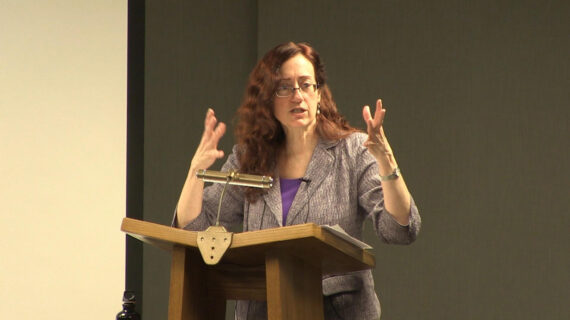
Mike Jacobs, assistant professor, Department of History, UW Baraboo. Mike Jacobs goes into detail about the secret codes and traditions of the Ku Klux Klan. He also delves into their precise activity in the state of Wisconsin.


Copy and Paste the Following Code to Embed this Video:
The Ku Klux Klan in Wisconsin, Part II
cc >> Good afternoon and welcome to History Sandwiched In again today. We're going to a have a "Part Two," but don't worry if you missed part one. Part two will be complete in and of itself. Our speaker is going to talk about the Ku Klux Klan in Wisconsin. His name is Mike Jacobs. He's a professor of history at UW Baraboo. And his book on precisely this subject will be coming out before too long. So please welcome Mike Jacobs to History Sandwiched In.
APPLAUSE
>>
Mike Jacobs
Define too long.
LAUGHTER
Mike Jacobs
I want to start by telling you that indeed that this talk today is, of course, related to part one, but when I was giving part one I didn't know I would be giving a part two. So today I'll be more specific about some details that I was rather general about last time. So you didn't need to see part one, I don't think, to understand and follow part two, but of course I'll answer any questions that you might have regarding that. Also I noticed someone had sent me an Internet link to part one and I made the terrible mistake of watching it, and you're always your worst critic. I realized I made two factual errors and one omission which I will correct during the course of today. But first, I'd like to thank you then for coming today "on the dismal day of the wailing week of the horrible month of the year 95," according to the Klan calendar. A secret organization, when they were doing things public that they didn't want public they had codes. And I doubt most Klansmen even knew the names of the various months and days of the week, and weeks of the month, etc. But the easy number is the year 95. And the year 95 is the Klan was revived in 1915. So add 95 years, and if my math is correct, here we are in 2010. Some other parts of their secret society was code words. Like if I suspected that you might be a Klansman and you might be friendly to me, I might approach you and say Ayak. If you were a Klansman, you would recognize that signal, and you would respond Akia. And if you weren't, of course you would have no idea what I was saying. You'd say gesundheit, right? ( laughter ) And then the response to that is Kigy. Ayak is, are you a Klansman? Akia is, a Klansman I am. And Kigy is, Klansman, I greet you. And they liked to use these types of codes, and I'll give you some other examples of these things. This is a Ku Klux Klan coin, but you might look at it and see the fiery cross and not know much else. This is also coded for "spend your money with Americans only." And MIAFA is "my interests are for Americans." And exactly how they defined Americans is probably not the way, in 2010, we define what Americans are. My omission from last time was somebody asked me this one right here. And I forget to answer. Anyone want to take a guess at what that one is? I wouldn't expect you to know. >> United States Klan? >> Pretty close. Pretty close. Some of the clues are here. "One school, one flag, and one country." They always replaced Cs with Ks. And on the right hand side "EWJS" is Emperor William Joseph Simmons. So even if you didn't see the inscription 1922 at the bottom, you'd know this is before he was kicked out of the Klan. >> Why? >> The new leadership believed that he was not up for the task, even though he had gotten the Klan going, he was the original imperial wizard and they bumped him to the emperor and took away all his power except doing things like naming months and rituals and those types of things. He got fed up, but we'll come back to him. A common question when I speak around the Madison area is about the Klan at the UW. And there were two Klans at the UW. There was the Kappa Beta Lambda fraternity, which was the real Ku Klux Klan fraternity. It stands for Klansman Be loyal. Then there was the honorary super-fraternity that was called the Ku Klux Klan, which had nothing to do with the revived Ku Klux Klan and the goals that they tried to achieve. And you'll find that fraternity, by the way, in the UW yearbook. And there's no doubt that they had some racist tendencies if you look at black face. Of course, that's a different time than we have today. But really they were more about hijinks. I have some of their, let's see if I have this on, you can't read this, maybe your eyesight is better than mine.
So this reads
"Hearken, ye chosen favorites of our Klan, of our approaching dance now close at hand, with mystic veils and in shreds of black, a member will call for you in no mean hack. The 20th night of May has been selected, and at 9 less 30 you'll be collected. Cursed be she who refuses our solemn request, and lest you be ever banished from our midst. Reply but by May 1st at the best." Signed the Ku Klux Klan in Mendota Court. Hijinks. Well here is the response
from Viola Swain
"Ye of the mystic Klan of the Ku Klux Klan, already do I fear it is too late to escape your curse. April has," sorry this is torn, "April has come and gone, and my reply remained unsent. Most honored of the mystic Klan, I beg your clemency for the most rude serving. Each day since April 26th have I tried to give answer, but my chaperone has guarded each action like a dragon. But at last I can say I will be ready when your Klansman calls." And signed Viola Swain. So you can see that those aren't type of activities that we generally associate with white supremacist groups or terrorist organizations. They predated the revived Ku Klux Klan, and that college super-fraternity was existent throughout the United States. It was very popular in the Big Ten in particular. All right, along the lines of changing words, you can see they're having their national "Klonvocation," instead of convocation, in Atlanta. And here they're meeting at Klansas City. ( laughter ) But even in this you can see that their values are evident. "You are the superior blood, you are more, you are leaders in the only movement in the world at present which exists solely to establish a civilization that wants sure these things. History has proved and is proving daily that only Nordic and Anglo-Saxon peoples have reached a high level of intelligence. >> ( inaudible ) ( laughter ) >> And if you've ever been to Chautauqua, they had their Klantauquas, where they engaged in similar things as the Chautauquas did. But, of course, to our end today, such things were not limited simply to other places. Not sure if that shows up, but this was the Oshkosh state celebration in July of 1925. Milwaukee parade 1924. You may notice that these men are on horseback, and Milwaukee's a pretty developed city in 1924, not a lot of horses on the streets any longer. It's mainly taken up by machines. Suggesting that perhaps these participants are not Milwaukee people but have come there for the meeting. Oftentimes we think of the Klan as a southern phenomenon. Even President Woodrow Wilson had this to say. And what you see here is a slide of the DW Griffith movie "A Birth of a Nation." And this is, according to the president of the United States
the post-Civil War history
"The white men were roused by a mere instinct of self-preservation until at last there had sprung into existence a great Ku Klux Klan, a veritable empire of the south, to protect the southern country." But by 1915, they are not focused on the south and they are not focused on preserving the ideals of the confederacy. It was, again, America for Americans. You won't see a great deal of confederate flags. You'll see American flags. You won't see the confederate flag really come up again until the 1940s or more prominently in the '50s and '60s in the next phase of the Civil Rights movement. But who were Americans? Well, according to the Klan that's the part that was of debate. Yes? >> Why the four Ks on this one? >> Knights of the Ku Klux Klan. Notice this. Stone Mountain, you might be familiar, has the faces of confederate leadership, and according to this pro-Klan magazine, that was really a papl effort. So they're equating, not the Klan themselves with the former rebellion, but with Roman Catholics. And likewise, you can see the National courier, I note that this is the South Atlantic version, this edition. South Atlantic would mean Georgia, North Carolina, Alabama, yet look what they have to say about Lincoln, Illinois. Now Lincoln really has not been a beloved figure in much of the south. Yet they highlight Abraham Lincoln here. So the ideals of them being pro-confederate have gone by the wayside. Back to the idea about who is American. One group that they thought were American, not by choice but through fault, were African Americans. And according to the Klan, if it could be done, they should be sent back. And look what they had to say about Marcus Garvey, the president of the Universal Negro Improvement Association. He wants lead members of his race back to Africa. In this idea he has the support of every intelligent friend of the negroes. This is the best thing that can happen to blacks according to the Klan. And they even say, colored people have their many excellent qualities, but their importation here as slaves was a fundamental error which has brought racial discord to this day and can only be solved by correcting the original mistake and returning them to their native land. Of course the Klan, calling themselves made up of Nordic and Anglo-Saxons, never proposed that perhaps they go back to their native land. ( laughter ) But African Americans were not always the victims of the Klan as we often come to think. As you can see here, in Texas the Klan supported a African American orphanage. Donated money. Would bring them Christmas gifts. The thing was that in their minds these were the right things that African Americans were doing. And so long as they followed the right path, avoided being uppity, everything was fine. In one of their songs to the tune of Turkey in the Straw, which I will not sing for you. ( laughter ) My Black-faced Fellow, look at some of the lyrics. "Just keep your place as a good black man and you'll have no trouble with the Ku Klux Klan. If you want your freedom in a white man's land, just keep friendly with the Ku Klux Klan." The Klan argued that they would be African American's greatest protector provided they stay in their social position. Speaking of music, I'll show you some of the Klan music. I played last time, I won't play any this time. This is Pat Malone, which wasn't his real name by the way. He took an Irish name as a speaker so he would sound like he was a Catholic apostate, that he had seen the truth, had left the Catholic church and become a Klansman, but that wasn't his real name. But he has a list of patriotic songs here. He was probably the most popular speaker in northern Wisconsin. In part one I focused a great deal on southern Wisconsin, so today most of my examples I'll try to give for northern Wisconsin. Take a look at some of the songs that he has. The Little Red Schoolhouse to the tune of The Old Oaken Bucket. We'll Fight for Freedom to the tune of The Battle Hymn of the Republic. A Great Movement to the tune of Tramp Tramp. And Dare to be a Klansman. Here are some other popular songs. This was, by the way, Pat Malone's vocal group. Looks more like a choir, doesn't it? Look in the lower left-hand corner. I'll blow it up in case you can't read it. Do not sing it. ( laughter ) I want to talk a little bit about their recruiting methods. Last time, I talked about the process by which they chose an area, but today I'm going to talk about how they actually did it. I'm going to give three examples that are all close by each other. Green Bay, Kaukauna and Appleton, and I'll do them in that order. One way to try to recruit members in an area would be to stage a gathering in that area. Have Klansmen that they already recruited from that area or other areas come there, notify the press and have the press come, report on it and give them free publicity. That's what they tried here, but if you actually read the article you'll see the reporter came, made the report but the editor of the newspaper refused to run it. Thus, denying the ability to get that free publicity to attract others. But that was one method. In nearby Kaukauna, they burned a fiery cross at night. Before they would burn a cross, typically, they would find an area that was secluded, that was potentially on a hill so it could be visible, and then they would either light dynamite or fireworks, something to get people's attention. What is that noise? They come out and then see a fiery cross and know that the Klan is ready to recruit in that area. And the final way would be to approach a minister, a Protestant minister, and schedule a Klan visitation at their church ceremony, where Klansmen would come in at a predetermined time, they would march silently down the aisle, they would make a donation and then they would leave. And then for the rest of that religious service the reverend would speak of the great qualities of the Klan and put their stamp of approval on this Protestant movement. So those are some of the ways that they tried to work themselves into areas that they had not yet kluxed, was their term. The first Klan periodical in Wisconsin was called the Badger American. Now of course if you just see that, my suspicion is you don't think anything about the Ku Klux Klan. You think Badger American, you think a patriotic periodical, which is indeed what they were trying to push forward. I'd like you to note, though, one thing on this periodical right here where it says each issue is securely wrapped. Suggesting that indeed there was a need for secrecy. You could order this magazine and have it sent in the mail without people knowing who you were. All right, let's talk about, for them, some of the benefits and the trials of secrecy. The Klan justified or explained, I should say, their secrecy by emphasizing that anyone, your next door neighbor, your business partner, anybody could be a member and you didn't know who that person was. Another advantage, they said, was that their visors that covered their faces were democratic because it equalized its members. All people were equal under the veil. Also it demonstrated their unity of thought and unity of purpose. And then, of course, I think an obvious benefit is secrecy certainly allowed for anonymity of action, actions without repercussions. The downsides are obvious. One, of course, is it lent to criticism from the outside. Outsiders would say, well, who wears masks in public? Only people who are criminals or people who are trying to hide their identity or engaging in activities that they're ashamed of. It also made exposure of Klansmen all the more explosive so when their identities were realized it was something to be concerned about. But for the Wisconsin Klan in particular, secrecy meant troubled leadership. There was widespread dissatisfaction in the Milwaukee Klan, the largest unit in the state, with their King Kleagle, William Weisman and his Milwaukee County Kleagle, Benjamin Bellows. A revolt occurred in which almost every member of the Milwaukee Klan left the official Klan. They revolted and formed their own organization called the Bow Tie Club. Saying the reality was they were still loyal to the Ku Klux Klan, the knights of the invisible empire, but for now they were not going to pay dues, they were not going to go to meetings, they were not going to recognize the leadership of William Weisman. I also separated the word Kleagle so you could see the patriotic, where that word comes from. They petitioned Klan national headquarters to resolve the dispute, and headquarters, on paper, stood behind Weisman. He was their official representative King Kleagle. Now what that means is until a state is recognized, you have a Kleagle. Once it's recognized as its own realm, then you have a Grand Dragon. A King Kleagle wants to stay in power as long as he can because once he becomes a Grand Dragon he's responsible to other people, to people below him in the organization who can elect him or not. The King Kleagle is only responsible to the national office. Also, when dues come in before your recognized realm, most of those dues go towards the King Kleagle, the Kleagle who recruited you, and the national office. Once you're recognized realm, those funds dry up. So their dispute with Weisman was that he said they had to had a thousand members before Milwaukee was recognized. When they got to a thousand he said make that 5,000. When they got to 4400, he said let's make that 10,000. And that's when they revolted. On paper they stood behind him, but the reality is they didn't stand behind him. They transferred him to other duties in Washington, DC. Well the question is why not just fire him? Did he know all the dealings of the Wisconsin Klan? Did he know all the members? Could he cause them great trouble if he was disgruntled? So they just moved him to a different place. So they had to keep him around lest he go public with their secrets like other Klansmen had already done so. For example, Henry Peck Fry was an early Kleagle who published a series of articles about the Klan. Eventually he wrote a book called The Modern Ku Klux Klan. You can find all their initial secrets right in this book. They don't want another Henry Peck Fry, which is something they have to be concerned about. If they did not have secret leadership, or secret membership, that would not be a problem. He was replaced by Charles Lewis of Michigan. The Grand Dragon of a realm which was much larger and much more fruitful. So it leaves the question, why would Lewis leave a stable lucrative position for one that was much more tenuous and certainly less promising? Well according to testimony in a Michigan court case, the Klan was moving Lewis out because of his failure to successfully recruit in Michigan. There, the Klan hired employees for the purpose of recruiting, and they were suing Lewis for not giving them their due amount. So getting Lewis out of Michigan made sense because they could resolve their Michigan problem. Putting him in Wisconsin only made sense because they couldn't cut him loose and because they needed to replace Weisman. So Milwaukee Klansmen, getting Charles Lewis, they believed they were getting a troubleshooter, a seasoned veteran. What they were really getting was just another castoff. Weisman, by the way, had been, the first time the Klan in Milwaukee revolted, Weisman was their choice for a new King Kleagle. The national office let them choose, they chose Weisman and he was a local, unlike their first Kleagle, Mitchell, but Weisman didn't expect all the money to come in that came in and so fast and he couldn't handle it and he started spending a great deal on himself and then he liked that lifestyle. And he wanted it to keep coming in and that was his problem. Well, I mentioned also the Milwaukee Kleagle, Benjamin Bellows. What about him? He was the problem that Milwaukee Klansmen had more than Weisman. They didn't like him. They hated him so he wasn't banished, he was transferred to recruit in the Fox River Valley north of Milwaukee, in part because they didn't want to risk another tell-all and in part because of his wife, who led the women Ku Klux Klan in Wisconsin. You certainly don't want to fire her husband and cause greater problems. All right, speaking of problems, let's look at, there's Pat Malone, I talked about him earlier. I'll talk about him again, he's out of place here. Some difficulties that the Klan had in Wisconsin is that it had already reached its peak in other places, particularly in Indiana where the Grand Dragon there, the former Grand Dragon there, was under indictment for murder. The Klan has a march planned in Chippewa for April 18th. Nowhere in the newspaper for the week before that do you see anything announcing this march. The only news you see is about this Grand Dragon up for murder. So what the Chippewa Telegram had done is planted the only information you have about the Klan is negative. So when the march happens, it doesn't have quite the success. In fact, police there stop the members marching, make them take off their masks, write down their names, write down their license plate numbers. Just the opposite of what the Klan wants to see happen. So stalled, they end up turning around and continuing their parade north to Cadott. >> Cadott. >> Cadott, thank you. I'm a Hoosier by birth, Badger by choice. So eventually they turn around and go to Cadott. But the problem is by the time they got there everybody had gone to bed. ( laughter ) So there were ways that people worked to foil the Klan. Just some of the difficulties that they had. More direct, and this is the one thing I will repeat from last time, is more often than not, far more often than not, the Klan was on the receiving end of violence rather than the perpetrators of violence. You can see here when they tried to organize in Waukesha. And the Klan meeting in Marinette where Pat Malone, who I just mentioned, was speaking ill of one of the local Catholic priests. And they stormed the tent, burned it, destroyed their instruments. And on the other side of the state, in this case led by a Catholic priest, it says Hudson, Wisconsin, it's actually Northline which is just outside of Hudson where this anti-Klan riot took place. And the Klan then reacted to the violence that they had faced, and hereafter, as you can see, they started arming themselves to guard their meetings. Which then, of course, just plays right into the stereotype that people had of the Klan, that they were a militant organization and here they are armed, armed and masked. I took this short article out of the Badger American. Gimbels gives $25,000 to Catholic charities. Now this is a periodical that is read by Klansmen, and what do you suppose is the message that they're supposed to get with this? Don't shop at Gimbels. Because look at what they're doing with their money, they're giving it to these non-Americans, these people who were not true Americans. Well, this was a tactic that they had picked up from a Chicago organization called the American Unity League, which had done similar things to the Klan. They would investigate the Klan in various areas, they would hire infiltrators, they would steal Klan rolls and then they would publish them in your newspaper and you could buy their newspaper and see who in your community belonged to the Klan. And indeed they came into Wisconsin into Milwaukee and Racine. So here, if you can see, the Badger American is winning this battle against the Papal Unity League, as they called them. So their response to having Klansmen's names published and then Klansmen dropping out of the Klan not wanting to face business boycotts, was they decided that they would use the same tactics and they would print up names of the Knights of Columbus in Milwaukee. ( laughter ) Which, if you're a Knight of Columbus, I'm not sure that, I mean, officially, they're a secret organization, but when you see them selling Tootsie Rolls outside of church. ( laughter ) Or working at the Corn Fest ring toss this weekend in Sun Prairie, where you'll see me, our identities are not that much of a concern. But it's something they tried to do to combat it. I'm going to focus a little bit on politics, and you cannot talk about the Klan and politics in Wisconsin without starting with Governor John J Blaine, who was probably the most outspoken Klan opponent that there was in Wisconsin. Even more so, I would say, than Robert La Follette. Blaine does a few things. In Boscobel, I said that one right, where he was from, the local sheriff, they had really not a sheriff, he was a constable, during a Klan parade marched out and started pulling off masks. Klansmen beat him, he drew his pistol. Fortunately for everyone, his pistol misfired when he aimed at the chest of a Klansman. But he was arrested and Blaine had him pardoned. Those who attacked the Klan speakers in Marinette, Blaine had pardoned. Didn't pursue anyone in Waukesha, didn't pursue Northline. The message was, do what you want to Klansmen and I won't do anything to you. But the Klan did have people who endorsed them. I mentioned the Oshkosh Independence Day program earlier, look who gives the opening address. So if you have your stamp of approval from the mayor. This man is Fred Zimmerman, Secretary of State for four years, governor for two, and then Secretary of State again for another 14. Was a Klansman. >> Was it generally known? >> It was highly debated. What had happened, how it came out was as Secretary of State he fired an employee, Alex Coban, and there was debate about why he fired him. Did he fire him because he was Catholic or did he fire him because he was incompetent? The argument against incompetent is that Alex Coban had worked there for a long time. There's great debate about why he fired him. Either way, Coban said it was because he was Catholic, and Zimmerman belonged to the Klan. There was a hearing about it, and Zimmerman refused to answer the question about whether or not he belonged to the Klan. So it became a cause. As you can see then Blaine went after him because he refused to announce his membership, refused to deny it or to do anything about the Klan. When he ran for governor, Zimmerman that is, he was opposed by three different people in the republican primary, a progressive, an independent, and Charles Perry who was the stalwart who lost and then ran against him as an independent in the general election. But you can see as an important part of his campaign literature is Zimmerman belongs to the Klan. Two affidavits will prove that Zimmerman belongs to the Klan. But Zimmerman was an astute politician, and according to historian Norman Frederick Weaver is when he campaigned in Wisconsin he winked at Klansmen and said I'm not a Klansmen. He had an African American jazz band play with him, suggesting he was friendly to blacks. And he had a Polish Methodist priest who wore a reverse collar travel with him, never introducing him as a Methodist, only giving his last name suggesting, I'm friendly with Catholics, see, I have this guy with me. He was able to get the endorsement then of a lot of Catholics. And he won, handily, the election. But then this became an issue with everyone. Is Judge Charles Rosa in the Klan? By 1926, summertime, the Grand Dragon announces that they're not involved in any of the elections at all. Suggesting that their power had been waning a great deal. But it's still an issue as late as 1928. What happened in this situation is Theodore Swanson from Pierce County wasn't given any leadership positions in the state legislature, and he believed that he was being blackballed by the speaker simply because he was from a place that the Klan had been strong and he wasn't going to give him a position thinking that maybe he is a Klansman. Or maybe the Klan will say that they elected him. So either way, he says that he was blackballed for that reason. This one didn't come out very well. The cover of the Badger American November 1923. You see to your far left is Victor Berger. You might also note that if you know what Victor Berger looks like it is a pretty good likeness, it does not use his last name, and it purposely misspells his first name. The Klan would often do this to try to avoid libel suits or slander suits. Not as easily identifiable because of the poor quality of this picture is the man who is being grinded on the stone here. It says Dano. That's Daniel Webster Hoan, the long time socialist mayor of Milwaukee. And those are the Catholic clergy who are holding him to do these things. The socialist party came out against the Klan, at the local level, at the state level, at the national level. They all came out against the Klan. Start with some of the examples of some things that's hard to know about the Klan. Difficulties researching the Klan. The most obvious is that they are a secret organization closely guarding its membership. For example, according to oral legend at least, the leaders of the Baraboo Klan where I teach, when the organization fell out of favor, they kept all their materials, all the robes, all the membership lists, etc. in the basement of a business. And kept it there for two decades, perhaps thinking maybe someday the Klan will be revived and we're ready to go. When that family sold their business, for whatever reason, they didn't dispose of the Klan material. Now as a historian that's opportunity knocks. But the purchaser of that business was so disgusted and appalled by what he found that he paid someone to haul it off and dump it. So it's hard to know some of those things. But there are ways to trace the Klan. For example, when all Klan periodicals failed, Klan editors urged their readership to a magazine called Fellowship Forum published in Washington, DC, a strongly pro-Klan organ. For a long time they were trying to raise money to create a Protestant radio station, which would have really been a pro-Klan radio station. So they solicited donations and when they received donations in mail, they printed them in the newspaper. How much, who it was from, and where. And oftentimes you'll see things like the women's Ku Klux Klan of Kenosha made a donation and then a list of their names. Or sometimes you'll see a list of names from the same location suggesting that perhaps one individual had collected those all and sent them in. Now this, of course, is not proof of Klan membership, but it does suggest that they shared Klan values and positions to be donating money to this. A senatorial campaign of Daniel Woodward, who was a great Titan of the Ku Klux Klan, his campaign is instructive. He ran for the Senate seat that was open due to the death of Robert La Follette, Sr. He won 40,000 votes through the military machine that was organized. The Klan had a political machine that they called their military machine in which they got out tickets and told people in the Klan who to vote for and who to promote to their friends. Never mention the Klan but talk to at least three people about these candidates and how they're good Americans. So if he garnered 40,000 votes, what's the maximum we can say about Klan membership in Wisconsin? It's certainly much less than what the Klan had ever claimed. But also when you look at the votes of Woodward, you can get an idea about where there was Klan strength in Wisconsin. You look at the districts that voted heavily in his favor. So these are some ways that we can look at this. And I believe I mentioned last time about advertisers in Klan newspapers and mortgage holders to Klan clubhouses. A number of studies have been done to determine the Klan's demographic. I'm not interested in that here in Wisconsin for two reasons. One is it's been done in a number of places. And the other is the information is so scant that you can't get a real, you can't ascertain a quality sampling. But let me tell you about one Klansman who I think might challenge your stereotypes of Klansmen. And it's John Kleist. A bachelor's degree from Lawrence. I believe his got his law degree from Michigan State. He was an assistant district attorney in Milwaukee. He was the district attorney in Calumet County. And he was the father of 11 orphan children. Now if I did not mention the Klan, it seems to me that he would sound like a very admirable person. He was also a socialist. One of the rare socialists who was both a Klansman and a socialist. He claimed there were a lot of them. The socialists tried to convince him to leave the Klan and eventually gave him an either/or, and as you can see he chose the Klan. Another thing about researching the Klan, you can see the Fellowship Forum in September 1927 talks about the Klan in Oconto Falls. They're Klan number 55. You can get an idea about how the Klan spread based on the numbers of when they were actually recognized by the state unit. The Marinette Klan, by the way, was 53. So there's a 54 in there somewhere. All right, let's talk about the exodus, the end. Lou Wallace McComb, who was the Dane County Kleagle, left the Klan for the Minutemen of America which was founded by the former Grand Dragon of Colorado. They had open membership lists. They didn't wear masks. And anyone could belong unless you were African American. That was certainly something that drew away from the regular Ku Klux Klan. William Weisman returned in 1931 to recruit for the White Band. The White Band was the organization created by the deposed national emperor William Joseph Simmons. So he no longer owns the Klan so now he has a new organization. And the great Titan, senatorial candidate Daniel Woodward, left in December 1926. He left for, I thought, a very interesting reason. Being a grand Titan, he had access to Klan records in the state and he looked at how much money the Klan spent on his campaign, and he thought it was too much. He said the Klan claims that we're not in politics, and look at how much money they spent on my campaign. So he decided to leave the Klan based on that. He joined the Knights of American Protestantism, a Klan splinter group that was started in Muncie, Indiana. And here was their magazine, volume one, number one. It doesn't appear that it's not about the Klan, though, at all, does it? And they maintained Klan values. They also had a women's department, just like the regular Ku Klux Klan. And they complained about the same enemies like Jews who were running movies featuring do-good Catholic people when they weren't saying good things about Protestant ministers. Okay, I'll open up for questions. ( applause )
Search University Place Episodes
Related Stories from PBS Wisconsin's Blog





Donate to sign up. Activate and sign in to Passport. It's that easy to help PBS Wisconsin serve your community through media that educates, inspires, and entertains.
Make your membership gift today
Only for new users: Activate Passport using your code or email address
Already a member?
Look up my account
Need some help? Go to FAQ or visit PBS Passport Help
Need help accessing PBS Wisconsin anywhere?

Online Access | Platform & Device Access | Cable or Satellite Access | Over-The-Air Access
Visit Access Guide
Need help accessing PBS Wisconsin anywhere?
Visit Our
Live TV Access Guide
Online AccessPlatform & Device Access
Cable or Satellite Access
Over-The-Air Access
Visit Access Guide




Follow Us