

 Passport



The Ku Klux Klan in Wisconsin 1920-1930
02/16/10 | 53m 17s | Rating: TV-G
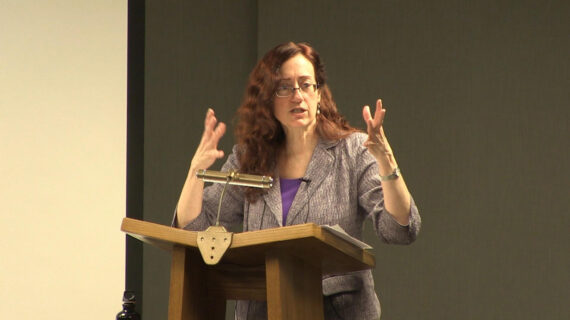
Mike Jacobs, Assistant Professor, UW Baraboo/Sauk County Historical Department Mike Jacobs, Assistant Professor of History at UW Baraboo/Sauk county, lectures on the history of the Ku Klux Klan but focuses on its activities in Wisconsin during the 1920s giving particular attention to its rise, appeal, opponents and ultimate decline.


Copy and Paste the Following Code to Embed this Video:
The Ku Klux Klan in Wisconsin 1920-1930
cc >> Mike Jacobs is from UW Baraboo Sauk County. He's an associate professor there. He's going to speak about the Ku Klux Klan in Wisconsin in the 1920s and 1930s. Please give him a warm welcome with a round of applause. ( applause ) >>
Mike Jacobs
Thank you for coming. It seems to be that what's apparently an overwhelming interest here today, that the idea that, the concern of race in America has not ended with the Obama presidency, which you know, is of course a great concern of ours. But maybe as a surprise to you, this discussion about the Klan in Wisconsin isn't going to be a great deal about race. I know a number of you probably have an interest about the Klan currently in Wisconsin. Considering today's timeframe, I'm not going to have the chance to talk about that. But I can tell you that the best place to get information about that is the Seven Poverty Law Center's Web site. They'll tell you all the places where there is noteworthy Klan or white supremacist activity. But today, my focus is on the Klan in Wisconsin. If you don't mind, I'd like to start, actually, with a little bit of music. And if you can, be quiet. I'm going to play "Name that Tune," and see if anybody can call out the song that I'm going to play. As soon as you know, flail or whatever you need to do. I think we have good enough volume here. Hands up, yes. What's the song? "The Old Rugged Cross." The old traditional hymn. Well, wait a minute, maybe we better listen to it. I don't know if you heard that, "Throughout the USA, the fiery cross we display..." They changed the lyrics for their own purposes. Let me play one other one that I suspect you'll know. And we could do this for a long time. Nobody? I thought somebody would get "Onward Christian Soldiers." Let me go back just a couple seconds on that one so you can hear it. And then listen to the first words. That was, "Onward valiant Klansmen." ( audience murmuring ) Yeah, it gives me the creeps. All right, so I wanted to let you know that they used a lot of methods to attract people to, and to sell themselves as legitimate and as Christian. Very briefly, back onto the Klan, you may be familiar with post Civil War phenomenon in the south almost primarily, but not exclusively. This would be a costume that one would wear. The idea of white robes or bed sheets, as some people say, doesn't come till much later. The idea that they had, well, originally, was simply to play practical jokes on each other. And then, that didn't seem so fun anymore, because they knew each other's jokes. So they tried to start dressing as ghosts so they could frighten newly freed slaves, who would be more likely, at least they thought, would be more likely to fall for their pranks. And then it turned into, as you know, a terrorist organization as an idea to frighten, particularly, former slaves. But not only former slaves, also people called scalawags. Scalawags were whites who belonged to the republican party in the south, or as you know, Carpetbaggers, northerners who moved south to take advantage of opportunities after the war. And it was at this time that the Klan was most famously a violent organization. You see the depictions here of a Klansman firing into a home of African Americans. You can see in the window, down below. The government finally took action, the federal government, with the Ku Klux Klan Acts of 1871. What's amazing to me, when I studied the history of the Klan, is what happened over the next 40-some years, which is, we have this clich that the victors write the history. Well, this is one certain notable exception. In this case, most of the history that was written, that worked its way into American history textbooks was written by white southerners, many of which, by the way, got exemptions as teachers, and didn't serve in the Civil War. And the history that they told us was that the really dangerous people that we all had to look out for as American were those scalawags, carpetbaggers and now the freed men. And that the Klan were the good guys. They were saving the values of America. And they were saving a value that was widely held by many Americans, was white supremacy. This really comes to the forefront when you talk about the movie, "Birth of a Nation," which is considered, I mean, despite its you know, abhorrent tones on race, it's considered one of the greatest American movies, by D.W. Griffith. And this sold the Klan. If you've ever seen it, and they play "Flight of the Valkyries" at the end, and the Klansmen come riding in to save the damsel in distress from apparent rape and murder. They come out as heroes. There's reports of men firing their guns at the screen, excited. And there were Klan representatives outside the theaters passing out membership cards. This was the way that they were sold that the Klan was a good thing, and the bad people were on the other side. All right, before I talk about Wisconsin in particular, maybe I'll address some of the commonly held myths about the Klan of the 1920s, which is my area of specialty. It was at this time that they had their highest membership. And arguably, their highest level of acceptance in America, and maybe influence, was during the 1920s. They were more popular in the north than in the south. As you can see here, a four-day Klan celebration on Long Island. To that end, they were also more urban than rural. That is, they were more people who lived in cities that were Klansmen than in rural areas. And despite what Beth and I were taught in fourth grade Indiana history, Indiana was not the strongest state for the Klan. Probably Ohio had more members, and Texas, the Klan was very strong there as well. And probably the most surprising element about the Klan in the 1920s, when I talk to people, one of the hardest things to accept, is that the Klan was more often on the receiving end of violence rather than meting it out. Because most Americans were intolerant of their intolerance. And when the Klan showed up in their area, many times they were chased off. Several times, here in Wisconsin, in a number of places throughout Wisconsin. Another thing that's a popular misconception is in this era, they preferred to punish white Protestants. They expected African Americans. They expected Catholics. They expected Jews and immigrants to mess up. It was white Protestants who were cheating on their wives, or bootlegging, or doing something else. The Klan was out to get them because they expected better, because they had sold this idea that these are the right kind of people, and this is what we need to have in America. And when those people weren't living up to the standards that they had laid out, which they usually didn't live up to themselves, those were the people that they oftentimes, meted out justice, if you will. They were more anti-Catholic than they were anti-Black, or anti-Jewish, or anti-anything else. Here's some Klan propaganda of the era. "Let's Go!" which was the old slogan of the American Expeditionary Force of World War I. They were trying this idea of patriotism. And it's patriotic to, apparently, throw baseballs at the Pope's head. And here are Klansmen chasing priests and nuns out of the country. With of course, the Constitution on their side. "Convent Cruelties," a story of an ex-nun, Helen Jackson, author and victim. And you can see, if you're interested in getting a lecture from her, or any of the dozen or more fake ex-nuns or priests who toured around America for profit. Well, look at the context. It was the Klan who was sponsoring the talks. Another thing is robes were actually official garb and not bed sheets. It's a common misconception. Here's an order form, for example. So you can give your measurements. I have a Klan robe as well that I can pull out to show you, that I have from the era. I do not have the cap. Those sell for a great deal on eBay. And I'm not willing to pay that for demonstrations. As you can see, it's old, stained, and clearly, manufactured not as a bed sheet. You might also note here, that one of the ways we authenticate such things, is that this is where the emblem was held. See the buttons? Someone else decided also to sell that on eBay. It went somewhere else. I found that it wasn't made up of just the lowest class citizens, that we generally think of. They oftentimes prided themselves that they had indeed doctors, and lawyers, and bankers. Famously, bankers in Chicago, by the way, an interesting story, if I may go off on a sidelight. There was a banker who, it was discovered that he was a Klansman, and then there was a run on the bank. It was in an area, I don't know if you know Hyde Park, a high African American area. They withdrew their money. And there went the bank. And the bank directors asked this man to please, you know, please leave, because he was wrecking their bank. There was runs on 17 banks in Chicago when there were discoveries of Klansmen who were employed there. But one example is this man who was a dentist, a successful dentist, Hiram Wesley Evans. Here he is on the cover of Time Magazine. He was the Imperial Wizard of the Klan. So they weren't simply the people on the lowest level of American society, which we generally think of. ( inaudible ) >> For Klan activity, yes. The Klan made the cover of many magazines. It sells. It's why many people are here today. ( laughter ) ( inaudible ) >> Actually, this man made a great effort to end vigilantism among the Klan, because he knew how that detracted from their prestige in communities. Of course, he was unsuccessful, you know, because the very nature of what the Klan does. Also, it was a typical, albeit extreme fraternal organization of the 1920s. Complete with headquarters, like here's the Milwaukee Klan headquarters. You know what? I'm sure I have this one at home, but I'm going to guess 1923-24. ( inaudible ) He made all the major newspapers and magazines frequently. There's the Milwaukee headquarters. I don't know if anyone is familiar with this building on Kilbourn, 24th and Kilbourn. But it is a magnificent building. ( inaudible ) Yes, great stone work. It's really something worth getting off the highway for if you're in Milwaukee to see. It's now a private residence. Well, it's replete with all the tapestries and attractions that fraternal organizations had, headquarters. Picnics, in Racine. Klavaliers, specially officered people in their fraternal organization. Women. There's a women's auxiliary. And as we know, there was a women's auxiliary in Milwaukee. And even for kids, the junior Klan. The Klan even had newspapers. The newspaper that first ran in Wisconsin was a monthly. Then they moved to a weekly. And they had pages dedicated for the women in the Klan, and for boys. And here, for example, activities for the juniors. See, of course, the KKK. But also look in the junior and see the KKK, the cross, and there's the Jr. They always want to tie themselves to a message of Christianity. And baseball clubs that would play teams like the Masons, or the Odd Fellows, or other fraternal organizations that were willing. ( inaudible ) That was not, no. And bands. You've heard some of the music we played already. Bands oftentimes accompanied the large picnics, or the beginning of their meetings. Vocal groups as well. I don't know if you've gotten a good look at this, but you can see a wide variety of recruiting. Young people in the bands. And you've heard at least two Klan records today. There were dozens of artists who made Klan music. My favorite one, I have to admit. This one is actually in Illinois, if I remember correctly. ( inaudible ) In Appleton, I'm not sure. I don't have any reason to believe. Usually, they did things, family events. Like that would be a family event. I can't see a bunch of men getting together and saying let's get a ferris wheel. ( inaudible ) Yes, I'll give you some examples. A Christmas card most of you probably don't want to receive. They did indeed stress family entertainment. You'll see the public was invited to come to their festival at Pleasant Valley Park. Again, tying themselves to patriotism, they oftentimes had their celebrations on American holidays that are considered patriotic. Now, if you look at this flag, and realize that this was owned by the Klan, think of the resources that had to go into this. We're not about an organization that is, you know, dirt poor. And as the Beloit Klan liked to boast, events in Janesville, they had the largest flag in the nation. Apparently, that's a testament of their patriotism, I suppose. I'm not sure. One of my favorite book titles. ( laughter ) They stressed Christianity. They stressed patriotism. They stressed family. And of course, there were even Klan weddings. This one was a double wedding. Witness, witness-- and double wedding. Another wedding. And a funeral. A number of Klansmen were buried in their robes by request. Well, if you take away everything that you know about the Klan, or you think you know about the Klan, and you just saw these images of things that are involving patriotism, and Christianity and family, I mean, it wouldn't be unreasonable to ask someone in the 1920s, after being fed propaganda by the Klan not being such a bad thing, well, what's wrong with the Klan? What's so bad about it? Well, the people who tended to join were, I will tell you, typical Americans. But they tended to hold extreme values. You could say that, by today's standards, they didn't embrace diversity. By today's standards. But then they held values that maybe some of you hold today, 90 years later. One country, one flag, one language. I know people who think it's their right to call someone and have them speak English. That's their right. ( inaudible ) Let me think about that one. I'll have it by the end. Oftentimes, the Klan would-- One of the reasons I'm having trouble with this is, oftentimes, the Klan would use abbreviations for Latin phrases that they used. One of the reasons it's hard for me to think of it is-- which is interesting because they didn't like the Pope, and well, you'd think that they wouldn't know Latin. And they had trouble with it. Oftentimes, their Latin is not accurately translated Latin. So it's one of the reasons I'm struggling, at least telling you I'm struggling to think about what OSFK was. Going back to what I'd said about their extreme ideas. They didn't believe that Catholics should be allowed to hold elective office. They thought that immigration to America should be halted, or at least restricted to white Anglo-Saxon Protestants only. They thought that the King James version of the Bible should be returned and used in the public schools. They thought all children of Jews and Catholics should attend public schools, private schools should be closed for them. And Catholics, especially priests and nuns, should not be allowed to teach in public schools. And finally, they thought that white Protestants should do business with white Protestants first. The methods with which they might achieve these goals, most famously of course, is force. They'd only try to use force in places in which they could get away with it. Wisconsin was not such a place. In the south, where they might get complicity with law enforcement, or where they might get tacit approval, or law enforcement might look the other way. That's where we see most of the acts of violence perpetuated by the Klan in the 1920s. And the Klan, by the way, was often quick to say that they had nothing to do with this. Or that it was these other people who were actually in bed sheets, not Klansmen. Or that they condemned such activity. Other places, political exclusion would be utilized. Trying to outlaw, as I mentioned, some people were not allowed to hold public office. That was an attempt made in Oregon, an attempt made in Indiana, and an attempt made in one famous case here in Wisconsin by the governor toward one particular employee. Social exclusion or extortion. These are all methods that the Klan would try to use to achieve their goals. Whether they would acknowledge those or not, the history bears out that that indeed happened. All right, the Klan comes to Wisconsin. It starts out in a very commercial nature. Under the guise of a fraternal organization. When they first start to recruit in Wisconsin, they do not recruit as the Ku Klux Klan. They come to Milwaukee and they recruit as the Milwaukee Businessman's Club. I'd imagine you wouldn't have a problem with joining such a club, right? The "Klegal," as they called the recruiters, would pitch to you the idea that you'd join and you'll get to meet other businessmen in Milwaukee who are up and rising. And you can sell your clothes to them, for example. And you can make mutual business relationships. And then later, when you realize that there were only white Anglo-Saxon Protestants in this organization, you found out that, indeed, this is why. They were also known in Milwaukee as the bowtie club. Okay, only men who wore bowties. And you'd say, oh, this might be someone who is in the organization. And you might feel comfortable approaching them. Profits were made through membership and through merchandising, selling things that they had. Now, this is about the demise, if I may skip ahead a little bit. There's a lot of reasons why the Klan failed in Wisconsin. And one of them had to do with a profit. A Klan was a provisional Klan until it was recognized officially by the Atlanta organization. The way the membership drive worked, is usually a membership cost $10. And the Kleagle would keep anywhere from $5-$7 depending on how they negotiated that fee. But once they became an official Klan, that money dried up, and it would go to the national. So the Kleagles would just do anything they could to prevent being recognized as an official Klan, all right. So in Milwaukee, for example, the number was 1,000. Once they came close to 1,000, they had it bumped to 5,000. Once they reached near 5,000, they had it bumped to 10,000. That's when Milwaukee Klansmen started saying why are all our dues going elsewhere? Why do we not have any benefit from this? And then we see, immediately in Wisconsin, splintering Klans. So they finally fired the Grand Dragon in Wisconsin, who by the way, several years later, died while trying to operate on himself. I couldn't help but tell that story. ( laughter ) All right, in branching out, Milwaukee was the first place. By the way, probably much to your surprise, the city in America with the most Klansmen was Chicago. And Kleagles found that ground because of the recent influx of African Americans during the great migration. And then some of them decided maybe they could tap Milwaukee, which was a large city not far away. That's how you'll see movement first, in large cities, that's convenient for these Kleagles, if you will. So after they come to Milwaukee, Racine, as you know, another major city just south. And they carried enough weight that here you can see the Imperial Wizard, Hiram Wesley Evans, who I showed you on Time Magazine, came to the Racine conclave and was speaking. This is the Milwaukee contingent that came to that conclave of Klansmen. The conclave was large enough that they had First-Aid headquarters. You'll see here, Milwaukee Provisional Klan Number One, okay, so that's the first place they came. And then you can see here, Racine, Provisional Klan Number Two. So one way that researchers have been able to determine how the Klan spread was seeing the number that's been assigned to the various Klan organizations. And then Madison, being the next largest city, would be a place that they sought to recruit. And successful. There is an article in the Wisconsin Magazine of History from autumn of 1974 about the Klan in Madison. If you're interested in further reading, here it is. I'll do a little plug for the magazine. You can get back issues. And that covers it, a pretty good job, of 35 years ago, the Klan here. >> That card, to whom is that aimed? >>
Jacobs
This, I think it was bootleggers in the Italian area of town, that they were defying the law. Most famously, here at least. Again, I should say this. Wisconsin did not have a very large African American population. The greatest draw for African Americans to come to the north was for jobs. And Milwaukee's low skill level jobs had always been satisfied by European immigrants. So it was one place that there was not a great deal of African Americans. And even then, they usually followed railroad lines. And there weren't direct railroad lines from Milwaukee to most southern, urban centers. So, Milwaukee was excluded and didn't have a vibrant African American community, starting then, at this time. There's a book by Joe Trotter called "Black Milwaukee," that talks about this at length. Here's the Madison officers. I don't know if you can see the portion with the headline up above, 10,600 automobiles checked in. Well, when the Klan did their numbers, they always assumed that all automobiles sat four to five people. So they would say there was 45,000 people at this meeting. Because Klansmen were efficient. They never wasted gas. This is from the Klan newspaper in Wisconsin, which is available at the State Historical Society. And yes, even the university. In fact, the university had two rival Klans. This is a map of Dane County. I thought I would show you how the Klan would spread, at least in one direction, so you can get an idea of how they spread. So when the Kleagles had exhausted their possibilities of this urban center, then they started going out to outlying areas where they might recruit some people as well. I think proximity for convenience was the first factor. Then population. And then areas that appeared to be potentially receptive. This made rural areas, far from Milwaukee and Madison, low priorities. So there'll be, as the Klan would call it, Kluxed very late. We'll see how familiar you are with the area. Here's Mazomanie. Lodi is right up there, not on this map. But here, the Klan is purchasing a home for a clubhouse in Mazomanie. And they burn a cross in Lodi. Sauk City, as you know, is immediately north of Dane. They move into Sauk County. They're in Baraboo, where I teach. Just the headline, at least 4,000 people came to watch the parade. And the fiery cross is difficult, particularly in bad weather, so they also had large, electric-lit crosses, you see here. Particularly because fiery crosses are hard to burn in the winter in Wisconsin, when you have indoor meetings. No one wants to have outdoor meetings in December, so they'll have lighted crosses. And this was, I don't know if anyone is familiar with Baraboo. This was the clubhouse that the Klan owned. They owned two different clubhouses at two different times. That is in Baraboo, yeah. >> What is that used for? >> I'd rather not tell you. I won't tell names. You can figure out exact locations. I don't want, you know, to disparage the ownership now. But it's reputable. ( laughter ) It's reputable. Before they had a clubhouse, they would have to rent space, "Held in Farm House Near Baraboo." This is actually talking about the conflict that happened in Madison, by the way, when police officers were trying to break up an alcohol ring. Then, 12 miles west of Baraboo is Reedsburg. That's where they went next. ( inaudible ) Well, at the time they attended his funeral. It's difficult to say who's a Klansman, because in Wisconsin, we have almost no membership rolls, almost none. But certainly the Klansmen favored law and order, particularly when it came to prohibition laws. From Baraboo, then Adams. You should be familiar with Adams. You can see kind of a line that they take, moving further away from the epicenter of Madison. More about Adams. This is what they had always claimed it would be, forever. I told myself I would leave about 15 minutes for questions. I've already gone over that. >> What's the Ku and the Klux stand for? >> When they first developed this organization, it was, I think, six former Confederate soldiers. And they were going to form their own little secret society, like I said, to play pranks. Actually, somewhat innocent. And Ku Klux comes from the Greek word kuklos, but they didn't think that sounded very mysterious. They didn't want anyone to know. And kuklos means circle. So this was a circle of friends. They separated Ku and Klux. And Klan meant family. That's where they get their name. Yes? >> Are there any active Klan now? >> Yes, oh, yes. There's a few different-- Well, it seems to me that there's the Klan, and then there's the mind of the Klan. And the mind of the Klan is much more active. And there are different organizations that are very much supporting the ideas of the Klan, but don't call themselves that, simply because of the negative public opinion that's generally associated with them. There's one group that I knew of, I don't know if it still exists. About a dozen years ago, they were the European Heritage Alliance. When you read their propaganda, you know what they really are promoting. Yes? >> Was there any violence in Wisconsin? >> Yes, but again, the violence that we had reported here was against Klansmen, not by Klansmen. For example, just north of here in Waunakee, there was a Klansmen meeting where the people of Waunakee were not happy about it. They came out and stormed it. And reported at least 12 flat tires of fleeing Klansmen, driving over tacks and stakes that were laid on the road. And a fence was torn down so that they could beat Klansmen's cars with it as they tried to escape. Yes? >> Where did those six Klansmen start, in what city? >> Polaski, Tennessee. Yes? >> Back around the '20s, I think organizations like the Elks and Moose were very popular. Would the men or the families who belonged to those also join the Klans? >> Very often. Klansmen usually went to the Masons first to try to recruit. Because of those groups, the Masons probably had the highest percentage of high-level business people. So they're trying to use the prestige of Masons, or people in high-level business, like bankers, lawyers, doctors, and say, look, these people joined, you should as well. Yes? >> I'm from Pittsburgh, Pennsylvania. My grandfather was involved in a confrontation with the Klan in Carnegie, Pennsylvania. >> The famous one. >> And the idea of the parades, which you mentioned a couple times here, what I had heard, a family myth perhaps, was that the Klan wanted to march by all the Catholic churches in this particular suburb of Pittsburgh, as a form of desecrating and putting the Catholics in their place. And I'm just wondering if some of the parades-- You're saying violence took place against the Klan as opposed to the opposite way. It seems like a provocative type of thing to walk by a person's church, or through a person's neighborhood, what have you. And you know, perhaps invite the violence that ensued. Was that part of their tactic to gain wider acceptance? Oh, poor us, we're getting picked on, type of thing? >> Sure. In that particular case, it's certainly the case. There was a Klansman killed at that parade. And there were a number of Klansmen who defected, who said that the Imperial Wizard planned that purposely for that to happen. He wanted violence for the people to see, look, people are attacking the Klan. It's these foreigners. It's these Catholics. It's these African Americans. We need to stand up for White America. Now about passing around Catholic churches. That happened a lot. And maybe it was provocative. But it backfired, because I'm not sure if you are aware of this or not, but part of the family I married into is Irish. And there's a long tradition of Irish being involved in public service, like the police and fire. Well, when Klan parades went by Catholic churches, mysteriously, the fire department would be called out and run their trucks through the parade, and the parade would have to disband and then come back together. And that could happen four or five times during one parade, if they were going in neighborhoods-- ( inaudible ) Yes? >> Would you characterize, kind of the era from the Nathan Bedford Forrest quotes, Civil War, kind of, and how it's evolved historically? >> Sure. I think numerically, the greatest prominence is the era that I'm studying right now. But I wouldn't say it was their greatest impact. I think their greatest impact ultimately was the post Civil War Klan, where they essentially were able to, through intimidation, create a pseudo form of slavery with share cropping and denying African Americans the right to vote, and putting that in the legal system. But I'll tell you, and this is where I have to get a little academic. Historians who study the Klan will debate about how many eras of the Klan there were, okay? So for convenience sake, I will simply say there was four. There was the post Civil War era. There was the 1920s high point. There's the 1960s anti-Civil Rights Klan. And then there is, you know, what there is today, which is a hundred or more different groups claiming to be the true successors of Nathan Bedford Forrest. >> I think I've seen pictures in books of a Klan rally in Madison, marching down State Street and around the capitol. How many people would've attended that? >> Well, that's another question. Attended or participated are two different questions. This is something that we've always had a problem with, because they're a secret organization. There's always discrepancies about how many numbers are in attendance, who's doing the counting. And if you look at, one of my rules in my own research is when I study a Klan event, if I cannot get a non-Klan source to also address it, I don't talk about it. Because if the Klan says that they had 5,000 people at a rally, unless I can get a newspaper to say something similar to that, or a newspaper that will say 500. Well, there's a big difference between those two, and I'll make sure I will note that. So determining numbers is a very difficult thing to do. Yes? >> I just want to mention that my grandfather and my uncle were shot by a member of the Ku Klux Klan in Arena, Wisconsin. They had a farm just up the road from where I live right now. Very prevalent up in that area. >> Oh, yeah. >> They had crosses burning on their lawn. >> In 1925, there was a major scandal with the Klan, and it really took a nosedive nationally. And this is one of the things that makes the Klan in Wisconsin unique, is that's when the Klan really started to rise. Because Kleagles had never gone to rural areas like Arena. And I have Klan material from Arena, as well, and the northern part of Wisconsin. There were places that were Kluxed very late. One of the major riots was in Marinette. Well, you know where Marinette is. You can't get much further. I've been in Marinette twice, and both times I've mistakenly driven to Michigan. ( laughter ) Really, it's true. I've done it. You go over the bridge and the next thing you know, you're in Michigan. And that was actually, probably to me, the most interesting riot. If I can share this with you. It was in the summer of 1927. There was, in Marinette, there was four Catholic churches. And Marinette's not a very large place. But there was an Irish Catholic church, a Polish Catholic church, a French Catholic church and a German Catholic church. By the way, across the river in Menominee, same thing. Now, from the evidence that I have looked at, those people had never done anything socially together. In fact, two of those churches are literally across the street from each other, and one is one block down, and the Polish church is on the other side of town. Well, the first evidence I have ever found of these people doing anything cooperative was when they stormed the Klan parade, burned the tent, beat up the speaker, threw their musical instruments in the river. When you read the arrest list, it reads like a United Nations list. Governor Blaine pardoned them all, saying that they were defending their rights, they were defending their church. Because the Klan speaker there was speaking against a local Catholic priest. But the Klan, I should mention, had some power in Wisconsin. Governor Fred Zimmerman was a Klansman. There were a number of Klan people who were ran for Senate who were very competitive. There's materials in the State Historical Society of their campaign literature. 1920s. >> Did they run as Klansmen? >> Oh, yeah. In fact, if I remember off the top of my head, Percy, he was insisting that he was the real Klansman candidate, not the other guy. ( laughter ) Yes? >> Are you writing a book? >> I am. >> You teach college. Do young people today know anything about the Klan before they came to classes? >> You know what, actually, no they don't. But I should tell you that I don't teach the Klan in class, for two reasons. One is that I don't to shove what I do down their throats. The other is, I actually think that we have overblown the importance of the Klan. And I think maybe we've gone too far, talking about this group. If I may give you this example, every American history textbook, just about, has this picture of the Klansmen in 1925 marching down Pennsylvania Avenue. Talking about anywhere from 10,000-25,000 Klansmen marching, showing their power. What isn't discussed at all is the reason why they marched is that the Holy Name Society had marched before them. And they had 100,000 people. And they met with President Coolidge. So the Klan said, we'll show them, and the Klan publications promised they would have 200,000. Well, they had about 1/10 of that, and Coolidge had nothing to do with them. So I ask this really honest question. What was more important in the 1920s? The Klan or the Holy Name Society? You'll never see a mention of the Holy Name Society in the text books. ( inaudible ) What would you like to know? ( laughter ) >> Politically, what did they do? >> Politically, what they did was, famously, the Grand Dragon there said, "I'm the law in Indiana," which I also say is not true, because as you may know, he went to jail and spent a good portion of his life, for manslaughter, of a crime that he may or may not have committed. He says he was framed, and there's a number of books that have also purported that. They tried to pass legislation closing all parochial schools, not allowing Catholics to teach in school. All of their efforts failed. >> But they did have office. >> Oh, yes, several. People claimed congressmen. Governor Ed Jackson, while he might not have been a Klansman, he had Klan support. We have the documents he signed where he said he would appoint Klansmen to these positions if elected. But I should also mention, that he also appointed the president of Notre Dame University, a Catholic priest, and the Archbishop of Indianapolis to positions as well. Yes? >> I wonder what the current, and possibly at that time, also the reputation of the Klan may have been exaggerated so as to provide cover for those who shared some of their extreme beliefs, but didn't want to go as far as being public about it. >> There's this historian, Kenneth Jackson, who talks about that in particular. What I called the mind of the Klan. The number of people who accepted the Klan values in the 1920s, and maybe even today, is far greater than the number of people who will actually sign up membership. In fact, when I do teach, I do teach about the Klan in one class. I teach a class called minorities in American History. And what I do, is I start out and I say, raise your hand if you agree with this. What the students don't know is I'm reading from the Klan's Web site. And there's a number of things that they raise their hands on. And by the way, it's not peculiar to their race, gender or age. And then when I tell them, you know. I can't say it because this is going to be on television. But you know, there's a lot of "Oh, my! I didn't guess that about you know, my own views." ( inaudible ) Well, you can go to the Klan's Web site and check it out. They raised their hands to, we should speak one language. They raised their hand to, there shouldn't be immigrants. One that surprised me that they raised their hands to is that there should be a national hospital for AIDS patients, to segregate them from the rest of the population. Yes? >> The quote isn't the Klan, as you said, the mind of the Klan, in that from reconstruction time up to the 1950s, they really got their way with, in the south, politically, with voting rights laws and all of that stuff. So, I don't want to take issue that they're not important, but you know, to me, they had their way for 100 years, which is pretty damn powerful in, you know, American life. >> Right. That's not the Klan, though. That's why I said the mind of the Klan. The Klan becomes stronger in the south when that's disappearing. When the federal government starts enforcing the Brown v. Board of Education ruling, that's when the Klan starts coming up, oh, my gosh, we can't control the government any longer, we need this vigilante organization. Just like the Klan in the post Civil War era. >> When I've gone onto the Southern Poverty Law Center Web site, on all these types of groups, the Klan is only a small fraction of those groups. They come over a whole variety. >> Christian Identity is another one. >> Can you elaborate on any connections, or historical linkages, other than simply some of the mind of the Klan stuff, how those might be linked? >> Well, they're linked by the ideology, and really that's it. Utah in particular has two different Klans. The Knights of the Ku Klux Klan and the Utah Ku Klux Klan. And they're two separate organizations, yet almost all their activities are done together. Some of the office holders in one are office holders in the other. And their literature is virtually identical. That's just an example that comes to mind. >> Are they registered in any way, in the sense that the Elks are? >> They're incorporated. That's one of the ways. >> They're recognized by the government. >> Well, incorporations are done by state governments, so yes, the Klan is incorporated in Wisconsin. That's one of the ways you can trace the path of who's involved, who signs the incorporation papers. When the clubhouse was bought in Milwaukee, well, who signed the mortgage? This is a way that we've discovered, you know, who these people are. And anti-Klan forces, they did the same thing, and they would publish their names in the newspapers. I mentioned about the commercial thing. That's a great example. What happened in Milwaukee, was that all of these businessmen joined. And then, in the Klan newspaper, they then all advertised, so other people who supported their ideas could see, you know, this guy is just like me. Well, Klan opponents got a hold of that and then published it. So when you shop here, you're supporting Klansmen. Well, then, these guys couldn't get out of the Klan fast enough. Yes? >> In 1993, I retired from teaching in Stoughton. I was a high school journalism teacher. And flyers showed up around Stoughton, coming out of Janesville, promoting the Klan, and the guy on the horse with a hood. And one of my students picked up a flyer, distributed, I think it was on the windshield of his car in the parking lot. And these students-- >> Like this? >> I think different than that. I took four students down to Janesville. We met with these people. Their headquarters was right near the GM Plant. And my students wrote a story, one of my students wrote a very long piece about it. We spent three hours in their living room, talking with them. There were teenage kids there who were doing mimeograph machines. And my student wrote a story that won first in the state for investigative reporting. This was in the early '90s. I forget, a guy named Peterson-- >> I don't use names in my public talks. I'm not interested in embarrassing anyone or exposing anyone. >> There were about 15 people in the house at that time. It was a very interesting experience for myself and my students. >> No doubt. As you might imagine the nature of my research, I've been compelled to go to Klan rallies. However, I can not talk to Klansmen, because most Klan rallies you go to are very heavily guarded. And when you come in, the police are there, and then you have to tell them, "I am pro-Klan or anti-Klan." And then you drive to different sides because they have them segregated. I just can't say I'm pro-Klan, so I never go to that side. So I just listen to their propaganda and then go home. >> There's no option for neutral? >> No, and I can't say I'm that either. Yes? >> In your studies of the '20s, with the Klan in Wisconsin, did you look at the regional issues, what the Klan would attack in a certain community? I just found out recently that my great-grandfather was a Klansman. And that's kind of a shock. My great-grandfather was a Klansman up in the Rio and Columbia County area. But their main focus was to stop the Irish from becoming - They were butchers. And that was their main focus. So it wasn't racial. >> Well, it was racial. What the Kleagles were told to do was simply find out what issue was of importance in your area, and play on that issue. And this is one of the reasons that Wisconsin had such trouble attracting Klansmen, is that the most obvious issue of African Americans, there wasn't a great deal of population here. And then the next issue was Catholics. And the problem with Wisconsin is there's so many Catholics. ( laughter ) That they could never have an upper hand. Or, there was just going to be a circumstance where you knew a Catholic, and you knew they weren't planning on taking over America, like the Klan propaganda said, or you knew they weren't harboring the Pope in the basement. This is not uncommon things that were popular mythology. >> I found out that they would builds thing at County Fairs, "The History of White Slavery," they called it. And you'd have to pay an admission to get in there to learn the horrors of white slavery. And I had no idea that anything like that happened. >> Was there opposition to the Klan from people other than Catholics or laboring classes, for example did the mainline Protestant people or other people stand against this? >> Certainly. Very much so. And obviously, Jewish Americans and the Socialists in Wisconsin were, you know, they'd condemn them. But many of the Socialists were Klansmen. So officially they condemned them, but the reality is that some people were members as well. And one thing, there was an anti-Klan organization made up, particularly of African Americans, Jews, and Catholics. And they constantly said in their publications, "Protestant Americans, this is your problem. You need to deal with this." They called them to that action. >> Did any of the trade unions ally or oppose? >> Yes, very much so. >> Which? >> In researching, if I can share this, in researching the Klan, I was living in Indiana and I was going to drive to Indianapolis. I was having breakfast before I left. I just said to my father, off the cuff, and I had been studying the Klan for about ten years at this point. And I said to my dad, you know, "I'm going to go look at Indiana Klan records. Maybe I'll see some of our neighbors." I just kind of said that to create conversation. And my father just blurted out, "You know your grandfather was a Klansman." ( laughter ) No, I did not. No, I did not. I did not know. The thing is, he had a lot of time to tell me, knowing I was studying the Klan. I think he just feared me sitting, you know, 150 miles away, in a room by myself, Clifford Jacobs?! And so that's when he blurted that out to me. Then I got to find out the back story. No way am I excusing that, but in southern Illinois, where he lived at the time, in the mines, there was two different groups. There was the American born, and there was a foreign born. And they competed for jobs. And there were two different unions. And there's a book about that called "Bloody Williamson County." And my father said that my grandfather joined so that he could get the job. I came to believe that, because he met my grandmother, who was a Catholic, and three weeks later, married her. So apparently, his prejudice against Catholics didn't hold out. ( laughter ) >> Thank you. This was outstanding. ( applause )
Search University Place Episodes
Related Stories from PBS Wisconsin's Blog




Donate to sign up. Activate and sign in to Passport. It's that easy to help PBS Wisconsin serve your community through media that educates, inspires, and entertains.
Make your membership gift today
Only for new users: Activate Passport using your code or email address
Already a member?
Look up my account
Need some help? Go to FAQ or visit PBS Passport Help
Need help accessing PBS Wisconsin anywhere?

Online Access | Platform & Device Access | Cable or Satellite Access | Over-The-Air Access
Visit Access Guide
Need help accessing PBS Wisconsin anywhere?
Visit Our
Live TV Access Guide
Online AccessPlatform & Device Access
Cable or Satellite Access
Over-The-Air Access
Visit Access Guide




Follow Us