

 Passport




The Birth of an Idea and the Birth of a Company
10/12/11 | 1h 0m 18s | Rating: TV-G
Bobby Peterson, the executive director, and Erin McBride, the managing attorney at ABC for Health, discuss their social entrepreneurial business; a public interest law firm dedicated to working with families, helping people connect to healthcare and helping to negotiate within the health care system.


Copy and Paste the Following Code to Embed this Video:
The Birth of an Idea and the Birth of a Company
cc
Jeanan Yasiri
This is Entrepreneurship in Society. It is a course that's offered through the University of Wisconsin-Madison School of Human Ecology. I'm Jeanan Yasiri. As we begin today, I'd like to extend thanks to our partners in
producing this course
the UW Office of Corporate Relations, the UW College of Engineering for their technical support, and financial support which is provided through the Ewing Marion Kauffman Foundation out of Kansas City. They are committed to advancing academic education in entrepreneurship. I'd also like to thank our media partners in this course, Wisconsin Public Television and their University Place crew for taping today's lecture. I'm quite pleased to introduce two special guests today that will be joining us.
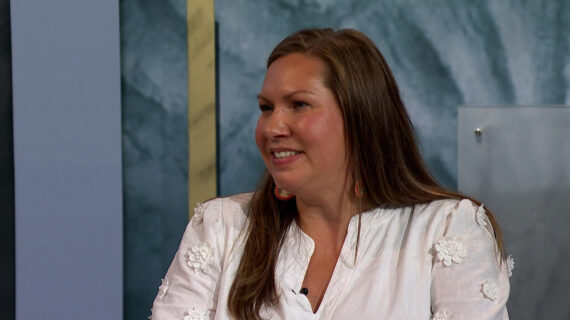
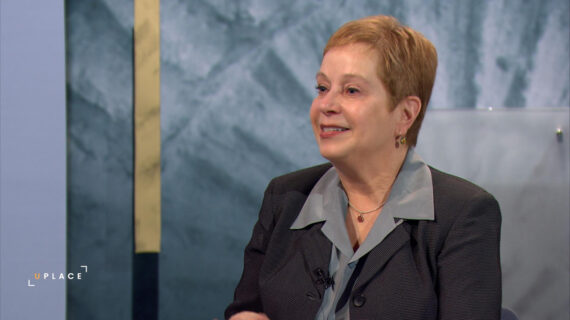
Bobby Peterson who is founder and executive director of ABC for Health and founder and president of My Coverage Plan Inc., along with his colleague Erin McBride who is managing attorney for ABC for Health. They will be talking with us about both of those organizations and the social entrepreneurship ventures that both organizations are running in tandem. Bobby is a graduate of the UW Law School and as dedicated his career to serving low income and health disparity populations in obtaining and maintaining a connection to healthcare coverage and services. In 1994, he founded ABC for Health, which connects children and families with health benefits through advocacy and counseling.
In 2010, he founded My Coverage Plan Inc., an innovative new technology firm to provide consumers and providers an opportunity to connect and maximize all of their healthcare coverage needs. Erin McBride is managing attorney for ABC for Health and she engages in direct legal advocacy as well as litigation on behalf of their clients. She is a frequent presenter on a number of very complex issues as they relate to healthcare benefits, including BadgerCare Plus. She earned her law degree from the University of Iowa.
This is an organization, ABC for Health, Bobby and Erin that have become nationally known for helping to turn traditional debt collection programs into innovative health benefits counseling programs that do reduce bad debt and ultimately help families not only identify coverage options but obtain and maintain their healthcare coverage. I've asked Bobby and Erin to come and talk with us about ABC and about My Coverage Plan, and how they interact as we start our conversations regarding social entrepreneurship. Let's start with Bobby Peterson.
APPLAUSE
Bobby Peterson
Thank you, Jeanan. It's a pleasure to be here today to talk to you a little bit about some of the entrepreneurial things we are doing at both ABC for Health and My Coverage Plan, Inc. Anytime you talk about starting a business, be it a nonprofit or a for-profit business, you have to go back in time a little bit to think about the beginning, the birth of an idea and the birth of a concept. And we're going to go back in time here to think about when these ideas started percolating in my mind, what I was working on, the introduction of ABC for Health and the way we developed that program of services, and then starting up My Coverage Plan Inc., which is technology company that actually grew out of a nonprofit organization.
The potential of that company, that the future of the company and some of the directions we see it going in. So the birth of the idea started, for me, back in law school. I was a student here from 1984 to 1987. Started law school without a great idea of where I wanted to practice, what I wanted to practice, how was I going to apply my legal knowledge and skills.
By the end of my first year, I applied for a clinical program through an organization at that time called the Center for Public Representation. They were offering a fellowship that was in northern Wisconsin, northwest Wisconsin, and the program was to help assess the needs of the rural uninsured. Now, it doesn't sound much like a law school project, it sounds like maybe sociology, or social work or one of the social sciences, but it was something I was interested in and I always felt people had a right to healthcare coverages and services. So I signed up for the internship, went up to northern Wisconsin, began working on this project with another student.
Our job was to walk the streets of small towns, Turtle Lake, Amery in Polk county, Rice Lake, Barron, talking to people who ran small businesses. We talked to people who ran hospitals and clinics, and we also talked to people that had been sued for medical debt. And that should give you a clue, that's probably some of the conversations that I had that gave me the idea. The idea was, at that time, after we completed the research and we identified a number of people that had been sued for medical debt for programs or for coverage that they didn't know existed.
So they didn't know they could challenge their insurance company the denial of claim. They didn't know about programs for their children with disabilities. They didn't realize the timing issues for applying for benefits. And at that time during my internship, I began thinking more and more about, well, couldn't we help these people get coverage, get services and then providers would get paid.
In a way I thought, you know, it was a win-win situation. Well, I started job hunting and my idea as I talked to law firms at that time was the win-win proposition. I'd go to firms that practiced health law and I would say, well, I have a thought that if your firm worked with hospitals, helped their patients secure coverage, made sure insurance companies paid what they were supposed to, held government programs accountable, made sure that the timing was right on applications and programs, there's a lot of money at play in the healthcare system. It's one-fifth of our economy.
When that starts to go south and the programs aren't aligned correctly, a lot of money is left on the table. Well, my pitch didn't work because I got blank looks like what are you talking about. Mr. Peterson, we do mergers and acquisitions of large healthcare providers.
Are you interested in that? I said no thank you. Not what I'm interested in. So I did what most, well not most, some headstrong people like me would do, and I just said forget it.
I'm going to buy a one-way ticket to Europe. Decided to travel, to forget about the law, and I spent six months traveling with a backpack and a tent and learning a tremendous amount about people and living off the land, but ultimately the dream of traveling around the world and writing novels kind of hit a dead end, and I had to come back to Wisconsin. So my dad paid for my ticket back, which is a little bit of humble pie for sure. But I came back and I started working in a plant store.
Thought about interviewing for law jobs and came back to Madison and visited the Center for Public Representation and talked to my old boss who was very excited when I got back and said, Bobby, we applied for a grant based upon your research as a student and we're going to be hiring a staff attorney to help people with health benefits issues. I was like, sign me up. So I interviewed for the position and I ultimately got hired as the staff attorney in 1988 after a year of being away from law school and traveling and working in plant stores and a variety of manual labor jobs, began my job as staff attorney at the Center for Public Representation. But the idea was still there.
How can we turn situations where people need help, providers need to get paid, into a situation that has a better result for both? So the birth of a family health benefits counseling idea became something that we really worked on. It started off pretty crudely because there were no experts out there and still there are very few people really who have a command of health benefits across the spectrum from private insurance to public programs, medical debt issues, charity care. It's not something that you learn in school.
You really learn it on the job. And there's no way of really measuring and testing. In class you get your exam and did you get an A, B, C or D. In this, someone lost $10,000, they didn't get paid.
Well, you flunked. Someone didn't sign up on their application on the day they should have. They were three days late, a $100,000 bill didn't get paid. Those are the things that happen and those are the failures that providers have to deal with and the resulting debt that goes to the consumer sometimes.
So we started working on this issue and our initial research showed that every dollar spent on health benefits counseling generated $10 in third party reimbursements. So the idea there early on was that if you help people and you're spending a dollar in salary and everything to help people work on benefits, connect to benefits and get coverage, that dollar that you're investing in the salary and time of an individual brings in $10. And we thought that was pretty remarkable. We wrote it in some of our grant proposals, and we began writing more grant proposals to further develop the concept.
By 1994, I had developed enough skill and experience to start my own organization. So I moved from the Center for Public Representation and started ABC for Health as a private nonprofit organization, and Jeanan described a little bit about what we do. There are some of the logos that we've had over the years. At the very beginning we looked more like a daycare center than a public interest law firm.
But we've changed a little bit since then, and we've definitely gotten a little bit more sophisticated in our approach and our strategies. We provide statewide services across all corners of Wisconsin. We've developed training models for healthcare providers so obviously what we know is very important for providers and their staff to know. So we've developed ways of teaching providers the tricks of the trade, the tips that they need to secure third party reimbursements.
We've developed management information systems and strategies to track information better, and some of these I'll talk a little bit more about as we get to the development of the My Coverage Plan company. We know that ABC for Health has an important role to play. Healthcare providers don't have the sophistication, families are caught in the maze. If you, family members, friends or relatives, everyone usually has a story somewhere of someone who just got caught up in the maze of healthcare.
They ended up with big bills. They ended up with unpaid bills. They ended up with collection notices. They ended up with compromised credit scores and trouble because it's hard to figure it out.
And the system is not designed in a way to be easy. When you have private insurance, public insurance, school health programs, charity care programs, it just does take a lot. All of these programs are governed by laws, rules and regulations. So that's why ABC for Health, a law firm, and me as a lawyer, it's a nice fit.
And early on when I was making my pitch to law firms, it does make sense for law firms to play a more active role because they're the experts in making sure that the rules are followed and that people are getting what they're supposed to be getting in some situations like this. So the lawyers at ABC for Health and benefits counselors work in tandem to help people through the system to make sure that they get the services that they need, representing families at hearings, sometimes in court, writing letters, demand letters sometimes to insurance companies to make sure they're complying with a contract, make sure they're complying with government and state regulations and now federal regulations related to healthcare reform that are currently active to make sure people are getting what they're supposed to be getting out of the system. In 2007, that's when we hired Erin McBride and her sister Brynne McBride. Erin will be up here a little bit.
We established a new community presence. You probably don't recognize this picture but this is the old Mifflin Street co-op back in about 1910 when it was a grocery store. Here it is in the late '60s, the first sign of the hippie paradise that it is. And here it is today.
Well, actually not today. Maybe last week because our awning blew off in the big wind storm, so we're getting a new awning in the next week or so. But that's the way it looks close to looking today. And there's our famous mural on the side of the building.
The old Mifflin Street co-op is now a public interest law firm dedicated to working with families and helping people connect to healthcare and coverage. And we still have a very strong mission rooted in the community. And we had a really nice segue between the management of the old Mifflin co-op to ABC for Health. And it was a nice hand off and they were all very happy and proud to be transitioning it over to ABC for Health, and we're proud to carry on that legacy.
We had to renovate the office. There's me signing the paperwork to buy the office. Here's what it looked like empty. There's where we're starting to build it out.
That's kind of the mess in the back. You can see in the very back corner it says "food for the revolution" and some of that graffiti we left back in the back room. It's still on the wall. There's a doorway that cut through it a little bit.
There's the multitasking executive director. And one of our staff working in the bathroom. And there it is today. So we transformed the old co-op into a public interest law firm and right now we're working on a variety of projects.
Erin McBride is going to tell you a little bit more about how we translated the idea of helping patients and working with providers actually into more of a business model with ABC for Health. Erin.
Erin McBride
Thanks, Bobby. Hi, everyone. One of the ventures that we wanted to talk about, one of the examples of ABC in the community was this partnership that we developed with St. Mary's Hospital.
And we're excited about this because it kind of carries on the theme that Bobby was talking about. It's a win-win situation. But the question is, who really wins when you put lawyers in a hospital? And it's hard to think of lawyers in a hospital other than malpractice or something going horribly wrong.
I don't think you would picture lawyers in a hospital as being preempting problems. And you certainly wouldn't picture an attorney sitting in neonatal intensive care, holding a baby, talking to a mom, but that should be the image of ABC in the hospital. In fact, that's what we do. So what we've done since 2005 is gone into the hospital, actually go into patient rooms, and so we have attorneys, we have health benefits advocates, we have health benefits counselors, we have students, we have volunteers, and they're all trained as health benefits counselors.
They're all trained in the rules of health insurance so they know how to help people get, how to help people use and help people keep their insurance or their coverage. And so it's a nice way to kind of get into where people need help the most. Catch them where they are. And so we go into the hospital, we talk to a mom about getting coverage for her baby.
Or maybe she has a baby in neonatal intensive care and so the baby has special needs or is going to have some pretty high bills. We talk about preempting debt for age 0-1, 1-3, 3-6, 6-9. We can map it out because what we're really trying to do is connect patients to services. And accidentally, everybody wins.
The hospital wins because now we have health insurance to pay the bill. The patient wins because health insurance is paying their bill, they're not paying out of pocket. ABC wins because on some level we're getting a small reimbursement for our time, but we're, on a bigger scale, fulfilling the mission of ABC in connecting children to healthcare. And I think insured people and other people at the hospital and community members benefit because if people go to the hospital and they're not insured, who actually pays the bill?
It gets shifted onto insured individuals. There's this cost shifting that goes on. There's a reason Tylenol is $17 a piece in the hospital. There's a reason a Band-Aid is $15.
It's because all of the expenses get shifted onto people who can pay. So what we try to do is identify who doesn't have coverage. So our work in 2005 started with the very small group of people. We started with nonqualified immigrant woman who are Spanish speaking who were pregnant.
So we started small. And we tried to identify what were some emergency resources we could hook people up to. And then pregnant women, now we have a baby, so then we started doing coverage for children. And now we do anyone who's uninsured but we also do people who are underinsured.
Maybe their insurance is not paying for everything. Maybe they got ridered out of a certain condition. Maybe their bill only provides certain services. But it's a nice expansion to a lot of people who either don't have insurance, are underinsured, and there's there's a segment of people who don't know.
They may have had coverage but they fell off. They missed a review or their insurance company canceled them and they didn't know. They didn't get a notice. And now you can see where having some legal backup would be really important.
What went wrong? How can we make sure that things get fixed? So to have this whole spectrum is really a beneficial source for the hospital. They now have someone who can help figure out the coverage because doctors aren't trained in this and billing staff aren't trained in this.
They're trained on how to bill insurance and how to collect on the bill. They're not trained on how to navigate these different avenues and navigate these resources. So it's nice to have someone who can be a little step removed and find out what's actually going on. If patients don't pay their bills, they either get sent to collections or in some cases the hospital will help them waive the bill.
They'll get charity care. So we like to say what we do at something like St. Mary's Hospital and now at Meriter Hospital, we do smart charity care. We save the kindness of the hospital and the hospital's obligation to help people who are low income.
We save that for people who absolutely have no option. And then we help everybody who does have an option. We figure out what that option is. And so it's nice to see that it actually has a benefit to hospital or they wouldn't be doing this.
And what's the benefit? Well, since we started at St. Mary's, it's $23 million that we've collected for the hospital just by making sure coverage was either acquired or paid for the claims like it was supposed to. So we keep really close track just to make sure that people are held accountable.
Insurance is held accountable, the patient is held accountable and the hospital is. And so I guess everybody wins. So it's a nice system. And what I like is that there's a very tangible way of measuring-- And there's the co-op-- A very tangible way of measuring what's going on.
One, we see the outcomes. We see that the patient is not turned away from the hospital. We see that the patient can go back and can go back and can go to this specialist and can go to that specialist because we're making sure we get insurance that they need and that covers their medical condition. So the outcome to the patient is truly measurable.
But the outcome to the hospital is extremely measurable too, and so that's why we have some of the charts here. How much are we actually securing for the hospital? And it's breathtaking when you think why doesn't every hospital do this. And so there is an option.
There's the possibility that hospitals could put folks in their hospital to help connect patients to services. Or patients to private insurance. Or to help troubleshoot some private insurance denials. You remember insurance policies are a contract and so a doctor probably isn't equipped to negotiate a contract, an attorney probably is.
So connecting patients to attorneys to help negotiate this results in some big, big spend down. So right now we're at about, we're averaging now about $6 million a year is what we're gaining for St. Mary's hospital. And that's just counting the first time we see the patient.
We're not counting any other bills. So it's a huge payout for the hospital and I think it's something that as, as Bobby talks about MCP, keep in mind what if every hospital did this. Is there a way to get people like ABC in every single hospital just to see what would that mean in terms of patient coverage but what would it mean in terms of finances for the hospital too. So I'll hand it back over to Bobby so he can dazzle you with the MCP idea.
Peterson
You can see on the chart the year that Erin started is 2007. That's when things started shooting up. So congratulations to Erin and Brynne for all their help in getting that program running really well at St. Mary's and it's a model program.
St. Mary's is great to work with. They have a tremendous mission and they fully understand their mission to the community and service, and this is an opportunity to us to help them provide help to even more people because we're finding resources for those that have other options. So let's talk about MCP.
Well, first, ABC for Health, if you look at the logo, there's a green block, a red block, and a blue black, and that was done by design. Back in about 2004 we came up with a new logo because we have some organizations that are part of ABC for Health. We have ABC for Rural Health and Mike Rust is our chief operating officer up in Balsam Lake. HealthWatch Wisconsin is still a project but is emerging as a separate organization that, as we learn about all these issues in the trenches, as we're providing casework to people, we should have a forum to do better teaching, training and policy work and HealthWatch Wisconsin is the vehicle for that.
MCP, which I'm excited to talk to you about, is our new technology company. And you can see from the logo, we've incorporated colors from ABC for Health and we've nested our company in the cloud. And we've got the rainbow which signifies the pot of gold, and there is a pot of gold at the end of that rainbow for people that will choose to use it because we believe it will have a significant financial impact on healthcare providers that choose to use this system. Now, how did this idea come from the original idea that I had back as a law student?
If you think about entrepreneurship, people that are entrepreneurs are always kind of thinking and scheming and dreaming, and I guess I fall into that category because it's always been in the back of my mind how could we take this to the next level. What's the next step? What's the next system? What's the next way we can be more efficient and effective?
Back in about 2005 I was in a meeting with colleagues and we were working on children and youth with special healthcare needs, and they were talking about developing service coordination plans and how they would coordinate services for children and I'm sitting in this meeting thinking but you got to coordinate the coverage. That's where the real money is and that's where people fall off the table, and a light bulb just went on and I thought developing a healthcare coverage plan. And My Coverage Plan really grew out of that. It was the idea that there was a big growth in electronic medical records and your medical records were a big part of the news and everybody was thinking about how do we digitize our medical records, and I thought, well, but if we could think about ways to track people's healthcare coverage, develop a healthcare coverage record and automate that system in a way that providers could use it.
Then we wouldn't have to send ABC for Health staff to St. Mary's, to Meriter, to 20, 30, 40, 50, 60, hundreds of other hospitals. We can develop the technology that they could use to help their patients in a systematic way of that would be helpful to them and also helpful to a new company. So we began applying for grants.
And if you're thinking about becoming an entrepreneur and you've got lots of great ideas, just get ready to get smacked in the face at least a dozen times because we did. I wrote grant proposals to the National Institutes of Health, HRSA, AHRQ, NSF, dozens of agencies and people kind of gave me the same blank look that that lawyer that was recruiting me for the firm to do mergers and acquisitions did when I was trying to pitch my idea. Didn't understand what a healthcare coverage plan was. Didn't understand what ABC for Health was doing.
Didn't understand how we could migrate a for-profit company and develop a software as a service product out of this. So it took us a long time. We got a lot of very strange responses back from reviewers. We were probably on the verge of quitting.
One of our board members said this is it, you've really got to stop. This isn't a good direction for you. It's just taking too much out of you. Well, we wrote that one last grant application and around December of 2009 we got word that we had made the cut and that we were being reviewed.
And by 2010 we were funded. And it was a very significant grant through the NIH. It was up to five years and up to $1.6 million to develop the company and to develop the technology. So we really hit a home run but it was not an overnight success by any means.
Remember, the original idea was 20 years earlier or 25 years earlier. By 2010, we were actually ready to start building the new company. So what is MCP? You think about technology and things that you use every day but from booking airline tickets to reservations in a hotel, finding a rental car, there's a lot of tools that are used through the computer now to assist you in your decision making process.
Decision support. Do I want four rooms or do I want a four-door or a two-door car? Do I want four-wheel drive? There's a lot of ways for you to go through the system and for your decisions to be supported in that process.
Healthcare really has very little to offer in that regard. My Coverage Plan Inc. is a database, web application that uses a dynamic interview process to take you through a series of questions and, as you answer those questions, the coverage that might be right for you is better identified. It's a tool that we've been using since probably for the last 10 years a tool like this was the classic garage built access database system which we used for just recording information and reporting to grants.
We've really tuned it up since then and created a tool that will help take people through systems, again, with the ultimate goal of helping patients get coverage and for the providers to get reimbursed. Here's what it looks like in a prototype phase. So this would be your screen shot as you enter the system. We're thinking of My Coverage Plan really as a suite of tools.
It's not just going to be one process but a suite of opportunities of what do you need. You'll see the one button is a benefit screening tool. Okay, you can see on the screen the new benefits screening. That would take people through the whole interview process.
The knowledge and training portal. This is really the latest development, and we've sought separate funding on this, but really because the information is so complex. People have said to me, Bobby, this really is rocket science when you have to understood private health insurance rules, the social security rules, Medicaid rules, medical debt rules, charity care requirements. A lot to know.
Well, if you've been doing it for 25 years like I have, I have a pretty good ability to work my way through those rules because I've spent my whole career immersing myself in this. But if you're just starting out, a knowledge and training portal will help you dial into those specific areas that you need a tutorial on, extra help on, maybe a quick video or a fact sheet or get to the source documents of what the rules and regulations are. So the knowledge and training portal helps get you to the information but also a part of this is what knowledge level do you need. We're not going to make everybody into an expert attorney with 25 years of experience.
Maybe you're working at a healthcare organization and you do some of the initial patient interviews. What's the knowledge that you need? So part of our knowledge and training portal is to assess your knowledge and to help you build skills based upon that assessment. So what do you need to know about private insurance?
What do you need to know about Medicaid and BadgerCare? What do you need to know about the charity care policies and rules? That will allow us then to identify specific training that meets the skills that are required as a part of your job and doesn't maybe take you to the expert level but gets you the basic information that you need to know to help families at an initial level or to pass it on to people that have a higher level of expertise. We also are incorporating a very significant resources database which will help identify a variety of other community-based resources that may not be health resources but other community resources that some of the patients may need and require.
So, again, we're working on a suite of tools. The main thing focused right now is our benefit screening tool for My Coverage Plan. The benefit screening process starts out. Here we have Kitty Kitterson.
We have to enter her birthday. Is she a qualified immigrant? Is she disabled? We'll indicate that she is a US citizen and that she is not disabled.
We'll get basic information. It will start assembling the client record as with enter this information into the tools. We have a section down on the corner which is alerts down here. You'll see later that at certain points during the process we'll know that there are key dates that we have to be aware of, and the system will alert us to make sure that we're intervening with the client appropriately in a timely manner so that we get an application in when we need to or a reapplication, a recertification, that's a tool that we've integrated into this to make sure we're maximizing all the benefits that are available.
We have to indicate household income. And that's tricky. It's easy, how much to you make? But when you get into sometimes, and for students, you know, how much do you make during the school?
How much do you make in the summer? It depends. Did I get that construction job for the summer or am I just stacking hay in the barn for the farmer down the road because I can't find anything else? Am I flipping burgers or did I get a good job down at the factory that's paying me $15 an hour?
It depends. And so your income can fluctuate from month to month. For families and for a healthcare program that's huge. If your income is high one month and low the next month we're going to say get in in the next month and let's see if we can get you coverage at least for a short period of time.
You get laid off. Your income goes down. Well, that's the time you need help with healthcare coverage so we're going to be looking at your income, what the timing is for that income, and we'll be able to calculate what's known as the federal poverty limit from it. And that's the tool that most government programs use to gauge your eligibility.
And it's going to be based on your income and your family size. Family income is also important. This is changing too. It's something that we have to keep an eye on because it's mom, dad, and whatever kids are in the family.
Also, you see the little baby here, it does count the fetus as part of the family size. The programs that we work with here in Wisconsin if you have twins, that means it's mom, dad, and twins, that's a family size of four when you're applying for BadgerCare Plus. So it's very important for us to know that information, the client income, as well as the family income. So when we look at this situation and the computer behind the scenes, the logic that's behind it and the algorithms that we've built in will tell us it's a household of three.
Annual household incomes of $46,404 and that equals a federal poverty limit, which we call FPL, percentage of 250%. So we kind of know the lay of the land then. Here's the family size. Here's what their income is.
Here's what their FPL calculates out to. Then we'll be able to look at some of the programs. The computer will search through the database and identify programs that fit those parameters for that family. And here we see BadgerCare Plus Benchmark Plan might be an option for that family.
We'll be looking at application dates, dates that they may have medical bills. There are certain rules that relate to when you apply. You have to apply during the month when you have had services in order to get them paid. So if you're eligible during that month, the end of the month at ABC for Health is always a very busy time.
Last day of the month we're scrambling around to make sure any clients that we've talked to or have contacted us during that time period we're really working to make sure we get them their applications in, or at least a registration application in, so that we can help them with their programs and coverages. We have some information on our client record that gives us more about their finances and summarizes everything. And you can see here we have Barbara Stanwick as our client and it tells us a little more. And this is some of the information that is synthesized into the health coverage plan record.
For us, this is really important and for other providers this can become really important because in the same way that you want to have electronic medical records portable between, if you're in an accident on spring break down in Florida, and your medical records are all up here in Madison, Milwaukee, or Chicago, for them to ship those down, it doesn't happen anymore. Now, for most providers that are moving to electronic medical records, those flow in the information highway and they can get down to that hospital very quickly. They can identify what your medical needs are, what your medical diagnoses are, any problems that you might have, any reactions to medications that you've had in the past. But in the same way, your coverage information would be very helpful for that to be there as well along with your electronic medical record.
People need to know what your coverage is, what insurance company you have or what government program you might be eligible for or are eligible for, what were you eligible for in the past. All of those are big pieces of information that can be used to assess how is the hospital going to get paid, how are we going to keep you from getting billed for a lot of extra services, potentially, or what can we do to help you secure coverage now when you need the help? Our idea behind this always has been thinking of ABC for Health and My Coverage Plan Inc. as services and technology that really is built on the public health model of prevention.
The more we know, the earlier, that we know it, we can help you avoid and prevent medical debt situations and issues related to not getting services because you don't have coverage. So we can work a lot on these types of programs and make sure that we develop the coverage plan in a way that keeps the providers informed about your coverage opportunities and you as well. You can see here, as I pointed to a couple of the alerts, we know, right in the middle of the screen here, we can see that on this date BadgerCare Plus renewal has to occur. So if there's an advocate working with this family, we know that they will get an alert saying that the family has to be renewed by this date so a month prior to that they'll get a notice to contact the family and say let's get that renewal taken care of.
Another note in here, Birth to Three ends. It's a program for kids with developmental disabilities from birth up to age three. So when they turn three, the program ends and they should be transitioning to certain early childhood programs. Again, it's nice to know that ahead of time.
We want families to be able to be ready for these coverage transitions so that they're not caught off-guard and suddenly they're going to the therapist and saying your birth to three coverage is over, here's your bill for $500. That catches people off-guard and people are focusing their energies on their families and on their children, and the financing and reimbursement stuff, it is complicated and it does take a back seat. So if we can develop tools and strategies to help them focus their attention on their families and their kids, I think we're doing quite a good service. So we've been on quite a ride.
This is the scenario of My Coverage Plan in the first year. In March, we started the company, of 2010. It is a for-profit subsidiary of ABC for Health. We work with the National Institutes of Health on getting all the paperwork squared away and getting it structured with our lawyers, accountants, to make sure we structured the company in the correct way.
We started building new tools. We worked with a variety of venders through the summer and different build strategies for the technology because, for those of you that have worked on technology or databases, there's a lot of different ways to build this. And we've worked and experimented with a number of different strategies on how to do it, and we're settling in on a couple ideas right now, but part of our first year was really to test and evaluate different build options for the tool. And we're continuing that through June of this year because the initial phase one grant concludes in June of 2012.
We've designed our logo. We've built up a pretty good reservoir of business plan tools. We have a foresight analysis that was conducted with the NIH in January of 2011 which really gave us confidence in our idea. So these were outside venders that came in, interviewed me, looked at our technology, compared it to other technologies that are out there in the field and basically said this one has a lot of potential.
This one really could go somewhere. Here's what you probably need to do making sure you secure your intellectual property, making sure that you've got the niche in the market correctly between different venders. I think the strength that we bring to this and other people who we've worked with in the past have noted this is, is that this is a company that has started in a little different way than most. Most of the start-ups that you hear about are a lot of times people that have been in the private sector for a while and then they start a new business.
There's not a lot of entrepreneurship that emerges from the nonprofit sector. And I don't think it has to be that way. I think there are a lot of very creative, talented people in the nonprofit world, they just don't think about those opportunities. I don't think they've been given the opportunity to translate their ideas of what they're doing that effective in communities, in the social service sector and translating it into business ideas and models.
And we feel very fortunate at ABC for Health that we have this opportunity, and we do have a way to go yet. My Coverage Plan Inc. is a long which from becoming a successful, commercially viable company, but I think we're on a strong path. We've been involved in several national SBIR meetings.
SBIR is the funding, Small Business Innovative Research program. It's federal funding. It's always under threat so we're always waiting for the plug to be pulled. But in some ways it's foolish to think about pulling the plug on a program that is developing technologies and jobs and opportunities for future business and future jobs.
And the SBIR program is one of the strongest job creators that the federal government has. So it has pretty strong bipartisan support at Capitol Hill. But you never know. They do crazy things up there so we just don't know how long the SBIR program is going to be hanging in there, but we're hopeful that it will continue for the next few years.
We've done some other analysis with another group called Merwin Analysis. That was a free analysis that was done with ABC for Health, I'm sorry, with My Coverage Plan Inc, and they also gave us some very promising information about the company. The growth potential on one side of it was listed as high as $8 billion because of the concentration of resources in this country spent on healthcare. We don't think we're going to get to that point, but it shows you the potential of what we're doing and how much of an impact we can have on healthcare coverage and financing if you do it correctly.
Remember, now, just on a smaller scale at St. Mary's, we're dealing with one hospital that's over $6 million a year. And we're still really not fully engaged there yet. We're still exploring new ways to extend further into the hospital, to reach people earlier on and execute even better in terms of helping patients.
If you take that across many hospitals, community based organizations, federally qualified health centers, clinics, there's tremendous opportunity and potential tools that we're developing. We can think about different end users. It doesn't have to be a hospital. It could be people in the community that want to have their home version of their healthcare coverage plan.
So a version that consumers could use to track family healthcare coverage for themselves and their families. For some people it's not a big issue until it becomes a big issue. You think we're healthy, we're okay. Someone gets in an accident, someone becomes disabled, a child develops special health care needs, there's a child with autism in the family, those can really create a lot of tremors in the healthcare financing world and trying to figure out the right path to take is overwhelming.
And tools like My Coverage Plan can be very helpful. I said that in June of this year we'll be going to our phase two, and that's got to be approved yet, but we've submitted all the paperwork and our application to take My Coverage Plan to the next level of a phase two process and that will be our commercialization phase. So we're actually going to be moving from sort of the laboratory and testing processes and strategies to actually deploying it with some other customers. So we've got potential customers lined up to actually show them how to use the tool and to provide services to their patients and obviously ABC for Health is going to be one of My Coverage Plan Inc.'s customers and our services at St.
Mary's Hospital. We're looking at new tools, and again, as I told you, I'm always thinking about new ways of doing things, new ways of developing strategies, helping people, and I think, in some ways I'm hoping that My Coverage Plan is going to grow into a company that can really fully support the mission of ABC for Health, and one thing as the executive director for ABC for Health you have to do a lot of is write grants, and it would sure be nice if My Coverage Plan replaced a lot of those grants with a funding stream that could support the nonprofit mission of ABC for Health into the future. That's the hope and it's something that we've been working on, we've been working hard on, and we hope that through the course of 2012 when we go to the commercialization phase, we see some results and some successful outcomes. Here's information on both organizations.
My Coverage Plan has its own separate suite now in the Mifflin Street co-op. So we're up on the second floor in the old business office of the co-op, and that's where my office is. I spend close to 60% of my time on the new company, and I still work with ABC for Health the other 40% of the time. So I'm split a little bit, but I'm working more and more on My Coverage Plan issues and developing that organization and business and working to see that it becomes successful, and hopefully, that idea I had way back when I was a student emerges into something that will last for a long time into the future.
We've got some time for some questions and some interaction. People have thoughts and questions, Jeanan asked me to save some time for anything you might want to ask. Thanks for that, Bobby, and the students know to put their hands up as they have questions. I'm going to offer, just because this is a slightly different concept from that which we've been discussing this semester, don't be afraid to ask questions that might better explain the concept to you as well.
Health benefits counseling is hardly intuitive. It's not something that you just automatically know about unless you necessarily have had some background in it. So if there are aspects of some of what ABC is doing or what My Coverage Plan hopes to intend that you don't understand, feel free to ask that as well. I'm going to start off by asking, so My Coverage Plan, who will you sell it to?
Well, initially, it's going to be looking at providers. So hospitals are our primary organizations that we'd want to sell the tool to. It's going to be cloud based so it would be something that hospitals could log into our system, develop confidential and secure information. We will be fully HIPAA compliant, HL7 compliant so that hospitals can use this system and it will be interoperable with their electronic medical records to help assess what coverage opportunities are available for their patients.
Jeanan asked the question like health benefits counseling isn't really intuitive and I can understand where that comes from because maybe out of a room of 10 people, there's two that could really use some health benefits counseling services because they're having encounters with the healthcare system. If you're healthy and you're not going to the doctor and you're not going to the hospital a lot, you may not need a lot of health benefits counseling. You probably should have it, as I said, to avoid the problem later, but if you have someone in your household that has a disability, if you have some medical bills that keep showing up and you're not sure why, if you have things that aren't covered by your insurance that you think should be, if you get laid off and you're wondering how am I going to be able to afford my health insurance or should I be thinking about a program like BadgerCare Plus that's there as part of the safety net to help, that's when you're going to need health benefits counseling to sit down and assess your benefits, your coverage, and how to make sure the rules are applied correctly for you. Because what we found is that many times you, on your own, you go to the insurance company or the government bureaucracy that's there to help you, you get the wrong information.
It changes quickly and you can get the wrong information, and then you're one of those families that I interviewed way back when in Polk County that got sued for a $7,000 medical bill. And I'd be saying, well, it didn't have to happen. I wish we could have talked to you earlier because I could have told you about BadgerCare Plus for your child. We could have used a deductible because there's crowd out issues here.
We could have helped you get these bills paid. But now it's too late. So health benefits counseling, it's a service that integrates aspects of law, social work, community organizing, people that have been health benefits counselors at ABC for Health have run the course from people that had degrees in geography, dancers, priests, reverends, really, you've got to have the tenacity and the intellectual curiosity to think about how do you get to yes from the no answers that you're getting from the bureaucracy and the system because you dig hard enough and you work hard enough at it, usually you can find it. Question over here.
Yes. Hi, my name is Hannah. I was just curious, for you personally on a day-to-day basis, are you mostly working with clients or what does your schedule normally look like? That's a great question.
I think it varies. But today is Wednesday so we had our client case meeting. Every Wednesday, every case that comes into the firm, new clients that have called with questions or issues are all entered into our old garage built database system. We project them in our conference room and we summarize what the issue is.
And so today was a big client day. We talked about client cases and issues. I didn't talk to any of those clients specifically myself, but I was very active involved in discussing all the new clients that come into the firm. On a day-to-day basis, there can be a week that goes by where I don't talk to one client.
Erin can't say the same thing, but I can and a lot of the staff that are at the front end of it are very, very active in talking to clients every day. We get over 2,000 requests and up to 2,500 requests for assistance each year at ABC for Health. I usually sit in on every case meeting so I'm hearing about them as they come in and I'm offering my insights and my thoughts. And actually when we think about you got to build the algorithms that sit behind, the if/then variables behind the computer, a lot of those come from the case meeting because we're thinking about what are our strategies, and we have our code writer sitting in our case meeting with us and converting a lot of the issues that we synthesize into the strategy into code so that we can build it into our tool.
So that was a good question. Thanks. Hi, my name is Sarah. I was wondering, so in an entrepreneurial service kind of industry that you're working with here, you deal with people every day but not only just people but people in need, do you have a hard time separating your work life from your personal life?
Do you find yourself sometimes getting too close to certain cases? Is that just kind of hard to separate? That's another very insightful question, and I think it's something that we all have trouble from time to time. And through experience and time you do learn to try and create some separation from your personal life and your work life because it can consume you.
And it's not easy at times when you have clients that die. You have little kids that you're representing that don't get the services that you thought they should. You have families that are going through the heartbreak of kids that have serious, serious illnesses. We know that in our role as advocates we're doing as much as we possibly can to take that burden off of the family and absorb it ourselves.
But we have to be careful that we're not taken down in the process because we're not going to be able to help all the other clients that need our help. So you have to be thoughtful, you have to be thinking about those issues and you have to give yourself some space to get away and kind of cleanse yourself a little bit because the emotional weight can be very heavy sometimes. Question back here. Hi, I'm Amanda.
I was wondering if you had one case that's just stayed with you? Well, there's a case that we've been working on since 2003, and it's a little boy who had autism and couldn't get speech therapy. Went through the whole health benefits counseling process at ABC for Health. We started asking the insurance company, in this case this mom worked for American Family and they were insured by Cigna, and we were really curious about why the services weren't provided.
There were some letters that we received from Cigna saying that these speech therapy services weren't allowed, that they weren't covered services, that they were based on tools that Cigna had called clinical resource tools and benefit resources tool. Well, back in 2003, another staff attorney who's now on our board wrote a letter saying we'd like to get copies of those tools, and you're required to provide them to us within 30 days or you're subject to fines of up to $110 a day. And we wrote letters. He ended up moving back to Ohio at that time.
I took over the case. I wrote four or five more letters. Our interns, because we have a lot of student interns that work at ABC for Health and legal interns and both undergrad interns that work with us. We wrote letters, we made phone calls.
It took us a year to finally get one of the documents that we wanted. Finally, we had a hearing and they granted benefits because they said we were right but they didn't tell us why we were right. We got the benefits for the little boy by 2005. We had the hearing, they didn't pay the bills until 2006.
We filed suit in federal court because they delayed the time period in which they were supposed to be sending information back. It was beyond the 30 days. In fact, it took 27 months before we finally got the documents. And remember, $110 a day penalty is the rule.
We took it to court. We took it to the Seventh Circuit Court in Chicago. We won. The insurance company appealed to the Supreme Court.
They lost. We went back to the trial court here in Madison. We had a trial last summer, or the summer of 2010, before Judge Crabb. And the insurance company was found to have breached the fiduciary duty.
But the penalties were way too low from what we felt they should have been and the attorney's fees were not what they should have been for a case that has taken this long. So we appealed again to the Seventh Circuit. So this is a case that started in 2003, we're still working on it today, and it's up in the Seventh Circuit again. The little boy is getting big now.
He's 12 years old. He was two or three when we started. How old is he? Nine or 10 maybe, or 11?
And the family is going through a very rough time. This is one of the clients that we're very close to, and it's a single mom, boy with autism, and they're doing their best in a very difficult environment trying to get what they should, trying to get what they deserve out of the system. He's had struggles with school. The mom has had struggles finding a job.
And it's been very tough and so that one sticks with me very strongly to this day and it will for a long time I think. Hi, I'm Brett. You mentioned student interns earlier, I was just wondering what kind of role undergrads like us could play in this whole thing? We have a lot of interns and usually, the thing is this is not the kind of internship where you come and bring your homework and do your homework at your desk.
This is one where we really work you pretty hard. So you know that going in. But you have a responsibility and you're part of the team. You're going to be working on helping file organization, getting materials together for meetings and trainings, making client calls in some situations.
And not everybody does it. You have to have the right skill and aptitude and earn the trust of Erin, myself and others at ABC for Health. But there's opportunities to do some limited client work, follow-up calls, research. And then, like everybody else, today is garbage day, so I'll be hauling probably trash cans out to the curb when I get back.
We all pitch in and try and do as much as we can. But it's a variety of tasks. And the students are, we wouldn't be here today without the powerful student interns we've had over the last 17 years. They've been great and they do tremendous work and service.
I'm going to close with just kind of an overarching question on the federal level. Is there a way to characterize how the federal healthcare reform initiative will impact what you're doing either with ABC or My Coverage Plan? I think both of them provide both threats and opportunities. I like to focus on the opportunities because more people will have coverage but it's more confusing.
People are going to need tools like My Coverage Plan to help sort out information through the healthcare exchanges. There's different levels of coverage through the exchanges. There's different criteria for Medicaid. There's certain expansions in Medicaid and other cutbacks in Medicaid.
So the stew of programs is stewier, and a program like My Coverage Plan and services like ABC for Health that they provide are not going away because of healthcare reform. Important to note. I know that all the students join me in thanking Bobby Peterson and Erin McBride.
APPLAUSE
Search University Place Episodes
Related Stories from PBS Wisconsin's Blog






Donate to sign up. Activate and sign in to Passport. It's that easy to help PBS Wisconsin serve your community through media that educates, inspires, and entertains.
Make your membership gift today
Only for new users: Activate Passport using your code or email address
Already a member?
Look up my account
Need some help? Go to FAQ or visit PBS Passport Help
Need help accessing PBS Wisconsin anywhere?

Online Access | Platform & Device Access | Cable or Satellite Access | Over-The-Air Access
Visit Access Guide
Need help accessing PBS Wisconsin anywhere?
Visit Our
Live TV Access Guide
Online AccessPlatform & Device Access
Cable or Satellite Access
Over-The-Air Access
Visit Access Guide




Follow Us