

 Passport



Ten Things You Should Know About Aging
02/22/16 | 45m 24s | Rating: TV-PG
Alexis Eastman, Assistant Professor in the Division of Geriatrics at UW Department of Medicine, focuses on physiological and psychological changes that occur as we age. Eastman explains why the body changes and provides suggestions for slowing the aging process.


Copy and Paste the Following Code to Embed this Video:
Ten Things You Should Know About Aging
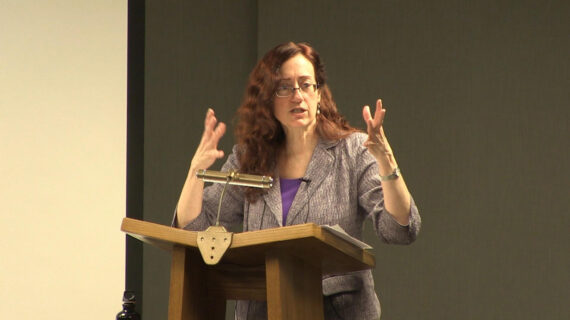
I am so thrilled to see such a packed room here to hear Dr. Alexis Eastman talk to us about what we need to know about aging. I did just discover the one tidbit I'll share about Dr. Eastman, is that she's a Japanese History major. So who would've guessed that, that was the road into med school, but I think it probably is what makes her such a well-rounded and caring and compassionate physician that we're lucky to have sharing her knowledge with us today. So please join me in welcoming Dr. Eastman. (applause) Oh, I'm too short for this. Okay, so Hi! I'm Alexis Eastman. I'm one of the geriatric primary care doctors. It's really nice to see so many familiar faces. I feel very loved. Thank you very much. I'm here today to talk about ten things that I think you should know about aging. I could've talked about probably 200, 300, 400. I tried to pick the ten things that I thought were really key, or things that people ask me about frequently enough that I think they're really important. So, spacebar he said. Aha! So this is gonna be a whirlwind tour. Fast, superficial,
but things that I think are important
key aspects of aging, physiology, and philosophy. So we're gonna talk a little bit about bones. Why do we break our hips? Muscles, what happens to them when we get older? Metabolism and medication, why are doctors always asking us about side effects? Skin, why is it so thin? Why do we bruise so easily? Bowels, why do we all get constipated? Why do we always have to talk about our bowels? It's a problem that I see a lot. Bladders, why do people leak urine? Sex, it happens, it's important. There are things you need to know about it. Brains, is your forgetfulness normal? Wisdom, I think we forget about some of the benefits of aging. Wisdom is one. Sometimes 20-year-olds seem awfully ridiculous. And the big picture, why are older people important? So first, I'd like to take a philosophical step and point to something that I think we forget a lot in our culture. Which is that aging is not a disease. Aging is something that is normal, it happens. It is important to understand, but it is not a disease. Older is not frailty. These are things that people confuse a lot, and I think it's important to point out. Just as soccer is a risk factor for breaking your leg, aging is a risk factor for disease, but it is not a disease itself. That said, let's start talking about some of the changes that happen with aging. So first off, one, why did I break my hip, or my arm, or my back? Why did I roll over in bed and hear something snap? What was going on there? So osteoporosis. Osteoporosis is a really complex disease of the bones about which we know relatively little. But we know more and more every week. Some of the things I think are important to know about the physiology of osteoporosis is that it has a lot to do with Vitamin D, and calcium, and bone turnover. So as we get older we have decreased Vitamin D absorption in the skin. If we live in Wisconsin and it's winter, that number goes down precipitously 'cause our skin doesn't see the sunshine, and the sunshine doesn't see us. In our guts we have receptors that control calcium absorption that are mediated by Vitamin D. So as you have less Vitamin D as you get older, you've decreased calcium absorption. So you have less building material for your bone structure. And then there's bone turnover changes, which I'm gonna talk about a little bit more, that lead to more fragile bones. So those of you who are unfortunate enough to be my patients know that sometimes I draw ridiculous pictures in clinic. I have drawn you all a ridiculous picture about bones. So, do I have a mouse? No. Alright. On the bottom, the big kinda white tube thing with the cracks in it, are your bones. And as you get older, you accumulate wear and tear, and that's what those little tiny cracks are. There are two main cells important
in bone turnover and repairing that process
the guy in the red hat, the osteoclasts, and the guy in the green hat, blue green hat, osteoblasts. The process is roughly thus, the osteoclast comes along and he hollows out the wear and tear cracks, so they're nice and smooth and waiting to be spackled in by the osteoblast. And then the osteoblast comes along and fills in the hollow with new bone. That's bone turnover. That's going on all the time, from the day you're born 'til the day you die. As you get older, the osteoblast, the guy with the spackle, slows down, but the osteoclast, the guy who hollows things out, keeps going. So you develop and imbalance of the hollowing out versus the filling in process, leading to more fragile bones. And that's the path to osteoporosis. So most of have you have probably had a bone density scan. And in that bone density scan, your doctors probably said something along the lines of your T-score is blah-de-blah. And you probably thought to yourself, what the heck is that? So what is the T-score? The T-score is a statistical comparison of your bone density to that of a 30-year-old. Well, why do we compare you to a 30-year-old? Why don't we compare you to a 70-year-old? It's because 70-year-old bone is already at risk based on that process I talked about. When you're 30, that's when your bones are the strongest they're ever gonna be. So we compare them to ideal bone to know how much risk you're at. So the T-score is essentially a measure of the standard deviations away from normal on a bell curve graph of bone density. So up there is the bell curve graph. So all are the areas in green are normal. All the areas in yellow are thin bone osteopenia. And the little tiny area of red is osteoporosis, representing 2 1/2 standard deviations below ideal 30-year-old bone. Why does it matter? So each decline in T-score of 1, -1, -2, your risk of breaking a bone doubles. So by the time you get to -2.5, or osteoporosis, your risk of breaking something is two-and-a-half times greater. 33% of people over the age of 65 fall every year. The vast majority of them never tell their doctor this. If they fall and they break a hip, the mortality rate at one year is 20%. That's huge. But probably more important to a lot of my patients is that fact that if you break a hip, you're at a 25 to 75% risk of losing independence, and having a decline in your physical function. So that's a quality of life issue that cannot be underestimated. So in today's talk, I'm not gonna talk about medications very much. I'm not gonna talk about tests very much beyond the DEXA scan there. I'm gonna talk about things that you can do that don't involve a doctor, that don't involve a hospital, that might help you age better. So the first thing to know in terms of preventing osteoporosis is exercise. I'm gonna pound that podium on the exercise thing many times today. But, weight-bearing exercise, things like walking, going up the stairs, doing some basic weight lifting with your arms, throwing things at people you don't like, those are all weight bearing activities. And they're excellent for preserving bone health. The calcium and Vitamin D debate, current guidelines recommend that you get about 1200 milligrams of calcium a day, mostly through your diet.
So I've put up some basic milligrams there
milk, cheese, yogurt, and collard greens, for the vegans out there, have about 300 milligrams of calcium per serving. Canned salmon and a serving of black eyed peas have about 200 milligrams per serving. Almonds have 70 milligrams per ounce. Now that's a lot of ounces of almonds to get to 1200, but some people are real aficionados. In terms of Vitamin D, the Institute of Medicine currently recommends 800 units daily. Most geriatricians recommend 1000 to 2000 units daily. And why is this? Well, there's some evidence that Vitamin D has a powerful impact in other areas, not just bones, like mood and skin health, and the immune function. And also, the toxic dose of Vitamin D is somewhere in the 200,000 unit range, so we have a lot of wiggle room. So moving on to the things that are attached to bones. Where did my muscles go? As we get older, muscle loss is a part of normal aging. Every single one of us loses muscle at the exact same rate. It is a linear decline. You have a decrease in fast twitch fibers, and an increase in slow twitch fibers. So slow twitch fibers are your endurance muscles. They're your marathon muscles. So they really conk out pretty fast if you do something really powerful or really quick with them, and they take a long time to recover. You've decreased muscle repair. There's increased fat infiltration into the muscles. The part of the cell called the mitochondria, which is where all the power is produced, they start to die off as well. And so you've reduced power production in the muscle cells. You have reduced force per fiber and reduced elasticity. So when you bend the muscle like this, you're not generating as much force per square inch, and it doesn't recover quite as well. So this is a graph of the linear decline, and you can see age 30 is kind of where you're at your best in terms of muscle. And then after that, you lose muscle at the same rate. Again, universal. Frailty is not the same. Frailty is a syndrome; it is a disease state. And the textbook would tell us it's "a state "of increased vulnerability to poor resolution "of homeostasis after a stressor event, "which increases the risk of adverse outcomes, including falls, delirium, and disability." So that's decreased ability to recover from an acute illness, weakness and balance problems, impaired physical function, a decreased gait speed, so if it takes you more than seven seconds to walk 15 feet, unintentional weight loss of greater than 5% in a year, low energy or exhaustion, and low physical activity. And we're talking really low physical activity like nothing. Now, most of us have some of this, at least on a daily basis. But if you put all of it together into a combined grouping, you have frailty. And why does this matter? It's not normal aging, and it's associated
with a number of adverse health outcomes
disability and functional impairment; decreased independence and immobility; a higher risk of having to go back to the hospital; and even death. So one of the larger studies, there's a med analysis with about 35,000 patients, so just a few, noted that at age 80, if you can walk 1.3 meters per second, you have a life span that's six to seven years longer than if you can only walk at 0.5 meters per second. (audience mumbling) So sometimes we do it in your clinic, right? So when you would do that timed get up and go test, we actually do a measurement a little bit of that. So that's part of the screening that happens in most primary care clinics at UW, now it is. At least once a year, they should be screening you for falls, and then watching you walk, if they think you're at risk. Again, back to the podium of exercise. Exercise helps, right? Use it or lose it. So multiple studies show that aerobic exercise, balance training, weight training, improves physical function and decreases frailty. So as one study of nursing-home residences that showed that as little as ten weeks of moderate resistance training, like one pound weights, improved muscle strength 113%, and gait speed by almost 12%, versus 3% and 1% in the non-exercising group. Another study in community-dwelling older adults showed that aerobic exercise and balance training decreased the rate of falling by 50%. And this is just another slide showing the difference between strength training and not strength training. So now this started with people in their 20s, but if you can see, you can see that the guys who were involved in strength training still lost muscle at the same rate, but they had more muscle to lose. So they were probably better off. So moving onto the rest of the organs in the body. This is a really whirlwind tour of physiology of the organs, but it's important to know why do I get more side effects as I get older? We'll talk a little bit about aging organs. So as you get older, the liver size decreases, both the size of the liver itself, and the number of cells in the liver. The blood flow to the liver reduces by 10% per decade after about the age of 60. And cytochrome P450, which are the enzymes that help us break down toxins and also most of our medications, slow down. And so because that's a funnel, where multiple medications and toxins go through, that becomes a sticking point where more side effects and more toxins are possible. In the heart, the maximal response to stressful stimuli decreases. Your ability to regulate your blood pressure decreases. So when you stand up quickly, you get more dizzy. Your pacemaker cells, which are the cells that control the rhythm of your heart, decline 10% per decade after about 65, 70. So you get more abnormal rhythms. People have more atrial fibrillation. They have more palpitations. In the kidney, the 10% rule also holds. You lose 10% of the blood flow of the kidney per decade. And it's also important to know that by the time you're 70, 30-50% of your kidney cells are nonfunctional. This is interesting because most of my patients will say, well but my creatinine is normal, you did my labs, they're coming out good. Proves the point that the kidney, like other organs in the body, has an amazing ability to compensate. It just means that your kidney is at higher risk than it was before, even if it's acting normally. It doesn't take as much to damage it. In terms of the muscles, as we sort of talked about already, the relative fat content of the muscle increases. And that means that fat-soluble medications stick around a lot longer. There are barriers in our body to prevent toxins from getting to important places. The two biggest are the blood-brain barrier, and the blood-eyeball barrier. As we get older, those two get more permeable, and so, sometimes medications that shouldn't affect the brain, do affect the brain. And sometimes eyeball medications that shouldn't affect the body, do affect the body. There was a talk by Dr. Pulia I think not that long ago on swallowing. If you were there, she talked about the decrease in saliva production, and decreased movement of the throat as you swallow. So those are also things that are important. And then there's the things that we have created as problems. So we know that everyone hand arthritis at some point, and that our vision gets worse, and yet, we persist in making all the medications little white pills. And then, your doctor asks you to cut them in half, or maybe cut them in quarters. And then they powder, and they're little tiny things, and they're in the corner of the dish. And you try to pick them up, and they go on the floor. And then we give you nine, ten, eleven medications and we say, well take this one three times a day, and this one two times a day, and this one half an hour before food, and this one like half an hour after you've walked the dog, and don't you dare take these two together. If anybody's on Warfarin or levothyroxine, you know that the doses are radically different on any given day. And then if you're on more than six medications, there's an 80% chance that two of them are not playing well with each other. And you're getting a side effect from the interaction of two drugs. Those are human-made problems. I put up, there's a long list called the Beers List, of all the possible dangerous medications you could be on. It's pretty much every medication. But I've picked three categories that I think are key, just to fill you in. The first one is the category of benzodiazepines, and these are your Lorazepam, your Valium, your Xanax. These are your anxiety and your sleep medications. Why are they problematic? Well, the first thing is that they stick around a lot longer than they did when you were 20. So Valium, it lasts at least 72 hours in your body from the time you take it. So if you take it every day, the cumulative dose of Valium becomes very high, very quickly. They've studied benzodiazepines pretty extensively, and they're risky meds for a lot of reasons, but one thing I like to point is they increase your risk of hip fracture by 50%. There's some data saying that they increase your risk of dementia as well. There's another group of medications called the anti-cholinergics and they kinda cross over with opioids. And these are your bladder medications, and one that if your my patient I'm always harping about, which is Benadryl, diphenhydramine. It's the PM part of every PM medication. Advil PM, Tylenol PM, Excedrin PM. It's sneaky. Loperamide, the antidiarrheal, is an opioid that also has anti-cholinergic effects.
There's a lot of effects here
constipation, dry mouth, bladder retention, but another one is that is crosses the blood-brain barrier a lot more easily when you're older. And that causes confusion and dizziness. And the third category that it's good to be aware about are anti-inflammatory pain medications. This is your ibuprofen, your Naproxens, Aleves, things like that. This is not Tylenol. Tylenol's a different type of medication. But these anti-inflammatory pain medications cause increased ankle swelling. And they're more likely to cause kidney damage because they stick around a lot longer because our metabolism slows down. So what can you do about it? Well, it's always good every time you come see me, or one of my colleagues, or you come see your pharmacist, ask what could be stopped, right? We tend to get this inertia creep of medications. Medications keep being added, and suddenly you're on 22 different pills, and you don't know why. Alright, so what can be stopped? There are some medications that may or may not be benefiting you. Sometimes you don't need that multi-vitamin, sometimes you do. Sometimes you don't need a bladder medication, sometimes you do. And near and dear to my heart though they are, sometimes you don't need a memory medication, and sometimes you do. There are some medications that have very long-term benefits,
but short-term risks
statins and aspirin. Some people really need to be on them. Other people may not be getting the benefit that they think they are. So those are conversations worth having. Other things to look at is what can be decreased and what has a safer alternative? Sleeping medications, benzodiazepines, these are things that often have non-medical, non-pharmacological means of treating things. Not always, but often. And then, last but not least, to deal with the half-a-pill at, like, crazy times of the day, pill boxes, pill cards. If you don't have to think about it, why? We put this burden on you, but it doesn't have to be your burden. Next, moving onto the surface of things. Why is my skin so thin? Why do I bruise so easily? All I did was, like, whack my hand on the table. Why is it purple, right? So as you get older, the top layer of your skin, the epidermis, gets thinner, and then the fat layer, just underneath it, becomes thinner as well. And that means more wrinkles. We all knew that, right? The elasticity of the skin also decreases. And the skin doesn't bounce back the way it used to, so wrinkles stick around. Blood vessels then are lacking the support structure around them of the collagen and the fat in the tissue. And they themselves also become thinner and more fragile. So there's no buffer, there's no protection, and they're thinner, so hit your hand, you bruise. You have less sweat glands as you get older. So your skin gets dryer, it gets itchier, it gets flakier. The pigment cells, the melanocytes, decrease, but the remaining ones gets bigger. And they tend to get gunky with some sort of gelatinous material we think, and we think that contributes to age spots. And as we all get older, we get more skin tags and rough areas, and lumps and bumps. Some of which you've inherited from your parents. So you can still blame things are your parents. So what can you do for your skin? Well, a big thing is hydration. Hydration, hydration, hydration. And this is difficult because your sense of thirst decreases as you get older. So a person in their 20s is gonna feel really thirsty when they're at a 6% body water depletion, but a person in their 80s, it takes 21% body water loss before they have the same thirst response. So you've got to drink water before you get thirsty. Lotion, lotion is a huge thing, too. And there's three kinda basic categories. There's ointments, there's creams, and there's lotions. Ointments are the greasy ones. They're your oils, your Vaselines, your petroleums, things like that. Creams are somewhere in the middle. They're kind of a mixture of an oil and a water-based gel. And then lotions are thin, and mostly water-based. So I really recommend that my patients wear creams. You wanna trap the moisture in. Lotions are a little too light. So the dermatologists say not to use soap unless necessary. Take a shower, wash the bits of yourself that get smelly, pat yourself dry, and then apply the cream while it's still damp, lock that moisture in. Sunscreen works at any age, use sunscreen. Eat your vegetables, get your nutrients. Make sure you have a good enough diet to support healthy skin. And stopping smoking at any age is beneficial for many, many, many other things, but also good for your skin. So we're gonna move back into the inside of things, and talk about the bowels, and why people seem to struggle with constipation as they get older. And the truth is, is that the normal aging of the gut, is a recipe for constipation. So first you have decreased lactase production, so you have more problems with dairy foods. You know, all those delicious cheese curds are not so good for you anymore. You get increased diverticulosis, which are these little out-pouchings from the colon that people are always talking about getting blocked. I'm gonna take two seconds for a tangent here. There's this long-standing belief that if you have diverticulosis you can't have popcorn, or tomatoes, or strawberries, or things with little seeds that might get stuck and block them off, and give you diverticulosis. That is mythical. It has debunked by gastroenterology. You may have your popcorn. If the diverticula are gonna get plugged, they're gonna get plugged, and there's nothing you can do about it. So back to aging. You get a decreased muscle in the wall of the intestine. So your intestines have muscular walls, just like the muscles in your body. As you get older, they decrease in size and strength. At the same time, you have an increased absorptive surface. So the part of your intestines that can absorb things becomes larger. And so where that really plays a part is in the colon where all the water is sucked back into your body, leaving constipated stool behind. You may have increased opioid receptors in the intestine. They respond to multiple different things, but anyone who's on pain medications knows that constipation is the side effect, the big side effect. And that becomes more so as you get older. And to add insult to injury, it takes more stool to trigger the urge to have a bowel movement. So more constipated stool in the stool, in the colon, required to make you feel like you've gotta go. So what can you do about it? How can you keep this moving? So another podium pounder. Everybody, everybody, everybody on opiate pain medication, I don't care how often you take it, or how rarely, needs to be on some sort of daily bowel regimen. Preventing constipation is far better and far easier than curing it. So I don't care if that's Miralax or Metamucil or Senna or Docusate, or 25 prunes and a jar of oatmeal, whatever works that you have a regular daily bowel movement that doesn't involve straining. Daily exercise, that Victorian concept of the daily constitutional, really works. Take a walk after your meals. You can circle through Oakwood a couple times, it's huge. And then you'll work things down, literally. Gravity will be your friend in that one. Discipline, we are creatures of habit. Pavlov's theories work. If you go to the bathroom at the same time every day, you will learn to feel like you have to go to the bathroom at the same time every day, and you will do so, even if you don't think you have to. When you add fiber to your diet, bulking agents, I say it takes one to two days for them to start working. But I also tell people don't do it all at once, right? If you've been eating five grams of fiber a day and you suddenly go to 40, you're gonna be a bloated, angry mess, and you're gonna hate me. So add things slowly. And add a mix of both the soluble fibers, which are your apples, your oatmeal, your prunes, which kind of form a gelatinous mass, and your insoluble fibers, your bran and your vegetables. And don't forget about water, right? You eat all this fiber and some of you have heard me say this before, if you eat all this fiber and you don't have enough water to go with it, it's like you ate a wool sock. It just sits there. So water is really important. Moving forward, why do we leak urine as we get older? So just as the normal aging of the gut is a recipe for constipation, the normal aging of the bladder is a recipe for leaking urine. Now Dr. Brown's gonna talk about this I think sometime in the near future. She knows far more about it than I do, and is gonna talk in great detail. So I'm just gonna go through it relatively quickly. But as we get older, our bladder elasticity reduces, and the muscle tone decreases, and our capacity decreases, so it's a smaller, floppier bladder. At the same time, we start getting these uninhibited contractions of the bladder as we get older. And we lose more of the part of our brain that tells us it's not time to go yet, right? So that inherent inhibition control starts to get weaker. All of that happens against a weakened sphincter. So the little valve that keeps the urine from falling out gets weaker, too. Men get prostatic enlargement, it's pretty much universal. So that leads to more retention symptoms where the urine doesn't come out, or what we call re-peeing syndrome, where you've gone to the bathroom, you leave the bathroom, and then you realize you've gotta go again. Alright, pretty universal. Lots of people have increased overnight urinary volume. Again, that's part of the brain's changes with aging that deregulates the amount of urine we produce overnight. And then, medications and constipation make urinary symptoms worse. How do we deal with that? Well, Kegels for all, right? So Kegel exercise is probably something you've heard about in clinic. They're these strange pelvic muscle floor exercises, where you sort of feel like you're about to have a bowel movement, you press down, you clench those muscles, and you hold it for ten seconds, and then you let it go. There are physical therapists in Madison because we're blessed here, that will help train you in this if you can't figure out how to do them on your own. It can be really difficult because they're muscles we don't use that often. Men can do them, too. They work for men. This has been studied pretty extensively in Germany, and they seem to have discovered that 40 Kegels a day is the magic number. Alright, you don't have to do them all at once. It doesn't have to be like Kegel time, right? You can divide this up. I can my patients to do a couple during commercial breaks, when they're stopped in traffic, between chapters of a book, when they're listening to really boring lectures like this, because I will think you're concentrating on me. You will know you're doing your Kegels. Some people get benefit from going to the bathroom every three hours even though they don't feel they have to go. Sometimes preventing urine leakage can be the cure in and of itself. A lot of people try to drink less water throughout the day. And I do say that drinking your water in the morning can be helpful. It's also helpful if you're dizzy and you're kinda dehydrated during the day. But it's important not to get dehydrated at night because concentrated urine is also an irritant to the bladder, and so can create more urgency overnight than you would've had if you weren't so dehydrated. Treat your constipation. I'm a doctor, I drink a lot of coffee, but decrease your caffeine intake. Decrease your alcohol intake. That will help decrease your urinary urgency. And most bladder herbal supplements have been shown to really not work. Saw Palmetto was the rage for prostates for a long time. The American Urological Association really found that it was not beneficial at all. Somewhere in the same geography, things you need to know about sex. This is something we don't talk about very often because most people hold onto the myth that it's all over after a certain age, right? But it's simply not true. So there are multiple surveys, and these are people who answered the surveys, who say that about 50% of people ages 65 to 74 are sexually active. And 25% of people over the age of 75-years-old are sexually active. And it's not rare. Of those sexually active people, 50% have sex monthly, and 30% have sex weekly. And so on average, sexually active older adults, have sex three to four times a month. By comparison, men and women in the 19 to 59 age range, have sex six times a month, so really you don't lose that much ground. Things change, right? Everything changes with aging, so some of the important things to know. In women after menopause, estrogen and testosterone decrease, about 50% of women struggle with atrophic vaginitis, which is a thinning and drying of the vaginal lining, can make sex more painful. Women have decreased lubrication, and decreased blood flow to the clitoris, which can change the clitoral erection, which much like the penile erection, is really important for achieving orgasm. But there is no change in the nerve sensation in the clitoris, so that important to know. In men testosterone decreases, testosterone being this controversial beast in the world of sexual health and potency, about 1% per year after the age of 30. Erectile dysfunction, both achieving and maintaining an erection, increase. There's decreased ejaculate, and that's both amount and force. There's increased refractory stage, right? So it takes a lot longer to get that second wind when you're 70 than when you were 17. There's decreased erotic tissue sensitivity. But men do report an increased sense of intimacy as they get older. This is one of those slides about medications, and I think I put here because sex is something we don't talk about very much, so therefore I think the medications are important to mention. In women there are topical lubricants. They should be water-based or silicone-based so that they're safe for condoms. There's topical estrogen for atrophic vaginitis, this will help create a plumper, more lubricated vagina. This is safe even if you've had breast cancer. The only time this is contraindicated is if you're still on Arimidex. But if you've had breast cancer, you've been treated, you've been on Tamoxifen, or any of the other meds and you're done, totally safe. Oral hormone replacement, another controversial beast, it was in, it was out, it's kinda coming back in again. Most evidence shows that if you're close to menopause, so you're maybe not even quite geriatric yet, but if you're close to menopause and you're having symptoms, that's when oral hormone replacement therapy is the most useful to you. And there's a new program of things called vaginal rehab. And this is mostly in the oncology department, where cervical cancer or endometrial cancer patients sometimes get radiation, and so they develop a lot of scar tissue. It's a type of physical therapy and it's being piloted here in Madison with some great success. So that's on the horizon. In men there's the classic PDE5 inhibitors. Interestingly enough, the first insurance company to put that on their formulary was Congress's insurance company. (laughter) Just saying. That's your Viagra, that's your Cialis. They work, people really like them. They shouldn't be used if you've unstable heart disease. Injectibles should be talked about with your urologist, 'cause they take a lot of training, and they're kind of difficult to use. Testosterone again, highly controversial. If you have low testosterone levels, if you have true hypogonadism, then we know it works. The rest is still in great debate and areas of research, hopefully that don't involve any baseball players. Then there's vacuum pumps and implants, that's sort of like vaginal rehab, again requires a discussion with your urologist. So what can you do that doesn't involve talking to a doctor? And this gets into the kind of fuzzy, nebulous area of sexual relations, right? The first thing is communication. All of us experience changes in our sexual experience as we get older. It's important to talk about that with your partner because you need to know what the other person likes, doesn't like, how they're changing, ways of exploring that intimacy with each other. The other thing that happens is we have a really age-biased culture, right? So all of us go into aging holding onto myths of beauty and sexuality that are unnecessary. And it takes a lot of work to re-frame your self image from the youth culture into one of knowing that you can be really sexy at any age. Right? And you have to practice that. You have to practice thinking about yourself as a sexual being and someone who has really sexy parts that you should glorify and enjoy. Couples need to take their time, right? Everything takes longer, foreplay takes longer, intimacy takes longer, so sex takes longer. And you really need to expand your definition of foreplay. So maybe foreplay now includes the romantic dinner beforehand, or the movie, or poetry. Expand the repertoire to include emotional and other types of sexual experiences. Try new things. Maybe that wonky hip is not gonna let the missionary position work for you. You know, you're gonna have to kind of experiment that way. Try other types of sex. Explore sensuality. Move away from goal-based sexual experiences, and work on just enjoying each other's bodies. I would not be a good doctor if I didn't talk about this. This is your risk at any age, so one in seven of new HIV cases in the U.S. are in people over the age of 50. Just cause you can't get pregnant, doesn't mean you can't get a sexually transmitted disease. The incidents of syphilis and chlamydia in older patients are astronomically rising. So in 2010, there were 19,000 cases of chlamydia in people over the age of 65, That's a three-fold increase in ten years from 6,700 in 2000. It's probably because less than 10% of people over the age of 61 use condoms regularly. In the '80s and '90s during the AIDS crisis, there was that line, "If you sleep with somebody, you've slept with everyone they've slept with", still holds true. So if you're sleeping with a new partner, use a condom. Moving back up to the brain. Is my forgetfulness normal? Again, there's gonna a dementia lecture I think somewhere in those whole series, and they'll talk about it more in depth. I have a lecture on this that's like an hour and a half long, so can't include it today, but we'll talk about the brief things. Normal aging of the brain includes occasional and temporary memory lapses. Some of you may have talked to me about this at some point, and I've talked about the brain as an overstuffed library. Right? You've spent decades accumulating knowledge and facts and putting it in there, but none of us does that in a very organized fashion. So when you go to pull a fact out, you have to sort through stacks and books and facts and interesting little tangents and find it again, so that can take hours or days, right? But it's "usually, quote-unquote, temporary." It's the kind of thing you walk into a room, you have no idea why you walked in there for, you walk out you say, "Ah, it was for my glasses." You walk back into the room and realize your glasses were on your head. That's normal. (laughter) So as you get older you have a decline in processing speed. Your ability to deal with new problems slows down, but doesn't go away, and you have delayed recall. But your vocabulary and your overall fund of information should not change very much. And if you look up on the graphs there I have verbal intelligence as we age over time. As you can see, it actually is very stable to slightly increased as you get older, but processing speed after about the age of 20, goes down. What's abnormal aging? So the two big categories of abnormal brain aging is in the memory disorders category are mild neurocognitive disorder and major neurocognitive disorder. So mild neurocognitive disorder is mild cognitive impairment, newly named. It's when you have an area in your brain function that's not working that we can see on testing that doesn't have a functional deficit, so your day-to-day life isn't really changed. Only 50% of people with mild disorder go on to develop dementia. The problem is we don't know which 50%, so we have to watch you. Major neurocognitive disorder is what they've renamed in the new textbooks for dementia. So that's a deficit in two or more areas of brain function that we can see on testing that has a functional impairment associated with it. They're all progressive. How they progress depends on the type. 60% to 80% of dementia is Alzheimer's, but there's a good number of others that we look for in the Memory Clinic. What you can do. Back to the podium of exercise. Exercise, exercise, exercise. In some studies, aerobic exercise is as good as our memory medications. Aerobic exercise appears to be better than weight training. There's some ongoing studies about what dose of exercise is the best. Most of the time we just say 30 minutes of exercise five days a week 'cause that seems to be a good amount. The other thing that people tend to forget about is one of the best ways of preventing dementia is to deal with the diseases you already have. Diabetes, a "Time" magazine cover made three, four years ago, pointed out that Alzheimer's might be considered a type 3 diabetes 'cause there's a lot issues with insulin resistance and sugar metabolism problems with the brain. Hypertension, your high blood pressure. Those small blood vessel changes that happen in the brain that aren't really strokes, and you don't notice them, accumulate over time. So keeping your blood sugar under good control, keeping your blood pressure at your goals, those are really key. Brain games, that's all the rage right now, right? So the best evidence for brain games is in the ones that you haven't done before. So if you're really into Sudoku, switch to crosswords. If you're really into crosswords, switch to Sudoku. If you're into both of those, try drawing, learn a new language, pick up the guitar, something else. Stretch your brain, that's what helps keep it going. Social activities stretch a different portion of your brain, right? So those are always important, and they're good for mental health. Music has a growing body of evidence that music is a whole brain activity. Whether you're intensely listening, whether it's an NPR show at like 8 PM, exploring music, right, great stuff, or whether you're playing or involved in a choir or something like that, that uses your whole brain. But to the more philosophical aspect of the brain, they make such bad choices don't they? I mean they're just ridiculous sometimes. My brother's, like, 32 and I still wonder about him. (laughter) So aging and wisdom, what is wisdom? Currently defined in the anthropological literature, wisdom is an accumulation of socially oriented attitudes and behaviors, social decision-making, and a pragmatic knowledge of life, emotional homeostasis and balance, self-reflection and self-understanding, value-relativism in context, tolerance and empathy, and acknowledgement and dealing effectively with uncertainty. So older really is wiser, even on big studies of MRIs. So aging brains are better at regulating emotion. So the amygdala, which is a huge emotional processing center of the brain, becomes less activated by negative images and negative concepts as we get older. Older people are much more able to put events into a contextual setting and interpret them thusly. Older brains have fewer emotional outbursts. They have better emotional balance. They're better able to regulate themselves. Aging brains make more meaningful choices. Older people are much more likely to choose time engaged in emotionally meaningful experiences, or with meaningful people than younger people are. Aging brains have a better sense of the passage of time, and can prioritize accordingly. Positive thinking increases brain creativity and brain efficiency, and that becomes a cycle. So creativity and efficiency breeds more positive thinking, which breeds more creativity. Older people are more likely to engage in egalitarian and socially-oriented decision making. And interestingly enough, I love this study, some studies indicate that older people ask more insightful and information-seeking questions, particularly of their doctors. So older brains are better at seeking out what they need to know, putting it in context, and judging it accordingly. Older is wiser. Last, but really not least, why are older people important? So I'm a geriatrician, this is like the stupidest question, ever. Of course you're important, right? Older people are, they just are important. But there's actually evidence for this. Older people support society. So per capita, older people give more money to charity than any other age group. They support the vast majority of good works in this country. Believe it or not, I just heard on the radio the other day, they also have the most buying power of any other age group. So you keep the economy going, too. Older people volunteer more than any other age group. And as a historian, formerly, older people are repositories of societal knowledge, skills, and historical perspective. If you don't know your history, you're doomed to repeat it, right? But if you can't learn it, if you don't have any older people around to tell you what the history is. So older people are necessary for keeping the flow of society on course. Grandparents, evolutionarily, may be the key to human advancement. So grandparents started happening around 30,000 years ago. That's the first time people started regularly living beyond the age of 30, which is a good time to become a grandparent, isn't it? But studies do show that we had kind of a cultural great leap forward at that time. In modern day studies of both urban communities and tribal communities, the presence of grandparents improves childhood mortality, decreases childhood malnutrition, and decreases childhood disease burden. Strong grandparent/grandchild relationships decrease the rates of depression for both groups. And they improve the childhood adjustment to the concepts of aging and mortality. And that's true not just of your grandparent and your grandchild, but it's any older/younger person interaction. So older people are important for making sure that the younger people become older people. To recap, first off, just to remind everybody, but I hope I've made it clear, aging is not the disease. Older is not frail. As I promised you, sir, aging is not for wimps. Aging is about change. It's about accommodating change, it's about adapting to change, but older is really about possibility, and the possibility about moving everything, including yourselves and the world, forward. So, thank you. That's my favorite 90-year-old, that's my grandmother. (applause)
Search University Place Episodes
Related Stories from PBS Wisconsin's Blog






Donate to sign up. Activate and sign in to Passport. It's that easy to help PBS Wisconsin serve your community through media that educates, inspires, and entertains.
Make your membership gift today
Only for new users: Activate Passport using your code or email address
Already a member?
Look up my account
Need some help? Go to FAQ or visit PBS Passport Help
Need help accessing PBS Wisconsin anywhere?

Online Access | Platform & Device Access | Cable or Satellite Access | Over-The-Air Access
Visit Access Guide
Need help accessing PBS Wisconsin anywhere?
Visit Our
Live TV Access Guide
Online AccessPlatform & Device Access
Cable or Satellite Access
Over-The-Air Access
Visit Access Guide




Follow Us