

 Passport





Ten Chimneys
09/02/10 | 47m 14s | Rating: TV-G
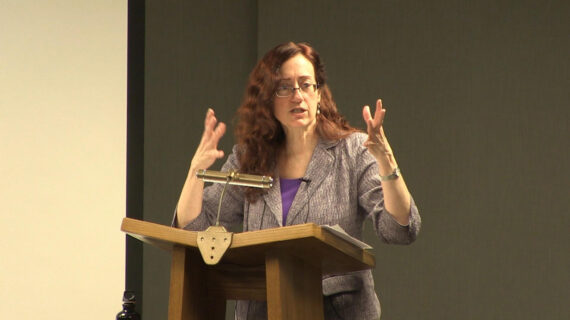
Sean Malone, president, Ten Chimneys Foundation Sean Malone illuminates the lives and careers of the legendary stage acting husband and wife duo of Alfred Lunt and Lynn Fontanne, explaining their decision to remain stage actors instead of choosing the big screen. He also focuses on their post-performance life and retirement to their home of Ten Chimneys in Genesee Depot, Wisconsin.


Copy and Paste the Following Code to Embed this Video:
Ten Chimneys
cc
Norman Gilliland
Welcome to University Place. I'm Norman Gilliland. Once upon a time, a prince and a princess lived in a beautiful summer palace surrounded by great works of art and artists. And they lived happily ever after.
Well that fairy tale, to a great extent, came true for the couple generally considered the greatest acting team in the history of American theatre. After 32 years on the stage they retired to their summer palace in Genesee Depot, Wisconsin, in the southeast corner of the state, and lived the rest of their lives there year-round. Their names, Alfred Lunt and Lynn Fontanne. And they had some special magic that was not available to most actors in this country or in any country and a very special place in which to regenerate their acting magic, a place called Ten Chimneys.
And guiding us through the lives of Alfred Lunt and Lynn Fontanne, through the images of their home, Ten Chimneys, is Ten Chimneys' Foundation President Sean Malone. Welcome to University Place. Thank you, it's great to be here. There's a kind of an irony to this most famous American theatrical couple in that they did very little recording, either video or audio, and so a lot of people today have never seen Lunt and Fontanne and don't have a good sense even of who they were.
Absolutely. Their far less famous friends and proteges are far better known today. Whether you're talking about Laurence Olivier or Katharine Hepburn or their peers like Noel Coward and Helen Hayes because of celluloid because the Lunts chose, very intentionally, chose to be stage artists. What they created was ephemeral, and so we know them to the history and we certainly are able to connect with them through Ten Chimneys, but there's no question that they are less well known today than people who were less well known than they at the time.
She was English, he was American, how did they come together? They met during a play. Alfred, they were both, and this was before either of them had had their big break, they had both made their ways to New York, Lynn from England and Alfred from Milwaukee, and Alfred was on stage, they were both playing bit parts, and Alfred was on stage and he was rehearsing a monologue and Lynn was back stage and heard this glorious voice and said it was love at first sight even though she saw him from behind the first time. And so she started conspiring with the stage hand.
"I need to meet him. Who is that? I need to meet this man." Alfred finished the work he was doing and came to go back stage. And it was one of those Broadway houses where the wings were down about four steps from the actual stage.
And so he saw Lynn and went to bow to her and fell down the stairs and literally fell head over heels and landed at her feet where a good pal of theirs said he spent the rest of his life. And that was how they met, and it really was, from that moment on, them as couple. Well, a great entrance. It shows they could play comedy, and they could play romance too.
Now, as a husband and wife couple, and we'll get into their background a little bit more, but as a couple they did have some advantages that single actors playing roles with single actresses did not have. Especially if we're talk about the 1920s, 1930s. Absolutely. Eventually, as they become a couple and got married, they eventually even put it in their contract that they would only work together.
What they were able to do as the Lunts surpassed the very impressive things that they were both doing individually. And not the least of it was that they were able to be far more physical on stage than any of their peers, both in fight scenes and in love scenes. And then they really did get away with quite a lot because people in the audience would say, "Oh, it's okay, they're really married, it's all right." How times have changed. Well we are fortunate to have, it's just one film that they did?
They only did the one film. "The Guardsman," and what would have been the year for that? That was 1932. And we have a clip from it that will give you some idea how the Lunts interacted especially in the physical realm.
Goodbye darling, take care of yourself, and don't forget me. What? I said goodbye darling, take care of yourself and don't forget me. Oh, have you forgotten anything?
No, I haven't. Very well then, goodbye. You can go. Is that your farewell?
Is that all you have to say to me at this last minute? Good heavens, you'll be back tomorrow afternoon, you're not going to Siberia. The journey to -- may prove just as fatal as a journey to Siberia. I think he's quite right, you know.
You don't even kiss him. No thank you, I don't want it unless she thinks of it herself. Come here, you fool. I won't.
Come here. I want to kiss you. Well, what is it you want? Well.
Oh, please. Kiss me. Very well. God bless you.
Ha, you call that a kiss? Very well. For pity's sake. Oh, you foolish boy.
You silly child. Darling. Darling. Darling.
Goodbye. Goodbye, sweet. Goodbye, dear. Goodbye.
Goodbye, darling. Good luck. Well they looked like they were having a good time there, but they just didn't enjoy movies that much? You know, they really didn't.
The film was a huge, huge success. It was a huge critical success, it was an even bigger popular success. But the Lunts didn't like making the film. They just didn't like that process.
I mean, certainly it was microphone in the bush era and there was no audience to connect with but above all they talked about, they said they'd worked too hard to be someone else's puppets. And film making at that time was very different. On stage they felt like they were creating the art, and they got to control what it was that they were creating. That's true, in live theatre once you're on stage the director isn't going to tell you to do it differently.
Right. And they also did a lot of the directing, and they also understood what was being created. Whereas in films, they felt like we're going to do what we do and we're going to do it five or six times and then someone else is going to decide what arc works, what reading works, everything else. And they just didn't want to do that.
So they said, no thanks. We tried it, not what we want to do. Turned down a lot of money, didn't they? The studios weren't hearing any of it because the Lunts were, in addition to being huge Broadway stars, they toured everything they did.
So they were the best known, best loved actors in the country and every studio wanted them. And this was the beginning of that studio system and the three studios trying to get their stables of stars. And all three studios kept offering them more and more and more money, and the Lunts kept saying no. And finally the studios had offered more than was reasonable, and they said okay if they're not going to do it, they're not going to do it and we'll move on.
And they were talking to all the other actors and all the other big Broadway stars, most of them were interested and they were talking and they were going to do it, but nobody would sign on the dotted line. And the studio heads couldn't figure out what was going on. And finally one actor told the head of Universal Studios, a man named Carl Laemmle, he said, "We're all waiting to see where the Lunts go." Everybody wanted to be in the Lunt studio. Or more specifically, they didn't want to be in the non-Lunt studio because the Lunts were so revered for their integrity and talent that other actors wanted to be associated with them.
So Carl Laemmle was a pretty smart business guy, and he said, "Okay, the Lunts can be lost leaders." It doesn't matter how much I pay them, if I can get them, I'll get everybody else and I'll be able to put the other two studios out of business before it even starts. He was very, very proud of himself. And he offered them, in 1932, a million dollars for a two-film deal. A two-film deal.
Two films, a million dollars. Which was exponentially higher than the highest grossing film in history. It was absolutely going to lose a ton of money, but he thought that this was how he was going to win the war immediately. And Lynn very famously sent him a telegram that said, "My dear Mr.
Laemmle, we can be bought, but we cannot be bored." They turned him down. And that was it, they just didn't do any more feature films. Well, they did appear on the Dick Cavett Show many, many years later and talked a little bit about their physical approach to comedy. You were in for very, very, well, spirited love scenes, you might say.
And there was a rumor that you... ( laughter ) Have I shocked anyone? There was a rumor that you were always inventing comic business of a kind of semi-erotic nature. That there was one scene which you grabbed Mr.
Lunt's leg, for example, and added a bit of business that got a laugh. No, she didn't grab my leg. She didn't? No.
I was in "Mistress Mine," and I was laying on the couch. His leg was across my knee. And suddenly she ran her hand up inside my trouser leg. ( laughter ) Just like this.
Which the audience was delighted with the business and so was I. ( laughter ) And we just kept it in for a couple of years. ( laughter ) ( applause ) Well, if you see that whole show from 1970, that Dick Cavett Show, Noel Coward actually comes on first before the Lunts, and he gave Dick Cavett the worst time. With his totally short, deadpan, stare off into the distance answers to every question.
And then he really lightened up once the Lunts showed up. Absolutely. You know, Dick Cavett was actually just at Ten Chimneys earlier this year. And we had a great time with him.
And he told us sort of the back story. And Noel Coward wasn't originally supposed to be on that show. And it was a huge get that Dick Cavett was able to get the Lunts. And about a week beforehand, Lynn Fontanne called him up, called him at home, he said, "I have no idea how she got my home number, but she did because she was Lynn Fontanne," and said, "Is it okay if we bring a friend to the show because we don't do TV very often and I think it would make us more comfortable.
And he said, "Sure, we've got a couple of seats in the front row for you, but if you'd like more..." She's like, "No, I don't believe you understand. It's Noel Coward and we'd love it if he was on stage with us." Dick Cavett said, "Yes, ma'am." And so that was how they ended up on there. You know Jack Paar, when that episode of the Dick Cavett Show re-aired, was quoted in the New York Times as saying that it was the greatest 90 minutes in the history of television. He was an enthusiastic guy, Jack Paar, but it was a very good show.
I can see Dick Cavett sweating bullets and the wheels turning with smoke during the first part of that interview though, the part with Noel Coward. And we'll see Noel Coward a little bit later in some of the images as we get into the estate. But before we go to Ten Chimneys, and there's some wonderful images of the estate, a little bit more about Lunt and Fontanne and the origins of each. Sure.
Well, Alfred Lunt, since we're in Wisconsin let's start with Alfred because he was a good Wisconsin boy. His father was a lumber baron, and his father passed away when he was two years old. And his mother remarried. Both his father and his stepfather were of Scandinavian descent.
And there's a very strong Scandinavian influence at Ten Chimneys once you see it. And Alfred went to Carroll College Academy in Carroll College and had always wanted to be an actor. And while he was at Carroll College, after a couple of years, his acting teaching said, you know, I've taught you everything I can and boy, do I love having you in the Carroll College Players but you're simply too good and you need to go some place where there's other people who can train you. And basically said, go east, young man and sent him off to her alma mater which was Emerson School of Oratory in Boston.
And Alfred enrolled but never went to any classes. Because between where he was staying and the school was the Castle Square Theatre, and Alfred went in and said, hey, could I have a job? And he said, would you take five bucks a week? And Alfred said, absolutely.
And so Alfred immediately started acting and pretty quickly started getting roles doing some touring with a lot of the grand dames, Lillie Langtry and Laura Hope Crews and that sort of thing. Really hold-overs from the 19th century. Right. So that's what he was doing at that time.
And while he was there, he turned 21 and he came into his inheritance because his father had been this big lumber baron and had left over half a million dollars to his mother and had left a much smaller, like $20,000-$25,000, trust for Alfred for when he turned 21. Well, Alfred's mother, Hattie, was quite the mother. And had burned through over a half million dollars in the intervening 19 years and, by the time Alfred turned 21, was completely destitute. She was known for saying all over the place, "I can do without the necessities of life but I cannot live without the luxuries." So Alfred took his inheritance and he purchased this land in Genesee Depot where he and his family, his mother and his half-siblings, used to picnic.
And he purchased this and then helped design and had built the first version of the main house. So this would have been about what, 1915 or so? 1915, 1914 was the inheritance, 1915 was when he built what we now call Ten Chimneys as a place for his family to live and really spent most of the inheritance on that and paying off their debts and saving the family. And having done his familial duty in making sure his family had a place to live, he then went off to New York to make a name for himself.
In the mean time, over in Essex, England, Lynn Fontanne did not come from money at all. She came from a very poor family, but a friend of a friend of a friend knew Ellen Terry, who was considered the greatest actress of the generation preceding the Lunts. And she was given this opportunity to read for her and did, and Ellen Terry fell in love with her acting talent and took her under her wing. And that was how Lynn got her start.
Lynn was then eventually discovered and came over to America and had started doing work, but really when Lynn and Alfred met, right before Alfred fell head over heels down those stairs, they were playing small parts at that point. And they were together as a couple when each of them had their big breakthroughs. So what was the first big part that they played as a couple? Well, that didn't happen until 1924 which was "The Guardsman." Alfred's big breakthrough was a play called "Clarence" that was written specifically for him.
A couple years later, a big breakthrough came for Lynn in a play called "Dulcy," which was written by George Kaufman and Marc Connelly. And in 1924 they did "The Guardsman" together, on Broadway, not the movie, and it was a huge, enormous, enormous hit. And it was around that time, at that point they'd even been married already. They'd gotten married in 1922.
And it was in the mid-'20s that they made another pretty enormous decision artistically where they put art over money. And that was where they signed up with the Theatre Guild, which eventually went on to be very influential in American theatre. They even did radio in the '40s. Yes, absolutely.
But at the time the Theatre Guild was this very young, broke, up-start company. And the Lunts were the highest paid actors in America. They were each making around $900 a week. But the Theatre Guild was going to do Ibsen and Shaw and Chekov and work that the Lunts wanted to do.
And so the head of the Theatre Guild said, the most I can afford is $600. And the Lunts said, you know what, the art is more important to us than the money, we'll do it for $600 each. And the head of the Theatre Guild said oh, dear God, I didn't mean each. And they said, oh, all right.
And so they did it, they still signed on to the Theatre Guild, but because they were taking such huge pay cuts, now down to $300 each a week, they could really write the rest of their contract, and they put in two pretty remarkable caveats. One was, as I think we talked about before, that they would never act separately. You couldn't have one play starring Lynn and one play starring Alfred. You had to have them together.
And because of that they really did revolutionize what we think of as American theatre and American acting. And the other caveat that they put into their contract was that they would never work in the summer because they wanted to spend every summer retreating and rejuvenating at this retreat that they had in their mind but they hadn't created yet. They had this house. Right, they had the beginning of a house and they had the land and they knew what they wanted to create.
They had Ten Chimneys in their mind. And so that really shaped the future of their career, the future of American theatre and their future lives all in that one contract decision. Well let's go to Ten Chimneys then and get some sense of what all is there and at what point they put in one piece. It's not just a house.
Right, it's an entire estate. So the one house was there and when they built a chicken coop, this is still when the family was living there, when Alfred's mother and half-siblings were living there. And when the Lunts got married in 1922 they converted that chicken coop into a guest house for when they were going to visit. A few years later, in the mid-'20s when they made this contract decision, they said, all right, we're going to create this retreat.
And they moved mom and the one half-sister who were still living into the main house out into the guest house. They renamed the chicken coop the hen house. And then the Lunts then spent the next 15 to 18 years, really from the mid-'20s to the late '30s, early '40s, creating Ten Chimneys, room by room, building by building, vista by vista, to be the perfect retreat. And there's an 18-room main house and a beautiful cottage with an extraordinary Scandinavian interior and a Swedish-style log cabin and a pool house and a greenhouse and a creamery and new chicken coops and barns and stables and that sort of thing.
And they really did create every space and every view to be the perfect retreat, exactly what they wanted to be. And then, like a stage set, when it was done, it was done. And they didn't change a thing for the next 50, 60, 70 years. And that's so different.
Most people, as well, after a couple of years, let's change this and let's change this or let's update this. But here this, we've gotten a sneak preview of this. It's called the studio. Right, this is the interior of the studio.
And what would they have used this for? Well this was, they used it for a few things. Certainly this was a place that was very special to them and to Noel Coward, and so it was Noel Coward and they would come and they would drink and they would talk the night away. But it was also where they went when they needed to get work done.
Because they took every summer off, every fall, or every other fall, they would have a new show on Broadway, and so the directors and the designers and the playwrights and other actors would come to Ten Chimneys toward the end of summer, and they would use the studio as a place to rehearse, to write, to rewrite, to create, to decide what the piece was going to be. And so a lot of the plays that are milestones of American theatre were really created and developed in that studio. Now they also worked, not just on the interiors, but on the whole layout of this place and the landscaping. Absolutely.
And the approach as we can see here. Now is this also the studio from the outside? This is actually the path from the studio up to the cottage which is where he moved mom and sis. And so that beautiful sleeping porch that you can see up there, that's where, that was mother's bedroom.
The bedroom was designed by Syrie Maugham, and it's all white on white with sheep skin carpeting. It's just stunning. And so every bit of this was thought through artistically. At what point did they start inviting fellow artists out to see and to stay at Ten Chimneys?
It certainly happened right away. So even in the mid and late '20s they were already bringing people out. And throughout it, but certainly by the '30s it was the place in American theatre. Really for about half of the 20th century, Genesee Depot, Wisconsin, halfway between Milwaukee and Madison, was the center of the theatrical universe.
Well of course Wisconsin did have a history of some fine actors that it produced. A lot of them not really known that much as Wisconsinites, but Fred MacMurray, Agnes Moorehead, Fredric March, among others. Right. Uta Hagen was from Wisconsin.
So you had quite a number of them. And here we have, is this the main house? This is the main house not completed but in probably its third or fourth iteration. They kept on building on to it.
Because, I mean, when it started in 1915, it was a block, it was a square. And they kept on building and building and building. And so I'd say this is probably '35-'36 and there were a number of additions that happened again up until the early '40s when it was done. This would have been near the same period, another angle of the estate.
This might actually be a little bit before that. This may be about three or four years earlier than the one we just saw. The pictures were very artistic too. I almost wonder if they didn't have a staff photographer working for them.
Well, they did actually. They had a wonderful Wisconsinite named Warren O'Brien who came out every summer to take photos, and he took a lot of photos of the estate but he also took a lot of publicity photos of the Lunts that they would, these meticulously staged candids, that they would then send out to all the periodicals and Life magazine and Time magazine. Before there was really an industry that did it, the Lunts very carefully created their public persona and did it beautifully. You can see that in some of these images that we'll see with them.
This is the bedroom you mentioned, I think. It was designed by... This is an early version before Syrie Maugham got a hold of it. This is one of the bedrooms.
Here's another interior. This is what the interior of the main house looked like in 1915-1916 when Alfred had built it for his family. So even then it's got, you might say it has attitude. It does, it does, but it's sort of a Swedish style hunting lodge at that point with all the bedrooms on the upper floor and a big open great room at the bottom.
And it bears no resemblance whatsoever to what you see now except that if you're in one closet you can see some of the sort of stones, the red stones they left exposed in one of the closets. So did it become increasingly less rustic over the years? Yes, it's not rustic at all now. Here is a scene of Lynn in one of those cute mirror scenes where you see her in a sort of split image.
This is actually taken in the flirtation room, which is one of my favorite rooms. Any other house have a flirtation room? I don't know but this is a tiny little room where you would escape when you needed to have a private tete-a-tete with somebody. And it has doors everywhere.
It has a door downstairs. It has a door upstairs to the bedroom suite. Door to the dining room, door to the drawing room, door to the sitting room. You sort of picture it being the center of a French farce of people running in and out.
Is the estate used for a set of any kind today? We don't allow filming or anything like that inside Ten Chimneys. We don't really set it up for Ten Chimneys to be the backdrop. But Ten Chimneys really serves as an inspiration.
And that's certainly true for the thousands and thousands of people who come through for the house tour. But it's also true of all the artistic programming we do and all the people we bring into the estate. And we do a lot of programs for and to serve American theatre and really try to tap into what the Lunts created Ten Chimneys to be, which is an inspiration. And it's an inspiration for civilians like you and me, and it's an inspiration for the top stage actors in America.
So the top stage actors in America and lots of civilians are coming to Ten Chimneys a lot. And it wasn't all indoors for the Lunts either I see. No, not at all. And Lynn loved her horse.
It was named Franklin after Roosevelt. Oh, really? Yeah. Did Alfred ride also?
We don't know much about Alfred riding, but Lynn certainly loved riding. This is the Syrie Maugham bedroom now after it's been restored. And so this is that bedroom that mom had. And it's white on white and sheepskin carpeting, and you just sort of picture it being one of those Paramount movies from the 1930s.
Noel Coward had a favorite bedroom, didn't he? When he went to Ten Chimneys? He did. He always asked for the big room with all the chenille.
Our docents are pretty convinced that he asked for it because it's the only guest bedroom with cross ventilation. And so it didn't have air conditioning back in the day. We have air conditioning now but didn't in the day. And here we have another one of those really theatrical interiors.
It looks like a set from a 1930s movie. It does. This is the large sort of living room/dining room of the cottage. And all of the, you can see in the background are these fantastic Scandinavian folk art that are tapestries that are hand-painted and all these religious signs, and they're just fantastic.
And then the Lunts didn't have quite enough to fill the whole room so there's a whole back wall that Alfred painted himself. And there's a fantastic image of Adam and Eve naked in the Garden of Eden. And Lynn liked to joke that if Adam and Eve looked alike it's because she posed for both of them. Did they bring in artists and architects and so on to do all of this?
Well, Alfred did these paintings but most of the main house has hand-painted murals of various different styles and attitudes throughout the estate. And those were all done by a pal of theirs named Claggett Wilson who was a wonderful scenic designer, before then he was really quite an accomplished modern artist and then decided it was all just a little too heavy for him and he decided he wanted to have some fun. And he became a scenic designer and he spent two or three years at Ten Chimneys painting the walls and ceilings of almost every surface of the main house. And it's just breathtaking when you see it.
And here's an image of Alfred in costume. What's the part? This is "The Taming of the Shrew" which was a huge, huge, huge hit. It was the only Shakespeare they did on Broadway.
It was an absolutely enormous hit. They toured it for years. Really brought Shakespeare to America in a way that hadn't been in a long time. And this year is actually the 75th anniversary of that production.
And just to get the other extreme here, we have them in a very practical setting. They did a lot of their own gardening, I guess. They did. They had flower gardens, they had vegetable gardens.
They were gentlemen farmers. They did it and they really wanted to get their hands dirty and get in it, but then also they had some other staff people that if it wasn't a day that they wanted to garden that weeds would still be taken care of. They weren't always home. You have to give them credit though.
When they retired, which I gather was kind of an informal process, they did stay year-round at the house. Absolutely. They always really thought of Ten Chimneys as home. They had a number of apartments and town homes in New York, and they certainly appreciated those and put a real Lunt design spin on them, but their true home was always Ten Chimneys.
And so once they weren't in New York, where else were they going to be? They were either going to be touring on Broadway or at Ten Chimneys. And when they weren't touring or on Broadway anymore, they were at Ten Chimneys. We talked some about the inside of the house and certainly about the surroundings, the land, but then there is this kind of area in between that they also paid intricate attention to.
Oh, they did. This is their garden terrace which they absolutely loved. It's right off of the main house, and they would have breakfast out there every day that weather allowed. And Lynn would sit at that very table feeding chipmunks, and Alfred would be about 20 feet away shooting at the chipmunks that were destroying his garden.
But they did, they just loved nature, they loved what the Kettle Moraine of Wisconsin had to offer them. You mentioned some of those set poses. I wonder if you would ever see kind of a off the cuff, from the hip shot of Lunt and Fontanne. This certainly wouldn't be one of them.
Right. We've got a few of them, and they're fantastic. We've got a couple of great shots of them just cracking up for real. That's lovely.
But they also did these shots. So sometimes they would do things for Life magazine and they wanted it to be rustic and outdoorsy. And this very same photo shoot, a couple shots later they've got their four dachshunds, and so they've got that and then they'd, at the same time, be sending a photo of them in formal wear in the dining room off to Vanity Fair. They were just very smart about what they were doing.
We'll see one of those too. Is this the drawing room? This is. This is the drawing room.
Behind them is the Noel Coward piano which was also hand-painted. It was delivered as a black Steinway. Yeah, I was going to ask about that. Somebody wanted it painted, did somebody else resist that idea?
Or was that just Noel Coward's idea? No, they just wanted the piano to fit in the room. They weren't going to have their pal Noelly play on a piano that didn't fit in the room. So no, they saw another surface, another opportunity to tell another story.
And they did it and the whole room is just filled, this particular room all the murals are biblical scenes. And there's them with Noel. This shot is out on the grounds, and it's right after they finished their Broadway run of Design for Living which was the play that Noel Coward wrote for the three of them to star in together that was just an enormous hit. Kind of interesting, kind of different too, isn't it, to have a play written for a threesome.
It was actually the culmination of very specific plan. Before any of them had made it big, they were good friends with Noel Coward and Helen Hayes during those early days, and they had this grand plan that they had made with Noel Coward that first the Lunts were going to get married, then they would find a way to only act together, then they would become the biggest stars in America, at the same time Noel would become one of the greatest playwrights in the world, and then, only when each of them had huge followings, Noel would write a play for the three of them to star in and as Coward put it the theatre would have a new cosmos. What kind of role then did Noel play? Obviously Lunt and Fontanne had some kind of romantic relationship.
The play is actually set up as three sides of a love triangle. So Noel Coward is the third corner of the love triangle. Absolutely. And it's got to be a comedy, right?
It is a very, very funny play, but there's some real serious moments to it too. The play is very much about living the life you want to live. Living life on your terms. And in a lot of ways sort of this idea of a design for living is the guiding theme of the Lunts lives, of designing the life you want to live, and I think the designing theme of Noel Coward's life and it's why they were such close friends for their entire lives.
The Lunts were able to have this balanced integrated life. On the one hand, they had this attention to detail and dedication to craft and merciless pursuit of perfection. On the other side, they had these life-long friendships and lasting relationships and whimsy and joy and tending the garden, and they didn't see it as contradictory. They saw it as the only way to really live their lives at all.
And it's extraordinary. We look at Ten Chimneys and we see the rejuvenation part of it, we see the retreat part of it, we see these life-long friendships with Laurence Olivier and Noel Coward and Helen Hayes. But on stage, when Coward gave the Lunts their Lifetime Achievement Tony Awards, he said, "Tonight we honor the greatest monsters in the history of theatre." They ruined it for everybody else. Because they hold everybody accountable to a standard only they can achieve.
They were work horses and task masters, and they didn't see that as contradictory to being inclusive and loving and building true relationships that lasted a lifetime. Ten Chimneys has three guest bedrooms. And if you were staying at Ten Chimneys you stayed in the main house, you didn't stay elsewhere. It is not the Hearst Castle.
It's not about opulence, it's not about showing off wealth, it's not about marble and mahogany. It is about this real place that is intimate and inspirational. And it's why it still moves people today. It's why it still inspires people today because it was created to do that.
And here we are looking at the ceiling with Lunt and Fontanne. This is the dining room. This is the ceiling of the dining room. They took all the silverware off so that they could get a good shot of the mural on the ceiling.
And were they as meticulous when it came to supervising the people who painted the dining room ceiling? Absolutely. Well it was one person, it was Claggett Wilson who did all of it. They built Ten Chimneys the same way they built their stage roles which was layer upon layer of meticulous detail.
And a level of detail that most people thought was a little ridiculous when you were only looking at that detail. The wonderful director Peter Brook compared the Lunts to pointillist painters. He said you see them work and everything they're choosing, do I want three pebbles in my shoe or four, should my hair be like this or like this, he said it's all obviously irrelevant, it's all obviously meaningless. It's just a dot.
And then there's this other dot and this other dot, dot, dot, dot, dot. And you step back and you can't imagine that picture, that painting developing any other way. And he was just mesmerized by it because it wasn't at all how he worked. And he, who was this great avant garde director at a time that the Lunts were considered very old school by 1960, talked about Alfred as being the greatest English speaking actor ever.
And that Lynn and Alfred easily being the greatest acting couple. He was absolutely blown away by what they were able to create through all of these meticulous details. And they did the same thing at Ten Chimneys. I can imagine that they even must have, in casual attire, had the same kind of meticulous detail.
Certainly, certainly if it's in a photo. It's not that they lived phony lives, but if they were going to present something to someone in a picture like this is about communication, Ten Chimneys was about communication and conveying something, a stage role and about communication, they didn't leave it to chance. And then when they were being natural and with their friends, they were doing just that. Well here's another shot of the dining room.
Here's them in the dining room, and the dining room looks just like that today. And they did dress for dinner and had their friends for dinner and their friends wanted to, but if Alfred were sitting down for dinner, 15 minutes earlier he would have been in an apron and sweating from having been in the kitchen all day. And there are photos of that, of him in the kitchen. Right, because he was a gourmet Cordon Bleu trained chef who would create the entire meal that they were going to have that night.
The detail and the attention to detail also spilled over into more practical matters, didn't it? Because didn't Alfred catalog all the light bulbs or something? He did. He had a whole list for each room what bulb type to use and the lamp location and the wattage.
This is another view of the flirtation room that we're looking at right now. And what's really fun is you can't quite see it on here but the wall paper is hand cut out and then it's hand-painted to match the curtains that Lynn sewed and the carpeting. But if you move the couch out of the way, they didn't paint the part of the wall paper you can't see. Really?
Because why would you paint what the audience can't see? That sounds like theatre, doesn't it? And they knew they weren't changing anything. So where the couch starts, the hand-painting stops.
You're not going to move that couch. That's right, I'm not. I've moved it once or twice to show people what it looks like. Here's another sense of, this almost looks like a movie set too.
This is Warren O'Brien, the photographer I was telling you about, and his young son Dean holding up a big silver piece of cardboard to get the light right, staging an image of them riding bicycles in front of the main house. We'll see a more contemporary image of that shortly too. Well, you mentioned the pool, Sean, and I suppose that would be have to be very meticulously designed and kept also. Very, very deep, unnecessarily deep and L-shaped, of course.
And if you look at the that wonderful candy-striped pool house. Yeah, I was noticing, it's almost like an American flag. And the fence is also candy-striped, there's all sorts of tie-ins throughout the estate. And there's a copper cupola on the top with a mermaid and that mermaid was a gift to them by Cecil Beaton, the designer and photographer Cecil Beaton, who created this copper statuette of a mermaid for them to put on top of their cupola.
Well of course if you're going to have a cupola you have to have something on top of it. Now from the sublime to the more mundane, but again obviously a shot that's set up. Absolutely. Although, I mean, it was their tractor and their field.
They just went out there with some of the people who helped them maintain the estate. So it's almost as if they had every aspect of their lives at Ten Chimneys documented. Not just documented by somebody shooting, but somebody setting things up and being very meticulous, again. It was very intentional.
What they did at Ten Chimneys was intentional. And yet they did that so that they could have these rollicking, laughing parties into the wee hours. So they would have these extraordinary dinners in the dining room or in the drawing room or on the patio. Alfred loved to set up dinners in other rooms.
They did it so that they could have Helen Hayes come not for a weekend but for a month. Why Larry Olivier would come for just weeks on end. Didn't Olivier say something to the effect that everything he learned about acting he learned from Alfred Lunt? Yeah, he was a very proud protege of Alfred, and said, "Everything I know about acting I learned from Alfred Lunt." And just was devoted to Alfred and to Lynn.
Well, lest you think that Ten Chimneys is in black and white, if you go to see it here's a little bit more contemporary view. But again you can almost see the Lunts on their bicycles there. Yeah, you really can, you really can. It's one of the things that's so magical when you come back through Ten Chimneys is that it feels like they just went out to get some more coffee.
Or if it's after 6
00 they just went out to get some more gin. And you have that experience. And because the Lunts created it as a place that would inspire and rejuvenate their guests, that's the experience you have. You don't need to have hero worship for Laurence Olivier and Noel Coward and Helen Hayes and Katharine Hepburn to be moved by Ten Chimneys because Laurence Olivier and Noel Coward and Katharine Hepburn didn't have hero worship for themselves.
There's something intrinsically inspirational about Ten Chimneys, and people find it very relevant to their lives, very meaningful. People leave Ten Chimneys inspired and rejuvenated even after a two-hour tour. And it's really just an extraordinary thing to behold. And a lot of details that you miss on the way through unless somebody points them out.
There are various little almost like touches of whimsy. Right, absolutely. Tea and biscuits staying warm on the radiator. But a mural, a painted on thing of tea and cookies, biscuits.
So is the piano in tune? The piano is in tune. Once a year we bring a world class cabaret artist to do a concert on the Noel Coward piano. Just take the furniture out and put just 40 chairs in there.
And it's amazing. It's just wonderful to see. So it's still used for the occasional theatrical event, but these are more like readings rather than staged. Right, we do that music in the drawing room once a year.
We try to use it the way the Lunts did. Which is not to put on plays but as a place for artistic creation and mentoring and discovering. We have a very large national program that we just started where we bring, we work with ten of the very top theatres in America and they nominate and we select ten of the very top stage actors in America for a week long retreat and immersion experience and master class at Ten Chimneys. It's really competitive, is it?
It's certainly a prestigious thing to get and these actors, the idea came from where do the mentors go to the mentored? If you are the top actor at the Guthrie in Minneapolis or in Chicago or at Arena Stage or Woolly Mammoth or Shakespeare Theatre in DC or at Seattle Rep or wherever you are, you're always the mentor, you're never the protege. And so we bring these best of the best actors, just like the Lunts did, to Ten Chimneys for a week with a luminary master teacher. And Lynn Redgrave was our inaugural master teacher and did an entire week focused on Shakespeare.
And the actors talked about being transformed, that they were forever changed by the experience, and that's happening now with the effect that they're having in their home communities is mind boggling. And then this year we had the top Shakespearean in the country, a man named Barry Edelstein from the Public Theatre in New York, stepped in for Lynn Redgrave when Lynn Redgrave passed away because Lynn was supposed to do the second year. Olympia Dukakis is coming next summer, and she'll do an entire week on Chekov, and again working with the 30 or 40 top theatres in the country and that's it. That's how many top theatres there are.
We're reaching the master actors of American regional theatre and inspiring them and serving them, and then they are inspiring and serving their communities for the next one or two decades that each of them are working. You don't have to be an actor to see Ten Chimneys. You don't have to be an actor to see Ten Chimneys. And the tour really is, most of the people who come through, about 75% of the people who come through say that they don't go see theatre.
And, interestingly, 75% of the people who come have never heard of the Lunts before they heard of Ten Chimneys. And so it really isn't about hero worship. People don't go to Ten Chimneys for the same reason that Elvis fans go to Graceland. They go and they are moved by the Lunts design for living.
And some are the attracted to the decorative arts and some are attracted to the design and some are attracted to the theatre history and some are attracted to the murals or the gardening or to the cooking, but everybody finds something meaningful and relevant. And our docents, and all the tours are docent-led, there's no script. They go through a 14-week incredibly intensive training program, and then they just share stories and guide people through and let them have an experience as if they were a guest of the Lunts. And it's what these docents, and all of our volunteers, our preservation volunteers and gardening volunteers, do to create this Ten Chimneys experience, it's breathtaking.
And I feel lucky when I get to go across the street from my office and be at Ten Chimneys, I look for excuses for it. Just another day at the office. Right, right. I'm pretty lucky, I get to go to a pretty beautiful place every day.
Sean Malone, thank you for being with us today for University Place and guiding us through the lives and the work of art that's Ten Chimneys. Thank you very much for having me. I'm Norman Gilliland. Thanks for joining us for University Place.
I hope you can be with us next time.
Search University Place Episodes
Related Stories from PBS Wisconsin's Blog








Donate to sign up. Activate and sign in to Passport. It's that easy to help PBS Wisconsin serve your community through media that educates, inspires, and entertains.
Make your membership gift today
Only for new users: Activate Passport using your code or email address
Already a member?
Look up my account
Need some help? Go to FAQ or visit PBS Passport Help
Need help accessing PBS Wisconsin anywhere?

Online Access | Platform & Device Access | Cable or Satellite Access | Over-The-Air Access
Visit Access Guide
Need help accessing PBS Wisconsin anywhere?
Visit Our
Live TV Access Guide
Online AccessPlatform & Device Access
Cable or Satellite Access
Over-The-Air Access
Visit Access Guide




Follow Us