

 Passport






Studs Terkel's "Working"
10/10/09 | 1h 28m 54s | Rating: TV-G
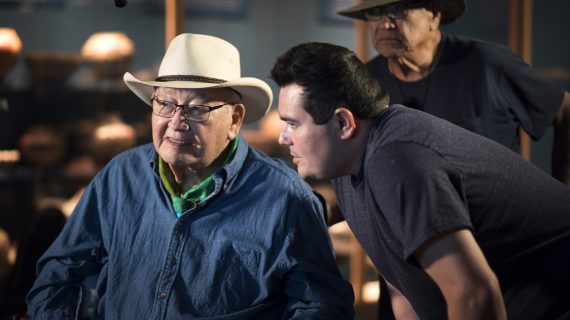
Harvey Pekar, Comic-book Writer & Author Paul Buhle, PhD, Author Harvey Pekar and Paul Buhle appear at the 2009 Wisconsin Book Festival to discuss the graphic adaptation of "Working" by Studs Terkel; it's the first effort to translate Terkel's oral history classic into comic art.


Copy and Paste the Following Code to Embed this Video:
Studs Terkel's "Working"
cc >>
Jonathan Overby
Fantastic reading and it's a whole new dimension for working. And I think from what little I know of Studs Terkel he would really have enjoyed this format for his great working. And of course, we're here about graphic arts in general. Comics in Wisconsin raises some fascinating questions, how far back do comics go? All the way back maybe to Hieronymus Bosch; I never would have thought of that. I think maybe all the way back to those cave paintings in France. But it's going to be a fascinating subject to explore. Especially because it has such strong Wisconsin roots. So who better to look into the past and the present, maybe even the future, but Paul Buhle and Harvey Pekar. Welcome, please. ( applause ) >>
Paul Buhle
You're not doing introductions? No, okay. Or are you? >>
Overby
No. >>
Buhle
Okay. Very good, then I find myself in the introductory row. We have an hour and a half which I think is really good because in astute comic audiences, as opposed to audiences made up of people all wearing superhero outfits, there usually is some really good discussion because, for a lot of reasons. Clearly the book world is in some serious trouble and graphic novels, so-called, even nonfiction things are called graphic novels which indicates how vague the whole business is, graphic novels seem to be a great interest to critics and widely appreciated in many parts of the world even including the benighted United States. Since the year 2000, almost inexplicably comics, graphic novels, have been accorded the designation of art. There is such a thing as comic art which serious critics scarcely ever accepted as a notion before 2000. Maybe Artie Spiegelman's Maus, maybe Crumb's drawings. But hardly anything else at all and only in the last ten years. Satrapi, Mary Jane Satrapi's "Persepolis," "Fun Home," Alison Bechdel, and a succession of other things have been seen, reviewed seriously and so forth and so forth. It's no longer true, as it was in the '90s, that I thought I knew all five of the underground or alternative comics, artists, people who were making a living from it. There must be more now. Although not so much more and it's a struggle for most people just to get by and not have a straight job and manage to squeeze in over a weekend. Well, it's interesting that since 2000 some people have been doing things for an awfully long time are now getting more attention in a new way. Maybe the most important point for us here, along with Studs Terkel and the question of adapting oral history and so forth, is the affect of the film American Splendor with Harvey Pekar introducing a new dimension of animation, also of oral history, you might say, and where do comics come from and so on and so forth. The effects of that we're still feeling now. But I want to come straight to the big questions for today or for this morning, why Studs Terkel and why Harvey Pekar and why bother to make a great oral history book into a comic. And what does it mean for comic art that we would try to make it into a comic. Let me say a few things. I will be pretty brief, I'm not sure how long Harvey will go on, but we'll leave plenty of time for you to ask these questions, so get them in your mind and get prepared to ask them without fear or trepidation. Boy, if you had been, as I was, an oral historian since the 1970s and both a field worker interviewing a whole lot of people over 80 years of age and others and teaching oral history in a classroom, as I was for ten years or so at Brown University, you would know that Studs Terkel is so far above any other figure in oral history it's almost like no other figures in oral history exist. The kind of aura around Studs Terkel's work, the ability to find perfectly ordinary people, a lot of them in Chicago, and to get from talking to them what the real story of their life is, not the incredibly famous people who are interviewed on television and whose names we forget within a year or two because they aren't famous but for a moment they are celebrities, but ordinary working class, lower middle-class and seemingly anonymous people. Studs Terkel is a radio guy as a theatrical guy from the 1930s and candidly as a left wing guy, was the perfect person to create this genre as much as anybody has ever created a genre. And just to go on about this for a moment, the field of oral history didn't exist as a field, as an academic field, it scarcely does now, it's not much of a profession, until the 1960s and then suddenly it gained a lot of participants and then a very high percentage of those participants were social movement activists in one way or the other. They wanted to document the Civil Rights Movement, the Anti-War Movement and so forth, and they went around with tape recorders and sort of tried to figure out what the importance of these things were that never were treated justifiably as legitimate movements in the commercial press and so forth on television. They wanted to get the stories behind the stories. That was the point of oral history. And then oral history grew, surprisingly, to sort of localists. People who didn't have PhDs or even MAs necessarily but wanted to document some community around them of some kind that was disappearing as a generation past. Or some incident that had happened and seemed terribly important but that had never really gotten documented. And between these two kinds of milieus oral history grew into a field, and then people developed all sorts of techniques and all sorts of issues and problems of doing oral history and all the little tricks that I would try to help my students with. But like for instance women are almost invariably best interviewed by women interviewers. And one of the few truisms in oral history is worth talking about that some time. But so throughout all this work, whether we're doing the field work and had Studs in the back of our mind or whether we were doing the teaching and had his text in front of us as a way to instruct people to do oral history, Studs Terkel was incredibly important, and for people doing oral history today remains incredibly important as no one else. That's Studs the interviewer. As Studs the personality, almost impelled by publisher Andre Schiffrin in the early 1970s to turn his work on to the printed page to make it into the book called "Working," was a literary phenomenon. For the first time an oral history became a literary best seller. Wow, amazing. And there's been a lot since, by no means all of his, but he created the genre of oral histories as serious best sellers. Well, he went on from that to do a whole bunch of oral history books. He lived to 95 and was working right till the end in Chicago, as well as supporting progressive causes. And his work continuously is fabulous and great and always has that quality of finding people famous or, generally speaking, unfamous, heading right to the heart of the way they feel about themselves, the way they understand themselves and being able to convey that story to readers. So it was a really, really natural thing for us, Harvey and I, to think of going to Studs Terkel and to think of doing "Working." If we get a chance to do this again with the same publisher, New Press, it's very likely to be "The Good War." I suspect my choice would have been "Hard Times" about the Depression, but "The Good War" is the second most famous book, and it's a great book, like all of his books it's a great book. So we're hoping that's in our future. Why Harvey Pekar, would be the next question. And I've been inclined, although I didn't think about this at the time when we were working on it, to imagine Harvey Pekar as a Studs Terkel continuator, or almost a Studs Terkel in the flesh in some other way for a succeeding generation. Harvey spent 36 years in a VA hospital, as a file clerk and other things, in Cleveland, and was exactly the kind of person that Studs Terkel was looking for, exactly the kind of person. Because you don't really expect, or intellectuals don't expect, the file clerk at a VA hospital to be able to tell stories that are fabulous as stories. But Harvey's a natural born story teller, because he's a great listener, that's the best thing about being a story teller, the most important thing, and there's some way in which Studs Terkel to Harvey Pekar is a beautiful, natural flow. And I guess the last thing I want to say along these lines is that we're able to find, it wasn't too difficult, really, really great artists. For some of them Harvey did the adaptation from Studs, but others, like Sabrina Jones who did the comic on a prostitute, it was something that they were impelled to do themselves. They didn't want Harvey or anybody else to write the script for them. So maybe half of them are self-scripted by artists. In every case, in any case, the art, the idea of the art, the idea of comic art, emerged as an expression of an art form which is just beginning to be accepted but which was terribly important for the artist to develop for this kind of specific project. There are half a dozen projects that Harvey and I have done together or plan to do together, beginning with a comic on the history of Students for Democratic Society, and a lot of that about Madison stuff, including the Dow police riot, a book called "Beats" about the beat generation, a book we're now working on called "Yiddish Land" which really is about the inheritance of 800 years of Jewish culture in Europe and its meaning for secular Jewishness in the US but also for commercial popular culture, and some other ideas that are sort of bubbling on the back burner and we're hoping will move to the front burner. But it's, in my estimation, a splendid partnership and working with Harvey and the artists is a way for me as a life long social historian to get back to comics, my first love, the first books I ever got to buy with my own dimes, and also to make a venture into popular culture, and most especially, by no means only, reach readers under the age of 25 for whom the visual world, as my students read less text each year that I taught, was more and more real as the world of prose became less and less real or less and less compelling. So with those words and coming back if you want some questions, let me turn it over to Harvey. >>
Harvey Pekar
Thank you. And it has been a pleasure working with Paul, and it's helped support me too. So no small fee. I really don't have a great deal to say about working so maybe you could interrupt me at any time with any question about anything, baseball, whatever. ( laughter ) And I'll, so we can make the time limit here. It's an hour and 45 minutes. >>
Buhle
Ask him about the Indians, he always has something to say about the Indians. >>
Pekar
I already wrote that down, that's hopeless. ( laughter ) I don't want to visit depression time after time. Okay, there is a connection that I see in retrospect between Studs Terkel and me in that we're both interested in the mundane and first person interviews or autobiographical stuff which I guess falls into that category. I was aware of Studs Terkel for a long time but never really got into his work. I would flip through some of his books and I'd like it. It was fine. But I never really sat down and read one from cover to cover before "Working." And obviously Studs was a precursor of mine. I can see that. But the guy who really, whose influence really affected me back when I was starting to get into comics and things like that was not Studs but Henry Miller who did autobiographical stuff. And there was some stuff I didn't like about Henry Miller. I always thought he was a bull ######. ( laughter ) And kind of a wind bag with his pronouncements about American society this and American society that. But still what he was doing sort of fit, I mean I look back, I had a notebook when I was 19 years old and I was trying to write some kind of Henry Miller type prose narrative so I guess that would probably be maybe my single greatest literary influence. As far as this project is concerned, I had been working with Paul for a few years and I find that it's real comfortable for me to work with Paul. There's a lot of mutual respect and it's a real pleasure compared to some people in the industry. ( laughter ) And so I'll work on practically any project that Paul proposes because I'm pretty sure that I'm going to be interested in it just from jump. We have a lot of similar interests and stuff like that. So then what I was supposed to do was adapt some stories for comics, some of his stories. As far as I'm concerned that's perfectly fine just as it's perfectly fine to adapt a novel to a movie. You move stuff around from one art form to another, they're basically the same material, you get a little bit different view of it each time, and it's certainly justifiable. But my job here was to adapt this stuff to scripts that the artists could use, adapt Terkel's prose. So I read the book through and then I just started, I did a certain amount of stories, as many as I thought that they would need from me, and I just, like when you read you kind of read, you take a breath after you've read a certain amount. And that's how I like to layout my stories and stuff, like pause after one of these breaths that I have in my head. And so that's what I did. I also made the, I put more words into a panel than I normally would because I was a little concerned about space limitations, but nobody's complained about that yet, don't start now. So knock on wood about that. The guy was very important guy, and his work is very, very enjoyable and it will keep on being important. He gives you a view of the times that practically no one else gives you, a view of his times. So having said that, maybe I could open this up for questions and you can ask me, like I said, really about anything. I just want to make the time limit so I get paid and stuff. ( laughter ) >>
Buhle
I guess I'll moderate and start on the left, on my left, you first. >> Harvey, did you find yourself, you were talking about because it was a snapshot of the time, did you ever find yourself when you were adapting it to try to make it more contemporary? >>
Pekar
No, I didn't mess with his stuff at all. It's a classic work and I don't go about changing or abridging stuff like that. It was never in my mind. Every word is his word. >> You mention the idea that translating a story from medium to medium kind of gives you possibly new perspectives on it and provides maybe different angles that the viewers or readers may have not previously had. What do you think your translated work has done for this story? >> Well, I think for one thing it's sort of put it more up front in people's minds. Because you're looking at specific characters now, illustrated characters, and in the sense that it's sort of more alive. This is not to put down prose because prose is as great an art form as there is, but with the additional illustrations, and I'll tell you they are very good illustrations, I was really kind of surprised at how good they were because there were so many artists involved in it and yet the stuff was pretty much universally a solid. So I think the comic book thing is like you get more of an immediacy to it. And I don't know, that's what comes to mind. >>
Buhle
Still staying on this side, yes? >> I was reading "The Good War" last night, the next one, and I wanted to ask you a little bit about how Terkel found people. And also if anyone ever interviewed Studs Terkel about his -- and how he did his thing. >> Well, on the first point, I just don't know, I don't know how he chose them. And no one has ever been able to ask successfully when he was around why he chose these particular people and not others. There's one other issue that comes up with students in class always which is are these as they were spoken. And the answer is no. He turned everything over to archives in Chicago, finally, toward the end of his life, and he heavily edited the material. So in his mind, and it's big debate methodically among oral historians, but in his mind he was getting the quintessence. But he did it in his own way. And my experience, including old Hollywood people, reds mostly, people who were on the black list, they wanted you to do this. They thought you were better at editing them down and capturing that than their voices, as such, their exact words and phrases would be. We can debate that heavily, and I'm not sure who's right, but that was his method in any case. And the second question was? >> Did anyone interview him? And I also want to ask for every person whose interview was published, how many were not? Like for The Good War? >> Again the archives are in Chicago. I don't know, I haven't been reading the Oral History Journal in the last few years. There's only one which shows you how tiny the field is. Maybe somebody has discerned that, not that I know of. And why did he choose some people over others? I got to assume they were the voices that seemed the most vibrant and so on and so forth. Maybe you have an answer, is that what your hand is raised for? >> I don't know if I have an answer, but I used to live in Chicago and I was home with a young child so I listened to Studs Terkel every morning and I listened to his interviews on the radio and there was an interview five days a week. >> He did thousands. >> And of those he extracted certain ones. >> That's right, I think that's right. >> ( inaudible ) >> Yeah, that's why he was a folk hero in Chicago and deserved to be a larger than life figure. Way, way back there. >> The individual stories of workers seem to be far more interesting than organized labor as a whole. That's my impression. >> That's an accurate observation. ( laughter ) >> Is there anything in the labor movement over the past 30 years, and if so, could it have the same type of power of the individual warfare. >> Well, I wrote one of those books called "Taking Care of Business," which was a long criticism, attack, on the history of labor bureaucracy in the US. Not very well liked at AFL-CIO headquarters. ( laughter ) But does it have the, or do other books, have the vibrancy of Studs' interviews? N-O. Madison's own David Newby is one of the only interesting labor leaders I've met that I know of for the last 40 years, practically since the labor movement got purged of reds in the early 1950s there. They've been, generally speaking, a very dull bunch. This is like 1970 that Studs did these interviews. There could be interviews done today that would be incredibly interesting. Sometimes you see a little moment of it in "Roger and Me" where Michael Moore turns to an average worker or in "Capitalism" where he interviews his uncle who was in the Flint sit-down strike. It's just moments that seem incredibly vibrant. But the truth is with the collapse of the labor movement, the voices of working people have been fairly silenced, fairly successfully silenced. >>
Pekar
I'd like to add to that that as good as Terkel's work is there's probably somebody out there, maybe he won't do it, or she won't do it, but that's perceptive enough or talented enough to come up with interviews that equal Terkel's in quality. If you got the stuff, man, and you want to use it, you can do a hell of a lot. >>
Buhle
It's encouraging. Just one more point of how the people in this volume are different, how their lives are different from working people today. It's a simple point, but once you hit it it's very memorable. There are a lot of people before 1970, and I knew many of them very well, who would say I got a great job because I never think about it when I go home at night. People made a lot less money, but they were a lot less stressed at their jobs. Their job pace was a lot slower. And if I could think of a contrast with today where obviously people are still working on their jobs until they go to sleep at night and probably in the middle of the night dreaming or having nightmares, that really is a contrast and when you read this book, that will come home to you. I'm not saying they're happy, I'm not saying they're not exploited or upset in many ways, but the pace is different. Yes? >> Someone had a question on somebody interviewing Studs Terkel on his method. ( inaudible ) An article asking him about how he would talk about particularly he would fumble with the tape recorder. ( inaudible ) Make it more of a conversation and he was not an expert at anything and say they were the experts. My question is on "Working" how you chose, there's so many stories in that or were you just going for the most visual stories? >> Harvey chose the ones he wanted, and he'll speak to that in a moment. The artists, who I admire greatly, a number of them connected with "World War 3 Illustrated," a real great forum for comic artists. It's hard to find but it's a very important magazine. They all had copies and they went and chose the stories that meant the most to them. But Harvey you say something about why you chose the particular stories you scripted. >>
Pekar
It had to do with like maybe one story complementing another, or maybe one thing being either too skimpy an interview or maybe too broad to put in the book without crowding out two others. That sort of thing, pretty mundane kind of considerations actually. >>
Buhle
Since there was so much great stuff any choice would have been arbitrary. Of people who read the book and of things that I saw, before it was a musical it was little play performed locally for humanities council, state humanities council, and I was the humanist at one of these in a YWCA in a little blue collar town in Rhode Island, it must have been 25 years ago. The waitress and the prostitute, those would be the two people were interested in forever. More than that, I can't say. >>
Pekar
Sex sells. >>
Buhle
All the way over there, Norm. >> Two things, I wanted to echo the bit about Studs putting himself on the same level as his interviewees because I think that's a really important point in his style. I too grew up listening to Studs on the radio in Chicago, and when he talks about sitting down with somebody and fumbling with his tape recorder until they feel at ease, that's a really important part of it because it's just like what Harvey said a few minutes ago about working with you is important because of the mutual respect, when Studs interviewed somebody he wasn't saying I'm the expert and you're, I'm drawing this out of you, it's tell me about your life. The question I wanted to ask though was something you said, Harvey, about the pauses, and I'd really like to hear you expand on that a little more about the breaths and where you put those breaths and how important that is as far as setting the book and the story. >>
Pekar
Okay, that's the way I generally do things, not just with Studs Terkel's stuff. A lot of the dialogue in my, and other aspects of the story. In my books the way, I just think about what I want to say and I just, like, listen in my mind's ear, I guess, to what I say to get it straight and then I'll write it down. Timing is really important to me, it's important just like it's important for a comedian or any other kind of story teller. You want to get the maximum impact out of the words. So sometimes, there are all kinds of little breaks you can make. You can use ellipses and you can use dashes and periods, and when I went over this stuff in my head I tried to determine where the breaks would come and how long they would be. And I also, another thing I did was, for example say you want to set up a punch line, but say it comes at the end of a fairly fevered discussion or something like that, and throughout the thing has been real fast paced. If you come up with a last line, if you want to call it a punch line call it a punch line, call it something else if you want to, but I would sometimes use dialogue-less panels where a guy would just stand there and stare at the reader for a second just to calm things down and set him up for the last line. That's another thing that I work a lot with. >>
Buhle
Let me add actually a comment and a question, among the things that Harvey and I have on the back burner is a book on jazz by Harvey with some of his essays. He's better known as a jazz critic than as a comics person in the 1970s. And I'm just wondering whether your self-education, writing about jazz, has had anything to do with your sense of timing in comics? >>
Pekar
Probably so but where I can really tell it coming from is I was in love with comedy starting with radio comedy in the '40s, and I used to really like guys like Jack Benny who were really creative about timing their stuff. I'll always remember this one story, a guy comes up to him and says, "your money or your life." And there's a pause. ( laughter ) And then, "I'm thinking, I'm thinking!" >>
Buhle
That was great. ( laughter ) >> It's interesting that you mention comics and jazz because that's really, people say it's the only two American forms of art that we created. So I find it interesting. I've always found that music and comics have a certain kind of connection in terms of the timing aspects. The question I was going to ask you is the way you approach writing, when you go back to the American Splendor stuff in your autobiographical part of your writings compared to when you -- to a third party like with Studs Terkel, do you approach it differently? Are there some similarities? >>
Pekar
Well, when I'm doing a piece, like if I'm doing a history of something, that I want to make sure, first of all, that it's coherent and that I let the reader know why I'm dealing with this subject. Like if I do something about myself I just assume people will think it's because I think I'm important. And they're right. ( laughter ) But then we're all like that. >>
Buhle
That's right. Let me add to that that the nastiest, stupidest critics, fanboys and otherwise, are really pissed off at Harvey for deserting the American Splendor narrative and being so presumptuous as to do take on historical subjects. I had come from a comic history of the industrial workers of the world called Wobblies and something a local artist Mike Konopacki drew, an adaptation of Howard Zinn's A People's History of the US, and I was stuck in the middle of this history of Students for Democratic Society, maybe because I was too close to it having published a magazine for SDS here in Madison and a comic, and I just broke down. I couldn't seem to go any further with the big, big story, and Harvey happened to call me for a completely unrelated reason and I dragged him into it. This about 2005 or 2006. And then it just came to me in desperation, as many good thoughts do, that Harvey's ability to tell stories was just as good in history as it would be in the stories in American Splendor, and it's absolutely turned out to be true. Which tells us something about history telling being narrative after all. Without stories we got nothing. >>
Pekar
Look at Herodotus. >>
Buhle
Look at Herodotus, there you go. >> I was just wondering about the role or not of the WPA and the federal writer's project. ( inaudible ) If anyone knows anything about the WPA, all people know about it are the photographs and some people might know about the theatre. But the federal writers did go out, people were sent out, I know people did work on every single state in the country at that point. And do you think that had any, that informed Studs at all? >> Yes, yes, Studs Terkel came out of WPA theatre. And WPA theatre was a big center, some people know about Hallie Flanagan who was an organizer of a federal theatre within the WPA, Works Progress Administration, was just full of creative left-wing people. A fabulous thing which was abolished by Congress in 1942 or 1943 because it was much too dangerous as a mechanism to reach popular culture. The beaver story came out of that, "Revolt of the Beavers." >> I liked hearing the other lectures about this. I was wondering what the most difficult part about adapting the story was for you guys? >>
Pekar
I didn't think it was difficult. I had my way of working and I applied it. Sorry. >>
Buhle
I guess I can respond differently by making a contrast. The decisions that had to be made to do a story about SDS were very, very difficult. It was a very decentralized movement. It had a terribly tragic and stupid ending. And likewise, something like industrial workers of the world, there are so many different things you can tell. Generally speaking if a comic is about history, non-fiction comics, nobody even has a name for them. They're called graphic novels, and they're obviously not novels. So we're in a vague zone of defining things or an exciting time of new things being created. How do you take some big book full of facts or big article full of facts and choose the specific narrative that will make sense to the reader. How do you not overload it? Somebody sent me some reprinted classics, illustrated comics from the early 1950s that are now being reprinted, and some of these stories like Les Miserables, which I was looking at the other night, so many things that are going on that I remember as a kid having disconnect and being totally confused by it. Likewise, if there's too much stuff in it then it can't possibly work as a comic. In my mind comics are somewhere between plays on the one hand and films on the other. At any rate, the necessity to reduce the number of words to indicate action without it being a superhero action comic in which nothing is said except the banal is a real narrative issue, and perhaps it's always approached in one way or another in the sense of writing a script for film or writing a script for theatre. It isn't that different. Harvey just has this incredibly instinctive, wonderful sensibility of how to carry it off. None better. Yes? >> When you first started writing your stories, did you immediately understand how to express your ideas on the page or was there a long learning process? >>
Pekar
It wasn't a real long learning, well there was a long learning process, but the long learning process didn't involve writing comic stories since I was a teenager until finally I met Robert Crumb and he liked my work and he said he'd illustrate it. That's what actually, the event that got me started writing comics. But when I was a kid, even in elementary school, I wanted to be the class clown. I wanted to break up everybody. And I was always getting sent out of the room for interrupting the teacher and stuff like that, with my little one-liners and stuff. From that I developed a story telling technique which involved memorizing stories. I wanted to get as many laughs as possible so instead of telling a story to 50 people at once I would tell it 50 times to one person at a time so I would get more laughs. ( laughter ) But anyway, the first comic book stories that I wrote were just adaptations of stories that I used to, when I was out on a street corner or something talking to people. >> Did you really draw the stick figures? >> No, no, no. It was all in my head. It was all in my head, but the sense of pacing and everything like that that I referred to, that all came through that and also through listening to radio comedians. I mentioned Benny. Another really big influence on me, and these guys are still very underrated today, are Bob and Ray. >>
Buhle
Right, right, great radio personalities. But his scripts are still stick figures with inside panels. They'd be worth something some day, but as he observed last time we were in a big forum together, only after he's dead. ( laughter ) >> Could you explain a little about how your relationship with the artist worked? ( inaudible ) >>
Pekar
When possible I meet with them face-to-face but if I'm working with somebody in California then I use the phone. I'll send it out or read them the script and then send it out to them. And I'll talk over the story. I write instructions in the panels to the artists but I realize they may not be plain. So I'll just go over it, if time allows, panel by panel with the artist and just tell them what I had in mind. That's my ultimate, that's the thing that I use to where I try to catch mistakes I've made in relating the story. >>
Buhle
Email is not in Harvey's world. >>
Pekar
I don't know how to email. ( laughter ) >>
Buhle
Way back there. >> I was wondering how your collaborations are being received by academics and using them as teaching tools? >> Very good question, very good question. Let's see, when I was teaching the big lecture course before I retired called "The '60s Without Apology," always and forever the most important book to students was "Stuck Rubber Baby," a comic by Howard Cruse that's about the south in the early 1960s, and has to do with race, civil rights struggles, homosexuality and a whole bunch of other things. And the only graphic novel Howard Cruse ever did, it seems like it's thinly autobiographical. It's just magnificent at pulling everything together. So I never, our books, mine and Harvey's together, have only been emerging the last few years so I didn't get to read them and use them in classes as teaching methods. So much I used the SDS comic in a couple of my classes and it was good, it was good but the power of "Stuck Rubber Baby" is something that sticks in my mind. I would say there's a lot of crabby comments from English professors about the beats. Either they loved the beatniks and we were traducing them by even the idea of having a comic about Jack Kerouac is just so horrifying they couldn't deal with it. Or you get a lot of people who hated beat writing all their life, which means they were envious that they didn't become famous writers and have a lot of sex and so forth. And the whole idea of making them popular again, horrifying, terrible. And I guess this comes down to the question of comics and classrooms. The person who occupies my office at Brown University, probably at this moment if he's working over the weekend, teaches a graphic novels course with an attendance of 200 and if he would let it would be 300. It would be 300. I think the Hernandez brothers are the giant faves in that class. Obviously, that level but also at the level of comics used for the purpose of teaching literacy. There's a guy who was a Daily Cardinal comic artist named James Sturm. He runs a comics academy in White River Junction, Vermont. If anybody wants to go and learn from the best, they would go there for a year. But any rate, he also founded an association for educators and comics. And there's no limit to what comic art can do for literacy in the time ahead. There's so many things that it can do, and it's only begun to do those things. Those seem really big, big issues for me for comics. Way, way back there. >> Given the recent -- that we've seen with underground comics and comics in general. ( inaudible ) And there was one in Milwaukee about two or three years ago. Related to the question about academics, I think, is this the greatest threat to the underground nature of the form or is it kind of -- things? I worry about when I see these types of things that, once it's put behind glass, while it does expose people to it, there's the whole deadening effect of the institution. I struggle with that because I enjoy all the pieces but I was concerned about, wait, this is our secret. ( inaudible ) >> Let me respond to that and then Harvey can. First to mention one of the two curators of that show is James Danky over there. And I don't think it's a negative thing at all. Underground comics died because people stopped buying them. By 1980 the whole field was dead. Some stuff was trickling on. But American Splendor and a very few other things were lifelines for what remained. Some of the wonderful artists stopped drawing for 10 years because they weren't being published anywhere. So this is something that needs to be recuperated. The second thing is that the masters of American comics, that was the phrase exhibit started in the Hammer Museum in LA and then moved to Milwaukee in 2006, was fabulous for many reasons, but among those was that for the first time for comic art all thing in art exhibits in museums showed process, what were the processes like in the creation of comic art. What were all the complications in various aspects of it. And that show was fabulous to me because it legitimated a whole lot of comic art as being a serious and meaningful art form. Somebody in Madison said to me 40 years ago poets are always talking about money because they don't have any. I think the same thing is true, a struggle to make a living for comic artists who aren't drawing for the daily papers because it's disappearing fast, is so severe that the idea that something legitimates them and means they might get an advance on a book and all this other stuff is hugely important. So if there is a down side, I don't perceive it. Harvey. >>
Pekar
Yeah, there's a couple of points I'd like to make about academics' reactions to comics. And actually it spreads beyond academics. So the first thing I want to say is, and I think Paul will agree with me, is that we've had some pretty crabby reviews but in general the vast number of reviews we've gotten have been favorable. And it's like I guess when you write about anything that somebody else knows something about or somebody else is a student about they think they got, it's their territory you're invading or something like that. And you don't have any right to say this stuff and you don't have any right to vary from what they say and things like that, and it really gets people mad because they think they got a monopoly on whatever it is you're writing about. It's something you want to not only watch other people about but watch yourself about. Because there's always this well, who does this guy think he is kind of thing that pops up in your mind. I knew about this 10 years ago. I didn't even think it was worth mentioning. ( laughter ) >>
Buhle
It's good. And many questions that come in forums like this behind many of the questions, many really good questions, is should I be doing comics. And the answer is yes. Ben Katchor, a really good artist and a really good friend of mine, insists that anybody who wants to draw comics and keeps at it can draw. I would draw the line at myself. As I realized at age 8 or so I was not going to be one of the talented or untalented artists. And Harvey doesn't draw either, except stick figures. But people can teach themselves to draw, there's some great places to learn. And, moreover, scripting is just as important as drawing. In some ways the story is the most crucial thing in comic art. A tiny portion gets published in books, but the field's opening up. It's not paying but it's opening up. And there's plenty of opportunity to publish on the web, and there's plenty of places to connect with other people who are doing things. Smith Magazine, an online magazine, is doing continuing stuff about Harvey and people drawing caricatures or stories from Harvey's stories and so forth and so forth. It's a very, very interesting experiment. I mention my pals at World War 3 who publish one issue a year. And there's other kinds of experiments going on and people can connect and maybe me only having really retired since July there may be a great local comic artist scene that I just don't know about but you'll find out about if you network. So be encouraged. If you want to think about doing comics, do think about doing comics. It's a way to reach a lot of young people among other people and find a new art form, create a new art form. Yes, back there. >> Will there be an opportunity in the future to have you do a similar talk while we're actually viewing some of the illustrations and comics? >> Oh, you raised a good point. If you're a professor these days and you're not showing PowerPoint people think you're a hopelessly aged figure. >> I don't mean PowerPoint, I would like to see the images or examples that you could actually talk about. >> Generally PowerPoint is the way we would do that. Yeah, probably. It just doesn't happen now. And maybe in an hour if Lynda Barry brings a flash drive that can happen. I think it didn't occur to me. Yes? >> Are any of your scripts, Harvey, available for viewing? Like the scripts for "Working," available in any publication or anything? >>
Pekar
Well, I mean, once in a while somebody will ask me for, I send them a Xerox of a script of mine with their writing an article about me. I didn't really think there was that much demand for it, and in fact, there hasn't been. People aren't that interested. At least they don't come up to me and say I'd like to see the original thing that you did. I have no objection to them doing that. >>
Buhle
Yes. >> Have you ever been approached for television? Like doing comics on television, the Simpsons, American Dad, stuff on Adult Swim? ( inaudible ) >>
Pekar
I'll tell you about one deal that's cooking now and it's not exactly what you might think it is. As Paul mentioned, I'd been a jazz critic for years and years before I started doing comic stories. I started doing jazz criticism in 1959, and I started doing comics in 1972. So I had something of a reputation as a jazz critic and the better my reputation as a comic book critic, I mean as a comic book writer became the more highly people thought of my jazz criticism, maybe not surprisingly. But now there's a guy in Ireland who wants to do a thing about the history of jazz where I would be writing the script and I would be narrating it. So we're working on it. And he's already apparently gotten the BBC to commit money for a pilot or something like that. And I guess most of the action when musicians are playing and stuff would be animated. So that's about as close as I've ever gotten. There have been people that have said things from time to time about my doing stuff for TV but nothing really close. >>
Buhle
Patty Elson. >> I saw you on TV on the travel channel with Anthony Bourdain. Do you remember? >>
Pekar
Yeah, yeah sure. Who can forget. ( laughter ) >> That was one of the most unusual and clever programs that I've seen on television, which doesn't say very much for television. >> You know it's funny because we went to a restaurant, we're trying to give him a real taste of Cleveland, so we went to a Polish restaurant that was set up like a cafeteria. And the first time I went with Bourdain we went with this guy named Toby Radloff. I don't know if anybody remembers Toby from the American Splendor movie, but among other things Toby is this tremendous glutton. ( laughter ) So we got in line, Toby was with us, and we got in line, Toby had his tray and the first two things that he put in it were these two huge pieces of cake. He likes sweet stuff and everything like that. And it was like that caught everybody's attention and they were watching him and listening to him throughout his stay in this place called Ostrovsky's. So I just happened to have occasion to go there again for the first time in a couple of years with some other guys, and I'm standing in line and some guy, some big fat guy who works there comes up to me and says where's Toby, where's Toby? ( laughter ) Toby is always good for some audience response. >>
Buhle
In the world of software development, which baffles me pretty much but like all of us we seem to enjoy the products, the distance between comics that have been created by software and animating them has been reduced continually over the last few years and will continue to be reduced, which means the prospects for comics of our kind being made into animation seems to be getting closer and closer. That's great for comic artists who are under 30, it's tough for comic artists who are over 60. One of my favorite books I edited for comics for years is Spain Rodriguez's biography of Che Guevara. Everything is by hand. There's nothing software. They would be starting from scratch. And likewise, another of my favorite, Sharon Rudahl, did a graphic biography of Emma Goldman. Magnificent book, wonderful book. But animating it would be extraordinarily difficult. On the other end, not to go on and on here, Sabrina Jones worked with me to create a graphic biography of Isadora Duncan, the famous dancer, which also is just an unbelievably great work. And that's ready to be animated. Wouldn't be such a big deal, or so I'm told. Have we run out of questions? No, not yet. >> I wanted to go back to the adaptation process. In a lot of ways the book is -- so Studs Terkel would adapt, heavily edit, you said, the words of the people he was speaking with. The adaptation in graphic form here. Did you ever have any moments, either of you, during this process where you thought the result was fundamentally different than the original story? Were there concerns that the adaptation changed things? >>
Pekar
You mean like doing comics? >> I'm talking about the book Working, in particular, when the artist came to you or during the adaptation you looked at it and said this is somehow fundamentally different than what the original person was saying? >> I want to make it as similar as possible. That was my goal because I didn't feel like that was my property to mess with. It was a classic work and I didn't want to screw around with it. >>
Buhle
I'm sorry, in a way, speaking as an historian, it's not so distant from me asking myself as I got page after page from Spain Rodriguez, one of the great figures of underground comics, was this really Che Guevara's life. And naturally I was looking for mistakes or some factual errors or whatever I could catch. But I felt I had to give the artist and script writer a great deal of latitude because, again, it's a story, it's told as a story and if it isn't accurate as a story than the artist has her or his own way of making sense of that narrative for himself. And I don't think, just speaking of the comics in Working done by artists themselves, I don't think any two artists would ever adapt a script in the same way, or a story upon which they based a script in the same way. It's an art thing. And it has to be an art thing. Let's see if somebody hasn't asked a question. You haven't. >> I had a stem cell transplant several years ago. I'm interested in Harvey's perspective on post-chemo. How do you view your life? >>
Pekar
Well, I guess just about everything's -- and I guess one thing that proves it is this book "Our Cancer Year" that my wife and I wrote together. And I've talked about my physical illness on a couple of other occasions. My wife now wants to write a book called "Harvey and Joyce's Big Book of Marriage." And she's got this contract to do it. But we both have to sign it. ( laughter ) And I want the money, that's how I make my living these days doing these graphic novels. And they're getting harder and harder to sell as the economy goes down the tubes. So naturally I want to get it over with. I want her to stop holding it over my head and sign it and have me sign it, but on the other hand, I know that whatever direction I push, she'll push the other way. ( laughter ) So I'm just doing, right now my policy is watchful waiting. ( laughter ) >>
Buhle
More candor, yes? >> Maybe it will just be Joyce's Book of Marriage. >>
Pekar
Well, the thing is, it would have been a lot simpler that way. I'm not bragging when I tell you this is true, they wanted my name on the book. All the money I make, it goes into an account and Joyce has as much access to it as I do. And I'm hoping, I hope I'm not mistaken, that if Joyce gets some good money she'll make it available. ( laughter ) I spend a lot less money than she does anyway. >> The question about adapting things to the medium, what did you think of the film American Splendor? >> I thought it was really good. I didn't really think it was like, I didn't write the script. I thought it was really good though, but I didn't think it was maybe that close to American Splendor. They came up with a lot of interesting devices that couldn't be used in comics like using me and the character who plays me simultaneously in the movie. >>
Buhle
And the animation, all three. Never been done before, I think. >>
Pekar
They tried, they pulled out all the stops. >>
Buhle
You were pleased with it? >>
Pekar
Yeah, I was amazed. >>
Buhle
You got a free trip to Cannes. >>
Pekar
Yeah, it was at Cannes, it was at Sundance, it won an award at Cannes. It probably wouldn't have if I would have been in charge of making the thing. These people just, it's like they were like film students and they hadn't really gotten anything really that heavy to do since then. So they got this and it was like they had this accumulation of ideas or something and they just all blossomed. I was really pleased. I was glad just to get paid. But to have a really good movie, because a lot of movies that are based on other things aren't too good. >> I was looking forward to Toby's revenge. >> Toby does these movies for local guys. He made one called Killer Nerd, and another one The Revenge of Killer Nerd or something like that. ( laughter ) There's one called Townies. These are really, as you might think, low budget productions, and Toby doesn't get paid anything for them. And, as a matter of fact, I think he might get ripped off. He spends a lot of his own money on this stuff. And I don't know if that's really necessary. But the stuff exists and he's got a following. There are people that collect his stuff. >>
Buhle
Let's see, somebody who hasn't asked a question. >> Harvey, earlier you were talking about territorialism and that type of thing in writing, switching it into a different background would you say you still root for CC? >>
Pekar
Do I still, I'm sorry? >> Do you still root for CC? >> Sabathia? My interest in baseball has been waning since 1954 when... >>
Buhle
The Indians lost the series in four games to the Giants. >>
Pekar
It wasn't, it was more than that. The Indians who had been finishing second to the Yankees or third year after year after year and who had actually won the series in '48 with this miracle team that included Satchel Paige, the great negro league star, and Larry Doby, the first black player in the American league, and Gene Bearden, this wounded war hero that came out and won 20 and lost only seven and stuff like that. >>
Buhle
Early Wynn? >>
Pekar
No, he wasn't on a team yet, he was with Washington. And that was like a miracle year. Like one of these, because they only won a World Series once before in their history. So they go back and they've got good players but the Yankees beat them all the time. So then '54 comes along and they must have put something in the water in Cleveland because the American League record for wins in a season, 154 game season, which is what they played then, was 110, and it was set by this great New York Yankees team that had Babe Ruth and Lou Gehrig and all those guys on it and Cleveland wins 111 games. So this has got to be a great team, right? So we're all going into the series with real high expectations. So I think it was around the 7th inning and the score is tied, and Cleveland has two runners on and this is being played in the polo grounds in New York, this old field that was 505 feet to dead center. In other words, almost impossible to hit a home run to dead center. The Indians, there was this guy named Vic Wertz, who was a real good hitter, came up and he hits this shot to dead center, 460 feet. Mays whirls... >>
Buhle
Willie Mays races back, instinctively. >>
Pekar
And catches it over his head, whirls and throws the ball back to the infield. The rally is broken. The Indians go on to lose that game with some guy hitting a 200, the polo grounds also had real short left and right field things so some guy hit a 262-foot home run down the right field line and they went on to lose three more games and I've never... >>
Buhle
Dusty Rhodes. >>
Pekar
Yeah, dusty Rhodes was his name. Oh, God. So ever since then it's just been gradually slipping away from me. ( laughter ) >>
Buhle
Yes, yes, yes. Anyway, let's get somebody who hasn't asked a question. You. >> Yeah, this is for Harvey, I was wondering what are some of the joys... ( inaudible ) And how does that change because of your fame? >>
Pekar
Well, I'm not unique in what I enjoy. I mean, I enjoy getting a lot of money, for example. ( laughter ) Or I enjoy somebody complimenting me effusively. ( laughter ) Something like that. Or getting revenge on somebody. ( laughter ) The standard stuff. ( laughter ) And what annoys me, one thing that annoys me is that I have to still hustle so hard to sell a comic book story and stuff like that. I don't know, mostly I'm an obsessive compulsive person, and I got paranoid tendencies and I bring a lot of grief down on my own head. And I know that and I've been knowing that for years. And I just can't seem to do nothing about it. >>
Buhle
He has mellowed. >> ( inaudible ) >>
Pekar
Pardon? >> ( inaudible ) >> Yeah, I was always messed up. ( laughter ) >>
Buhle
Let's see, I guess you a second time. >> With how Terkel would shape his stories. ( inaudible ) In some way where he's not, there's an emotion but he's not going to cross over. ( inaudible ) >> You know, I had students 10 years doing field work in oral history, the best way to get a student off campus is have him do oral history with perfectly normal people, mostly working people or, in my case, aged peaceniks or radical nuns, etc., those types. And the only terrible interviews were with professors. Those would be the worst. ( laughter ) Because they've been thinking about their autobiographies all their life. ( laughter ) Polishing it up in hopes of making it sound better than it is, more interesting than it is. And likewise, musicians are almost impossible to interview effectively, in my experience. And anybody who's been famous and thinks a lot of themselves. But other people, ordinary people, it's amazing that a high percentage of interviews are incredibly dramatic, emphatic and great simply because they're life story interviews and because these people who haven't been asked to tell their life stories before wish to lay it out to interviewers. And are honored to have some college student come and ask them about their life. And tears aren't infrequent. With crises in teenage years. Bad stuff happens. They begin straightening things out, and if it's about a social movement, as my students often did and I often did, then 10 years go by after the -- has collapsed, and suddenly it's historical and ironic instead of being epic. Or it was epic and it became ironic. In other words, people construct the story of their life and if they don't over construct it by being too intellectualized then those things are there. And I guess Studs' enormous talent was to hone it down and bring the points up more clearly. But I listen to the interviews. I think about these interviews with -- Yiddish speakers in 1981, and I still get the lump in the throat because they want to tell their life stories and they're pretty darn frank about it. Yes, our media personality. >> The adaptation came out about a year after Studs died, what was the status of the project when he died? What consultation was there with him? And what rights of approval did he or his estate have over the finished work? >> The biggest problem was that we were really hoping and planning he would live a few more years. Really. He very much liked the idea of it, the work, the art was still underway when he died. And his heirs or the Terkel estate, etc., they sort of turned over everything except money for film adaptation to the New Press. The Terkel legacy keeps the New Press alive in my candid opinion. >>
Pekar
Incidentally, Studs is on record as saying that the book, as much of it as he saw, he really liked it. >>
Buhle
And that's probably all we can say. It would have been great to have him go over it. But he also had a sort of artist integrity or artist autonomy thing where if he lived several more years, and mostly was sleeping a lot during the last years because of the medication, if he lived several more years I strongly suspect he would say this is an art form and I'm not going to say if this is done wrongly or differently than I would have done it. It wouldn't be like Studs to take that view. >> When you got the rights, they didn't retain any approval of the finished product? >> Only on film adaptations, purportedly. The first stage of film adaptation is in the process of being negotiated. Will this ever come to anything? I doubt it seriously. But if it does than the estate gets 50%. And I think Harvey will be able to buy a pizza with what we get, if there's anything at all. But maybe it will be an expensive pizza, a Madison pizza. Yes? >> Do you refer to your working in musical at any point? ( inaudible ) >> No. No, I never saw it. I'm allergic to musicals, I'm afraid. As I say, I was a humanist, a human for this little tiny stage adaptation at an earlier stage and that's my only connection. Yes, again. >> ( inaudible ) >> You mean in terms of comics? >> No. ( inaudible ) >> It's so broad. It's easy for me to say that Ken Burns is awful. And everything that corporate America wants to tell about America, despite having great researchers and great footage with his brother and others, and that Michael Moore's documentaries are, in a way, implicitly a savage attack on Ken Burn's mode and mentality. But interviews are so much a part of documentary film making that it's so much bigger than what field workers like me used to do. And it's hard to say, everything that it is, what's really great and so forth and so forth. Michael Moore is the greatest filmmaker I know of right now, or his films have a huge impact on me. So I'm prejudiced along those lines. And the field is so broad I would be to loathe to say, oh, there's like seven other things that I think are really great because maybe I don't see so many of them. >> ( inaudible ) >> What do I think about StoryCorps? Well, the StoryCorps guy blurbs the book so it doesn't behoove me to say even one negative thing about it. However, I will say my friends at Brown who use this stuff or work with the stuff, they have only one criticism, that the people who appear on StoryCorps most all seem to be the same social stratum, listeners to National Public Radio. Is that a fair criticism? It's not entirely fair. But is it accurate? I suspect it's accurate. And I don't have the answer for how it should be different. That's just an observation. Have we reached the end? There, yes, again. >> ( inaudible ) >> It's where it all starts. In a way, the first sustained oral history in the US were the slave narratives. Some of the people who were interviewing people who had been slaves, obviously as children, were the decedents of plantation owners or other respectable white people and the former slaves didn't hardly give them candid stories of the horrors and so forth. But nevertheless, despite all the limitations, they got over thousands of pages of slaves narratives which finally were published, edited by a friend of mine George --, and published in the early 1970s, and then oral history was nothing until it was started at Columbia University, and they only interviewed people who were really important, all white men who didn't write memoirs. That was the first idea about oral history, the first archive that was ever funded. And then 10 years later they were doing all kinds of other work. And that's, in a way, the best oral history project in the country or the flagship. The other thing was presidential papers. The Truman papers were the first presidential papers of oral history and they were very, very carefully bedded. All tapes were erased because nobody wanted anything of the dirt of the Truman administration, and there was plenty of it, to be available in the public record. And I presume it so with other presidential papers, the oral history aspects. It's a way for oral historians to make money so I don't want to say too much negative about it. But oral history then sort of like moved to a higher niche and got broader and broader and did a lot more great stuff. So it's a process which really begins with those slave narratives and then becomes more and more a community history. And everything that oral history is today, if you happen to go to an oral history academic convention, eventually there'll probably be one in Madison, you see the lowest percentage of PhDs at any academic convention you will ever go to. You'll probably see the highest percentage of women, also, because it's an occupation that doesn't pay hardly anything at all, has very little prestige, and there aren't very many university poisitions. But if you happen to go to this convention, you'll hear a lot of great work being done through love, and not so much for money. Yes, again. >> ( inaudible ) >> I think the answer was, we were satisfied with Studs' adaptation, so we didn't see any need to go further than that. Wouldn't want to correct Studs, gosh. That would be horrible, yes? >> Sorry, since you brought up the theme again of oral history, I was wondering whether you'd like to comment on Steven Spielberg's effort, I think -- southern California. >> This is the Holocaust interviews. Yeah, yeah. >> ( inaudible ) >> I think it's admirable, and it's not a subject which hasn't been done very considerably in many places, but the thoroughness with which he provided the means to take it on, is in some ways a model of a huge behemoth of an oral history project. And that's good, and there's been a lot of discussion within the field of oral history, about how people remember things, about how Holocaust survivors remember things, it's very interesting because it isn't at all what you'd expect. It's very, very complex, and you know, I'm hoping other areas of human history get as documented in oral history as the Holocaust experience has been documented. That would be my response. Yes, again. >> Do you want to keep doing stuff until the end? ( laughter ) >>
Pekar
If I could picture myself hanging out and listening to jazz, yeah, you know, I'd like to end it like that. But I don't see any, see... I had this job at the federal government as a file clerk for the VA hospital. And it was my dream job, because it was the lowest level job they had, but I made enough to get by, and the work was so simple, it was just beyond boring, it was like, I didn't even have to think about it, I just went around like in a dream or something and did my work and talked to people. I got a lot of stories out of work. And you know, then... Let me think. It just, I don't know. I just... You know, I used to get awards for doing outstanding work when I didn't hardly do any work. I used to carry around a box of recrods, LPs with me, to sell while I went about my duties. So this was really a wonderful, for me, job at the time, but what I didn't realize was that your pension is based on how much money you make during your career. And I never even asked for a promotion, and I'd known people who worked for the federal government for a long time and had gotten pensions, but these were people that went up in the hierarchy. Whereas I stayed in the same place for 37 years. So when I got my pension I was like, what? ( laughter ) How can these other people live? And then my wife explained it to me. ( laughter ) >>
Buhle
On that note, and because we need to go out in the hallway and sign some books I hope, thank you very much. ( applause )
Search University Place Episodes
Related Stories from PBS Wisconsin's Blog







Donate to sign up. Activate and sign in to Passport. It's that easy to help PBS Wisconsin serve your community through media that educates, inspires, and entertains.
Make your membership gift today
Only for new users: Activate Passport using your code or email address
Already a member?
Look up my account
Need some help? Go to FAQ or visit PBS Passport Help
Need help accessing PBS Wisconsin anywhere?

Online Access | Platform & Device Access | Cable or Satellite Access | Over-The-Air Access
Visit Access Guide
Need help accessing PBS Wisconsin anywhere?
Visit Our
Live TV Access Guide
Online AccessPlatform & Device Access
Cable or Satellite Access
Over-The-Air Access
Visit Access Guide




Follow Us