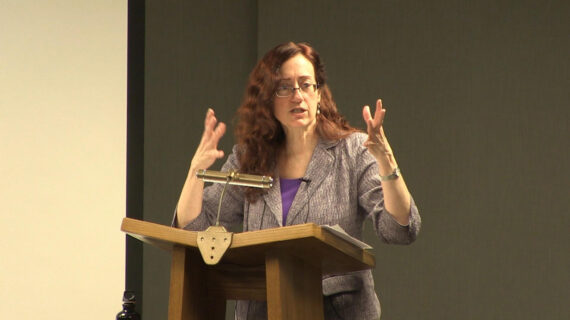
cc >> Thank you Marsha and thank you everyone for coming today. I think this is a really fun event and it has been good for me as a basic cell biologist to learn more about individuals with Down's syndrome and their families and so I find this to be a really exciting event, and thank you for coming. So today I am happy to have the opportunity to talk to you about some of the basic research that is going on here at the Waisman Center on Down's syndrome and specifically on how we are using stem cells and skin cells to study the development of the brain in individuals with Down's syndrome. So as you know there are differences in the structure of the brain in individuals with Down's syndrome as shown in this diagram, and I'm hoping you can see it. So basically there are areas of the brain that have fewer nerve cells or neurons, there are areas of the brain where there are normal numbers of nerve cells and those nerve cells function normally. Then there are other areas of the brain where the nerve cells-- there might be the right number but they have structural abnormalities where they don't have the right number of synapses so they don't communicate with each other in the right way. Then there are also degenerative implications in Down's syndrome. Basically, what I'm going to do today is tell you about the three main characteristics that many people think about that are different in brains of individuals with Down's syndrome and how we are trying to use stem cells to study them. So the first, as I said, there are areas of the brain that there are fewer neurons in Down's syndrome and there are some neurons or brain cells that have faulty synapses or those connections between the nerve cells aren't working correctly. Then finally as Marsha already mentioned individuals with Down's syndrome have a higher risk of developing Alzheimer's disease and that tells us that some of the neurons in the brain are more susceptible to degenerating. So these are the kinds of things we would like to understand both the causes and the consequences and if there is a way that we can maybe ameliorate some of these aspects. We think that these differences are set down during development of the brain, they are not something that happens later but happens as the brain is forming. This presents us with a pretty significant problem of how to study the development of the brain in Down's syndrome. We know that in human development the brain mostly forms prenatally so during the 40 weeks of gestation the brain is put together, the cells go to the right place, the right number of cells are made and so when a baby is born all of the cells are in the right place and now they can respond to the outside environment after a baby is born and make the correct connections. We also know that there is a pattern of the formation of the brain so that there are neurons or the main functional cells of the brain are made and populate the brain from about 10-25 weeks gestation, so pretty early. Then support cells then fill in the brain so that by the time a baby is born you have both the neurons in the right place, the right numbers, and then you have the support cells there to prepare the brain for the outside world. Obviously this provides us with a challenge for how we can study this time in development. So what I am going to tell you about today is how we are using human stem cells as a window into this developmental time period. So stem cells are the cells that araise in an embryo and their job is to populate not just the brain but the whole body with all the different cell types and all the billions of cells that form a person. So the stem cells that we have been using are called induced pluripotent stem cells and I know this is a bit of a complicated slide so I will take you through it. So induced pluripotent stem cells are not stem cells that we get from an embryo but they are ones that we make from skin cells and so what we can do-- and this a very new technology less than 10 years old-- the researchers here not just at the Waisman Center but throughout the country have really been excited to use this new technology because it allows us to make stem cells from skin cells rather than embryos. So what we can do is we can get a skin biopsy from an individual and take the skin biopsy cells and put them in a dish, we call these the adult cells and then through this new technique we can transform or reprogram the skin cells into stem cells. These particular kinds of stem cells, as I said, are called induced pluripotent stem cells which means they are pluripotent they are true stem cells but we have induced them to become stem cells. They did not start out that way. These IPS cells as we call them have characteristics of embryonic stem cells that are found in the embryo and so we can use them as a different kind of stem cell. So they have characteristics of embryonic stem cells in that we can grow them in the dish for a long time which is great, it gives us something to work on. More importantly they can be turned into all the different cell types of the body which is what embryonic stem cells do in the embryo normally. So we can take these cells, these IPS cells, and turn them into heart cells or blood cells or in our case, neurons, cells of the brain. This technology not only allows us to get stem cells not from the embryo but it allows us to get cells from individuals with different genetic mutations and those mutations will be stable throughout these cells. So our strategy then is to get skin cells from Down's syndrome individuals and these cells will have the extra chromosome 21 then we reprogram them into IPS cells and they retain the extra 21st chromosome and we are now taking these IPS cells or Down's syndrome stem cells if you will and turning them into neurons. As Marsha said our researchers here have figured out how to take stem cells and turn them into brain cells so we have a perfect environment in which to do this. I am going to tell you about the work that we have done using this strategy and the few insights that we have found into Down's syndrome brain development. So first of all we actually made IPS cells from individuals with Down's syndrome and we did this by the very generous donation of skin biopsies from individuals with Down's syndrome and usually from their family members. We reprogrammed them according to this magic recipe that has been established and this is actually a picture of some human embryonic stem cells and these are our Down's syndrome stem cells or Trisomy 21 stem cells and you can see, I hope, that they look pretty similar. We also found that our Down's syndrome stem cells expressed all the right markers of human embryonic stem cells so we do believe they are true stem cells. Most importantly when we looked at the chromosomes from these cells we found that they had the extra chromosome 21. Going through this process did not change the chromosomes of these cells and this was really important to us obviously. So again we now have these human Trisomy 21 induced pluripotent stem cells and I will show you now how we turned them into neurons. I always say "oh we just turned them into neurons" like we just did it so people often ask well how do you actually do that? The way we do this is we take what we have learned from developmental biology mostly from animal studies in the kinds of factors and cues that we know are present in the brain when it develops. So we know for example at the first time period we need to give the cells a particular growth factor and that will take them down the first step. Then we learn that we need to add another growth factor or another chemical that will turn them into the next step. So through this strategy of subsequently adding different signals in the culture dish to these cells we will eventually end up with neurons. What is interesting about these human stem cells is they follow human time in that if in the human prenatally if it takes two months to make a neuron it takes two months in the culture dish which means we feel like we are doing it in the correct natural way but it also means that these experiments take a really long time. So we have actually made neurons from these Trisomy 21 stem cells and I'll show you here, here are some control neurons and some Down's syndrome neurons. The controlled neurons were made from IPS cells that did not have the extra chromosome and these are actually shown here in green, we used a marker to show the neurons they are not normally green but we used a marker to show them. What we found a little bit surprising to us was that the Down's syndrome cells, IPS cells, made similar numbers of neurons as the control cells. So we had no problem making neurons from the Down's syndrome IPS cells. I will talk about that a little bit more later because as I said one of the characteristics of the Down's syndrome brain is there are some neurons that are missing. So the second thing we did was we asked whether these Down's syndrome-- how well they functioned. As a way to do that neurons-- their basic function is electrical activity and to have synaptic activity with other neurons. So we measured the electrical activity in these Down's syndrome neurons and again they are shown here. The blue are the neurons, I am sorry the green is the outline of the neurons here and the blue just labels the nuclei within the neurons. So we used a method to record the electrical activity in the individual neurons and this schematic just shows how we do that. Here is one of our little neurons in the dish and we put a pipette in here and it stabs the neuron so we can measure any electrical impulses in it. Then we stimulate the neuron in the dish and this-- I hope you can see it- is the neuron here and here is that patch pipette stuck to it. When we do this we hook the pipette up to a computer and you can actually see the electrical activity in the neuron. So we did this and compared our control neurons and our Down's syndrome neurons and we found first of all that the Down's syndrome neurons had electrical activity, they are functional, they have synaptic electrical activity, they are communicating with the other cells around them. But we did actually see a difference and I hope that you can see although it is a little bit subtle that there are fewer. There's less electrical activity in the Down's syndrome or Trisomy 21 neuron. When we quantified this we found that fewer of the neurons that had Trisomy 21 were electrically active and of those that were the frequency of electrical activity was less. So the way we like to describe this is it seems as though the Trisomy 21 neurons are quieter, they are functional, they have activity but they are just quieter, there are fewer that are active and those that are active have less activity, okay? So we wanted to understand why this might be so we looked specifically at the connections in these neurons, we looked at the synapses themselves. To do this-- this is a little bit hard to see I think-- the red here is the process of a neuron and the green here shown by these arrows are the synapses on the neuron. We labeled them with a marker that just shows the connections, just shows those synapses between neurons. We, meaning an army of undergraduates, counted those dots on the line and found that the Down's syndrome neurons actually had a lot fewer of these synapses or a lot fewer of the connections than the control neurons. So this can explain why those neurons were quieter because they didn't have as many connections. Yes, question? >> Excuse me. >> Yes. >> What is the control again? >> The control are neurons made from stem cells that don't have the Trisomy that have a normal complement of chromosomes. So they've gone through the same process. So as I said having fewer synapses could explain why these Trisomy 21 neurons are quieter because they don't have as many connections between them. The next thing that we looked at was oxidative stress or how the neurons-- how happy they are in their environment and there has been a lot of data showing that cells in individuals with Down's syndrome have a lot of oxidative stress. That is they respond to their environment by being stressed, there is a lot of reactive oxygen, they are more stressed, they are more susceptible to stress than cells without the extra chromosome. So we actually looked at this in our Down's syndrome neurons and found that they do indeed have increased stress. These are in cells in a dish so they have it inherently in them. We also looked at how well their mitochondria function and so these are specific organelles within the cell that provide energy and help the individual cells function and we found that using a marker of dysfunction of these mitochondria that the Down's syndrome neurons also were just not functioning the way they should. They are more susceptible to these kinds of stresses. From these very simple, very basic data that we got from these cells we are trying to figure out, how is this helpful, what have we learned? I go back to the three characteristics that I first told you about that we know from Down's syndrome brains that there are fewer neurons, there are faulty synapses and the predisposition to Alzheimer's disease. So what I think our data has told is that not all-- there aren't fewer of all neurons. This isn't a characteristics of all the neurons in the brain-- and it may be that the population of neurons that we've made those are just fine, those are the ones that have normal numbers in the brain. So now we are actually making other kinds of neurons in the brain to see if those may be that fewer are made and to pinpoint what kind of neurons are missing in the Down's syndrome brain. The second thing is I said that there is evidence of faulty synapses in the Down's syndrome brain and as I've shown you we are able to use these stem cell derived neurons to actually see this, to see that there are fewer synapses, to see that there is less activity. So we were really excited about this because it provides us, as I said, a window into this aspect of brain development in Down's syndrome and so now we can ask questions like "is this just a delay?" "will these neurons catch up?" "is there something we can do to maybe push them along a little bit so that they form more synapses?" and what effect does this decrease of electrical activity have on their functioning later. Finally this data to some extent may give us hints as to why there are neurons in the brain of Down's syndrome individuals that are more susceptible to degeneration such as during Alzheimer's disease and our data showing that there is increased oxidative stress just as these cells are happily growing in the dish may suggest that they are more susceptible to insults and they might be therefore more prone to degeneration and dying at the individual cell level. So as I said and just to summarize what I just said coming back to what we know happens in Down's syndrome I hope I have shown you that these neurons that we made from stem cells that we have in a dish can help us understand the causes of some of these differences. What can we actually do with this information? Well as a basic scientist I find it really useful to actually know what goes wrong, to be able to identify the steps that may be different in Down's syndrome during development and that information then can help us potentially design more intelligently some sort of therapeutic whether that be drugs or whether that be just in different strategies for learning because we now know that there are certain brain pathways that are different in Down's syndrome. As with many other diseases and disorders human stem cells and the neurons that are made from them are being used for drug testing and not just neurons but heart cells and other kinds of cells. So instead of maybe testing any drugs that might be used on mice and then going straight to humans this potentially provides us a bridge between animal models and clinical trials at a minimum to see if there are some toxic effects of specific compounds that aren't toxic in animals but they might be in human cells. So I would like to stop there and I am happy to take any questions. This is the building that we are in here at the Waisman Center and I'm very fortunate to be able to work at the Waisman Center where as I said a basic researcher who looks at cells through the microscope all day gets to really see the big picture and understand how the work that I do may impact the community around me. The stem cell research program that we have here at the Waisman Center is part of the larger University of Wisconsin Stem Cell and Regenerative Medicine Center and I have funding from both private donors, a family with a son with Down's syndrome as well as the Natural Institutes of Health and the Jerome Lejeune Foundation. I would be happy to take any questions.
appaluse


 Passport






















Follow Us