

 Passport







The Science of Supper Clubs
10/16/14 | 1h 19m 49s | Rating: TV-G
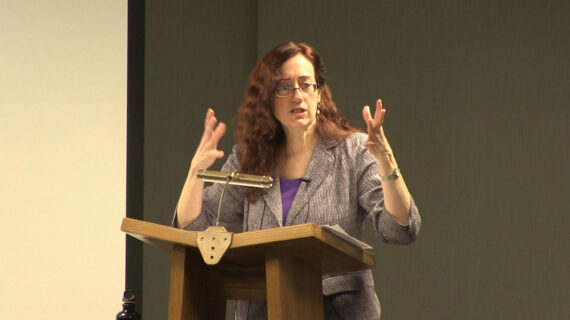
Terese Allen, Co-author, "The Flavor of Wisconsin," Ron Faiola, Author, "Wisconsin Supper Clubs: An Old-Fashioned Experience," and Robin Shepard, Author, "Wisconsin's Best Breweries and Brewpubs" share their thoughts on the history and cuisine of Wisconsin supper clubs.


Copy and Paste the Following Code to Embed this Video:
The Science of Supper Clubs
cc I'm Judith Siers-Poisson from Wisconsin Public Radio, and I'm very pleased to be taking part in the Science of the Supper Club event tonight. It's sponsored by both the Wisconsin Book Festival and the Wisconsin Science Festival. So we're getting twofer tonight. When I moved to Wisconsin 26 years ago, I had a lot to learn.
One of the more shocking things was that when I saw promotion aimed at deer hunting widows, it was not nearly as morbid as I first thought it was.
LAUGHTER
And happily, I eventually also learned that you do not have to have a membership to enjoy the wonders of a supper club. Even growing up just a few hours to the south, in a large Illinois city that we will leave unnamed, I was completely unaware of supper clubs until I moved to Wisconsin and, really, to be honest, until I moved out of the student life and into real life. But what actually makes a supper club a supper club? I hope all of you have been doing your own research here for the last few hours.
And lucky for us, we have three panelists this evening who will share the history and lore of supper clubs in Wisconsin. And the presentation is called "Fish Fries and Rib-Eyes and Highballs, Oh My!" We're going to hear from Terese Allen, Ron Faiola, and Robin Shepard, and we'll also have time for questions from you at the end. And we're going to start with Terese Allen. Terese has written many books and articles about the pleasures and benefits of regional foods, sustainable cooking, and culinary folklore.
With the late Harva Hachten, Terese wrote the expanded edition of The Flavor of Wisconsin, which is an extensive history of food and cooking in our Badger State with more than 450 recipes. Then she took that wonderful resource and adapted it for children as The Flavor of Wisconsin for Kids with co-author Bobbie Malone. If you have any kids on your holiday gift lists, trust me, The Flavor of Wisconsin for Kids is a great book. Terese also is the co-founder and long time leader of the Culinary History Enthusiasts of Wisconsin, which, if you're paying attention, you'll know that the acronym is CHEW, and a long time board member of REAP Food Group, which is an active grassroots organization that advocates for sustainable food systems in southern Wisconsin.
Terese is also a former chef. She went from kitchen manager to cookbook author when she wrote the Ovens of Brittany Cookbook, a collection of recipes and remembrances from a groundbreaking Midwestern restaurant, which, for the record, I still miss. Her writings over the years have celebrated the diversity of Wisconsin food, culture, and agriculture. Its farmers markets, food festivals, cheese factories, small town cafes and much more.
And what I love about Terese's writing is that she always highlights the people behind them and their unique stories. Please join me in welcoming Terese Allen.
APPLAUSE
Thank you, Judith. Thanks for the introduction. I want to also do a call out to Laura Hiesler. Thank you for coming up with the idea of this wonderful event and bringing us all together.
Hi to Ron who I just met this spring. It was one of those inevitable meetings. He came to speak to the Culinary History Enthusiasts of Wisconsin, this crazy group that I'm in that meets once a month and hears about food traditions from around the world and throughout time, and he kind of fit right in there. And also hi, Robin.
Robin and I go pretty far back. My husband and Robin have been on the same softball team for years, or had been. You're not playing anymore, are you? Because he quit a few years ago.
I wouldn't call it playing.
LAUGHTER
Anyway, so we had a tradition after the softball game of going out to the Harmony bar afterward for some good Wisconsin beers. So I'm here tonight to cover just a few little parts about supper clubs. I'm really thrilled about what's happening around supper clubs in Wisconsin these days. A sort of resurgence of interest, if you will.
I've been going to supper clubs all my life. I have actually a bit of a culinary brag around them, and that is that my aunt and uncle, brother and sister, were the owners and operators of The Roxy Supper Club in the 1950s and 1960s, which is one of the classic supper clubs in the state. I don't know if Ron would call it a supper club since they also serve lunch. They're open for lunch now.
Yeah. But they're in Oshkosh, right? They're in Oshkosh, right. And The Roxy, during the '50s and '60s, was one of those really classic classy places where you would go for the whole evening.
You would get dressed up, take a date, meet friends, have drinks, have dinner, hear live music, and go dancing. So it was a whole night kind of thing. I didn't get to do it because I was too young then.
LAUGHTER
But I've been going to supper clubs all my life, and, again, I'm just really thrilled about this sort of resurgence of interest in them, witnessed by such things as Ron's book, this event tonight. There's another supper club cookbook that's in existence by Dave Hoekstra. It's about supper clubs around the Midwest. It's called The Supper Club Book, I believe.
And I just learned that Ron's working on another one of Wisconsin's supper clubs. There's someone in the audience here tonight, Mary Bergen, where are you? She's working on a cookbook of supper clubs around Wisconsin. And I don't know if Jim Draeger showed up or not, but he is with the Wisconsin Historical Society, and it is his plan sometime over the next few years to do a definitive history of supper clubs in the state.
I'm looking forward to all of those. What I want to cover in my 10 or 12 or 15 minutes or three hours, we'll see...
LAUGHTER
Once I get talking, you never know, is just three things. I want to look at some of the core elements. What defines a supper club. Ron will be getting into some of them more specifically also.
I want to look a little bit at the history, and I want to particularly look at what supper clubs mean to us and why they are so big here in this state. Okay, what exactly is a supper club? First of all, I don't think there is an exact definition, but I'm just going to read a couple of paragraphs here from The Flavor of Wisconsin in a section that I wrote about supper clubs. "Although the name implies exclusivity," I knew I wasn't going to get that one out, exclusivity, thank you, "supper clubs are anything but exclusive.
They took root along America's byways as early as the 1920s, wrote the late Milwaukee Journal Sentinel dining critic, Dennis Getto in 1995. Found statewide, they are typically dinner-only establishments that are family owned and a favorite with locals. Supper clubs are often located on a lake, next to a golf course, or in the old section of town, and they usually have a bar separate from the dinning room where patrons mingle while waiting for a table. That the menu is limited and predictable is a draw rather than a drawback to supper club regulars.
Such staples as steak, ribs, broiled fish, and batter fried chicken or shrimp are at the core of the meal, and each comes, as Getto wrote, with relish tray, soup or salad or salad bar, bread, and choice of potato. Portions are large, the wine list is small, and dessert, should you still have any room left for it, might be a slice of cheesecake or chocolate torte or a minty grasshopper cocktail. Every Wisconsin supper club worth its salt also offers nightly specials. Indeed, without Friday night fish fry and Saturday night prime rib, a supper club it isn't.
Nor is it one without Old Fashioneds, Brandy Old Fashioneds to be exact." We're going to hear more about Brandy Old Fashioneds, right Ron? Good, okay, because I'm thirsty for one right now. And I wanted to just give a few more, I think the ones, the sort of core elements that I just named are really the basics, but here's a few more of what I think of as earmarks. Maybe something we can talk about more later, too.
So supper clubs have neon signs outside. They are dim or dark inside with twinkly accent lights or colored wall sconces. Supper clubs have photos of the owner's family or local history pictures on the walls. There's some kind of theme very often with supper clubs in terms of the décor, either inside or outside or both.
You might be walking into a southern plantation, a colonial house. It might be a Northwoods theme or a nautical theme, western theme. At the bar, besides Old Fashioneds, there are also Manhattans, straight up or on the rocks and also made with brandy. And the beers generally are on tap.
I'm sorry, are not on tap. They are in bottles. I think Robin's going to be addressing how that might be changing also. Plus, behind the bar is a bartender who either knows your name or you know his name or both, but you get to know each other pretty quickly.
Supper clubs are kind of fancy but not too fancy. There are cloth napkins and maybe tablecloths. The seats are padded and maybe a little clunky looking, and maybe they're even on wheels. There are candles, special glassware, and when you leave there will be printed matchbooks at the hostess station for you to take home.
Kids are not only allowed at supper clubs, they are often an important part of the picture. Supper clubs offer kiddie cocktails, kiddie menus, they supply large tables for entire families to gather around, they sometimes have placemats for the kids to color on, and they sometimes give away little gifts, like a little pin or some candy, as the kids leave. The owners of supper clubs are not absentee. They are on-site, and they are working hard.
They are answering the phone, seating guests, taking orders, mixing drinks, and cleaning out the grease trap. Supper clubs are definitely not chains. They're not cookie cutters. One of my favorite things about going to places like, say, the White Stag in Eagle River is getting that wooden bowl with the quarter hunks of fresh crispy iceberg lettuce and their homemade French dressing that is so popular they sell it by the bottle.
Or going to Ishnala, that is Ishnala, isn't it, and seeing the trees coming up through the bar. So supper clubs have their special takes, their special looks and their special menus.
Really important question
does a supper club have to be open for supper only in order to be a supper club? In Ron's book, literally speaking, yes. In his book, he decided that's right, didn't you, to go with places that are only open for dinner. In my book, figuratively speaking, no.
I point to places, like The Roxy for example, which is also open for lunch but still really is very much a classic supper club. I think that the difference, sort of that difference that some people will say, no, it's got to be only open for dinner to be a supper club and some people will say a supper club can be breakfast, lunch, and dinner, I think that difference kind of points up something about supper clubs that I think is particularly interesting. That there really isn't an exact definition, a precise definition. The fact that we sort of argue or discuss what is the real, what makes a real supper club is part of the reason why supper clubs are so vital and so vibrant yet today.
I think for every supper club, when someone says they're only open for dinner or they have to have white tablecloths, you're going to find somebody else arguing about it, and that very argument, as any good folklorist will say, is what keeps the tradition alive. Supper clubs are not static. They're not set in stone. They are ever evolving, and the fact that we're having a conversation about it means that they're very much alive and very much thriving.
As for the history of supper clubs, I have more answers, more questions myself than answers around the history of supper clubs, and I'm really looking forward to Jim Draeger's work on this myself. There actually isn't a whole lot on the topic out there. Supper clubs are not recognized nationally as a widespread or well known category of eating out in the way that, say, coffee shops or night clubs or taverns, etc, are. Still, wherever I do find discussions of supper clubs, there's usually a reference to them being part of the evolution of eating places that came out of Prohibition when private eating and drinking clubs existed because of the ban on selling alcohol in public places.
Most sources that I've seen credit Milwaukee native Lawrence Frank for opening the first supper club, and that would have been in the 1930s. Some sources say 1930, some sources say 1920s. And it wasn't here in Wisconsin. It was in Beverly Hills, California.
American restaurant authority John Mariani and his scholarly book about all of the kinds of, all the history of restaurants and restaurant types in the United States, it's called America Eats Out, he wrote about Frank's restaurant saying that its gimmick was that it sold only one signature item, prime rib, with Yorkshire pudding, mashed potatoes, creamed corn, and sweet peas. Frank's restaurant utilized glistening silver serving carts to dispense lavish portions of roast beef. Frank also introduced the notion of the spinning salad bowl, served before the main course, an idea that caught on in the rest of America. And he provided fixings for his baked potatoes.
Things like chives and sour cream and bacon. Another idea that took off. And finally, it was Frank who first offered his patrons doggie bags in which to take home food that they couldn't finish. I don't know about you, but I certainly hear a lot of supper club themes in that description.
But he never did call it a supper club in the book. And he certainly didn't call it the first supper club. So who knows. It may be like trying to find out who first cooked meat over an open fire.
I'm not sure. But what Mariani does say is he places Frank's restaurant in the same time frame and in the same genre as the night clubs, themed restaurants, and destination establishments of that time frame. We wrote by the end of the 1930s, every major American city had a deluxe supper club or night club. Certainly Wisconsin versions began popping up in the 1930s and likely even the 1920s.
These were adults-only social settings located especially in rural or resort areas with a combination of eating, drinking, listening and dancing to live music, and staying out late with friends. In Wisconsin, as well as elsewhere in the Upper Midwest, the big years for that kind of supper club were the 1950s and 1960s, is the time frame I think of as the Mad Men supper club years. In the 1970s and beyond, of course, the world of food and restaurants changed drastically. Independently owned supper clubs faced challenges that stemmed from things like the proliferation of fast food and chains, shifting dining customs, and lots of competition, and also changing liquor and smoking laws, and they began to die out.
But they did not die out in Wisconsin. Why have supper clubs survived here? Why do they thrive here? That's the thing that really particularly fascinates me.
Why have they become, in fact, an idiosyncratic hallmark of social life in our region? Again, I don't have any definitive answers, but I've got a lot of ideas. And in the interest of time, because I think I'm probably already starting to go over, I'm just going to list them sort of quickly, and maybe this can be part of the conversation afterward. Tourism is a huge reason that supper clubs are popular here.
We are a tourist state. We are a state of recreation and resorts, and they very much go hand in hand with supper clubs. Sociability. For better, and sometimes for worse, Wisconsin has a culture of sociability.
Of gathering together in a way that is very much closely tied, intimately tied, to eating and drinking. And it comes from our German heritage, and there's a term for it. It's called gemütlichkeit, and it implies camaraderie, sociability, neighborliness all around food and drink. The supper club as a meeting or gathering place fits perfectly into that mode.
Supper clubs are not just where you go to go out to eat. They're where civic and religious groups meet, where weddings happen, where there are anniversaries and graduations and receptions of all kinds. Supper clubs are a place to meet and celebrate, but also a place unlike, say, town halls or many churches where there's also beer and booze. Another reason I think Wisconsin is big for supper clubs has to do with agriculture and the very strong rural-urban connection that we have in the state.
Wisconsin is an agricultural state and a very diverse one. Enjoying the food that we grow and produce here comes really as second nature to us. Supper clubs offer and celebrate those foods. Meats, fish, and cheese and dairy products and vegetables and fruits.
Tied to that, the farming aspect of the state, is the work ethic in this state, I think along with other Midwestern values that are very strong here. It takes a 24/7 commitment to run a supper club, and we have the work ethic here in this state to make that happen, to support that. We also have heartland attitudes that value aspects of supper clubs related to that ethic. Things like egalitarianism and generosity, those big portions, and affordability.
Okay, so it may cost $20 for the steak, but you're taking three-quarters of it home for another two or three meals. And also community support. And tied into all of that is another really important thing, I think, and that's the contemporary emphasis on local foods. I believe, in fact, that the local foods movement is having a really positive effect on supper clubs that more people are seeing the benefits and pleasures of supporting locally owned restaurants, local growers and producers, and regional food traditions.
Indeed we are, as a state, as a whole state, we are very proud of what we grow and gather and hunt and reap and produce. And not only do we celebrate it, but we ritualize it. And the case in point there I think that's perfect is the fish fry. Fish fry, of course, is very intimately tied to supper clubs, and it's another reason that they're so big here.
Finally, one more thing, it isn't just supper clubs that Wisconsin supports. Supper clubs, I think, are part of a network, if you will. The state also really stands out for the quality and quantity of other traditional community based food business and practices like butcher shops and cheese factories and micro breweries and church suppers and farmers markets and bakeries and all the places I like to go. Supper clubs are part of that culinary web, if you will.
A web of diversity, of pride of place, and support. So, what do supper clubs mean? They mean tourism and economic health. They mean celebration and ritual and nostalgia.
Supper clubs get us around the table, around from scratch food, the kind of food that maybe we don't cook as much as we used to but we still value it very much. Supper clubs help feed the need we have to eat together, to connect as family, as friends, and as community. And I think above all, supper clubs mean identity. When we sit down to eat at supper clubs in Wisconsin, we are, in a sense, all sitting at the same table.
We're all essentially eating the same food, the same menu, and we're all relishing the pleasure of belonging to one another.
APPLAUSE
Really important question
Did you say "relishing" on purpose?
LAUGHTER
Really important question
All right. Well, next we are going to hear from Ron Faiola. Ron is a filmmaker who has produced and directed critically acclaimed documentaries, including Fish Fry Night Milwaukee and Wisconsin Supper
Clubs
And Old Fashioned Experience, which was broadcast on PBS stations nationwide. As an author and photographer, in 2013, Ron released his first book, Wisconsin Supper Clubs, which showcased 50 supper clubs throughout the state. Now that's dedication. It clearly struck a chord because it's currently in its fifth printing.
Is that right? Fifth printing. Ron is also currently on the road working on a second supper club book, earning him the distinction of having visited more supper clubs in Wisconsin than Al Capone and John Dillinger.
LAUGHTER
Clubs
Are you as a good a tipper, though, because they say they were really good tippers. They were really good tippers, are you a really good tipper too? I just... There you go.
LAUGHTER
Clubs
And if you know your Wisconsin history and that of Chicago gangsters, you know that's nothing to sneeze at. So let's welcome Ron Faiola to the podium.
APPLAUSE
Clubs
This is the cover of my book. That is Ishnala. That's a table there. People get engaged and married and divorced...
LAUGHTER
Clubs
Kyle Cherek and I had dinner there for the Wisconsin Foodie episode. I don't know if you saw that, but we didn't get married or anything.
LAUGHTER
Clubs
We decided just to go as far as the appetizer. Let's take a trip and go visit some...
LAUGHTER
Clubs
Supper clubs in Wisconsin. This is my meat map from the movie. And, basically, we love steaks in Wisconsin, and that's a nice shaped rib eye there. We have to pick a location, and how do you find some of these supper clubs?
Well, back in the old days before the internet and GPS and so on, you had to find a sign on the highway you were traveling. And often they were back roads. No interstates. The signs have helped me out, actually, when I get lost trying to find a place.
But these days they're still there, and if you don't have just a regular old sign like that, you can have something nice and bright to shine through the forest. That's Dreamland up in South Range near Superior. And they are really hidden. Highway 2 bypasses them, and they're kind of behind there.
But that sign is one of the best neon signs or supper club signs I've seen. And it's not the original one. The original one was kind of a long, narrow one. The place has been open since the '20s, and this one is probably dated to the 1950s.
But the night I took that shot, it was the heavy pouring rain, and I'm trying to hold an umbrella with the one hand to protect the camera and get the shot, and I did, luckily. Superior can be a rough place. Now, this picture has the classic three elements of a supper club that most people think about.
LAUGHTER
Clubs
Taxidermy, twinkly lights, and dark wood.
LAUGHTER
Clubs
And this is the Mill up in Sturgeon Bay, and it could be any supper club. But not all of them have that décor necessarily. If you go to the HobNob in Racine, they have a very exotic décor. And here if you go to the Tornado, you won't see any deer heads there, but you'll go back into the '50s, kind of when it was Crandall's.
So that's one of the things you look for when you want to find a classic supper club. And of course you go to the bar and have a Brandy Old Fashioned. We kind of went overboard on the condiments on this one.
LAUGHTER
Clubs
I was having fun. When I was shooting the book, I got 45 photos of Brandy Old Fashioneds, and after a while I said let's stop putting cherries and oranges, let's put a bunch of stuff in there. And I had everything from marinated mushrooms to asparagus and pickles. There are some onions, pearl onions in there.
But that is the classic cocktail. It needs to be in a big tumbler too. Nice big size and it's the adult soda pop. And something, you're going to have one of these or six or seven before you have dinner.
LAUGHTER
Clubs
This is a real sign.
LAUGHTER
Clubs
And this is Wisconsin.
LAUGHTER
Clubs
And I think if the kid bought a round of drinks, he might be able to stay there.
LAUGHTER
Clubs
But this was at Rocky's in Stoddard. And they still have, now they have a new one up, but it's still the same thing. That's just classic Wisconsin. The kids can sit at the bar and buy a round.
The relish tray. The relish tray, people really draw a line in the sand. If they don't have a relish tray, they're not a supper club. Honestly, from what I've found, really maybe 30% to 40% of supper clubs have relish trays now.
Largely because either they've installed salad bars or include salad with your dinner, but a lot of people were not eating the relish tray or wasting some of the vegetables. And the classic story I have is last year I was here at the Tornado, and I was with a group of about 10-12 people that were from Texas and Guam and stuff. And we were sitting there and our end of the table, now the Tornado does their relish tray in a glass, and people thought that was a decoration.
LAUGHTER
Clubs
And people on my end of the table, I said that's a relish tray, let's dig in, and then the people on the other end were still admiring their decoration. And we said, send it over, and we finished it off.
LAUGHTER
Clubs
But it is a common thing. And the dip in the middle is the green goddess dressing that's typical for a relish tray. A lot of times you'll see crackers and cheese dip or pickled herring, which I've come to really enjoy now. I used to go, whoa.
And they had beets today at the relish table, and I love pickled beets. So if you can find a relish tray, you're in double bonus supper club heaven. Friday night fish fry. This is a big, nice piece of walleye at Marty's Place North in Arbor Vitae.
And when I do the book, I talk to people and say, what's your big night. I shouldn't really ask the question because they say, Friday fish fry and Saturday we have prime rib. It's like written in stone for these places, but that's what people come in for. And the fish fry will vary from geographically around the state.
If you go up to Green Bay, Door County, you'll get perch, which used to come from the lake, from Lake Michigan. Now it comes from Lake Erie, the Canadian side of Lake Erie, because there is not enough perch and they're not big enough and the invasive mussels have just kind of ruined the perch fishing, and the state also has a pretty low, let's say, quotient of how many fish you can pull out of the lake. It's not worth it for anybody. If anybody knows about Maricque's in Green Bay, famous for their fish fry, yeah.
Right now they're doing 99.999% Lake Erie fish. Maricque's has, for the people who don't know, a commercial fishery that used to supply the perch, and they can no longer do that. So they have to get it from Lake Erie, and it's still really good. A lot of times perch gets called lake perch, or let's say lake perch, and people assume it's from around here, but a lot of it is European zander.
And it's not as big and not as meaty as the Canadian lake perch. But let's move on to Saturday night. A big nice piece of prime rib there. I like it medium rare.
I've seen people that have it more bloody. But I love prime rib. It's really nice. It's a popular thing.
It takes a long time to make, and a lot of times places run out of the prime rib because there's only so much you can make. It's not like an endless supply. After dinner you go to the bar and have one of these. This is a pink squirrel.
Not something I would order necessarily. That was at the High Shores in Chippewa Falls with the little cute hearts on it and everything. But that's a classic ice cream drinks after dinner. And once you're done with your dinner, of course you've got to remember Fido.
And they don't, places still hand these out now. But usually the portions are so large they ended up giving you three or four bags or a big carry-out container. But back in the day, when I was a kid, we had a dog and we would go to a supper club and bring home the bones and have our dog, Holly, go nuts when we'd come home with that. But that's basically a night at a supper club.
And I'm working on the second book now. I'm encouraged, first of all, by the response to the first book, and I'm seeing a resurgence of supper clubs, places that are being kind of resurrected from previous places by younger couples that are, I think they know that people are getting maybe a little tired of the cookie cutter chains and people want to revisit the restaurants of yesteryear and remember the big portions and the personalized service from the family run places. You can't get any better than that. And I still see a lot of, as I drive across the state, I see places that are closed, obviously have been closed for a while but still have what's left of their sign hanging out.
And then I'll see other places that are open that are under the radar. So there's still a lot of places out there. We talk about it being a Midwestern thing. It is, but whereas Minnesota and Iowa and maybe upper Michigan has a handful of supper clubs, Wisconsin has over 300.
So we're still the supper club capital. And just last year the Calumet County trademarked the term Supper Club Capital of the Midwest, apparently. And they used my meat map, by the way.
LAUGHTER
Clubs
They kind of stole my meat map. Wisconsin itself is the supper club capital. I'm proud to be part of that and to be letting people know where to go, and visiting these places and keeping them open instead of closing them. So, that's it.
APPLAUSE
Clubs
I've got that doggie bag staring at me. Well, last but certainly not least, we're going to hear from Robin Shepard. Robin is an associate professor at UW in the Department of Life Sciences Communication in the College of Agricultural and Life Sciences, which makes him a colleague of a guy named Larry Meiller, who you may have heard of and who I get to work with every day. Robin is an accomplished academic and member of the UW community, but what we're really all happy about is that he really knows his beer.
Robin gives wonderful historic brewery walks and presentations. I just have to say, brewery is the hardest English language word for me to say. Hands down. I sound like I've spent several hours in one every time I try to say it.
LAUGHTER
Clubs
For example, the Wisconsin Alumni Association invites him to present to alumni across the country to share his expertise in Wisconsin brewing history and his knowledge of the state's most iconic beverage. Although, with all the talk of Old Fashioneds tonight, I think they could give beer a run for the money. In 2012, Robin led a group of UW alumni on a 12-day educational tour through Germany, which included cultural and natural history and, yes, the study of beer. Robin's book, Wisconsin's Best
Breweries and Brew Pubs
Searching for the Perfect Pint, was given the top book prize in 2001 by the North American Guild of Beer Writers. He's also written two additional books about the brewing industry, and last fall he published a historical analysis of Wisconsin's post-Prohibition brewing industry in the International Journal of Brewing History. Robin has written more than 500 beer reviews, travel articles, and stories. I'm guessing there's at least a pint in the background research for each of those.
And you can find his regular weekly column, "Beer Here," in both the Isthmus newspaper and the paper's web-based daily page site. Please join me in welcoming Robin Shepard.
APPLAUSE
Breweries and Brew Pubs
I think it's really appropriate that we're here on a Friday night talking about supper clubs, isn't it? That connection between supper clubs and beer, at least for me, is pretty direct. They all serve beer, right? So kind of start from that premise as you kind of listen to a few of my thoughts about supper clubs because I'm one of those people that has a little bit more of a looser definition of supper clubs.
But supper clubs for me and a lot of the beer folks across the country, they provided a very interesting model that I think we actually should give some credit to for when we walk into a brew pub today. So, first and foremost, at least my definition of a supper club means that they have to serve beer on tap. That's it.
LAUGHTER
Breweries and Brew Pubs
No seriously, they will all serve beer. As Terese pointed out, many of today's supper clubs still sort of that time honored tradition of beer in a bottle. But that's changing as sort of the pressures, the interests in today's modern craft beer movement is beginning to sort of besiege much of Wisconsin. Supper clubs of the '30s that arose at that time, I think, Terese commented on this briefly, is that they did sort of arise or they came out of that atmosphere of the speakeasy.
And that really has carried through into what we see in a supper club today. They're generally open late at night. They offered alcoholic beverages. They only served supper.
Many had entertainment to go with them. They evolved in places where everybody knows your name. I read an interview that Ron gave a couple of years ago, and he was quoted as saying, "Supper clubs generally are frequented by regulars, and if they don't show up, the owners will call to see if everything's okay."
LAUGHTER
Breweries and Brew Pubs
Supper clubs emerged as our roadhouses early on. And part of that was a function that, coming out of Prohibition, communities would prefer that liquor licenses and other types of establishments like that be outside the city limits. So all of that made the roadhouse the early form of the supper club a destination, so to speak. Well, fast forward today.
So, where does the supper club and beer intersect? Well, just like the brewery industry, that local aspect of them makes them interesting. It helps them to serve and maintain that unique niche that they have in a very competitive restaurant industry. Supper clubs are not chains.
They're not chain restaurants. They are unique, from their décor to their location. The owner is a fixture at a supper club. And while the menu, there's a core there that is sort of the staple, it's that local flare in dishes.
The sometimes locally sourced ingredients or that secret grandmother's special spice in the pumpkin pie that makes them so special that people keep coming back for. Now, some of these same qualities are what we see in today's local craft beer scene, especially when we think about Wisconsin's brew pubs. Brew pubs are those breweries that have a restaurant or a part of that. A commercial brewery just basically bottles or kegs beer.
And I really feel that today's model, at least in Wisconsin, there is a group of these brew pubs that really we should sort of salute and credit that they really arose from that early on fascination, maybe even direct association, with the supper club. The brew pub sort of arose from, yes, a brewery, but it arose from a local restaurant. They were greatly influenced by that local, and that was reflected in the atmosphere that you see when you come into a brew pub, particularly those that are sort of in the outer portions of the state. Those that are destinations in and of their own selves.
Let me tell you a couple of stories about similar models. Why I think that we should credit some brew pubs as sort of coming out of the supper club model. Wisconsin's very first brew pub was Brewmaster's. It was located in Kenosha.
It was actually the 16th brew pub in the country. So this was early on. It was founded in 1987. In my first Wisconsin beer guide, I was looking back at it and trying to make some of these associations and décor and hours and menus and things of that, I sort of chuckled at my own self because this was my first book, I wrote it several years ago, but in the book I wrote, "Brewmaster's Pub has a menu most Wisconsin supper clubs would envy, offering both English and German specialties," which I think both Ron and Terese pointed out that those very hardy, those comfort types of foods are part of that supper club.
Well, in Brewmaster's, the owner Jerry Rezny had located his and wasn't quite as picturesque as Mirror Lake or with frontage along Lake Michigan, but he had turned an old Christmas tree farm into his brew pub. But most importantly or impressively, he had taken a century old, three story stone barn and turned that into his restaurant and brew pub. What I remember was not a single relish tray, but the relish, it was more of a relish bar. It was segregated out from the main salad bar.
But that was something that was very unique in its own right. Again, it was the first of Wisconsin's brew pubs. Another brew pub that emerged a few years later that was built on sort of the old grounds, direct grounds, of a supper club occurred in Egg Harbor, Shipwrecked Brewing Company. And it's small brew pub, but it has seasonal hours, really limited hours, and it has its own seasonal house beers.
What makes it a wonderful sort of example of how the supper club model has influenced today's brew pubs is that there's a lot of things to that, especially sort of the fun tale of the supper club lore that goes with this restaurant. It's family run, which a lot of our supper clubs are. In this case by Rob and Noreen Pollman. They also own Door County's Peninsula Winery.
There's a road trip involved to get there. It was built in a transition from several other restaurants and supper clubs. It opened in 1998 as a brew pub, but if you go back in its history, it goes all the way back to 1930 when it was originally opened as Murphy's Moore, it then became the Thimbleberry and later the Blue Iris in another string of different supper club and restaurants before it was taken over and became a brew pub. As a menu that's perhaps a little more limited than what we see in some supper clubs, but it does have that wonderful Friday night fish fry that draws people from all over the peninsula.
It has that homey atmosphere, even like some of the supper clubs that Ron mentions in his book. There are eight guestrooms for those people who want to make a complete evening of it. And then there's the story of intrigue and danger that goes with Shipwrecked. As with Norwood Pines in the north central part of the state, it's mentioned in Ron's book, it had one of those very famous gangsters, Al Capone, who frequented there.
Local legend has it that two revenue agents were last seen in that building lurking about looking for Capone. The building has tunnels that connect it to other businesses in Egg Harbor. And there's even the story that the local tell of Capone's illegitimate son Jason who hung himself in the attic and whose ghost is occasionally seen on the roof. And from my recollection, there are a number of haunted supper clubs in Wisconsin's 300 number.
So just like with supper clubs, this was sort of, it doesn't quite fit the perfect model, but when you walk into Shipwrecked, you get that supper club feel. You have good food. You have the kinds of conversations over beer that progress and make this a destination. I think supper clubs also really tell us about our desires for all things local, especially local food, flavor, and flare.
And that's what we see in today's craft beer movement. Now, there are chains and large macro breweries here in Wisconsin, but that local brew pub is really a manifestation of what we've learned in supper clubs. The modern renaissance of small, local brewing reflects a desire on the part of the beer drinker to support beer that is made right where you drink it. Just like in a supper club, food prepared right there, sometimes in special recipes that take on almost an icon in that community for special dishes.
I can't think of a better example of a brew pub based on the supper club model than one that's right here in Madison. It technically would not fit Ron's definition of a supper club, but have you ever walked in Vintage Brewing? You can't help but think about that motif and that atmosphere that is created when you walk through that door. I also am struck by the aspect of the owner becomes a fixture in a supper club.
And just like with a supper club, you'll find Scott Manning, the brewmaster and co-owner, working behind the glass in the brew house. He'll even come out to say hello to the folks he knows at their table or at the bar. I'm not sure that Vintage has a relish tray, but when Scott says hello at my table wearing his brewer's boots, now that's Vintage supper club in my book. Our small breweries have found that just like the supper clubs, they can offer a variety of tastes and flavors to choose from.
At a brew pub today, you find a constantly rotating menu of beers. You'll find a core set usually. But that diversity is what you often see in a brew pub. I think it lends itself to the people, not only the regulars who come back for that local beer and locally made beer, but it also is somewhat like a little bit of a scavenger hunt.
It's why people keep going up and down the road to see how many supper clubs that they can check off their list or have sign Ron's book, right? I met a couple people earlier tonight that said I take Ron's book with me and have the waiter or the barman or the owner sign it. It's a game we all play. Whether it's in supper clubs or brew pubs, it's a scavenger hunt of can we find these places and what's it like locally when we go in.
Now back to the specifics of beer in the supper club experience. Yes, when you go into a supper club you're going to have a selection of beer, and more likely than not you'll have your selection based in bottles. But that is changing. The craft beer movement is convincing supper club owners that there are folks that will come in and look at the beer list first, and then figure out what they want their entrees to be.
I think supper clubs are changing, but they're still lagging a little bit behind the beer geekdom crowd. But they are going hand in hand with those folks who love to search for good food and good beer. But just as the Brandy Old Fashioned is iconic in the Wisconsin supper club, there are a couple of beers that I think are iconic when you travel around the state. Can you imagine a supper club that could get away by not serving Spotted Cow?
What about Leinie's Original or Leinie's Red? That's another one, right? Where the name says it all, Capital Supper Club. What self-respecting supper club wouldn't serve that?
Those have become the beers that are really part of the modern supper club movement for me. Finally, I am also struck by the stories and the experiences that we have that make supper clubs special for all of us. And I've been, I have to admit I'm a Wisconsin transplant, but I've been here over 30 years. So I'm pretty close being solid.
But I can remember one of my first experiences is that I was sitting in the bar of the supper club, waiting on my table and, I don't know, I think it was the early evening church service or a wake, but they let out across the street and they went right into the supper club.
LAUGHTER
Breweries and Brew Pubs
And it wasn't 30 seconds until I was seeing a 13-year-old sitting on the bar stool next to me ordering a root beer. And this was a kid that came from Iowa with a fairly conservative upbringing thinking to myself, wow, this is a really interesting cultural tradition.
LAUGHTER
Breweries and Brew Pubs
Thank you very much.
APPLAUSE
Breweries and Brew Pubs
All right. I guess my question could be to all three of you, but I recently bought a supper club. I grew up, I know, it's Friday night, it's not open yet.
LAUGHTER
Breweries and Brew Pubs
Otherwise I wouldn't be here. But I grew up in the supper club business. My dad owned one that almost fits Ron's definition to a T. So that's kind of what I grew up in, and that's really what I wanted to continue with the supper club that I bought.
But my question is more about lunch.
LAUGHTER
Breweries and Brew Pubs
And Jeremy's my business partner and he's right next to me too.
LAUGHTER
Breweries and Brew Pubs
We've discussed this ad nauseum, and when we first found the one that we wanted to buy after looking at many different ones, it was we're not going to do lunch. It does not fit my definition of a supper club. It just doesn't. But then what happened was after we purchased the place and we started to really get to know the community, as we were replacing the 30-year-old carpet and things like that that we just had to do, we found that there was such a desire for lunch and it was our guests that were telling us that we're not even open yet and our guests were coming to our door, knocking on the window saying when you open?
Are you going to have lunch? Are you going to have lunch? And I'm struggling with my own internal definition of what a supper club should be because one of the fundamentals, I think, is being a part of the community and serving your community. So I just would like to maybe push you guys a little bit on that issue because it's certainly something that I'm still struggling with.
Am I going to serve lunch in my supper club, and will I still be one?
LAUGHTER
Breweries and Brew Pubs
All right. Well, Ron, do you want to start, and then, Terese, do you want to jump in? Yeah. I have an interesting story about the Bartolotta Group in Milwaukee opened up two supper clubs called Joey Gerard's, and one of them is a block and a half away from my house in Greendale, and Joe and I talked when he opened the place.
He actually bought my movie to check out what to do for a supper club. But anyway, the village in Greendale said, open for lunch, be open for lunch. And he said if I open for lunch, I'll lose money. Now, if your community, if you've got five or six people that show up and say we want lunch, well, are you going to be busy enough to keep that going or not?
If you can make your money as a supper club and stay as a supper club, that's great. If there is a real need for you to open up at lunch, then that could work, and you can still call yourself a supper club. I went on Facebook on my supper club page on Facebook, and I asked people if a supper club is open for lunch is it still a supper club, and the large percentage said, yes. So it goes against what my criteria is, but, again, it's financial for somebody who owns a place.
A lot of places, like here in Madison, Toby's and Kavanaugh's, they're open for lunch because they have to survive, and Feiler's. They have to compete against other chains or other supper clubs and whatever, and being open for lunch is just another way to bring in some more money. But if, like Joe Bartolotta decided, that they wouldn't make any money if they were open for lunch. So that's kind of...
It's hard because it wasn't a financial issue. It's more about I don't want to frustrate the community that's asking for it. So the restaurant does, it's a 60-year history in the restaurant so it did fine without lunch for a lot of years, and for a while they tried lunch and then they didn't have lunch. But it was always a response to the community.
So that's my internal struggle. Terese. I think this kind of goes back to what I was talking about earlier about supper clubs are more than a place people go to to eat. They go there to meet.
They go there to gather. They go there for business meetings. Lion's Club. Lion's Clubs, right.
And depending upon where it is, I feel like I agree, it's got to work for you financially. But I think it sounds to me just that you're considering this, that you want to serve the community, it sounds to me like you already are doing so much of what supper clubs do for a community. They serve people in different ways beyond just feeding them food. You sound like the classic supper club owner to me.
You're going to be there. You're in the community. You want to serve the people. You want to give them what they want.
I say go for it, ignore him.
LAUGHTER
Breweries and Brew Pubs
I didn't say not go for it. And I know places that do that. They have meetings of the Lion's Clubs and so on during the day. Or go to a few places.
Go to, well, The Old Fashioned here in Madison is jammed. That is just jammed all the time. Lunch, breakfast. That's because I put them in my movie.
Yeah, it's because you put them in your movie. Or The Roxy is a really good example It's in Oshkosh It's in downtown Oshkosh. It's not a classic place as far as being in a resort area, but it is in the old section of town. And I've been there for lunch, and it's packed.
You wait in line for lunch too. And they serve just wonderful fresh food, and people are having meetings and they're having gatherings. You can tell that it's a service to the community as well. We have a question over here.
We are very boring people. We don't really drink that much beer, and even though my husband grew up in Port Washington and a few years ago we flew to London and he was looking after the fish fry. So I thought it's originally in London, but when we come back I realize his hometown offer fish fry every year, summer fish fry. Anyhow, could you please tell me the origin of it?
Of fish fries? Yes. Sure. You got to buy the book.
LAUGHTER
Breweries and Brew Pubs
Have you got an hour or two or three or four?
LAUGHTER
Breweries and Brew Pubs
So fish fries, really briefly and not completely at all, but fish fries are one of the most fascinating, to me, culinary traditions in the state because it does come from so many sources here. We have, first of all, we have a taste for fish that runs in our blood. Literally, if you go back, first of all, the state, if you look at it geographically and climatically, there's water everywhere. So we've been fishing here for millennia.
The native tribes fished. The immigrant groups who came here fished. Commercial industry grew up around it. So it was tied into our economy.
We just, it's in our blood. Eating fish is in our blood, and even though it's not much of a commercial industry anymore, it's certainly very much a part of our recreation and sporting industries and is very important to us. So there's that. There's the fact that Wisconsin has a very high percentage of Catholic population.
So, of course, Catholics used to not any fish on Fridays. And so that was feeding in a big way. Prohibition has actually a lot to do with fish fries, believe it or not. Taverns used to give free meals kind of as a way to get you in and get some salty food in your mouth, and then you'd be thirsty for some more beer or some more drinks.
And during Prohibition when they couldn't serve drinks, they would offer free or very cheap dinners or lunches of fried fish because fish was abundant at that time and very cheap, and it was a cheap way to serve a lot of people and charge very little or nothing at all. And then, along with that, on Fridays, that's when people would get paid. So these big Catholic families would get their paycheck, and where would they go? They'd go out to eat because they were flush, there was this cheap meal or it was a free meal, and the adults could still get some hooch under the table, so to speak, in a lot of these places.
And by the time Prohibition ended, people had become sort of used to this, and it grew into a tradition and people started serving it not just in taverns but in restaurants. And, of course, now it's part of the supper club tradition. You can find it in fancy restaurants, etc. I think it ties in also, without going into it in huge amounts of detail, I think the whole gemütlichkeit thing that I talked about.
The same thing that happens in supper clubs around prime rib on Saturday night happens with fish fries on Fridays. So that's part of that. It became big in Wisconsin and it stayed big and it became really a hallmark here. There's more but...
Port Washington was also a big commercial fishing port, and they no longer do that. But they have the big every once a year fish day where they serve the world's largest fish fry, apparently. The smelt fry? No.
It's actually just regular fish fry. But it's all over town. Actually, I dated a girl from Port Washington, and back in the '80s it was more drinking than eating fish.
LAUGHTER
Breweries and Brew Pubs
But Port Washington, yeah, that was a big part. Smith Brothers Fishery was part of that. So that is part of their heritage in Port Washington. And why is there beer in beer batter?
Robin? Tastes better. It tastes good. Yeah.
LAUGHTER
Breweries and Brew Pubs
But I'm guessing there's something about the chemistry of it that makes the batter especially crispy?
LAUGHTER
Breweries and Brew Pubs
It makes it puff. It makes it puff. See, I knew there was something. Another question?
I'm kind of blinded, so I might not be seeing people. Anyone else? Yeah. A follow-up.
Sorry, I forgot to ask, my second question is for the professor. We finally, I finally like the Spotted Cow, given last Friday for free at the gallery walk or gallery night. Anyhow, is there a fish fry, no, supper club in New Glarus because I love that place.
LAUGHTER
Breweries and Brew Pubs
Actually, no. New Glarus, I've tried to go down there in that area, and it's largely kind of like a European Swiss area, and they really don't do supper clubs down there. And it's interesting about Spotted Cow because I have friends in bands and live in other states that just, Spotted Cow is not served outside of Wisconsin. They don't ship it anywhere other than Wisconsin.
And they go nuts for that. It was like when Coors, you couldn't get Coors. Remember? You had to have, what's that?
Couldn't get it east of the Rockies. Right, yeah. You had to have Burt Reynolds go get it for you. But the Spotted Cow, yeah, New Glarus, unfortunately, that area is just kind of not a supper club area.
Though, I would posit that the closest thing, I would almost, I think I'm going to say it, I would say that the Glarner Stube is a supper club. It has so many of the same elements. And even though the food is Swiss, but there's meat, there's fish, there's potatoes, there's salad, there's Brandy Old Fashioneds, and there's Spotted Cow. There you go.
A question back there? Just throw the mic at people. Go left and then right. I was just going to say that New Glarus used to have a supper club.
It's called the William Tell, it's on the edge of town, and it was a regular supper club but it had a slightly Swiss food twist to it. Yeah and they just closed. Yeah, about three years ago, four years ago. Yeah.
They were, yeah. Is this thing on? One, two. I noticed over the years, many of the supper clubs that I visited typically waitresses rather than waiters and often wearing some kind of uniform or sometimes black skirts or white blouse.
Is that, uniforms and the waitresses, is that incidental to the supper club or is that a component of it for a while? This is why I can't wait for Jim Draeger's book to come out.
LAUGHTER
Breweries and Brew Pubs
That's a good question, and I have no idea. Let me ask Ron. You've been to a million of them. Have you seen anywhere the wait staff is wearing uniforms?
Sure. Yeah. And I think it's, again, part of the, it's like you're going a couple steps above a tavern. You're serving food with tablecloths and linen napkins or at least nice napkins.
The wait staff isn't just somebody who walks in in a T-shirt that says Zany's Sports Bar. They're wearing kind of a uniform for the place. Yeah, and they've been there for a long time. A lot of the supper clubs I visit, they've said, oh, here's this person's been here for 25 years and this person's been here for 30 years and they make it part of their life and the uniform is a big part of that.
So it differentiates just the plain old service to something a little bit above, a little big nicer. I would add to that, not that I'm actually part of the panel but I have a microphone, that it strikes me as the people who are serving in a supper club are almost more in the European model of where it's actually a career. It's not just a job. Exactly, yeah.
That's a good point to make because it is a career, and they've been there for a long time. In the back. Can you speak to the impact of the smoking ban on supper clubs? Yeah.
I did an interview upstairs about that, and it really had no effect. In fact, if anything, it brought more people into supper clubs because a lot of people were complaining how the bars were too close to the dining area and the smoke would get into the dining area. So now it really, the biggest effect that any laws had on supper clubs is the stricter drunk driving rules, but not the smoking. In the front.
I'm a little interested in part of the economics of it, which is the distribution of where supper clubs are because you seldom hear about cut throat competition between supper clubs. And one gets the feeling then that there's more than just economics driving the decision to open a supper club. We heard about that before. I have a parenthetic question for the first questioner in the audience.
We're curious to know where his supper-club-to-be is.
LAUGHTER
INAUDIBLE
Breweries and Brew Pubs
Where is that? Kingston, Wisconsin.
INAUDIBLE
Breweries and Brew Pubs
I know where King is. About 30 miles south of...
INAUDIBLE
Breweries and Brew Pubs
So for those of you who might not have heard, about 20 miles south of Green Lake in Amish country. The Kingston House. The Kingston House. When will you be opening?
www...
LAUGHTER
Breweries and Brew Pubs
KingstonHouseSupperClub.com. October 29th we open. Oh. Great.
Kingston House Supper Club. But getting back to my question, what about competition between supper clubs? You tend not to see that, which we don't think is necessarily a bad thing. I've asked supper club owners, I said the only other, especially in the holy land, which is east of Lake Winnebago, the only other places are other supper clubs, and all the owners will say, they're friends of mine.
If they run out of a bottle of brandy or something, they can run over and get one. They're not in competition. They're friends and they're neighbors. Actually, I have a question to jump in.
With the fact that supper clubs are often tied to the tourism industry and are in resort areas, do you have a sense, Ron or any of you, how many are actually seasonal? And if so, how do they manage that? How do they make that work financially? A lot of them are seasonal.
And some of them, there's a whole bunch of different versions. I just came across this because I just came from doing all the Northwoods supper clubs, not all of them but many, and this one guy is going okay, from October 1st to November 2nd we're open these days, and then December we're open these days. A lot of it depends on snowmobiling, ice fishing, summer vacations and so on, so the hours in the summer, obviously, are a lot longer and they're open longer. In the winter, a lot of places are either closed completely, like Ishnala.
There are big windows. There's no insulation there so they have to close from October 1st to May 15th because it would be too cold or cost too much to heat the place. Other places, again, they're open year-round. The Steak Pit in Washburn, right on Lake Superior there, you'd think in the wintertime people wouldn't show up, but they said no, we get year-round traffic, and it's just easier to say we're open year-round and people know when we're open.
So it kind of depends on the financial situation of the supper club and the area they're in and how much traffic they get as far as the season. So I don't know. Yes. A comment.
If one visits Germany, to this day in the small villages and communities there's almost always a gasthaus, guesthouse. It's not a hotel, although some of them do have rooms. But with this very large German background in Wisconsin, I think something like 50% or 60% ethnic background in Wisconsin is German, if you go to the holy land and you mention that, which is the east shore of Lake Winnebago, just northeast of Fond du Lac. A German monk came there in the early 1800s, set up a string of beautiful churches, all Catholic churches, which give it the name the holy land.
I think every one of those little villages has a supper club probably on that German gasthaus model. I think somebody mentioned earlier, Calumet County has the largest concentration of supper clubs. Any comment along those lines? I noticed that for every supper club I saw in the holy land, there was a church right next door.
LAUGHTER
Breweries and Brew Pubs
And they oftentimes call the supper club, like Roepke's Supper Club in technically Chilton, but they're in Charlesburg, but they'll call it Charlesburg, the supper club. So they call it after the little unincorporated town they're in. But that's, yeah, that's very common out there. When you're talking about Germany and beer, something I noticed about beer in Germany, because I've been to Germany several times, in supper clubs in Wisconsin is that you find, in Germany, the little local beers that are available just in that area, and the same thing with Wisconsin supper clubs.
Where you'll have O'So or you'll have Central Waters in Stevens Point area, and Madison you'll have Supper Club and things. So I find that interesting where, like you said, they're supporting the local brewery. Yeah. But I also think, though, at supper clubs you're going to find a predominance of lighter lagers, whether it's the German influence in the supper club, but the supper club also is about the food experience.
So you don't necessarily want your big robust beers to get in the way of that overall experience. I think supper clubs, listening to both of you, to me it's like that very much is in somewhat the German tradition of, we want beer at the table to be part of the conversation, but we don't want it to get in the way of the conversation. That's why fest beers are generally light beers today in Germany. They're there.
They're sessionable. You can have more than one at a setting. They don't get in the way of the food. They don't make you so sleepy that the conversation is over after one.
Terese. Well, I want to place my vote for, now that we're having local beers showing up at Wisconsin supper clubs, I want to see more local cheeses showing up. We have, the same thing is happening in the cheese industry that has been happening with micro breweries. We're just getting all these fantastic artisanal specialty micro brews, and wouldn't it be great if on that relish tray or in that salad or on that baked potato were the cheeses from the cheese factories that are also right down the road.
Well, it's interesting you brought that up. I just was at... There's a challenge. Yeah, got to find the local dairy guy.
And that's where I heard a few times from supper club owners that, oh, I invented the deep fried cheese curd.
LAUGHTER
Breweries and Brew Pubs
It was because the local dairies were practically giving the stuff away a long time ago. And then once they realized they could really do something with it, bread it and batter it or whatever and sell it. But also local wines are important. And a lot of supper clubs are selling Wollersheim, and even in Milton there's a vineyard outside that the Buckhorn uses for their wine.
So you can find some local wines in addition to dairy and beer. I might point out that New Glarus, who gave us Spotted Cow, in the interest of the Old Fashioned, they have a beer that they introduced last February called Spiced Ale, and it's spiced with the same spices that you find in the Old Fashioned. So it tastes like a beer/Old Fashioned. Does it have a cherry in it?
You can put a cherry in it if you like.
LAUGHTER
Breweries and Brew Pubs
You could even put that onion and that Brussels sprout, everything you want in there. How about one more question. I grew up Catholic in Milwaukee, and I remember for, gosh, the first 25 years of my life, so probably the middle of the '80s, you never paid more than like $5.50, maybe $6.00 for a fish fry. And then it suddenly changed, and it changed everywhere really fast and just started going up, up, up.
What would you attribute that to? Was it the lack of fish coming in locally, perhaps? Yeah, fish prices have increased. We're getting it from, like cod or haddock, it's coming from the North Pacific or North Atlantic.
And, again, the perch, if you're getting the real lake perch, it's coming from Lake Erie, the Canadian side. And you see less of all-you-can-eat, too. Right. Which was popular.
Do you have... Well, what it puts me in mind of is what I always, I can pretty much, if you were to transport me with my eyes closed to a fish fry, a supper club Friday night fish fry, pretty much anywhere in the state and I couldn't see what I was, you gave me the fork and I tasted the fish, I could probably tell you the town I was in or the area of the state I was in because, yes, it's gotten more expensive, but we still do have a very regional/local focus on the fish itself. If you're in the Green Bay area, you're going to get perch. And whether it's from the Bay or whether it's from Lake Erie, but it's going to be perch because that's a fish fry in Green Bay.
If you're in the Northwoods, it's probably going to be bluegill or walleye. Along the Mississippi River, it's going to be catfish. So that's the thing that's interesting to me is that there's still, that's like the cheese, also like the beer, that's that local connection. Thank you all for coming out, and thank you to our panel.
APPLAUSE
Search University Place Episodes
Related Stories from PBS Wisconsin's Blog




Donate to sign up. Activate and sign in to Passport. It's that easy to help PBS Wisconsin serve your community through media that educates, inspires, and entertains.
Make your membership gift today
Only for new users: Activate Passport using your code or email address
Already a member?
Look up my account
Need some help? Go to FAQ or visit PBS Passport Help
Need help accessing PBS Wisconsin anywhere?

Online Access | Platform & Device Access | Cable or Satellite Access | Over-The-Air Access
Visit Access Guide
Need help accessing PBS Wisconsin anywhere?
Visit Our
Live TV Access Guide
Online AccessPlatform & Device Access
Cable or Satellite Access
Over-The-Air Access
Visit Access Guide


Follow Us