

 Passport





Same Time, Same Station
05/06/10 | 46m 43s | Rating: TV-G
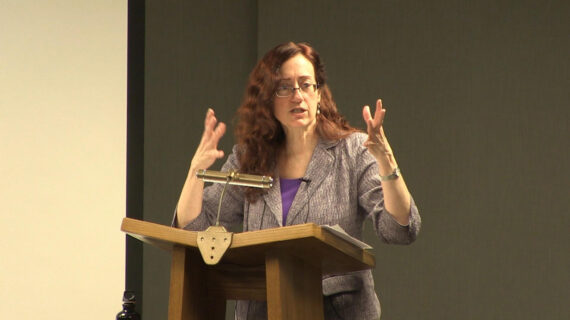
James L. Baughman, School of Journalism and Mass Communication, UW Madison. James Baughman joins University Place Presents host Norman Gilliland to discuss the history of television from 1948 to 1961.


Copy and Paste the Following Code to Embed this Video:
Same Time, Same Station
cc >>
Norman Gilliland
Welcome to University Place. I'm Norman Gilliland, Wisconsin Public Broadcasting. Television has been with us for 75 years or more, but in the 1950s, the people in control of programming on television came to a crossroads and the decisions they made then affect what we see on TV today. We're going to find out about those decisions and their repercussions from James L. Baughman, professor with the School of Journalism and Mass Communication at the University of Wisconsin-Madison. He's also the author of a book, "Same Time, Same Station," published by the Johns Hopkins University Press in 2007. Will, Jim, I think maybe we should've dressed in black and white for this. We're talking about television from 1948 to 1961 or so. >>
James Baughman
Yes, I almost wore a bow tie. >> But television, when we say it goes back 75 years or more, there was not a lot going on and yet it had been developed in its most basic form by the late '20s, early '30s? >> There were continued technical improvements both in telecasting and in reception, such that it really isn't until about '47, '48 that a TV set is reliable and affordable and the TV originations didn't melt the actors when they were on stage being shot. It really is in the very late '40s that the medium takes off. >> And this was largely the burden of local television producers. We didn't have a lot of network programming at this point. >> Well, the first stations originated in, with maybe one exception, in the largest cities. Initially there was a network connection. There were four networks in the late '40s and early '50s, but it was only those East Coast stations that were connected. The had to be connected in those days by what was called coaxial cable. And so Schenectady and New York were connected, but not Milwaukee. Milwaukee I don't think had a connection till '49 or something like that. >> So they had to produce a lot of local programming. They had not 24-hour schedules to fill, I assume. >> No, but they were very creative. Chicago probably has the highest reputation for creating some really original, interesting programs. Milwaukee telecast the Marquette homecoming dance. They were a little frantic to fill time, but there were some other innovations that stations worked. What they really wanted, though, was that network feed, because that assured them a product all evening, so that when, as my parents used to say,
they warmed up the set and come 8
00
or 7
00 Central, there would be a continuous stream of entertainment programming all evening. >> So the local programming was usually relegated to being what would be called primetime access programming that would, as you say, warm up the set? >> Off-hours. A lot of stations in the '50s, I've found the program logs because I have no life. A lot of these stations didn't
sign on until 4
00 in the afternoon or they signed on early and then they went off the air and you'd get a test signal. Again, in the very early going. So when they did their original programs they did shows that you just may be old enough to remember, which were kiddie shows that came on late afternoon, very early evening, that often had a male hosting, imitating Howdy Doody, the very popular NBC program or Captain Kangaroo on CBS beginning in the mid-'50s. In which this kind of weird man would be hosting a program with children and they'd often show clips of Laurel and Hardy or the Three Stooges or something, and then he'd come back to these kids. Chicago most famously had Bozo. And these shows were done live. My mother once, while shopping, had a Lucille Ball episode where she actually barged in on one of their shows, it was originated from a department store, not realizing it was on the air. >> The anecdotes must be legion of misfires during live television. >> Absolutely, they were. But I will say now that, and I think it's worth keeping in mind, people knew it was live, so they weren't surprised by screw-ups. Whereas today, people would get all angry about that and stuff. I remember my students years ago watching a recording of Paul Newman in "Bang the Drum Slowly." And there's a moment near the end where he flubs a line. It's not a bad flub, but he flubs a line. And I talked to my students about it afterwards, and they all said, "We knew when it was produced, it was produced live and that that was going to happen." There are episodes we know where obscenities were used on the air by accident, control room accident, and nobody complained. >> Nobody complained. >> At least twice. One involving, I believe, Roy Bridges. >> And there must have been the occasional wardrobe malfunction back then, too. >> Yes, we won't go there. Yes, that did happen. >> The fact that this programming in the early days came out of major markets, big cities... >> Primarily New York as the origination point. >> How did that affect the programming decisions? >> Well, it had a very New York flavor initially and there was a very similar, it was repeating a pattern from radio. Where radio originated in the '20s and '30s, New York was initially the production center of radio programs until about the mid-'30s. And you had the same thing in New York. As I have done, if you look at old Milton Berle scripts, Berle was the first TV star. >> We'll get to him in a minute. >> Texaco Star Theater. How many of his references are to New York, to Lindy's, to --. And if you're watching it, and I spent five years of my life in New York, my parents loved New York, but I grew up in Ohio. I'm able to get some of them, but not all of them. Just imagine when Berle begins to reach smaller cities and towns with that New York orientation, people sort of don't get it, they don't like New York. >> That raises another question, a couple of questions, actually. One is, how did the programmers then even know that people were getting the show? What kind of ratings did they have for TV? >> There were ratings services from the beginning. That is to say, '47, '48, there were ratings services. A lot of the evidence was anecdotal. If a program advertiser had a spot on, they would notice more traffic the next day and then they in turn would call headquarters and say, "We're getting a lot of foot traffic from that ad, people want to see that product." So that was one, there was more anecdotal evidence than network executives wanted to admit. But the ratings services were available. We have ratings certainly since 1950 as to what were the most popular shows. >> What would they have been at that point? >> Surprise. Milton Berle was far and away the most popular in the very late '40s and early '50s. He is eventually displaced by "I Love Lucy," a CBS situation comedy starring, of course, Lucille Ball and Desi Arnaz. But Berle's ratings in the late '40s were incredible. When he was on, I believe Tuesday nights, something like 60% of all sets were tuned to his program. He did get some competition eventually from Bishop Sheen, who had a half-hour devotional program. He was quite good, a Catholic bishop, but Berle's famous line was, "I expected to lose audience to Bishop Sheen. After all, he has better writers." ( both laugh ) >> Well, that's a good indicator that Milton Berle was fast on the draw anyway. >> When he wasn't plagiarizing jokes. >> When he wasn't plagiarizing jokes. And so, how were these shows monitored? Again, it's live, did the FCC come in after the fact and say, "You've got something on the air that shouldn't have been there"? >> Under broadcast regulations, the station is essentially liable for what is broadcast. In other words, Channel 4 in Milwaukee or Channel 27 in Madison, essentially is liable. It's not the networks and it's not the advertiser. However, the understanding always was, and again this predates television, was that if the networks aired something that was considered in bad taste, and that did occasionally happen, they were called on the carpet. They had to answer to the Federal Communications Commission, which did award a small number of stations to the networks. So what they could do was go to NBC and say, "We didn't like that sketch, we don't approve of it. And when your license is up for renewal, we're going to look into this." In fact, that rarely, if ever, happened, and you know, Norman, being a historian of radio, that there were several episodes in the late '30s, a famous one involving Mae West. >> Yes, indeed. >> It's still funny when you read it. >> The snake trap. >> The snake trap. But also a production of the "Desire Under the Elms," by Eugene O'Neill. So there was a lot of pre-censorship. We have the censorship records in Madison at the State Historical Society. And these are weekly memoranda from a brilliant man who was the censor for NBC. In which he would write a weekly report on who had misbehaved. Turned out this fellow, his name was --, had a somewhat radical past, but he was a very smart man, very nuanced. And a lot of his criticisms weren't involving sexual innuendo, but involved racial and ethnic stereotyping and he would complain about this. >> That became increasingly an issue as you get into the late '40s and early '50s. >> But he was very sensitive to that. The bottom line was, the networks were essentially liable. They were very careful, including women's costumes, not exposing, showing too much, and so forth. Because the networks, in turn, if the Federal Communications Commission wasn't too bossy, but Congress could get interested, the way they did when the Janet Jackson episode occurred at the Super Bowl, when too many of us were doing the dishes or whatever. Then Congress got involved. In some ways, Congress was the bigger player in the '50s than the commission. >> Today, TV networks are notorious for copying each other's successes. Was that the case in the '50s? >> Yes and no. There were really only two major networks through most of the '50s, NBC and CBS. ABC and Dumont, a network which ceased operations in 1955, were not able to compete for reasons that would require you to invite me back on the program. >> Okay. >> And it would be your least-watched program. But the bottom line was, CBS and NBC were the competitors. It was like the way the Big Ten used to be in football when it was just Michigan and Ohio State. And actually, there was some copying, but NBC and CBS actually had somewhat different programming philosophies. CBS was more oriented toward situation comedies. And NBC was more interested in specials, in special event programs. NBC did have an inventory of programs like "Dragnet," "Who Do You Trust?" Programs like that. But not to the extent that CBS did. >> Was NBC thinking more in terms still of the large city appeal, of the theatrical appeal that you find in New York, Chicago? >> I'm not sure they fully realize this. NBC's top managers, who were brilliant, thoughtful, very idealistic people, but they made a terrible mistake that mass communicators must never make. They confused themselves with the audience. And I'm really serious about that. They just assumed. Although Pat Weaver, the very innovative programmer at NBC did have a valid point. He said, if people have never seen Shakespeare produced, how do you know they won't like it? And he was very idealistic about culture. It wasn't that he was this elitist, so forth. But they really thought, they gambled that people after World War II would want broadcasting to be more ambitious than before World War II. They particularly disliked all those old sitcoms on the radio that I think you enjoy listening to. Weaver hated soap operas. He thought they were demeaning to women. >> Those were very popular back then, demeaning or not. >> Viewers need to understand. The old soap opera was a pretty wretched excuse for programming. It was not nearly as interesting as soap operas became over the course of the late 20th century. So there is that divide. And NBC gambled, and I mean gambled, that people would want more event programming as opposed to CBS, which was committed to weekly series, hence the title of my book, "Same Time, Same Station." >> Did these two networks, their decision makers, did they have a sense of rural, small town, versus urban audiences and how those tastes might diverge? >> Not really. ABC did, actually. The eventual head of ABC was a brilliant lawyer named Leonard Goldenson, and I recommend his memoir to you if you're ever interested. Goldenson had been in the movie distribution business. And he had a much better sense of the difference between small and large markets, because what happens over the course of the '50s is, as TV begins to reach smaller markets in the West, in northern Wisconsin, in the South, performers like Berle, opera, and so forth, the audiences for that kind of programming really begin to shrink. Live drama, audiences for that really begin to shrink. >> Well, let's look at some of the artists and do a little bit of free association here, Jim. >> All right, very good. >> Beginning with the one that we've already talked about. Uncle Milty. >> Uncle Milty. I've got a joke that would close this network. He was originally slated as one of what was to be rotating hosts on a program sponsored by Texaco. In June of 1948, he just took off. People were just again, set owners, which is a subset of Americans mainly living in big cities, not just New York, but in Washington and Los Angeles, just found Berle to be hilarious. >> Where did he come from? He didn't come out of radio, did he? >> Well, he had done some radio, and he'd done some Broadway, but not very successful. He memorably referred to one of his Broadway shows as "death with scenery." But Berle had really been an accomplished nightclub comic entertainer. And as you may know, Norm, nightclub productions in the '40s were pretty elaborate. You might have 300 people. >> Oh, they could get... >> We actually have film. If you watch some of these old chestnuts on TCM, they do some nightclub productions. Berle was raking it in in the '40s as the nightclub comic and emcee and was persuaded to do this Texaco gig, and it just took off. He was phenomenal. NBC actually delayed broadcasting their election coverage in 1948 to air Berle's show. >> How times have changed, but again, that was a little bit of a carryover from radio, too. The program had priority over news. >> Right, right. ( both laugh ) >> We looked at this and we thought, ooh, what's going on here? But after a while, it becomes a little clearer. >> Right. This is a live production. It was telecast live, they didn't have videotape in 1949, I believe it is, of a modern-dress version of "Julius Caesar." Produced by a brilliant early period producer named Tony Meyers. And I believe this is Brutus' funeral oration. It was one of those productions that people saw once and were talking about years later. >> This is the sort of thing that NBC then would... >> I believe that's CBS, actually. Tony Meyers was still with CBS at that point. Two of the most popular and admired comics in early television were Imogene Coca and Sid Caesar. And here you see them doing what I believe is a take-off of the Western "Shane." And I think they called it "Shame," which is why I almost tripped over my line. This program is called "Your Show of Shows," and whereas Berle's comedy was very broad, he was very brash and made a lot of enemies in show business, people who watched TV who were discriminating consumers of comedy thought that Coca and Caesar were much better and much funnier, and a smarter kind of comedy. They did one of "From Here to Eternity," the famous scene where the couple's making out on the beach. Of course, they managed to, while they're having this passionate embrace on the beach and the wave recedes, they're covered in seaweed and dead fish. Needless to say, Columbia Pictures wasn't very pleased with that. >> I can imagine, I can imagine. >> This is the "Honeymooners." Jackie Gleason, Audrey Meadows, Art Carney, and Art Carney's... actress wife. But anyway, this was originally a sketch on Gleason's variety show that they made a stand-alone series. Interestingly, it was recorded, but when it first aired it was not successful. It really became successful in syndication. >> We can talk a little bit later about other shows that really took off in syndication. >> The other example that's dear to me and a lot of guys my age is "Twilight Zone." >> Quite so, yeah. >> The show that, when the Sci-Fi Channel has the "Twilight Zone" retrospective, I disappear and my wife cannot find me. >> All 79 episodes or whatever. >> Yeah, "The hell with the lawn, dear." >> And this is a studio. >> Gleason, I think that's his bartender routine, he did that on his variety show in the '60s where he would sing and Frank Fontaine would come on. >> A set format with the bar motif. >> This I believe is Sid Caesar doing a sketch. A lot of their sketches involved take-off. This is, I believe, a satire of "Dragnet," the police drama, taking place in Moscow. With, I might say, fake commercials added for Russian cigarettes. Czar-size cigarettes. This was the great single programming triumph of Pat Weaver's time at NBC. That's Mary Martin in "Peter Pan" in March of 1955. NBC broadcast the Broadway production of the musical "Peter Pan," and she was playing Peter. And there you see her. It's interesting, when I was doing my book, I wanted that on the cover, and my editor made me put two other people on instead. >> We actually have a little bit of video of a later production featuring her from 1960, but it gives you some idea of the state of special effects and a sense of network entertainment. >> Just to finish one thought. One of the reasons this show was a success, and the ratings were phenomenal. Again, over a 60% share. And it looked for a moment that NBC was right, that Weaver was right, that if you produce something like this people will watch it, it will outdraw conventional sitcoms. The problem was, the product predictability couldn't be, for most of what NBC produced, was not nearly as memorable. >> Each one being so different from the other, it's hard to know which will hit and which will miss. >> Right. Whereas people sort of knew how funny Jack Benny was going to be. >> A consistent product there. >> And Benny himself famously remarked that he didn't want a great show, he just wanted a good show every week. >> Let's take a look at 1960s special effects and music and tastes with Mary Martin as "Peter Pan." >> Just think lovely, wonderful thoughts and up you go! I'M FLYING LOOK AT ME, WAY UP HIGH SUDDENLY HERE AM I I'M FLYING I'M FLYING I CAN SOAR, I CAN WEAVE AND WHAT'S MORE I'M NOT EVEN TRYING HIGH UP AND AS LIGHT AS I CAN BE I MUST BE A SIGHT LOVELY TO SEE I'M FLYING NOTHING WILL STOP ME NOW HIGHER STILL LOOK AT HOW I CAN ZOOM AROUND WAY ABOVE THE GROUND I'M FLYING >> There was also a 1954 version also? >> '55. That's a videotape of the '60 production virtually with the main characters in it. >> What did they do differently? >> I was afraid you were going to ask me that question. They did substitute some of the kids, because they were lapsing into early adulthood. But I think everything else is about the same, and I hope I'm right in saying that. Again, people about my age can remember, because it was re-broadcast somewhat frequently in the '60s. >> She become synonymous with Peter Pan. >> And we thought it was really neat. I think if we showed this to kids today, they're sort of puzzled by the obvious harnesses and everything else, but again in 1960 it was really incredible to see what we knew to be a live production where all these crazy effects are going on. >> TV seemed to be a particularly fertile ground for another concept that had been developed a little bit before that time in radio, and that is the sort of, not anti-hero even, but the little guy. >> Yeah, yeah. And one of the more famous ones was Mr. Peepers, a high school science teacher. NBC I think made an interesting decision that they would film it live. Imagine a half-hour sitcom that was filmed live before a studio audience in New York. It's one of those things, if you could have a TV history do-over, and you filmed it in Los Angeles the way "I Love Lucy" was filmed, very carefully. Whether it wouldn't have had a longer shelf life, whether it might not have had a bigger place in TV history. As it happened, a lot of people remember it, but they don't... >> That has to be another one of the big decisions that was made back in the '50s in particular with the technology being what it was. Do we go for something that's good for today and that we can produce pretty quickly? Or do we go for something that might have, as you say, a great shelf life? >> The very early '50s, it was not clear that there would be a large market for filmed, syndicated product. So the easy pitch to make when you were going to do a series was, we'll do the Norman Show, we'll film it live because we're not sure there's going to be residual value in the re-runs. When "I Love Lucy" was being negotiated, Desi Arnaz and Lucille Ball were negotiating with CBS, CBS originally wanted to produce it live. They didn't want to film it. Arnaz insisted on filming it, but his assumption was that they would sell the re-runs to overseas markets. It didn't occur to them that there would be a domestic market. It was thought, by the way, this was one of the surprises. People were surprised how often people would watch the same episodes over and over again. >> The reruns. That's a concept, again, that you did not have in the radio precedent. It was live, it was gone. >> You did have some shows recorded in the late '40s. >> But not re-run, typically they wouldn't produce them if they wanted to re-run something like a comedy workshop. >> The sort of sentimental argument was that people wanted the sensation of simultaneous transmission. That a woman in Idaho would be watching a program that was produced at the same time. >> Still an issue now, yeah. >> With the Olympics. >> Metropolitan Opera. >> Right. But there was another, more, shall we say, not sinister, but cynical reason why networks did this. They were afraid if too much of their schedule was filmed, it would negate the value of the networks. And third parties would step in. There was great interest with the Los Angeles Times, for example, in forming a film network to compete. They tried to strike a deal, actually, with some people at the Milwaukee Journal, Chicago Tribune, that they would offer, in effect, a film network. >> Kind of way ahead of Ted Turner, huh? >> Right. They would, what they used to say, bicycle the films to different affiliates. And NBC and CBS were very worried about this, that this was a potential competitor for them. >> So Mr. Peepers was done live and he created, from the get-go, this persona. >> Yes. You know, the downtrodden, but still very funny and very likeable science teacher. >> Mr. Peepers. >> Mr. Peepers. ( inaudible ) >> I'm the new general science teacher. >> Go in the main door of the main building. >> Thank you very much. What's that you're building there? >> A new addition to the school. >> It's very nice. Well, I have to go now. Is that the main entrance over there? >> That's right, pal! ( hammering ) >> Hey, hey, you nailed my hat to the wall. ( sawing ) Hey, that's my suitcase there. >> That clip, it wasn't film, obviously, was it kinescope? >> They called it kinescope. >> It looked better than a usual kinescope. >> Yeah, it was recorded off, I believe off of a receiver, but it still wasn't very high quality. And so you didn't have the same syndication possibilities. >> I think it was filmed with a 16-mm film. >> Well, "I Love Lucy" was 35-mm. >> 35, which was movie house quality. >> And Ed Murrow's "See It Now" was 35-mm. >> There were some other shows that did that, too, for example, I think the "Cisco Kid" was originally filmed in color and then it was syndicated for television. And "Hopalong Cassidy," Bill Boyd actually bought the syndication rights to his old short films and ran them on TV for years. >> And made quite a nice income from it. >> There was good money in syndication, as it turned out. >> And Boyd's an interesting figure, because he was getting old and his career was pretty much washed up. And you're right, he went out and got, not all of them, but virtually all of his old "Hopalong Cassidy" films from the '30s and then offered them to stations. So in the very early going, Hoppy was quite popular. >> Now we come to another guy who was sort of popular vicariously. >> Right, right. Originally this show was called "Toast of the Town," and the host was a newspaper gossip columnist, a show business columnist, I guess you could say, Ed Sullivan. And his original sponsor was Lincoln Mercury, and I believe there he's surrounded by the dancers on his show. >> The Mercurettes, or whatever they were called. >> Yeah. This was broadcast on CBS on Sunday nights. He had a tremendous capacity for recruiting top talent to appear on the show. At virtually no fee. >> And he never upstaged them, that's for sure. He was almost totally without visible personality. >> Yeah. Competitors and people like Fred Allen couldn't stand Sullivan. They thought, you know, Allen had a great put-down of Sullivan, just so bereft of talent himself. But he worked really hard on the program. He held it together for a long time. CBS didn't invest very much in the show, to the point where Sullivan was covering some of the costs out of his own pocket. >> So I assume that he was picking the acts. >> Absolutely. >> Had a very keen eye for some of those acts. >> And to his credit, Sullivan brought a lot of African American performers on his show at a time when they didn't appear elsewhere on television. >> And we get a sense here of some of the diversity of those acts, especially in the later Sullivan years. Famous story about the Beatles, who were offered very early on, this would've been '63, late '63. They were offered the choice of doing some live show in New York or else being on the Sullivan show, which would have paid maybe 10% as much. >> Right. >> And guess which they picked. And the rest, as they say, is history. >> Right. One of the few times at our house we watched it. We were normally a "Bonanza" family but my brother won. >> Tremendously successful, Ed Sullivan. And often imitated, too. >> Yeah, "Really big show." >> That's right. He had certain mannerisms... >> Trouble is, you master that imitation and then you do it in class and people don't understand who you're imitating. >> It's been too long. >> Yeah. >> All right, we've already talked about it. It's hard not to, kind of, open the gate a little bit for this famous comedienne, there with Vivian Vance. >> Right, right, who was a very accomplished actress in her own right. Lucille Ball, who is the one wearing the headgear, without question was not only the most popular program in the 1950s, but the one that will, as I like to say, it set the rules for television programming for arguably the next 30 years. If you want a successful TV program, you want it on every week, and ideally you want it filmed, or in time videotaped so it can be re-run. Again, initially, CBS didn't re-run episodes of "I Love Lucy" in primetime. It was only in '55 or '56 that they began to do so, but it is without question the single most popular program. And I hear younger people in the business talk about "Seinfeld" and how popular it was. There's no comparison to a show like "I Love Lucy," or even other conventional '50s programs like Groucho Marx's quiz show. >> You can see where it would have had a much broader appeal than many of the things that are on today, in terms of people in the country, people in the city. There were no inside references to downtown New York, although it was set in New York. And they had this wonderful combination of a first-generation American couple with a pretty wacky well-established American and the constant bickering between them. >> Originally there was objection to Arnaz playing her husband, even though he was her husband, because he was Cuban American, a Cuban native. But they won the day, they were able to do that. >> You have to really emphasize, though, not just the fact that it was syndicated and it was filmed instead of done live and so forth. But it had a great ensemble cast and fantastic writing. And also, they were very well aware of the medium, weren't they? The most visual gags, constantly. Things that you would never get on radio because there would be not necessarily any audio to go with it. >> And you know, Norman, that a lot of radio performers were reluctant to move to television because it was so much more work. It was much more labor intensive. Ball and Arnaz deserve enormous credit for not just doing the show, but doing it well. They both worked very hard to make the gags work. They didn't spare expense in terms of the camera number. They used three cameras. They did have a real audience while performing. And again, they were very professional about it. There were other shows at that time, similar ideas, similar concepts, that just weren't as well executed, and you know, that happened in radio. >> Even some of the later things that Lucille Ball did. She had some other TV shows that didn't have the pop and sparkle that they managed to accomplish with "I Love Lucy." >> There was a physicality to her, which she could still do. She actually spent a lot of time with Buster Keaton in some of the old silent films, and learned a lot of the visual gags. You're right. I give her a pass on that, I think it's hard to sustain particularly that kind of physical humor as you get older. I think we're already seeing this with some film actors who really ought to start thinking about alternative lines of work, because their humor is so physical that they just can't do it anymore. I won't mention Jim Carrey or anyone like that, but... It's hard. The shtick that works when you're 40 or 30 doesn't work when you're 50. >> It's hard to pull off. If we go back to the 1950s and those decisions that were made back then, what do you see as the fruits of that split back there between theater programming and what we would call more popular programming? >> Well, I think that the more popular, the more formula-driven programming prevails. But even in the '60s all of the networks, even ABC in 1967, is doing some theatrical influenced programming. One thing, whether it was because of Congress, whether it was because of, and this may surprise you, TV critics at the New York Times and the New York Herald Tribune, the networks were much more self-conscious about what they produced. They weren't just worried about a dress slipping down a little bit too much. They were self-conscious about their cultural role in American society. They were self-conscious about their information role. In ways that I think speak well. Again, it wasn't always because they were fraidy cats. I think people at CBS tended to be more fraidy cats, people at NBC were sort of imperial, British and India or something, that mentality. But as I revisited this era, I was impressed by the idealism. Not just the idealism that you find among some of the pioneers of TV news, like in Murrow, who was clearly to be admired, but also in the people who were producing shows. Even when they failed, the idea was, and even though that's still true in show business, and I might say, in academics, you try to write a paper or a book that doesn't work or that no one but your family reads. I'm impressed by the idealism that I find in these people. >> And as far as the live component of television? >> Videotape is the key here. Videotape and the fact that most performers, particularly those who have spent any time in Hollywood, don't want to perform live. Someone like Fred Astaire. Does not want to perform live. It's not that he can't, but he wants to get it right. >> And he realized that in the course of a five, six-minute, very complicated routine, one misstep and it's not right. >> I spent some time reading the Los Angeles papers, comments by people like Donald O'Connor, who some of you dimly remember, another dancer, and just adamant that he didn't want to perform live. It wasn't that he was a scaredy cat, some were. Clark Gable, I think I can say this without fear of retribution, did not want to perform live. He was invited to do a program, a production, I think of "Men in White" at NBC. Rosalind Russell didn't want to perform live. Now, as you're getting older, you're worried about how you're going to look. >> You didn't have those close-ups, too, you wouldn't have to worry about in theater. >> Right. And women in particular were sensitive to this as they got older. But, what do I know, I keep seeing my grandfather in the mirror. >> TV was not the most flattering medium for a lot of performers, was it? In terms of just the sheer, the way they looked in the '50s. >> Right. And again, as you got older, people got more sensitive to that. Hollywood allowed you the luxury, say, someone like Joan Crawford, of being filmed in just such a way to hide age. Joan Crawford, I guess, was very short, am I right? She was like two feet tall or something. ( both laugh ) >> Those cameras are always looking down. >> Exactly. But Hollywood, you had two and a half days to film, for instance, a sitcom. And you didn't want to do multiple takes if you didn't have to. And someone like Ronald Coleman, the film actor who had had a successful radio show. >> Very, yeah. >> He did that for television, it shortened his life because it was so much more work, and he had such a hectic schedule. >> He was doing it late in life, where again, those close ups would be less forgiving. >> Not that late, I'm not sure he was that old. A lot of film stars will say this in their memoirs, which are interesting and they're very candid about this. "I could memorize my lines, if I flubbed a line, we'd go back and re-do it." Boy, you can't do that with TV. >> So live television really becomes, other than sports, but in terms of a dramatic context, really becomes a novelty, doesn't it? >> And the other thing that happens, which we've sort of talked about, I think audience expectation changes. I think earlier in the 20th century the sensation of seeing a live performance held more appeal than it did later in the 20th century. >> Really, now what do you think caused that? >> I think because more of us saw live performance, we went to the theater, we went to a nightclub or something, I think film became a more common mode of entertainment, which is why, if there was a glitch in the late 20th century, some young 'un would complain about that and go, "There's a glitch, how shameful." Whereas earlier in the century, I think people would have said, "There's a glitch. That stuff happens." >> There's a whole hobby sort of industry about finding continuity errors in films and television shows. >> Again, if you think of that "Peter Pan" clip we looked at, there's a moment when Mary Martin looks like Lon Chaney in "The Hunchback of Notre Dame," because you can sort of see her harness pulling up her back. Now, I would argue, consumers of video now are picking that up, whereas they weren't as sensitive to that in 1960 or 1955. I can remember watching as a kid the old "Flash Gordon" serials, which were being rebroadcast. They were filmed in the '30s starring... >> Well... >> Buster Crabbe. >> Okay. >> And the special effects, the spaceships on that, were just... you were falling down laughing. But I have a feeling my dad and his brothers... >> You look through it to what was the exciting part of it. Right. Well, the only exception I can think of right now in terms of live dramatic television, and again, it was a novelty, this was some years ago now, "ER" did a special live broadcast. It was really interesting to watch it because the main difficulty I saw was getting the lighting right. >> I did not see that, I read about it. I did see the live production of "Fail Safe," remember George Clooney did that? >> Right. >> What was interesting, there weren't any screw-ups that I remember, and that's a very complicated plot to do, but they filmed it live. >> Well, all of this is kind of the legacy, isn't it, of those decisions made back by network executives in the '50s. What kind of programming do we do? Do we do it live, do we do it videoed? Do we film it? >> And how culturally ambitious should we be? I think that's another difference. I don't fault the medium or the networks for moving towards the more standardized model that they did. What I'm sorry about is, and maybe cable's rescued us, I'm not so sure, is that it's so lacking in cultural ambition today, that it's just cynical. There are shows on the networks today that they wouldn't have dared air 50 years ago. I don't think it's because they were worried about Grandma, but they just would have been embarrassed. They would say, this isn't worth airing. I won't name the shows, by the way. >> All right, let's put this one on the line. How do you see the role of public television playing into that whole question as to cultural ambition? >> Well, I think the Public Broadcasting Act of 1967 is one of the least understood documents in the history of broadcasting. I think the networks very quietly wanted PBS to become PBS because they felt, they never said this explicitly, I tried to nail the guy who was then president of CBS to admit this. In the long run, PBS took pressure off the networks. >> To do the cultural programming. >> Exactly, which is why the great cultural critic Gilbert Seldes was among those who opposed, or was in educational television in the '50s, and said, you're going to drain away and take pressure away from networks and they'll feel no obligation to do more ambitious programming. I can't prove that. I've argued it in a book, but I can't really prove it, and no one's read the book. ( Gilliland laughs ) >> I have! >> This is another one. Many have read this. All right, some have read this. But no one talks about that, but I think that was part of the problem. Public radio's another issue, a very interesting one. And then cable will eventually take a lot of the pressure. >> Do re-makes, it's a whole new ballgame from what it was 50 years ago. >> Yeah, if you've got a young relative and you tell them that in 1952 the networks broadcast gavel-to-gavel coverage of both national party conventions, they'd ask when you started doing recreational drugs. They couldn't imagine a commercial network. But the networks did that, they gradually pulled away from that obligation, really in the '70s, but the ultimate justification is, "We don't need to because cable will and CSPAN will. And we're only going to broadcast an hour a night." So there was that really kind of sad moment, six years ago, where John Kerry is trying to give his acceptance speech and he's worried they're going to cut him off, there's going to be some guy with a hook and vaudeville. And I just thought, "I wouldn't let that bother me at all, I'd just go on and on, maybe tell some jokes, do some imitations." >> Sounds good to me. >> Yeah, there you go. >> My guest has been James L. Baughman, he's the author of "Same Time, Same Station," also a professor in the School of Journalism and Mass Communication at the University of Wisconsin-Madison. Always a pleasure. >> Thank you, Norman. >> Thank you for joining us for this edition of University Place. University Place is made possible in part by the Corperation for Public Broadcasting.
Search University Place Episodes
Related Stories from PBS Wisconsin's Blog







Donate to sign up. Activate and sign in to Passport. It's that easy to help PBS Wisconsin serve your community through media that educates, inspires, and entertains.
Make your membership gift today
Only for new users: Activate Passport using your code or email address
Already a member?
Look up my account
Need some help? Go to FAQ or visit PBS Passport Help
Need help accessing PBS Wisconsin anywhere?

Online Access | Platform & Device Access | Cable or Satellite Access | Over-The-Air Access
Visit Access Guide
Need help accessing PBS Wisconsin anywhere?
Visit Our
Live TV Access Guide
Online AccessPlatform & Device Access
Cable or Satellite Access
Over-The-Air Access
Visit Access Guide




Follow Us