

 Passport






The Role of the Arts in Economic Development
01/06/16 | 55m 5s | Rating: TV-G
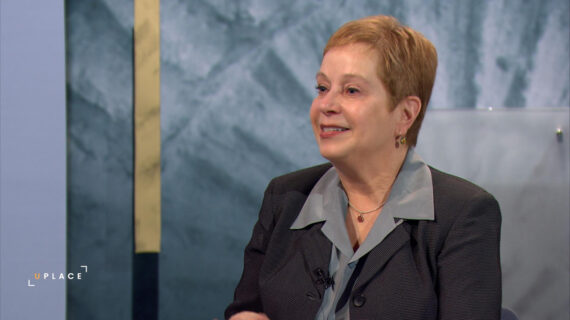
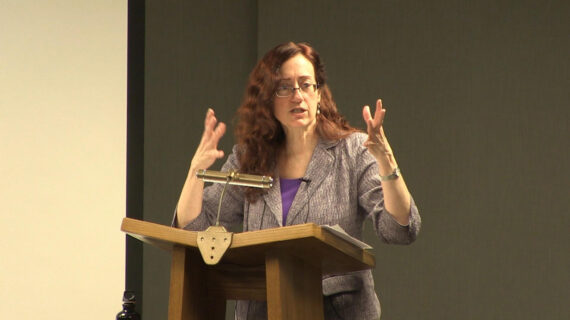
Anne Katz, Executive Director of Arts Wisconsin, shares her journey as an advocate for the arts. Katz focuses on the mission, vision and purpose of Arts Wisconsin, an organization that focuses on making the arts the center of life and learning throughout the state.


Copy and Paste the Following Code to Embed this Video:
The Role of the Arts in Economic Development
And good morning. And welcome to Vilas Vision, Vilas Vision Leadership, here in Vilas County. We're in Phelps, Wisconsin, and, as our first speaker today, I want to introduce Ms. Anne Katz, Executive Director of Arts Wisconsin. I know Anne grew up in the New York City area and went to college at Brandeis University, which is in Boston. So the first question I asked her is, are you a Yankees fan or a Red Sox fan? And she surprised me with saying she was a Dodgers fan. So we compromised right there. -
Voiceover
I don't know if these people know that the Dodgers used to be in New York. The Dodgers, okay, that's right. They were the Brooklyn Dodgers for a long time. Not the LA Dodgers. But Anne has been in Wisconsin for 31 years, and is now, of course, the Executive Director of Arts Wisconsin. Please help me give a warm Vilas County welcome to Anne Katz. (applause) Thank you, Chris. All children are artists and learn through the arts and express themselves in creative ways. And when I said it gets beaten out of us, I was being facetious, but really it's true. Then we start getting into societal roles, and all the other things that happen as you grow up. But we still are artists. I mean, most of the people that I deal with are not, I keep going like this, professional artists necessarily. They don't necessarily make their living as artists. Some people do. But 99% of the people out there that make art don't necessarily make money, but they make it because they can't help themselves. My journey in life has been convoluted and unplanned. And so, leadership has been learned, I don't know, because I kept having to make decisions about things that I didn't really have to think about before. So, Chris said that I'm from New York. I grew up in the, I was born in New York City. I grew up in the suburbs. I spent a few years living in New York after college, trying to be an actress because I was going to be a big Broadway star. That was my goal in life. I didn't really have any other clue about what to do, nor did I have any skills to do anything else, really. I always say that I ended up in, so, I lived in New York trying to be an actress. How many of you have been to New York? New York is really nice now. It's cleaner. It's, people are more polite. People actually smile at each other on the streets. It's very gentrified and very expensive, but when I was growing up, in my growing up years in the '70s and '80s, it was disgusting and dirty and horrible and dangerous and awful. And I, as a young person, not only did I not really have a clue about how to make my way in life, I knew I didn't want to live in that environment. I just couldn't. So I kind of looked, I worked in the arts world. I never waited tables or anything like that, but I worked for nonprofit arts organizations, and I thought, well, and I was interested in theater. I've always been a theater person. I could work in a theater. So I kept applying to theaters for jobs at theaters outside of New York, even though I had been to California. That's kind of where I'd been. And to Pennsylvania. That's about it. And eventually I got a job. But I was clueless. I didn't really know what to do with myself. And so I really should have just joined the Peace Corps. That's what I should have done. Then I would have had adventures, at least while I was trying to figure out what I was going to do with myself. But, oh well. Eventually I got a job working for Madison Repertory Theater, which used to be. It has since gone out of business. But it was the professional theater in Madison. And I was hired as the director of development, and I thought, okay, I'm going to move to Wisconsin, which, okay, not only did I not know anything about Wisconsin, I didn't care. I mean, it wasn't even on my radar screen. My father had had, no one in my family had ever thought about the Midwest. Sorry. (laughter) My father had had a cousin who had moved to Iowa, to Des Moines, in the '50s, and my father always said, "And then we never heard from him again." It just, I mean, the Midwest was not a place that I gave any thought to. My sister went to school in Ohio, but that was about as far as I went. I got this job. I thought, okay, I'm just going to do that. I packed up and moved to Wisconsin and started to figure out who I was and what I could do, given that I didn't have really any skills. I only lasted two years at that job. That's a long story. But by that time, and I was ready to do something else and leave Wisconsin, maybe, but, you know, by that time there was this man who was from South Dakota. (laughter) Amazingly. So, 31 years later I didn't plan to live in Wisconsin. I didn't plan to marry a man from South Dakota. We have lived in three different houses on the same block in Madison. It's a really nice neighborhood. In the last 31 years. And I'm doing a job that I have basically made up because Arts Wisconsin, and I will get to that in a minute, Arts Wisconsin is a service organization. We're not an organization that presents theater or visual art exhibits or does some kind of arts program. I talk about the arts. I do research about the arts. I gather information about the arts. I spend a lot of time on my computer, you know, trying to get people's attention, and speaking like this. And I'm the first and only director that the organization has had, and I will get into that in a minute. So I have kind of made it up as I've gone along. And, amazingly, it's all worked out pretty well. I'm quite happy that I ended up in Wisconsin. I, you know, love my husband. I love my neighborhood, obviously, and I love my work because I've discovered that the thing that I seem to be good at is being a leader in this thing called community arts development, community cultural development. The fact that I'm standing in Phelps, Wisconsin, talking about economic development in the arts is so wonderful I can hardly stand it, because I've been talking about the creative economy, and we'll talk about that in a minute, since the last century. I use that phrase a lot. I've been talking about economic development in the arts for at least 15 years. More than that. But it's only now, in the last few years, now that we know we're not in a recession anymore, we're in a new economy, and the whole role of creativity is more than important than ever, whether you're in Phelps, or whether you're in Milwaukee, the times have caught up with the message. And so I think even though there are a lot of stresses in all of our lives right now, I think it's a really exciting time for Wisconsin, and I think there's a huge amount of opportunity. And the Northwoods are kind of a hotbed of economic development through the arts and creativity. So let me talk about that for a minute. Yeah. So, Arts Wisconsin, now I'll get to my organization, builds on Wisconsin's long and proud tradition of the arts happening at the local level. So we've always been a state where we have world class institutions of all sizes in all different kinds of communities. So we've got the Milwaukee Symphony. Everybody knows about that. We've also got the Land O' Lake Artisans in Land O' Lakes, and we've also go all sorts of incredibly creative artists working in their studios in the middle of the woods and in inner city wherever and around the state. You know, this has, I'll go to this slide first. This has to do with the Wisconsin Idea. I'm a big fan of the Wisconsin Idea. You all know what the Wisconsin Idea is, right? Don't be afraid to say you don't. Okay, in case you don't, the Wisconsin Idea is the mindset that the borders of the university are the borders of the state. And you may have heard of this last year because the governor and his budget, whoops. The governor and his budget kind of tried to get rid of the Wisconsin Idea. But we won't talk about that. It came up, it was brought into being more than 100 years ago when the governor of the state and the chancellor of the university in Madison said we have this wonderful university and we need to make its resources available to everybody in the state. And so that's been a great mindset in Wisconsin for over 100 years. And it's all about sharing ideas. And so this is a plaque that's somewhere on campus in Madison. I don't even know where it is. But it sort of has the, it's the philosophy that guides Wisconsin Public Television, Wisconsin Public Radio, and the University System, and really it's been a, even though it's not something that people talk about, I was glad that people were talking about it last year because it deserves to be recognized. It's this mindset that has really guided life in Wisconsin for a long time. So, we build on that tradition because the arts have always been a huge part of that. And the School of the Arts in Rhinelander, which unfortunately is now no longer, was founded sort of based on that principle of people being involved in the arts, and that people in every corner of the state, whether you lived in the city or in the countryside, could be involved in the arts in some way. And so there was a professor at the university in the mid part of the last century named Robert Gard, who ran something called the Office of Community Arts Development, which was based in the ag school, not in the arts school, which I've always loved. I love that. And he went around the state helping farmers write poetry and starting community choirs and putting on plays in cornfields and things like that. And so that's kind of how Wisconsin is, which is one of the things I really love about it. So we were founded in the early '90s, sort of based on that philosophy, that the arts are for everyone everywhere, that we should do our best to try to make sure that people have access to the arts, and that the arts are recognized for their inherent good and for their benefits to the economy, education, and quality of life. And so we do advocacy service and development. Again, I basically, I work on my computer. I talk on the phone, and I answer emails, and I drive around the state. That's what I do. But we have, we do everything from lobbying the legislature, to helping artists figure out how to make their living as artists. On Friday, Debbie and Wendy are going off to Amery, Wisconsin, to be part of one of our programs called the Rural Arts Management Institute, which is a very small group of people that are kind of a leadership learning community, over six months, and learning about organizational management and fundraising and marketing and all the things you need to be in business in the arts in a community-minded sort of way. So we do workshops. We do conferences. If you want to know something about the arts in Wisconsin, I can probably tell you. We do research. We gather information. As I said, we sort of look at global trends and figure out how that relates to life on the ground in Wisconsin and what it means in terms of the arts being part of that. I have been doing this job, again I'm the first and only director, I've been doing this job for 20 years. I have pretty much been everywhere in the state. In fact, I just said to Celeste, "Wasn't there a building on the corner where the lake is?" Because I remember the last time I was in Phelps, there was a building there. And so she told me that there's going to be a grocery store there eventually. But I sometimes forget that most people don't know Wisconsin as well as I do because when someone says, from Milwaukee, believe me, especially in Milwaukee, if you asked people where Phelps, Wisconsin was, they'd say, "What?" But I can say that I do know, and I've been here more than once. And so I get to travel around the state and, again, facilitate planning sessions and talk to economic development people and work on arts education and sort of help people realize what their calling is or what their organization's mission is and try to do something with that. So it is really fun. I mean, as I said, it's very stressful. It's overwhelming. I work all the time. But it's kind of what I was supposed to be doing, even though I had no idea that this kind of job existed when I was wanting to be a big Broadway star in New York. So, if you want to know where the best pie and ice cream is in the state, I can tell you, because, of course, local food, local art, it's all connected. We work on big ideas. So these are some of the logos we've had over the years. In fact, I have magnets that say "The arts matter" for you before we all leave. But we talk about creativity for all. We talk about the arts creating everything from jobs to life to inspiration to possibility and the arts are not a frill. So, you know, those are some of the buttons and pins and posters we've had over the years. I've got a lot of T-shirts, if anybody wants them. So let me just talk about the 21st century economy. And, as I said, I do not have a graduate degree in economic development. I was a theater major. I knew nothing about economic development when I started this job 20 years ago, and, believe me, I still don't. I think that's kind of how it works these days. I think all of us are trying to figure out what that means. But I've learned over the years about what it means to revitalize a community and how people work together. I've learned a huge amount about human nature. I actually wish I had a degree in psychology so I could figure out why people do the things they do. And, for the most part, people do things. People are well meaning when they do things, but they do things from their points of view. And so they have to kind of... It's hard for us sometimes to figure out what's better, what's best for all of us and not just me. So, I talk a lot about the economy, because in this moment in time in our history, and I love history, it's an incredibly interesting moment because the old economy, which means the manufacturing and agricultural economy that Wisconsin based its livelihood on, for the last 100 or 150 years, is sort of receding in the background. It's going. It's leaving us. Everybody wanted to buy cheap things in China. And so that's why Walmart came about, and that's why our downtowns have been decimated, etc, etc, etc. That's why there are no jobs. But, in general, America was known for making things up until very recently. We were leading the world in making things. We made cars. We made widgets. We made paper. We made all sorts of things. And Wisconsin was a leader in that manufacturing sector. And manufacturing will still be in this state and this country. It's not like it's going away completely But even manufacturing has to be more nimble, more innovative, and more creative. And so, in southern Wisconsin, what I often say is the way you know that the economy has changed forever is that GM is not coming back to Janesville. GM was in Janesville for 85 years, and everybody worked at the plant. And you could get a job that supported your family and you could have a nice house and you could have a little vacation every once in a while. And that sort of kept the community going for quite a long time. And nobody ever thought that GM would leave Janesville, and then one day they did. And now Janesville, like thousands of other Wisconsin communities, has to figure out what it's going to do next. The example I can use now from my own town, is now Oscar Mayer is leaving Madison. Who ever thought that would happen? So that's a huge shock, but, you know, people aren't eating as much bologna and hot dogs now as they used to, and so there's less demand. So that huge factory, which is about a mile from my house, is going to be empty. And so, what's Madison going to do about that? The papermaking industry is not as big in Wisconsin as it was. It's still, there are still paper mills, but they're not the way they were, and they're owned by corporations in Finland and Germany anyway. And that's actually a huge part of the sort of change that, a company like Oscar Mayer was very rooted in Madison. When I worked at the old Art Center, before we had the Overture Center, the big theater was called the Oscar Mayer Theater, because Oscar Mayer had given most of the money for the theater so they named it after them. You know, any company was... Companies were, for the most part, good corporate citizens. They supported fairs and festivals and things for kids in their communities. And not just in Wisconsin but over time. The paper mill in Wisconsin Rapids is owned by a company in Finland or Germany. I can't even remember where anymore. Kimberly-Clark in Appleton is owned by something in Atlanta. So that corporatehood, that corporate community fellowship is going away. So our manufacturing economy is there, and we're holding onto it for dear life, because humans don't like change. They think they do, but they really don't. The new economy is here, and the new economy is... I don't even know if it says that. But the new economy is creative, innovative, imaginative, and entrepreneurial. Most of the businesses in this country are small businesses, which is defined by businesses under either 500 or 50. But most businesses, small businesses, in a place like the Northwoods would be one or two people, or people working in their basements having their own companies. And so that's the new economy. And right now we're right here. We are standing right here because our systems are built on the old economy. The state department of, the Wisconsin Economic Development Corporation gives out grants to companies for building factories in their communities. They give out money to clean up brown fields from industrial pollution. They have really no money for creative economy development, but we're working on that, which I'll talk about in a minute. There is very little money out there, in fact there's really not any money out there, for creative economy development. There's money to build factories and get factory jobs. That's kind of how our system works in this country. I heard an economist on Public Radio say that the US economy seems to reinvent itself every 60 years ago, 60 years or so. And end of the war to 2008, that's about 60 years. So what we're living right now is this period before the new economy really takes over, using the systems that we built with the old economy. So it's really interesting. I mean, it's driving us all crazy, but it's really interesting. And so, what you're seeing is that the systems are still trying to generate businesses based on that old economy when people on the ground, you people and these communities in the Northwoods, are doing the work to build the new economy. So, again, this is why I'm really excited by my job, because I go around the state, and I see amazing things happening. The fact that Eagle River, the snowmobiling capital of the world, has two art centers now, the fact that there's an accelerator in Phelps, the fact that there's a wonderful arts center and program in Land O' Lakes, there are art centers in Minocqua and Boulder Junction and Manitowish Waters have all sorts of arts, and Three Lakes not only has an arts center, but they've got this fab lab at the high school, which is this totally high tech 3-D thing. I don't even know what it is, but it's one of the only ones in the country. But it's a Google technology-- (indistinct conversation) Have you, It does? Oh, I'm so sorry. I didn't know that. I thought that just Three Lakes did. Okay, see? The fact that there are two fab labs in this little corner of Wisconsin, I mean, that's amazing. That shows how the world is changing and that shows that even though we don't really know what to call it, and I will talk about that in a minute, we don't really know what to call it, we don't really have the systems to support it yet, we don't know where the money is going to come from, nobody really knows about it, and everybody says, "Well, why would we do that, "we've never done that before," it's happening. And so what we're trying to do is sort of get people's attention and let them know that it's happening. And, actually, one of the pieces of paper I gave you was 10 reasons to invest in Wisconsin creative economy. And so it has, I'll go through some of this. But it has facts and figures about how this change is happening. And it's happening everywhere. As I said, I get to go everywhere in the state, and it is happening as much in the Northwoods as it is happening in Madison and Milwaukee. Different scale, but it's happening just as much. And I think it's actually even more important in our rural communities because rural people, to make a generalization, have always been extremely creative, have never really had any resources, and have always kind of, for the most part, worked together because you have to, because that's how life is a little bit more than in the city. So, we talk a lot about arts and creativity in education because we have to train our kids to be workers and productive members of society in the 21st century. Problem solving, working as a team, working independently and coming up with ideas, all of those are skills that the arts teach and involvement in the arts teaches. And there's tons of research about that. So we talk a lot about arts education being imperative for a 21st century education, which is why it's cool that you've got the fab lab. And as budgets get tighter and tighter, there's less and less arts education in the schools. And the whole issue of public schools being one of the only places where a lot of kids can get involvement in the arts is a big issue for us, because if they cut the strings program out of my kid's school, as a middle class person, I'm probably going to get my kid private strings lessons, which is great for my kid. But what about the kids whose parents can't afford it or won't do it or whatever? So arts education in public schools is a huge issue for us. We did a survey of sort of the state of arts education in Wisconsin a few years ago. Kind of a very baseline thing. And we found that the rate of participation in arts programs was actually higher in rural areas in Wisconsin than in urban areas. Probably mainly because most of everything in a rural community happens in a school. And so, you know, kids are involved in every activity, and there's more participation. So, this is part of what makes it an interesting time. Trying to deal with these global forces on the local level when we're dealing with budgets and lack of opportunities, not enough workers, etc, etc, etc. All of this goes into the creative economy. Right now we, Wisconsin does not do a lot with the creative economy, and I will talk about that in a minute. But other states are roaring past us. Not just Minnesota, which gives a huge amount of money to the arts. Oklahoma calls itself the state of creativity. Florida has a creative industries council. Colorado has a creative industries council. Louisiana has pretty much based its recovery from Katrina on music and food and history in New Orleans. So, Minnesota has a program where a portion of the sales tax is given to support conservation, clean water, and the arts, which means that Minnesota gives $6.36 per capita to arts programs, and we give 14 cents per capita to arts programs. So that's another thing we're really working on. What we say is that Wisconsin is as creative as Minnesota or any of those other places, and it should be known. So, you know, we're definitely working on that. But all of these factors go into the creative economy. And trying to make sense of them is quite a challenge. I talk about the arts as an industry. It's not only that people are involved in the arts, because it's a stress reliever, but it is an industry where people make their living, pay taxes, own homes, send their kids to school, etc, etc. Someone who was an artist working in their basement is a self-employed entrepreneur and a small business owner. So it's an industry that's locally based. As you know, especially in this area, cultural tourism is a huge part of the tourism industry. So people want to live and play in communities where there's stuff to do. So the fact that, again, I'm not picking on Eagle River, it's just such a great example, the fact that Eagle River has two arts centers means that you can snowmobile and you can go to the art center. You can come up to the Northwoods and go biking or whatever and go to do art classes at LOLA. Things like that. But people want to live in places where they can have good programs for their kids at schools, there are parks, there are libraries, there are zoos, there are things to do. I know that bike trails are another big development in this area. So that's another way that the tourism industry is attracting people to get here. So that's part of what the industry is all about. Humans. It engages residents and strengthens relationships. Humans have been coming together through the arts since the beginning of time. You know, the cavemen drew paintings and people have done festivals and fairs in ways since, you know, since humans came about. You can't stop that creative spirit. So the arts, as an industry, are all about bringing people together really for the common good. Lifelong learning, vibrant communities, all about quality of life. The more that we can make the, the more that a business can make the case that your employees want to live in a community, because it's a good place to live, the more that the business will be able to attract or the community will be able to attract people to that community. It's all about jobs and revenue. So these are the kinds of things that I talk about when I talk about the arts. I do start with the fact that the arts make us human. That's why the arts are important. And you can't stop that creative spirit. But in this 21st century economy, the fact that the arts are all about economic vitality and education for the 21st century, and healthy communities and engaged residents is a huge benefit. And so I have been spending a lot of my time with the economic development world trying to give information. And, you know, I really appreciate Chris asking me to come up here and talk, because people like Chris are the ones who are going to be doing the work in the business world using the arts as a, not as the tool but as a tool. So, I've used the phrase creative economy, and I thought that about and kind of know what it means. But I wanted to give you some definitions, because we're kind of, basically, we're building this car as we're driving it. Nobody knows what the creative economy is. I am supposed to be an expert on the creative economy, and I can't tell you it is this. You know, it is this and only this because it is a sort of fluid, changing, evolving idea right now. It's a phrase that we use a lot, and so that's why I've given you some examples. I'm going to give you some examples. But we're kind of trying to, we being the collective we, we're trying to figure this out as we go along right now, which makes it exciting and also overwhelming. So Art Space is an organization in Minneapolis that works on real estate developments or arts real estate developments. So they do artist live/work spaces. They help develop art centers. They are a real estate company that focuses on arts development. A many million dollar company. So they say the leveraging of cultural assets to strengthen the social fabric of a community. Okay, that means using the arts for community development in some way. The Massachusetts Housing and Economic Development Office says this, and the New England states, in general, and other English-speaking countries have done way more in the creative economy, certainly than Wisconsin. But New England has done a lot of creative economy development over the last 20 years. So they actually have programs that are focused on creative economy development. So they talk about people involved in goods and services which are arts based. And that's not just people who are artists or performers, but people who are architects and involved in media and graphic design and TV production and radio production. So all of that is the idea of the creative economy. There is data about this, which I'll show you in a minute. but this is sort of trying to describe what the creative economy is. The British Council, again, the English-speaking countries besides ours have done a lot of stuff with creative economy development. They talk about the socioeconomic potential of the arts. Sorry, that's a little cut off there. But Jerry Hembd is an economics professor at Superior, and he has done a lot of research on the creative economy and the economy of the Northwoods. Actually, he's got a map that shows a lot of the population and age and income levels of the Northwoods, but it's Minnesota, the Northwoods, and the UP. It's like one place. It's the same kind of people. It's the same activities. It's the same kind of communities. It's very interesting. But he's done a lot of research about arts development and how individual artists make their living and how they add to the economy. So he says you put together the creative industries, and that's jobs and businesses in the arts, the creative workforce, those are the people that do the work, and creative communities, like the Northwoods, and you put them all together and that's a creative economy. Okay? That's another good definition. I talk a lot about asset-based community development when I'm trying to sound official. But that's using the assets of a community to make money and to revitalize community. That's what economic development is all about. But, you know, to make a generalization, we've been good at, again, things like attracting factories to come and be in a community to build, companies to build a factory and add those kinds of jobs in a community. What we're not just now starting to figure out, but what there's more emphasis on now is what are the assets of a community and how do we make money out of them, how do we get people to come here, how do we get people to stay here, how do we educate our children? A place like the Northwoods, again, you've got a lot of assets. You've got creative people. You've got beautiful landscapes. You've got things to do, etc, etc. So all of those go into what kind of economy you have. And the addition of the arts is not a new thing, but it's a thing that's growing in importance. I also talk a lot about creative placemaking. That's another phrase that's out there that is being defined as we go along. And, actually, it's a phrase that, it's an idea that uses the arts as a way to define place and really enhance place. But I've heard a lot of complaints from artists that it is more focused on economic development and how economic development does that and forgets about the fact that it's the artist that creates the work. These are good arguments to have. Our Place America is a funding organization that provides support for placemaking projects. And so they talk about improving the quality of a place through arts offerings. Weaving the arts and creative processes into planning and development. Human centric comprehensive and locally informed. So, really, we're talking, the idea of creative economy and creative placemaking is really on the local level. What are the assets? Who are the people? How can you bring people together for common good? This is not a new idea in any sort of way, but it is an idea that's growing in importance, as I said. The NEA is the federal agency that supports the arts. They talk about not just economic development people going to arts people, but the arts world coming to the economic development world and meeting in the middle somewhere so that we can all talk about community development. I have been to placemaking conferences in the last year put on by environmental organizations that are just as much about the creative economy as a conference that I would do, because they're talking about quality of life and they're talking about creative people and they're talking about creative communities. And so we're kind of all talking about these issues these days. Let's see, Partners for Public Spaces is another company that helps work on these kinds of things. I have a, by the way, I have a huge amount of information. There is so much. You Google creative economy or creative placemaking, and you could be at your computer for the next month. I've got a lot of that stuff. So I'll send it to you so you can send it out to everybody because there's a lot of really, there are wonderful examples out there. Anyway, placemaking is all about paying attention to how people use the community or live in a community, what the heritage is of a community, not just throwing it all out, having an identity. You know, what we're all trying to do is sort of brand our communities so that people say, "Oh, this is a creative community "and we should go live there or we should go visit there "because there's a lot to do." But that goes into the whole creative economy and creative placemaking idea. This is a great map that I will also send you, but, you know, what makes a great place? So, again, it's the intersection of sociability The reason I have lived, my husband and I have lived in the same neighborhood for 31 years on the same block is because we know the people. We love the people. We have, they have helped us. We have helped them. It's close to the capitol. It's close to the lake. It's not fancy, but it's just very nice. You know, I walk down the street, and I grew up in the suburbs. I drove everywhere and I didn't know anybody, for the most part. And so the fact that I walk down the street and, you know, know everybody and they come to our house and the kids come over and ask my husband for popsicles, you know, things like that. Sociability. Making sure that things are connected and walkable or at least accessible. That's another thing to consider when you're talking about places. Comfort. So, are places safe? Are they aesthetically pleasing? Do you build on the history? Things like that. One of the things I love in Wisconsin are all the historical markers. So every time I pass one, I have to stop and sort of read about the history of Wisconsin. And then how people use space. So, these are, again, it's not linear or separate. These are all things that the economic development world or anybody involved in a community project considers when they're talking about how do we make a great place. How do we keep being a great place? It's not like you make a great place and then, poof, you never have to do anything else. Let me give you some data about the creative economy. So, I got a million stories. There are a million stories of the creative economy at work, which is important, because the human side of these things is critical. But it's also helpful to have some data. So Americans for the Arts is the national organization that does on the national level what we do on the state level. We're the state partner. And the Wisconsin Arts Board is the state agency. So they have, Americans for the Arts has done this for the last 10 or so years, and the Arts Board has made it possible in Wisconsin to look at the economic impact of the arts. This is not money that is spent on ticket sales or exhibit fees. This is money that spend when they go out to dinner or they park their car in the parking ramp or they pay for the babysitter or they go and fill up at the gas station. All of that money, when you crunch it in a number system, adds up to $535 million. And that's actually almost five years old. They're going to do a whole other study next year. We're talking about over 22,000, almost 23,000 jobs, full-time jobs in the arts. We're talking about, you know, people actually making an income and aggregating that. And then taxes in nonprofit organizations. People pay taxes on their income when they work for nonprofit organizations. Some art centers pay property taxes. Everybody pays sales tax. So all of that is revenue that is provided to the government for the general good. So these are good numbers because, you know, $535 million is not the biggest number, it's not the biggest industry in Wisconsin, but it is an industry. It is, you can measure what happens when an art center goes into a town, or you have a festival in a community and what people spend. I can't remember if I told you this guy's story. So you may have heard this already. Oh, I told somebody. Anyway, in the last few days. In Solon Springs, which is about 30 miles south of Superior, it's 500 people. They built a beautiful outdoor amphitheater almost 20 years ago, and they do a whole series of concerts every summer. We heard the story from the people there that the first night they did a concert, there's a Dairy Queen like at the entrance to the park where the amphitheater is, and there was one teenage boy on duty. And I didn't hear this from the teenage boy, but I heard it from reliable sources. A line of cars starts coming into the Dairy Queen for this one, because everybody leaves the concert and, "Oh, let's go an have an ice cream "in the middle of the summer." And the poor kid is standing there like, "Oh, my gosh. "What am I going to do with all these people?" You know, people spent money at that Dairy Queen. They also told me that the deposits at the banks from businesses went up by 10% on a weekend where there was a performance. So arts organizations or businesses measure this kind of impact because it's not only that the arts are nice and, "Oh, we're going to go to a nice arts experience", but it brings in revenue. So this is a way to show that a community gains revenue from the arts. I was talking about the different kinds of jobs and businesses that are involved in the arts. So, Americans for the Arts also took Dun & Bradstreet data. Now, Dun & Bradstreet is the company that tracks business development in this country. They took things that were arts related. So, again, you know, the media industry, design and publishing, the art, the visual and performing arts, museums, etc. And they crunched it into a big GPS system, and they came out with jobs and businesses. So every dot on this map represents an arts business. Now, let me say two things. Number one, it's undercounted, because most nonprofits do not have a Dun & Bradstreet number, especially smaller ones, unless they are applying or getting state or federal funding. So I'm always encouraging people to get their Dun & Bradstreet number because then they'll be counted. The other thing is it's not like there's not stuff going on in all the white spaces. I mean, obviously you know that there's stuff going on in every part of this area, even if there's not a dot there. It just means that there's not a business that's registered with Dun & Bradstreet. But there are certainly plenty, I won't say amateur because I don't like that word, but community choirs and quilting groups, and all sorts of organizations that just don't have Dun & Bradstreet data. But this is good because you can see that there's art stuff happening all over the state. Not just in the urban areas, but in every corner of the state. And so this helps show that the almost 10,000 businesses, again, are producing businesses in the community, and the, oh, over 42,000 people, these are full-time jobs. They pay their taxes. They have mortgages, etc, etc. So, it's 3.2% of all businesses in the state, and, you know, one-point-something-or-other of all employees. So, again, it's not huge, but it is an industry worthy of attention. The National Endowment for the Arts and the Bureau of Economic Advisers, which is a federal agency concerned with the economy, crunched numbers about the arts and culture and came up with 4.3% of GDP, so gross domestic product. That's the money that is earned and spent in this country, B with the billions, as we say, so $699 billion. You can't see this, but this is the art sector, and this is like transportation. I don't know why that didn't come out. Sorry. Transportation. These are other sectors. And the arts, I think this might be tourism. The arts has a percentage of GDP. Arts businesses, nonprofit businesses. These are, this is how the arts add to the economy. So, you know, all of this is information that I throw around all the time and show charts and get people to try to understand. And I think slowly but surely, again, the fact that I'm standing here in Phelps, Wisconsin, talking about economic development in the arts is sort of a seat change. It's not something that happened overnight, and it happened because we've put in a lot of work and because all the work going on on the local level is pretty profound. But it is happening, and it's pretty exciting. I want to just, two more things. And I have no idea what, okay. I'll leave time for questions. So, I talked about how most people don't consider themselves arts people or artists or whatever. But there has been a fair amount of, there have been articles written and research done in the last few years about Nobel Prize winning scientists and about how almost all of them are involved in the arts in some major way. And so this scientist says it's all, he learned all of his leadership skills and his scientific skills by playing the bassoon. So, that just shows that, you know, again, everybody's involved in the arts, not just art people. I want to just sort of finish with some of the strategies. Oh, again. I have a lot of information that I've written about this, so in your spare time you could also read that stuff. But just to sort of sum up what I've been talking about. So, how does this actually happening? I mean, what is Chris going to do, as the economic development person, to... What are you going to do, Chris? (laughter) We'll talk about that. -
Voiceover
That's a very broad-- Well, right. Again, because it's not one thing. You're not going to say, "Oh, we're going to build "a huge performing arts center in Phelps." We're not going to do that, but we are, but there probably are ways that Chris and his counterparts around the state are going to encourage entrepreneurs who are involved, who are interested in starting or continuing arts businesses. Things like that. Helping community events happen that are based in the arts because, again, that's part of the tourism economy and that brings people to town. Things like that. There are small towns all over the place that are doing things like artist live/work space and, you know, ways that people can come live in a community and make their living as artists. And I'll give a few examples in a minute. But the most important thing is to see the arts as community assets, not just that, "Oh, that arts are kind of nice "and only those people are artists", but everybody else is a hardworking businessperson. Believe me, artists are hardworking business people. Right, Wendy and Debbie and Lynn? So the arts is assets. They're human assets, financial, social, socioeconomic, educational. The arts are something that is not only intangible, again being creative, but also, you know, you can gather data on it. You can brand a community with it. You can use it for marketing. They're assets that should be considered. Diverse mix of opportunities. You know, again, one of the reasons that I picked on the Overture Center, which I don't really mean to pick on them, because they're on the right track now, is that there is a perception and a truth that, you know, building a big art center is only for rich people. And, again, I would say that we could have, we would have all been better off if we had more money for the arts on a more local level. But that's all right. But having a lot of different kinds of things to do. Some people want to go see the opera. Some people want to go hear country music. Some people want to paint. You know, having a different variety of things to do in the community is really important. I know that Wendy and Lynn will talk about this, but LOLA is about to do some sort of community planning to find out what people in the community want to do and how they can fill that need and try to be able to offer a diversity of opportunities. And so, you know, that's one of the ways they're being very proactive, which I really appreciate. Investment in the arts. So, investment in the arts is really important. One of the other things I've given you is a description of a piece of legislation we are working on called The Creative Economy Development Initiative. As I said, Wisconsin does very little at the moment in terms of structured programs to support arts development. So we have a bill in front of the legislature, and I'm also, we have a bill in front of the legislature to create a program that will fund economic development through the arts, which means economic development projects like downtown marketing projects or public art plans or artists live/work space or a promotional kind of thing. So, economic development projects where the economic development people are involved, the local government is involved, the arts world is involved. Arts education, because, again, said that arts education is a huge component of education now for our kids. They will not be served well if they do not have the arts in their lives. And then infrastructure. So the businesses and organizations that do the arts, those organizations need resources. People do a lot with no money. Right? But having some resources to be able to do programs for the community is very important. I'm really happy to say that we have gotten a really good response from this for this bill so far. The arts are totally nonpartisan. And everybody, every decision-maker wants to make sure that their community has things to do and people have jobs and kids are educated. Everybody's concerned with that. So if someone says to me, "My legislator doesn't care about the arts," my answer is, "Well, your legislator is probably "involved in the arts in some way, but your legislator cares about what happens with jobs and with education and with quality of life." So talk about that. Don't talk about, I mean, not that you shouldn't talk about arts. But we have gotten a lot of engagement in the legislature and on the local level with people because we talk about what's happening in their communities. And they know that people in their communities have businesses in the arts, and they know that people come to their communities because there are interesting arts things to do, and they want that kind of stuff to happen. So, Senator Tiffany needs to hear from his constituents because he needs to know that people support that. So, just to let you know that we're kind of working not only to sort of spread the good word about the arts but to make sure that there are resources available. So we are optimistic that that is going to happen in the near future. And it won't be a huge amount of money for the arts and we'll try to get more, but it will be some. It will be a program that will really help people from the state on the local level. One of the things that I talk a lot with people is inventorying what's happening in a community. It's, you know, we all think we know what's happening in a community, but when you get a group of people in a room and you say, "Okay, what's really happening", then people start saying, "Oh, yeah, there's this and there's that, "and did you know that there's this amazing woman "who does arts programs in her house", or something like that. And so, for economic development people, knowing what's happening, you know a lot, I'm sure, but we'll help you know more. Knowing what's happening in a community and what the assets are that you have to work with is a really important thing. That's an economic development strategy. Incorporate arts and creativity into civic planning. There is some work being done in Wisconsin. There are lots of examples where artists have been involved in developing bike paths or bridges or underpasses or, you know, civic infrastructure kinds of things. And sometimes there's money for that. We used to have a percent for our program in this state where art was incorporated into public buildings. But that kind of creative mindset involved in a process where engineers are talking about how to build the struts of a bridge can be very helpful because there might be ways to look at it that people didn't think of. And, actually, I'm not dissing engineers at all because engineers are some of the most creative people out there. They have to think about how to, you know, get from point A to point B. So the arts as part of civic planning. Sometimes I've talked to mayors about doing things like having a quarterly meeting of arts people in a coffee shop where people sort of sit around and talk about ideas and think about who they could work on them. But, you know, treating artists just like regular people. Having people who are involved in the arts look at a civic issue that isn't necessarily an arts issue, I think is a good strategy. I don't have a picture of this, but I'll send it. In Hudson, which is just on the St. Croix River, 15 minutes from St. Paul, they have a wonderful art center there. And they work a lot with the schools, and they work a lot with the community. They have a program called The Artful Rain Gardens, where, because it's on the river, water issues are a huge, water is a huge issue for that part of the state, as it is for every part of the state. But the health and well being of the St. Croix and the Mississippi Rivers is very important. So, rainwater runoff is an important issue. So the center worked with the schools and with the city to develop rain gardens that would help address rainwater runoff issues. So around the city there are these rain gardens that the kids worked on doing, and the city advised on planting and that the city maintains. So it's, instead of doing, you know, a sewer or a pipe, or a culvert, which they probably have also, but now they have rain gardens that are also helping in a more environmental way. So that's something that it was an artist-led program and they worked with the city, and they worked with the kids. And so that's an example of how, you know, again, it's not that the arts are something separate. It's that the arts, you know, are part of the solution. The arts can be used for civic infrastructure, and civic problems, or challenges that we don't always think about, but that, in the development world, we should be thinking about more. Again, investment in arts infrastructure and people. It is true that the arts will happen whether there is money or not because that's the way it is, but money helps every once in a while. And so we think of, we don't think of the program that we're trying to get established as, you know, give us money and communities will use it. It's an investment by the state in its communities and people. And so there's payoff. It's not that the arts world is saying, "Please, just give us some money and we'll take it, "and don't worry, we know what we're doing with it." It's that this program is going to benefit the community, and it's a good investment. Arts and creativity in education and quality of life for all. Again, quality of life, arts education access, all of those are really important themes because the arts help create a just and equitable society. And so, again, that's a theme that we talk about a lot. And, Anne,
I just want to point out it's 10
15. Okay, good. I'm done. I'm actually done. -
Man
I just want to point out it's 10
We'll take a few questions now from the audience here very soon. Well, thank you. (applause) So I've talked a lot. Sorry.
Search University Place Episodes
Related Stories from PBS Wisconsin's Blog


Donate to sign up. Activate and sign in to Passport. It's that easy to help PBS Wisconsin serve your community through media that educates, inspires, and entertains.
Make your membership gift today
Only for new users: Activate Passport using your code or email address
Already a member?
Look up my account
Need some help? Go to FAQ or visit PBS Passport Help
Need help accessing PBS Wisconsin anywhere?

Online Access | Platform & Device Access | Cable or Satellite Access | Over-The-Air Access
Visit Access Guide
Need help accessing PBS Wisconsin anywhere?
Visit Our
Live TV Access Guide
Online AccessPlatform & Device Access
Cable or Satellite Access
Over-The-Air Access
Visit Access Guide




Follow Us