

 Passport






The Rise and Fall of Teotihuacan
10/03/12 | 59m 45s | Rating: TV-G
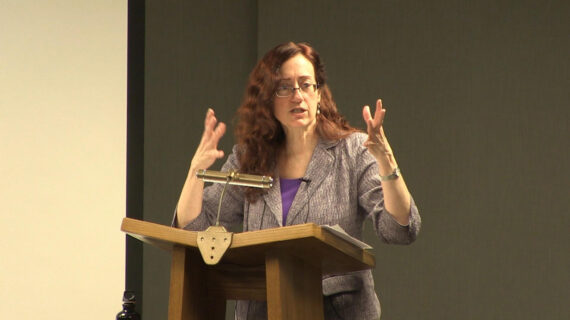
Sarah Clayton, an assistant professor in the Department of Anthropology at UW-Madison, joins University Place Presents host Norman Gilliland to discuss the mysteries of Teotihuacan, the site of an ancient city in central Mexico. Excavations of the area, including chambers in the pyramids, give a glimpse into the lives of the people who lived there.


Copy and Paste the Following Code to Embed this Video:
The Rise and Fall of Teotihuacan
cc >> Welcome to University Place Presents. I'm Norman Gilliland. It's one of the world's great ghost towns. At one time, it was the largest city in the western hemisphere. It was one of the largest cities in the world with a population of 100,000 or more. It took up some 80 square miles, and it flourished for several hundred years. And then about 1300 years ago, it ceased existing, abruptly. As mysteriously as it began. What happened to cause the rise and fall of Teotihuacan? Questions for an anthropologist and an archeologist, and with me is Sarah Clayton who is a professor of anthropology at the UW Madison and who has spent a lot of time digging into the mysterious past of Teotihuacan. Welcome to University Place Presents. >> Thank you. >> Why is this place not more famous? Is it just because the name is relatively hard to pronounce and spell? >> It might be. It's interesting. Teotihuacan doesn't roll off the tongue as easily as Maya or Aztec. But I knew in K-12 curriculum, it doesn't make it's way in there as readily as, say, ancient Egypt or ancient Rome or Greece. It should. It's such and important part of American heritage. It's an important part of the indigenous past on these two continents. It's something that I hope we will hear more about in the future. >> Okay, we hear about the Maya, we hear about the Aztecs, how does it compare with them? >> It's contemporaneous with the Maya, and it predates the Aztecs by some thousand years. It's a lot earlier than Aztec society but in the same place in the central part of Mexico, right near Mexico City. >> In fact, we can have a look here. This will give you some idea of where Teotihuacan is. And it's this huge site. How much of it has been excavated? >> Not very much. I mean, really, the excavations have focused on the civic ceremonial core of Teotihuacan, which is traditionally what archeologists are most able to see are these large pyramids and temples and broad avenues, and that's what we see in the central part of the site of Teotihuacan. And so many excavations and reconstructive efforts have focused on that area, reconsolidating that area for tourism, too. But in terms of understanding the city more broadly, what its every day inhabitants experienced in their daily lives, how they lived, how they subsisted, let alone suburban areas, areas that extend out beyond the downtown part of Teotihuacan. There's not much that's been excavated. Some really great projects have happened there and some that have really contributed a lot. We owe a lot about what we know of Teotihuacan to these very extensive survey projects that have happened there. >> So if we had gone to Teotihuacan, let's say, 200 years ago, how much would we see? Is it an instance of where you'd see these big mounds covered by vegetation? >> Overgrown by vegetation but it's an arid environment. And so they're still very visible. You can see them on the landscape, but it's the monumental structures that are the most visible, that make their mark. And some of the more ephemeral house structures are kind of buried at ground level, and we see those, we recognize them on the surface as scatters of artifacts. Perhaps broken pieces of pottery, broken pieces of stone tools, and sometimes exposed plaster floors that we might see walking along a road. >> That's spectacular. Plaster floors? >> Plaster floors. And housing ranged, in Teotihuacan, from anywhere from a very small kind of dirt floor home to a large apartment compound. A lot of the population resided in these big apartment compounds that did have stone walls and cement and plaster, and so those we can recognize archaeologically a lot more easily than we can the more insubstantial structures. >> So what kind of infrastructure did they have? If they're this sophisticated with the use of stone and plaster, did they have a way to sort of keep things in order and keep things running? >> Well, I think so. And those are the sorts of questions that we're interested in as archeologists. It's something that we constantly work on trying to understand. What was governance like? How was the population administered? How heavily were they taxed? To what degree? >> All these very relevant questions today. >> What kinds of regulations. Yeah. How much regulation was there in Teotihuacan government? And we're learning more, but when we focus just on those monuments, we're missing a very important part of the picture and that's looking at variability across the population. >> I gather those monuments are sort of the eye grabbers. >> Yes, absolutely. And they're important too. They're fundamental. So we need that research as well. But those are the kinds of archeological features that are more likely to be protected today, and so the danger is in losing access to these features that are buried underground and more likely to be destroyed by the rapidly expanding urban sprawl of Mexico City, for example. >> And so this 80 square miles, some of it has already been lost? >> Absolutely. In fact, if we look in the rural Teotihuacan countryside, so if we wanted to characterize the entire society more comprehensively as opposed to just looking at it as a fantastic city, we need to go out into that rural area. But right now, that's buried largely under Mexico City. It's population of 20 million people who continue to build, and there's only a few sites, really, left where we can get a hold of some rural information. >> So I gather, when they build a road or dig a subway tunnel or some other kind of infrastructure in Mexico City, they must be just flipping up these artifacts all the time. >> All over the place. This is a place that has such a deep history. It predates Teotihuacan. People were living there for thousands of years before Teotihuacan developed. That city was unprecedentedly large and densely populated and really, really changed the way of life in the basin of Mexico, but even after if fell, then you have the Toltec state and then you have the Aztec state after that. So, history stretches back a few thousand years in that area, and associated with that history is all these monuments corresponding to different states and different empires. >> Well, before we look at some of the temples and the really big things, why was this such a big site? Why did this city develop in the first place? Why this location? >> That's interesting question, especially because there are better areas, even in the basin of Mexico, for agriculture, for example. This is not the richest area in the basin to grow things well. In fact, the southern basin in Mexico receives more rain and has better soil, particularly around the southwestern part of the basin. And in its early centuries of development, Teotihuacan had about 20,000 people living there in the early centuries BC. >> Still, that's a huge city. >> It's a pretty big city, but it's, at the same time, you have a city of equal size in the southwestern part of the basin where you have this favorable conditions for agriculture. There was a volcano in that area as well, though, which contributed to the nice soil that also happened to erupt. And it erupted at the height of Teotihuacan. So it's eruption, I don't think, was the cause for the fall of this other city, but the signs that it was active and that it was about to erupt might have scared people enough to kind of move up to the northeastern part of the basin and coalesce Teotihuacan to form this large society. At the same time, real quickly, we have volcanic activity happening in the state just to the east of the state of Mexico in Puebla. And, in fact, that area was destroyed by Popocatepetl which is, today, active and threatening Puebla. There was a really cataclysmic eruption there in the early centuries AD. And so we have all this volcanic activity and people frightened by it and maybe looking for a place that's nowhere near these volcanoes. >> So that's why they would go to Teotihuacan? >> That's a possibility. That's one of the hypotheses. Of course, concurrently, once you have this flow of people inward, there are changes to economic networks, maybe there's new opportunities, and so there's kind of a chain reaction. Different reasons and motivations that people would have moved beyond just fear of the volcano or deities associated with volcanoes. It could be that they found interesting things to do in a cosmopolitan place, or they found new economic opportunities there as well. >> Speaking of deities, let's look at some of the big ticket items at Teotihuacan in some of these temples. How many of them are there, and what does the heart of the city look like? >> The city is bisected by a really wide avenue that we call the Avenue of the Dead, and it really was the Avenue of the Dead in that there are burials all along the sides of it. This was about a 50 meter wide avenue. Unnecessarily broad, really, just for daily transportation. >> Because let me point out that not only did they not have conveyances, but they didn't have beasts of burden even. >> Right. Exactly. So this was kind of a perfect setting to have, say, a procession, maybe a military procession, to have ceremonial activities taking place, or to line with market stalls. Maybe have vendors set up. It was part of the hustle and bustle of Teotihuacan. It definitely contoured movement through the city, and not only did it sort of divide it directly in half because you have settlement pretty symmetrically set on either side of this broad avenue, but it goes uphill and eventually culminates in the moon pyramid which caps it. >> Which we're going to have a look at again here. This is, we've got a glimpse of it a second ago, but this is the moon pyramid. >> That's the moon pyramid, and that's the earliest of these major monuments. And so when you're at Teotihuacan, and it's quite a remarkable visual experience to be there, the thing that's constantly in your view as you're making your way through this site, even as a tourist today, is that moon pyramid. You also have the sun pyramid, which was larger in fact, on the eastern side of the Avenue of the Dead. And just south of that, the feathered serpent pyramid which is set in a large enclosure called the citadel where people could have gathered for political ceremonies or all kinds of other events as well. >> Here's another look at the moon pyramid, and this indicates some of what the archeological work that has been done. >> Yeah. Just recently there were excavations in the moon pyramid, with the hopes of actually identifying rulers of Teotihuacan for trying to figure out the modes of governance. It's kind of mysterious. >> I was going to say, how can you do that with just the artifacts to work with? >> Well, hoping to find buried individuals that were kings. Because in Maya sites, every time you have a pyramid, you basically have a ruler or maybe two or three members of a royal family whose tombs are inside those pyramids. >> You do find burials in all of them? >> You do in the Maya lowlands, which is the contemporaneous society. And these were celebrated kings written in history. They're depicted in portraiture, in stone monuments, and nothing like that has ever been identified at Teotihuacan. So, the idea of excavating into these large structures was really about identifying, possibly, a king or ruler. >> What was determined? Did you find kings or rulers? >> No.
LAUGHTER
But we found a lot of victims of sacrifice, and these are probably foreign captives. And it really gives us a picture of a state that was militaristic in nature and whose expansion really was associated with conquest. >> We see that with the Maya and the Aztec later, also. >> We do, especially with Aztec. And Maya fought with each other as well. None of these were peaceful societies. They probably had moments of peace and moments where there was greater violence, but it seems to be that the most effort invested in construction, repeated construction of these monuments, their expansion, all of these expansions associated with the burial inside of them of foreign captives. We can tell through bone chemistry of the individuals that have been located that they come from elsewhere. >> Where they came from. >> Often, we can't tell where exactly through the bone chemistry, but then we look at the associated artifacts, and that helps us to identify probably locations. In particular, the Maya lowlands. It looks like Teotihuacan had some antagonistic relationships with Maya polities and, in some cases, some diplomatic ones as well. There's probably trade diplomacy and depending on the place, depending on the particular Maya kingdom because there's hundreds of those. And other times you have actual conquest, or meddling at least, in the political affairs of the Maya. >> Can you actually tell from these remains, can you tell physical differences between Maya and Teotihuacan? >> Um, no. I don't think that we can see... >> Who's who. Other than context. >> Just in terms of their skeletons, it would be difficult to tell, but the bone chemistry that we can do, bone is constantly remodeling. And, actually, it's affected a lot by what we eat and what we drink. >> Right. >> In contrast to your teeth which are not. >> You can't tell from the teeth? >> Well, we do. We do use the teeth, but it's interesting. Tooth enamel, it stops remodeling when we're young. So if we look at the chemistry of an individual's bones and compare it to the chemistry of their teeth, we can say that they've moved. So we can kind of trace the life histories. And in some cases we can kind of, through their chemical signature, associate them with a likely source of origin. But in other cases, we can just say they've emigrated to this place. They're not local, and we don't really know where they came from. But in those cases, we rely on maybe what they're decorated with, what they're wearing, what kind of objects they're associated with, or even the position in which they're placed for burial. >> Now, at the risk of digressing, I've heard that Indians in the Mississippi Valley that you can tell when they started making that transition from hunter/gatherer to agriculture because they started eating corn and their teeth went to pot. >> Absolutely. >> Do we see that in Teotihuacan? >> Yeah, we see a lot of cavities in Teotihuacan. And, in fact, that's one of the great directions for future research. There have been excellent studies but limited studies of paleodemography through time at Teotihuacan, concentrated on just small segments of the population. And, in particular, we've identified a decline in general health and well being within particular segments, though. >> And this is attributable to what? >> Probably not a great access to... >> Too many sweets. >> Yeah.
LAUGHTER
Too many sweets perhaps, but not a very healthful diet. Maybe not eating as much meat. Maybe eating a lot more grain. You mentioned the connection between maize and cavities, and these are populations that were mostly reliant on maize. Whereas, if you had more access to wealth and resources or maybe higher status, you might have been eating more meat and you may not be as susceptible to the decline in health and heightened risk of anemia and cavities and that sort of thing. >> Now, we have here, this is a diagram. Is this still the moon temple that we're seeing? >> This is, yeah. >> And this is where things have been found? >> Yes. The moon pyramid has been expanded seven times. And so the recent excavations, which just were started maybe in 2000 or around that. >> That recently? >> Yeah, very recently. And, in fact, right now there's excavations happening in the other pyramid, the sun pyramid. But those recent excavations, they tunneled into the moon pyramid and documented seven different expansions of that structure. And those expansions may have coincided with calendrical events, with important acts of conquest, important accomplishments of rulers or the government in general, or maybe the ascension of a new ruler to the thrown. But they continue to just rebuild the same structures. This goes for all the pyramids in Mesoamerica, generally. They start with something small and then build another level and then continue to just build on top of it and build on top of it. >> They did the same thing with the Memorial Union in Madison. >> Right. >> So we're familiar with that technique. >> Exactly. >> So, what kind of things do we find in those? You say sacrifices of warriors. Do we know how they were sacrificed? Was there a consistent method? >> Well, there's no evidence that they were knocked over the head or anything like that. And, in fact, their hands are generally bound. Their mouths are generally gagged probably, at least based on some evidence from fibers around the jaw. And so the idea the excavators of these monuments, Saburo Sugiyama, I should name him. He's the one that's been directing most of these excavations. But they believe that they were actually buried alive. And so that was the form of sacrifice as part of the construction process. And it's possible you can poison someone and that's not going to leave a skeletal indication So there are other possibilities, but the fact that they're all buried with their hands bound and gagged and their feet bound as well. >> These were all warriors? These were all men. >> Well, they're mostly men. In some cases, in the feathered serpent pyramid for example, we have women buried. But the women are buried in a different location. But the women, as well, seem to be kind of militarily decorated. >> Oh, really? >> There are trophy skulls and trophy parts of other humans that are worn around the necks of these skeletons. And so they may have been sacrificed and they may have been captives, but it was acknowledged that these were important individuals. In the case of the moon pyramid, one of the burials might actually be an important Maya royal. >> A Maya royal captive? >> He's in a seated position. Yeah. A captured king or a captured member of a royal family or dynasty in the Maya lowlands. He's wearing a carved jade pectoral collar. He's seated with his legs crossed. The hands are probably bound, but they're crossed in the front so it's hard to know. But they seem to be highly decorated, well-known, important individuals here, and not necessarily just any Joe the street thrown into the pyramid. >> This is the look at one of those sacrificial burials here. >> Right. This is the first one that they found This is corresponding to the fourth expansion of that pyramid, and that expansion made it nine times bigger than it was previously. And as part of that expansion, they dedicated one sacrificial male. He was about 40 to 50 years old. He's a foreigner. And in the burial with him, along with a lot of beautiful objects placed in specific locations, there are animals buried, and these animals are predators. So pumas, wolves, snakes. >> Eagles. >> Eagles. And they're buried like in the five corners of the pit and in the center. So specific kind of ritualized locations. But the animals were probably buried alive as well. One of the indications of that, you can see that in that slide in fact, are the lines that are associated. You can see that next to that skeleton of a puma, those lines were probably a cage that was perishable. So they've made a mark in the soil, but the cage wasn't excavated. It had long since decayed. But you can see the markings there, and so these were caged animals in some cases. We can see that they had recently eaten. The eagles had been fed rabbits right before they died. >> Make you wonder what the rabbits had been fed, I mean, if you're totally proper about this. >> Right. >> Sun, moon, how can we tell the difference? How can we tell one pyramid from the other? >> Well, the sun pyramid is a lot bigger, for one thing, but because the moon pyramid is elevated, they're at about the same level. They look sort of comparable visually. We don't know that Teotihuacanos called them the sun pyramid and the moon pyramid. That's a later name that was given by Aztec society who actually was curious about Teotihuacan as well, set up a settlement there, and sometimes excavated. They conducted their own archeology in the 14th century and 15th century. >> Really? >> Yeah. >> The Aztecs? >> The Aztecs did. But most of those place names, basically all of the place names we have for Teotihuacan for structures and of the Avenue of the Dead, those are later names given by the Aztec in the Nahuatl language that they spoke. >> In fact, Teotihuacan is, this gets us into a whole big topic of language, written language, and you've referred to written language of the Maya but to written language for Teotihuacan. >> It's a big mystery at Teotihuacan. We don't know if they spoke the same language as Aztecs. They may have. Or they may have spoken Otomi or a number of other languages that are indigenous to that area. >> What about the writing? >> We can't read it. We know there is some writing. >> There is written language? >> There is written language, but it may not be written speech the way that in the Maya there's a connection between the symbol and the word that is spoken. And for Teotihuacan, they seem to be more simplified symbols that may be sort of ideas that are related through these images as opposed to related to the spoken word. >> Which is a fascinating significant difference for two populations that were in relatively close quarters. They have such different approaches to language. >> Absolutely, and probably differing approaches to governance as well. Their artistic styles are very different. There's absolutely no confusing the two societies if you're presented with their material culture. They're very different societies. But a lot of interaction between them as well. >> And we have here the citadel, and what was the significance of that? Do we know? >> The citadel has, within it, the feathered serpent pyramid. And this is a really unique structure at Teotihuacan. Although, not unique in the fact that it's got a lot of sacrificial victims in it as well. But it was probably a gathering space, and it may actually have been the place where rulers or administrators live, where governing officials live. There seem to be palaces within it. And so this may have been an important kind of seat of government within Teotihuacan. >> And we find, you've mentioned this feathered serpent temple. >> Yes. >> Do we know what the significance of the feathered serpent was? Serpents seem to play such a big part in this middle American culture. >> It does. And it continues. It really continues even into Aztec society. We see Quetzalcoatl is the feathered serpent for Aztec society. And so we don't know. That's something that the content of meaning of the symbols is just too distant from us temporally in time. We don't really know. But what we like to do is see where these symbols are and be able to try and understand their social significance. How important they were to the broad population. What they mean in terms of linkages across space. Although, we don't really know what they represent in terms of religion. What did they mean to people? >> So we don't really know what the, do we know much about the deities of Teotihuacan? >> No because we can't ask them and we can't read what they've written about them. >> We have the pyramids but we don't know what the religious significance was. >> We can tell that there was a religion. There were probably many religions. It's a multicultural society that includes immigrants. So there may have been a state sanctioned religion. And certainly there doesn't appear to be a separation of politics and religion in this kind of a society where you have temples lining the avenue. A hundred all together. So there's something very religious. It may be a sacred city, in fact. >> It seems to have been that way. If we're starting with temples. >> Sure. >> And the temple the moon is on the highest piece of ground in the city. >> Yes. So you can imagine all these processions blocking up the Avenue of the Dead toward the temple. >> So it seems as if they indeed started with that and then everything else kind of took place around that for some reason. >> And then they continued to modify that through time and expanded and it was constantly in the view of anybody living within miles, within the city but also beyond it. You can see it from miles away. And if you knew the events that took place there, mass sacrifices, important kings being killed and buried in the pyramid, you can get a sense of what it might have meant to see it all the time, have it be constantly present. >> So those captives march down the Avenue of the Dead and know what their fate was going to be. >> Absolutely. >> Speaking of sacrifice, here's one from the feathered temple. >> Yeah. >> Feathered serpent temple. >> These are burials. The image, the drawing that you see on the right is kind of with the flesh on, but this is one of the groups of people among many different burials that are there. There's over a 130 complete skeletons and then, additionally, body parts associated with the skeletons. So many individuals in these burials. The image on the left, you can see the hands are tied behind the back. And so this is showing that bound position. You also see that he's wearing a color of human maxilla, the upper part of the mouth. >> Right. >> As well as human teeth. >> Well, I think we'll probably see another decorative display of those particular parts too. >> Yes. Yeah, there is another slide with that. >> Here, though, this is more of a diagram of the sort of things found in that feathered serpent temple. >> Yeah. These are all of the mass burials that are found in the feathered serpent pyramid. They're groups of individuals. They're either all male or all female. So they're divided by gender. And who knows what they represent, whether they're each representing a different a conquered site or they're representing different orders of the military. Most of them are foreigners but they're not coming from the same place either. So it's a mix of foreigners from different locations but all sacrificed. >> Here's a more artistic look at some of the things that seem to be prized parts for these sacrifices. >> Yeah, this is part of the exhibit of those burials from the feathered serpent pyramid. So they've been on exhibit in various locations and museums. The museums in Mexico City are fabulous for archeology. The National Museum of Anthropology. This one, I think, is from the Templo Mayor exhibit which is right in the downtown part of Mexico City. But it shows one of the crania of the individuals that were sacrificed and put in the feathered serpent pyramid along with that trophy necklace of teeth and maxilla. >> Can we see evidence, as we do at some other archeological sites, of grave robbing that has gone on long before? In other words, do we have a sense that some of the more precious artifacts have been lifted from Teotihuacan? >> Yes. Throughout history all of these sites are susceptible to looting. I think we see more of it outside of the protected zone. So Teotihuacan is a protected archeological site, and it's less in danger of being looted than of some of the contemporaneous sites that are not protected. It extends, really, into people's backyards. So, at this point, the site that I'm working at currently is beyond Teotihuacan but still in the basin of Mexico, and it's highly looted. Every time we see a mound, we march up to the top of it, look down in and there's a crater that's just been dug out. And so this is definitely a problem. >> What is the status of those things in Mexico, legally? If you find in your backyard a scattering of artifacts, what's the legal status of it? >> If it's on you private property, there's really no problem with kind of digging it unless it's a mound. The mounds are protected. It's illegal to be digging something like a pyramid, and that happens. We do see pyramidal mounds in people's backyards, and they're not supposed to be digging them. But anything else, if you need to dig your house foundation or well, there's no law in place to protect anything they might be destroying. And so that's a real problem for the archeological record. >> There must be some remarkable private collections that nobody much knows about. >> Absolutely. I hear about them all the time. I get emails from people that say my grandfather found artifacts on his property in Mexico, can you identify them? This is something that any academic that does archeology in Mexico are contacted all the time with those sorts of questions. >> One of the things that seems to drive contemporary archeologists a little crazy is the techniques, by today's standards a little haphazard of earlier archeologists. We have a look here of the site as it would have been, what, roughly a hundred years ago. >> Yeah, this is an aerial photo, and these are buildings that are pretty much in tact covered by grass, a little bit overgrown, but very visible, as you can see. Teotihuacan never had to be rediscovered. It was always known. >> Always known. >> And people have been doing archeology there for more than a century now. Really since the late 19th century we've had excavations. And that doesn't count the Aztecs before. So, some of those excavations we've learned important information but the materials recovered have been lost. In the early 20th century, one of the earliest excavators was Leopoldo Batres. He excavated the pyramid of the sun. One of his techniques was using dynamite to blow through. >> I gather not a chosen technique today. >> No. We don't use dynamite today. We're more about the trowels and the dental picks. >> Little sifters. >> Yeah. Very, very small tools. But he just kind of blew in there trying to find maybe some kind of tomb like you would see in an Egyptian pyramid which are completely different sorts of structures. I don't know what. Dynamite was used in Egypt as well at the time. So it seems to have been a problematic historical archeological technique in that time period. >> So the pyramid, which these are obviously very distinctly different, say, from the Egyptian pyramids in their design, but it does seem to be a fairly common design throughout the Americas, this particular kind of structure. Do you have a sense of why that is? Is is just because it's so stable? >> It is very stable and that might be part of it. At Teotihuacan there seems to be an effort to echo the landscape around. It may have been a sacred landscape around the city. And so if you're standing on one pyramid in particular and looking at the other pyramid, so say you're standing on the pyramid of the sun looking toward the pyramid of the moon, behind it is going to be a mountain that's kind of shaped like a pyramid. That's the --. Same thing the other direction. You have the -- behind the pyramid of the sun. So it has something to do with the surrounding landscape. >> And I also have heard tell of some tunnels, or at least very long tunnel. >> Mm-hmm. >> Through these from the original builders. >> Yes. The Teotihuacanos dug a tunnel. At first we thought it might be a natural cave, but now the idea is it's entirely man-made And it's dug from the entrance of the pyramid of the sun all the way down underneath it and ends almost at the center point. So if you were going to stand up on the summit of that pyramid of the sun and look straight down, you'd see the end point of a tunnel. >> Function? >> Ritual deposits are located in there. Probably some kind of underground ritual. There's an importance across Mesoamerica in things like caves, the underworlds. There are supernatural deities that live in the underworlds. >> That's kind of universal, isn't it? >> Yeah, yeah. So there's an importance at different levels of the universe. You have the sky where you ancestors go. You have the underworld where there are certain gods that live. So I think it just had to do with religious practices that are kind of foreign to us now. We don't really understand what was done, but there was a sacred significance to that, to being underneath. >> And here we have what looks like jade. Is there a lot of jade at Teotihuacan? >> Yes but it comes, generally, from the Maya world. So it's one of those examples of interaction. This is a piece that was recently discovered, maybe just this year, in some current excavations that are happening in the sun pyramid. And it's one of the more naturalistic representations of a face. Most of the art at Teotihuacan is quite standardized and quite abstract, and this one actually looks more like a portrait which is very, very rare in Teotihuacan art. But a recent discovery. >> Is the pyramid really a universal here or do we get other shapes occasionally? >> In Teotihuacan's early competitor, a site called Cuicuilco, there's a round pyramid which is kind of strange, and we definitely don't see that form at Teotihuacan, at least not yet. Maybe there is something there and we haven't found it yet. >> So round is earlier. >> Round is earlier. Round is earlier than the height of Teotihuacan. But Teo, I'll call it Teo for short.
LAUGHTER
>> You just shortened the show by about 10 minutes. >> Right, exactly. It was occupied at the same time as this round pyramid, but it hadn't grown into the very large, very populous state, powerful state that it later became. So this is when it was still quite small, and Cuicuilco was about the same size having maybe 30,000 people there. >> Give us some years now that we've been talking about Teotihuacan, we've been talking about Maya, we've been talking about Aztec. >> We're talking about the first 600 years AD for the most part. Teotihuacan was settled maybe in the early centuries BC. So between BC 200 to AD 1 we had the settlement. And, at the same time, you've got Cuicuilco, a competitor maybe, I keep calling it a competitor, but about the same size in the southwestern part of the basin. Cuicuilco is abandoned and then you see this aggressive growth of Teotihuacan. It expands to well over 100,000 people in a really pretty short amount of time. Maybe a century or so going from 20,000 to more than 100,000. >> Grew very rapidly. >> It did. >> For whatever reason. >> Yeah. And at the same time, it drained the rest of the basin around it. So you had, basically, a lot of villages that were roughly equivalent in size, and 80% to 90% of that population aggregated at Teotihuacan. So you have this concurrent population drain in the countryside. >> It sounds so contemporary, doesn't it? >> Yeah, it does. >> The rural population would shift and become urban. >> Move right into the city. And that process, it really changed everything. It wasn't just Teotihuacan growing in a vacuum. We can see that it had an effect and impact on the broad landscape around it. It was a process of urbanization at the same time as the process of ruralization making the surrounding area into a rural world, where before it had just been all these autonomous groups of people living there. >> It's more of a satellite of the city. >> Yeah. Yeah, exactly. >> Now we have here two faces, and I'm fascinated by these because they're so different. >> They are different. They represent different societies in the lowlands. And the first, on the left, is from Olmec society, and on the right is from Maya society which came much later. And the point of this is just to show that you have individual kings that are probably deified. These are divine, sacred kings in the Olmec world and in the Maya world that are represented in portraiture, commemorated in all kinds of monuments. And we see them as individuals. And that really contrasts with Teotihuacan. There's nothing like that. That one little mask that looked like a portrait. >> Right. >> That's kind of the only thing that's really portrait-like, and the rest of it is very abstract. And it seems to be that the individual ruler was not to be celebrated and commemorated in that way. It may be more about institutions of government. Maybe it was collective form of rule, a republic. People that very deliberately came together at Teotihuacan to rule in kind of a group way, as opposed to individual kings. >> Raises an interesting question about whether republics lead to great art as monarchies do. >> Yeah.
LAUGHTER
I happen to really like Teotihuacan art, but I think when you do compare it to the Maya art, people just love Maya art, and it's much more naturalistic. You feel like you're looking into the face of somebody that lived 2,000 years ago. With Teotihuacan, it's a little bit... >> You don't have the faces. >> Yeah. It's a little flatter, a little two-dimensional, and a little bit standardized. All the same. >> Would this be, that we're seeing now, is this paint on stone? >> This one is on a wall. It's on a concrete wall. It's a mural and we see murals like this all over within those temples and even within the residential compounds that were wealthier. This is, I believe, in one of the areas that lined, that was very close to the Avenue of the Dead. So very close to the central core of the city. And it's just a small part of a larger mural that shows a procession of individuals, but they all look the same. They all look a little cartoon-like, so you can't pick out individual faces in there. >> Who's who. >> Yeah. It's more the depiction of the event, I guess, of a procession. >> Another thing that we hear about and see a lot in Aztec and Mayan civilization is pottery. >> Absolutely. >> How does Teo compare with those? >> They used pottery as well, and it's stylistically very different. Pottery is one of the ways that we can look at interaction among contemporaneous societies through trade. We can kind of recognize a Teotihuacan style pot pretty easily when we compare it to, say, a Maya style pot. But Teotihuacan was a specialized society. It was complex, economically. So you had some people that were full-time farmers, some people that were full-time craftspeople. So they're making pottery. They're making lapidary crafts. They're carving stone, making jewelry, in some cases chipping stone to make cutting implements >> Is there a distinctive Teotihuacan style of pottery? >> There is a lot of different things. They had the full range, the full assemblage that you would need to cook a meal. >> Sure. >> So to store liquid and to store food. So anything from huge -- that were cooking pots, they would have cooked stews, and down to very flat kind of clay griddles where they would have probably cooked tortillas. Although, not all of them. That's one of the interesting things is pottery, on the face of it, can be a little bit boring, right? >> Yes, yes. >> Unless it's beautifully decorated like the one on the slide. But we can learn a lot from it. We can reconstruct economic relationships, trade between civilizations. We can also look at the variability even within a site to consider different cooking practices, and in a multi-ethnic city like Teotihuacan, if we see on neighborhood is using griddles and another one isn't, that's kind of a clue that they have sort of a different cuisine, a different tradition, different food tradition. And that's one of the ways that people perpetuate ethnic identity. And so it's a clue to us about the diversity that is present there. >> Another thing we think of in South and Central America is obsidian. As long as you have volcanoes, it seems like a great source of this very strong and attractive stone. >> Sure. Yeah. And they used obsidian, several different kinds but maybe the most important kind was from Hidalgo which is the state just to the north of the state of Mexico, and it's called Pachuca and it's a green obsidian. It's nice and clear and high quality. Very easy to make blades and knives and points, and it was very widely traded. Obsidian can be laid out, say, on a hide and wrapped up. The hide can be rolled, and it's a very small thing to transport. Very light weight. You can have hundreds of blades. >> Easy for trade. >> Transport them for hundreds of miles and they're safely wrapped and they're not going to break. In fact, we do see that. That's one of the ways that we detect those trade relationships with the polities in the Maya lowlands. Because it's the only place where they have green obsidian in Hidalgo. So if you see it somewhere in Belize, you know that it's been brought there by somebody. >> Now, what are these figures here? These are obsidian figure that we're looking at here, but what are they? What's going on? >> Well, the one of the left is just a simple cutting blade used for anything you can imagine. The same things we use our knives for today. Cutting food, cutting hides, that sort of thing. The one on the right is a decorative kind of figure of the sort that we find in burials in monuments. So in the moon pyramid burials, for example, there are individuals that look like, in this case to me, they kind of look like their elbows are cut off. And there's been a hypothesis suggested that that actually represents the bound captive position. >> Oh, sure. >> I don't know for sure. It's a good idea, I think. >> A little souvenir of the occasion. >> Yeah. And it's certainly in the same context. We find these in the context with the bound captives. So it may be representing a sacrificial position anatomically. And then where we see it at different sites in the Maya lowlands, it tells us about trade. >> I was mentioning a distinctive Teotihuacan style of pottery, and I've heard of these rather thin orange-goldish pots that seem to be their trademark. >> Yeah. That absolutely is. That's a Teotihuacan style pot. It helps us trace that trade, again. These are from Puebla, and at Teotihuacan they're widely consumed but they're all imported. So this helps us to kind of understand a market economy, basically. How are people getting the things they need to provision their household? And every household, they're mostly occupational specialized. So they're dependent upon each other and upon this economy of trade where they're getting things that they need from other people in the community and also things that are imported, like this kind of pottery. >> Were there knockoffs though? >> There are. In fact, in this image there's an imitation. So this was not necessarily a cheap kind of vessel, but it was one that people desired to have. I don't know why that is. It's not absolutely the most beautiful thing in the world. But, in fact, if you see it in person, it's very thin, very light weight, very finely made. A lot of ancient pottery can be kind of clunky. It can be chunky, a little uneven, and this is not that way. It's very beautiful, kind of aesthetically pleasing kind of vessel to have. And so people wanted it, and if they couldn't afford it, they made something that sort of looked like it. >> Well, that still happens, doesn't it? >> Absolutely. Yeah. >> I've also heard about Teotihuacan that there are these big apartment complexes. >> Yes. The way most of the population lived, at least after maybe the 3rd century AD, was together in groups of upwards of 60 to 100 people living in one structure And this is an example, on the slide here, of one of them. >> Multi-rooms. >> Multi-rooms and courtyards inside that don't have roofs over them. So they were actually kind of outdoor spaces but within the apartment compound itself. So a lot of life was lived in those areas where you didn't leave the compound. You produced your food, you cooked it, you gathered with your neighbors, probably your extended kin group, your family members, in these kind of patio and courtyard spaces, and then at night you went into your respective apartments to rest with your own family and to go to sleep. So much activity, different kinds of activities occurred in these residences. >> We hear about in some of the, like, pueblos, for example, that burials within the walls or the floors of these complexes. >> Yes. So these are places that are very important to people. They're burying their parents there. They're burying their grandparents. And this would be under the living floors. So they would just dig through a plastered floor, normally not a large extended burial and nothing marked with a tombstone or anything, but kind of a small pit. They'd place the body most often in a crouched kind of flexed position, often a seated position. >> Really? >> Uh-huh. >> Because that would take, you'd have to dig deeper, wouldn't you? >> You did a little deeper but a smaller hole, and you dig down and you place the body in there. Sometimes they're on their side. Sometimes they're kind of upright but almost always flexed. And not just the body but little trinkets and offerings. There's a slide here that just shows some of the different kinds of things that we see in these burials placed with individuals as grave goods, as offerings in the burial. And what people are choosing to bury with their dead actually varies across different apartment compounds. >> And from, I assume we're seeing class differences? >> Yes. And so you have higher quality goods in the wealthier compounds. Status is definitely reflected, class and status are reflected in mortuary customs. But you can see that a lot of these ritual traditions are really developed within compounds, within the particular extended family, and there's a lot of variability, a lot of diversity. So it'd be very difficult to define what's the typical Teotihuacan burial. >> And this is a cute guy here. >> Yes. >> What's his story? >> In Nahuatl, in the Aztec language, he'd be called Huehueteotl, and he's the old fire god. So he's one of these deities that appears to be continuous, that lasts for a very long time. But he's really nothing that we see in a monumental context. He's a domestic ritual sort of person. Ritual deity, I guess. But something like this, this is an alter where it would be about the size of maybe table height. >> So it's huge. >> Large, carved stone. Yeah, this isn't a little piece of pottery. This is something that would be sitting positioned in the center of one of those courtyard spaces of a residential compound where people are then burning pine resin, burning incense, making offerings. >> So, he still has some kind of a religious significance rather than just a practical use? >> Yes. I think it's, you can imagine it was probably warm and smelled good if they're burning incense. So in a way I can see those. >> Those cold nights. >> Yeah. It may have just been something as simple as fostering a situation where people could gather together as a family group and you have this little fire burning, but it's inside this carved image of maybe a god. But anyways, it's something that we see at Teotihuacan and even at sites nearby and the outskirts. This is something, an image that we see all over the place. A shared belief. >> Well, and not so different from what you see now. These have become increasingly popular, these little braziers that you can just put a fire in. >> Yes. >> And sit out in the yard. >> Yeah. Yeah, exactly. That's a really good comparison. >> What goes around comes around. >> Definitely. >> Now here's probably a more practical, whoops, more practical piece of equipment here, but nonetheless, very creatively decorated. >> Yeah. This one is what we would call an effigy vessel. So it shows an individual and it's just kind of a nice example of some of the opportunities we get to kind of look into the face of a Teotihuacan in clay. This is an individual shown probably grinding corn, which is an important part of daily activities. I don't know whether it's male or female, but it was found at a rural Teotihuacan period site in the northwest part of the basin. >> It almost seems remarkable that it would be so well preserved. It looks rather delicate, doesn't it? >> Yes. >> The details and the jutting out of the details. >> Mm-hmm. >> It's remarkable that it would have survived the past 1400 years or so. >> Yeah. Really, we only see whole pottery like this, whole vessels, if they're coming from a burial context. >> Otherwise it would have been used until broken. >> Exactly. So most of what we see is broken. It comes from garbage heaps of the past, but occasionally, out of those burials, we get the whole vessels like that. Museum quality pieces. >> And is this the site that you've been working on in particular? >> This is. It's called Chicoloapan Viejo, and it's in the southeastern part of the basin. It really is one of the only remaining rural sites. And I showed it here. The area that I'm doing research in is enclosed within that square that's on the slide. This is a Google Earth satellite image of the area. The area just to the left of it you can see is very developed with houses and roads, and that's part of the site but that's the part that's no longer accessible because it's completely underneath that development. That happens to be a municipal boundary there. And so in the municipality that I'm working in, it's not developed yet, but that's not going to last. So this is one of those places we have to hurry and try and get some information before it's just completely destroyed. And, unfortunately, we're losing that battle pretty quickly with many of the rural sites. >> Because the rural are becoming urban you mean? >> Yeah. Well, I'm thinking of rural sites in terms of rural Teotihuacan. >> Oh. Formerly. >> Yeah, formerly. In ancient times they were rural. But what happens is when we lose these, they're gone. These are important cultural resources. They're unprotected. They're being developed. And it's not just losing them that it's sad because we can't see them as tourists or something like that, but it actually does completely limit our window into this society, scientifically. We lose just such an important part of the archeological record, and so what we end up getting is a capital of a society but with no knowledge of the region that it dominated. >> Right. >> So it just really limits our ability to reconstruct political organization, economic organization, in a way that we potentially could if we had those resources. >> I'm sort of imagining how many thousand years from now somebody finding the mall in Washington, DC, and trying to construct the entire American civilization on the basis of that. >> Exactly. Precisely. So it's like losing the all the neighborhoods around. >> The context. >> Exactly. So we're fighting to kind of get the information while we can, but also it would be nice to be able to devote more funding to the kinds of science programs, NSF for example, that allow us to argue for preservation and to really keep these sites protected so they can't be developed and destroyed. >> And this, I think, is what your part of it looks like today? >> Yes. The image here is just the site as it looks today. This one is a pyramid at the site. So even in these contemporaneous sites on the outskirts of Teotihuacan, this one is 30 kilometers from the city, you still get pyramids out there. >> Still get pyramids? >> Yeah, monuments all over the countryside. >> Smaller ones? >> Very small compared to, say, the sun pyramid, but they're there. >> Do we have any sense that this would have been in a suburban context? A smaller temple? >> Yeah. This one, without excavating it, it's hard to say exactly even when it dates to because we have this rich occupational history that postdates Teotihuacan that might even be later and not exactly contemporaneous with it. So part of the puzzle is going mean excavating and being able to precisely date these monuments to put them in, figure out what society they actually correspond to in the first place. But the fact that there's monumental architecture there, it speaks to religion that's practiced in the area, if it's a temple, it's maybe a sacred place but also potentially tells us about how directly these areas were governed. Were there elites that were installed? Did they come from Teotihuacan? Are they buried in these structures or are they local? >> So, if you come to a site like this and you see that mound, do you have this irrepressible urge to go over there with your shovel and see what's under there? >> I do. What we're doing now is we're trying to treat these areas more comprehensively, more holistically. In fact, what I'm most interested in and what tempts me the most in terms of sticking my shovel in the ground are the small households because that's a part of society that we know less about than these big monuments. And what we do in our field work, what we did last summer was to map the surface, map all of those features, be able to establish them in a map, take photographs of them, and also collect, systematically, all the artifacts that we can find on the surface, and that way we can reconstruct a settlement pattern. We can see where it was likely that houses were, how they related to the monuments. >> We see some of that here, don't we, in this next image? >> Yeah. >> It's an outline, apparently. >> Right. >> Would this be an apartment or do we not even know? >> It may be an apartment compound, and that's one of the questions is, do people in these rural areas live in the same way as the urban society? Do they live in apartment compounds? If they did, that may indicate that they were socially organized in a very similar way, had a very tight social relationship with the urban population, identified themselves as Teotihuacanos. But it's a question whether they're living very differently. They certainly don't need to have apartment compounds in these small areas. They had... >> Plenty of space. >> Populations that were smaller. Plenty of space. So that really the only reason to have that there is to kind of look like the urban center. So that really speaks to issues of social identity, and that's one thing we want to find out. These are the sort features that we see on those sites as we're walking across them. This is a dirt road in that area, and we look down and there it is, a wall from an ancient structure. >> Let's go back to the big city. What happened? >> Oh, good question.
LAUGHTER
It's one of these cases of escalating violence. It's a place where sculptures were toppled, where there was burning. Some really bad things happened there. It was a period of violence, and it really never recovered. This happened around AD 650 or maybe in the 50 or 100 years leading up to that. But the final events involved dismembered skeletons and shattered skulls, and we definitely see traces of violence in the archeological record. However, we don't know whether to attribute that to outsiders or internal revolt. Whether it was some sort of sectarian violence or the government attacking its citizens. We don't really know, and that's one of the things, one of the mysteries that we can find out about by maybe looking at the population as a whole, figuring out whether it was ideologically diverse, was there kind of an environment where you could envision political factions forming or people with different religious ideas where you have social tensions developing. There's all kinds of ways to get at that question, but it's going to take a lot of research and a long period of time. It's one of the mysteries of Teotihuacan. >> Well, it's a big and fascinating mystery. >> Yes. >> Thanks for digging into it with me today. >> Thank you. It's been a pleasure. >> Sarah Clayton, always a pleasure. I'm Norman Gilliland, and I hope you can join me the next time around for University Place Presents.
Search University Place Episodes
Related Stories from PBS Wisconsin's Blog





Donate to sign up. Activate and sign in to Passport. It's that easy to help PBS Wisconsin serve your community through media that educates, inspires, and entertains.
Make your membership gift today
Only for new users: Activate Passport using your code or email address
Already a member?
Look up my account
Need some help? Go to FAQ or visit PBS Passport Help
Need help accessing PBS Wisconsin anywhere?

Online Access | Platform & Device Access | Cable or Satellite Access | Over-The-Air Access
Visit Access Guide
Need help accessing PBS Wisconsin anywhere?
Visit Our
Live TV Access Guide
Online AccessPlatform & Device Access
Cable or Satellite Access
Over-The-Air Access
Visit Access Guide




Follow Us