

 Passport






Wisconsin's Ecosystems and Climate Change
04/09/09 | 43m 53s | Rating: TV-G
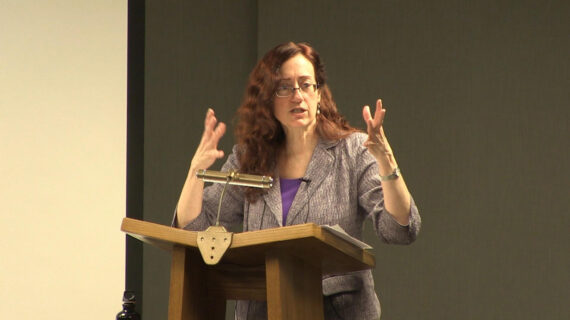
Jack Williams, Assistant Professor, Department of Geology, UW-Madison In the second half of a two-part lecture series, Jack Williams discusses regional and continental climate and temperature changes causing significant ecological changes and how that affects us in North America.


Copy and Paste the Following Code to Embed this Video:
Wisconsin's Ecosystems and Climate Change
cc >> All right, now I'd like to introduce our second speaker. And thank you, very much, John, for your presentation. Our second speaker is Jack Williams. He's an associate professor in the Department of Geography in the Center for Climatic Research at the University of Wisconsin Madison. He's currently the Bryson Professor of the Climate, People and Environment program, named in honor of Reid Bryson, a pioneer climatologist at UW-Madison who's one of the first to recognize the vulnerability of human societies and ecosystems to climate change. Jack studies the responses of plant communities to climate change and studies climate changes from the past to better understand the changes of the future. Jack received his PhD in 1999 from Brown University and joined Madison in the fall of 2004 after a postdoctoral position at the National Center for Ecological Analysis and Synthesis and at the University of Minnesota. >> Thanks a lot Mike. Okay, I'm just going to get set up here for a second. Okay, make sure I'm oriented here. Okay, hopefully you can see that pointer there. I'll be using that as my pointer in this talk today. I'm just getting over a cold so excuse me. I'd first like to say it was both a great honor to follow John Magnuson here and also a great challenge. It's a great talk and he's been doing a lot of work and he's been a pioneer in this field of ecosystem impact and adaptations of climate change for many years now so it's great to be teamed up for this presentation series. I'd also like to thank Mike Notaro, the Nelson Institute for Environmental Studies, the Department of Natural resources at Wisconsin and Wisconsin Public Television. And thank you for coming. Okay, I guess one confession up front, the title, the series promises a focus on Wisconsin ecosystems and climate change but I'm going to be going a little bit more broadly here. I'll be working on time scales of the last hundred years to the last actually 20,000 years or so, and then I will be working at a spatial scale that's more regional to continental from the United States to North America, with Wisconsin in that context. I'd like to start with the main points of this talk first, the main messages of this talk. The first one being that we are already seeing the ecological consequences of climate change. And I think John, in his talk, outlined in the aquatic systems some very nice examples of both the physical systems, changes in ice cover, and then changes in biological systems as well. Another point I'd like to make in this talk is the idea that many of our impacts and the consequences of our recent greenhouse gas emissions, the temperature and other climatic changes that result from those greenhouse gas emissions are still in the pipeline ecologically. And I'll go into the reasons for that later in this talk. And then zooming out to the last 20,000 years, which has been one of the primary time scales that I've worked on on my own research, is showing this point that even small temperature change, on the order of a few degrees Celsius or a few degrees Fahrenheit, can have very large ecological effects. And just one little comment down here at the bottom, this talk will be 99% model free. I'm really going to focus on actual data and actual time series as much as possible. I know when talking with students and reading online commentary about various studies there's a lot of skepticism out there about the climate models that are used and the ecological models that are driven by these climate models. There's actually very good reason to believe in the robustness of these climate models and the ecological models that work from them, but that's sort of a separate lecture onto itself. So here what I'm going to focus on is actually time series, both on relatively short scales and longer time scales, documenting ecological responses to recent and not-so-recent climate change. Okay, so again this is a data again here. This is a record of changes in temperature over the last hundred years. This is from the IPCC and the 2007 report here, and if you can see at the right there it ends, I believe the IPCC report ended in 2001 and since then the temperatures of the last several years had leveled out but the overall pattern is still there. That we've had about a three-quarters of degree warming over the last hundred years. And you see there's variability in this. Just as John was pointing out in his talk there are years and decades where there are relatively high temperatures and low temperatures but you can draw a line from that trend, and the long-term trend underlying that year-to-year and decade-to-decade variability is about three-quarters degrees Celsius or 1.33 degrees Fahrenheit. Even this relatively subtle warming, which you might not think is a very large amount of warming, has been having ecological, or we should be careful here, is believed to have ecological consequences. There's a pretty straightforward and it's not a big leap of faith but we should note that there's a hypothesized connection here. But there are various biological events that are timed to temperature just like there are these physical events, such as the date of ice break, the date of freeze, there are various biological events that are temperature cued by temperature changes over the course of a season. The dates of animal migration, the dates of leaf senescence in the fall, the date of bud burst and leaf-out in the spring. For many organisms over and over again there has been well showed these are strongly temperature cued ecological phenomenon. There's a whole branch of science known as phenology which is the study of the seasonal timing of these ecological events and the controls of the seasonal timing of these ecological events. And so the biological systems, this is believed to be one of the canaries in the coal mine with respect to ecological responses to temperature change. Because it's a relatively quick way for species to adjust to changing temperatures. It often takes a while for plant populations to colonize new areas or for change in the abundance of various organisms, some organisms or species die out and others become more abundant. But regulating their cues in response to these temperature signals is a fairly fast way that species can adapt to climate change. One of the things that we're seeing in this bottom plot is the fact that these various signals, these springtime signals, are occurring at earlier and earlier dates. And so what we're seeing there on the left hand plot, this is a whole variety of different, this is a paper by -- looking at a variety of different organisms there. So the change in the timing of these events, that's the vertical axis in days per decade. And you can see that most of the bars in that plot there are pointing down, meaning they are occurring earlier in the spring than they used to. And you can see that range of variability around that. Some is occurring as many as 30 days earlier in the spring, others actually occurring later in the spring. But if you take an average across all these different species, the many different studies have compiled this data, we can see there's an average shift of about a two day earlier onset of spring, when trees start to bud out, when animals start to migrate, and so forth. There is just starting to be evidence, and this is really in the early stages of this, but there is just starting to be evidence now of actual shifts in species ranges which is one of the things that you would predict from climate change. That species have a climatic niche that they can tolerate. As John was talking about with various fish species, they can thrive and grow and reproduce within that range of temperatures but outside of it their abundance has declined and potentially go locally extinct or extirpated. One of the sets of species that are again believed to be relatively sensitive, another one of these sort of early indicators of ecological responses to climate change, are butterflies. They are a temperature dependent organism. They are ectotherms. They cannot regulate their own body temperature. They're dependent upon the temperature of the environment around them. They can actually migrate. They can move from spot to spot relatively quickly in response to climate change. So this is just an example of one study here from Spain where there was a survey of butterfly populations. You can see the upper left map shows the region of Spain that's being zoomed in on here. You can see there's two maps, at right the one map from 1967-1973 a survey of butterfly populations from this black satyrs species shown at the left. And then the right one a resurvey of those same species roughly 30 years later in 2004. The dots and circles are probably a little hard to see from where you are, and so the key thing to look at is that background color where you can see the range, shown by the dark shading, was relatively extensive in the 1960s and 1970s and that shrunk over the 30 years since then. And this represents an up-slope migration of this species, where the lower elevation populations of the species have died out. And there's been some movement of this population to higher elevations, but the overall effect is that there's been a shrinkage of that species range, because there's more area in the low elevations, typically, than the upper elevations. So this up-slope range shift has become an overall shrinking of this species range. Another area that is among forest ecologists is causing great concern, and this is where it's critical to say we don't fully know the exact cause of this, we are working this out still, but there is good reason to suspect that climate is implicated here, has been the widespread tree mortality events in the western Canada, the western US. This is a map from western Canada here where the red shows this amazingly large areas of mountain pine beetle outbreaks and then these mortality, these die-offs of adult pines in these areas. And you may not be able to see that figure in the lower right down there but it shows a mixture of green and red patches. Where the green are still living trees, the red are dying or dead trees. And in this image there about a third of the picture is now red and it's sort of this patchy distribution across the landscape there. The direct cause of mortality for these pines are the beetles. It is these beetle outbreaks and these beetle infestations that are killing the pines, but the question becomes what's the ultimate cause of mortality. And this is where there's a debate going on right now. Many forest ecologists think that climate is the cause, and there may be a climate agent in two different ways. One is by moving towards warmer and dryer summers. These plants may be actually shutting down their leaf stomata. A tree takes in carbon dioxide from its leaf but it also loses water from its leaf. And so in dry summers these plants will shut down their leaf stomata to minimize the escape of water. But in so doing they're effectively starving themselves of carbon and carbon dioxide which is a basic building block for photosynthesis. And so the consequence may be they're actually sort of starving themselves and consequently not able to mount a defense against this pest and mount the chemical defenses that these pine trees use in defending against these beetle outbreaks. That's one possible climatic cause. The other possible climatic cause is the fact with these shifts towards warmer winters in these areas this may not be knocking back the beetle populations as much in the winter time so every winter there's less and less knock back of the beetle populations and they're able to spread further and gain more of a foothold in the following years. Again, with the understanding there's variability around these trends and there's year-to-year variations. But it should be clear and so that's why this quote here is from a meeting of forest ecologists one argument putting this point of view forward, beetles are the bullet that's killing the pines but drought and climate variability may be what's pulling the trigger here. But it's also important to note that there are counter hypotheses in terms of the overall re-growth of these trees from earlier logging events, and this may be sort of a natural cycle of these trees and there also maybe fire suppression effects coming into play here. So as always, one of the challenges here is to make a confident attribution yet, and we're not at the stage where we can fully make a confident attribution of what's the actual cause. We have reason to suspect that climate change is implicated here but we don't have a definitive statement at this time. Okay, one reason for that is that the ecological impacts and the ecological consequences, so the second point here, of climate change are still in the pipeline. They're sort of this causative change that I'm showing up here where greenhouse gas emissions, and I'm sort of highlighting CO2 as the major component of greenhouse gases that we emit to the atmosphere and causing an increase strengthening of the greenhouse effect, the trapping of long wave radiation, warming of surface temperatures, that leads to climate change and a warming of the overall atmosphere and oceans. But there's a time lag to that. The oceans and the atmosphere have a thermal inertia to them so driving our car today, the climatic affects of that will not be seen for several years to decades because it takes a while for that signal to transmit itself through the climate system. Similarly, there is a lagged response of the ecosystems, and I'm focusing on vegetation here but this is a broadly true statement, that there is a lagged response of ecosystems to these warming. It takes a while for species to move around. It takes a while for changes in population abundances. Some responses are relatively fast, such as those shifts in phenology and spring timing that I showed you earlier. Some, such as shifts in forest belts and species distributions, are relatively long. And just to kind of show this graphically, here we have this is a record of carbon dioxide concentration in the atmosphere. The horizontal scale there is years from 1000 AD at left to 2000 AD at right. The vertical scale is parts per million concentration of carbon dioxide in the atmosphere. You can see that for 1000 AD to roughly 1800 AD carbon dioxide concentrations in the atmosphere were relatively level. And then there's a very clear signal of increases in carbon dioxide over the last 200 years. This is confidently contributed to the start of the industrial revolution, the burning of coal and other fossil fuels for energy and power and so forth. That signal is incontrovertible and it's been a signal that's been well underway for several hundred years now. Now we get to where there's been a lot of debate over the last several decades, and I would say with this most recent IPCC report in 2007, this debate is finally ending. Certainly it's ending in scientific circles where the IPCC has stated that the warming of the climate system is incontrovertible and has made statements with high confidence that warming since 1975 is likely caused by human activities. And so here with we can see here this is the same time, a little bit longer time scale, going back to about 600 AD all the way up to the year 2000 AD and now the vertical time scale are variations in temperature where zero is a reference temperature for representing the mean temperatures from 1961 to 1990. This is a summary for the northern hemisphere. And you can see that there's variability, that there have been relatively cold decades and warm decades, cold centuries and warm centuries. And only now in the last 20 years or so has, and you can sort of see on the far right there, that black line, have the temperatures been moving beyond the range of variability. And there is still a point of debate going on here between sort of the medieval warm period, some of those warmer intervals around 1000 AD compared to the 20th century. I think it's safe to say that we are at least at present one of the two most warmest time periods on record and depending on which way you want to argue the data we are at or beyond what we've seen for the medieval warm period. But again just to kind of go back to the IPCC statement, based upon this other analyses, which I'm not going to go into about the distribution of this warming signal which is seen worldwide, the fact the distribution of this signal vertically in the atmosphere where the upper troposphere is warming and the stratosphere is cooling a bit. These are all diagnostic fingerprints of a human causation, a greenhouse gas causation and so the IPCC and the global climatological community has made, again, statements with saying it's likely that the human causation of climate variability and this most recent warming trends can be confidently dated back to 1975 AD. But now we get to this last part. We're really looking at the ecological signals, and I've showed you some studies where people are arguing that we are in fact seeing these early ecological signals of climate change. But this is where the signal is just emerging from the data. Okay. And one comment then, John gave a very nice work-through of this figure a moment ago. He talked about how the red line was the, this is the one actual slide using model, climate model simulations here. As opposed to the data which is everything I've been showing you from this point and will keep showing forward here. These are again these climate model simulations where the black line is actually data, that's the historic observations from 1900 to 2000, and then the different colored curves show changes, projected changes in temperature. Again, the red line being more of a business as usual scenario where we don't take serious steps towards reducing our greenhouse gas emissions at a national or international level. The blue line representing more of a place where we might be able to get to with more serious attempts to reduce greenhouse gas emissions. And then that yellow line, which is one that John didn't spend much time on but I'll note for a moment here, is the warming that's already in the pipeline. This gets back to the point that even if we were to shut down all fossil fuel emissions today there will still be maybe a half degree warming still coming at us. And no one thinks we're going to shut down all fossil fuel emissions today or tomorrow. This is more of a what-if scenario. And even in this what-if scenario we still have this warming, again, in the pipeline and then the ecological consequences from that warming still coming down with some lag after that. This is a figure that I've seen I don't know how many times or variations on this figure. In my career if you are working on climate change in the area of science or interest in the impacts of climate change, these kinds of projections you see over and over again. I like very much how John connected to this figure using the idea that the mitigation community is trying to move our range of possible futures from the red curve to the blue curve. The adaptation community is thinking about how can we help societies and ecosystems adapt to the inevitable amounts of climate change that are inherent in even the most optimistic scenarios represented by the blue curve. A way that I've tried to connect to this is sort of tried to get to this from a perspective of thinking about what these numbers mean and put it in sort of a context of our lifetimes. And so one context is in my lifetime. I was born in the early '70s just actually at this point when the IPCC sort of said that we think we see a confident signal of global warming being caused by greenhouse gases. Over my lifetime I might expect to see a net change in global temperatures of 1.4 to 2 degrees Celsius, 2.5 to 3.8 degrees Fahrenheit. I have a 3-year-old. She was born three years ago. And she, in her lifetime, may expect to see an additional warming. This is using averages here we don't know how long any of us have to live but using sort of an average lifetime for the US population, she might expect to live until the 2070s, the 2080s and might expect to see a net 1.8 to 3.5 degree Celsius warming, 3.2 to 6.3 degree Fahrenheit. And this is just really astounding. If you think about how much change we'll actually see in our lifetimes and our children's lifetimes. This to me is where these sorts of analyses become very sobering. All right, so now I want to sort of segue and talk about why I think that these are such significant changes and why we should be concerned about them. And I think one thing that, as scientists commuting to a general audience, to the general public, 1.4 to 4.5 as a global mean temperature increase, sort of the range of temperature increases over this century, doesn't sound like a lot. One reason is that scientists use Celsius, most of the American public uses Fahrenheit, and it's about a five-ninths conversion between the two so you have to do a little mental re-scaling there. But then of course other big reason is our own day-to-day lifetime we see plenty of temperature variances which are far larger than that. And that's sort of shown in these three bars at right here, where the biggest bar is sort of the average range in temperatures from the coldest month of the year to the warmest month of the year which is about 55 degrees Fahrenheit from about January to August or 30 degrees Celsius. Daily temperature ranges of course that various quite a bit day-to-day, season-to-season but you might see on average about 20 degrees Fahrenheit and 12 degrees Celsius or so. And when you scale this against those, the model, I'm sort of flagging it as a modeled number there, projections for this century of, and I'm purposely using the upper end numbers there, of 8 degrees Fahrenheit, or maybe 4-1/2 degrees Celsius, that seems kind of small by comparison, right? So why are we so concerned as climatologists, as ecologists and others thinking about the climatic impacts of these numbers that are small relative to the day-to-day and the season-to-season ranges? Well one answer of course is that that number on the right is representing a global average where it's not just for a single location, but it's a change in the mean state of the overall climate system which has major affects upon transfers of heat and the operation of the climate system. But another reason, which is what I'll go into here, is what we can know and document from the relatively recent geological record. And now the time scale will be focusing on the second part here is the last 20,000 years or so. The top plot there, this is going from the time scale here is years before present, years BP. So that's 22,000 years before present at left all the way to zero years before present which is how paleoclimatologists talk about today say zero years before present. And the vertical scale is estimates of temperatures at Greenland and from ice core data up in Greenland. And again using the zero representing sort of a reference modern day temperatures over Greenland. And so we can see in Greenland our estimates in the temperatures were about 10 degrees colder at sort of full glacial conditions, 20,000-22,000 years ago. There's a period of deglaciation from about 16,000 to 10,000 years ago. And you can see there's some large oscillations along the way; it's not a straight linear transition. And then over the last 10,000 years ago it's been a relatively stable conditions at Greenland. And those numbers right there, worldwide the estimate is going from 22,000 years ago to today. Worldwide temperatures have increased by about 5 to 9 degrees Fahrenheit, and at Greenland again the estimate is more like 18 degrees Fahrenheit warming. Because typically on all time scales the temperature variations we see in the high latitudes, in the Arctic, is higher than we see on a worldwide basis. So the point to take way here is that global warming, that amount of temperature change worldwide, 3 to 5 degrees Celsius, 5 to 9 degrees Fahrenheit, is pretty similar in magnitude to right there. To what we're modeling for this century. So in terms of the magnitude of change this transition from a full glacial state to the present day interglacial is roughly equivalent in size to what we're projecting for this century. Now you look at the bottom set of maps, and I've just shown you three sets of maps here. 21,000 years ago, 11,000 years ago, today. And this is mapping, and I'll show some more maps of this in a few minutes, mapping the percent abundance of spruce pollen. And I'll talk more about how this works. But what we're basically doing is using the pollen grains we find in sediments at different locations looking at the abundances of pollen from different tree taxa and then mapping out their distribution. So you can see that 21,000 years ago, and notice that there's a large ice sheet over much of the continent 21,000 years ago. This is when we had ice over much of Wisconsin except for the driftless area in the southwestern part of the state. That ice starts melting back and is effectively gone from North America by about 6,000 years ago, and as that ice retreats and as temperatures warm, the distribution of spruce pollen and by implication the spruce trees themselves is shifting and it's shifting northward. You see this whole shift in range where there's almost no overlap between where we find spruce pollen 21,000 years ago. You can sort of see in the eastern US we find lots of spruce pollen in glacial sediments from around here. And then today where most of our spruce trees or spruce pollen are in northern Wisconsin, Canada and the boreal forest. So we see these major shifts in species distributions over this time. All right, so again just to kind of make this point that this last deglaciation, the climate changes are kind of a good case study, a good system to be studying, we're thinking about what might be happen over this century. We go from having ice melt, we go from having large ice sheets to only permanent land ice over Greenland and sea ice, of course, over the Arctic ocean. As well as the ice sheets in Antarctica. And there's changes in carbon dioxide during this time as well. So if you're interested in the physiological responses of plants and other organisms to CO2, this is also a good time to be looking at things where we go from about 190 parts per million, so vertical scale CO2, horizontal scale, again, time years before 2005. We go from about 190 parts per million CO2 at the full glacial conditions to 270 parts per million or so at the end of this transitional period at the start of the current interglacial that we're in. And then you can see that big spike at right there, that's what we've been adding to the climate system, to the atmosphere, since the industrial revolution. You can measure the height here and in the height of that spike at right and you can see they're roughly the same magnitude, 80 to 100 parts per million. Of course, we haven't stopped putting carbon dioxide in the atmosphere, we're going to keep going up. And so more and more we're going to move well beyond the magnitude that we've seen in these geological time scales. Okay, I'm going to now start talking a bit more about what the ecological and plant vegetation responses to these sorts of climate changes. But I want to do a little interlude here about method. Since I know not everyone in the audience is a paleoecologist who works with these sorts of things. So I want to talk a little bit why we actually use lake sediments to study changes in vegetation. This is a photograph of Trout Lake in northern Wisconsin. And what we're interested in is forest history. Those responses of forest communities and other plant communities to climate change over the last 20,000 years. But those forests of course are long gone and we have to find some record or archive of them. You can think of lakes as many things. You can think of them as habitat for fishes. You can think of them as very sensitive canary in the coal mine indicators of climate change. You can also think of them as giant garbage pans in which they've been sort of collecting sediments and debris from the watershed around them. And that sort of garbage pan capability is what makes them very useful to us. They have been collecting, among other things from that surrounding watershed, the pollen and other plant debris that has either been blown or washed into that lake from the surrounding plant communities. Many plants, not all plants, but many plants rely upon wind dispersal, so they broadcast large amounts of pollen into the atmosphere. That pollen, of course if you have rag weed you've experienced this firsthand, that pollen will settle out across the landscape. Some of it settles out in lakes, travels down through the water column and then will be captured and preserved in the sediments accumulating at the bottom of the lake. We can go out and take cores and time series, such as shown at right. Where we're looking at three different taxa, spruce, pine and oak, and looking at the percent abundance of these different taxa over time. Here's just a shot of our operation. You can see it's pretty simple. A couple canoes and a platform. We typically work with small lakes where we do this all by hand. We might take 13 or 15 meters of mud, and that 13 or 15 meters of mud might represent 17,000 years because these lakes are building up their sediment slowly. You might be not be able to see it so well but there is darker variations and lighter variations that sediment core that tells us something about the depositional history and the lake itself. We can then extract the pollen from these sediments, look them under a light microscope. This is where the grad student person-power really comes in handy because this is a laborious process to count multiple grains per multiple samples taken from this 13 meters of mud. But we can visually identify the pollen grains by their morphology, their shape, their size, the sculpturing, the number of holes they have in their shell, the -- of the pollen grain, and identify the different pollen grains to different pair of taxa. We're typically working on sort of a genius level working with pollen data. People have been doing this sort of work for decades now, collecting this data in the database so each dot that represents a site where we have sediment record at that location for these different time periods. You can see that as we get close to the present we have more and more data. Old lakes are hard to find, we look very hard for them. And that's when we can make these sort of maps here. And we're going to switch now. So what I just showed you were static maps, I'm going to show you the sort of animated form of these maps. And if I can find my cursor. So again what we're looking at here, just to give you an orientation, the blue is a Laurentide ice sheet. And in fact, why don't we, before we get to spruce itself why don't we just do a general geography map here. Let's see. There we go. All right, let's not worry about the plants first. Let's just look at what's happening to the ice sheet and Florida. Because what's going to happen here as we move forward from 21,000 years ago to today ice is going to melt and you're going to see the blue area shrink and you're also going to see Florida shrink and the sea level rising. You see how Florida is much bigger then than it is today. And then the dots are showing where we have our different sites for our fossil pollen records. It doesn't matter so much here. So you can see the ice shrinking away. You can see sea level rises and Florida shrinks to its present configuration. You know Florida is, and you might notice how Florida is shrinking quite a bit, but say the west coast of the United States is not changing that much. That's because there's a much shallower slope in Florida, right? It's a carbonate platform, it has a very gentle gradient and so a meter of sea level rise, let's say, can translate to, I'm making up numbers here, but a 6 or 7 meter larger shift laterally because the slope is so gentle, whereas a relatively steep slopes on the west coast result in relatively little lateral change in coastline. All that water in that ice sheet results in about 100 to 120 meter, 400 feet let's say, increase in sea level coming from the last glacial period to present. By contrast, Greenland, the amount of ice up in Greenland, it's estimated that if we melted Greenland that could be about 21, I'm sorry about 7-meters, maybe 25 feet or so. So that's just the background geography. Let's take a look at spruce now. That's just sort of an aside there. So again to orient you here. You see what happens with spruce and with Florida. Now with the green, the coloring, the white are areas where we didn't map the data. We have some sites out there but the site density is relatively low so gray in this color scheme are sites where we have sites but there's little or no spruce pollen found at those sites. And then as you go to darker and darker green there's more and more spruce pollen found on those sites, and by implication we think more and more spruce trees growing around those sites. So what's great about these maps is that you look at them you can see how what we think of as static entities the forest around us at these times scales, given a climatic driver, are actually quite dynamic. Species do move as they track their climatic optima, they migrate across landscapes following the range of temperatures that they can tolerate. Now, of course, plants don't pick up and move. What's happening is that new seeds and new populations are established in areas that have become climatically favorable and then populations and stands are dying out and areas have become unfavorable, and the net affect of the species level is this migration and this shift across landscapes. And by the way, these animations are available online. If you just Google pollen viewer you can find them and show them off to your friends and family. Okay, all right so that's one, and again remember what we're talking about here is on a global scale about 3 to 5 degrees Celsius that has caused these major shifts in tree distributions and ice extent over the last 20,000 years. Another point is that species don't move as blocks. We don't see the sort of migration, this is actually a big debate in biogeography. When climates, several decades ago, when climate changes do forests move at intact blocks? No. Instead what happens is you have this resorting of species and communities as each species is tracking climate change in its own unique way and you get this reshuffling of communities and new communities emerging. One kind of nice example I use to illustrate this point, here's a range map for spruce on the left, ash on the right. You can see how today there are areas of overlap but they're largely disjunct from each other. Only sort of overlapping at the range margins. 15,000 years ago, that's the map here, their distributions are actually very similar. Pollen records that have a lot of spruce in them, spruce pollen in them, also tend to have a lot of ash pollen, suggesting that these were sets of taxa that were much more closely associated in the past than they are today. And this is just two of the taxa. We can look at over examples as well. So we see this reshuffling and resorting and sort of high abundance of spruce and ash in the same communities would look quite odd to us today but would have apparently been the norm during this time period here. And one of the great ongoing research questions is what causes, what allow these taxa to reshuffle and reform to our modernized odd communities. Another area that people have been working on quite a bit is looking for periods of abrupt climate change and trying to figure out how quickly can plant communities respond to those climate changes, actually trying to quantify these lags between climatic change and ecological response. A famous event is the Younger Dryas, or YD as it's labeled there. Where this is, you might have remembered during that progression from colder to warmer temperatures there is return to cold temperatures along the way in that Greenland record, that cold interval which lasts for about 1500 years is known as the Younger Dryas, and it's seen around the north Atlantic and around much of the northern hemisphere, and even some places in the southern hemisphere, we see this cold interval. And so the latest papers have been suggesting that the Younger Dryas termination may have been this sort of abrupt ending of this Younger Dryas cold period, may have been within sort of years to a few decades. It's a very rapid event in our paleoclimatic records. And we can use it to study the responses of plants and other species to abrupt climate change. And what you can see here, so the left hand record is a record of organic sediments the lake has lost -- is what that acronym stands for. And this scale here, the vertical scale is older sediments at the bottom, younger sediments at top. And this lake tends to be more productive, has more organic content in its sediments during relatively warm intervals and then during that Younger Dryas interval when it's cold, lake productivity shuts down. There's little or no organic carbon in those sediments. And we have this nice indicator of cold temperatures at this site. So the left hand record marked by that percent LOI is a record of lake productivity and, by implication, lake temperature. And then the right hand plots are the percent abundances of different pollen grains corresponding to different plant taxa growing on the landscape around that lake. And you can see that very quickly where we have this decrease in organic carbon and temperatures on this site, we see decreases in spruce and birch abundances, increase in sedges and maybe a smaller increase in grasses. We have a very quick change in the plant community composition from maybe more of a forest tundra type of vegetation to more of an open tundra sedge grassland around that site. And again the key point being here this happens quite quickly. That these climatic changes were happening years to decades. The ecological response is the vegetation change in these communities around these in response to these climate changes is happening on the scale of decades, maybe a century or so at most. These are not, one of the big debates has been how much inertia is there in plant communities and these sort of records suggest that plant communities can change quite quickly in response to climate change. One of the interesting things, if you look at these recent geological records, is that there's not many plant extinctions. Most species are not being driven extinct by the climatic changes we've seen over the last 20,000 years, the last 100,000 years, the last million years. There are cases where there are some. You can definitely point to a few. But of course the famous wave of extinction that happened during this time period is the demise of the mammoths and mastodons and giant sloths and other large mammals, large vertebrates in North America. There's a wave of extinction that happened worldwide and there's been a classic debate that's been going back to Paul Martin in the 1980s about what killed the mammoths, what killed the mega-fauna. Was it climate change, we're moving from colder climates to warmer climates? Was it human hunting? And I think as with so many of these debates, the answer is it was both. That it was a combination of climate change reducing the habitat area available to these animals and reducing their population sizes making them more vulnerable to other pressures, in this case for these animals, the pressure of human hunting, the arrival of early Indians into North America and the big game hunting culture that came with that. So just to kind of wrap up here, what can we expect from Wisconsin based on what we see? And I'm giving you a very general sense of answers here. We expect, again, especially in the more extreme climate scenarios for this century, we expect to see shifts in the range in distribution of various plant taxa. We might expect that the various pines and spruces of the northern forests would diminish in abundance and/or die out and maybe increase in abundance up in Canada. We might expect to see other new species, formally non-native to Wisconsin, moving in, immigrating into the southern part of the state. We expect to see changes in the community composition in all communities as some species become more abundant under the new climate regime, others becoming less abundant. And, more generally, we should expect the unexpected. We should expect there's new species moving in, other species are dying out. That we see new webs of species interactions and from these interactions will be I think some of our greatest surprises. We have to have a lot of humility as we think about what will happen in the future. We know that there are, under these sorts of climatic scenarios we project for the future big ecological changes are on our way. We can make some first-order predictions about them. But when we get into these species interactions, that's when we have the least ability to make confident predictions about what will happen. And we should really expect sort of the unexpected in those areas. This is also kind of final pitch for WICCI. There really has not been much work done at this point. There's been David -- and UW Forestry and others are the exception to the rule, but by and large at a state level there has not been a very detailed assessment of individual localities and locations and the response of these ecosystems to the kinds of climate changes for this century. So this is what WICCI is really trying to do, bring together UW scientists and DNR scientists and land managers to look at these sort of changes, building on the pioneering work of John Magnuson and others, to really give policymakers and citizens of this state an understanding of what we might expect or a range of scenarios of what we might expect in this state over this century. Okay, I'll stop there. And I'll take questions, I'll just note for a couple of things I showed along the way, pollen viewer, WICCI, IPCC, the easiest way to find these things is just to Google them and those strings will track them down pretty well. Thank you again for your time.
APPLAUSE
Search University Place Episodes
Related Stories from PBS Wisconsin's Blog






Donate to sign up. Activate and sign in to Passport. It's that easy to help PBS Wisconsin serve your community through media that educates, inspires, and entertains.
Make your membership gift today
Only for new users: Activate Passport using your code or email address
Already a member?
Look up my account
Need some help? Go to FAQ or visit PBS Passport Help
Need help accessing PBS Wisconsin anywhere?

Online Access | Platform & Device Access | Cable or Satellite Access | Over-The-Air Access
Visit Access Guide
Need help accessing PBS Wisconsin anywhere?
Visit Our
Live TV Access Guide
Online AccessPlatform & Device Access
Cable or Satellite Access
Over-The-Air Access
Visit Access Guide




Follow Us