

 Passport






Relearning to Balance After Stroke or Brain Injury
05/01/12 | 54m 9s | Rating: TV-G
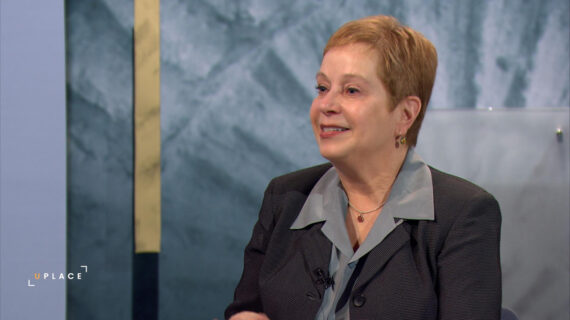
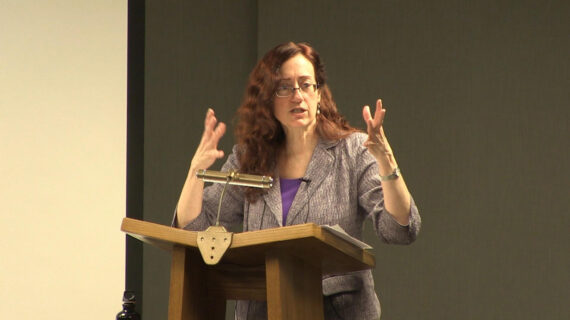
Beth Meyerand, a professor in the Department of Biomedical Engineering at UW-Madison, introduces a device that uses electrical stimulation via the tongue to induce a sustained behavioral improvement in balance in patient populations that have balance dysfunction.


Copy and Paste the Following Code to Embed this Video:
Relearning to Balance After Stroke or Brain Injury
CC >> Good evening and welcome to tonight's Wednesday Nite at the Lab. We are fortunate to have with us Professor Beth Meyerand. She's the principal investigator at the University of Wisconsin Madison's Applied Neuro MRI Lab. This lab is part of the Department of Medical Physics and the Department of Radiology MRI Research. Meyerand's research is in the field of magnetic resonance imaging, or MRI, of the human brain. The goal of her research is to develop new MR methods to visualize the structure and function of the brain and to translate these methods to the hospital for clinical diagnosis. Please welcome her.
APPLAUSE
>> Thank you very much for the introduction, and thank you all very much for being here, especially on such a beautiful evening. When it's lovely outside, it's hard to come into a windowless room, so I promise I'll try to make it worth your while. So I'll be talking a little bit this evening about some of our research to improve balance in different patient populations who have been afflicted by things like traumatic brain injury or a stroke. So, there are many problems with balance dysfunction and balance disorders. 69 million Americans have some type of disorder of balance, and it increases healthcare expenses, there's increase in falls, and, especially in seniors, a fall might be a major reason for going to a nursing home and losing independence. So it's an area that is very much worthy of research in trying to improve balance so that individuals will be able to retain their independence as long as possible. Unfortunately, though, there's, right now, very few therapeutic options for permanent impairment. So there's not a lot we can do for people who have balance disorders beyond just traditional physical therapy, which is not effective in all individuals. So I have been collaborating with the Tactile Communications and Neural Rehabilitation Lab here at UW Madison, and it's housed in the biomedical engineering department. And the individuals in this lab have invented a device that uses electrical stimulation via the tongue to induce a sustained behavioral improvement in balance in patient populations that have balance dysfunction. We call this type of improvement sensory substitution. And so what I'm going to tell you about in today's lecture it how this device works, how we think it's changing how the brain works, and then how all of these changes are sustained. So how they improve someone's balance over a long period of time. So I'll begin by talking about the device itself, and it's called CN-NINM. And I'll talk about just they physical therapy measures first, so how it works, and I'll show you a video of how it improves balance. I'll talk a little bit about the areas of the brain that are improved while using the device, and then I'll talk about some of our imaging results and show you the parts of the brain that are changed after treatment with this device. So, in terms of tongue stimulation, we've demonstrated that stimulation to the tongue improves behavioral and subjective measures of balance. And you might be thinking why is she talking about stimulation to the tongue? What does this have to do with balance? Well, the reason that we ended up stimulating the tongue is we chose the tongue because it's actually the most sensitive organ in your entire body to touch or any kind of sensation. And we're also going to choose electrical stimulation, and there's salt in your saliva so it's like salt water in your mouth and that makes excellent conductants between the electrodes and the tongue. So then I'm going to spend the rest of the talk sort of describing how sensations in the tongue can alter function in the brain. So this is the device, and this is actually an older version of the device. It's about five years old. We have a smaller version now. And you can see that it's basically a helmet that the person wears on their head and there's an accelerometer in the helmet, and then there's wires coming off the helmet that are attached to this electrode on the tongue. Now, the device that's used now, you don't need the helmet. It's just a small accelerometer that can sort of be positioned behind the head, and now it's wireless. There's so many wireless devices out there today. This can be wireless too so you don't see a wire going into the mouth, and the strip has been replaced by a retainer that looks just like a dental retainer. So there's no obvious things coming out of the person's mouth at all. So it's very unobtrusive. So the idea for this device is that if the person tips too far forward, so they're losing their balance and tipping forward, the accelerometer measures that and delivers a particular pattern of stimulation to the tongue. If they tip too far backward, it's a different pattern. If they tip too far to the left, it's a different pattern. Too far to the right, it's a different pattern. So the person can be trained to recognize that these different patterns of stimulation are telling them to move in different directions. And if you think about it, it's a little bit like braille where you're taking sensory information and you're converting it to a different sense. So in braille you're taking sensory information, sense of touch, converting it to visual substitution. This is sensory substitution where we're taking tactile information and substituting for the sense of balance. And what's really interesting about this device is even after the person takes it off, after they've been trained with the device, their balance is still improved for a period of about three to six months. And from what we know, this is the only device like this that has this function. There are other types of sensory substitution devices out there, and there's other types of neuro stimulation devices, like if you've ever heard of deep brain stimulation for Parkinson's disease. If you turn that device off, the tremors come back. Whereas this, you can turn it off or remove it entirely and the person's balance is still retained. So my lab is involved in trying to understand why this device works so while, why the effects last over time. So, we had the subjects experience different types of visual sensations in order to perturb their balance. We had them watch checkerboard videos. So there's a static video which they're just looking at a checkerboard. So you have black and white boxes, doesn't move, they're just staring at the checkerboard. Then we also have a dynamic image where the checkerboard is spinning. So it's rotating in and out. And if I were to look at something like that that was spinning, even though I have no balance problems, it would be very disorienting. It would give me a sense of vertigo when your whole field of view is filled with this spinning thing. And for someone who has a balance disorder, it's very, very disorienting. So what we wanted to do by applying this perturbation to their balance was to see how their brain reacts when there's a static image and then when there's something that's kind of making them feel woozy like they're going to lose their balance. And we monitor their head sway with this accelerometer. So when they were trying to stand up and watch this rotating checkerboard, they're kind of moving around, and we monitor this. And then, again, we want to ask some questions. Is this stimulation sufficient? And here is an example of the device. So it's just a strip of electrodes on the tongue. And you can see stimulation to different portions of this electrode strip, just as I said, correspond to different head positions. So when the person's head is right straight up and down, they fell stimulation right in the center of their tongue, and if they're tilted too far over this way, they fell stimulation over here, etc. So that's what it looks like. And then this is the size of the device. So here's a quarter so you can see in relation to a quarter how large this strip of electrodes is that's on the tongue. And, again, what we're trying to do is understand how the brain is altered with this device. So I'm going to show you an example. This is someone who has a mild traumatic brain injury, and this individual had already undergone physical therapy for about five years before we ended up trying to treat her. So what we're doing right here is having her try to walk down a hallway. This is before treatment with the device. So she's had normal physical therapy. We have not treated her with our device yet, and you can tell it's very difficult for her to walk down the hallway. We're having her to try and walk and look to the right while she's walking. And then look to the left while she's walking. And then we're trying to have her step over a cardboard box. You can tell this is very difficult. Then having her walk around these traffic cones. And walk up steps, which needs a cane and the handrail on the stairs. Then we trained her for two hours a day for five days with the device, then removed the device, and you're going to see another set of videos. So this is five days later, after the training. Now she's walking down the hall. It's amazing. Looking to the right. Looking to the left. Stepping over the box. Walking around the traffic cones. Walking up the steps. Yeah. It's just amazing. Walking down. So this was not part of our test.
LAUGHTER
But she was so happy she wanted to jump rope afterward which is something, clearly, there's no way she could have done before training with this device. So this device had actually been in use for a number of years and obviously it works, but there's a lot of questions from the scientific community. How does it work? And some scientific reviewers and we would try to submit papers would be saying I think you're just making this up. This is a perfectly healthy person. We're trying to make it look like she has balance dysfunction then she's walking fine. You have to show me what's going on in the brain. So this is where our imaging studies came into play. So we were able to actually show these changes in brain function. So we looked at 12 subjects with chronic balance problems. And, again, as I said, they were trained twice a day. They were 20-minute sessions for five days. And they were standing with their eyes closed during the training period. And we also used nine healthy controls. And we measured behavioral measures. So postural sway, how much they kind of swayed back and forth, due to this visual motion, spinning checkerboard, and we used three standardized measures to measure their movement. And then we used functional magnetic resonance imaging, and I'll explain that technique in just a minute, to measure the brain changes in response to this visual motion. So what's really interesting about this device is I've been telling you that it's important to have information on different parts of the tongue to tell if the person's tilting too far forward, too far backward. So basically there's information contained in those pulses you feel on your tongue. You know if you feel a pulse in the front, you've got to right your head in a particular way. Well something we also tried was information free pulses. That just means a pulse of noise. So there was no information. Whether or not they tilted too far forward, backward, left, right, they always felt the same sensation on their tongue. And I should mention too, the sensation isn't painful at all. It feels like a carbonated beverage. So like you're drinking a soda or something like that. So it's not a painful stimulation. So, when the stimulation is correlated or contains information about head position, we call that the HPSS version, and then CN-NINM is the information free version. Just has a noise pulse, no information contained in that. So we wanted to see if the information is important if the person still had balance function without any information contained in that pulse. So we measured things that a physical therapist would normally measure. They would normally measure things like dynamic gait index, activity specific balance composite scores, dizziness, handicap index. And what's interesting is even with no information contained in the pulses, the subjects improved on all three measures. So, really, all they did was they stood with their eyes closed, the device was on their tongue, and for 20 minutes they just felt a noise pulse on their tongue. And they did this for five days, twice a day for five days. That's all we did. And this is a graph showing that in all of those standard physical therapy measures, their balance improved and you could tell that their balance was very much like the lady that you saw in the video. So it definitely works even if there's no information, which from sort of a brain science perspective is really fascinating. I was thinking how in the world could this be working? So, again, no difference between these two methods of stimulation. So here comes the imaging study. So I said we used something called functional MRI, and it uses an MRI scanner. And probably many of you in this room have had MRIs. Whenever I give this talk, usually about a third of the people in the room have had MRI scanners, have had MRI scans. This is a scanner. I've had many MRI scans because every time we test out something new in my lab, we test it out on each other. So I'm often the scan volunteer for my students. And, basically, an MRI scanner is a large superconducting magnet. It does not involve radiation like you would get radiation with an x-ray or a CAT scan. That's not true with MRI. It's just a superconducting magnet. And so you'd lie on this table here, and a normal anatomical MRI image looks like this. So if you go in to get a brain scan, knee scan, wrist scan, it's a gray-scale image, and it looks something like this. And with MRI, you're basically getting an image of water in tissue. So the level of gray on the image is reflective of the water concentration in that particular type of tissue. So bone shows up black, then fat and tissue and blood and spinal fluid, all are different shades of gray because they have different water contents, essentially. And those anatomical images are very useful. They show us anatomy. If you have a tumor or a torn ligament, you can see that. But for brain imagining, we want to know how the brain is functioning. We don't want to know does the person have a brain or not or is there a piece missing. We want to know if it's working, and that's what functional MRI lets you do. So what you're seeing in this image, the gray-scale image here is the MRI, normal anatomical MRI just like the image above, but what's in color is the functional MRI part. So what we have here, the two colored blobs, are the primary sensory motor cortices. So one is the left motor cortex and the other is the right motor cortex. So that gives you functional information. If the person's motor cortex, their motor system, is functioning correctly, you're going to see these sort of blobs of colored activation. So, how does this work? What we do when you get an MRI scan is we put someone in the scanner and we acquire images very, very rapidly. We get an image every 40 milliseconds. So it's basically a real-time movie of the brain. So we have someone in there, we're getting these real-time movie images of their brain, and then we have them do something, some kind of activity. So what I've been talking about with this balance study is they're watching this checkerboard. They're either watching a static checkerboard or the spinning checkerboard. In the example I gave you on the previous slide, the person was tapping their fingers like this while they're in the scanner. So we were getting images and they're tapping their fingers. So in this example, I'm tapping my fingers, what's happening, I have brain activation. The part of my brain that's controlling the movement of my hands is active. And because it's active, we're going to have an increase in metabolism in that area of your brain that's active. Now, you probably all know that your body does oxidative metabolism, meaning that it needs oxygen. Whenever you have an increase in metabolism, you have an increased need for oxygen. And you probably also know that oxygen travels around your body bound to hemoglobin. So what you're going to do is have more oxygenated hemoglobin traveling to the part of your body that's active, doing whatever task it is that we're asking the person to do in the scanner. Well, I told you before that the MRI scanner is a magnet. It's a big superconducting magnet. So that means if I were to take a piece of metal, like this pointer, and I were to stick it in the MRI scanner, first of all that would be a very bad thing to do. Because it's a magnet, it would get sucked into the MRI scanner, but if I were to try to get an image while that piece of metal was in there, I'd see a black spot on the image where the object was because it's metal and it's interacting with the magnet. Believe it or not, there is enough iron in the hemoglobin in your blood to cause a similar effect. So the idea is when there's oxygen bound to the hemoglobin, it basically shields the iron so the iron cannot interact with the main magnetic field, and you don't get a dark spot. But when the oxygen is not bound to the hemoglobin, the iron is free to interact with the magnetic field, and you do get a dark spot. So for an MRI scan, we always have the person do an active state, so this would be tapping my fingers or looking at a rotating checkerboard, and we also have them do a resting state. I'm not moving my fingers or I'm looking at the static checkerboard. So I'm always comparing oxyhemoglobin, active state, to deoxyhemoglobin, resting state. And one key here is I told you there's more oxygenated hemoglobin traveling to the part of the brain that's active, your brain doesn't use all that oxygenated hemoglobin. It needs some of the oxygen, but your brain is so important your body actually does overkill and delivers more oxygen than you need to that area that's active. So you have an excess of oxygenated hemoglobin during an active state. So you have this active state, more oxyhemoglobin, no dark spot; resting state, more deoxygenated hemoglobin, you have a dark spot. So we compare those two sets of data, and that's where we get an fMRI signal increase with an active state. It's a small change. It's less than 5%, and that percentage depends on the area of the brain we're looking at. For the visual part of the brain, the visual cortex, which is actually quite large, it changes probably around 5% to 7%. But if you're looking at tiny areas of the brain, maybe like the hippocampus, it's going to be maybe half a percent. So that's a real engineering challenge for my lab. It's very noisy data. So any type of engineering signal processing techniques that you might use to pull signals from noisy data, we use a lot of those in my lab. So that's basically the idea. You don't have to inject anything into the person. It's a very safe technique. We're just looking at the differences between oxy and deoxyhemoglobin in the brain. And so here is an example. So I told you, you have an active state and a resting state. So the curve that you see in red, this is active, this is resting. We always do multiple cycles. Active, resting. Active, resting. Active. And then this is real data underneath. This is from a motor study. And what's interesting is it's very important that you know the timing of this pattern of active and resting because if you were just to subtract active and resting, it wouldn't work well because I'm in the magnet, I'm tapping my fingers, so you're going to see motor cortex active, my whole motor system, but I might also have my eyes open, so the visual cortex is active. If any of you have ever had an MRI scan, you know the magnet is noisy. It makes like a knocking sound. My auditory cortices are active. I may be in the magnet thinking I don't want to be in here, this is uncomfortable, I want to leave, so all those parts of the brain are active. So if you just subtracted active from resting, yeah you get motor cortex, or whatever area you wanted, visual cortex, but you get all this other stuff that you probably don't want. So it's just very messy data. So instead, what we do is we know that we asked the person, say, to tap their fingers for 10 seconds, rest for 20 seconds, tap for 10, rest for 20. So we are only going to look for signals that follow this temporal pattern. So even though the scanner was on, probably wasn't on 10 seconds, off 20. Same with having your eyes open, thinking about how you want to get out of the scanner, that didn't follow this pattern. So you're going to look for these signals that look like this that match the temporal pattern. Yeah? Do you have a question? >> I don't think your cursor's working. >> Oh, it's not. Okay. Thank you for telling me. I've been told I can't use a laser pointer. So I won't do that, but thanks for letting me know. I'll stop doing it. So you're looking for a pattern of activation that follows that temporal time course. And what we do is at every signal, and what I'm going to talk about is voxel. A voxel is a volume pixel. You're all familiar with pixels on TV screens and things like that, well an MRI, we have that third dimension. We actually have a volume. It's like a cube of tissue. So we call it a voxel. So at every single voxel in our data set, we compute a statistic that is telling us how closely our data matches that on/off pattern that I showed you. And then we just attribute a color intensity to the value of the statistic. So what you're seeing here are three perpendicular slices to the brain, and this was a motor study, so what's showing up in orange is the motor cortex and what's showing up in blue is just the rest of the brain. So the motor cortex was following that temporal on/off pattern the way we expected, the rest of the brain wasn't. So then all we do is we just threshold the data. So we get rid of all those blue voxels, and then we just keep the colored ones. They're hot colors so they have a high value of that statistic. Then we overlay them on the anatomical images. So everyone gets their own anatomical image, then they have a functional image. So that's the idea. I also want to make sure that you understand that this is an indirect measure of brain activity. So it's not like something called an EEG, if you've ever had one or seen one. It's where you have electrodes that are placed on the surface of the skull. They look like wires that are on the surface of the skull. They actually measure neuronal activity. They measure neurons firing in the brain pretty much in real-time. This fMRI is measuring a blood flow response that is a result of the neural activity, so it's kind of indirect, and the reason I mention is is because it's important to realize it's a blood flow technique. So anything that affects blood flow is going to affect our data. So even if you drink, say, three cups of coffee before you get an fMRI scan, your blood flow will be different and the results will be different. And there's a lot of medications that you could be on that will affect your blood flow that will affect these results. There's all kinds of brain pathology that you can have that would affect this. So it's just an important thing, it's kind of a pet peeve of mine, often when you read about fMRI in the popular press they talk about here's a map of brain activity. It really isn't. It's a map of blood flow that's indirectly related to brain activity. So that's how fMRI works. Now I'll show you examples of how we used it in our study. So, as I said, we were having these people look at static checkerboards, that was the resting part, then they were looking at these spinning checkerboards, that was the active part of the scan. And we had them scanned before we treated them with the device and after they were treated with the device, and then I'm comparing this to a normal control. So these are fMRI maps. This is pretreatment with the device, post-treatment, and then this is a normal control. So we're going to compare these, and these blobs of activation that you see here are three brain areas. One, V1, is primary visual cortex. Then there's area MT which is involved in the processing of visual motion. So it's the part of your brain that allows you to see things that move. And then PIVC is also part of the visual system. Yeah? >> You still have no cursor. >> Yep, and I won't have one either. Something's wrong with the computer. I apologize. I won't be able to use it. >> Use the laser pointer anyway. >> Okay. All right. There we go. At least you guys can see it. So what's interesting about this data is you can just look at this, after treatment with the device, the patterns of activation look a lot more similar to the normal controls. Notice that these blobs of activation are a lot bigger pretreatment than they are in the normal controls. So what we're kind of interpreting for that is that there's some kind of hyperactivity. It's like the brain is hyperactive in terms of its processing of visual information. And if you've ever had a balance disorder, like I've had a virus in my inner ear, and I've notice I am hypersensitive to visual motion. Walking through a grocery store or seeing moving objects, it just is very intense, and it's hard to deal with. So just having experienced this myself, I can understand how that part of the brain would be affected in this kind of case. There are other scientific studies that have investigated the response of the brain to visual motion, and that's one of them here, healthy controls in patients with, in this case it was balance dysfunction. In this other study by other scientists, again they saw this hyperactivity of the same brain regions that we saw. So that kind of just makes us more confident in our results. So, we saw activation of the structures that are involved in visually processing, we saw this larger hyperactive activation in patients, and this area MT, part of the brain that's again involved in processing visual motion, is stronger in patients, as I said, before treatment with the device. So this was really interesting. And what, again, was interesting is, if we're comparing, no difference between post and the control. There was no statistical difference. We actually went through and did statistics on the size of these regions and the intensity of the activation, and there was no difference after treatment. So our conclusions from just this imaging part of the study were that this information free, just noise pulse on the tongue, improves balance measures. So this stimulation alone is beneficial. And we also saw that there was an improvement in their balance in response to this optic flow or this rotating checkerboard. So, again, after treatment with the device, the visual part of the brain responded similar to in healthy people, and we saw this change in brain function in the area of the brain called the dorsal pons, and so we're kind of curious, okay, this is what seems to be changing after treatment, wonder if that's maybe the target of the therapy of this device. Yes? >> Was the stimulation random? >> No, the stimulation was not random. And what's really interesting, this is just is pilot study. Everything I'm showing you today is hot of the presses. We have not played with any attributes of the stimulation. It would be great to see if it was random, change the intensity, change the frequency, change the area over which the stimulation occurs. We would love to do that. So that's a really good point. >> So it was driven by the accelerometer but it was not specific to an area. >> Correct. Yes. Yes. So the next question we wanted to answer is what areas of the brain are really important to balance, and can we investigate those with MRI. So, what we used in order to do this is a technique called ICA, or independent component analysis, and it sounds like a really long word and a fancy technique but it's really simple. And the best way to describe it is, for example, if you have two speakers in a room, so these two people are talking, and then you have crowd noise in the background. And you have two microphones, one here and one here. So each of the microphones picks up the signals from the crowd and the signal from both speakers. So that's true with both of these mics. They're picking up a mixture of signals, and you can run these audio signals through a computer program called ICA. So you can convert the auditory signals to a digital format, run it through ICA, and this computer algorithm, ICA, has the ability to actually separate out speaker one and speaker two. And it's kind of cool. It's something I know that the FBI has used. You can put speakers in a room and you can use ICA to hear what individual people in the room are saying. So it's an amazing technique. It has a lot of uses, but what's cool about using it for MRI is we can stick all of our data into it, and what it's going to give us as an output is all the different brain regions that are active for our task. So different areas of the brain have different responses to visual stimuli. Some of them only become active at the very beginning of seeing the visual stimulation. So rather than having sort of this sustained, 10 seconds on, that curve kind of plateaued, some areas of the brain are like spikes, like tines in a comb. They look more like that. But we don't know if we're going to get that or not. This was kind of a fishing expedition. We wanted to know what areas of the brain are going to be active in response to using this device under experimental conditions when we're perturbing the balance. So I see as a great method to use for these kind of fishing expeditions you don't quite know what you're going to see, you put in this mix, it spits out what's in the mix, and you don't have to know anything. You have no prior knowledge of what you're going to get out. So what's kind of interesting is two signals showed task related time courses. That means the signals corresponded to the timing pattern, roughly, that we had the static checkerboard and the rotating checkerboard. So these were area V1, and this is area V1 so it's kind of in the back of your brain. And like I said, it's pretty big. The visual part of your brain is quite large. And then also visual motions area. So this is area MT, the PIVC, and the brain stem. So these are very reasonable results. These are areas that we might expect to be seeing in response to some kind of task that involves some kind of thing that's moving in your visual field. So, in terms of the effect of CN-NINM in our experiment with these patients, so this is just a plot of our balance subjects. So each subject, rather than having their names here, we've just got them as letters. And here we're looking at percent signal change. So in pretreatment is in white and post-treatment is in dark gray and the controls are in dashed boxes. So you can see, pretty much in every case, like I showed you with those images before, pretreatment there was always greater signals, this hyperactivity. So we saw this with the ICA analysis too. We're basically trying to repeat the experiment in as many ways as we can to be really confident in our results. And we saw that these motion related responses were up-regulated, or hyperactive. When I say up-regulated I mean hyperactive, big signal intensity, in balance impaired subjects compared to controls pretreatment. And, again, this response was decreased after this treatment. No difference between post and control. And that's what you see on the far right-hand side of the graph. So we're concluding that there's a whole network of brain areas. It's not just one brain area that responds to visual motion. So all these areas are showing up in our ICA analysis. So that's really important to know what areas are active. I also talked about this network hypersensitivity, this up-regulation of part of the brain. And this CN-NINM affects the entire network. So the response of the network of brain areas to motion decreases after CN-NINM stimulation. We actually saw a decrease in the area of those blobs of activation and in intensity of the activation. So that's what we see, but we want to ask more interesting questions like how does the information flow through the network? I've showed you where all these areas of the brain are active, but how do they communicate with each other? I've told you they're part of a network, that's nice, but I want to know is this part of the brain active first and does it drive this part? Does that part drive this part? I want to know how the whole thing works together and improves your balance. So that's the next question that we wanted to ask. And to do that, we use an algorithm that my lab uses a lot, and it's something called dynamic causal modeling. It's basically a way of mathematically modeling brain function using different types of data. So what it lets us do is to estimate the influence of one brain region on another, which is kind of what I just said. This area is active first, then that makes the next area become active, which makes the next area come active. You use this algorithm called DCM, and it lets you do that. So it allows three types of interactions. So it allows you to see is A influencing B? It also lets you look at is a particular task influencing A? So is this rotating checkerboard making brain area A light up? And it even lets you look at modulatory effects. So, for example, is the checkerboard rotating, that's my task, affecting the influencing of A on B? So those are pretty high level questions. It's letting you ask a lot of different questions which lets you make some very powerful statements about how all these brain areas are working together. So the one current problem with this technology that there are statistics students in my lab and mathematicians are trying to improve this, is this dynamic causal modeling method requires predefined brain regions. So in order to run the software, you have to have a first guess at what brain regions are going to be important. So it could be that there are other brain regions that are also really important. I don't know what they are so I haven't included them in my model. It's not an optimal algorithm. So in terms of development of the technology, that's one way that a lot of this, I think, is going to move is not needing to know this predefined model because if I'm wrong, then you don't get a lot out of it. So I'm going to, though, use the four brain regions that I've been showing you on those images. So area V1, MT, the PIVC, and the brain stem. And I'm going to combine them in as many different ways as I possibly can. So in order to select the best model of how the brain regions are interacting with each other, I'm going to look at how well does the model fit the data, and I'm also going to penalize my model for complexity. I don't want a really complex model, honestly, because it's going to take a really long time for the computer to work if I let it be too complex. And I don't know enough about how the brain works, nobody does, to make it really, really complex. So we're just starting with some very basic modeling. And I'm going to look for models that are strong across all my groups of data, pretreatment, post-treatment, and controls. So here, I've got a plot of different models. So the models are the way that these four brain regions are interacting with one another. So you can think, is A driving B, then C, then D? Or maybe A is driving C, then B, then D. Maybe A is driving D, then C, then B. So that's where all these different models are coming up with. You can just imagine those circles that I showed you moved in different order and having feedback loops on each other and that kind of thing. So what you're seeing is, in blue, this is pretreatment, the dark orange is post-treatment, and then that kind of yellowish is the normal controls. And we saw two models that really outperformed the others. It was this one and this one. And this model right here is one of the ones, I'm going to show you a blown up version so you can see it better, one of the versions that we looked at. We didn't have a single model that was best across all individuals. It was kind of down to those two. And so we grouped these models into families by similar connections. And here's the way they are. So this is one model that showed up as having a very high probability of matching the data. And this is another one that had a very high probability of matching the data. So it's just got a different order in which these different brain regions are interacting with each other. So the one that finally won out, that matched the data the best, we did some more statistical analyses, and that was this one right here. And we found that there was two important interactions that showed differences after treatment with our device. So what you're looking at here is area V1, area MT, PIVC, and the brain stem. These red arrows imply a positive interaction, sort of like a driving force, one area of the brain pushing the other one to turn on. And then you also see a blue arrow, which is a negative interaction, which is one area of the brain telling another one to turn off, to not be active. So this is what our model is, and when we ran it through dynamic causal modeling, it's giving us this information. So the likelihood which areas are driving the others, this is the stationary checkerboard which is driving the primary visual cortex, and then this is the rotating checkerboard which is driving these two areas. So what we saw is that motion dependent connection from V1 to MT, so it's this connection right here, increased in balanced subjects. So after treatment, these same subjects no longer had an increase in this connection. So this connection right here between these two, that might be what's making this whole network hyperactive is this connection right here. We saw this was very strong in patients before treatment, then this connection was much more like normal controls after treatment. We also saw that the brain stem that received projections, so it was receiving information from area MT, so that's this connection right here, here's the brain stem, it responds to motion in the visual field after CN-NINM but not before and not in controls. So it's kind of this connection here is acting differently before and after treatment. So we know from knowledge of neuroscience that there's different areas in the brain stem that are involved in balance and processing of motion information. And we know from our knowledge of neuroscience that these are individual nuclei, or you can think of those as pieces, individual pieces of the brain stem, but all the imaging that I've showed you so far, the resolution is not high enough for us to be able to make out those individual nuclei. So the problem is that what we have, the images that I've been showing you thus far, are very blurry. The voxels are actually quite large. They need to be large because I told you that our signal change between active and resting is only a few percent. So if the voxels are really, really tiny, we're going to get even less signal. So we want to try to have pretty big voxels so we really have more stuff that we're getting signals from in order to get enough signal so the poor person isn't in the scanner forever. If we scan somebody for three hours, we get lots of signal. Nobody wants to be in there for three hours. So a typical scan time is about 45 minutes. That's as long as we want to keep people in there. We're constrained by that so we end up having kind of blurry data like this. For large areas of the brain, like that visual cortex, not a problem. Big area of the brain, who cares if we don't have high resolution. But for these brain stem nuclei, it really does matter. Here I focused in on the brain stem. So this is what our functional resolution data looks like in the data I've showed you thus far. It's just kind of one blocky blob of activation. But if we, instead, do high resolution imaging, you can actually distinguish two separate areas. And this is because of our knowledge of neuro anatomy, we know that it's supposed to look like this, that we would expect to see two areas. They should be symmetric, but at least we see two of them and not just one big blocky blob on one side. So we did a whole other set of experiments that were much more high resolution to try to get information from these brain stem nuclei because we knew that they would be important to understanding this whole mystery of what was going on in the brain. So we did these high resolution studies, and we performed these in eight subjects that had this balance dysfunction. We used the same stimuli, so the static checkerboard, the rotating checkerboard. And what we found is the visual motion, so the rotating checkerboard, activated two areas of the brain stem, and again, your brain stem is kind of down deep. It's sort of at the level of your neck. It's where your brain connects to your spinal cord. So that's the part of the brain we're talking about. And visual motion activated the vestibular nuclei and the inferior olive. And I've drawn a little cartoon over here of what it actually looks like. So this is the trigeminal nucleus, the vestibular nucleus, and this is the inferior olive. And this is the actual data superimposed on an MRI scan. And then this is just another example of some of our data. So what we found is after stimulation with the device, that increased the response of the trigeminal nuclei to visual motion. And that was actually really cool. That was amazing because we know that the vestibular and olivary nuclei process visual information pertinent to balance. We knew this based on our knowledge of how the brain works. So we were really happy to see that data. It made sense. We also know that CN-NINM improves balance measures, so we have this reduced postural sway and reduced susceptibility to optic flow. That means they were less bothered by seeing this rotating checkerboard. They didn't immediately feel like they were going to fall over. And they had improved scores on all physical therapy measures. And we also saw that CN-NINM normalizes the brain's processing of optic flow, meaning that after treatment, their scans looked a lot more like those with normal controls. And we believe that there was a decreased network response to optic flow. You don't have that hyperactivity anymore that we saw pretreatment. So kind of our general conclusions from all these studies, and again this is pilot data. I've shown you data from eight subjects and 12 subjects. There's a lot more we want to do with this over the next many years. So we saw that CN-NINM causes sustained neuromodulation. So this is increased task related brain activity. All of the trigeminal nuclei and this is a really exciting finding because the trigeminal nuclei receive input, so they have fibers connecting them, directly from the tongue. And that's likely where the stimulation connects with the balance processing at work. The whole time we were thinking how in the world is the stimulation of the tongue somehow connecting to what's going on in the brain. And this is kind of the key to all that is we saw that activation that I showed you just in the previous slide from this area TN, trigeminal nuclei, we know it's connected via nerve fibers to the tongue. So that's probably how the sensation on the tongue is traveling up to the brain is through those fibers that go to the trigeminal nucleus. And we also know from other scientific articles that previous tracer and behavioral studies have shown bidirectional connections between the trigeminal nucleus and the vestibular nucleus, and the increased activity in this area after CN-NINM may represent the way in which stimulation induces this neuro plasticity, the change in the way the brain functions, to produce these sustained beneficial effects. So we're still trying to understand how does this work over time when the device is turned off. This may be a secret to that. So here's kind of what we'd envision all of circuit to look like. This is kind of a little cartoon that I drew up. So what you're seeing in the dark box here, I want this to represent the brain stem. What you're seeing in the gray box is the cortex. So here's my eyeball, and it responds to motion, visual motion goes right to vestibular nucleus. And then all visual stimulation goes right to area V1. And then there's a bidirectional connection between area V1 and area MT. Area MT is driving the PIVC, and area MT is driving the trigeminal nucleus. So we believe that CN-NINM via those fibers that I talked about that run from the tongue up to the brain to the trigeminal nucleus, there's that. So everything I'm showing you here in solid lines, we discovered from our experiments. What I'm showing you in dotted lines to kind of complete the picture is data that other people have published in journal articles. So we're trying to combine what we found with everything that everybody else has already discovered to give a complete picture of what we believe is going on in the brain, and then try to see if this makes sense. So previous studies have showed a connection between area VN and TN. And we also know that this is the thalamus, and the thalamus is a structure deep within you brain that basically straddles the cortex and the brain stem. It's kind of like the big network area where a lot of different brain connections meet and go from the brain stem to the cortex, and we know that there's a connection from the thalamus to area MT. And we also know that there's a connection from the trigeminal nucleus to the thalamus. So this would kind of complete our whole picture of what's going on in the brain. So where we want to go with this in the future, I told you that this is very preliminary, we want to do some dynamic causal modeling that includes the thalamus. The thalamus is a very important part of your brain. It's involved in motion and movement. And the first time I mentioned it in my talk is just in this last slide, where we think it might be in the model. So we need to actually run experiments, use tasks, stimuli, that include the thalamus. And we also want to include some more appropriate vestibular stimulation. So we just have people looking at the spinning checkerboard. You can also do things like put water in someone's ear, and that can really give somebody a sense of vertigo. We like to do this actually in the scanner. We want to see what's going on in their brain when they're feeling that effect because everything that I've shown you so far, it was before and after treatment. So it's a little bit different. So we'd also like to look how neuro modulation of the trigeminal nucleus, that area that I talked to you about, induces it to respond to visual motion and how this alteration propagates to the cortex. We didn't cover that at all. We know that this area TN is really important because that's where those nerve fibers are going. From the tongue it goes first to TN, but we haven't investigated really anything that goes out of TN and goes to the rest of the brain. So we need to do that. Also, we need to look at other cognitive networks. You know from how you keep your balance that it's not just motion or vision. It also involves memory, attention, I'm aware that this podium is right here. When I touch it, I'm keeping my balance. There's a lot of different factors in your brain that are involved in keeping your balance. So we have just really touched the tip of the iceberg in terms of getting to those questions. And, as I said, we want to look at using the device actually in the scanner. So we'd love to have the device on their tongue while the person is in the scanner, not do it before and after treatment. And what this is going to mean is I told you that the MRI scanner is a magnet, you can't go putting metal wires in a magnet. If any of you have had MRI scans, you know that there's a sign that says you can't have a pacemaker and go in the scanner, you can't have wires, so we're going to have to design and MRI compatible version of the device, maybe with fiber optic wires, and we're going to have to decouple that device from the scanner. So sort of make sure they don't talk to each other or interfere with each other. And that's all doable. That's very feasible and that's one of the next things that we're going to try. Also, we have not dealt with the whole concept of having a placebo. So you know if you've ever been in a drug trial, there's a placebo which would be like a sugar pill. So you never know, if it's a blind study, if you're getting the real drug or a placebo. And then the person, the physician, will, say, do brain scans or whatever tests they're going to do, and then they can see if the drug had an effect or not because there's a placebo group which they're going to compare to the treatment group. The problem with this particular device, as I said, you always feel the sensation on your tongue. So it's really obvious if you're in the placebo group, you don't feel any stimulation on your tongue. So you don't want to give away who's in the placebo, who's not because then there's also psychological effects. You know you're not in the treatment group, so it's just very problematic. So we're struggling a little bit with how we design and appropriate control group. But this is necessary in order to really interpret our data correctly. And this is interesting too. So I'm talking about using this device for people who have had a traumatic brain injury or a stroke. But you could imagine even using this in healthy people who want to improve their balance, like athletes for example. Gymnasts is a perfect example, but almost any athlete, golfers, balance is very important if you play golf. So you could see this, people wanting to understand this and use it in a variety of different sports. Even just normal aging, we all know that our balance deteriorates as we get older. Wouldn't it be great to have a device that you just tune yourself up on this thing two hours a day for five days, you're not going to trip and fall. Really, I'm kind of joking about it, it would be great if it actually worked and people can retain their independence, people aren't falling. It would be a wonderful thing. So it's definitely worth further research, and there's a lot of diseases that would benefit from this, possibly. I haven't talked about multiple sclerosis, Parkinson's disease, really any disease where balance is affected we'd like to explore this. It's also quite possible, though, that very different brain areas, sort of the network that's involved, could be very different depending upon the disease that we're looking at. So it'd be a really interesting study to explore. So I want to end with some very, very important thank yous. The people on this right-hand part of the slide, these are the individuals that invented the device. Kurt Kaczmarek and Mitch Tyler have the patent on the device. Yuri Danilov is a neuroscientist who's been involved and critical to this development for many, many years. So without them, the device would not exist. And so that's extremely important. They're the engineers who created the technology. I'm the imager who really tested it. Then this gentleman here, Joe Wildenberg, is the graduate student who did all the studies that I've just described in my presentation. So again, without Joe none of this would be possible. He has earned a PhD in neuroscience, and he will be graduating with his MD in May. So he's and MD PhD student and he's going to be a neuroradiologist. So I've had a tremendous amount of help on this. It's not like I just did this on my own. So I want to thank these people very much, and I want to thank you all very much for your attention.
APPLAUSE
Search University Place Episodes
Related Stories from PBS Wisconsin's Blog










Donate to sign up. Activate and sign in to Passport. It's that easy to help PBS Wisconsin serve your community through media that educates, inspires, and entertains.
Make your membership gift today
Only for new users: Activate Passport using your code or email address
Already a member?
Look up my account
Need some help? Go to FAQ or visit PBS Passport Help
Need help accessing PBS Wisconsin anywhere?

Online Access | Platform & Device Access | Cable or Satellite Access | Over-The-Air Access
Visit Access Guide
Need help accessing PBS Wisconsin anywhere?
Visit Our
Live TV Access Guide
Online AccessPlatform & Device Access
Cable or Satellite Access
Over-The-Air Access
Visit Access Guide




Follow Us