

 Passport






Preserving and Restoring the A.D. German Warehouse
03/18/13 | 52m 18s | Rating: TV-G
Peter Rott, Architect, Isthmus Architecture, Inc., Madison, discusses the Frank Lloyd Wright-designed A.D. German Warehouse is located in downtown Richland Center. Rott provides his perspective on what might be done to enhance the future of the Warehouse.


Copy and Paste the Following Code to Embed this Video:
Preserving and Restoring the A.D. German Warehouse
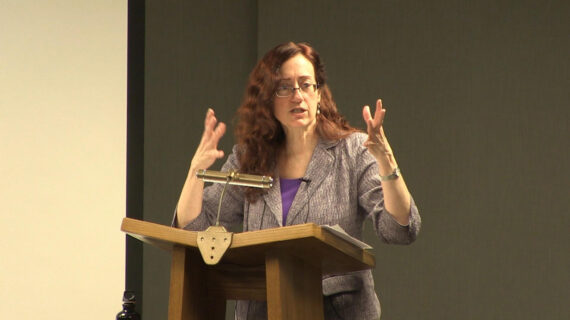
cc >> Well, good evening, everyone, and thanks for coming. Welcome to the third in a series of lectures on the AD German Warehouse. Now, thus far we've learned about the architectural history of the warehouse and about the man whose name it bears, AD German. Tonight, we'll have a bit of a look at the future. I first met our speaker last June when a number of community members and I gathered here on the UW Richland campus with members of the Frank Lloyd Wright Building Conservancy. Our topic was the future of the warehouse. Peter Rott, our speaker tonight, was part of that conversation. Peter has roots in Richland Center. He told me that in his youth he frequently walked by the AD German Warehouse and admired it. Peter also has roots at Taliesin. He completed his education in architecture there where he participated in an innovative program established in 1932 by Frank Lloyd Wright and his wife Olgivanna. Peter received the first professional degree offered by that institution. A master of architecture granted in 1985. Peter Rott is co-owner of Isthmus Architecture in Madison, Wisconsin. Now, Isthmus Architecture has a regional reputation for historic preservation. Their first project was a restoration of the Wisconsin State Capital. Isthmus Architecture has partners with a number of different cities, organizations, the city of Madison, the city of Racine, the Frank Lloyd Wright Foundation, the National Park Service, the National Trust for Historic Preservation, the Wisconsin Historical Society, and the Wisconsin Department of Transportation. Peter Rott is an active member of the Frank Lloyd Wright Building Conservancy. In advocating for the ongoing preservation of the extant work of Wisconsin native Frank Lloyd Wright. Tonight, Peter Rott will be speaking to us on the topic of preserving and restoring the warehouse. Peter.
APPLAUSE
>> Thank you, Dean. Thank you, everybody. So, if you've been to the previous two lectures, you've had an introduction. And my talk, hopefully, will dovetail nicely into the two previous talks. But I will be doing a little bit of background and a little bit of setting the context here, which might be a little bit of repetition. I apologize if it is. So, preserving and restoring the warehouse. Preservation is my specialty. It's what I do for a living. And, as Dean said, this is a building near and dear to my heart, having walked around it and deciding to go into architecture. The great thing about this building is it's built to last. I'm going to give you a little introduction into how we do what we do in my office and the building here serves as a really good example on how we could do our work. So, Frank Lloyd Wright. Very famous American architect. Some arguably say the most famous architect. Many, many stories about Wright. Good, bad, otherwise. For every fantastical one, there's a very humbling one. I keep hearing more and more of them all the time. In any case, Frank Lloyd Wright was awarded the highest honor in the architecture profession in 1949, and decided not to list all the other things that he did as accomplishments because they wouldn't all fit on the slide. But let's just say he didn't retire, Frank Lloyd Wright, when he died at the age, well, the age is arguable too, whether he was 90 or 92, but he had 150 active projects in his four offices, his offices were at Taliesin in Spring Green, Taliesin West in Phoenix, an office in San Francisco, and his field office for the Guggenheim which was in the Plaza Hotel in Manhattan. So, he was very busy. So, why? We certainly know that this is not the first time preserving this building has come up. And I'm sure you all walk around this building a lot, drive by it a lot, and there it is. And it's going nowhere. It's very solid. It's very permanent. But it needs help, and it's got lots of issues. Some people will tell you it's maybe not saveable. I will tell you it is very saveable. The great thing about this building is it's probably one of the best built buildings in the city. It's certainly one of the most significant buildings in terms of size and permanence, irrespective of its fame and notoriety of being a landmark. It is a designated landmark. It is on the National Register of Historic Places. It is on the Wisconsin Register of Historic Places and has been listed on the most endangered list here for some time. So, a little history lesson. Other things Wright was doing. Okay, Wright did a lot in commercial buildings with brick and concrete. And his work was trying always to push the envelope. At the upper left of the screen, we have the first atrium building ever constructed. This building, in its very massive form, has a lot in common with the AD German Warehouse. And the building in the lower right, similarly so, but it's a Unitarian meeting house in Chicago. That was one of the first all poured concrete buildings. Both of these were extremely important buildings in not only Wright's career but in the development of architecture here in the United States. Here's our situation now. The one in the upper left was demolished during Wright's lifetime. He even tried to save it. All that's there in Buffalo now is a big pillar that's kind of leaning over in what used to be the parking lot of the company. It came down in the 1950s when we really, really just thought new was the only way to go. We got to knock it down. We got to build new. The building in the lower right has had preservation work done to it. One of Wright's most famous buildings here was built during the very time that the German Warehouse was going up. Wright was spending a lot of his time in Japan working on this large hotel, but, likewise, it's not around anymore. There are some remnants that you can find in a park in Japan, but the whole hotel is pretty much gone. Mrs. Wright tried to save this building. She was the last person to sign the guest register, and when she left, they boxed up all the China and sent it back to Spring Green with her. But, as I say, I was too late. It was pretty much a forgone conclusion that the building would be taken down. This building was designed to resist earthquakes, and it actually did, but when they put a subway underneath the back end of it, it undermined the structural idea and then it sort of took the long route to its eventual demise. I think it probably was really a victim of the high cost of land in downtown Tokyo. But the structural system had begun to fail too. So, German Warehouse. Looks pretty good. And that's the thing. It really does look pretty good. It's really just never been used. Nearby in Milwaukee, we have probably like a first cousin to the German Warehouse. This is the Bogk House, and this house was lived in. This house is well maintained, but it has a very similar, and this may have been talked about in the earlier talks, but a very similar brick patterning and a poured concrete frieze underneath a big hip roof. And the poured concrete has a motif which includes human figures and little windows on either side of their outstretched arms. It's pretty intricate. It's really more intricate than the frieze on the German Warehouse. So, those buildings, a lot of those were not standing anymore. The Bogk House and the German Warehouse are really, really significant to scholars and to the architectural community because during the time that Wright was really spending most of his time in Japan on the hotel, these are the two main buildings still standing that were built in America. So, that's really added significance. Later on in Wright's career, more concrete, more brick in much different form, but, of course, this building, very famous, it's in Wisconsin, and it's still being used. Outside Wisconsin we've got other famous buildings. The German Warehouse is right up there with those buildings. What an advantage, though. Here in Richland Center, we have a building that people who know about architecture are as familiar with as they are the Guggenheim Museum or Falling Water. That's pretty darn cool. So, there's been a lot of preservation on Wright. There's been a lot of it in Wisconsin. These are a few examples of buildings in Wisconsin that have or are undergoing preservation. And the upper left is a house in Columbus, Wisconsin. In the upper right is a building near Taliesin called the Wyoming Valley Grade School. And below that is a wood and stone house called the Pew House. That's on Lake Mendota in Madison. The bottom center is a house called Tan-y-deri House, which is on the Taliesin estate. This was a very early home. Predates the German Warehouse. It was built much later than it was originally designed. But the clients were Wright's sister and brother-in-law. Later on that became part of Taliesin. That's the photo on the left side. And my firm has participated in most of these projects here that I've shown you here. We'll talk about those a little bit later. So, if we were going to proceed to do a project to save the warehouse, what would we do? Pretty much the same thing we do with all of our other projects. I'll walk you through that. One of the main things that we do with historic buildings it to develop a very comprehensive report, and it is called a historic structure report. And it documents all the facets of what the building's like right now. It's a snapshot. And a document like this is probably relevant for about five years, and then if you haven't done anything by then, you need to do another one because it's really looking at what's going on there now. It also formulates a plan for how to do what we call preservation treatments. How to take care of the issues of the building. And, finally, at the very end, it puts some budget estimates with that and some potential phasing, and most projects are not done all at once, and how would you do that and what would be a logical sequence. This particular one is a work in progress for the Al Ringling Theatre up in Baraboo. They all follow the same structure. Another standard document that we do for projects like this is a feasibility study. And, actually, this is something that has been discussed amongst some people here in Richland Center for the AD German Warehouse. This is probably a more necessary document for the German Warehouse, and the reason is that the historic structure report is less relevant for this building because it's not ever been completed and it's not ever been occupied. It's an unfinished building. So, it doesn't have mechanical systems, per se. It's kind of like a shell which just needs to be finished. And, therefore, we can move to step two much quicker. The feasibility study is really the plan of, okay, we restored the building, what are we going to do with it? What's its function? What's its use or uses going to be? And what kind of rents is that going to bring in? Is it going to cash flow? Is there gong to be a viability to the place after we've got the envelope stabilized? The feasibility study looks at a lot of different things, and a lot of it has to do and it will have to do with this building and things like tourism and how far away people might come for various activities or to, say, to work in the building if there were office space. And, so, there's a lot of analysis there. And then there's a lot of the cost factor. The build out of the space. It's really mainly about cash flow. It's coming up with a viable plan that will take it from just restoring the building but making it a viable, livable envelope. So, in either case for those documents, we look at what do we have. Well, we have some great existing documentation on the building. All the existing drawings that there are do still exist. They're accessible. We know where they are, and there's been a lot of research done on the building. There are some people who have written their dissertations on the building. There is a local historian who wrote a book on the building. So, there's lots of sources for what we call primary source material. These are copies of Wright's drawings. The drawings are linen drawings. He drew these on waxed linen, and they're done with ink. What we have here basically is a four-story building, very basic rectangular shape, regularly spaced window openings, regularly spaced columns, and then the small annex off to your left. Nice, wide open, flexible space. And you can see the notations on the right tell you just how much. Basically, we've got about 4,000 square feet per floor. A big house. Each floor is a big ranch house. It's not that big a building as far as buildings go. Some great sections here. You can see some details on the building are actually, well, on the drawing are not actually on the building. Such as, off the corners were tall flagpoles which were never constructed. They could be. So, one thing our preservation architects do is we analyze the building pathology. And this can be a little painful. Basically, from the moment one constructs a building, it begins to deteriorate from the very day it's finished. And what we do is study the path of deterioration. Here in this building, it's textbook, and it's also very familiar to us. My office does a lot of work with load-bearing masonry buildings. This is exactly what this is. So, we have very thick brick walls. These walls dry to both sides. Really early construction from this period going backward, all the walls dried to both sides. Now, since we have buildings like this which are brick on the outside but then insulated, we build different kinds of walls, but it doesn't mean that we can't still use buildings like this which are just solid masonry. But we cannot get the optimal performance out of this building that we could out of a new building or a newer building like this which has the insulation. And we've learned in preservation, just since the 1970s really, some very powerful lessons about how much you can tweak these old buildings and how much you can expect to reduce your energy bill and increase you comfort and so forth. It's still all good. This is probably our most challenging problem here is the deterioration of the very, very ornate parts of the building. I would say from what I know of this building right now without going through it in great depth is that we mostly have cosmetic problems. They are about to become much more than cosmetic problems, but they haven't really yet. So, what I mean by that is, in the upper left, you see how it's eroding, it's falling off, it's spalling. Moisture has gotten into the concrete and the freeze/thaw cycles have started to make it pop off. But I'm not seeing any steel yet, and that's good. Once we start to see steel exposed, then we've got a much bigger problem. And down below that, you see the brick has a white, frosty kind of texture on it. That's called efflorescence, and that's the salts coming out of the concrete and the mortar. It happens to brand new buildings. You can clean it off. It's not a problem. It's indicative of a problem, but it's not a big worry yet. So, this is what we would do to the building if we were ready to start. We probably would scaffold the thing. And everybody in our office has this sort of getup, and we would clamp ourselves onto a cherry picker and go up the side and really start looking and poking and really looking very, very closely at the condition of the building. Then if we encountered some problem areas such as cracks, we might put something on the building, like in the lower right we have a crack meter. We would photograph that at intervals if we thought there was movement. And I don't think we got that problem in this building, but I can't say that for sure. And then we would actually take a tool and we would survey, in depth, a lot of the joints in the brick. And what we would try to do is to identify the good parts, the bad parts, the patch it, the rebuild it, different stages of work. So, we don't want to say that the whole building needs to be repointed if it doesn't because you repointed joint hardly ever will look like your original joint. The really interesting thing about this building is, from the book that was written by the local historian, we know where the aggregate for all the concrete came from, and we know what the concrete mix was. We know the whole recipe, and that's exactly what we would use to put it back together. There is work that has been done over the years. Very little, but there has been some work done to some of the joints. And if you see, as you go by the building, if you see gray mortar, that is a Portland cement mortar. That has come about and is commonly used now more and more and more. And it wasn't used at all when this building was built. This was built with lime-based mortar. Very natural. You burn the lime. Limestone, we got a lot of limestone around here, and so everybody had a lime kiln. They made their own, they burned their own, made their own lime. And, as Wright said, you're making the building out of things in the area, definitely. And this mortar is much more forgiving than the Portland mortar. The Portland mortar actually will start to destroy everything around it because it's about 20 times stronger than the brick. It just won't give up. And we've actually seen buildings that were being destroyed by the maintenance efforts of repointing. If you can imagine that. But that's not a big problem here. It's only been minimal, very, very minimal work like that done on this building. It's hardly even a concern. There's a piece of the building on the left. This aggregate is super, super fine. And that's part of the finished surface concrete. I've got a diagram on the right kind of going back to what I was talking about, load-bearing masonry buildings or solid masonry walls. What happens with a lot of buildings is when you begin to inhabit a building that you're going to rehabilitate, my office in Madison is in an old farm equipment implement dealer space. It's a big brick building, and we don't have insulation on the inside of our walls. But there are buildings like that that have been insulated. And the insulation on the inside and the drywall and the vapor barrier under the drywall start to make the wall only dry to one side, only to the outside. We've taken the normal path of the drying to both sides away. Not good. So, in inhabiting this building, we would probably make the recommendation to leave the inside walls absolutely bare so they can continue to be like they have been and not change the ebb and flow of the condition in the building. We'll be left with a wall that is not optimally insulated, but it's going to perform and continue to perform well long into the future. Main problem here is water coming in from up top. The interesting thing is there's no roof up there. See. It's all concrete. It's bare concrete. And then, where the lines are, that's where the pour lines in the roof concrete stopped and there was a new pour. Wherever there's a cold joint, which is what we call those, it's tarred over. And that's all they did because the building was never finished. Up on the edge of the parapet, which is the half-wall that surrounds the roof, there's a little seat poured right into the edge of the parapet which also stiffens the structure. The other thing is below the seat where the back of your knee would be there's something we call a reglet, a line, an indented line poured into all the way around the building. That's where you would, if you were going to roof it, that's where you would terminate your flashing for your roof. It never happened because German ran out of money. So, it's pretty amazing that only until recently did this thing start leaking like a sieve. And I'm pretty sure that it is only recently in terms of the building's history. When I was first in this building I was a teenager, and it didn't leak. And that's just a truly amazing thing. But somebody kept tarring those joints. Over on the far upper left is a closeup of what's in the large picture, back left. There's an opening there. Again, it was never completed. There was supposed to be a stairwell coming up through there, and that opening just simply has a wood frame construction with some sort of rolled roofing or something stapled on to it. And it is deteriorated and then it's been later covered with a tarp, which is also failing. And that's really where your major problem is on the roof. And the other problems on the roof really are where we have scuppers, openings where water can flow out, but they've become plugged or a couple drains that have frozen and popped so they're not operating properly. There's no leaks today in the middle of those open areas of concrete between the tarred joints. The lower right, it's hard to see, but that's the elevator shaft coming up and then a stairwell to the left. There was a freight elevator installed. It was functional until fairly recently. So that accesses all floors. Inside the building, especially under the area I said had the Visqueen over it, it's pretty bad in terms of visible signs of moisture coming through. Here we see a lot of spider webbing and whatnot of moisture coming through the concrete. It's kind of scary-looking, but if we fix the top side and we give it a good year or so to dry out, you can brush all that off and it won't be a problem again. It hasn't gone far enough to require tearing down or reconstructing. A lot of this is similar to what you see on DOT bridges, only it's much more accelerated because we use salt on our bridges. But these kinds of conditions are not unfamiliar. So, after we take a very in depth look at all the components, all the parts of the building, we then prepare a variety of recommendations on how to treat or how to mitigate the issues that we've identified. This was an example from a stone building on the UW campus in Madison. But a lot of this comes out of documents that are really our preservation bible. We call them preservation briefs, and these briefs come from the National Park Service. They have been written by people in their respective areas who are considered the experts, or were the experts at the time, about particular aspects of the building. And those that I pulled out are all on masonry or masonry related. But there are preservation briefs literally for everything, and there are more and more being created all the time because we're not just restoring things from the early part of the last century. We're actually now starting to restore things that were built in the 1950s and the 1960s, and they're a whole different animal. Okay, so, the preservation treatments can be minimally invasive, like on the lower left. That is a wood-sided Wright house where we actually can clean the wood. We can get the mildew off. We can get the wood back to looking like the day it was put on the house, except for minus weathering. Or, in the upper right, we simply stabilize what we've got and reconstruct everything behind it. So, that's your most extreme example. And that would be in a building where everything framing-wise and structure-wise inside was gone but the shell was still good. And in reconstructing or stabilizing the envelope, we'd use very specialized people. The people that work on masonry jobs like this usually have to go through special training. On the job when you see the people on the scaffold, some of those people were certified only to remove a joint, some were certified to remove the joint and prepare it for being remortared, and others just did the fun work of the final remortaring, and others who weren't even on the scaffold, they only got to mix. And these are great projects because the people who get this training, it's like a chain reaction because you take a bunch of masons who, yeah I'm a mason, I've been a mason for 20 years. I know how to lay brick. Yeah, but do you know about lime mortar? No, I've never heard of it. They're learning something along the way. They're getting certified in older techniques. And they're getting preservation credentials, which they can take to other preservation jobs, and that's the super thing about preserving buildings is that it's a learning process for everybody and a sharing process. And the moral on these jobs is just fantastic because everybody is like going home and can't stop talking about it. Jobs like these people bring their families over to show them what they did. And on this building there will be a lot of repair, repointing, and some reconstruction. The cornice on the left is a terracotta cornice, but the repair of that, the process would be very similar on the cornice or the frieze here at the AD German Warehouse. With things that aren't masonry, we'd recommend what we would call compatible replacement. Now, on the first floor at the entrance there is glazing that was added, we'll say, fairly recently. It's been there for a while, but it's much more recent than the original building. It's not too bad. It doesn't meet all the preservation guidelines, but something like that could be viewed as a compatible replacement. On the upper right, back to the elevator, we can reuse the shaft. We can put a new elevator in the shaft, and there will be very little visible difference. The elevator companies are really good at adapting elevator systems to existing buildings and fitting them in. And I think getting the elevator up and going is very straightforward, very simple. So, the other thing then is once we feel confident about restoring the building is what are we going to use it for and what's the building telling us it wants to be used for? Well, it could obviously be used as a warehouse again. That'd be really easy. But the first floor has had some improvements, and it was intended to be partially or mostly finished space originally. It has a great street presence. All that glass right there on the sidewalk. And the improvements that were made most recently make it universally accessible. It has a handicap ramp inside already. That's great because that's usually the first thing we have to put on old buildings. We're off and running on this already. With the elevator, you've got a completely accessible building. Okay, as we said earlier, all the floors are wide open, more or less. There are restrooms on the first floor, and there's a small, at least one small restroom on the second floor. Otherwise, it's open space. It's not well lit, naturally. It has skinny little windows, but it's not really dark in there. And, also, the conduit in the concrete has electrical wiring that still works. It's probably not very safe, but it still works. There you can see it's on. So, with the columns on about 15-foot centers, we've got basically the same kind of column layout that any modern office building has. So, office uses, very compatible. Work stations could layout in here very easily because of the column layout. So, there's a few potential uses that we've mentioned. We also want to look at, so, how's the AD German Warehouse in its neighborhood versus how it was when it was built? What's its context? Well, it is still situated within the downtown area. A lot of things have changed, though. It's what I call the remnant of a commercial corridor. To the, let's see, to the west we are missing the feed mill, the lumberyard, and a railroad spur that used to come along there. But further on the right of the image we still have a very active creamery business. And beyond that, which we can't see, we've got the courthouse and so forth. So, it's pretty much in its original context, minus some of those things that are gone to the west. The main highway used to go in front of the building, probably a lot of you remember that, and then it got moved west. I don't know that that's a plus or a minus. This building is visible as you come into town. It's easy to spot. These are some views of, well, on the left we've got the original warehouse that was too small for Mr. German, and so he requested a bigger building and that got what we're talking about. And on the lower right is an image from the other side of the block, and the warehouse in the center. The upper part is a plan showing all the buildings on that block. The lighter tone in the upper right is the warehouse building. Below that are two brick houses. And then there's a frame house on the corner below that. And then, moving to the left of the warehouse, you have the original warehouse, a small frame house, and the former -- mansion, which also has a large garage behind it or maybe it was a stable. It's a quite a chunk. And all of the shaded properties are available for purchase right now. They're part of the estate that needs to be settled. So, I'll mention a couple of ideas. Here's a few more ideas for use potential. An interesting thing happened last fall when I organized a walk through with some people from Kraemer Brothers Construction and Millen Roofing from Milwaukee. And we were walking through the building with Darla Wentz, and we left the front door open which we shouldn't have. Next thing we knew, we had 12 architects from Paris.
LAUGHTER
And a university professor from La Crosse escorting them through the building. And you got one heck of a tourism destination. This thing attracts visitors whether it's open or whether it's not. They're not just coming from Dubuque. They're coming from Paris. So, you got an automatic market there. And I think that on the first floor and some of these other things on some of the other floors is really a solvable problem here. So, to take this study further, we would just do our fact finding and confirm the need, confirm the potential, identify some users who might want a whole floor, a long-term lease, or maybe a few tenants who would take parts of a floor on a more short-term lease. The build out cost would depend greatly on what is going in there. Big build out costs would come from things like a food service, restaurant, that kind of thing. Huge build out costs. Huge. And how they split out depends on how you strike a deal, but to build out a kitchen is a lot of money. Put in office space, well all you got to do is run some duct work so you can heat and air condition, you got to put some better lighting in, and then decide whether you want carpet on the floor. It's a very small build out cost. Obviously, the base systems in the building do need to be upgraded. When I mentioned those, I'm really thinking of that as part of the stabilization of the envelope. That's all part of getting a container that can start to take tenants. There's going to be some phases. There always are. There's always phases, and I don't think anybody needs to worry about too many phases. The best projects are chipped away at for years and years and years and years and years. But the main thing is to get initiative and some forward movement, and, certainly, all the work all the way through all the phases should comply with the best practices. We want the finished project to be the best example it can be of reuse of the building, that's appropriate, and well integrated. We want it to be a building that is restored to the highest preservation standards. And we also would like it to be as sustainable as possible. So, the way to be sustainable is, we've got a little bit of a leg up here too in that we've got an existing building. I always tell people the greenest building is the one you've already got because its carbon footprint is miniscule compared to any new building that you would build. The other thing about the AD German Warehouse, it's going to cost a lot to tear it down. A lot to tear it down. A couple of Wright's buildings, the big masonry ones that were torn down, people went broke tearing them down. So, the main thing in all of this planning is realistic expectations. You start small and you work into it. But I think with four floors, that's not a lot of space to try to find people who want to be in there, businesses and activities and so forth. And you have, to whatever you degree you want to make of it, a ready tourism destination. And you all know that. Buses and cars stop there whether the building is open or not. So, what's next? The best reuse projects come because of these five things. Local initiative. There are many, many, many groups that can help communities pull off a project, and I could do another talk on that. But believe me, there are. And there's some really good examples of two of Wright's buildings in small communities not far from here that have done amazing things to achieve what could be done here. That takes local commitment. That takes a few visionary people who, no matter how hard it is trudging up the hill, just stick with it. And then other people can come and go with level of interest or particular area they find interesting to participate in, but you need a couple of those champions who are going to stay with it. And there are outside resources, national resources. I think because this is a Wright building, you have a few more of those on your list than if it was a more anonymous kind of building. There are some. I think as the ball would get rolling, there would be some people on the national level that could be pretty interested in participating. What they need to see is the community's going to stick with it. That's really all they're looking for. And there's a couple of very good foundations here in Wisconsin. Same thing. They want to just see that you can get the ball rolling and you're going to stay with it, and then they'll jump on with you. Knowing exactly what the hard costs and the soft costs are is very important too because commitment is good, enthusiasm is good, some people to join your team outside the community is good, but you've got to have your plan together and you've got to know exactly how much bad brick you've got and how much bad concrete and so forth. And you've also got to know what other costs will come in that are beyond the bricks and the mortar. It's all very attainable. These are very attainable goals. So, there it is. There's the German Warehouse. Unfortunately, there are no street trees anymore. There were some street trees, but I guess they lost those in the street redo. But here the building sits pretty much in its context as it always has. And you see how, I noticed this the other day, the annex is almost identical height to those other brick houses. They predate the warehouse by only a few years, but I think Wright was trying to make this big block fit into the community, but it straddles a line between downtown and residential. A very interesting problem for an architect. And you can be the judge on how successful he was there. But we've got a wonderful opportunity here, and I just want to say it's not too far gone. We know, in a ballpark sense, what it really would cost to get the envelope stabilized. And the last few years, you've seen more problems on the outside, visually. Driving by, you've probably been aware of that. And that really is just because in the last several years there just has been nothing but neglect. If somebody had a can of tar or somebody would put a new piece of a drop cloth of Visqueen over the openings, if they put the door back on the top of the elevator shaft, just nail it back on, you'd already see things turning around. So, I just want to say that it ain't as bad as it looks. In fact, even after you walk through the whole thing and you see the good, the bad, and the ugly, this is better than most buildings we start working on. So, thank you very much.
APPLAUSE
Search University Place Episodes
Related Stories from PBS Wisconsin's Blog




Donate to sign up. Activate and sign in to Passport. It's that easy to help PBS Wisconsin serve your community through media that educates, inspires, and entertains.
Make your membership gift today
Only for new users: Activate Passport using your code or email address
Already a member?
Look up my account
Need some help? Go to FAQ or visit PBS Passport Help
Need help accessing PBS Wisconsin anywhere?

Online Access | Platform & Device Access | Cable or Satellite Access | Over-The-Air Access
Visit Access Guide
Need help accessing PBS Wisconsin anywhere?
Visit Our
Live TV Access Guide
Online AccessPlatform & Device Access
Cable or Satellite Access
Over-The-Air Access
Visit Access Guide




Follow Us