

 Passport






Nero
08/25/14 | 51m 51s | Rating: TV-G
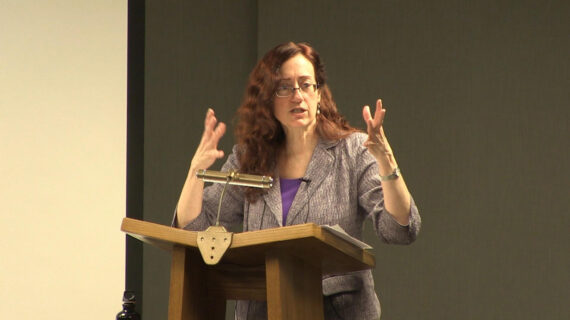
Margaret George, Historical Novelist, joins “University Place Presents” host Norman Gilliland to examine the reputation of Nero, Emperor of Rome, who ruled in the 1st century A.D. Installed on the throne at the age of 16 by his mother, Nero was an artist and attempted to bring the Greek culture to Rome.


Copy and Paste the Following Code to Embed this Video:
Nero
cc >> Welcome to University Place Presents. I'm Norman Gilliland. History has not been kind to the emperor Nero. After all, there were the two murdered wives, the murdered brother-in-law, all those Christian martyrs, St. Peter and St. Paul among them, and yet historians are always reinventing and rehabilitating dark historical figures, and so why not Nero. Well, one of the rehabilitators is with me today for University Place Presents. She is Margaret George, historical novelist and author of the novel Nero. Welcome to University Place Presents. >> Thank you. Very happy to be here. >> Why all this interest in Nero, and yours in particular seems to be a real upsurge of it. >> Yes, I know. Well, I was always interested in him because he seemed to me to be the guy, like the insurance salesman, is forced to be the insurance salesman when he really wants to be an artist. And in his case, so many people were killed to make him emperor, he really had to be emperor. And, of course, it's better to be an emperor than the other, grinding away. But there's a lot to him. He had a very, he really was an artist. We laugh and say, oh, he must not have been any good. But, actually, he was very serious about his art, and he also has sort of two parts of his reign. There's what they call the good five years and the bad five years. And he started out, he was the youngest emperor almost ever in the Roman Empire, but certainly at the time, the youngest ruler of any country in the western world. And the empire was huge. It was huge. It was almost to its greatest extent. >> This was what? About 54 AD? >> It was 54 AD. It got a little larger under Trajan, so 50 years later. But he really inherited all of this. He was 16 years old. And his mama had put him on the throne. She's a character in her own right. >> We'll get to her. >> We'll get to her. And I guess the more I learned about him, his architecture, his wanting to bring all the Greek culture to Rome, his great love of ancient Greece to the extent of letting them be free of Rome. He tried to actually kind of liberate Greece. He was such an interesting character, and I feel that he really has kind of been gotten a shaft by history because there were only three real main sources about him, and they were all hostel to him. And one of the other sources, Josephus, talks about, he said that there were good sources about him and there were bad ones. And he said I'm not going to recount them, unfortunately. >> Unfortunately. >> Unfortunately. So we've lost the good ones. And you have to kind of read between the lines, see what other people were saying maybe just off-handedly in passing about him because you've lost the things on the other side of the scale. >> Was there a hatchet job, do you think, done against Nero after his time? >> Yeah. Well, there was the nearest Tacitus is our most complete source, and event that was written 50 years after his death. And Tacitus is a great historian, but like everybody he had his own biases, and one was how the Roman Empire had gone to pot and it was so immoral and was so terrible. And so, naturally, he would take examples that he felt proved this. And he was very unkind to Nero. And then Suetonius, who's our other big source, he did have access to certain records, but he really is a gossip. He's delicious to read. And that's sort of the basis of reading I, Claudius. You love reading Suetonius. It's like the National Enquirer. But you have to take what he says with a grain of salt. And then the last one, Dio Cassius, is 150 years later and does not exist in the original anymore, just a medieval summary. >> So really quite distant from the original. >> Yeah, so quite distant. And then they could kind of tell sources these might have used, but those sources are gone. And we'd give anything to have those sources back. >> Read between the lines. >> Yeah, yeah. Which is always fun to do, of course. >> Well, let's look at some of the latter day interest in Nero. We have some exhibits, for example, that we see in Rome, I think. This is an image from a Roman exhibit. >> Yeah, they recently had a big exhibit. It was in April to September of 2011. And it was very popular. And I have some images from that. They had the Coliseum was given over to the exhibit as well as the Palatine Museum and some things in the forum. And it was really exciting. So anyway, that one back there but the superstar. And then just recently the National Geographic has a cover story about him. There that is. And there were a number of statues loaned for this other exhibit. And so there it is. Nerone in the arches of the Coliseum. And it was very popular. They got together a lot of material, a lot more somber material examining his role. He was, the great fire of Rome is always associated with him about fiddling while Rome burns. >> Oh, yes. Yes. >> But actually, he wasn't even there. >> Not when it started. >> Not when it started. He came back and he did a lot of public relief. He really did. And then he helped to figure out a way to stop future fires. That actually didn't work because I know there was another big fire in like 80, but the business about having breaking between the buildings where you had to have three feet between the buildings, which I did see one of those in excavation, and the streets had to be a certain width and everybody had to have firefighting equipment in their homes. >> Oh, really? >> Yeah. But, of course, they had no pressure for hoses. So they were still stuck with a bucket brigade. >> Some difficulties. >> But still, you were supposed to have that in every home. >> The fiddle. >> The fiddle. >> Did he play a stringed instrument? >> Well, the thing about that, it's very interesting because it was the --. It was very difficult. It was like a lyre. And he took lessons from the foremost teacher of the day. And he was very serious about his music and his poetry and his singing. And he was also, for some reason no one knows, he was very hung up on the Trojan War. And he actually wrote, this is lost to us too, but he wrote his own version in which Paris was the hero. Not Achilles, not Hector, but Paris. >> He wrote his own version? >> Yes, he wrote his own version. And supposedly he composed something about the fall of Troy and may have sung it in response to the fire. Now, whether he actually sung it while the fire was going on, the sources all have him in different places doing different things. But knowing he was so fascinated by the fall of Troy, I would imagine that he really did compose something. >> And you mentioned, of course, a couple times now, the burning of Rome. >> Mm-hmm. >> Which sometimes is blamed on him. >> Yeah, sometimes it was. And the reason it was blamed on him sort of retroactively, retrospectively, was because so much of Rome as destroyed. There were only four out of the 14 districts that escaped completely and others were totaled. So he then set aside all of this land to build his magnum opus, his golden house. >> Well, as long as all this land is clear, why not put something nice on it. >> So the next step was, well, he must have burned it. And he just wanted an excuse. He wanted to build his palace. Now, the fact that his own palace, his other one had gotten burned up in the fire, you think he wouldn't have set fire to his own palace. >> Insurance wouldn't have been an issue. >> No. But that was how it began to be thought, well, he must have done it. And he got really upset because he had put so much effort into the rebuilding and the relief of the poor people who had lost their homes, and now they were blaming him. So whose idea it was to find a group to pin it on, was it Nero's, was it his advisors? Who was it? The Christians were supposedly selected. A couple of historians now have said, oh, it wasn't the Christians, it was the -- people that were being blamed and tortured. But Tacitus specifically says the Christians. And it's kind of hard to get around that. That's the first actually non-religious mention of Jesus and the Christians. It said Christus, his followers, he was executed in Judea, and then the terrible superstition has cropped up again. So it's hard to say, oh, no, it really wasn't the Christians. We don't know how many there were. The legend is there were lots and lots and lots, and it was Peter and Paul. We have no way of knowing the number. Whether it was a small number or what. And they're not mentioned in these martyrologies the church fathers would write. Oddly enough, it's not mentioned there. So we kind of have to go again, we're stuck with Tacitus, Dio Cassius and Suetonius. But they didn't really name numbers. >> However, there is this lingering, you might say, smoke surrounding Nero. >> Smoke.
LAUGHTER
>> To this day. You have exhibit A there, for example. >> Yes. Here. This was for sale in a gift shop in one of the museums. Nero's matches. >> A little tongue in cheek there. >> A little halo with his matches. No, I don't think he's ever going to shake that. And then the expression fiddle while Rome burned has entered our language. It really was not contemporary with him. It was later affixed to him, but he'll never live that down. >> What did he look like? >> Well, he looked, there are a lot of different statues of him, and then I actually was able to get this also in a gift shop. This is the later Nero. So I will talk about the other, the younger Nero. >> Kind of like the Animal House Nero. >> Yeah. In full form here. In full form here. >> Double chin. >> Double chin. Lots of hair. So anyway, this is how people think of Nero now. So I'm going to go through some pictures of him, though. One of the earliest ones is this picture of him of what looks like he has a thing on his head. That's because he has kind of a priest's covering of his head. And he was very young then. He was probably 17 or 18. And his statues, one thing, he was under a lot of pressure to be like Augustus. >> Oh, yes, the great emperor. >> Who was his great-great-grandfather. And to be an austere Roman and to be, obviously not anything in his own nature, to be always controlled. So his early statues have the Augustus look. And there's another one and his hair was just combed straight forward like Augustus. >> We can look at another one here. >> But again, as time went on, he began to adopt the hairstyle of the charioteer, which was considered kind of shocking. It had these little curls across his forehead. >> Was he a charioteer? >> Yes, he was a charioteer. He liked to drive his chariot, and he actually did once race with a 10-horse chariot. >> How did that go? >> Well, he fell out of it.
LAUGHTER
But it's very difficult to race a 10-horse chariot. >> I would think. >> Very difficult. So he did okay with the fours and sixes but not so well with the tens. >> You rise to your level of incompetence. >> Yes. And as he went on, he began to adapt the curls in the back, which was considered also what actors had. And that was really considered shocking. And he took up flowered, not toga, he would stop at the toga. He would wear tunics that were flowered. And anyway, it was very shocking. >> You say it's shocking. Why? Were emperors not supposed to express themselves artistically in public? >> No. The idea of an emperor of Rome getting up on a stage and competing, it wasn't that he said I'm going to give you a concert of my work. It was like he would enter these contests, like American Idol, and be judged with other people. And this was just considered really, well actors were considered... >> A little suspect anyway. >> Up until the early 20th century with us. >> And sometimes including. >> And sometimes including. And it was just considered so unseemly. Now, he got more and more florid, but he was the great-great-grandson of Augustus, but he was the great-great-grandson and the great-grandson, he had a double dose of Mark Antony, who was his ancestor. >> We don't think of them as performers. >> And we think of Antony as being much more... >> Dignified. >> No. He was more of a performer. He loved to perform, and he was so scandalous for his time. >> Well, yes. >> Yes. So Nero, as time went on, more and more of the Antony came out in him until he finally was all Antony and went beyond Antony. >> Well because we associate Antony with Cleopatra. >> Yes. >> And that big scandal. Was anything like that in Nero's life? >> Not really, no. He didn't have a Cleopatra. He did have a wife he loved. He liked older women, probably because of his mother. >> We're going to get to her yet. >> We'll get to her yet. But he had a wife that was about six or seven years older than he was. That's not the one he had to marry again when he was being a good boy but the one he chose for himself. >> Well, what about this first wife? What became of her? >> The first wife was chosen for him. Because she was Claudius' daughter. And the idea was that if he was being groomed by mama to become emperor, it wasn't enough that he was adopted by Claudius. It would really help if he would marry Claudius' daughter. >> Ah, so. >> So he had to marry her, and they didn't care much for each other. But it was kind of a political marriage. And then as soon as he was able to get free himself and was now an emperor, he decided to divorce her. >> Now, what about mom? How big a part did she play in his life? >> We'll have to go back to mom. Nero was an only child of the Lady Agrippina who was a very formidable woman. She was the daughter of Germanicus that everybody worshipped because he was supposed to be this perfect warrior. But she was also the sister of Caligula. >> Oh, sister of Caligula. We could spend another hour or two just on him. >> Yes. So she was the sister of Caligula. So she came from an interesting family. Had to be very strong to survive that family. She was very ambitious for Nero, and everything that she did was to propel him ahead because she married Claudius, people think, kind of to bump him off probably. To groom her son, keep him safe while he was growing up, and then push him out to become emperor. >> Now, as a woman, Agrippina herself could never lead the Roman state. >> No. She never could lead the Roman state, but she was the sister of one emperor, became the wife of another, and the mother of the third. And so when the time was right, Claudius very conveniently died. There are people who say, well, we don't know that he was poisoned, but his death was quite convenient because Nero had already been proclaimed his son, had taken the toga of manhood, whereas Claudius' real son, Britannicus, was still a couple of months shy of being proclaimed a grown up. So how opportunely Claudius exited his life, and so Nero was proclaimed emperor by the Praetorian guards and mom. Now, mom was a very beautiful woman. She was still only 33 when he became emperor because she was young when he was born. >> Must have been, yes. >> And so one of the things that she did was to, we're talking about this was her great father Germanicus who was also held up to Nero as someone he should emulate. He was very war-like. Nero was not very war-like. He did not want to put on armor, and there were no wars during his reign. It was a short reign. >> 13 years but still, as emperor of Rome, that's a pretty good track record in terms of peace. >> Yes, and one of the things he did is he negotiated a peace with the Parthians, a diplomatic peace, which was held for 50 years. And that was probably the greatest thing of his reign that he could say lasted forever. There was a big ceremony. The king came to Rome and took his crown from Nero and so on. >> As far as Agrippina is concerned, obviously she can't be ambitious strictly for herself, but she can certainly be ambitious for her son. >> Right. >> We gather he was not terribly, but she had plans. >> Now, one of the things she did is she had herself put on coins with Nero on one side and her on the other. >> Is that a precedent? >> No precedent. No living Roman woman has ever been on a coin. But she clearly, and she's bigger than he is on this, and clearly what she had in mind was she had this nice puppet and he was only 16 years old, and, my golly, how long could she reign? A long time. And so a statue had been found, it's in Turkey, of mom actually putting the crown on Nero's head. >> Some potent symbolism there. >> Yes. And looking at him like, now listen, I'm the boss, I put you here, don't forget. And he's kind of like a teenager. He's looking off in the distance. He's trying to ignore mom, but she didn't want to be ignored. And she had plans, really, to become the de facto ruler of Rome. >> What did she want to accomplish, do you think, as the de facto ruler of Rome? >> Oh, you know, I don't think we'll ever really know. I don't know what her grand plan was. Did she have one? Now, she wrote an autobiography. >> Agrippina wrote an autobiography? >> Yes. It's missing. >> Oh. >> And supposedly she named names. She let everything hang out. What a juicy thing that would be. And in there maybe she did say what her plans were. Another thing missing in history that just drives you crazy. >> Yeah, yeah. How do you get your hands on that? >> Did she want a military expansion? Was she going to follow in her father's footsteps and try to go beyond the Rhine, try to extend the empire? I don't think she had big artworks planned. I don't think she had a lot of programs for feeding the poor. So I would imagine that hers was all about conquest. >> Now, what all area did the Roman Empire cover at this time? We're talking, again, we're talking about 54-55 AD. >> Yeah, well it had Britain all the way up through Britain and the whole Mediterranean basin was now all Roman. Egypt had fallen long ago to Augustus, and they had Europe up to the Rhine. They didn't pass beyond. And around the Danube. And they were taking also a lot of what we think of as the Balkans. That was Roman at the time. So it was really large. >> Anything in North Africa other than Egypt? >> Oh, yes. The whole rim around what's now Libya, what was then Mauritania, Tunisia, all of that. That whole thing, it made a circle where Morocco touches Spain. All that. >> Gibraltar. >> Yeah, yeah. It was all Roman. >> Did they call the Mediterranean something like RC? >> Yeah. And it was theirs. It was a Roman lake. And supposedly Nero had some plans for extending into the Black Sea. >> But his biggest plans, you say, really were just to pursue his art. >> Yes. And so that's why I wanted to show the picture, the famous one of the Laocoon with the sea serpents. We just passed that one. That was found at the golden house. And we think that he had it. Again, it's an illustration from the Trojan War. It's about the priest who warned, please don't take that horse in there. Don't bring the horse in there! >> Right. >> It's dangerous. And then Poseidon sent these sea serpents up to strangle him because Poseidon didn't like Troy so he wanted to punish Troy so that was the end of the priest. He got dragged off into the sea and the horse went into Troy and the rest is history. I'm not surprised that he would have things about Troy decorating his house. >> Now, what is this golden house that you mentioned? >> Now, the golden house was his magnum opus that he built on the area of Rome that had been a large part of Rome. He took over a large area after the fire. And it had a lot of very important architectural advances. One of the rooms is vaulted in a manner that really people tend to think didn't happen until the Pantheon. And it was very, very large. They called it the golden house not because it was sheathed in gold but it had a lot of gold inlays, and it was very light. And what happened to it is after he died and later on Trajan filled in, he leveled the top layer completely and left only the first story and he filled it all in and built his baths on top of it. So for many centuries it lay underneath Trajan's baths. And then about 1400 or 1500, somebody happened to fall down into it. It's odd that they didn't pack the interior. >> Right. >> But you'd think if they wanted to make a stable platform, you wouldn't have this hollow thing sitting there. But they left it hollow. >> Low bid. >> Yeah. The person that went down there saw all of these frescoes. And it became very popular and artists like Raphael went down there on ropes. Some of our knowledge about the frescoes are the drawings they did in the 1500-1700s because now there's been more damage, more water damage and so on. So we have the reconstruction. Some of it's still pretty visible. And then in 2010, there was a big mudslide and a cave in, and so tourists have not been able to go into it for a while. You can actually see it on YouTube because some people that went in with their own video cameras posted it through their tour. And they plan to reopen it again maybe in 2018. But it's really quite something. And this large basin, which is now in the Vatican Museum, was taken from the golden house. Now, what it was used for, I can't imagine. It's too shallow to be a pool. It's too big for a drinking trough. The horses wouldn't be drinking from it in the house. I don't know. But he just loved color and beautiful form. >> That somehow is just amazing that it would have survived. >> Yeah. Yeah, I know. >> All of that time. >> Well, the popes rescued a lot of this because a lot of this was discovered, people were digging and they carried off these things to the Vatican. There's also a beautiful statue of a sleeping woman that came from one of Nero's villas. He had two villas, and that came from one of them. This was all in the Nero exhibit that they had in Rome in 2011. >> And this is, would you say, this is in a Greek style that we're seeing? >> Yes, yes. And he also was a tourist raiding the Greeks and their statues. And then this picture is the best you're going to see of what the golden house, the grounds. Where all those trees are, it's under there. And you can see some little arches, the red brick off to the far left. Those are the remains of Trajan's baths built over it. And this was taken with a telephoto lens from the top of a building pretty nearby. It's just a stone's throw from the Coliseum because the Coliseum is actually sitting on the place that was the lake connected with his house. He had an artificial lake, and then he had this giant statue built to be overlooking the lake. Later on, they filled in the lake and built the Coliseum on top of it, but the statue is still there. And that's what gives the name of the Coliseum the Coliseum because it was the the Colossus. >> Oh, that's it. It's named after the statue of Nero. >> It's named after the statue. >> We'll have kind of a speculative look at that a little later too. >> Yes, yes. >> A fascinating 100-foot bronze structure also missing in action. >> Yes, yes. He had a big ego.
LAUGHTER
>> I guess that was part of the job, wasn't it? >> Yeah, part of the job. And there's also, this is a painting from the golden house of a scene from the Trojan War cycle. This is Achilles. Odysseus is tricking Ulysses. He was hiding out because his mother didn't want him to go to the Trojan War because she knew he was going to get killed. So she made him dress up like a girl and stay in this palace and pretend to be a princess. >> The heroic alternative. >> But Odysseus, the wily Odysseus, he knew how am I going to trick him? How am I going to get him to reveal himself? So he made a little visit to the island. He opened a big treasure chest full of jewels and dresses and all the princesses ran to that. And he opened a big chest with war material, and, of course, he threw off all this girly stuff and ran to get his arms. >> Couldn't resist it. >> And then uh-oh, his cover was blown, and it was like, okay, you're coming with us to Troy. So that's a picture from that. >> Some psychological validity to that. >> Yes. >> Other houses other than the golden house that Nero had? >> He had what they call the Domus Transitoria. Some of that is still extant in Rome. Most of it burned in the great fire. But this is some of the wall decoration. You can see how light and airy it is. A lot of white background. Isn't it amazing it survived? It's still there. >> It is, and yet, I guess, on the other hand, there just must be so much stuff in Rome that the odds are that some of it somehow would survive. >> Some of it, yeah. Yeah. And then that's also, this decoration, that style with the red and the white, is very characteristic of the period that Nero was living in. >> And what was then, this was just a private residence for Nero? >> Just a private residence. This is from the real golden house. This is taken from the one that's, and the reason it's so dark on one side is it doesn't get any light anymore because, of course, Trajan filled in all the windows. And I guess they're afraid if they take away that supporting stuff, the whole thing will collapse. >> Is that kind of, I suppose, must be a every day decisions that they would have to make in Rome as to, well, do we restore Trajan's property or Nero's? >> Yeah. >> When one's on top of the other. >> I think so. I think for the longest time Trajan's were somewhat restored, and Nero's, they didn't know if they could really bring it back again. It was under there. It was dim and dark, and it was wet. And then dangerous, I think. Unstable maybe. >> Sure. >> This is a picture of the loggia of -- in the Vatican. And you can see how influenced it was by the things he saw. >> His climbing down into the pit there. >> Yes. And the term grotesque comes from their climbing down into there because they thought it was grotto. So it's like we've grotesque the figures that were on the wall. Some of them were very exaggerated. >> So I have to ask you about some of these murders. >> Yes, we have to get away from the art and go to the murders. >> Uh-huh, yeah. Art is all well and good, but when the art lover has two dead wives and a dead in-law to account for, how do we approach that? And you, particularly, as one who is, I think, telling the story from Nero's side. >> Yes, from Nero's side. >> Is this going to be first-person narrative? >> Yes, it's going to be first-person. Nero speaks. >> How does he account for these two dead wives? >> Well, the first one I will say, don't forget his mother. >> Well, yes. >> The mother. >> The crown jewel. >> The first one he divorced and then sent away to an island because she had too much political support. And then either she committed suicide or... >> She was helped. >> She was helped or someone came along and said, time to exit. The other one, Poppaea, he loved her very much, and they had one child that died and he was distraught about that, and then she was pregnant with a second one. The story is that he kicked her because she criticized him for coming home late from the races and that she died. Now, whether that's really true or whether she had a miscarriage. >> Or how many times he kicked her. >> Or how many times he kicked her or what we don't know. We do know that she died when she was pregnant. He had this huge funeral for her, and he was so into all the Egyptian sort of things. He had her embalmed instead of cremated. He had her embalmed. And so he was grief stricken. So if he had anything to do with it as an accident, he was really sorry. Now, the mother, however... >> Agrippina. >> Agrippina. Well, it became, he tried to kind of demote her. First he told her she had to move out of the palace. >> She had no official position. >> She had no official position. She tried to make one for herself, but she had no official position. So first it was like, mom, you really should move out of the palace because she was there all the time. Whenever he would give an audience, she would pop up and want to sit with him on the tribunal and it was so. So he moved her off. And then he decided to take away her guards or her special, she had these special, her own sort of army almost. But then she kept interfering and kept interfering, and finally he got to the point where it was like either him or her. Probably for very deep psychological reasons, he probably could have neutralized her politically. He didn't really need to kill her, but it's almost like the only way he could exorcise this. >> The only way he could really kind of free himself. >> Free himself because she had this choke-hold on him every since he was three years old. And so he decided he, in conference with his advisors, and here's where Seneca gets a black eye because the noble philosopher that supposedly was going to be the Aristotle to his Alexander the Great, well he kind of help plan this thing. So it's hard to reconcile those two sides of Seneca too. >> Well, get to Seneca again in a second too, but what did they plan? >> So the plan was, okay, she can't just be attacked with knives. That's just too obvious. We can't do anymore poison because we've done that already. >> It'd been done. >> We've done it already, too obvious. And someone, we don't know whether it was Nero or someone else, came up with the idea of an accident at sea. Accident at sea. Because in those days, of course, there were lots of accidents at sea. And they came upon the idea of the collapsing boat. That she would take this boat ride and this boat would have been built so that you pull this pin out, it fills with water, it sinks. And so that meant that one had to be constructed. It happened that the head of the fleet, the Roman fleet, happened to be Nero's old tutor that Agrippina had fired at one point. >> So he had an ax to grind. >> As a bad influence on Nero. So he was the man for the job. He couldn't trust the Praetorian guards because they were so committed to the whole royal family. And they were absolutely fanatically devoted to the memory of Germanicus, so they weren't going to do anything to his daughter. So this boat was duly constructed, and Nero presented it as a gift to his mother. And there's more to the story, but I'll just say that he managed to get her onto the boat. But then the plan all went wrong. And the thing is that only half the people on the boat, the sailors, only half of them knew about the plot. The other half thought something had gone wrong and they were trying to save the boat. >> That's a problem right there. >> Yeah, problem right there. So what happened was also that the boat collapsed partially, but Agrippina managed to escape and swim. She was a strong swimmer. She had been plied with alcohol, she'd eaten this huge meal, and she was already, I think, 43 years old at that point. But she swam, and she swam to safety. So she did not get killed with the collapsing boat. >> Like a fair number of other people, I guess, did. >> Yes, a fair number of other people. So she knew instantly it was a plot to kill her. So what could she do? She said her only hope lay in pretending that she didn't know it was a plot, and then Nero would have to pretend there was no plot. So she sent word to Nero that a terrible accident had happened, but by the grace of the gods, she had escaped but don't come and see me now, I'm resting. I'm trying to recover. So as soon as Nero heard this, he was like, oh, no, now she's going to try to kill me because now the cat is out of the bag. He knew his mother really well, and he knew that she wouldn't hesitate now to get rid of him. So when the messenger came from Agrippina, they claim, Nero and his cronies claim, that he had dropped a knife as he was trying to assassinate Nero. So they immediately went off to the villa where they did dispatch her with swords the old fashioned way. And supposedly she always knew that the price of his becoming emperor is that she would die. In fact, a fortune teller had told her that he son would become emperor but something really bad was going to happen to her and that she would have to die. And she did say, let him kill me as long as he becomes emperor. So when they came for her, she said strike the womb that bore your emperor.
LAUGHTER
>> Nothing melodramatic about that. >> It's all very melodramatic. And I think one thing that's attractive about the story of Nero is that he's just got so many interesting aspects like that. So theatrical. You couldn't even make it up. >> For an artist, I guess it's appropriate. >> For an artist, yes. >> What about Seneca? >> Oh, Seneca. Well, Seneca was an interesting character because he wanted to be the stoic philosopher. He wanted to guide the young emperor. He wrote these very deep sort of, well they're still studied today. He's considered a great philosopher. But he also had this habit of making money. He made a lot of money. He was really, really rich. And he said, well, in the stoic philosophy, money is one of those things that doesn't matter. So it doesn't matter that I have a lot of money. >> It doesn't matter either way. >> It doesn't matter. And so apparently one of the things that sparked off the great rebellion in Britain in 60 AD was that Seneca called in his loan all of the sudden. He had tremendous loans out in Britain. All of the sudden all the chiefs were supposed to cough up all this money, and they didn't like that. So Seneca also not only collaborated in several of these murder plots, but in the end there did arise a conspiracy against Nero. It was called the Pisonian plot, and it was in 65 AD, a year after the great fire. And Seneca, his dear father figure, his dear tutor was in on it. And I think, really, a number of people that Nero really trusted and believed in were all in on this plot. And I think that's part of the turning point for him becoming what we think of as kind of the crazy emperor. >> Right, he does have that image, doesn't he? >> Yeah. It was a real blow. And I think Seneca actually hoped he was going to become emperor. >> Seneca hoped to become emperor? >> Yes, because there was sort of a figure that might have become emperor, but the idea was that they were probably not going to take him. Seneca had been off in the country, living by himself, supposedly in exile, leading a quiet life, trying to avoid poison. But the night before this plot, he moved back to Rome. So he could supposedly be right on hand when all this happened and that they presumably might proclaim him emperor. So I know it's corny to say, but I think it broke Nero's heart. And so Seneca committed suicide. And then he had this very showy kind of suicide where he said, I am not allowed to leave anything to my family so I can only leave them my example as a philosopher. My wonderful life. And then his wife said she wanted to commit suicide with him, and he said, oh, okay. But as soon as she was off in another room, bound up the wrists and she outlived him. And actually Nero said she's allowed to kill herself. We're not going to let her kill herself. >> Rough break. >> Rough break. So Seneca's one of those fascinating kind of contradictions, like Nero himself. A very complex person. >> Yeah, really. It seemed very conflicting motives. >> Very complex, yes. Not a comic book figure at all. Very hard to figure out all the different layers of him. But I think Nero also had all these layers. >> Speaking of layers and image, Nero, as I guess some emperors did, many maybe, did have a certain kind of image that they wanted to project as emperor. >> Yes. >> But before we get to that, and I know that we looked, of course, a lot of images of him, but in terms of his actual physical appearance, what else do we know? >> Well, there's a couple descriptions of him. One thing, he was blonde, which you don't expect. >> Yeah, that's the type, isn't it? >> Yeah. And then he had spindly legs, which again seems odd since he was a good wrestler and he was a good athlete and that he was kind of, I guess, medium height. We don't know that much about what he looked like except from these busts, and are they accurate? They seem to be. >> I seem to recall some account that said he was sort of splotchy and smelled bad. >> Yeah. Yeah, that's the one that's Suetonius, and was he splotchy? >> Is that part of the hatchet job? >> I don't know. Was it true? It could have been. I don't know. But then others described him as being an appealing young man. And so I don't know. >> Well, let's see, we're following him from the age of 17, when he becomes emperor, to the age of 30. >> Mm-hmm. >> When he dies. So I suppose living the Roman life you could change a lot in that period of 13 years. >> Yeah because he looks different from when he was 16. You can see him getting heavy. They certainly didn't cover up his big, fat neck and his double chins. They didn't seem to do that. So I don't know. But of course, a statue wouldn't show bad complexion. There's no way to do that. >> No, even if they wanted to. >> Impossible. >> It just wouldn't look right. >> But the spindly legs, it's funny because the statue, the coin that we showed, if you look at it closely, and it was quite small, the statue has spindly legs. I don't know whether that's because it was difficult to do an image on something that tiny or whether he really did have spindly legs and it's in the statue. >> That's fascinating. But then did he associate himself with, what, the sun? >> Yes, he more and more associated with Apollo. >> The sun god. >> Because not only was Apollo the sun god, but Apollo was the god of music and art. >> And so this is him, is this an image of Nero as Apollo? >> Yes. An image of him as the sun god. That was with the radiates coming out of his head. >> And this would have been something obviously constructed during Nero's lifetime? >> Yes, during Nero's, yes. >> Placed in some public position? >> Yes. Yeah. Yeah, he was nothing if not on stage. >> We'll get to the really big one in a second, speaking of such things. But you mentioned this already, I think, the Coliseum built on top of the lake. >> Yeah, I wanted to show the relationship of the Coliseum, which is now sitting on a what was a drained lake, and the statue would have been standing kind of behind what we're looking at here head on. And also the golden house is behind. It's in the part that's the higher part of the Coliseum, the highest wall. So that's where it is. Even today you can see it's lower. It's a good place for a lake. >> Yeah, apparently a lot of places, either intentionally or otherwise, in Rome are good places for lakes. A lot of running water there where it's not necessarily wanted. >> Yeah. >> So now back to the statue. >> The statue. >> The big one. What about it? >> Well, the statue was made out of bronze, and it was made to go in the vestibule of the golden house. Now, that means an open air vestibule because obviously you couldn't put, some sources say it's 120 feet, other sources say it's 109 feet, but it was really... >> The size of the Statue of Liberty. >> Yeah. It was as big as the Statue of Liberty. And when I was in Rome and I looked up at the Coliseum and I realized that yes it was taller than that, how that they did that, cast all in bronze, this the image of it. It's the one that we have on that coin that was in his lifetime. So I assume it's the nearest thing we've got to what it looked like. The spindly legs.
LAUGHTER
>> A hundred foot statue with spindly legs. I'm not sure what that accomplishes from the extent of heroism. >> And you do wonder because that doesn't show any support on the base and yet the spindly legs couldn't have held something up that high. They must have had some kind of a thing with the rudder. Like people say, he had the rudder and the globe. >> Yeah, we'll get some conjecture about that too. >> Because most of those statues, they need to be standing next to a log or something to prop them up. >> Well, here. This is what they did. Possibly. >> So this is an artist's idea about what it looked like. And you'd have to be leaning it on something, I think. >> Okay, now, so this is the sun god, but he is carrying what looks like an umbrella. >> It looks like an umbrella. >> What's with that? >> If you look closely, it's a rudder on a globe because that's what they say was in the statue. And I guess he just has this kind of column for support. >> Well, he certainly looks heroic there. >> Yes, he looks very heroic. >> Not like any of the other images of Nero that we've seen. Actually, it looks more Greek, I suppose. >> Yeah. He was so in love with all the Greek culture. >> So, anything left of that statue today? >> Well, the base of it is left, right by the Coliseum, and people would use it as a little place to sit down and have a smoke and have their sandwiches and read their guide books and everything. >> You get some idea of size from that. >> Yeah. >> Look at the size of the people compared just to the base of that statue. But we don't know what happened to the statue? >> No, apparently. Did it disappear and get hauled off? You know the Colossus of Rhodes, there's a story about how it was hauled off by this guy. But we know nothing about what happened to the statue. >> A hundred foot bronze statue just disappeared. >> Yeah, it doesn't just disappear. But how could it? Where did it go? >> It was supposed to be in the golden house, but it was, what, moved to the Coliseum? >> No, the vestibule of the golden house came right up to the Coliseum. >> Oh, I see. Sure, of course. >> So I think they moved it around to a different place, and it took 24 elephants to move it. I think that's what they said. 24 elephants to move the thing from the place it was with the golden house, which they were going to fill in, and then around the other side. And I think they actually replaced Nero's head with a general sun god. >> More all purpose. >> Yeah, it was an all purpose thing because they really wanted to get rid of the Nero statues and remembrance of Nero. >> How popular was he during his reign? >> Well, you have a split vote. The people loved him. The common people. >> And why? >> Because he gave them circuses and fun. And he was also, he went out at night doing his carousing, the kind of thing that really the populous approached people love. The ordinary people. But the senate couldn't stand him because he was not proper enough. He was demeaning the office. Whoever heard of an emperor behaving as he did. So everything the people liked, the senators didn't like. And it was almost like he preferred the company not of the aristocrats but of common people and even ex-slaves. >> So if we follow his rather short 13-year trajectory, didn't really, so far as we could tell, want to be emperor. His mother Agrippina was the one who really wanted him to be emperor. >> Yeah. >> He was an artist and would rather have done that. Had those five good years. >> Mm-hmm. >> And then things, around 60 AD or so, start to change, and that's because the senate is getting tired of his shenanigans? >> I think so. And also, after that, they say Seneca began to lose his influence. That's Seneca's point of view. When I lost my influence... But it could just be that he was beginning to blossom and come into his own and throw off the way he'd been before, and mom was not there anymore. But the thing is, after his death, the common people really mourned his death. And even a few emperors later, some of the emperors sort of tried to kind of bring back his image in some ways because he was so popular. So people were putting flowers on his grave. And there were these imposters that were fake Neros that arose, and people were excited about it. >> Hey, look, there goes Nero. >> Yeah. And there were three of them. Three separate times. One right after he died, another about 10 years afterward, and a last one a little after that. And the idea was that he had escaped. He had gone to the east. Like King Arthur. He's not dead, he's just sleeping. He will come back. And the idea was that Nero had fled to the east where he was most at home, or somewhere in Greece, and he would come back. But they wanted him to come back. That was the interesting thing. >> Well, what actually happened to him. Here he is, all of 30 years old. An emperor from the age of 17, 30 years old and now he's dead. What happened? >> Well, he lost the support of the Praetorian guards, who now had the power to make and unmake emperors. And because he had gone off to Greece for 18 months to compete in poetry and singing contests, and he just neglected what was going on in Rome. And so he was judged to be incompetent. And by the time he got back from Greece, they finally had to come over and say you got to leave, you've got to come back. By the time he got back, it was too late. There were already plots against him and the army had gone against him and they had a successor. They had Galba who was waiting in the wings. So all these things took place because he was off singing and dancing in Greece. >> But they had to bring him back and kill him? >> Well, no. They didn't bring him back. The person that had been acting for him came and got him and said, hey, I can't hold this anymore. They need you. You've got to come back. I can't do anything. It's too much for me. And it was his deputy representative that came and got him back. >> And then he wasn't actually assassinated. >> No. April to June, and what happened is that he had to commit suicide because the senate then voted against him and said he was a public enemy. Now isn't that something. You have, a year before they're fawning and saying we're going to engrave in silver all your words and they will be recited every year, and then a year later he's a public enemy and he has to be executed. >> Politics can be like that. >> Yes. It just turned like that. So rather than be executed publicly, he decided to commit suicide. But he had procured some poison that he had at hand, and darned if his servant didn't run off with the poison. So he's like, where's my poison? >> Hard to find good help. >> It's gone. Yes. And so then he had to resort to the knife. And that's when he said, "What an artist the world is losing." >> That was his famous last words. >> Famous last words. "What an artist the world is losing." It's translated. Sometimes it's "What an artist dies in me." But the gist is that, yes, what an artist the world is losing. >> A period of instability after Nero. >> Yeah. >> Went through, what, four emperors in 10 years? >> Yeah, the year of four emperors. >> Galba didn't last long. >> No. He was assassinated like two or three months later. Yeah, they went through four of them. And one of them actually tried to rehabilitate Nero. He was kind of pro-Nero. But then he didn't last long. That was Otho. So it was, and then you get the emperors that's the end of the line of the most famous dynasty. If you even count Julius Caesar, you've got six of them. And then from then on, the workmen-like arrangement where you get generals and you get people not even born in the Roman area. And so the magic is gone. >> I was going to say. >> The magic is gone. >> Well, Margaret George, thank you for sharing some of the magic with us today. >> Well, thank you. Thank you. I've enjoyed it. >> Rehabilitating, to some extent, the emperor Nero. >> Yeah. >> Fascinating times. Fascinating person, what little we can ultimately know of him. >> Mm-hmm, yeah. Thank you. >> I'm Norman Gilliland, and I hope you'll join us next time around for University Place Presents.
Search University Place Episodes
Related Stories from PBS Wisconsin's Blog











Donate to sign up. Activate and sign in to Passport. It's that easy to help PBS Wisconsin serve your community through media that educates, inspires, and entertains.
Make your membership gift today
Only for new users: Activate Passport using your code or email address
Already a member?
Look up my account
Need some help? Go to FAQ or visit PBS Passport Help
Need help accessing PBS Wisconsin anywhere?

Online Access | Platform & Device Access | Cable or Satellite Access | Over-The-Air Access
Visit Access Guide
Need help accessing PBS Wisconsin anywhere?
Visit Our
Live TV Access Guide
Online AccessPlatform & Device Access
Cable or Satellite Access
Over-The-Air Access
Visit Access Guide




Follow Us