

 Passport






The Market in Blood, Milk, and Sperm in America
03/10/15 | 30m 58s | Rating: TV-G
Kara Swanson, Associate Professor, Northeastern University School of Law, discusses the legal implications of use of body products routinely used by the medical community. Swanson delves into the current body product exchange, body products as property and the history behind the exchanges.


Copy and Paste the Following Code to Embed this Video:
The Market in Blood, Milk, and Sperm in America
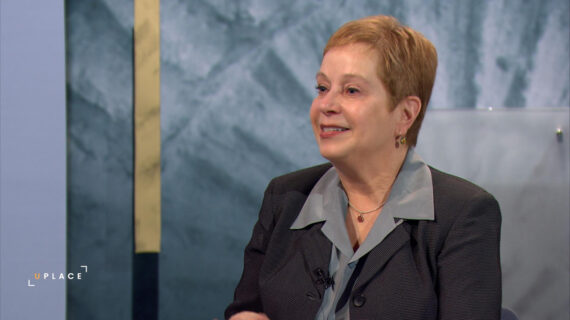
>> I'd like to welcome you all to today's Law Society lecture here at the UW Law School. My name is Mitra Sharafi, and I'm a faculty member here. Our speaker today is Professor Kara W Swanson, who's joining us from Northeastern University School of Law where she's an associate professor. Professor Swanson has a law degree from Berkeley and a PhD in the history of science from Harvard. Her earlier studies were in biochemistry and molecular biology. She has a BSC from Yale and an MA from Berkeley in those fields. Professor Swanson is a Wisconsin native from Racine, Wisconsin, I just learned earlier today, and so we are particularly delighted to welcome her back to her home state. She practiced law before during her PhD, and she practice in the field of intellectual property. She also clerked with Judge Cecil F Poole, Ninth Circuit Court of Appeals, and with Judge William H Orrick, Jr., US District Court for the northern district of California. Professor Swanson has published numerous articles, including one in our own Wisconsin Law Review, that was in 2011, on historical perspectives on food and drug law. She's also published quite a bit in the world of journalism and has been communicating her research to a wider audience in Slate, the Boston Globe, and the Atlantic. Her fields of interest and expertise include copyright law and intellectual property law more generally, the history of gender and sexuality, history of science, technology, medicine and law. Today, we're going to hear about her brand new book, as you see on the screen and here as well, "Banking
on the Body
The Market in Blood, Milk, and Sperm in Modern America." In her book, she combines the history of law, science, and medicine to look at the trade and donation of human body fluids in US history. So, with that, I will hand over the floor to Professor Swanson. Please join me in welcoming her here.
APPLAUSE
on the Body
>> Thank you very much for inviting me here today to talk about my book project on body banks. I'm really thrilled to be here in Madison for three reasons. One is probably why all of your Law Society speakers are thrilled to be here because, of course, this is the home of Willard Hurst, the famed legal historian who really taught us all to think about law and society and to think about law from the bottom up as it's created through the actions of individual people, and that's very much inspiration for this particular project. Those of you in the law school might not know that I'm also thrilled to be here because Madison is a powerhouse, long has been a powerhouse in the history of science and medicine, and that's another strand of this project. And then, as Mitra said, I'm also thrilled to be here because this is my home state. I'm a native of Racine, and Madison was my first image of what a university should be. And it's still, I find astonishing that other places think that they're world class universities when they don't have, for example, multiple lakes and their own brand of ice cream.
LAUGHTER
on the Body
Right? So truly a great pleasure to be here today to talk about this book. And as I said, this book takes what I consider to be a Hurstian approach to understanding property from human body, using this on the ground analysis of how doctors and patients use these products in order to think about the much later development of law on the books and law from the bench, that is court decisions. So, what is this property, goodness, that I'm talking about? Body products, material sourced from the human body, living or dead, that has value in a disembodied form. I'm using that term body products in part because even to apply the term property to these things is controversial. Some courts say that these are not property at law. But whatever we call it, we routinely rely on these body products, particularly, although not exclusively, as medical therapeutics. You see I have hair on the list there and a picture of these gentlemen who are not wearing their own hair, right? Hair for wigs has been a body part that's been exchanged in markets for centuries. But I'm going to set aside hair and really focus on body products used in medical treatment for the duration of this talk. And part of what I'm arguing to you is quite simple. That whatever we call it, whatever courts may say these body products have been property in action for quite a long time. So, given how controversial body products are and the question about whether they're property, I want to understand how they came to be so mundanely and routinely used because somehow we moved forward with their use even if we're not sure how to consider them in law. And as I thought about that, I realized that we managed them through this institution that we call a body bank. And you all know what a body bank is. It's an institution that collects, stores, and exchanges these body products. Not all body products are banked or bankable, as you can see looking at that list. But for over a century, the body bank has been the dominate way that we've talked about and experienced treating human bodies as a source of property and exchanging that body products between strangers. As I thought about this a little bit more, I developed another question, which is, why the bank? And if I can go back to my childhood in Racine for just another minute, my mom used to work in the blood bank at St. Luke's Hospital there, which is actually where I was born. There was never a time when I didn't know what a blood bank and understand what that term meant. But as I thought about it as an adult, that's an odd term, right? Why do we refer to financial banks when we're talking about these body products that we're not even sure are property. And these cartoons are playing with that oddity, right? That sperm banks and blood banks are really not like financial banks. So I wanted to understand where the body bank came from and how it shaped our understanding of body products, so I investigated the first body products to be banked, which in historical order are human milk, blood, and sperm. Due to the pressures of time, I'm not going to get to sperm banks today, and to the interesting questions of gender and sexuality that I was able explore in the book as I looked from one body product sourced exclusively from male bodies, sperm, and one sourced exclusively from female bodies, milk, but I'm happy to talk about that in the Q&A. What I do want to talk about today is start by thinking about the contemporary law and policy of body product exchange. Sort of the end result of this history, where we are now. And then I'm not going to try and give you, in a few minutes, the hundred years of history that I cover in the book, but I want to describe body product exchanges that occurred in the first half of the 20th century in ways different than we experience today. And then put on my law professor hat and think about body products as property using some property theories as a way of analyzing that history. And then, in conclusion, suggest a few lessons from that history to guide our law and policy going forward. So to go back to our list here, as you look at that list, you can, of course, see the body products vary. Some are bankable; some are not. Some come from living bodies; some only from cadavers. Different risks to the supplying body; different needs of the recipient. Do you need a new heart, or do you need some sperm? Despite that variability, there's a large and growing body of research that says for most body products, and the one exception might be sperm, we never had enough to treat everybody that needs it, or conditions of constant scarcity. And among those conditions of constant scarcity, as we're in those conditions, these body products are allocated unjustly. So the best known, best studied problem involves organs, particularly kidneys, and this slide just shows you very quickly that the number of people waiting for kidneys keeps growing and the number of people getting kidneys doesn't grow very much, right? Increasing scarcity. And the data show that in this situation, the poor and racial minorities are giving organs more often and getting organs less often. There's unjustice, injustice in the allocation of these organs. You probably also know that there's a big difference in how we get sperm, which we have about enough of, and how we get organs, which we don't, right? Sperm banks offer payment to their suppliers, but this federal law, the National Organ Transplant Act passed in 1984, forbids organ procurement organizations from offering any payment either to living suppliers or the family of deceased organ suppliers. So from the legal perspective today, we treat body products in two very different ways. For some of them, blood, sperm, milk, feces-- there's a new stool bank in the Boston area where I'm from-- we don't regulate sales. You're allowed to buy and sell them. There are strong norms against buying and selling milk and blood at least, but no law against it. And then for organs only, we ban sales by suppliers and we force them to be gifts. You donate life. You don't sell life. And we do this based on a series of legitimate concerns. First of all, sales may seem morally or philosophically wrong. That they equate human worth with cold, hard cash. They propertize the human body, and that's simply wrong. But we also worry about it from practical policy-oriented perspectives. We worry about the recipients, right? In a free market, we know what happens. Those that can afford it, get it, and those that can't, don't. So we worry about that injustice in allocation. And we worry about the quality of what we've got, of supply. That if money's on the table, people might be encouraged to hide medical conditions, to put diseased products into the supply, and that would endanger recipients. And we also worry about living suppliers. We worry that the poor might feel economically coerced into selling their body products and endangering their health. For example, these men who sold one of their kidneys. So we're worried about three things. We're worried about injustice to recipients in terms of the allocation, problems with the supply, and problems with the supplier. These are all legitimate and important worries. The problem is, today, that our current situation does not manage to avoid these harms even as we ban sales. I've just told you the data shows we have unjust allocation of organs. We have this international gray market that harms suppliers like those men I just showed you. And the AIDS crisis of the 1980s showed that gifted blood could be as deadly as bought blood for those who received HIV infected blood. So this on/off approach, either gift or sales, sometimes that's called the gift commodity dichotomy, that gives us only these two policy choices, is not working very well. So what I want to argue to you is that while our current legal regime tries to answer and address these three harms by saying one question, "Is the supplier paid?", gift or sale, that's how we're going to avoid these harms, that, historically, we address these worries differently. So formerly, rather than thinking about them as harms to be avoided, we thought about them in a positive form as goals for body product exchange, goals that might possibly be advanced by supplier compensation. What are the goals? Making body products available on the basis of need not just ability to pay, having a safe and adequate supply, and treating suppliers fairly. And, in fact, perhaps even promoting their health by the ways they participate in these exchanges as opposed to today's single question. Is the supplier paid? So let's look at that history for a few minutes. As I told you, I'm concentrating on body products used for medical treatment, and so the people that were creating them and exchanging them in systematic ways in the first decades were doctors. They wanted them to treat their patients. They wanted a reliable and safe supply. They wanted to be able to say, nurse, hand it to me, and then they have it and they can use it. And pretty much the first things these doctors turned to to incentify suppliers was cash. Money to sell your milk, money to sell your blood. Gifting was terrific, but buying was absolutely fine with them. In fact, nobody thought that women would or should give up their breast milk for free to strangers. After all, they could make money as wet nurses, and they had been for centuries. So doctors developed what they called mother's milk stations beginning in about 1910 to replace wet nursing, a service, with bottles of breast milk, property that they could control, property in action. And these stations, unlike almost all milk banks today, paid their suppliers for milk, and they charged for milk. Here's some pictures from the mother's milk station in Chicago in 1940. This is run by the city of Chicago to collect breast milk to give by prescription to babies who lacked a maternal source of milk and who doctors thought would be doing much better on human milk than the artificial formulas available. So these are institutions that are managing markets in human milk. They're buying and selling. But they're not buying low and selling high in order to maximize returns. Instead they're thinking very carefully about how much they're paying suppliers and what they're charging their recipients and using these money flows in order to address those three goals that I just showed you. So if you think about recipients, they wanted to get that milk to all babies who needed it, both babies from poor families and babies from rich families, so they used a sliding fee scale. If you could afford it, you were charged top dollar, which might be 30 cents an ounce for this breast milk If you couldn't, they would give it to you for much less or even free, and the idea was that the average selling price would meet the cost of the station. They wanted an adequate and safe supply, so offering women money was a way of getting them to come in every day and express milk, which was a pain to do when you're a new mother, you've got a new baby at home. And that money they offered, also, women were required to have a physical exam by the station doctor. Make sure that they're safe. And they had to express in an area, here, in an area visible to the station nurse so that while you might be tempted to dilute your milk with water or cows milk in order to get more because you got paid by the ounce, you couldn't do that because you were under this surveillance. And, finally, the doctors also thought about these milk stations, thought about themselves as a double charity. They're collecting milk to benefit these babies that might otherwise die, but they're also thinking about the money they're giving these mothers as a way of improving the health of these women who necessarily gave birth recently and their own nurslings and maybe other children they had. Why? Because instead of weaning their baby, endangering that baby's health and going out of the home at wage labor, they could stay home, keep breastfeeding their baby, best for that baby's health. They would be home with their other preschool children improving their chances in life. So it's a win-win as far as the doctors saw this. Furthermore, of course, these mothers were not just getting money, they were getting free medical care. This was before health insurance. They're getting postpartum visits that they wouldn't otherwise get. In Chicago, they're required to drink a quart of cow's milk, which is handed to them, every time they express. Free nutritional supplements for these women who are breastfeeding. It helps maintain their health. And, in fact, in 1943, when the American Academy of Pediatrics issued guidelines for how to run a mother's milk station, they said, "You should pay these donors and you should pay them enough to ensure good standards of living and relief from financial worry." That's part of your mission as a milk station. So let's talk about blood in this period a little bit. Using blood as a body product was definitely much trickier. We had a long tradition of wet nursing; we did not have a long tradition of giving your blood to other bodies. But once blood transfusion became a viable treatment, around the 1910s again, doctors again were like, "Okay, how do we get the stuff?" We offer cash for this. And, in fact, over time, doctors learned to prefer what they called a professional donor. Think about that phrase. Professional donor. Somebody who's earning money, and a profession means, of course, that you're serving as well as just getting wages for labels. It's a service profession. They like the professional donors, somebody who was more efficient and more safe. Both hospitals and stand-alone for-profit agencies set up these registries of willing blood sellers, these professional donors. That meant for doctors that rather than taking the time to determine the blood type of a volunteer that happened to be right there and relying on their verbal assurance that they were healthy, they could call a registered professional. Their blood type was already taken, they'd submitted to a medical exam, they knew what to do, they were ready to go. Safe and adequate supply. And these examples from the press talk about how blood selling was lauded as a worthy job, and admirable job, a way of earning money for your family. And these professional blood sellers were almost exclusively men. They talk about them earning money for the family table. So the professional blood donor is great. We've got a safe and adequate supply. We're paying attention to the health of suppliers. What it doesn't do is help the doctor who wants to treat a patient who's too poor to pay the professional donor, to meet that first goal of justice in allocation. Because they're selling blood in individual supplier-to-recipient exchange. So creating that very problem we're worried about today, that those who can afford it, get it, those who can't, don't, and in the case of blood, die because they can't get blood. So the medical solution to this problem was to transform blood into property that doctors could own and allocate in their medical discretion by creating a stored inventory of blood and an accounting system to manage it. That's what we know today as the blood banks. The blood bank is a move by doctors in the late 1930s based on this medical vision that they wanted to make blood available to all who needed it. Here's a very early blood bank. That's the hot new technology in 1938 is the refrigerator. And Dr. Bernard Fantus is the man who created the first blood bank. What did the blood bank do? Well, it allowed patients who lacked the money to pay for a professional donor and had no friends or family available to give blood when they needed it to receive blood as a loan from the bank and then pay it back later in-kind themselves, after they recovered or from a friend or family member, but the key thing was that they had these accounts and all pints of blood were considered equivalent. It didn't matter if the pint of blood that came in to pay your loan was at the moment you needed it. It was going to go right in your body. No, it would go into the supply. It didn't matter if it was the same blood type as yours or not. So you didn't have to find somebody who matched. You just had to eventually get another pint of blood back in there. The blood bank didn't eliminate the paid donor. In hospitals that treated people who had enough money to pay, you could choose to pay back your loan with cash, and then the blood bank would take the cash and pay a professional donor to get the blood they wanted, and blood banks kind of liked that because then they could choose the type that they were putting into their inventory. But what the blood bank did was it changed the nature of blood as property in action. It enabled doctors who controlled it to fulfill that historic goal of justice in allocation of blood supply. So in the book, I traced how that term bank, which was chosen very deliberately by Fantus to encourage us to think about it in this way, spread from blood to other body products and how as blood banks became ubiquitous in the late '40s and throughout the 1950s, making blood the most common body product as it is today, that's the one we experience the most, the banking metaphor itself helped promote a transition from a historic focus on these three goals to where we find ourselves today with a single focus on supplier compensation as the key question to manage all those concerns. I don't have time, unfortunately, to recount that history here because it involves a lot of different factors. I just want to list some of the things that were involved in that. There were fights about government funded healthcare. Does that sound familiar? As you probably know, we've been fighting about that in this country for a very long time. There was the development of strict product liability in tort law had a role to play in this story. The chronic problem of racism in American society is part of this story, as well as the increasing concern in the '50s and '60s among both doctors and the lay public of fears of hepatitis, blood-borne disease in the blood. All of these factors together contributed to a new belief, both medical and lay, that payment for body products caused harm rather than solved harms. And by the mid-1970s, the blood banks had voluntarily agreed to eliminate the professional donor. All right, I've told you there's no law against selling your blood, but they agreed that they would no longer buy blood almost completely. And replacing them with the figure that we know today, the altruistic blood donors. There's a story of the fall from grace of the professional donor. And just as that banking metaphor arose in the context of blood and then spread to other body products, I mentioned the word milk banks. We now call the successors to mother's milk stations milk banks rather than stations. This backlash against cash exchanges for body products also spread from blood to other body parts. If it's dangerous and problematic for blood, it must be dangerous and problematic for milk and other things. What that meant is just as organ transplants are becoming more successful at this time in the 1970s, there was a doctor who had the same idea as the pediatricians and surgeons in the early part of the 20th century. We need a safe and adequate supply, I'm going to set up a registry and I'm going to pay people to be organ donors. But in the early '80s, as opposed to the 1910s, this idea hit a quick negative reaction, leading to the federal law that said no. We know now, this is what we understand, that the professional donor is actually a bad idea, and we're going to ban it for organ sales. So now I just want to spend some time analyzing this history and drawing connections back to where we started. I said there's a current dissatisfying law and policy of body products. So I want to take my Hurstian analysis of body products as property in action, I haven't been talking about law, I've been talking about what people did, and think about it through the lens of property law and property theory. And in order to do that, I want to draw on the work by Greg Alexander in this book he published some years ago. He's a legal historian and property scholar, and he wrote this book that traced the ongoing dialect over the course of American history between property as commodity, what we might call market property, and property as propriety, what we might call civic property. And these two theoretical approaches, which have also been discussed by other property scholars, Carol Rose has written in this area, differ in the understanding about the relationship between property and markets and the relationship between individual freedom and social order. The market property perspective is very familiar to us here in the 21st century. Property is simply that which is exchanged in markets. And through those market exchanges, we satisfy individual preferences, and that gives us social order. The invisible hand of the market idea. The civic property perspective is less familiar, but it was very dominate in the early republican United States, and Alexander traces how it was increasingly marginalized throughout the 19th and 20th century. And it starts with a normative vision of the public good. What are we trying to do with property? And then thinks about property exchanges and creation, both market and not market, from the perspective of that vision, and that's how we're going to advance to individual freedom and social order. And in this book, Alexander argues that while the market property perspective was very dominate in American law by about 1970 when he ends his book, and those of you who are familiar with the law and economics movement could nod your heads, very dominate in American law, he argued that the civic property perspective was more robust than many had realized and has persisted as a strain in American legal thought. And actually, since writing this book, Alexander and others have devoted themselves to thinking about ways of applying and expanding this civic property tradition and Alexander today sometimes uses the words of communitarian property or social contract property and sort of this whole world of progressive property scholars thinking in this tradition. What I want to put to you now is what I've just described to you, this history of body products as property in action is a history in which these body products began as a form of medical civic property and ended up as market property in law. What do I mean when I say that? Well, I mean that during those first decades when body products were collected and used and there's no law on the books, we're just looking at what doctors did and how they treated them, that they treated them as property that existed not simply to maximize profits or satisfy individual preferences, but to advance this particular medical vision of the public good, a vision that encompassed these three historic goals. That's what they were aiming at as they propertized the body. Then what happened? Well, the banking metaphor deliberately equated body products in cash. In fact, Fantus' picture I showed you, he said to his colleagues, "I don't want you to think about this as a metaphor. Take me literally. Think about body products just like cash." And that metaphor and the many ways that people that followed in his footsteps, the post-war blood bankers, did promote that metaphor, ended up encouraging the parallels between blood banks and financial banks in a way that encouraged the reconceptualization of body products as market property, as just like cash and other market commodities. And that shift, of course, was aided by this general shift in law with the dominance of the market property perspective at the same time by about 1970. And I think that this insight, if we think about this history that way, it explains the origins of where we are today, the origins of this gift commodity dichotomy. Because from a market property perspective, if body products are going to have to be market property if they're recognized as property in law, then mandatory gifting is the only way to separate them from the free market and prevent this list of worries that all our worries about the free markets exchanges. And remember I said at the beginning that courts were reluctant even to apply the word property to these things, and I think that's because that would throw them into this market property definition and thus throw them into this list of worries. But I think this history helps us perhaps get out of the gift commodity dichotomy. I just want to conclude by suggesting a few lessons from this history. So, what have we learned here? I think we've learned that our current understanding of body products as market property and thus our focus on this single question, are suppliers paid, is neither natural or inevitable. Right? We can denaturalize this set of questions by looking at the past. Furthermore, I think I've just told you that we have legal and theoretical tools to think about body products as property through a broader lens. Once you've recognized that we're looking at it through this one particular narrow lens, we can think about it differently. Whether we want to call that civic property or one of the sort of 21st century reworkings of that position under the rubric of progressive property. And furthermore, we have these set of historic goals for body product exchanges, which perhaps can be a rough starting point for out own normative vision of what we're trying to accomplish with body product exchange and thinking about supplier compensation perhaps as a means rather than the end point of our questions. So, what does that mean in practice? Well, I think we've come to associate payment with disease, with risk, with sordidness, but that isn't necessarily the case. In some situations, I'd argue to you, supplier payment can increase quality and safety as well as reduce shortages. So if you go back to thinking about those Filipino men I showed you a picture of, right, we would probably all agree that when they sold one kidney for a low sum and got little or no followup medical care in a situation where the broker that arranged the transition was making a heck of a lot of money, that was exploitative. But if we think about moving that system of compensation from an unregulated black market that exists in part because of the ban in NOTA into a regulated lawful market, that might provide and opportunity to revive that double charity model. Thinking about these suppliers as beneficiaries of the exchange rather than just a source of property. Either by providing a fair payment, remember the American Academy of Pediatrics provide enough, and/or other benefits, such as free healthcare the that the milk stations did. I want to be very clear here, I'm not advocating that we go back to a situation in which we let the medical profession set the agenda before there was any law here. And I'm not claiming that there is or ever actually was a unitary beneficent view of the medical profession. Part of what I talk about in my books and part of what the transfer to the market property perspective came from was the doctors couldn't really hold it together long enough to keep single civic property-like vision there. This is something that we as lawyers and legal scholars need to think about, and think about in a democratic society, we all, I think, together need to work on thinking about what we're doing, not just leave it to the doctors. And I also want to say, as I said in the beginning, body products vary. The way you regulate one type of body product might not be the same that you regulate another. But I think that once we realize that our instinctive fear of paid body products, which I think we all have, is itself a historic artifact, then we're free to think beyond gift or sale to reconsider how market exchanges might benefit the public health and thus promote justice. So, thank you.
APPLAUSE
Search University Place Episodes
Related Stories from PBS Wisconsin's Blog










Donate to sign up. Activate and sign in to Passport. It's that easy to help PBS Wisconsin serve your community through media that educates, inspires, and entertains.
Make your membership gift today
Only for new users: Activate Passport using your code or email address
Already a member?
Look up my account
Need some help? Go to FAQ or visit PBS Passport Help
Need help accessing PBS Wisconsin anywhere?

Online Access | Platform & Device Access | Cable or Satellite Access | Over-The-Air Access
Visit Access Guide
Need help accessing PBS Wisconsin anywhere?
Visit Our
Live TV Access Guide
Online AccessPlatform & Device Access
Cable or Satellite Access
Over-The-Air Access
Visit Access Guide




Follow Us