

 Passport






LeMay: The Life and Wars of Curtis LeMay
04/06/10 | 43m 38s | Rating: TV-G
Warren Kozak, Author. Warren Kozak analyzes the career of World War II commander Curtis LeMay. Kozak focuses on LeMay's leadership style, philosophy and problem solving techniques.


Copy and Paste the Following Code to Embed this Video:
LeMay: The Life and Wars of Curtis LeMay
cc >>
Jeff Kollath
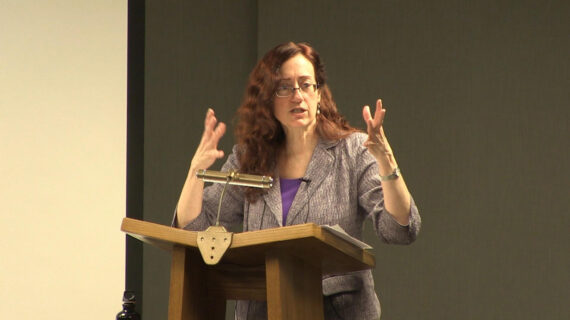
Ladies and gentlemen, welcome to the Wisconsin Veterans Museum, an educational activity of the Wisconsin Department of Veterans Affairs. My name is Jeff Kollath, I'm Curator of Programs and Exhibitions here at the museum. I'm very excited to have Warren Kozak here to talk about General Curtis LeMay. I'd be remiss if I did not thank our sponsors for this event. The University of Wisconsin Department of History, Center for World Affairs in the Global Economy, the Grand Strategy Program, and also the Wisconsin Alumni Association. This is our second Dr. Richard H. Zeitlin Distinguished Lecture Series event for this year. So we have two more of those that you'll be able to find out about on our website. Like I said, Warren Kozak is here, author of this wonderful book, "LeMay: The Life and Wars of General Curtis LeMay," which is available in our bookstore for the low price of $22.36. So I invite you to pick one or two or three of those up after the talk, and I'm sure Warren will be happy to sign those for you after the event. Warren Kozak was born and raised in Milwaukee, Wisconsin, and is proud of his solid Midwestern roots. His father was an independent insurance agent, as was his grandfather. After a public school education, Warren went on to graduate from the University of Wisconsin in 1973 with a BA in political science. He then left for New York City and his dream of working in a TV network news room. His first job at ABC news was as researcher where he helped compile the election fact book for the Ford/Carter presidential race in 1976. He spent much of that year traveling on the campaign, as he did again in 1980, but this time as a producer/reporter for National Public Radio. Later at NPR he reported on everything from live Senate hearings to the first space shuttle mission in 1981. In 1988 he turned his focus to his life-long interest in World War II when he cowrote the PBS documentary on the 50th anniversary of Kristallnacht with CBS legend Eric Sevareid. In 1993 Warren was the winner of a prestigious Benton Fellowship at the University of Chicago. His op-eds have appeared in the Wall Street Journal, the Washington Post, the New York Sun, and other newspapers and magazines. His first book, 2004's "The Rabbi of 84th Street," was published by HarperCollins. This biography of a legendary rabbi, Haskel Besser, who was born in Poland before World War II, is a window into the rich aesthetic world of that era that was destroyed in the war. His second book, and what he'll be discussing this evening, "LeMay: The Life and Wars of General Curtis LeMay," was published by Regnery Press in 2009. His fascination with World War II was first sparked by his father's experiences in that conflict. He dedicated the book to his father, who was a captain in the US Army and served in the European Theatre. Warren now lives in New York City with his wife and his daughter. Ladies and gentlemen, Warren Kozak. ( applause ) >>
Warren Kozak
Thank you. Thank you, Jeff. And it is such a pleasure to be back here in Madison. I see a lot of old friends in the crowd. And I also have to come this far to experience three seasons in 12 hours. ( laughter ) Which is always exciting. We don't get that in New York. I want to start with just an informal poll here. How many of you in the audience, with just a show of hands, knew about Curtis LeMay before you saw this program or the book? Okay, that's very unusual. Jeff told me that the crowd here is unusually well-informed and they ask very tough questions so please ease off on the second part later. ( laughter ) And I do want to leave a lot of time for questions because I always find that to be the most interesting part of the program. Here's the other part of my informal poll. Of those of you who knew about LeMay, how many of you had a negative image of him? Okay, now that's more like it. Because most of the people that I've come across since I wrote this book, first of all, I'd say at least 50% never heard of LeMay. And if they had, it was just some vague recollection that they couldn't quite articulate. But almost everyone had a negative view of him. And I think that's why I wrote this book. And I'm going to tell you how I came to this topic and what relevance there might be to our world today. I have to tell you, for any of the teachers out there, and I know that there are a few, when you throw something out, you never know what's going to stick, and this all came from a throw-away line in a college lecture many years ago. The line was, "you might not agree with his politics, but if you have a son serving in combat, you want him serving under someone like LeMay." And that stayed with me because, frankly, it was the first positive thing I ever heard about Curtis LeMay. And it was revolving in my brain for many, many years. I was searching for a second topic for a book after my first book came out, and I came up with one after another and nothing really interested me that much. And one night in New York my wife and I had, we got a babysitter and we were supposed to go to some event. The event was oversold, we couldn't get in. I said, "Let's just go home." And she said, "We have the babysitter, let's see what else we can do." And we went to Lincoln Center, she wanted to see if we could get a ticket. And we got a ticket to a romantic musical set in Italy. It had nothing to do with war, nothing to do with bombers, nothing to do with anything. And I was obviously bored, and my mind was going back and I don't know where it went but it kept going back to that line, "you might not agree with his politics." And when I got home that night I thought maybe I ought to look at LeMay. I started to do research that night, and what I found was a person that I had no idea had done as much as he had done. And then I couldn't figure out why there weren't 10 books about this man and a couple of movies. As I did more research on him, I began to find out why. And part of this was his own fault. He was not a likeable person. He was gruff, he was asocial in some ways. I have no degree or ever took any classes in psychology so I was not about to psychoanalyze this man who I never met. He died 15 years before I started this project. But I have read, and some would probably not disagree with the fact that there was something almost self-destructive about LeMay. And I think that came across in his run with George Wallace in 1968. And you cannot talk about LeMay without talking about that run, and we'll get into that later. But at the same time, there's no single man who had a greater impact on the United States Air Force, on our victories in World War II, both in Europe and in the Pacific, and in winning the Cold War than Curtis LeMay. Now, any one of those achievements would have been just a tremendous feat in and of itself. Yet, at the same time, as I said before, there's been no major figure in the last half century that's been more misunderstood than LeMay. I said earlier that some of this was his own fault. We live in an age where our leaders, politicians, celebrities pay vast sums of money to professionals who tell them how to speak, what to say to reporters, what to wear, LeMay didn't give a damn what anyone else thought. He was interested in solving problems, in winning wars, in saving as many of the lives of his crews as he possibly could. And after that he didn't care. And, in fact, I think he went a couple of degrees further. He almost wanted to be disliked, it seemed. Besides those feats that I told you about, which were pretty phenomenal, here's something else that a lot of people don't even know. He created the RAND Corporation after World War II. That's the research and development arm of the Air Force. He was the head of Europe at the start of the Berlin airlift. And he was on the joint chiefs during the Cuban Missile Crisis and the start of the Vietnam War. There's almost no events in the middle part of the 20th century where LeMay was not involved. So when I learned all of this, I didn't understand why he had been so vilified by the press and in films, and all of us probably remember Dr. Strangelove and the Buck Turgidson character which is a classic character. If you haven't seen that film go and see it again or rent it. It is as great, it gets better with time. But the Buck Turgidson character was the character played by George C. Scott which was based on LeMay where he saw this attack on the Soviet Union as not a disaster but as an opportunity. There were reasons that I think Hollywood turned on him. There is no one in US history that was involved with killing more civilians than Curtis LeMay. It's a fact. And it's nothing you can get around. It's estimated that upwards of 350,000 civilians were killed because of this man's decisions. Men, women, and children in Japan. At the same time, with the strange mathematics of war, he wound up saving at least a million American casualties and probably two million Japanese lives. Those are the estimates, I think those numbers are low, actually. Very few of us in this room, I would hazard to say, would want to make those kinds of decisions. It takes a very unusual person to do that. For some reason, I know I wouldn't want to do that, LeMay had it in him and he always stepped up time and time again. There was something about him. So I think it's important to look at his background. He came from a dirt poor family in Ohio. His father was a complete failure. He could not hold down a job. There were times when his family didn't have enough to eat. At the age of 10, LeMay is in Montana, and I was reading up on this, his experience in Montana, so he was born in 1906, this is around 1915-1916, was not unlike anyone living in Montana in 1848. They were living as pioneers. It was at the age of 10 that he figured out ways to feed his family when his father couldn't. This was an incredibly, unusually responsible young boy who became a very responsible adult. And he shifted that responsibility, he was the eldest of six, his daughter told me, she said, "My sense was Grandma LeMay was always pregnant." And so all these kids were coming after him. He figured out ways to watch out over his siblings. Later, he transferred that to his country. Something happened when he was four years old that had a huge impact on his life and on the history of our country I think. He was in the backyard of his home in Columbus, Ohio. He was chopping wood for his mother, he was chopping wood for the stove, and that meant keeping the house warm and being able to cook, and he heard something and he looked up and, unbelievably, he saw something that made no sense to him. There was a man looking back down at him with goggles on, and it was one of the Wright brother planes from nearby Dayton. And this four-year-old took off after the plane wanting to catch it. And he wrote about this in his autobiography. And he ran and ran and ran. He had no idea how far he had gone. All he knew is that he couldn't catch the plane. He came home in tears and it took him hours to get back home. But this Wright brother plane becomes a metaphor for the rest of his life. And it's something that he was always chasing, trying to grasp. It propelled him through Ohio State University. How did this young man from a dirt poor background get through college in the 1920s? Well, he got a job in a foundry, and he worked in this foundry
six days a week from about 3
00 in the afternoon until about midnight. And he also took a full course load. He also was in ROTC. And he did this because he knew the only chance that he could get to fly would be if he got into the Army Air Corps. And he knew that the only way to get into the Army Air Corps was to have a college degree. That's why he went to college. He got a degree in engineering, and he turned out to be an absolutely brilliant engineer. In order to get into the Army Air Corps in 1928, this is a year after the Lindbergh flight, all of the sudden everyone else catches up with LeMay and everybody is fascinated with aviation. There were 3,000 applicants to get into the Air Corps program, into the cadet school that year. Of those 3,000 they would take 100. Of those 100, 25 would pass, 75 would wash out. LeMay, at this young age, shows an ability that comes up again and again, and it is a way to work, manipulate, basically, a bureaucracy. And for those of you who have been in the military, you know that in order to get anything done, you have to figure out ways to work around the bureaucracy at times in order to get something accomplished. There's nobody that would have taught him how to do this, it was something that was innate. Years later, when I was working on the book, I talked to so many officers who served under him and some of them also went to the very top. They were the heads of the joint chiefs. And they said they never saw anyone use psychology more brilliantly than LeMay to achieve what he wanted, and he also had the ability to choose the best people, he always had the best people. And God forbid if you showed the two cardinal sins which he hated most, which was stupidity or laziness, and you were just out. He showed no mercy whatsoever. He gets into cadet school in 1928. He is then stuck in that army between the wars. He becomes a lieutenant and he stays a lieutenant from 1928 to 1940. No advancement. Nothing whatsoever. He is thinking, in the mid-'30s, the best he can hope for is perhaps getting up to colonel some day and then retiring. There is an offer as a commercial pilot with the Ford Motor Company. The Ford Motor Company was making the Ford Tri-Motor in the mid-'30s, and they had this deal where they sold the plane to an airline along with a pilot. And LeMay was exactly the kind of guy they wanted. In the middle of the Depression they offered him $1,200 a month. He was, at the time, earning $200 a month. And he thought about it, and then he thought, no, I think I'm going to stick to it. And I was fascinated by that decision. I think a lot of it had to do with this strong belief in this country. And he wanted to protect it. In 1935, yes, there were some problems in Europe, but they didn't seem that big and they seemed pretty far away. And in the Pacific there were problems but they were also remote. LeMay may have seen what was coming, I don't know, I'm not sure about that. I also think that because of his father's failures, later on he never showed any personal fear whatsoever. And I'll explain some of the situations he put himself in. But he did have a fear and that great fear that he had was failure. So I think that he was sure that if he stayed in the military he would have a secure job with the airlines. With Ford, he just wasn't sure. I had always heard, I heard this from my dad when I was young and then I read about it, how unprepared we were for World War II on December 7, 1941. I didn't quite understand it until I saw the movements of Curtis LeMay right after the attack on Pearl Harbor. Basically, we did not have an air force, we did not have an army and we didn't have a navy. The navy that we had, a good portion of it was at the bottom of Pearl Harbor. What we did have were two large oceans, and at that time it gave us the two years we needed to build the army and the navy and the air force that was necessary to fight. In Washington, they made a very calculated decision, and they decided that they were going to send B-17 crews to England to start to whittle down the Luftwaffe, which was, at the time, the best air force in the world. Best trained, by far. Most hours, by far. Most experience, by far. They had already started bombing in the Spanish Civil War, Poland, England. When LeMay takes his first bomb group to England in 1942, and this is just about eight months after Pearl Harbor, he is not even sure that they're going to get across the ocean in one piece, and he is amazed when they all get there. And he finds somebody who has flown just a few missions already, and he said, what can you tell me? LeMay has never been in combat, although he's been in the Air Corps since 1928. He's not even sure how he will personally deal with it. He's not sure if he'll be able to stand up to it. And, you know what, I'm going to take an aside here. Over and over again with LeMay, there is no arrogance to this man. He is never sure that anything he proposes is going to work, and he's always surprised when it does work. We're used to seeing someone like Patton who just strides into a room and just assumes he's going to be victorious. LeMay is never sure about any of this. So he gets a hold of someone that he knew who has flown a couple of missions, and he says, what can you tell me? And the guy says, all I can tell you is the flack is so terrible that if you fly straight for 10 seconds, they're going to destroy you. And he thinks, my God, if you're going to weave into a target, if you're going to zigzag in, you're not going to hit the target. These guys aren't going to hit the target. They're so inexperienced. And he says, what is the sense of doing this? What's the sense of training these crews and building the bombers and putting gas in the tank and bombs in there if you're not even going to hit the target? So he first comes up with a plan to put every plane in a different box formation to protect each other because they didn't have fighter escort all the way in. And the B-17s with the guns out of every side he thought would have a field of fire that could protect them. He then, being the engineer that he is, calculates how many times he thinks one of the German batteries is going to fire, will have to fire, in order to hit the plane. For the very first mission he gets up and he says, we're going to fly straight in, nobody is going to deviate, whoever deviates can spend the rest of the war in the brig. And there's a man I know, and this is an amazing story I'll tell you later, who was in the room, he was in that original group. He's 90 years old now, phenomenal guy. And he said a moan went up through the room. And one of the guys finally says, we're going to be slaughtered. And LeMay looks at him and he says, no, I think we can take it. And here he shows the most brilliant form of military leadership. He says, to prove it, I'm going to fly the lead plane in the formation. The lead plane in the formation is the first plane the Germans will target. But he knows that in order to get these guys up, in order to have them fly straight in, they will follow him. And all of them think, if he thinks there's enough to it that he's willing to do this, maybe there is something to it. That first mission, they fly in, and for the first time they actually come close to hitting a target. I told you there was a calculated decision. This was a brutal war of attrition. And they just decided, in Washington, that we could produce bombers faster than the Germans. We could train crews faster. And they were going to whittle down the Luftwaffe. Of the 35 original crews, I know a man who is a phenomenal man, Ralph Nutter, he's in the book quite a bit. He is a Harvard law graduate, and he was LeMay's chief navigator. Of the 35 original navigators, he is one of two who survived. The men of the 8th Air Force, which was an umbrella organization, had a higher casualty rate than the Marines in the Pacific. This is something I didn't even realize. Every time LeMay sent these guys up on the most dangerous missions, he insisted on flying the lead plane. The only thing he changed, however, was, after that first mission he decided not to be in the pilot seat, he went into the copilot seat. And as soon as they got up he knew that if he was in the back watching the other planes, he could figure out new strategies. So here is a guy who is putting his own life on the line and he is trying to create a new science called strategic bombing with machines that have never been used before. General Grant and General Lee each fought 17 battles in their entire careers. LeMay is fighting a battle almost every single night, I'm sorry, every single day. Nighttime, that's in the Pacific. And his battlefield is 25,000 feet above the earth. But he has this ability to understand how every single part fits together. He understands how everything fits in the plane, he knows more about the mechanics of that plane, the B-17, then any of the top mechanics. And he tells them how to fix things. He's always tinkering with everything. He's tinkering with the guns, he's tinkering with the bombardier, he's tinkering with the navigation, and he's one of the great navigators, one of the original navigators. He's always working things out. So by the time of 1944, and there's no reason why this man should have survived. There are planes around him that are exploding, and he gets home every time. By 1944, Washington is correct and these guys, at a tremendous cost, whittle down the Luftwaffe to the point where the allies control the skies on D-Day. And that was what the purpose was. So here's LeMay who understands this B-17, who understands the war in Europe, and he gets a call to go back to Washington, and he's told he's got a new challenge, a new job, he's got to take over the B-29 program. He's never flown a B-29. He doesn't know anything about the B-29. And all he knows about the Pacific are the didn't reports he's had time to read, and he hasn't had that much time because, let's face it, he's been pretty busy in Europe. So he says to Hap Arnold who's the head of the air force, and by the way it was the US Army Air Force, there wasn't a separate air force in World War II, that comes after the war, he says, look, if I'm going to fly, by the way Arnold says, I want you to go. He comes back to Washington. He said, want you to go, like, now. And LeMay said, if I'm going to take over this program I ought to know how to fly it. And Arnold thinks maybe the guy has a point. So he sets up a training program in Grand Island, Nebraska. And LeMay picks up his wife and his daughter, who is then about three or four years old, and takes them with him and learns how to fly the plane. The B-29, here's the problem with the B-29. It is this marvelous new bomber. Three times the size of the B-17. Unlike the B-17, it is pressurized. It's not unlike the planes you fly when you go anywhere these days. It's comfortable, it's not 50-degrees below zero like the B-17 was when it was up in the sky. But there were more mechanical failures. More men were killed during the war due to mechanical failures than due to enemy fire with the B-29. There's something else. The idea of the B-29, it could fly these vast distances so it could finally hit Japan. The idea was that the Marines would take these islands at tremendous cost, and then, something else I didn't really understand, this is something only America could have done. They came in and within four to six months built a midlevel American city on these islands that had nothing been huts and palm trees. They built the busiest airports in the world. They built roads. They had to build everything, the infrastructure. And all of this had to be shipped from the United States. You didn't have cement on these islands. So the B-29 gets there and on the first mission, this is before LeMay takes over, they run into something over Japan that all of you know, it's called the jet stream. But no plane had every flown that high over Japan before. So they run these winds, these ferocious winds about 200 miles and hour. And the bombs go this was and they go this way. They're going every way but on the target. And once again here comes LeMay with this insolvable problem that no one else can figure out. And when he's given this job, he's also told, again, this great fear of failure, the commander says, if you don't figure this out, you're fired and we're going to get someone else in here that can. So what does LeMay do after his first try and again bombs go every where because of the jet stream? He comes up with a whole new plan. And he sends his bombers out, it's March 9, 1945. This is late in the war. America cannot figure out, most Americans cannot figure out why we haven't bombed Tokyo. Yes, Jimmy Doolittle bombed Tokyo right after Pearl Harbor, but that was, as brave as it was, and it was very brave, but it was a PR stunt and it did very little damage, it did no damage, frankly. And here we are, 1945, we'd been hitting Germany for three years and nobody could hit Japan. The Japanese even thought that they were immune to any attacks by the Americans because of the divine lineage of the emperor. LeMay comes up with this new plan and he says, okay, this is what we're going to do. We're not going to fly in at 35,000 feet, we're going to come in at 5,000 feet. We're not going to go in formation, which is all they've been training for. We're going to go in long single files. We're not going to go in the daytime, we're going go at night. And we're not going to use bombs, we're going to use incendiaries. On March 9, 1945, he sends 346 bombers to Tokyo. He kills more people in that 12-hour period than any time before or since and that includes Hiroshima and Nagasaki. Here is the attitude back in the states. He gets a green light from Washington and they just congratulate him and they say just go at it. And he takes a world almanac and he goes down a list of Japanese cities by population. Now by today's standards, and a lot of people believe this, they say this is a war crime. You are specifically targeting civilians. And there is no doubt about that, that's what he was doing. But here was LeMay's rationale, and this is where it gets so complex, and, again, would you want to make these decisions, think about it. Unlike Germany and America and England, the manufacturing base in Japan was not factory-centered, it was dispersed throughout the entire city. So instead of having a big plant in Cleveland or Detroit building these bombers, you had a mom and a pop in the backyard with a lathe making a nut or a screw for the Mitsubishi plane that would then be collected. So how do you keep the Japanese from pursuing their war? LeMay figured that area bombing was the only answer. And he does this from March 9, 1945, until August 15, that's the last mission, it's actually after the two atom bombs, he's still sending them out. Here's something else I think you need to understand, and I didn't understand this myself. I was talking to one of the vets who was on Tinian, and he said, well, we were there, he happened to be working on a special unit that put the second bomb in the plane, the atomic bomb on the boxcar plane, and he said, there were so many construction guys over at the other end of the island who had better rations so we would trade with them. And I said, what were they building? And he said, they were building hospitals. And I said, for the crews? And he said, no, no, no, they were building it for the invasion. We were getting set to invade Japan. There was going to be the first wave of the invasion was set for November 1945 with the second wave in March of 1946. Unlike Germany, which started to collapse after the Battle of the Bulge, and you had tens of thousands of German soldiers who were surrendering, the Japanese fought harder as we got closer to the mainland. We saw this on Saipan, we saw it on Iwo Jima, and then we saw something on Guam that horrified even these battle-hardened Marines. Upwards of 98% of the Japanese soldiers were dying, but on Okinawa they started to see civilians killing themselves rather than being captured. And what they were preparing themselves for on the mainland was an all out war that would involve civilians and the idea was that you were going to die anyway, you might as well take two Americans with you. And they were training the entire population to do this. Men, women, and children. LeMay had a doctrine that comes up later and I think it's very important and it's crucial to how this might relate to what we are dealing with today. And the LeMay doctrine goes like this. Any country should think long and hard before it makes the fateful decision to go to war, but if all else has failed, if all diplomatic measures have failed, and a country has to go to war, and in the United States it has to be decided by Congress, then that country should use every weapon in its arsenal to end the war as fast as possible because LeMay thought the worst thing were prolonged wars. He thought you end it just as fast as possible and you get on with peaceful relations. And he saw this with Japan after the war. But here's the kicker to this LeMay doctrine. He said if is country isn't willing to do that then it shouldn't go to war in the first place. Now think about that for a second. Think about how the wars we have fought since World War II would have been fought differently or not at all. Once again, I go back to this very complex problem that many of us wouldn't want to have to deal with, yet he dealt with it over and over again. There's something else that I saw that I think is relevant. In the campaign two years ago, I heard that John McCain's grandfather, who was second under Nimitz, came home. He was supposed to be on the Missouri for the surrender ceremony. And he decided he didn't want to do that, he wanted to just go home. He goes home and there's a party for McCain and then he dies. He dies either that night or the next morning. And I understood that because these guys worked themselves to death. John McCain's grandfather was a lot older. LeMay was the youngest general in modern US history. He was 36 when he became a general. He was working 20 to 23 hours a day. He sometimes would take one hour of sleep. And he was young enough to survive that kind of really brutal existence. A lot of the generals, I noticed, were dead within a couple years of the war. Stilwell was dead in '46. Hap Arnold had had four heart attacks. He was dead in 1950. These guys really worked themselves to death. I want to quickly, I want to leave time for, where are we, I want to leave time for questions, but there are two other quick stories I want to tell you about. One is when, after the war, he takes over the Strategic Air Command in 1948, that's SAC. And once again they give him an impossible problem. SAC is supposed to be our nuclear strike force that's supposed to hold the Soviets at bay. In 1948 it's a disaster. And LeMay comes in, he looks at it, he knows how bad it is, and he comes up with a strategy. And he walks in one morning, and this thing was called the Dayton exercise, and it was actually hidden for many, many years, for obvious reasons, nobody wanted anybody to know about this. He came into his office and he told his aid, have them all bomb Dayton. Send the whole lot of them out. What did that mean? It means electronically every airplane in the Strategic Air Command should bomb Wright-Patterson Air Force Base in Dayton, Ohio. Half the planes don't get off the ground because of mechanical failure. Half the planes can't even fly. These planes don't have to go over an ocean. They don't have to go to Russia. They're going to Dayton, Ohio. It's an air force base they all know well. Not one plane hits the target, not one plane. So LeMay says, okay, now you know how bad you are, now we're going to fix it. And he rolls up his sleeves, he gets rid of a lot of the dead wood, and he also creates a spirit decor that, by the time he retires in 1957, he has created the deadliest force in the history of man. And I always think that the SAC bombers, these B-52s that were flying around the Soviet Union 24 hours a day, seven days a week, that held the Soviets at bay throughout the '50s and throughout the '60s and throughout the '70s, I think in the beginning they never thought of doing anything, trying anything because, not only did they know that the B-52s had this deadly force, but they knew the man behind it was Curtis LeMay and he wouldn't hesitate for a second to use them if he had to. They saw what he had done before. So where does that leave us? I think, I guess I'd like to say what did I learn from four years of working on this book? And I guess my biggest lesson was I always assumed that World War II was just some vast breathing mass that took over the whole globe and it swayed this way and it swayed that way. And if were lucky you survived, if you were not lucky you were killed or someone you loved was killed or your friends were killed. What I didn't realize was that one person could actually make a difference. And this came to me when I suddenly realized one day, my God, what if LeMay had been on the other side? And I thought about that and I thought that would have been a disaster for us. And I realized that actually one person can make a difference. And I thought about it even in modern times. I thought about United 93 on September 11th. That was the plane that crashed in Pennsylvania when the passengers understood what they were doing. I am convinced that there was one person that got up first and gave everyone else the courage to do what needed to be done. I saw LeMay do this over and over again. I think we were very lucky to have this man at the time that we had him. Controversial? Absolutely. Complex, this man redefines the word complex. And I think in the question and answer period we should talk about the Wallace run because I think that's important. But in the end, I would say I came to admire this man because he did things that I couldn't do. And I think he did things that most people couldn't do. We were lucky to have him. I think that it is a country like ours that allows somebody to come from the abject poverty that he came from, no lineage whatsoever, and it allows him to rise to the very top of his profession. And I think as long as our country holds on to those values and holds on to our Constitution and holds on to our system of government, I think, I'm optimistic. I think that we have a good chance of surviving and even doing better in spite of whatever comes our way. So thank you, very much, for listening, and I'm happy to answer any questions. ( applause )
Search University Place Episodes
Related Stories from PBS Wisconsin's Blog








Donate to sign up. Activate and sign in to Passport. It's that easy to help PBS Wisconsin serve your community through media that educates, inspires, and entertains.
Make your membership gift today
Only for new users: Activate Passport using your code or email address
Already a member?
Look up my account
Need some help? Go to FAQ or visit PBS Passport Help
Need help accessing PBS Wisconsin anywhere?

Online Access | Platform & Device Access | Cable or Satellite Access | Over-The-Air Access
Visit Access Guide
Need help accessing PBS Wisconsin anywhere?
Visit Our
Live TV Access Guide
Online AccessPlatform & Device Access
Cable or Satellite Access
Over-The-Air Access
Visit Access Guide




Follow Us