

 Passport






John Muir: The Wisconsin Years
10/30/13 | 1h 8m 42s | Rating: TV-G
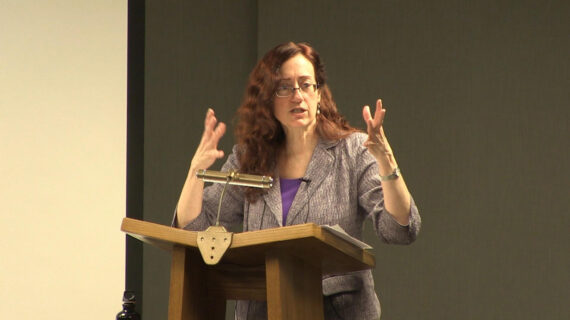
Daniel Einstein, Historic and Cultural Resources Manager, Campus Planning and Landscape Architecture, UW-Madison, joins University Place Presents host Norman Gilliland to discuss the life and interests of naturalist John Muir.


Copy and Paste the Following Code to Embed this Video:
John Muir: The Wisconsin Years
cc >> Welcome to University Place Presents. I'm Norman Gilliland. Whether it's a tiny piece of land somewhere in Wisconsin that's been restored or somehow saved in its original form, or something as big and monumental as Yosemite National Park, there is a tribute behind them to a single man who spent a good deal of time in Wisconsin, in fact some formative years.
His name
John Muir. He was one of the co-founders of the Sierra Club. For that matter, he has many big firsts to his credit when it comes to our relationship with the land. And what was it about his early years in Wisconsin that shaped the thinking and the actions of John Muir? We'll find out from somebody who has spent a good time studying the life and work and even the artifacts of John Muir. He's Daniel Einstein. He's the manager of historic and cultural resources at the University of Wisconsin-Madison. Welcome to University Place Presents. >> Glad to be here. >> What got you interested in John Muir? >> Well, John Muir has been a figure in my life for many years. I actually grew up in the Midwest and moved to California, and one of my first places that I visited was Muir Woods just north of San Francisco. And I went on to work at Redwood National Park and fall in love with Yosemite and the Sierras and Redwood National Park. John Muir's imprint is all over California. Later, I came to Wisconsin to go to the Nelson Institute for Environmental Studies and discovered that there was a Wisconsin connection to Muir, and I've had a chance to pursue that connection over the last few years. >> I was not too long ago in Scotland, and lo and behold there is a tribute to John Muir there, not surprising since he came from Scotland, and what was his life like there? >> Well, he was in a large family, eight children. A fairly prosperous family in the town of Dunbar, Scotland. >> Not too far from Edinburgh. >> From Edinburgh, right. And his father was a successful merchant. But he was constrained in his ability to practice his religious interests in Scotland and decided that he would take his family to America. So here was a boy, 11 years old, who very much scampers about the countryside, an urban lifestyle, who's yanked out of school one day and boards a boat, comes to America. >> Was their intention to come originally to America? I mean, these are British citizens. >> Well, that's interesting. As I say, the father was looking for religious freedom, and as a British citizen his initial thought was he would go to Canada, that that might be the easiest route for him. But on the boat over, he's talking it over with some fellow emigrants and he's told that, no, Canada is much too difficult a place to make a living. >> They weren't trying to sell him land, were they? >> No, there were just too many trees. But there was this place in the Midwest called Wisconsin, where in a short while you could clear the land and plant your first crop of wheat. And, more importantly, in this area of southern Wisconsin you could access the two great
watersheds of the continent
the Mississippi basin and the Great Lakes basin. Only separated by a mile between the two watersheds and the town of Portage. And as someone who was looking to become a farmer and to grow wheat, he thought being able to access the waterways and export through the Gulf of Mexico or out through the Atlantic, this would be the place to go. So he changes his plans midway across the Atlantic. >> And this would have been, what, about 1849 or so? >> 1849. The story goes that it was quite an abrupt departure. That he didn't really announce this to the family. He comes home one day and he says forget about your studies tonight, tomorrow we're going to America. And John, of course, is 10 years old at the time, is delighted, and he runs out into the streets and screams I'm going to America in a Scottish brogue of course. Every time I've tried Scottish brogue it comes out a hybrid between Italian and Yiddish, so I'm going to spare you that. He goes with his sister and brother, and they board a ship, a six-week passage across the Atlantic. They arrive in America. They get another boat, travel up the Hudson, travel across on the Erie Canal, another boat from Buffalo, land in Milwaukee, and get on an oxcart, and they head towards Marquette County. >> And so they have bought or are soon to buy this piece of land? >> They buy the land once they arrive. >> Sight unseen. >> Sight unseen. They use their Scottish clan connections, and they hear about this place near Montello, Wisconsin. It's about 50 miles north of Madison, where there's a combination of grasslands and widely scattered open oak openings. And wheat, at the time, was the primary crop in Wisconsin. A lot of folks are unaware because of our dairy heritage that dairying was not the first crop, but wheat was. >> They weren't even using wheat for beer at that point, were they? >> I don't know. >> And does, well, farming of any kind, but in the mid-19th century in a place that's never been farmed before has got to be notoriously difficult. >> Well, it was backbreaking work. In Muir's autobiography, he writes a little bit about what it was like to arrive in this wilderness of Wisconsin. And let me read to you about his first impressions as he arrives at what they would later name Fountain Lake.
He said
To this charming hut, in the sunny woods, overlooking a flowery glacier meadow and a lake rimmed with white water-lilies, we were hauled by an ox team across trackless carex swamps and low-rolling hills, sparsely dotted with round-headed oaks. This sudden plash into pure wildness, baptism in nature's warm heart, how utterly happy it made us. Nature streaming into us, wooingly teaching her wonderful glowing lessons. Here, without knowing it, we still were at school. Every wild lesson a love lesson, not whipped, but charmed into us. Oh, that glorious Wisconsin wilderness. You get a sense for his writing style, but this was, in many ways, a spiritual awakening for this young boy. >> It makes me wonder if he had been reading Thoreau. >> Well, he didn't have access to books as a young boy. His father was, well, to be generous, a religious zealot who insisted that all of his family read the one good book, the bible. And they were required to memorize it. And Muir writes quite critically of the teaching technique that his father imposed. He said something to the effect that what the mind forgets the flesh remembers. Which is to say he was whipped quite brutally on a regular basis if he did not mind his father, if he did not tend to his biblical lessons. >> It must have been difficult for him, and we have a view here of the place that he came to. It must have been difficult for him as such a lover of the outdoors to be so strictly controlled by his father. He seemed to have right away the impulse to just go running off into the woods and meadows. >> Well, he was, what, 12 years old before his father put him to the plow. And he would work on this farm and another farm for the next 11-12 years, sometimes 17 hours a day, from sun-up to sundown. Meanwhile, his father was a preacher and would leave the farm on a regular basis to work the circuit, leaving his children to work the fields. >> Was this the proverbial log cabin American boyhood story? >> Well, initially there was a shanty, a burr oak shanty that they created. We saw the view from that shanty out across Fountain Lake. This combination of sedge meadow and bog and prairie. And eventually they did build a fairly substantial home at Fountain Lake, and it was there that they raised animals and raised their wheat. >> Those look like a pretty substantial and, if the picture is right, a fairly trim family home for the Muirs. >> They were fairly prosperous, but, remember, he had all the children working for him. They worked the land pretty hard. And wheat is a kind of crop that exhausts the soil fairly rapidly. >> Presumably, they just have to move pretty soon. >> They lived there for about seven years before the father decides to pick up and move away. And this was heartbreaking to John because of all the work they had put in to building this place, and, yet, here they were moving on to the next farm. >> Which, I assume, was at least fairly nearby. >> Yeah. The farm was about five to six miles down the road. But this Fountain Lake farm had this unique combination of different habitats and water, water in particular. >> And we get a view of the lake here. >> The lake plays an important role in his understanding of the landscape because we have these different ecosystems. We have the sedge meadow. We have the prairie. We have the bog. The farm they moved to, Hickory Hill, is on a hill and no water to be found there. The lake plays an interesting role in one of his early adventures, which he writes about in his autobiography, "The Story of My Boyhood and Youth." He didn't know how to swim, and he's out on the lake one day and he's about to scare a friend of his who's on a boat. He approaches the boat, but instead of being able to grab the boat, he's drawn underwater, and he doesn't know how to swim. And he falls lower and lower into the lake, and he thinks he's about to die. And he has this epiphany that he has to swim, that he must find the courage to drive himself back up to the top. And he's able to do this, gasping for breath, nearly drowning. But he's terribly embarrassed by this experience, and he wills himself to swim yet again the next day and the day after. >> That's a real exercise in overcoming fear. >> Here is a man whose exploits later in life are well documented that he would go off into the wilderness for weeks at a time all by himself with but a crust of bread and a pouch of tea. And he would just will himself to survive in these very trying situations. >> Is this, what we're seeing here, a look at Fountain Lake today? >> Fountain Lake today has been preserved. >> And is there water in there? >> There is water. That's a 30-acre lake which is just over the horizon of this view of the former home site. The property has been preserved as a county park and a state natural area. And then the original homestead, the home 80, has been purchased by someone who is helping to preserve the site and has been able to get the home site designated as a national landmark. >> Did he bond as well with the Hickory Hill property as he had with the Fountain Lake? >> Well, Hickory Hill, as I said, was the second farm, a different landscape, a dry, sandy landscape. And he talks about that transition to the new farm.
He writes
After eight years of dreary work of clearing the Fountain Lake farm, fencing it and getting it in perfect order, building a frame house and the necessary outbuildings for the cattle and horses, after all this had been victoriously accomplished and we had made out to escape with life, father bought a half section of wild land about four or five miles to the southeast and began all over again to clear and fence and breakup the fields for a new farm, doubling all the stunting, heartbreaking chopping, grubbing, stump-digging, rail-splitting, fence-building, barn-building, house-building. We called our second farm Hickory Hill Farm for its many fine hickory trees and the long, gentle slope leading up to it. The land was better for farming, but it had no living water, no spring, or stream, or meadow. So, clearly, his association with the Fountain Lake property was much stronger, but he did as he was told. They built this fine house, fine brick house, and it was here, from the time he was, oh, let's see, 17 to about 22, where he lived. >> Now, this is starting to look like a classic 19th century Wisconsin farmhouse. >> It's a substantial house and barn that they built there. One of the iconic stories from his time on Hickory Hill Farm was digging the well. As he says, there's no water. They're at the top of the hill, and one of the first assignments that his father gives him is to dig the well through the solid sandstone rock. And each morning he would go out with a hammer and a stone chisel, and he would literally chip away at the solid stone. And he worked at this for weeks each morning. >> Without knowing how far down the water would be. >> It's down there somewhere. >> Could be 50 feet; could be 250 feet. >> They had no way of knowing. It was close to the house. You want the well close to the house. But, no, he had no way of knowing. They set up a tripod with a pulley and a bucket and rope system so that midday John would load the little chips of rock into the bucket and his father would haul them up to the surface and they would empty the bucket and then have his lunch, he'd go back down into the hole and work by himself in this three-foot diameter shaft. >> Three feet, and he's 40, 50, 60 feet down? >> He got to 80 feet, and one morning his father is lowering him down into this dark, narrow shaft and he's immediately overcome by what is referred to as choke damp, which is an accumulation of carbon dioxide gases. And, for some reason, they knew nothing of this threat. He immediately losses consciousness, and right before he goes blank, he calls out to his father and his father instructs him to grab hold of the bucket. And clinging to the bucket, his father hauls him 80 feet to the surface, unconscious, near death. Well, what they learned from their neighbors who were miners, this accumulation of gas in the mine can be cleared away. It can be stirred up, and you can return to the shaft. After just a few days of recovery, what does his father do? He sends him back down to finish the job. >> So just as he has overcome his fear of drowning, he has to overcome this fear of suffocating at the bottom of a mine. >> I can't imagine after being that close to death to being told this is what we do. You have no choice. Go back down and finish. Apparently it was only another 10 feet before they struck water. And that well is still present on the farm. They've built a windmill over the top of it. >> We saw that. >> Of the well head. The farm is privately owned by the same family that bought it from the Muirs. >> Oh, really. >> Back in the 1870s. >> Well, it must be a good spot then. Well, as John Muir gets into his teens, he faces a decision as to whether to stay on the family farm or strike out on his own. >> You know, he stays on the farm until he's 22 years old, which is longer than most young men would have stuck around. But he's very attached to his family and his brothers and his sisters. But he hungers for something more. Now, I said that he had no books as a young boy, but through his teen years he is able to find books that he borrows from neighbors. Sometimes surreptitiously, sneaking them into the house. >> Is he home-schooled through these years, or does he actually go to a local school? >> The only record we have is that he might have attended school for a couple of months between the time he is 11, leaving Scotland, and the time he leaves to go to Madison. So he's teaching himself. He's home-schooled in a sense, but he has no formal instruction. He teaches himself algebra and trigonometry and physics, and he starts reading the great poets and the classics, teaching himself Latin and Greek. >> Does his father approve of this learning? >> His father initially is restricting his education because the bible has all the truth that one might need to live a good life. There are stories of him taking time in the middle of the day to scribble out math problems in the dirt in between the harvest and the planting season. He begs his father to allow him to study, allow him to work on some of his inventions. He becomes very interested in mechanical contrivances. >> Is he starting to invent things on the farm then? >> Pardon me? >> Is he starting to invent things on the farm? >> He does come up with some inventions that help feed the animals, but his primary inventions seem to be centered around clocks. He doesn't have, I think there may have been one clock in the household, but mostly he learns about clocks and time from these books that he's able to borrow. >> Here's one of these devices that he has put together. Something called a scythe clock. >> A scythe clock, right. It's a whimsical contraption that he invents. A scythe is a tool that one uses in the fields to cut wheat. That implement that father time and The Grim Reaper carry around with them. And he uses just a whittling knife to carve gears and cogs which he assembles on the blade of his scythe, and suspended from the blade is a pendulum which he makes out of arrows that are counterweighted with old copper pennies that he pounds out into arrowheads. And this arrowhead pendulum drives the gears that provide both the seconds, minutes, the hours on his scythe clock. >> What is the actual function, a purpose for this scythe clock? >> To tell time. >> To tell time. >> And what's, I think, fascinating about this very early invention of his, he carves on the handle, the re-curved handle, the biblical verse all flesh is grass, which I think can be interpreted many different ways. >> Yes. >> Don't be so vain, you may be flesh today but tomorrow you're grass, that life is fleeting. But I also think it portends some of his thinking about immortality. That flesh is grass and grass is flesh. >> This cycle. >> This cycle of life, this carbon cycle, this interconnectedness of all things, which is an important theme in his later writings. >> And he would be very aware of that as being on the farm over a period of time where he could see this annual cycle or lifetime cycles taking place. >> Absolutely. His connection to farm animals but as well as the birds and the animals that live in and among the fields where he is working. He's very aware of both the animals and the trees and the flowers. Fascinated from his very youngest days. >> How does it come about then that he leaves the farm at the age of 22? >> Well, he's inventing. Let me just tell you about one of his earlier inventions that he creates. It's a self-setting sawmill. >> There it is there. >> The self-setting sawmill, say that 10 times, is a model that he creates in his early teens. At the time, sawmills had a single blade and you would drive the log through the sawmill. >> A circular blade. >> A circular blade. But each time the log goes through the sawmill, you'd have to reset the spacing so that you would get a standard dimension lumber. >> Right. >> And so he sees that there's an opportunity to create a carriage that will allow a standard offset to be created each time the log passes the blade and so you get a standard board. >> A standard board each time. >> Right. So he takes this model, and I think this is a wonderful story, he takes this model down to a stream, he's still living at Fountain Lake, and he dams the stream to create the water power to drive this model sawmill. And he sees that it is good. Almost biblical sounding. >> Yeah, I was going to say, right. >> He sees that it is good, and he decides that that's enough. That his concept for this machine is good and it works and he moves on. Of course, later in life, the irony here is that he works tirelessly against damming projects throughout the west. And his ire is often raised against the clear-cutting of trees. But here he is building a sawmill in his youth. Well, he is known in the neighborhood for inventions. He builds clocks. He builds the sawmill. And one day he meets a friend on the road, and the friend says, you know, down in Madison they're about to have the State Fair. I bet that if you gather some of your inventions, go to the State Fair, put them on display that many people will approach you and offer you a job as an engineer or someone to work in their factory. And this is the opportunity that he's looking for. So he announces that he's going to Madison. His parents are not necessarily enthused about losing their son, but they realize that he must go. So he bundles up his inventions, and he heads to Pardeeville. >> Sort of the train line ends. >> That's where the train is. It's about nine miles away. And the interesting thing about this is that here he has been in Wisconsin now for 11 years, and he's never traveled more than a few miles away from the home farm. >> Yeah, probably not at all unusual back then. >> In fact, his father only allowed him Sundays off and two days of vacation throughout this 11-year period. New Years and the 4th of July. Those are his only days off. >> Not even Christmas. Too lavish, too garish a celebration. >> I don't know. But here he is, he's been cloistered on this farm for 11 years. He remembers the trains from Scotland, but he has not seen a train. He has not traveled more than a few miles from home. He attracts attention immediately in Pardeeville. They say, who is this boy, and what are you doing with this strange bundle of inventions? And when the trains arrives, the stationmaster asks the engineer if this boy, who's going to Madison to exhibit at the State Fair, could travel up in the engine. And, reluctantly, the engineer allows him to climb up onto the locomotive, and they head south to Madison. Well, it wasn't good enough to be traveling with the engineer. He asks if he can climb out onto the engine to get closer to the wheels and the drive mechanisms. >> This is before liability laws. >> Yeah. And, again, reluctantly the engineer says sure. He climbs out and that's not good enough. He climbs out onto the cowcatcher on the front of the train, and this is how he rides into Madison. >> That's how he comes into Madison. >> He comes into Madison. >> This is some idea of what he'll see there. He'll see this view of Madison at about that time. >> So, it's September 1860, and he goes to the fairgrounds. On the hill is the Fine Arts Hall. The Fine Arts Hall is where all of the exhibits are being held. The Fine Arts Hall is roughly where the west stands of the Camp Randall Football Stadium is along Breese Terrace, the largest structure at the fairgrounds. And he's met there, again, all according to his unbiased autobiography, he's met with with intrigue and excitement. What is this that you have? And he says, well, I've got some inventions. And the professor who's minding the hall says, pick any place for your exhibit, I'll get you a carpenter and we'll build you a shelf. And he sets up his scythe clock and he sets up one of his other clocks which he attaches to something called his early rising bed. >> Ah, the early rising bed. >> The early rising bed is at the exhibit. And this is a great sensation. In fact, the Wisconsin State Journal writes and article about this man, this man-boy from the hinterlands who's come to Madison, the ingenuous whittler and his early rising bed. >> How was it supposed to work? >> How is it supposed to work? It's a clock again. It's a series of cogs and wheels that are attached to a counterweight. It's a three-legged bed. Two legs are at the head of the bed and a third leg in the center. And that third leg has an elbow. The elbow joint is held in place with a peg, and attached to that peg is a cord. And so he sets the clock for a few minutes and asks one of the young boys in the audience to come and lay on his bed, and after a few minutes the pendulum drives the gears which trips the escapement which allows the counterweight to drop, pulling the cord, yanking the peg out of the elbowed joint, and the bottom of the bed falls to the ground, and the unsuspecting occupant falls in a heap. People loved this. In fact, he writes later that he tries to patent this idea, and several of these beds he fabricates and sells as a student trying to make a little extra money. I'm still looking for that bed. I'm persuaded there's one of them sitting in someone's attic. >> If not their dorm room.
LAUGHTER
He writes
>> In their dorm room. Well, this experience at the fair is successful in as much as the other great attraction at the fair is a man who brings an iceboat. This is a boat that would allow someone to traverse the frozen rivers of Wisconsin. And this man invites him to come to his shop in Prairie du Chien, and he will mentor him and he will teach him the mechanical trades. And so he leaves Madison after the fair and heads out to Prairie du Chien. Well, it turns out that this ice-breaking steam-driven boat is a technological failure, and it sinks. >> We'd call that a failure for any boat. >> Yep. >> Except maybe a submarine. >> And so he makes his way back to Madison. I imagine him, without projecting too much, like so many young men who are lost. He doesn't know what to do. He knows he has to leave his family. His first venture into the working world is a failure, and he wanders over to the campus. And of course he's enthralled by what he sees there. Here's what he writes about seeing the university campus.
He says
No University, it seemed to me, could be more admirably situated, and as I sauntered about it, charmed with its fine lawns and trees and beautiful lakes, and saw the students going and coming with their books, and occasionally practicing with a theodolite in measuring distances, I thought that if I could only join them it would be the greatest joy of life. I was desperately hungry and thirsty for knowledge and willing to endure anything to get it. And he chances upon a student who'd seen him at the fair, said aren't you that John Muir? And he said, yeah, yeah, I would love to come study here, but I don't know how to get in. >> Don't have the tuition either, perhaps. >> I don't have the tuition. I've never gone to school. I haven't been to school since I was 11 years old. He says, no problem. Go and talk to Professor Sterling, who was the acting chancellor of the university, and plead your case. And he said, but I don't have any money. He says, no problem. He says, very little is required. I'm presume you're able to enter the freshman class and you can board yourself as quite a number of us do at a cost of about a dollar a week. The baker and milkman come every day, and you can live on bread and milk. This is the 1860s version of a student diet based on Ramen. >> There you go. >> In fact, there are stories of students chipping in and buying a barrel of crackers and cooking a potato on the furnace and getting by with very little. So, Professor Sterling asks him to recite a little Latin, a little Greek, and has him do a few problems. He says, you know, I think you have what it takes. And he goes to what is called the preparatory school to bring him up to speed. Apparently, he only needed a few weeks and he enters the freshman class. He moves into North Hall, North Hall at the time. >> And here's what it looks like pretty much today and then. >> It hasn't changed that much. The exterior of the building hasn't changed. Unfortunately, the interior of the building has been modified pretty significantly. >> Is his room there, I haven't been in, but I imagine one of those velvet cords and a little plaque on the wall and maybe some Victorian furniture. >> No, not quite so glamorous. Although, as we can see in the picture here, his room was in the first floor northeast corner. And it was just recently in the last year that, in conjunction with the local Sierra Club's 50th anniversary, we were able to get into the room and they cleared the furniture out for us, and we were able to kind of reconstruct the space to imagine what it looked like back when John Muir was a student. His bedroom was about nine feet by nine feet. There was an adjacent study room, and he shared a second bedroom. So it was kind of a suite. So he had two windows in his bedroom, one which could look out across the lake, one which looked out towards town. By the way, in the 1860s there were only three buildings on campus. There was North Hall, South Hall, and the main edifice which we now refer to as Bascom. >> Right. >> So campus is quite small. There are 80 students. Most of them are living in North Hall. Some of the classes occur in Bascom Hall, but there is a recitation hall in North Hall as well. >> And what about the proverbial student desk? You have a bed. We've got that figured out. And then the only other thing you need as a student is a desk, right? >> Well, the student desk is, I think, one of the more wonderful inventions. He, of course, continues to whittle. And there are descriptions of his dorm room being something of a museum, and in the corner was this student study desk. And a pile of wood shavings in the corner and bottles and vials on the window sill and buckets of botanical specimens. So keep up with his studies, because he's an easily distracted young man, I can imagine he might have a diagnosis as ADD because he's just so fascinated and so brilliant but easily distracted. He builds himself another clock. There's always a clock involved. Time is a theme that plays out in so much of his writing and his thinking. And, of course, these gears and, again, this theme of revolution and cycles. Well, this clock is attached to a tabletop which has a slot in it. And below the slot in the tabletop is a book rack. And he would set his clock at 15-minute intervals, and every 15 minutes a counterweight would drive a piston which was below the book rack and drive a book up through the slot in the tabletop and it would flop open. >> The book, for that 15 minutes. >> That 15 minutes. And he would study for 15 minutes, the gears would rotate, the piston would retreat, the book would drop through the hole. The bookcase was on a carriage, it would move over a slot kind of like the self-setting sawmill. It would move over. The piston would drive the next book up on the table, and he would have 15 minutes for his next lesson. >> A fascinating idea. I suspect not really that practical given the way most people study. >> Well, we did some research recently to try and find in the UW Archives references to his time here, and there were only a few catalogs. They actually printed the catalog after the term. So they would have the names of the students who had attended in that term and the coursework. And although Muir spends the equivalent of two and a half years in study at UW, he never advances beyond being a first year student. And he's categorized in the catalog as an irregular gent.
LAUGHTER
He says
Which I think is a wonderful term. He was not normal in the sense that he had any particular notion about how he was going to navigate his time on campus. >> As he's doing all this inventing, do we have any sense that he still has this inner glow of fascination for things natural? >> Well, his studies were standardized, in some sense, where in the 1860s you learned the classics. You learned Greek. You learned Latin. You learned mathematics. And natural history, as a discipline, was relatively new. His main instructor was Ezra Carr, who taught chemistry but also natural history. And this is where he starts to pick up some of his ideas about glaciation and geology and the natural world. But much of his studies were in that classical mode. >> So a good complement to his what might intuitive studies. >> He does have an epiphanic experience. Probably occurring in his first or second year on campus. A fellow student meets him outside of North Hall, and this student has a reputation for being a little full of himself and wants to share his knowledge. And he asks Muir if he knows anything about trees. Well, he writes about it in his autobiography. Let me just read this. One memorable day in June, when I was standing on the stone steps of the north dormitory, Mr. Griswold joined me and at once began to teach. He reached up, plucked a flower from an overspreading branch of a locust tree, and, handing it to me, said, "Muir, do you know what family this tree belongs to?" "No," I said, "I don't know anything about botany." "Well, no matter," said he, "what is it like?" "It's like a pea flower," I replied. "That's right," he said, "it belongs to the Pea Family." "But how can that be," I objected, "when the pea is a weak, clinging, straggling herb, and the locust a big, thorny hardwood tree?" Now, of course, this is written 50 years after this experience. And Muir is a wonderful storyteller, and these stories change over time. Was there a locust tree? Yes. Did he have an epiphanic botany lesson? Well, he'd always loved flowers. He was always aware of the natural world, but what Griswold introduced to him was the plant science, the taxonomy, which, for someone who has these mechanistic views of the world, genus species. >> Yes. You have to have the organization that goes with the knowledge. >> So now he's learning about the reproductive parts of a flower and how they're similar and dissimilar and how you can group these together.
He writes
This fine lesson charmed me and sent me flying to the woods and meadows in wild enthusiasm. I can imagine him literally being off the ground a few feet. He writes about his botanizing expeditions. He would traverse the lake shore, Lake Mendota, gathering flowers, gathering plants that he would bring back to his dorm room to identify. By the way, there are some accounts of him swimming along the Lake Mendota shoreline out to University Bay and back. >> As long as you stay near the shoreline. >> As long as you stay near the shoreline. This is where he's really awakened to this natural world. >> And what becomes of that legendary Muir locust? >> Well, the book, his autobiography comes out in 1914. And by that time, they're not sure where this Muir locust is. During an alumni parade they walk around North Hall and they look for the biggest black locust they can find and they declare that that would be the black locust that John Muir received his first botany lesson under. >> I don't recall there being a locust there now. >> It was cut in 1953. And that's a picture of it on the front page of our tree walk brochure. >> That's what became of the locust. Some wood products. >> The locust had to be cut down, but because it was a revered tree, President EB Fred worked with others to have mementos crafted from the tree. They made gavels and they made letter openers out of these gavels which then were distributed to benefactors across the country and people who loved or knew John Muir. And there was a wonderful collection of these letters of acceptance. Oh, thank you, President Fred, for remembering me and remembering John Muir with this gavel. >> So he was having the time of his life at the University of Wisconsin circa 1860-1861. It's a time in which a lot of young men are going over to Camp Randall for processing to the front during the Civil War. What about John Muir? >> Well, John does not volunteer. In fact, he arrives on campus February of 1860. It's only a couple of months later that the shot at Fort Sumter is heard. Immediately, many of his classmates drop out of school and join the Union forces. They head over to what used to be the fairgrounds, now converted to a Civil War training ground. And he's torn. He doesn't want to go to war. It's not in his constitution to do that. He visits Camp Randall, and he writes that he was absolutely appalled by these young men. Some of them students that he knew, some of them neighbors from up in the Montello area. They are drinking. They are swearing. They are visiting the local bordellos. >> I'm tell you, it's the beginning of the end for Madison. It all ended with the 1861. >> It was a rough stretch. But what distresses him the most is sitting around the fire at Camp Randall with these young recruits, and they're talking about how glorious a time they will have killing the southerners. And he ministers to them, and he tries to calm their nerves because they're scared, they're frightened, their hubris is beyond what one might expect from a reverent person heading off to war. Later in the war, he visits Camp Randall again at a time when the wounded and the sick are being brought back to the hospital, and he tends to the sick and wounded and it's at that time that he imagines that he might become a medical doctor. That might be his path in life. >> Not far fetched given his ability to improvise devices and, of course, his understanding of the organic. His reputation as the best chemist on campus certainly sets him well for a career as a physician. There are stories about Muir being a draft dodger, that he avoided service. He leaves campus in 1863. And he returns to the family farm, and he's waiting out the draft. At this stage in the war, no more volunteers are coming forward, and they need new recruits. >> They do, yes. They have repeated calls. >> They have repeated calls, in 1863 in particular. So he's thinking maybe I want to go to the University of Michigan. They have a medical school there. But perhaps he decides that his chances are better if he stays in Wisconsin when the draft comes up that his number will not be as high, and his chances will be better. So he waits in Wisconsin until the draft is satisfied, the local draft is satisfied. And he pledges to leave Wisconsin when the first flower emerges that following spring. >> An interesting way of thinking of the time. >> And come early February, late February of 1864 the flower blooms in his yard, and the next day he takes off for Canada. Now, his younger brother had already, in the parlance of the time, skedaddled across the border to Canada. He, it appears, was dodging the draft, but Muir seems to have stuck around long enough to know what his chances were and was not so much avoiding the draft as sidestepping it. >> And is this the point at which he leaves Wisconsin? >> He leaves Wisconsin, heads to Ontario where he works for a while, then makes his way down to Indianapolis, Indiana, where he gets a job working in a carriage factory. And he's well liked in his job because, of course, he's coming up with new ways of manufacturing and time studies that he's doing to improve the efficiency of this operation. But he has an industrial accident. A tool flies up and catches him in the eye, and he's blinded. And he spends the next month recuperating, not knowing if he will regain his sight, and it's at this time that he vows that if he should regain his sight, he will look towards nature and leave this industrial world behind. And he does regain his sight, and, from there, he leaves on his first great adventure, what he later calls his thousand-mile walk to the Gulf. >> Down to Cedar Key, Florida. >> Right. >> This is, I think, 1867. >> Right, right. So he makes his way down, eventually arriving in Cuba. He contracts malaria. It's not such a great trip. Then finds his way back to New York where he boards a ship and makes his way to California. And, of course, California is where he spends his adult life and is most closely associated. But he's, what, 28, I believe, by the time he gets to California. >> And, of course, by this time his formative years, well in terms of Wisconsin, are behind him. Does he ever go back to Wisconsin? >> He makes his way back on several occasions. Once, he's hoping to buy back the Fountain Lake farm. And his brother-in-law has purchased it. And he recalls, many, many years later of course, that his brother-in-law would not sell him the farm. He wanted to preserve the farm, and his brother-in-law tells him that it's folly. That you can't stand in the way of progress. That you can't fence off this place. That it's inevitable that it will be a farm forever. Fortunately, many, many years later, the farm is purchased, as I mentioned, by Marquette County, and through the work of many volunteers conducting ecological restoration, the sedge meadows and the prairie has been restored. And it's a beautiful time of year to go and visit the old Fountain Lake Farm, now known as the John Muir Memorial Park. >> He's really best known, isn't he, for his work out west, though, with Yosemite and then starting the Sierra Club, which is a concept which must have been foreign to a lot of people when he did it. >> Well, John Muir is, for many people, the foremost iconic figure in the early conservation movement. He was an early advocate for forest reservations which become our national forests. He advocated for the establishment of national parks. He writes hundreds of articles in what at the time was the equivalent of the major networks. Atlantic Magazine, Century Magazine. He was appearing on all of those. >> Talk shows of the time. >> Talk shows at the time, right. And he has a powerful influence in the establishment of the Grand Canyon, Petrified Forest, Mount Rainier, Sequoia National Park, and of course Yosemite. And this earns him the title father of our national parks. >> Now, in order to do that, in order to have that much clout, he had to have some political connections somewhere. Where did he get them? >> Well, this is where his friendship with Ezra Carr and his wife Jean Carr becomes so important. Ezra Carr was his teacher in geology and natural history, and his wife really took a strong interest in John. They leave the University of Wisconsin, move to Berkeley to teach at the University of California, and they reunite in California. And they are well connected, and they introduce John to folks like Emerson. >> Ralph Waldo Emerson. >> Yeah. And other movers and shakers and magazine editors and political contacts. He spends a night with Teddy Roosevelt. >> That seems inevitable, doesn't it? >> Right. >> Because Roosevelt was such a big proponent of parks. >> Right. And the Antiquities Act and the National Park System Organic Act. These are all things that Muir was able to influence through his writing, through his politics, through his relationship with the Sierra Club. >> And I think this is, is this the Carr's house here that we're seeing? >> Coming back to Madison, Jean Carr was one of the people who was judging the inventions back at the Fine Arts Hall. >> Oh, is that right? From his very first days in Madison. >> Very first days. And her son was one of the kids that was used to demonstrate the early rising bed at the fair. And so they invite him to come over to his house, and he's the chore boy and the babysitter for the Carr children. And, of course, they have this remarkable library. >> Where's the house? >> It's on West Gilman Street. >> West Gilman in Madison. It's still there. >> It's still there. It's been converted, like so many grand houses in Madison, has been converted to student housing. I'd love to go take a look there. But wall to wall books and this wonderful wraparound sun porch. And that's why I'm persuaded that early in his Madison career he must have been learning about botany because Jean Carr was a botanist and introduced those ideas to him. >> He lives until 1914. How long before the first memorials to John Muir start to show up? >> Well, here on campus the first recognition that he receives is with an honorary doctorate. I think it was 1897. Never graduates but he receives an honorary doctorate, which, interestingly, he doesn't come to Madison to retrieve. But we do have a letter in Archives where he very politely acknowledges his alma mater and thank you very much for the diploma. He receives honorary doctorates from other universities as well. So not bad for a dropout. >> Right. >> In 1916 the sculptor CS Pietro sculpts a likeness of Muir, and, in a dramatic ceremony held at Music Hall, the dedication occurs with a special address from Chancellor Van Hise, who recalls Muir's great achievements. It's important to remember that during the first 75 years of the university's existence, John Muir is the greatest man to have ever passed through the university's doors. That bust, that bronze bust is over in Birge Hall. If you enter the main lobby and go up on the mezzanine, you can see the Muir bust. A couple of years later, he was honored again with the designation of Muir Knoll. Muir Knoll being directly across from North Hall. And another dedication, I think we have a picture of the ceremony. There it is. And who is that at the podium? That's Milton Griswold, the man who provided John Muir with his first botany lesson. >> That's appropriate. >> Yeah. And this photo is kind of a who's who of Madison dignitaries. Birge and Van Hise and Elizabeth Waters. They're all... >> Familiar names. >> All at the podium to dedicated Muir Knoll. The adjacent park is also now named for John Muir. John Muir Park was designated in the 1960s, interestingly, as a result of a controversy on campus when a social science building was being constructed in this woodland, then known as Bascom Woods. The compromise was that no more buildings would be built in these woods and that they would be renamed John Muir Woods. So John Muir Knoll, John Muir Woods. >> Which is where we find you getting inspired by the work of John Muir, as many have over the years and continue to be influenced by John Muir. Well, Daniel Einstein, it's been a pleasure walking through the Wisconsin footsteps of that great environmentalist and so many other things he has to his credit too, John Muir. >> If I can just close with the very last lines in John's autobiography about departing the university. From the top of a hill on the north side of Lake Mendota I gained a last wistful, lingering view of the beautiful university grounds and buildings where I had spent so many hungry and happy and hopeful days. There with streaming eyes I bade my blessed alma mater farewell. But I was only leaving one university for another, the Wisconsin University for the University of the Wilderness. >> Well, it's a very poetic statement of a turning point in the life of John Muir by the man himself. I'm Norman Gilliland. Thanks for joining me, and I hope you'll be with me next time for University Place Presents.
Search University Place Episodes
Related Stories from PBS Wisconsin's Blog





Donate to sign up. Activate and sign in to Passport. It's that easy to help PBS Wisconsin serve your community through media that educates, inspires, and entertains.
Make your membership gift today
Only for new users: Activate Passport using your code or email address
Already a member?
Look up my account
Need some help? Go to FAQ or visit PBS Passport Help
Need help accessing PBS Wisconsin anywhere?

Online Access | Platform & Device Access | Cable or Satellite Access | Over-The-Air Access
Visit Access Guide
Need help accessing PBS Wisconsin anywhere?
Visit Our
Live TV Access Guide
Online AccessPlatform & Device Access
Cable or Satellite Access
Over-The-Air Access
Visit Access Guide




Follow Us