

 Passport






How to Be the Next Michael Feldman
05/08/12 | 51m 15s | Rating: TV-G
Michael Feldman, the host of “Whad'Ya Know” from Wisconsin Public Radio, talks about what lead him to his weekly radio program. He discusses innovation, risk-taking and his successful twenty-five years with the program.


Copy and Paste the Following Code to Embed this Video:
How to Be the Next Michael Feldman
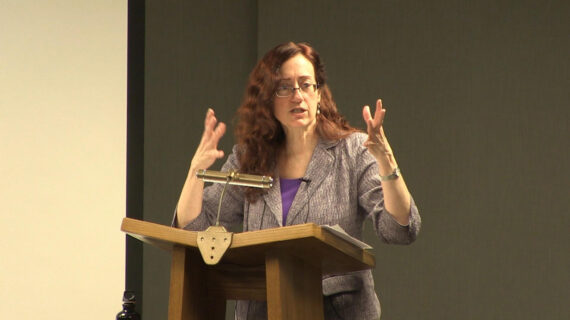
cc >> Welcome back, everybody. This is Entrepreneurship in Society. It is a course that is offered through the University of Wisconsin School of Human Ecology. I'm Jeanan Yasiri Moe. As we begin today, I'd like to extend thanks to our partners in helping produce this class, the College of Engineering for their technical support, the UW Office of Corporate Relations for their support, and the Ewing Marion Kauffman Foundation which has provided financial support for this course over eight semesters. Additionally, we'd like to thank our media partners, Wisconsin Public Television, and their University Place crew for taping today's lecture. It's my special privilege to be able to introduce to you a special guest today, Michael Feldman, host of the wildly popular national radio program "Whad'Ya Know?" Michael was born and raised in Milwaukee, graduating from the UW in 1970. While teaching at an alternative high school here in Madison, he volunteered his services at a local public radio station, WORT, back in 1977 and soon landed his own Friday night call-in show called "Thanks For Calling." That experience eventually led him to Chicago's WGN radio to host their afternoon drive slot, and in 1985 Michael returned to the Wisconsin Public Radio network to host "Whad'Ya Know?" a weekly talk show. Today, "Whad'Ya Know?" is produced by Wisconsin Public Radio and broadcast across the US to 200 public radio stations and broadcast on Sirius and XM satellite radio. The show is streamed, podcast archived, and available on demand through various sources. I knew that Michael's story was an interesting one and one that
really does speak to entrepreneurial thinking
innovation, risk-taking, as well as great wealth creation, especially for those in his audience. So it is my pleasure to introduce and to welcome, as our last speaker this semester, Michael Feldman.
APPLAUSE
really does speak to entrepreneurial thinking
>> Ah, geez. Well, thank you. Well, some of that is true. I don't know about the innovation, to tell you the truth. I do a public radio show so you've never heard it. I would say probably your grandmother might like me. Your grandfather probably doesn't. That's just sort of the way it splits, public radio. Some of you might be familiar with me. We've been on long enough now where we actually raised children in the show from birth to about age 25 or so. So you could be one of those kids that was raised on "Whad'Ya Know?" but it doesn't look that way just from the reaction I'm getting. Anyway, I am Michael Feldman. The show is called "Whad'Ya Know?" that I do. I used to be high school teacher, but it drove me to seek other forms of vocation. I don't know if any of you are in education, but you might find that same thing happens to you. So I taught here at Shabazz High School in Madison, which is the alternative high school, so-called because the kids went, like, every other time. Actually, my first radio show I had a show at a greasy spoon called Dolly's Fine Foods on Williamson Street. It was right across from the Crystal Corner bar, which you may already know. If you don't, you probably will. And I'd do a show there from 6:00
to 9
00 in the morning each week day, and then I'd go and teach at Shabazz, and that worked out pretty good for a while. But after while I left that, and I got a job, actually, on Wisconsin Public Radio which it turns out the guy who runs Wisconsin Public Radio, ran at the time, heard my show from the greasy spoon and said this could work on public radio, and I pretty much proved that it couldn't. But I did several shows there. Then I got the call to go down to the big time in Chicago at WGN, which I found out actually stands for Who Goes Next in terms of personnel. And I lasted there the worst part of a year, actually, I like to call it. They teamed with a co-host, and I had actually never worked with anybody before. For me radio is me. You have a microphone and due to certain dysfunctions that I have, kind of a nervous disorder that I have, I can free associate and just keep talking about nothing. It worked very well in teaching high school, as you can imagine.
LAUGHTER
to 9
So I can do that endlessly, but working with someone else, they interrupt you flow. And they teamed with this woman who had been a traffic copter reporter. So she had a very loud voice because she had to be heard above the props of the helicopter. So I would go off on one tangent and she would just chop it down. It was horrible. That's why I never work with anyone. I shouldn't really be in a relationship with anyone.
LAUGHTER
to 9
I shouldn't really deal with anyone outside of myself and just stay in a bubble, and I'm okay in the bubble. Eventually, it got so bad, actually, we had to do the engineering for the other person, we'd switch off the pots and all that, the levels and stuff, and she kept potting me down and her up, and I would pot her down and me up. And finally they super glued the controls on the control board, WGN, World's Greatest Newspaper station. And they super glued them, and she was so loud on show that I was doing that I actually pounded on it with my fist until they bled trying to move her pot down so I couldn't hear that in my ears. So that's my history in commercial radio. Oh, and one weekend at WMAD in the cornfields there in Sun Prairie which didn't work out either because I didn't know you couldn't play what you wanted to. I'd never been on commercial radio before. On WORT we played pretty much whatever we wanted to and some pretty obscure things and a lot of strange music. But on commercial radio you don't do that. There's actually a play list, I was told by the program director the next morning. So I had an overnight in the cornfield there, and it was very strange to begin with because would call in and say my sister just had a newborn baby, could you play Hells Bells by AC/DC for her. Sure, okay, whatever, commercial radio, do that. So I played that but it's very bizarre because, literally, you're in a cornfield at WMAD, if it still exists. Does it? Probably does. It's called something else maybe. And so you have a window there, and all you see are corn, stalks of corn in the dark. This is the overnight show, and it's very scary. And so that lasted two weekends, and that was the end of commercial radio for me. But public radio is a good thing because you can stay on it as long as possible because no one notices you're there. I have flown under the radar for, like, 25 years just on this show alone. And people don't even realize that I'm still here so it's perfect. You really couldn't ask for anything better. I don't know if any of you are thinking about careers in radio. Anyone here radio oriented? TV? No. Comm arts? What's your thing? >> Comm arts, TV and film. >> TV and film? Okay, cool. I will say that, in terms of preparation for a career in comm arts, radio, TV, or what have you, I never took a course in it. And I'm not bragging about that. It just never occurred to me. I never really thought I was going to do that. I took English because I could speak it and write it. So that's cool. So I had an advantage, I thought, taking English courses, and I liked reading. And then I graduated and I figured I didn't see any ads for English majors wanted. So it was a question of what am I going to do for a living. You may run into this shortly. So I thought I could always teach. Those we can, do; those who can't, teach. The old saying. And so I took a year of education here at the university, teacher education, and there was an internship that open up in Kenosha at Tremper High School down in Kenosha. It was opened because the kid who had gone there to intern from Madison, these were the days, had shown up at the welcome dance at the country club wearing sandals. And they sent him home. They sent him packing because this is not going to work in Kenosha. So I took his opening. During my job interview they asked me, would you ever consider sitting in the yoga posture on your desk while teaching a class? And I said it never occurred to me. Which, of course, I did for the following three or four years. It was just those days. The war at home was going on in Madison, and in Kenosha some other sort of war was going on, the war against the factory. My students in Kenosha, universally, all they wanted was not to work in the factory. It was American Motors at that time. And they were great kids and everything, but they wanted to get out of Kenosha. That was their one consideration not the war or politics or anything else. But when I came down there, my first day when I saw the campus, there was smoke rising from Tremper High School. As I came down highway 50 and I see that smoke was rising. And I thought, my god, the war at home has reached Kenosha. And it turned out it was senior bratwurst day. That was my first indication that Madison is different from maybe some other places you'll run into. So take that for what it's worth. As far as being an entrepreneur, can you be something that you can't actually say?
LAUGHTER
to 9
I've been practicing, entrepreneur. I don't think I would be anything that is French, to begin with. That's a French word. I don't think there's a French word for me. Unless it's je ne sais quoi. So entre-manure I thought of. That was possibly me. I'm more of a contra-preneur or something. I never have made wealth because I got the list things, take risks, think innovatively, and create wealth. Now, just looking at wealth, I have made some money, but I've never created wealth because wealth, to me, is bigger than money or making a decent living. It's like creating wealth, something really big. I'm not sure what it is, to tell you the truth, but like creating wealth stream, a stream of wealth that other people can dip into. You know, wealth. Producing wealth, making wealth available. That, I don't do that. I don't know what that would be. Taking risks. I'm not a type A. Well, it depends what that stands for, I guess. I occasionally take risks but usually not intentionally. So there's that. I think, for me at this point in my life, getting up in the morning is a risk I take.
LAUGHTER
to 9
I do it slowly. Well, you're not there yet. I won't even tell you want's going to happen. You don't want to know, believe me. You wake up each morning sort of surprised that you're still here. That's different. So that's taking a risk, I'd say, to get out of bed and go into the world and so forth. But I'm not a type A. I can't imagine somebody wants to sailboard off of Jesus' arms in Rio there, off Sugarloaf Mountain, wherever that is. That would be cool, but I wouldn't do it. Or any sort of sport that's those sports they have now, those extreme sports. For me, getting out a chair is an extreme sport. Do I take risks? I take risks because I probably didn't know what I was getting into. So, for example, my career is not a typical career. There is nothing you'll see anywhere that is what I do for a living. So I had to invent it. So there's that. But it wasn't so much a risk as it was desperation. There's a slight difference between being desperate and doing anything and taking a calculated risk. So I'm not, like an investor might take a risk and so forth, I don't do that. Thinking innovatively. Once again, that's pretty subjective. Once, when I was a kid actually, I came up with the idea for The Clapper before it existed. You know, The Clapper, where your granny can clap her hands and the TV goes on or off. Unfortunately, it also shuts off her husbands hearing aid and pacemaker, but that's another...
LAUGHTER
to 9
That's probably a good thing for her. I don't know, it might be a good thing. But I never had an innovation unless it is the fact that I could make basically being me into a career. So that's pretty innovative in a way because, really, there's not much of a use, initially you wouldn't think there's much of a use for a Michael Feldman. I can see you agree.
LAUGHTER
to 9
So if you're doing something like in radio, now radio they have things that are called radio personalities but usually they're not. In fact, they told me on the radio, I won a contest in high school to be on the radio one time. I was shooting my mouth off and talking and play weird, Louie Louie and songs like that, and a guy afterward told me, it was Bob Berry, who was a very big DJ in Milwaukee at the time, rock DJ, the fifth Beatle, actually the five millionth and fifth Beatle but that's what he called himself, he said just play the records, give the weather and get out. He told me not to really consider that as a career. But there were radio personalities, and there's some leeway in terms of actually expressing something you feel about or something you think about and playing music that you think should be played that perhaps isn't being played and that sort of thing. But they don't encourage it. In fact, it almost doesn't exist anywhere. There's Rush Limbaugh now and guys like that and Howard Stern. They do have that leeway but they're very few and far between. So maybe that's innovation. Luck. I would advocate if you're going to have anything, have luck. Have good luck. You may, in fact, now for me the problem was teaching was cool but it wasn't going to be my life work. I was an artistic type. Maybe you are as well. In the sense of I wanted to have an art in the worst way, and all my art was about the worst you could ever see. Anything I would do artistically was terrible. I couldn't paint. I couldn't draw. I couldn't sing. I couldn't play an instrument. All these things that I really admired. Just to draw something that looked like something would have been a great thing for me. And I appreciate all those things. And music, I love music but I've tried, well it never went anywhere. I don't have the knack. I don't have an ear, and I don't have an eye. And I have a mouth. That's about all I have. And maybe something that you've run into too is if the need to express yourself is sort of important to you, than you are quite possibly and artistic type. You may not be an artist. That's something that you have to establish. But it's sort of a problem because if you don't immediately have an art, that's apparent. You have to come up with something eventually. So you try a lot of things, and I think that's probably the best thing about college is you could go off in a lot of areas that you never even thought of before and explore them and think, well, this is cool, maybe I can't do this or maybe something that really turns you on in a whole new way of looking at things or a way of expressing yourself. If expressing yourself is not important to you, then you don't have this problem at least. You may have other problems. So it's a question of how are you going to do that. Photography, I tried photography for a while. I tried ceramics. So I was very desperate. I had wheels throwing terrible pots. All my friends are musicians or artists, and I was like the odd man out and I really wanted to have an art. So the only argument that I could come up with is that what I do on the radio is an art form. It may not be high art, but it certainly is low art. I'll say that. So that's just sort of the whole thing about radio and how that happened. I've volunteered at WORT. That's how I got on the air in the first place, and I found that I have three basic skills that work in terms of doing radio. That is I can speak in front of a group of people and free associate. It's really a dysfunction that I have. So if you can make your dysfunctions pay, this could be very important for you. I can free associate. I used to do it in my classes all the time. Kids would get me off on tangents, and I'd just keep going. I'd be talking about one thing and they say what about, and so I'd go that and I would never get to what I was going to do because that's how I think. And it's a dysfunction based on nervousness. So it's a nervous disorder that I made pay. So that's cool. Otherwise I would be tranquilized and years of therapy. I probably should have therapy with a lot of this stuff because it could have been therapized, or whatever they do, therapeutized, but I wouldn't have had a career. I would be on the air, for example, doing my show from the greasy spoon, and it was whoever came in including people off the streets and stuff, and I could work with all of them because I was just free to talk to people and so forth and get something from them. Someone called in one day and said, you know, you're really messed up. You're very neurotic and you have a lot of problems, and he said don't ever change. So if I had therapy I wouldn't be able to do that because I would have been at peace with myself. But you can't be at peace with yourself and make a complete ass of yourself at the same time, so that's very important that I didn't do that. I do want to say something about old media and new media because I'm definitely old media, so I wish you guys a lot of luck with the new media. I'm making forays in it. I do tweet or Twitter or whatever the verb would be. I do that. And now that's part of my nervous disorder now. It's a very strange thing. First of all, I believe that our history will be divided into pre-cell and post-cell. Or BC and AC. That will be our generation. Before cell and after cell. Now, I am before cell. For me a phone is black. It has a rotary dial. There's a cord. If you want privacy, you drag it into the bathroom and lock the door and your brother knocks on it the whole time trying to get in it. But that's a phone. You didn't take a picture with it, for example, and there was no social networking. We didn't social network in my day. We didn't have social media. We had social diseases. That occurred. Social studies. We definitely had social security. You probably had one of those three things, but that was all the social we had. There were social organizations, rotary and your elks and so forth, but there was no social. And, frankly, I feel I'm sort of relieved in a way because, first of all, I have a phone. Where'd I put it there? And I'm supposed to leave it on my daughters tell me, one of whom is there actually. I wasn't going to mention her but there she is. I finally got the phone. Dad, take your phone with you, leave it on. Alright, I don't want to be that available. See, now, that's the difference between your generation and mine. Why would you want to be that available? It's the same thing with Facebook now. Everyone knows what you're doing every step of the way, and why do you want that? It's none of their business where I am now. Unless I'm expecting a call, but I don't expect somebody I don't even know on Facebook to know what I have just done which is probably trivial anyway and none of their business overall. So that's why I'm not of this generation. It wouldn't work out for me. But I do use my phone now. Occasionally I turn it on. So that's cool. They're cool devices. Now, I'm Android simply because I'm sort of anti-Apple simply because I don't know why.
LAUGHTER
to 9
Since that Mac that looked like a TV set, I thought it was really ugly looking, those old Macs, and then they came out with a laptop that looked like a toilet cover and that was it for me for Mac. I keep thinking about that toilet cover Mac. Who invented that? Now they're doing a lot better design-wise and so forth. To me, the whole Apple thing is such a closed system. They control all the content going in, the content coming out, and so forth. And to me that goes back to my University of Wisconsin days. That's the man. Apple's the man. Of course, Google is the man also. There's a lot of men now.
LAUGHTER
to 9
Amazon. The whole cloud thing now is very scary to me as a member of the old media because you've got your Amazon cloud, you got you Apple cloud, you got your Google cloud, and eventually there's going to be warfare between these clouds.
LAUGHTER
to 9
And ships of destruction will fight one another in the clouds, in the various clouds, and it will be the end of the world as we know it. But that's new media, what can you do? In my day, you have AT&T, but in my day it actually was American Telephone & Telegraph. So that's it in a nutshell. Just left the telegraph behind and we had the telephone, a wonderful thing. Now you actually make calls on your cell? Probably not, right? My youngest daughter is shocked when her phone rings. It doesn't ring, it plays some heavy metal anthem. Phones don't ring anymore. You don't dial anything because there's no dials. But anyway, if it rings, she's shocked because all she does is text. She's a different creature from me, as is Ellie. Ellie has gone totally Siri. Siri is the only person she talks to now.
LAUGHTER
to 9
Because that's the one person who always responds. I can understand that. It's a wonderful thing, but Siri is not real. She's not real. I don't think. Maybe she is real. Maybe there is someone there who's behind the scenes being Siri, but I don't think so. So I guess all I'm saying is I don't get all this stuff, especially Facebook, I think, more than anything. Facebook is interesting because here is a guy, Zuckerberg, who had no social skills whatsoever.
LAUGHTER
to 9
And invents this thing because of that. That's amazing. Talk about my lack of access to what's really happening. He's totally asocial. He just didn't have any social skills. Terrible social skills. You saw the movie, right? I think that's pretty accurate. Total lack of social skills. He's now worth how many billions of dollars? That's an amazing story for someone with social problems. So that's interesting and, once again, this is all new media stuff. Radio is probably the only surviving thing of the old media. Even television now has gone different, high def and whatever. Soon television will be more interactive. It will all be one big thing and so forth. Radio is still there hammering away. I'm on the AM here in Madison, so how cool is that? With the basketball games, the high school basketball games, and "Whad'Ya Know?" In my day, the basically the big innovation in radio was we got the six transistor radio which made it possible for the first time to gouge out a textbook and conceal a radio in it. You take a knife, history books work best I find.
LAUGHTER
to 9
And you make a little thing in there and the rest your little six transistor radio. This is, consider the height, state of the art. And then you run, there was a single thing that goes in your ear, it looked like a hearing aid basically, and run up here and stick it in there. And you just sit like this and listen to the World Series or whatever. Just for special events. You can't do it all the time. So that was it but that was a big deal. Suddenly you're portable and that, all portable devices now, that was like the first portable device. Suddenly we've got that six transistor radio. That's a life changer. But you couldn't do much with it. You couldn't take pictures with it. You couldn't find out where your friends were and where they weren't and summon them all. I do like flash mobs.
LAUGHTER
to 9
Ellie always told me I use the term wrong, but this is about the coolest thing because we used to, in the days here when the revolution was on, say the revolution will be televised. The idea that everything that was happening on campus, all the riots and protests and kids getting beat up and all that stuff, was all on television. So they said the world is watching, the revolution will be televised. It didn't quite work out that way. But now I think the revolution will be on Facebook, if there is one, it will be called Facebook. You'll all know where it is and where to show up and so forth. But I see a flash mob kind of thing where everyone gets together and has a revolution instead of a dance thing, actually stage a revolution. And then they go away and do something else. I don't know. I think that's pretty cool. There's that sort of social aspect of it, which I think is very cool I got to admit, which didn't exist before. It's possible if you look at Egypt and countries overseas where there's been a total regime change, all of that was made possible by this new technology which didn't exist before. So that's pretty amazing and that's a pretty powerful tool. So I do have a lot of respect for that end of things. However, radio is still AM.
LAUGHTER
to 9
And scratchy and doesn't reach very far. They have tried to do innovations in radio. They have an HD radio now. I don't know if it stands for high density. I don't know. Hound dog. I have no idea. It's really not high def or anything. And no one has it anyhow. Now you can get Sirius and so forth. That's cool but it's expensive. So it does offer more options though. For us, the main thing we had were records and the stereo. The stereo was an amazing invention. We went from one speaker to two. And amplifiers, someone figured out that you can get, like, 100 watts and up and build speakers that were really huge. Somewhere in the '70s, I think, this occurred. And so maybe a student such as yourself or yourselves could get the biggest damn speakers, and suddenly you dominate your space. That's the cool thing about all this technology. A lot of it now is you dominating your internal space. But you could really work the whole block with the right speakers. And that was kind of powerful because the music also is part of it. Sort of a revolution going on. The Beatles somewhat but also Bob Dylan and all these people, and they weren't exactly calling for a revolution but it was a whole new way of doing music, and it was very anti-establishment. So that was the cool thing about it. And it was everywhere. It was on the radio everywhere, and it was blasting from your dorm. That was sort of the one unifying social factor that we had going for us. If we had anything going for us, I'm not sure we did. This Twitter thing is, I've gotten, it's addictive in that on my show I have a monologue, monologue so called because I'm the one speaking it, so I start each show with a news monologue. All the news that isn't I call it. And it's basically what's happening, what I think is funny, and trying to put a spin on it and sometimes successfully. But I've been doing that on Twitter. Something comes up, John Travolta, okay, let's get something out on the John Travolta masseur thing. Not too hard to do. So I do it almost, sometimes I think I'm doing it in my sleep. I'm actually tweeting, if that is the verb, in my sleep which is an odd feeling. It also is sort of bad in terms of composition because you're limited to 140 characters. And that's a different way. I always wrote, and I try to write humorous pieces and stuff, and they always end up being about a page and a half maximum. That's all I could say. Usually I would take a one-liner and expand it, and I get about a page and a half out of it, and sometimes I get a newspaper column out of it or something like that. So that's cool. But now with Twitter, you're limited to 140 characters. And if you look at it, perhaps no literature will ever be written again if this becomes the norm for writing in 140 characters because that's like, what, 20 words maybe. And if you think about it, I looked it up and the bible is 774,746 words in the bible. That's both books not including book of Mormon. Figuring it's seven letters a word, words were longer in those days because they had, like, speaketh, sayeth. You always had the eth endings on everything. So that comes out to 5,423,222 characters in the bible, which would require 38,737 tweets. However, the 10 Commandments are more doable. I actually worked out the 10 Commandments. I can do them in 51 characters. Here they are. No god, images, cursing, killing, sex, steal, covet, Sundays, honor folks. 10 Commandments. It doesn't have the same impact.
LAUGHTER
to 9
If Moses had actually tweeted, I don't think it would have the same impact, and I think today our entire western culture might be entirely different because I don't think people would have thought this was necessarily the tweet of God.
LAUGHTER
to 9
Okay. I just thought about that so I thought I'd tell you. Let's see, I've got a couple things I want to say here. Okay. Feldmaneurship, I actually felt under a lot of pressure because Jeanan is so into this and she's so good at what she does and she is all these things. Do you know about her? She's absolutely amazing, by the way. She is in so many things and so many areas, and she has got the business acumen but she uses it for the good of people. It's almost never been done before. She's an amazing individual. And she is so organized and so goal-oriented and so follow-through on everything that she is the exact opposite of me because my approach to life is to stumble over something, and then as you're getting up you see if it actually works for you or not, and maybe you'll stumble over it again. So totally disorganized. The opposite of Jeanan. J-Moe as she's now known.
LAUGHTER
to 9
So I try to think what would Feldmaneurship be? I came up with a few things here, and I'll just give these to you quickly here because they're of no use to you.
LAUGHTER
to 9
Number one, no goals.
LAUGHTER
to 9
How can you have goals when you have no idea what you're doing?
LAUGHTER
to 9
Goals are usually somebody else has foist it on you anyway. People like to pretend that whatever they may have achieved in life is what they intended to but they're delusional. They're rationalizing what may have been some pretty bad choices along the way. It's like Toddlers and Tiaras, right? Those kids are out there because of their mothers' needs. The desperate needs of their overweight, overbearing mothers to have been a beauty queen. So these poor little kids have to pay for it. Unless you're a Manning, a good rule of thumb is to do nothing that your parents have done.
LAUGHTER
to 9
Goals are limiting many interesting, even profound, avenues and dead ends you may have taken. In Feldmaneurship, we get out there and stumble over things. Take the wrong direction on the wrong path, start over, and stumble again. Eventually, you stumble over something worth the fall. Then it's a question of how I can keep having the same happy accident over and over again. And, really, because you try things and this doesn't work, that doesn't work, and to find something that I could do then, and then the question of actually doing it. So for me I said I can do radio because I can talk, I can hold a microphone, and I can answer the phone. So the three qualities you need for doing a radio show. But then it's really a question of actually developing the skills because they don't just come naturally. You have to have the talent. There has to be some talent there. And that's a problem I've had in a lot of areas. There's stuff I really want to do but I didn't have that talent. Finally you find something, this is something I can do. Then you've got to develop the talent. So that's the thing. Number two, no ambition. Very important not to have ambition I don't mean to be a stoner or whatever they're called now. Are there still stoners? What do you call someone who's like, ya know? >> A stoner. >> A stoner? Cool.
LAUGHTER
to 9
I'm down with that. By the way, in school, myself, in high school in particular, I was very, not conservative but just kind of...
LAUGHTER
to 9
What does this mean? What's a word for this? A kid who's like this? I used to wear dickies. I used to wear turtleneck dickies and white shirts, and you could see the dickie outline underneath.
LAUGHTER
to 9
Penny loafers, you don't know what those are but they are little shoes that actually had pennies. I'd take the pennies out because I was cool.
LAUGHTER
to 9
Black stay-press pants and penny loafers, and I eventually went to hush puppies. I really got pretty hip. And white shirts. I looked like a junior accountant. My dad was an accountant. Maybe I got it from him. I don't know. And I had a sense of humor and stuff, and I was pretty funny and stuff, but I was pretty closed off. Whatever. That was me. But the guys that I admired, we called them greasers in our day. We had these greasers because of all the grease. They were the coolest guys in the world because they would talk back to teachers and stuff, and I loved it because deep in my heart I wanted to do that. I hated high school. It was all abuse of authority, especially in those days. You needed a hall pass. No protests in our high school. It never occurred to us to do that. So the greasers were my heroes. They were pretty cool guys. But anyhow, no ambition, don't be a stoner but be whatever you have to be just not to have ambition. I don't know if we're all here for a reason, but we are all here and we can make up reasons. So you don't really have to have an overriding ambition. Those are usually imposed on you anyhow. Rich and famous are the two absolute worst ambitions you can have. I think maybe you could be rich or famous. That wouldn't be so bad, but if you have them both, it's not a good thing because they sort of take over your life. Ambition should be to do something you love to do because if you do something you love to do then you'll never feel like I've wasted the past 30 years of my life at the Department of Motor Vehicles. Good job, probably gratifying in some sense of the word, but it's not what you wanted to do. You wanted to dance. So go for the love thing, I would say. Forgot the ambition thing unless your ambition is to make the most of yourself. That's a good ambition I think. And there's no reason that shouldn't pay good money. Ideally, you'll do something you love and get paid for it. That's the only ambition. Make mistakes. Very important to make mistakes, constantly, repeatedly, same ones over and over again. You should have a wife there to confirm all that.
LAUGHTER
to 9
That's very helpful. Or a husband who can tell you that, in fact, you're making the same mistake. Of course that was a big mistake in the beginning but never mind.
LAUGHTER
to 9
You think Edison didn't come up with some stupid inventions? I bet he came up with hand buzzers and nose hair trimmers and stuff, but he came up with the light bulb and the phonograph. Of course he stole all those ideas but still. Without mistakes you never get anything right. So make mistakes. It's normal. Don't try to make them. That'd be weird. But you'll make them. Roger Clemens even would hang the occasional fastball in the letters and shoot the occasional needle in his butt.
LAUGHTER
to 9
So everyone makes mistakes is what I'm saying. Still a great pitcher. Hope he gets off. And I always think Columbus, remember, was looking for India. Big mistake. Only a couple more of these. Money is only a problem when you don't have it. Okay. It can't be money-oriented. Definitely I have been broke, and it's a good thing to be broke just to know what it's like not to have money. And to know that you don't care for that feeling. At one point here, a low point in my life, actually I was driving cab, I quit my one radio job for some reason, on the air by the way, don't ever do that if you're on the air.
LAUGHTER
to 9
And so I ended up driving cab and was a terrible cab driver. Definitely not my life work. I had the lowest revenue per mile in Union Cab because I turned off the radio because I didn't want to be bothered.
LAUGHTER
to 9
Plus, I grew up on campus here, grew up, I guess I grew up, and I didn't know there were streets called the Grand Tetons. Did you know that? On the west side of Madison? The Grand Tetons. They'd say number 24, pick up Grand Tetons, and I had no idea we had Grand Tetons in Madison. On the far east side of Madison there are streets named after the developer's daughters. So Donna. You've got to know developer's daughters to know what street you're on. It's a very confusing thing if you've never been off campus. Broom Street, Bassett, cool.
LAUGHTER
to 9
By the way, Mifflin Street block party, Mayor Paul Soglin was the first guy arrested at the original Mifflin Street block party. Where was he? I'm sorry. It really bothers me. Our motto was the streets belong to the people. We were wrong.
LAUGHTER
to 9
But why were there horses in the street and the people were on the sidewalks, it was the worst possible situation, scenario. It's amazing nothing worse happened than arresting Montee Ball.
LAUGHTER
to 9
And who turned in Montee Ball? We've got to find him, we've got to, I'm not saying hurt him or anything, I'm just saying.
LAUGHTER
to 9
Mess up his porch a little bit. You know what I'm saying?
LAUGHTER
to 9
That was the weirdest event of all time, I think. Do something you love. I covered that one already. Finally, this is the last one in Feldmaneurship, learn how to dance. It may seem inappropriate with the other ones, but I guess mainly to the guys out there because most of the females probably already know how to dance. For women it's innate. For men it's acquired. It's an acquired skill. But it's a tremendous advantage to you. You guys, you're still in the sifting and winnowing, the great Wisconsin Idea of the whole mating game or whatever, and if you can dance it gives you, how many times have you stood up in front of a band there while the only girl there that you would have wanted to dance with gets asked to dance by some guy who knows how to dance? Now, I'm not saying that would have been the girl for you, but you know what I mean. Learn how to dance. Take some lessons. Don't tell anyone you're doing it. That's humiliating.
LAUGHTER
to 9
Because I guy does not learn how to dance unless he has a sister who teaches him, and I had three older brothers. None of them taught me how. They taught me how to defend myself from a headlock and how to breathe with my neck being pressed against the floor.
LAUGHTER
to 9
But no dancing. So I would say it's a tremendous advantage. And that's what I would advise to you. So that's pretty much me in my life and times. It's not much but it's my life.
LAUGHTER
to 9
So I would be happy, now you may have questions not so much about me but about, let's say, radio or broadcasting or how do I get into this sort of thing. If I can help you, I'd be surprised, but I'd be glad to entertain any questions you might have. >> The students know that they put their hands up, and then I go ahead and hand off the mic. Do I see any hands? I see one at the back. >> So I'm watching her move. She moves so well. >> If you guys could make sure your backpacks aren't in the way of my running through. >> Public Television there. >> Hey there. I know your daughter Ellie, and I know she went to West. I went to Memorial. Which high school did you go to in Madison? >> I didn't go to one. I taught at one. >> Oh. >> I taught at Shabazz. >> Oh, Shabazz. >> I'm from Milwaukee. I went to Milwaukee Washington. >> Okay. I was just wondering. Just curious.
LAUGHTER
to 9
>> West has been our school here, though. Both daughters went to West. >> Right here and then I'll come down front. >> Hi. My name is Michael. >> Hi. >> I was just wondering, if you could go back and give yourself one piece of advice while you were in college, what would that be? >> Don't get married.
LAUGHTER
to 9
Alright, okay, no one ever gave me advice, and anything I would say to you, I expect you not to pay any attention to because I wouldn't have either. So I graduated college, I was 21, I was living with a certain person, and I thought I'm going to get married because my brother Clayton got married when he was 21 and he was still married and he's still married now. But that was Clayton, and he didn't marry the person that I did. So I would say, for some reason I thought that I had to get in line, in step, with expectations. Get married, get a job. So I would say don't do that. Are you crazy?
LAUGHTER
to 9
>> Hi. My name is Justin. >> Hey, Justin. >> First of all, thanks for coming. It was really enjoyable. >> Oh, thank you. >> So you made the distinction between old and new media. >> Yeah. >> Your radio show is on the internet, how do you make that connection, I suppose? How do you reach new people with old media? >> I would tie it to a brick and throw it through a window if that's all, in terms of delivery of the material. The material is very much traditionally delivered. It's sort of repackaged through the internet and so forth. It's not really internet friendly in the sense that it's not interactive, which would be nice for me to do that more. I would use whatever is available in terms of broadcasting. We do have podcasts and so forth, and I have never actually listened to a podcast. I don't know what sort of pod you need.
LAUGHTER
to 9
I think it's like a body snatchers thing where the pod comes and takes over your body. Replica of you kind of thing. But I'm not sure what the technology is there. I find the new technology very interesting for all the reasons I said earlier, I guess. It's sort of beyond me. Especially all the social media part of it I, personally, don't get. For you, I'm sure for all of you it's like second nature. You think about the cell phone thing really didn't hit that long ago, but you grew up with that. So that's really totally different orientation. >> Michael, "Whad'Ya Know?" is very, very popular, and it's obviously gone through a lot of transitions over the course of the last 25 years. What do you think is the riskiest thing you've ever done with the show when you think back? >> Risky? >> Yeah. >> I think showing up is the biggest risk. Honestly, it's not a risk sort of show. Do you know what I mean? No one's life is in danger by the doing of it.
LAUGHTER
to 9
We may have had impact on some people listening for one reason or another. I know that people have told me that their mother in the home, she listened to the show and she loved it, and it tied her into things that were happening back here in Wisconsin. That sort of thing. So that's risk exactly but it's sort of having an effect of some sort. So that does occur. And, really, what I like is not so much the risk of it, it's actually connecting. So I say all that stuff about social media, but for me radio was maybe the original social media in that you go on the air and you're talking to people around the country who maybe have the same point of view as you, or similar, and they're funny, they're interesting, they tell you something about they are and where they're at, and I love that sort of connectedness. To me, that's really what makes it interesting. That's not really a risk thing. It's sort of a risk to put yourself in that position. It can be. >> You went through a lot of different positions, jobs, careers, and, obviously, "Whad'Ya Know?" is very, very popular. Was there ever a point when you realized you'd made it? >> No, not yet.
LAUGHTER
to 9
No. And I'm already in my decline. It's sort of slipping away I feel like. It's hard to maintain and arch. That's why it's an arch I guess. But no. Making it? No. Surprised that I'm still on? Yes. So there's that. I really do think if you stay on long enough, you become grandfathered in, especially in public radio. Commercial radio, you probably have a two-year life span before you get fired or they change format of your station. I've worked with commercial guys. They're always reformatting stations. So you go in and it's jazz one day, the next day it's Spanish language, and you may not make that jump comfortably. But that's commercial radio. Public radio just goes on and on and on and on and on and on. >> Any final questions for Michael before we close? Well, I know you all join me in thanking Michael Feldman.
APPLAUSE
to 9
>> Thank you guys.
Search University Place Episodes
Related Stories from PBS Wisconsin's Blog





Donate to sign up. Activate and sign in to Passport. It's that easy to help PBS Wisconsin serve your community through media that educates, inspires, and entertains.
Make your membership gift today
Only for new users: Activate Passport using your code or email address
Already a member?
Look up my account
Need some help? Go to FAQ or visit PBS Passport Help
Need help accessing PBS Wisconsin anywhere?

Online Access | Platform & Device Access | Cable or Satellite Access | Over-The-Air Access
Visit Access Guide
Need help accessing PBS Wisconsin anywhere?
Visit Our
Live TV Access Guide
Online AccessPlatform & Device Access
Cable or Satellite Access
Over-The-Air Access
Visit Access Guide




Follow Us