

 Passport






History of the Bicycle
04/15/13 | 45m 27s | Rating: TV-G
David Herlihy, author of "Bicycle: The History," delves into the history of the bicycle, originally described as a “mechanical horse.” Herlihy discusses the invention of the bicycle, the freedom it provides, regardless of social class, and the passion surrounding this mode of transportation.


Copy and Paste the Following Code to Embed this Video:
History of the Bicycle
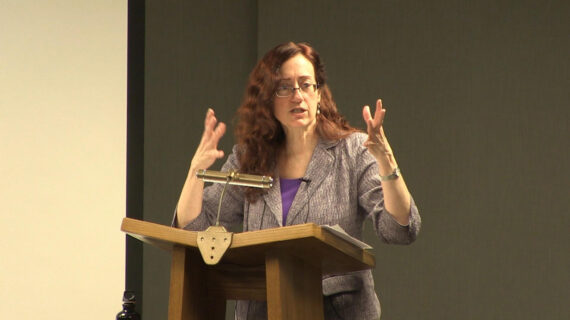
cc >> Today we are pleased to introduce and host author David Herlihy as part of the Wisconsin Historical Museum's bi-monthly History Sandwiched In lecture series. He shares his knowledge of the history of the bicycle. The opinions expressed today are those of the presenter's and are not necessarily those of the Wisconsin Historical Society or the museum's employees. Please join me in welcoming David to the stage as he traces decades of development and ingenuity that transformed the basic concept of human-powered transportation into the marvels of engineering that today's high-tech bicycles represent. >> Thank you, Patty.
applause
Thank you. Thank you very much, it's a pleasure to be here. This is actually kind of a homecoming for me because I grew up down the street on Harrison Avenue. Or was it Harrison Street.... At any rate, I haven't been here in awhile, but it's great to be back. I know you're a big bike city. That wasn't necessarily the case in my day, but I'm glad to know that it's become so bike-friendly. Without further ado, let's talk about the history of the bike. I'm going to talk in general terms. There is, of course, a lot of local history as well, but we're going to keep it pretty general. Starting with the question, where did the idea come from? I always like to kind of frame it in more general terms. It's really not so much how did we invent the bicyle, but where did the basic idea come from? I think the answer to that is that it's an outgrowth of a larger quest for a practical human-powered vehicle. Let's go into our slides. Just briefly before I do though, a quick plug for my two books. Bike History, on the left. And this is my latest one which has to do with a young man who tried to bicycle around the world in the 1890s on what was then a newfangled Safety bicycle. He actually crossed the state of Wisconsin in July of 1892. Frank Lenz, his name was. I'll have an article coming up in the magazine of Wisconsin History about that episode. So the question about a human-powered vehicle is really an ancient riddle. This is the frontispiece for a book that was published back in the late 1600s by a French mathematician named Jacques Ozanam. The subject of his book is basically he has picked out, I think, something like 40 of what he considers the most challenging technical problems of the day. It's interesting that he selected a human-powered carriage for his frontispiece. That was his solution to the problem. You can see that it's a four-wheeler. The owner sits comfortably up front and has the reins while the lackey does the actual work. That means he has to step up and down on those treadles. But even then Ozanam recognized the theoretical advantages of such a contraption. Obviously, you wouldn't be reliant on horses which would be nice. You don't have to deal with taking care of the horses or deal with their moods, or anything like that. It had some appeal. But from the very beginning there were also skeptics, people who thought, well, if God wanted us to get around on wheels we would born with wheels. There was that kind of notion. There was just also the sense that this just doesn't work. These early experiments really involved so much work to go anywhere that would have been easier for them both to get off and walk. So there was that kind of skepticism as well, a sense that there would never really be a solution to this problem. The first real kind of break through in the story-- You had a couple of centuries where experimentation continued without much luck, along that basic line of four wheels with two people on it, one of whom did the work. The real breakthrough, at least a partial breakthrough in this story, came in the year 1817. That's when a German baron named Karl von Drais came up with a very novel solution. Interestingly, he too had been experimenting along the pervious lines of the four-wheeler. Then for reasons that we don't quite understand he suddenly had an idea which really kind of revolutionized the whole concept. In the first place, he came up with a very compact vehicle with just two wheels that the rider straddled and kicked along. That of course eliminated the lackey. So that's an important philosophical change. Now the idea is that you-- It'd be a personal vehicle, a mechanical horse so to speak. And again, for some skeptics that didn't make a lot of sense. The whole idea of the Industrial Revolution was to get away from manual labor, right? So why introduce something that you actually have to work? But on the other hand there were those who thought, well, this could be a-- There's already a sense that exercise isn't a bad thing, so maybe if this works out it's actually pretty ingenious. According to this caricature here which was an English-made caricature from 1819. You can see the velocipedist, as he was knows, because Drais introduced the word velocipede from the Latin for fast feet. The velocipedist is beating the horse there. I think that's a little fantasy there. In point of fact, some-- Well, let's show you how the craze was. Drais introduces his model in Germany, than he personally visits Paris and tries to get the French interested to some extent. Then the English get interested in it. There was a carriage maker in London named Dennis Johnson who made very fancy hobbyhorses, as he called them. It even came to the United States in the year 1819. Here's an ad that ran in a New Haven newspaper. There you see the word velocipede. This is a gentleman named Don Mix who's opening a rink. He's advertising-- So the rink is in the garden. You'd kind of kick you vehicle. You'd rent your vehicle and kick it around. Meanwhile there's refreshments being served here. In fact, he's even advertising, down here it says, "Wanted immediately by the subscriber a sprightly active young man to attend the velocipede--" Something-- "The velocipede bath and gardens and occasionally at the bar." It's my understanding that that position is still open.
laughter
So after that brief first velocipede episode, I mean, people did unfortunately kind of abandon the idea fairly quickly. There were a number of problems with the kick propelled velocipede. It would wear out your heels, for example. There were reports of accidents. There was initially quite a bit of excitement about this revolutionary idea. The fact that it was so compact compared to every other previous attempt to do a human-powered vehicle seemed to offer advantages, less material. The lighter weight meant that it was a personal vehicle. All the seemed appealing, but at the end of the day, it just didn't work very well. That word, velocipede, kind of stuck around even though the kick-propelled two-wheeler was more of less abandoned. It came to mean this sort of thing which was basically a child's toy. This daguerreotype, I believe from the 1840s, shows what was generally intended at the time by the word velocipede. Essentially the skeptics are still winning out in this. There's a notion that the velocipede is something for kids basically. It's not a serious adult vehicle. The prevailing notion was indeed that the quest for a pratical human-powered vehicle was a bit of a wild goose chase. What I don't have and should have included was a slide of a gentleman in England, in Dover, who did make pretty fancy four-wheeled vehicles named Willard Sawyer in the 1850s. He had a certain amount of success with those. There's some reports of people riding, I don't know, 50, 60 miles in a day on one of those. But for the most part there was really no adult velocipede until you get to the 1860s when we have the second breakthrough. What I would say was the real breakthrough in the story. This is where the basic bicycle is presented. By that I mean, a two-wheeler with pedals, which really changes everything. According to Drais's thinking, what you needed for a practical human-powered vehicle was a system that worked with the natural motion of walking. His vehicle was also dubbed as a swift-walker. The idea was, you were still walking as you would normally when you straddled it and kicked it along, because the wheels were rolling you would go farther. That was the thinking behind it. Whereas by adding these pedals here and reconfiguring it a bit, now it an actual vehicle that you-- So you don't kick the ground, you pedal. That really does change the whole notion of a self-supporting vehicle. This really surprised people because it really wasn't established, the point that you could sustain a two-wheeler in that manner. In retrospect, they probably should have figured it out because with the old kick-propelled --, as it was sometimes called, it was noticed that you go down a hill and get a certain momentum, and lift your feet up off the ground. You were effectively balancing. Essentially the were on a bicycle without truly understanding that. You would have thought that it would be a fairly simple step to go from there to adding pedals. But in fact, you have a 50 year gap almost. How did that come about? That's an interesting question. This is a Frenchman called Pierre Lallement who patented the idea. He filed the world's first patent defining the basic bicycle, which again is the two wheels aligned with pedals attached to the front hob. He's sort of an interesting character. He's a little bit mysterious in the history. We know that he leaves Paris in the year 1865, so at the close of our Civil War. He arrives just after the Civil War in July of '65 and settles in New Haven. Actually he settled in a little town called Ansonia, which is just northwest of New Haven. We know that he put together a second bicycle. His testimony would later be that he built his first bicycle in Paris in the year 1863, while Gettysburg was raging over here. Two years later he emigrated with the makings of a second bike, put it together, and apparently did a ride in the fall of '65 around Ansonia. Then the following spring he went to New Haven. I actually found the first report in the newspaper of a cyclist in a New Haven newspaper at the time from April, '66. There's just a little paragraph saying, that there was an enterprising individual last evening who when about the green on this curious two-wheeler. Then he went on to describe it, so we know that he was talking about the bicycle. We've got a plaque there now, if anyone gets to New Haven, to commemorate that event. That performance was good enough to attract an investor, a guy named James Carroll who went in on this. That patent was filed in '66, but unfortunately Lallement was unable to enlist a manufacturer. We don't quite know the details, but at a certain point he goes back to France. Meanwhile, in France you have the beginnings of the first bicycle company. So curiously enough, while he's over here, there's a company in Paris that emerges called Michaux that starts the make vehicles very similar to the one in the Lallement patent. That's what really kind of triggers a craze. So it starts in France. So although Lallement himself is unable to convince Americans to start making these things, when it takes off in France in the year '68, well, starting in '67 with the Universal Exhibition. That's when the Michaux was presented and immediately got a lot of interest going, and international attention. Then '68 became known as the year of the velocipede in France. Then that craze, at the tail end of that year, spread to the United States in a big way. Even women took an interest in this. For them it was quite a revolutionary idea. It called into question the kind of dress that they were wearing, and also questions of mobility and things like that. What happened was that after the craze started in France it came here in the winter of '68-'69. Rinks open up all across the country. I'm sure there was one here in Madison as well. The idea was, you know, this is a new era of road travel, as some described it, or a revolution in locomotion. Everyone was very excited about the idea. That finally we've got the solution to this age-old problem of a practical human-powered vehicle. This thing seemed relatively fast, it was compact so you could maneuver it through traffic. It seemed to hold out a lot of promise. The velocipede craze, the New York Times I think described it as-- They marveled that there had never been such a demand for an article in the history of American manufacturing. You had carriage workers working around the clock trying to satisfy the demand. Unfortunately-- Well, I mentioned the rinks. Here's a rink scene. This one is in New York City. Here you see, everyone's trying to get ready for the spring. They envision that they're going out and riding these things around. There actually was a lot of interesting innovation very early on. This is a Pickering and Davis. I think there's actually one of these somewhere in Wisconsin. Nick, can you remind me of where that is? >> I think it's New Berlin. >> Okay. So this was a manufacturer in New York City who was one of the first in the trade, but they came up with some very innovative ideas very early on. I'll see if I can just use this. For example, this is actually a tube instead of a solid iron. Because the other vehicles were solid iron frames that weighed maybe a hundred pounds altogether. This was kind of an innovative idea to have a tube. Also, he was concerned about absorbing road shock so a nice spring there. But also very importantly, you've got metal spokes. If you remember the other vehicles we saw, they were all the traditional wooden carriage wheels. This was a very big step forward, which would have a big impact on bicycle history. And also, finally, this was also designed to take solid rubber tire. So this machine was very advanced for 1869 and might have held out some hope for sustaining the boom, but unfortunately the Lallement patent fell into the hands of a carriage maker in Brooklyn who started to kind of clobber his competitors. He wanted $15 per bicycle when the original price was $50 for the bicycle itself, which was already a lot of money. That didn't really leave a lot of room for any of these other innovations to get to the market. Unfortunately, after this huge, you know, craze with rinks and whatnot, the whole industry imploded very quickly. The feeling was that this was all a humbug and that we were misled. In fact, we really weren't that far away from having practical bicycles, but our first industry ended there. But evolution continued overseas where there was no controlling patent. This gentleman here whose name was James Moore, and he's a very important guy in bike history. He's from Irish background but he grows up in Paris. He's actually right next to the Michaux factory. He learns to ride at a very early age. In fact, he wins to the first official bike race which was held in May of '68 in Saint-Cloud just outside of Paris. Then he goes on to kind of a distinguished career as a racer. Over here you see him around the year 1872. At that point he's returned to the United Kingdom because a war had broken out in France and that kind of decimated the Michaux company, and the original French industry. He wants to continue his racing. It's developing very rapidly in England. Notice that the form has already evolved somewhat. You've got a much larger front wheel. That's because you're getting better gear ratio. You're going farther for every revolution of the pedal. So racers were discovering that this gave them an immense advantage. Here's James Moore again just two years later, in 1874. He's now declared world champion. Notice the bike is completely changed at this point. This is what becomes what some of you may know as the Penny-farthing, or the high wheeler. This is a much more advanced machine than what the earlier bicycles were. They were started to be called boneshakers. But curiously, and this is a point I think a lot of historians have missed, that first bicycle, the boneshaker, that elicits so much excitement, including the women as we saw in that image, because people envisioned that was something they could really ride. This transition made it a much more road-worthy machine because it's large diameter did a lot to absorb the road shock. Of course these are unpaved roads at the time. Meanwhile you've got all that technology that Pickering was starting, like, you've got the tubes, you've got the wire wheels, you've got the rubber tires. This is a vehicle you could actually ride a hundred miles in comfort. But it's not something everybody wants to ride for the obvious reason. It had the tendency to throw you over the handle bars. You'd suffer what was called "a header." Instead of those dreams of a practical means of transportation, it really became kind of a wealthy, athletic, young man's passion. Clubs stated to be formed in England. It was all about getting out in the city, getting exercise, having comradery. It wasn't about practical transportation, although some people did go on long-distance tours. That's kind of how the bicycle-- That was the situation going into and throughout the late 1870s up until the 1880s. Now the bicycle makes a return to the United States in the late 1870s. This, I believe, is from late 1877. This was published in Boston. It was the second American cycling journal after the very short lived Velocipedist, published in New York for three months in 1869. This fellow, Frank Weston his name was, he was observing how much success the bicycle was having in it's new form in the United Kingdom. He decided, maybe it's time to bring the bicycle back to the United States. He started importing English bicycles, as they were called, to Boston, and he started this journal. Notice the masthead. He's got kind of a marketing problem. Everybody has such a sour memory. It's only about ten years later of that original bicycle. So he's trying to tell people, you know, this is not your father's bicycle, or you older brother's. You've got the guy on the high wheeler kind of waving to Father Time who's still stuck on his old boneshaker. The imagery is all about trying to overcome the prejudice against cycling. Really it's about convincing Americas to at least tolerate. It doesn't have the kind of reception it got the first time around, because again, it's not for everybody. But the hope was to at least clear a way so that cyclists could have access to the parks and things like that. Here's a very early photograph. Boston really was the hub at the start of the high wheel era. This is Copley Square which sadly now is the scene of the bombing. This is where the original club would meet, the Boston Bicycle Club, and go off on their rides. You can see some people chose tricycles. The next guy who enters after Weston is Albert A. Pope. They were pretty much concurrent. But Pope had a different idea. He also started to import British bicycles but his idea was, you know, we should be able to make those in the United States. He started up the Columbia Bicycle Company. He used the Weed Sewing Machine Company in Hartford to make his bicycles. He pushed very hard to win over support for this, to create a market among wealthy, young sportsmen. Also, a certain amount of tolerance among the public so that people could actually ride out in public. That's what's going on here, where he's trying-- There's a notion that that is Pope himself on his bicycle. Again, he's putting his own image out there. He wants people to know that this is a proper gentlemanly sport. He is a scene from the Weed Sewing Machine Company in Hartford where they're making the first American-made high wheeled bicycles. And here's Pierre Lallement again. Meanwhile, he comes back to the United States in his middle age and actually starts-- Pope acquired the Lallement patent which helped him really secure control of the industry. It was valid until 1883. So that's Pierre kind of celebrating the next generation of bicycles in Boston. As I mentioned, not everybody was thrilled with the bicycle.
laughter
There was concern. This caricature comes from a New York newspaper. The caption is, "The bicycle fiend in the park." Kind of like Godzilla, I guess, arriving and everybody runs. Again, knowing that the cyclists were kind of young, reckless men there was some concern that no, maybe we shouldn't give cyclists access to the parks. They are simply going to prove menaces to women with children and so forth. There was quite a bit of fight. Pope funded the League of American Wheelmen, the LAW, which became kind of an important lobbying group. He also, part of his PR campaign was he organized something called the Wheel Around the Hub in Boston. I think the year was 1879. That's Pope himself. It was a group of about 40. You can see, again, the roads around Boston. This was all a PR effort really, to try to convince the American public that cycling was healthy, at least for those who dared to do it, and something that we should encourage as progress. Again, Pope goes to some extremes to soften the vision of bicycles. Here you see this is a Valentine's card I think. You have some lovely scenes of cycling in the morning, returning home by moonlight. You have a very romantic image. Of course the lady is riding a tricycle. Women weren't going to be riding the high wheelers. There was some attempt to offer tricycles, but they were even more expensive than bicycles. Of course the clientele was just society women. Here is an image again showing how elitist the sport was. This is the Yale cycling club from the period. Notice the high wheeler over there. Okay, so now we come to like the third phase which is when the great bicycle boom is, leading up to that. We have another total transformation on the bicycle. Now we're talking about late 1880s. We've had a good decade of more of high wheel riding with a certain amount of success. It grew. Pope made a lot of money. But again it was very limited in the number of people who actually rode them, a very limited clientele. Over in Great Britain where there had been cycling for a long time, there was an understanding that a certain number of people were being deprived of the opportunity to ride because of the dangers associated with high wheeling. So there was an interest to develop something that was known as a Safety bicycles. A fellow named J. K. Starley was really the genius behind this new design. He was looking for a way to reduce the size of the wheels so that you wouldn't fall so far. That meant he had to deal with the gearing problems. Chains had been developed. We saw the images of tricycles in the 1880s. A lot of them used chains for gearing. That technology was being developed. It finally occurred to Starley that maybe we could use that to create a new kind of bicycle. He comes up with a chain and sprocket. That allows arbitrary gearing to the point were you don't need the huge front wheel, although it has a somewhat larger wheel. But this is the wheel that's being powered. And you can adjust the gearing based on the size of the sprocket relative to that. That allowed for reconfiguration, ironically, reverting back to the original boneshaker form. Of course there was also a lot of prejudice at first among long-time cyclists. They felt, well, the chain is going to be hopelessly inefficient. You're going to lose a lot of energy here. Plus this was a heavier vehicle, and clunky looking. Some people kind of laughed this off as not a serious bicycle when it was first introduced. But within the space of a very few years the design evolved, and at a certain point it actually became clear that for various reasons, the Safety, as it was know, was even faster than the high wheeler. Of course, we know now, there are aerodynamic advantages to being lower down. But as the construction improved and the weight went down, it was pretty clear that if there's no real advantage to the high wheeler, why ride it? Very quickly it kind of-- It's kind of remarkable how quickly, in the space of one or two years, it went from being the preferred bicycle, the Ordinary, as they called it because it was considered the regular bicycle, to something that was basically obsolete. What really kind of clinched it, with no pun intended. The victory for the Safety was the introduction of the inflatable tire in the late 1880s. It was clear that if you had a bicycle with two equal-sized, smaller wheels, that was much better suited than the high wheeler was for inflatable tires. And it was discovered that the inflatable tire added comfort and speed. Once that was clear, by the early 1890s, that pneumatics were the tire of the future, then that was the end for the high wheeler. Then we enter the great bicycle boom. Women were once again on the forefront of that. This is kind of a scandal sheet at the time, the National Police Gazette. You see this woman in Newark kind of flaunting the fact that she's riding a bicycle, raising some eyebrows. But indeed, women were very interested in this. They had a lot of do, I think, with the explosion of bicycle boom. As more people who had always kind of envied cyclists but never dared do it started to buy bicycles, then the old timers gradually switched to the Safety. By the early 1890s you have the great bicycle boom. This is a view of Pope's factory in Hartford which was constantly expanding and very advanced. Of course, there was interest in using bicycles in the military. I think that's the Connecticut National Guard in the 1890s. There was also an experiment, some of you may have seen on PBS. There was a black regiment that rode from Montana, I think it was, to St. Louis as an experiment to prove that it could be useful for military purposes. And again, women did take an interest. It sparked quite a debate about their dress. So bloomers were revived as one possible solution for women cyclists. Also split dresses like, I think, what she's wearing, became popular. There was a lot of discussion about the propriety of women cycling. Again, you see the images from the boom. Women are often in them either to sell to men or to sell to women. This corresponded with lithographs, so for the first time popular magazines were able to produce very vivid colored images. You also have a lot of posters which are very valuable today trying to market all these bicycles. Then we kind of move into the 20th century. At that point, the boom kind of goes bust by the end of the 19th century, but interestingly enough though, the price plummets. It had been stuck at around $100. By the early part of the 20th century it can be as low as $20, and you could order a good, solid bike from Sears. In a sense, at that point, the bicycle really has achieved the original dream, which was to become a practical human-powered vehicle. It basically was. There were a couple of thing though that it was missing from a modern perspective in general. First of all, freewheels. It's only about this period that freewheels are introduced. Without freewheels you have to put you legs on a footrest. You can't coast down a hill unless you keep your feet on the pedals which can be uncomfortable. That was a major breakthrough in terms of comfort. Speeds was another issue that gradually-- in Europe they were a little ahead of us in terms of developing three-speed hub gears, and the derailleurs. For the most part, our bikes didn't have any of that. So the American cycling scene in the early 20th century. This was certainly a part of it. The telegram boys in every major city delivering telegrams on these very solid bicycles. You even had policemen, like these in Stanford, Connecticut. I think that's in the teens. I like to point out the gear here.
laughter
They were serious about chasing down offenders.
laughter
I wouldn't want to try to out-race those guys. And of course, Norman Rockwell. The real American market in the first half of the 20th century, or most or it really, was the juvenile market. Companies like Schwinn really focused on that. Adult cycling really went through a low period after the boom. The notion was, yeah, there were a few people who used it to get around the city, but really the money, if you will, was in the juvenile market. Kids rode bikes to school. Here's a nice image by Norman Rockwell depicting that. There was an attempt in the 20s. The industry consortium, the Cycle Trades, it was called, they tried to kind of-- They did a campaign to try to get people. Trolleys or trams were very popular at the time in the United States to get around for urban transportation. They were trying to convince people. You know, here you've got the cyclist smiling, going on his own time, going where he wants to go. They were trying to kind of regenerate an adult interest in bicycles given the superior flexibility of cycling. But they did not have a great deal of success. In the midst of the Great Depression however, strangely enough, there was something of a bike revival. It was sort of, the story that I hear, we had the Olympics, I think, in Los Angeles in 1932. Apparently a bunch of Hollywood-types went to the races and took an interest in it. That's Joan Crawford. It says, Jaunty Joan. A bunch of Hollywood-types in the early 30s got interested in cycling, as a means of recreation really, and that helped revive an interest. Now the type of bikes that people have at this time are those balloon tire bikes. They were basically just like the juvenile bikes but blown up. They were very heavy. It could be like 50 pounds. I think they generally had coaster brakes but no gears. That's the kind of bicycles that the market offered. But it was enough to spark a certain revival. For example, Manhattan department stores started to run special trains from Manhattan to the countryside in Connecticut. It was really kind of a dating service I think.
laughter
You'd spend the day there, and of course that was a way for them to sell their cycling costumes as well. In the late '30s there was this kind of revival going on. There was a little bit of interest in touring. There had been a long tradition of bicycle touring in Europe. It's where the youth hostel movement starts in the '30s, in Germany of all places, under the Nazi regime actually. This is a photo taken in that era. These kids are from Minnesota. They're heading off on a long trip. But you can see what kind of bikes they have. It's that kind of 50 pound bike, no gears, which really probably isn't ideal given the weight and all. But that's what they had. Again, it's part of this revival that was going on just before the war. Now we're going to fast forward a little bit. I can tell you-- That era kind of fizzled a little bit too. It didn't quite stick, that revival in the '30s. During the war there was an attempt by the government to save gasoline and encouraged the use of cycling in the workplace. Also made the industry cut out a lot of the frills. They were adding a lot of unnecessary hardware to try to market it, especially to kids, making bikes look like motorcycles, that sort of thing. The government said, no, cut all that out. We want practical, light-weight bikes. There was a little bit of change in the industry mentality. But what really kind of changed things was the fact that so many GIs were over in Europe and a lot of them were apparently introduced to cycling, which is war-time Europe was really the way a lot of people got around. A lot of returning GIs realized that, boy, they have a lot better bikes over there than we do. That forced some changes in the industry. You started to see light-weight British bicycles with three speeds on the market in the '50s. Paul Dudley White was Eisenhower's personal physician. Eisenhower had suffered a heart attack in the office. White got him to start cycling. So there was a bit of a revival in the '50s in terms of getting adults back on bicycles. That sort of continued in the '60s. Then you had, in the early '70s, you had the second bicycle boom, if you will. This was the ten-speed craze. I remember that. Some of you probably do as well. I was actually living here in Madison when that happened. Then it was all about getting ten-speed bicycles with derailleures. We really had been deprived of derailleures for all that time. I mean, the best you could hope for would be a three-speed hub on a light-weight British bike. But these were real racing bikes. They were selling millions of these, and making and selling them as fast as they could get them. Getting them from Japan. Originally from Europe, Peugeot, makers like that, and Italy, but then they couldn't satisfy demand. That's when the Japanese entered the market. Makers like Fuji started to become popular. As it turned out, this bike really wasn't all that practical either. Especially because a lot of the bikes being sold were kind of cheap knock-offs of European racing bikes. They weren't even good racing bikes. So unfortunately the '70s boom kind of ended. A lot of these bike that were bought during that period ended up in garages. Just another point about that bicycle revival. Something called Bike Centennial of the year of 1976. You can an organization called Bike Centennial that was formed to encourage people to bike across the country. That's a scene from one of those groups. Then the next real revolution, and this is where I'll wrap up, was the introduction of the mountain bike, which really is credited to a bunch of hippies in Marin County.
laughter
Some of them I've met. In fact, they did start riding-- They were getting old Schwinns, fixing them up. Some of the stuff was on the market, derailleures. But they were looking for a kind of bike that really wasn't on the market, which was something you could charge down, off-road. Something that had big enough gears that you could climb steep descents and charge down them. What came out of that was the mountain bike which had a lot of success. Again, a lot of it has to do with marketing, the hype. For Urbanites this had some kid of appeal, the idea of getting off and out of cities and into the countryside. It's the same kind of thing that happened in the 1890s. It turned out a lot of this technology, the fat tires, the relatively light-weight, despite the upright handlebars. A lot of this technology was actually very useful for urban bikes. Maybe you didn't need all these gears, but the fat tires, the shifting up here instead of the typical racing style down here, just your general position, has really led to a major bicycle revival. I mean this technology is now getting-- Now the latest thing really is, we just started our program last year in Boston, the Bike Share system. I noticed you have a system here as well. We've had tremendous success even in Boston which is not really designed for cyclists. I think that's kind of where things are going. It's really reached a point where it like-- You've got a great variety. I understand there's a carbon fiber Trek out on the third floor here in the Wisconsin Innovations. There's something for everybody out there. Those who really like fast riding, you've got that. But most importantly, you've got practical bikes that people really can use. It's kind of, finally, the fulfillment of that vision back in the 1860s that we could have practical bicycles. I'll take a few questions. Thanks.
applause
Search University Place Episodes
Related Stories from PBS Wisconsin's Blog







Donate to sign up. Activate and sign in to Passport. It's that easy to help PBS Wisconsin serve your community through media that educates, inspires, and entertains.
Make your membership gift today
Only for new users: Activate Passport using your code or email address
Already a member?
Look up my account
Need some help? Go to FAQ or visit PBS Passport Help
Need help accessing PBS Wisconsin anywhere?

Online Access | Platform & Device Access | Cable or Satellite Access | Over-The-Air Access
Visit Access Guide
Need help accessing PBS Wisconsin anywhere?
Visit Our
Live TV Access Guide
Online AccessPlatform & Device Access
Cable or Satellite Access
Over-The-Air Access
Visit Access Guide




Follow Us