

 Passport






Gustav Klimt as Viennese Modernist
12/15/15 | 51m 55s | Rating: TV-G
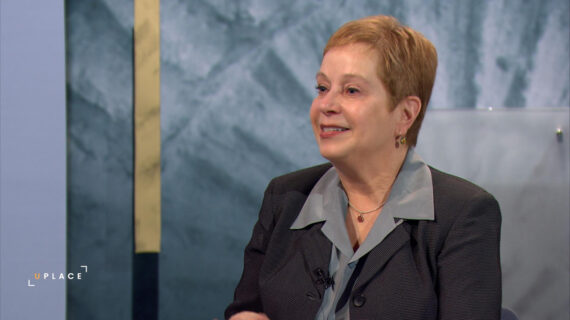
Barbara Buenger, Professor in the Department of Art History at UW-Madison, joins “University Place Presents” host Norman Gilliland to explore the artwork of Gustav Klimt. Buenger discusses Klimt’s historical vignettes in Viennese Buildings and his work as part of the Secession Movement in the late nineteenth century.


Copy and Paste the Following Code to Embed this Video:
Gustav Klimt as Viennese Modernist
Welcome to University Pl ace Presents. I'm Norman Gilliland. It's very tempting and natural for us to categorize things that we come across. That's certainly true of the arts too and the way we look at them and try to label them to understand them better. But some of the arts and some of the artists really resist, if not downright defy, categorization. And one in that category is Gustav Klimt, a fascinating figure from the early 20th century and late 19th century. And we'll see what kind of label, if any, we can apply to him. And our guide through the life and works of Gustav Klimt is Barbara Buenger, who is a professor of Art History at UW-Madison. Welcome to University Pl ace Presents. Thank you very much. How did you discover Gustav Klimt? Oh, that's funny because... I took a lot of Modern Art, but Modern Art in the 60s was really French art. One day a professor pointed out a wonderful book that was a more broadly-based look at the 19th century, and there was work by Gustav Klimt. And, in the jargon of the 60s, I saw that and went, "Far out!" because he looked sort of psychedelic. And it happened the next year, unexpected, I was in graduate school and working with Alessandra Comini, a great expert on Klimt and Schiele in Vienna. And she suggested I work on Klimt's "Beethoven Frieze." So that's how I got involved with him. But he seemed so different from anything I knew of French art that it was quite a step to take into him. Interesting that you should mention the college scene. I was talking to a friend today and he said, "Oh, yes, when I was in college, you know, it seemed like every other dorm room had "The Kiss" poster. Yes, absolutely! (laughs) One of Klimt's most famous. He does, if not have a psychedelic quality to him, something it's a combination of real and surreal or real and exotic. All that design, all that gold, all that pattern. In fact, from the start, it was very hard to place Klimt. He was Austrian, and yet, even Austrians were not sure how to place him. He was someone who looked at Austrian folk art, but looked further east. He went to Ravenna and saw the mosaics, the Byzantine mosaics. And it was a time when many people were moving away from the treasuring of dominance of ancient Greece and looking at Mid-Eastern art, Near-Eastern art and starting to look at Oriental patterns from Mycenea and other cultures. And so it was a fascination with ornament and what ornament could do and its expression power. So he looked, and people didn't know, if he was Austrian, what did he represent? Austria, of course, as you know, was, the Austro-Hungarian Empire was comprised of many different nationalities, so one could not put a finger on what it represented then. And Vienna, like much of Europe in those closing years of the 19th century, early years of the 20th, was just fermenting with all kinds of ideas that were unconventional, considered 10 or 20 years earlier. Absolutely, it was really a hothouse of ideas, of intellectuality. Of course Freud was there. Great ideas in psychology, in science, in drama. You had your leading plays that weren't being seen in any capital, were being seen in Vienna. And great ideas, of course, in always in music. So Klimt had access to many of these directly and indirectly in artistic circles, in salons, which were a great conveyor of ideas in arts and literature, in the artistic groups to which he belonged. And he made the transition, really, from the 19th to the 20th century in the groups to which he belonged, from a more conventional decorator, as he began, of some of the buildings on the Ringstrasse at the end of the century, to the forerunner and, really, the president to the leading group called the Secession that became the molder of the new ideas of the 20th century. So was he, by the time we get into the 1880s, when he would have been in his mid-20s and into the 1890s, is he actually doing public art? Yes, he trained in the... School of Applied Arts where he and his two brothers had their schooling. It was very different from the academic training. And first received commissions to train, to paint, murals for institutions such as the Art Historical Museum and the National Historical Museum and all these great new buildings built in this boom period of Vienna that when they took down the walls that surrounded the Hofburg in Vienna and they built all these different buildings in different historical styles, Gothic, Renaissance, Baroque, and they needed these murals. So he excelled. He did them for the opera, for the theaters, and all these. And he did these also historical styles, imitating these styles. In the Art History Museum, for instance, he would do illustrations for ancient Greece or ancient Egypt, and he would take the designs from these styles and put them into the volutes and other illustrations for these museums. So he could have made a career and continued to do this sort of historical illustration for the rest of his life had he wanted to. He had many commissions to do historical illustration. He could have done, he did portraits as well. But then he came in contact with the younger generation and chose to do something very different. We have an image of one of the buildings that he worked on here. Yes, that's the Art Historical Museum, designed by Gottfried Semper. It was a great example of this revival of Renaissance style. A most handsome example. And we have these opposite the Natural History Museum and these other institutions that line the Ringstrasse. So Klimt is really identified with these. And then inside this museum, he did these vignettes along with other painters of this older generation that were asked to make decorations for this richly decorated interior. And how were those received? I gather well, he continued to get commissions. Very well received, very well rewarded. In fact, you have to realize they had, he had to support them. And also interestingly, even when when he joined the Secession, they had the support of the government and of the royal family for what they were doing. So this was art that was very much supported, very much loved. These were the styles that were supported then, and they had commissioned work for publications and other types of works. So this was certainly art that was well received. And theirs was kind of, I guess you'd say, a re-interpretation of the classics, ancient Greece, ancient Egypt. Yes, they put modern women with modern hairstyles or sometimes they had the headgear of antiquity. But they would maybe do nudes with modern articulation, but they had the trappings of the... Sort of, Pre-Tut era but the Egyptomania in those fashions, and so that was quite... Scintillating and attractive to people at that time. But did he ever go too far in terms of being explicit? Was there any kind of popular reaction? I mean we're still talking, in a very general sense, Victorian terms. With those historicist works, yes. It was probably chiefly as he became involved with the Secession, this group that seceded from the official Knstlerhaus the official organization of the Academy, and to show things. He did, for instance, a title page, a poster, to advertise the Secession and when he showed nudity and bared genitalia for "Theseus and the Minotaur" and a censor had to censor that, this was going too far. And several times this was seen as too much. Klimt was of the generation, we really could relate to the Symbolists or the Decadents in France and throughout Europe, who were pressing and showing types of nervous female types. It was really in the fashion of the time in the sense of neurosthenia or nervous appetites was really attractive in this type. But some people saw this as indeed too nervous. Almost, the word "degenerate" would come to mind. This was not fashionable. So he could be criticized for that as well. Here's another building in Vienna. Well, this represents the next generation. This is the Secession House by Josef Maria Olbrich. And this was the new home of the Viennese Secession. And this, too, is in the classical style, but a modified classical style. Simplified cubic with its golden dome. And actually already it's sort of the butt of jokes in Vienna. They call this crown the golden cabbage head. (laughing) The gilded dome structure, but simplified. It was not imitating the classical orders we saw in the Art Historical Museum. And this was also a change from the Art Nouveau that was so popular in Paris and other countries. It represented the Viennese equivalent of the Art Nouveau, or as it was called in Germany, the Jugendstil, the youth style. They called it the Secession Style also. But they preferred something that was more geometric, a bit more simplified, a bit more cube-ified. Preferred sort of asymmetrical ornament and a bit more simplified forms. And so Josef Maria Olbrich was a leading formulator of this style, in fact, we find a lot of commissions to do work also in Darmstadt, Germany. Another leading practitioner of this style, this quite different architectural accent, was Josef Hoffmann, who designed Klimt's studio. We have a picture of Klimt's own studio, designed by Hoffmann, and you see it with its simplified woodwork, geometric patterning, and layout of the forms with its emphasis on rectangles and squares. Notice, too, you see Japanese prints and you can see some of the ceramics or maybe you can't see them in this thing in the shelves beyond, this taste for Japanese art was strong and a great influence in Vienna. In fact, there was a lot of collecting of Japanese art on the part of the people in Vienna. A lot of Japanese art acquired by the Museum of Applied Arts in Vienna. A lot of Japanese people in turn came to Vienna and bought Viennese art. So it was two-sided, it wasn't one-sided. But this taste for Japanese art had a profound effect on the aesthetic of Viennese art toward simplification, the spare aesthetic. And this would have wide......spread implications for all the art that we see built by the artists, produced by the artist in this group. Did they get into textiles too? The Japanese are rich in that. Now they formed, they had their group, the Secession, but they joined with craftspeople and the Vienna workshops in every different craft, so they worked in textiles. They worked in ceramics, they worked in metals. And many of these artists, like Hoffmann the architect, he also worked in jewelry and in metals. Many of them had their hands in all these different areas. So they believed in this idea, propounded first of all by the composer Richard Wagner, of the total work of art, the Gesamtkunstwerk. And so they wanted to combine the arts and crafts. This is actually the leading idea in the arts mainly throughout Europe at the turn of the century. So this is something they took and brought into principle in their exhibitions and what they did. Now we're seeing a photo also of... Klimt's good friend and often partner. We're not quite sure if she was his lover. Emilie Flge, who was a dressmaker and had, with her sisters, a dress shop. And this is a photo taken by Klimt. So, he worked in the photography as well as in painting. And he designed this dress, and she produced it. And it's wonderfully loose-hanging for the day. In fact, it's a model of the "reformed" clothes. This was a new idea in dress and design, to be corset-free and to be more modern. The idea of "reformed" clothes came from Henry van de Velde, the great Belgian architect who was living then in Germany and came to the Vienna Secession and talked about reformed clothes. And had a great influence on Klimt and modern dress throughout Europe, and so this is an example of high design, high style, wonderful fabric, elegant fabric. And these fabrics that they designed in Vienna were popular throughout Europe. We have, for instance, the French designer Paul Poiret would acquire fabrics designed by the Weiner Werksttte for his fashions designed in Paris. And Klimt did a portraits of Emilie Flge. There is a wonderful one of her in a blue dress. And you see how pattern takes over. This is a great change from what he was doing in his earlier work in the Museum. This is about 1902. Again, there is design all over her. We can compare it to some of his ancient Egyptian works where he has ornament all over the figure. It's still ornament, but it's now more like the ornament of living cells and living creatures that he sees. And he has her just a little bit of flesh, and he has the figure emerge from this quite natural and this again free-flowing silk dress, as he shows her. And the asymmetrical alignment of the figure within the ground is also something that he and others take over from Japanese art. And we find in Klimt that I don't think we, find in many other artists of his time and place, this emphasis on gold. I don't mean just the color, but I mean the texture of gold. Yes, gold, gold, gold. And we come actually to another work, perhaps his most famous work now in the United States, if not everywhere, is the so-called "Woman in Gold", the portrait of Adele Bloch-Bauer, representative of his gold period around 1907. In fact, his father worked in gold. And both of his brothers were trained, one as a goldsmith in particular, and taught him to do gold work too. So that when he developed his paintings, he worked on them not just in paint but he would often embellish them with semi-precious metals and with embossing in gold work too. So they had rich textures. And he would use gold leaf but also incising with metal and with design. And so this rich work and this is one of these women. And this woman, Adele Bloch-Bauer, as well as his, Emilie Flge, was quite an intelligent, gifted, liberated woman in her day. And this is another, perhaps seeming, contradiction. We are used to seeing Klimt often do the femme fatales, again, as you might say, the sort of degenerate women. And people would often say he seems to do these wealthy, spoiled women, but they were quite talented women. She was a liberated woman of her time and quite talented, very much in her role as... In her home. But he did this portrait. He honored her, she honored him. And after his death in 1918, she had a whole room devoted to his works. But this work too shows the new aesthetic taste of the day. Again, with this gold on gold on gold. The gold leaf. We know he had seen the mosaics in Ravenna at this time and the Empress Thoedora. But also, again, this trace, the influence of Japanese art so much in the asymmetrical placement. I've got some samples of ukiyo-e prints here that were in Vienna that we know he knew. But just for types. The asymmetrical place of the figure, the type of piling of different pattern on patterns. In Klimt's place it's a combination of organic and geometric patterns and cells that seem to open and suggest erotic growth and swelling and spines. We have just a little bit of the figure. In fact, her name is Bloch-Bauer. And critics at the time someone complained it's more blech than Bloch. (laughing) It's more tin, it's more metal than it is Bloch. We have also this wonderful sort of floating of patterns into one another that's also of some Japanese prints as well. So many of these things he got were suggested by the different prints that he admired in Japanese art. There's also a handsome frame around this painting, by the way, which was designed by Josef Hoffmann, the architect, too. This is the famous painting that was just acquired by the Neue Galerie in New York. This is the one that had been seized by the Nazis from her husband, Friedrich Bloch-Bauer, when they came into Austria, and it was taken from him. He left Austria after the Nazis came and was in Switzerland. It was wrongly seized from him, and then it remained in Austria, remained in the Belvedere. They falsely claimed that since she'd said in her will that it belonged in the Belvedere, it should remain there. But she had merely said she wanted after he was done with it that it should go to that gallery, but she had never foreseen what the Nazis were going to do. It still belonged to him. He, of course, did not foresee the future either, and it was taken from him when he was in exile. So only after protracted proceedings in this case with the help of Arnold Schoenberg's grandson did they have this case, this amazing case that finally got the works returned to her niece. And then she sold this to Ronald Lauder, and it came to the Neue Galerie in New York. Just to jump ahead for a minute, then. After his death in 1918, Klimt's paintings became increasingly appreciated and valued. And that was true in the Germany of 1930s and 40s also? Was it appreciated? Not considered decadent or degenerate? Actually, it's quite interesting. It was modern art and... It was the value of these works was recognized. So actually it was a Nazi guard who saw this work in Vienna and he, acquired it for the museum, or he took it for the museum right then and there. He knew it was valuable. Hitler and Goering would not want this work, would not want Klimts for their collection just because they did not like modern art. But on the other hand, they did not try to sell it. They tried to sell some modern art, of course, to get the money from it, but by the point they went into Austria, those efforts had failed. And so they let it go. They, again, other Nazis who would want this would have it. So it did have value, and it was recognized to have value, so they left it alone. Was it appreciated in Italy, Klimt's work? Yes, it was, actually, I've got a photo. Actually, you just saw it on the slides right now. It was. Ironically, it was not appreciated in France at all. There was a show in Paris in 1900. They first saw Klimt and they had no understanding for his works at all, could not appreciate it. In Italy it was shown and appreciated. And I've got a photo of 1910 exhibition at the Venice Biennale. And they liked it. I think part of it because there were so many recollections of the Ravenna Mosaics and this taste for things East and the exotic look of it that appealed to them. And also this clean style. Part of it was that Venice, and Italy itself, northern Italy, had a strong taste for this Art Nouveau, this Jugendstil, this new style. They were very much into it, they liked it. They liked the clean look of this exhibition. They had some artists, Galileo Chini, for instance, who was a great emulator of Klimt. This did not last long, but there were a great many fans for Klimt's style at that time and the Rome exhibition right afterwards. You mentioned Wagner and earlier you mentioned a Beethoven? -
Barbara
Frieze, yeah. -
Norman
Frieze, yes. -
Barbara
Well, this is central, as I said, as a part of my first involvement with him. And, in fact, I'm now going to talk about this Beethoven frieze, 1902. This is when the members of the Secession came together to celebrate Beethoven and, above all, a great sculpture of Beethoven made by the German artist Max Klinger, who is a great artistic figure, sort of a great German Victorian figure who did works on great themes of human life and yearning. A great sort of German Symbolist. And he'd done a great sculpture of Beethoven, Beethoven heroically nude like a great Zeus with an eagle cowering before him. (Norman chuckling) And so the members of the Vienna Secession, a great photo of them sort of lounging about in their Secession Hall with Gustav Klimt seated on the throne and other members, had decided to do an exhibition as a total work of art to honor this statue by Max Klinger and the idea of Beethoven. The idea of Beethoven and above all the Ninth Symphony which has this choral symphony at the end and bringing together the word and music, this idea of bringing human aspiration to music and making it concrete. So it was a great inspiration of bringing together different types of art into a work of art. They joined together in this exhibition in their hall. This new hall made by Olbrich had movable walls that they could change and make an exhibition as they wanted. Quite a modern idea. They had the ideal installation art, really. And they put the Klinger statue in the center of this hall. And they wanted you to be able to circulate around this exhibition, but you could see the statue from wherever you were in this exhibition. And they agreed that they would embed their works within the stucco. They would avoid strong illusionistic effects. They would just use monograms to identify themselves. They would use only natural materials. All in the interest of circulating around this Beethoven by Klinger. Klimt was the only one who was given a whole room to himself. You can see his figures on the wall above the Beethoven. He was given three walls to decorate with his Beethoven frieze, so on the top part of the architecture where a frieze belongs. And he gets this idea of a hero leading mankind, suffering mankind, naked mankind, shown very nude. And he is shown heroic in his armor, leading them before this pod filled with angels, as these women float in the background, against the hostile forces, sort of the Typhoeus, and all these awful figures of... Excess and worry and the Gorgons. And he's going to lead them against these horrible forces in us and in nature to the higher things that we can attain ourselves and through the arts. And so finally he did this in temporary materials and casein colors. And all the other artists did these other vignettes on human themes to accompany this. And so finally one scene I can show you is of Music. In Music, you see these floating maidens behind coming to the figure of Music, who is giving them release and finding themselves in the arts and music. And she is modeled on a figure in Greek art. And this whole sort of style idea in this frieze has found some stimulus going back into the works of McIntosh, the Scottish Arts and Crafts artist and his idea of the frieze. He was very popular in fact in Vienna and showed there often. And this also type of architecture and style idea of rectilineated forms, spare forms, very much in accord with what Hoffmann and the artists of the Secession were doing, and having a frieze as well, seems to have been the stimulus to Klimt's own frieze. But finally, after the figure of Music we come to a reconciliation of the lovers. They're making love, they're embracing before a choir of angels suspended in the air, and then another line of women fall. They're making love. And this celebrates women as active lovemaking, joining men, being in accord with many philosophies of life and love at the turn-of-the-century. This is another thing that separates Klimt from the 19th century and from what he did before and from these ideas, that women could be active and powerful, and, again, underlines this accord with many feminist philosophies of the idea. So they embrace in this pod which celebrates their lovemaking and this germinating of life. Throughout his art you see a lot of germinating pods and things coming up from earlier longings. We know that he and other artists in the Secession were very much interested natural history and the interpretation of evolution and of things coming to life by the study of natural science. We know that one of his champions, Berta Zuckerkandl, was married to a leading anatomist at Vienna University and that he came and lectured to them on natural science and brought slides of microscopic enlargements of slides. These artists studied these with fascination and brought these to inform their ornaments. So not only were they studying the ornament of Byzantine art and different cultures, but they're also studying natural ornamentation. So we've got an image of his goldfish, for instance, which shows also celebrating lesbian love, really, these women hovering and sort of merging so that they seem to be one unit brought together and merged into one head and floating amidst all these fish and all these organic... Plants and things growing about in this wonderful floating world of lower beings. The celebration of love is recalling this... Growth of other realms and this wonderful floating-free universe. And we know that this is very much inspired by his looking at other forms of life. A very popular source aside from these slides and lectures we know were illustrations and readings. We know he had lots of illustrated history of nature, of animals, copiously illustrated volume in his library. Ernst Haeckel, a German proponent of Darwin in Germany, published these beautifully illustrated volumes too, of radiolarians, and made models that were in fact featured at the Vienna Museum of Natural History that showed these creatures from under the sea. And these inspired many artists at the turn of the century and artists of the Jugendstil to make these robustly alive and burgeoning forms of life far out of proportion to the way they really looked in nature. So this was a new form of ornamentation in life that he could make that was quite suggestive. And did Klimt ever do a self-portrait? Actually, funny you should ask. No, except one it was a drawing, a caricature of himself as a bit of genitalia sprouting a head. (laughs) So he was a-- Unconventional in the self-portrait department. Yeah, a celebrator of the sexual life, you could say. And I have another, this is one great commission he did, the mural commission. Another one, whose works I really can't show you on TV, was a set of murals for the University of Vienna, for the "halle" of the university, which he worked on starting before the Beethoven frieze and slightly after. These were controversial, the set of four murals to join a larger one that was to show the victory of light over darkness another artist had done, someone with whom he had decorated the Vienna Museum. And he was caricatured I think I can show you the caricature of him working the scaffolding on his Philosophy. It has two nude models giving him food, you know, grapes and nectar and ambrosia as he's showing this abstruse subject. And people found these too abstruse. They didn't understand them. They seemed pessimistic. They couldn't understand them because murals of this sort for a university were supposed to be enlightening. They were supposed to show books-- -
Norman
Or inspiring. Telescopes. They're supposed to show God up above. They were supposed to show, light coming from heaven. And these were dark, they were gloomy. (Norman laughs) They showed Philosophy as this mass, ineffable mass. They showed chains of human beings, sort of this writhe, sort of the survival of the fittest, one could say. -
Norman
Back to Darwin. - These chains of birth -
Barbara
and death and suffering. And even his champions would say, "Well at least if he's "showing medicine, at least he could show "the healing powers of medicine." (laughs) Everything looks sort of mysterious, and people couldn't quite tell what he was suggesting. But he had strong defenders, but they found these too ambiguous, and that was typical of Symbolism, that is to make people think and to show these mysteries that maybe things weren't clear-cut in the modern world. -
Norman
More than one possibility to interpret. -
Barbara
Yeah. So what happened with Klimt when he paints a mural for the University and they say we don't like it? Well, this was criticized in Parliament. It was criticized by some of the people, some of the professors at the University. He'd been paid for it, and he finally got fed up with it and he bought them back. So he took them back. And these were some of the works that were destroyed in that fire that was apparently caused by retreating Nazis in 1945 at the end of the war. Now, one of the great champions of these murals was a woman, this Berta Zuckerkandl, was a great journalist. She was married to the anatomist who lectured the members of the Vienna Secession. A great feminist. She held a salon in her house and she brought all the great figures of science, of psychology, of writing together. She and her husband could not afford a portrait by Klimt because he lived on his professor's salary. I think her sister had her portrait painted by Klimt. She was quite adamant in defending these and other works by Klimt and particularly in defending his way he depicted women. He did a famous image of a pregnant woman which I also can't show you on TV. -
Norman
Not in its entirety anyway. (laughs) Not in its entirety anyway, called "Hope 1", which shows a pregnant woman, her body misshapen. And then again a sort of recapitulation of the Darwinian idea of how maybe what growth inside of us echoes the growth from primal beings, shows this sort of odd tadpole cum-skate in the background. She is looking sort of entranced with the mystery inside of herself, untroubled by the death in the figures worrying behind her because she's intrigued by the mystery within herself and this mystery of life that's gone on. And unashamed by this. And so Berta Zuckerkandl praises this, praises Klimt's conception as being honest, forthright, and this is a way of showing women. So, again, another example of how women, really, enlightened women of the time really saw this as a strong figure on their side. You mentioned the architect Josef Hoffmann. What sort of collaboration did he have, did Klimt have with him? Well, they were partners all along. And Hoffmann remained even well after Klimt's death a leading figure of the Secession, even as the Secession had great troubles just after World War I and finally ended in the 30s. He was a leading figure and great supporter of women artists, I might add, in Secession. And he continued to build even after the disintegration of the Austro-Hungarian Empire. Hoffmann had a great, actually all these artists in the Vienna Workshops, had a great gift coming to them. About 1907, 1908 when a commission by Stoclet in Brussels. His father had died and he asked them to design a palace for them in Brussels, (coughing) a large private home. And so Hoffmann did, and you can see an image of it. It is broad, simplified areas of marble, lined with brass. (coughing) This huge form. Spare no cost. He had marble on the inside, rosewood veneer, all the finest materials. And the workmen of the Vienna Workshops executed the interior, the furniture, and the murals and the furniture of this. Klimt did another mural installation. He did not, in fact, go to Brussels, but he designed a mural which was not as ambitious in content as his Philosophy, as his University murals, or the Beethoven frieze, and combined, again, the figures of "The Kiss" and "The Tree of Life." Rich in its overlay of patterns and designs, again we can see many echoes of Japanese art in his "Tree of Life." Mycenaean art in his spirals and rich overlay of mosaics with golden spirals and semi-precious stones, and of landscape with this pattern taking over. We don't say he uses ornament to decorate. Ornament is a full bearer of meaning in this or in "The Kiss." Now, the ornament has bound the couple fully in their embrace. -
Norman
This is the famous "Kiss." Almost no body, yeah, one of the many (laughing). But it's fully embodied in the approach of the different types of these swelling of forms as they come together. What's interesting, though, again, we can trace these to all this exotic Eastern source, but there is another perhaps less expected source that an art historian brought up a few years ago at an exhibition. And this is a Romanesque source. So from Eastern Austria, from Styria, this is a pattern from a Romanesque door, metalwork on a door of a Styrian church of the 14th-century. So you can see how these things occur in many different cultures. It would be typical that he would find this closer to home as well as in more exotic cultures. So it's interesting that these patterns come both from close and from far. And it's interesting that this Vienna Workshop had took its influences, it's ideas from both many folk patterns of Vienna and arounds and from more exotic course centers. Well, just as Klimt was a member, a founding member, of the Secessionist Movement. Were there reactions to the Secessionist movement and to Klimt? Absolutely, and the... Immediately following group, the Expressionists, and their champions included many critics and architects and intellectuals, though they all admired Klimt and the Secessionists and felt that they had paved important ground for them, felt that they had a different way to go. They became increasingly impatient with all that pattern, all that decoration. And Adolf Loos, a very important architect we've got a portrait of him by Oskar Kokoschka, a great artist who was an Expressionist and who does away with all that ornament, even though he too had trained in the Arts and Crafts School and originally worked with a lot of pattern and ornament like the Secessionists. You see he works with a much more loose, gestural, painterly style in his portrait of Loos. And Loos himself was quite sardonic in his criticism in a book called "The Poor Little Rich Man" of 1900, in which he criticized things like the Stoclet Palace or things like that of the turn of the century. And he said, "How horrible to have to live "in a house like that." Completely designed by the Vienna Secession. And you couldn't get gifts from your grandchildren because, you'd have your slippers designed by the Vienna Workshop, but you couldn't get art by your grandchildren and you couldn't get anything else because your architect would always say, "No, you have to have things designed by me." Well, that does raise an interesting question, doesn't it? A big question, and I mean I even think of, Frank Lloyd Wright in this context. That is it's one thing to design a structure that has a universe all its own, but then as soon as you inject people into it they will necessarily bring something else that may be at odds with that universe you have built. -
Barbara
Yes (laughs). -
Barbara
You must keep with my aesthetic. You must adhere to it. And of course there was a lot of irony because there is a lot of ambiguity even in, as I said, Kokoschka used a lot of ornament, and Loos himself had done as well. And another artist of this next generation, Egon Schiele, was a great Expressionist, who, in fact, came to Klimt and said "I want to study with you." Klimt said there's nothing I can teach you're so well-trained. In fact, Scheile had trained at the Academy and was a precocious draftsman. But, again, this younger generation who had very different needs and interests. Also this younger generation felt they couldn't get the support they needed, and their advisers said "You have to go to Berlin, "you have to go to Munich, you need galleries." There wasn't a gallery system in Vienna. -
Norman
Oh, really? Yeah, so they were screaming, they needed support and they needed monetary support and they needed the intellectual support they felt they could not get under the old system in Vienna. So there's a wonderful portrait in which Schiele shows himself and Klimt in these gowns they both wore. As hermits, they're both recluses. It's almost a symbiosis, Schiele shows himself emerging from Klimt, who seems to be falling back on the wayside. Klimt also did a lot of landscapes. 40% of his works which might be less well known to us. -
Norman
Yeah, they seem to be. Rich, lavish, here's one in the Museum of Modern Art. There are one or two also in the Neue Galerie in New York. He of course had a lot of patrons, but his patrons didn't necessarily want his figurative works on depressing subjects. He liked painting them when he was under all this flak for his controversial figurative works. He himself liked to do landscapes. He also had a special viewfinder. He would peek through a device, you know, so he would have a close sight on what he was seeing. And so he would come close to his motifs. In this, many of the trees would disappear, so we seem to have a close-up of just these little dots. You can see he's been looking at the Pointillists and the little dots of someone like Signac or Rysselberghe or Seurat, and just loving this animation almost like the small cells that he magnifies. And this wonderful magnification of light in these small things. Critics would say, "Oh, this is like a carpet. "It is like decoration." They would see it as degenerate. It's not your basic trees, but this wonderful carpet effect was quite deliberate on Klimt's part. But if we go to the next generation, if we see Egon Schiele, again, we see the new generation having just very different interests even though they come from Klimt. So, Schiele when he shows Trees in 1912, we see-- -
Norman
A little streamlined, to say the least. (laughs) -
Barbara
It's not quite as lush. As Carl Schorske, the great historian of Vienna and Viennese cultures said, "We've left the garden. "We've left this paradise of the Vienna Secession." And we have things more angular, again, more gestural as we have in Kokoschka and we have the bare trees and leaves and things that become more anthropomorphic, in their expression. -
Norman
It's almost as if there's a prediction of World War I there, that landscape, more barren landscape. He had something very different and something more agonized or, you know, Christ-like or something like that. And Schiele actually did this portrait of a woman wearing the dress, also the Weiner Werksttte, the Vienna Workshops, the patterns, bright patterns, folk patterns of their cloth. And this is a young woman who, like many of the models, many of his portrait subjects, had a lot of money and bought the clothes from this group. But it looks odd and ambiguous in ways that Klimt never looked odd. We don't know those hand gestures, those little fingers come together in this odd way, and she doesn't even seem supported. In fact, Schiele had her lie on the bed so her pose is not explained. She seems to hover, and he has her fully clothed, as if she wants to distance himself from her. She was a young women about his own age. Now this is a case-- It's quite interesting because Klimt did a portrait of the very same woman about four years later. Klimt shows her in a very different way. -
Norman
I would say! (laughs) Much more lush back in the garden, as it were. She is again wearing clothes of the Weiner Werksttte, but actually she had a jacket from the Weiner Werksttte, a fur jacket, but she turned it inside-out so the lining is there in its full pattern. And then, he magnified the pattern on one of his Korean vases, so we see all the figures but very large. It's colorful, it's painterly, actually recalls something like a Vincent van Gogh, or this great Monet portrait of his wife with all sorts of color. So it's much more luxurious. It doesn't have that ambiguity of the Schiele. He certainly knew that portrait, but it's much more. This is buoyant color, celebration of life. He certainly knew the Schiele and he wanted to respond to it. And he responded to it in his own way. As we go back through some of these paintings by, well, Schiele and by Klimt, especially the figure that we just saw that was Schiele. Does perspective play any part in their paintings? There seems to be over all a flatness to them. Yes, well, that's a good point. Schiele is... Quite concerted in demonstrating a sort of a modernist flatness and sort of... Exaggerating that and taking away, sort of vacuuming out that space. His intervals are much more pronounced than those intervals that we saw in Klimt, that were taken from the Japanese. He makes those stand out. They're much more electrified, much more tense, the way he has those come out and lets that operate to a much more energized way than we had in Klimt. Vienna, end of the 19th century, beginning of the 20th century, you can't get around Freud. Connection between Freud and Klimt? Absolutely, (Norman chuckles) they were very much talked about, read about. In the same circles, in the same salons. I don't think we can say that Klimt read all of Freud. And actually Freud's views of women were in many ways much more backwards than Klimt's. -
Norman
Yes, I would say. And Freud's views on art were also quite, he collected antiquities. He had. He had a great appreciation for Renaissance art. Yeah, and he had, you know, all these little figurines from much older cultures. When he collected art it was actually more like, you know, Klinger and older Symbolists. It wasn't Klimt, you know. We like to think that he would, of course, by all these people who were contemporary, but he of course had a great influence on this. But these were ideas that were growing and steaming, and had a great influence on everyone, but they were manifested in different ways. But they were certainly there at the same time. Kind of a legacy question, then. Klimt dies in 1918 just before the end of World War I. So much changed in many ways, but in the arts, certainly in music, during and after World War I. How did that whole change in the culture of Europe affect the appreciation of Klimt? Was there a connection, or was he just kind of gradually more appreciated after his death? I think it took a long time. I think within Vienna he was appreciated, and then of course you have the big, you have the dissolution of Austria-Hungary. You have The Depression and war... Again in this country, there's really no exhibition of Klimt or Schiele 'til the 1960s. Within Vienna, he's always been appreciated. The appreciation of those what would we say probably the music came first precisely because some of the exponents came to this country -
Norman
That's a good point. And made it known, and it was practiced much more than before, and they had disciples, whereas Klimt really didn't. I should add that Egon Schiele himself died in 1918 of the flu. And so some of that was quashed. Kokoschka migrated to London in Europe, so he had a following. But this was such a rarefied, specifically Viennese, taste that it really is, really-- Can we see influence of Klimt in those to follow, or is it really just a thing unto itself? Oh, it definitely followed in Vienna and in the followers there. I definitely see it in contemporary artists of... Vienna perhaps following Schiele more than Klimt, but certainly a knowledge of them. I think just looking at some recent catalogs of Klimt, I think our own age's sharper sense of eroticism and sexuality has brought renewed, sharper insights into Klimt and what the meaning of these works were, and what was doing, and what was so shocking and what, you know, in some ways still remains shocking about these works-- -
Norman
(laughs) Clearly. And what they were doing at that time, and can be said. It was really pushing the envelope in so many ways. And I also teach German and Austrian art and there were parallel developments in Germany, but they knew of each other and did not. And I think, as you say, the war, World War I, stomped things out and the other war We can never forget how much those wars brought a stop to a lot of things. Barbara Buenger, thank you for taking us through the life and times and art, some of it, of Gustav Klimt. Well, thanks for having me and listening. (laughs) I'm Norman Gilliland and I hope you'll join me next time around for Un iversity Place Presents.
Search University Place Episodes
Related Stories from PBS Wisconsin's Blog










Donate to sign up. Activate and sign in to Passport. It's that easy to help PBS Wisconsin serve your community through media that educates, inspires, and entertains.
Make your membership gift today
Only for new users: Activate Passport using your code or email address
Already a member?
Look up my account
Need some help? Go to FAQ or visit PBS Passport Help
Need help accessing PBS Wisconsin anywhere?

Online Access | Platform & Device Access | Cable or Satellite Access | Over-The-Air Access
Visit Access Guide
Need help accessing PBS Wisconsin anywhere?
Visit Our
Live TV Access Guide
Online AccessPlatform & Device Access
Cable or Satellite Access
Over-The-Air Access
Visit Access Guide




Follow Us