

 Passport






Genealogy and the Wisconsin Historical Society
02/02/16 | 37m 12s | Rating: TV-G
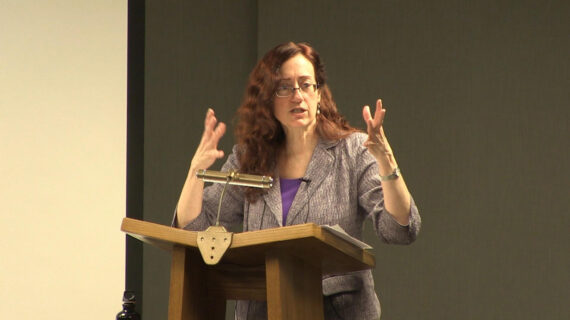
Lori Bessler, Reference Librarian at the Wisconsin Historical Society, reviews the resources available at the Wisconsin Historical Society to help research local and family histories.


Copy and Paste the Following Code to Embed this Video:
Genealogy and the Wisconsin Historical Society
Katie Schumaker
Today, we are pleased to introduce Lori Bessler, as part of the Wisconsin Historical Museum's "History Sandwiched In" lecture series. Lori Bessler has worked at the Wisconsin Historical Society Library Archives since 1988. She is a reference librarian and outreach coordinator. Lori has lectured throughout Wisconsin and the Midwest on genealogical topics for over 25 years, and has been researching family history for over 35 years. She specializes in breaking down brick walls and finding hard-to-find resources. Here today to share some of the many resources available to researchers at the Wisconsin Historical Society, please join me in welcoming Lori Bessler.
applause
Katie Schumaker
Thank you. It is kind of an interesting day out there weather-wise. As Katie has mentioned, I've been with the Society a long time. I've talked about our collections many, many times, but I always enjoy telling more about it. There's such depth to the Historical Society collections, and they are just hiding on the other side of State Street for you.
chuckles
Katie Schumaker
So, the collection has over four million items in it, most of which have to do with North American history. So we cover all the United States and all the provinces of Canada. So it's a wonderful collection. No matter where your ancestry is coming from or going to in North America, we do have materials for you. In the Library, we have mostly published materials. In the Archives, there are more original documents. We are the state archives for the State of Wisconsin, and so we have a lot of materials that have come from courthouses and other governmental agencies, as well as private collections that people have donated, or that we've obtained in various ways. The Library also has very accessible hours.
chuckle
Katie Schumaker
We have our hours posted on our website. I'm going to give you a review of our website in a few minutes. The collections for both the Library and the Archives are now in one catalog. If you used our different catalogs a couple years ago, that changed about a year ago. In May, I think it was. And so everything was deposited into one catalog, which makes it a lot easier in a lot of ways, but change is always interesting, too.
laughing
Katie Schumaker
So having the archivists and the librarians help you through this is really core, and we try to make ourselves pretty accessible in a lot of different ways. You can contact us by e-mail, by phone, and then also just visiting. I do a lot of phone consultations with people from around the country who have connections to Wisconsin. And people who are in this area, who are coming in, or anywhere in Wisconsin traveling to see us, I have consultations with them, as well, to help them identify the paper trail that will shed more light into the family history that they're researching. On-site, in the library, and in the archives, we have technology that can help you capture what you do find. So if you come to do research at the Society, then you're going to want to bring a flash drive.
chuckle
Katie Schumaker
You can bring laptops. People have brought hand scanners that can be used in the library, not necessarily in the archives. It is a more secure area in the archives because you're dealing with a lot of original documents. You have printers and scanners so that if you come in and you have a book and there is a portion of the book you want to scan to your flash drive, it's awesome.
chuckle
Katie Schumaker
It makes it a lot easier to capture that information then take it home and read it when you get home. If you do make prints, there is a 25 print fee. There's 10 for other things. All of those details are found on our website. And then, also, calling before you come is a good idea as well. All right. Let me show you a couple things on our website. Our website is wisconsinhistory.org. And if you look lower down on the screen, you have all these different tabs. You have Research Your Family History; Discover Your Community History; Explore Our Collections; Teach and Learn Wisconsin History; Visit Wisconsin Museums and Historic Sites; and Preserve Your Homes and Properties. I'm going to cover a couple of these different buttons. Research Your Family History right away comes up with a search box. And I really encourage you to take a moment, breathe before you start putting names in. It's always important, especially with sites like this and very much especially with "Family Search" and "Ancestry", that you understand what you're actually looking at. What does that index include?
So down here it says
Browse All Items in Family History Resources. It gives you a list of all the different types of items... all the different types of collections that are being indexed in this. And so each one of these has criteria to them. All right? They have limitations. They have a wonderful amount of information, but they definitely have limitations.
An example
the Birth Index Record. What you find are index... It's an index to birth records we happen to have before October 1, 1907. They're only records that were sent on to the state level... to the state by the Records Office. And so it is possible that the County Register of Deeds Office has something that's not at the state level. That's where reference librarians and reference archivists can help you. If you went into this index and you did not find something, then it's really important for you to contact us and say, "Why didn't I find something? What else can I find this information on?" And we can explain the details of the paper trail that exist out there for your ancestors, depending on, you know, the criteria of where they're from, what time or era are they from. That kind of information. And so when you look at that index... let's go back here... all these different indexes... or collections in the index... they all have criteria to them. Take your time to understand each part. If you do find an entry in the records... I have this one example here... What you can do is choose to go online and actually buy it from us. Or if you live in the area, write down the information it tells you in the reference details, make a print of this, screen shot of it, whatever it is, and then, when you come to the Society, you can make a print of this for 25. So there are those kinds of deals.
chuckles
An example
There's that kind of research technique or tactics that we can help you with, as you call us ahead of time or when you come in. Set up a time that you can talk to one of us, and we can explain these kinds of details. When you do have a bunch of hits on the list, on the right-- the left side, rather-- you can actually start to filter down, down to a certain era or down to a certain location. So find out someone was born in Brown County in 1842 or 1840. Eighteen hundred to 1900, I can choose 1840 to '49. So if you used to use the index before we had changed it, this is kind of new. You should be able to filter down by location and by year and be able to see exactly what there is. This is especially important when you're dealing, and everybody deals with it, name changes and misinterpretation of names. Someone else is writing your name most of the time in public records. Someone else is interpreting what you're saying and spelling it the way they want it spelled. Or they're going to spell it. So what you can do when you get the best amount of hits, you can then sort it alphabetically. So this index has become more accessible, more usable to a lot of people in that way. I will go back a couple pages here. Another item in here is Video Tutorials. The information I just gave you is all in different tutorials here. All you have to do is... This one is six minutes. Most of them are less than six minutes. This is how... I was telling you how to find... Learn about the collections included in the index. That's how I explained how you find that list. And the second one is learn how to find a name in our index from the home page, which is the very first page. They have a search box at the top, and that explains how you can manipulate your search that way. Then, how to find a name through our Research Your Family History page specifically. And most importantly, how to search the index without a name, which is really key. I encourage you to try that kind of strategy on places like "Ancestry" as well. Try a search without a name. Try putting in a location and a date. It gives you a bigger snapshot of that location where your ancestors were. So all of those are different, like I said, research strategies that are important to take. This whole thing we call genealogy, family history, it's a journey; It is not a quick trip. No matter what "Ancestry" says, it's not a quick trip. You don't want it to be. You want to keep going deeper and deeper and deeper. And that's what our staff helps you to do. Believe me, I meet with so many different people, and I'm like, "Bring your brick walls. I can't wait to take them on!"
laughing
An example
There's got to be something else. I've only gotten stumped once. The gentleman had looked at all kinds of different materials. What about this? What about that? So there's always another level to go to.
Finally with that gentleman it was
You know what? You can add some more general history to your family. You can look at where they're from and what was going on at the time they were living in that location. That may shed some light. They lived in this one town, a tornado came through at the time they were living there. There's a story. I don't know how it missed the family oral history, but somehow it did. So it's important to look for how deep you can go. And again that's how we can help you with that. I'll go back here again. For those who are living far away, another resource we have is an obituary search service that we have. So if you are unable to come here to do the research, then you can go on this website and actually order an obituary search. Now we took our lead from the Minnesota Historical Society, which is a great institution as well. They do an obituary search as well. We actually do two newspapers when we search. Our newspaper collection is second only to the Library of Congress. Only to the Library of Congress. That's an amazing collection. What that means is that we have any Wisconsin newspaper that has ever been uncovered, we have copies of. Most of which is on microfilm. And then also if you can't get to here, then our microfilm loans to other libraries, internationally. So there's that accessibility to materials is also really core to our services. So if people do need us to find the obituary, then they can put that on order at our website.
Other parts of the site
a big part is access to our online catalog. This is really important. This is THE list of what we have, which is really important. When you're trying to do research you want to know, okay, what is there first? You can do all of this searching from home before you come. All right?
Here's an example
if you're looking to see if we have any family histories that have been published. I'm not talking about the trees that are on "Ancestry." I mean people have written a book of some sort, and we have gathered that book or it's been donated to us. What you would do is you would put in a name. Last name Frank. And then use two different words when you're searching, okay? Do the surname and the word "genealogy." You can see I got five hits. Change that to "family." And you see I got 10 hits. So when you're using an online catalog, that's one additional strategy. Make sure you're trying different terms, okay? Try the surnames of people who married INTO the family. There's a family tree... a family genealogy that we linked into. It's called "For the Starr Family," S-T-A-R-R. There's one little paragraph about the fact that the Cook went INTO the Starr family, and it gave the maiden name of a woman. I could not find that maiden name anywhere else. It must've been published around the time that my ancestors were living. They provided that information, and it was not located anywhere else that I found in the public record. So that's important to look at.
Another item
when you pull up an item, many of our family histories are still under copyright, or assumed to be under copyright, published since 1923. We have a lot of people... because we have a contract with Google, a lot of our books have been digitized. Well, they pull it up in Google, and we get e-mails and phone calls saying, "I'd like to buy that book from you."
laughing
Another item
I'm like, "No, we're a library. "We don't sell books. We keep the books so that you can access them later," you know. So one of the things is that if it is a digital book, a couple of points, okay? One is that familysearch.org and Google are two of the websites I go to most frequently to check if a book has been digitized. Familysearch.org is the website for the Latter-day Saints, the Mormons. Their website is huge, and I will give you a little bit of a survey on that site as well. What you would do in this case. I want the "Wiseman Genealogy and Biography." You can see I have the call number to the book in the stacks. If I look lower down, it gives me access to the digital copy that is at HathiTrust. That's a combination of a lot of different campuses who have gone through this digitizing project and made their books accessible through this HathiTrust organization. And so that gives me free access to the full book. And I will tell you what I've done is I have tried to find all of the books that any branch of my family has been listed in that is out there, digitized. I save the whole book, and have my own digital library in my external hard drive and in the hard drive of my laptop... as well now I'm looking in the cloud too
chuckling
Another item
because there are so many ways to save that information. And there are strategies with saving information too that, but I could go on all day on all of these topics. That's for sure. Okay, so again, look for those items that are in that online catalog. See if there is a digital copy you can just go into and download. All right. Down here, "Webinars and Workshops." Every fall and spring we hold workshops, all-day workshops, that are held usually at Memorial Library on the first floor. So we bring guest lecturers who can provide us programming on a variety of different topics having to do with genealogy. In the spring we had one on DNA... I'm sorry, in the fall we did. In the spring, this year, we will be holding one again, and it has been a very well received program. It's all-day, it talks about... I would show you on the site, but it's not in the store quite yet.
laughing
Another item
I imagine we will be holding it numerous times because the topic being so hot in genealogy. DNA research. And so, we will be holding that on April 16. We will have information on this page about how to register for that. Again, all-day. We feed you lunch. It's $30 for the day, 10% off if you are a member of the Wisconsin Historical Society or Wisconsin State Genealogical Society. Okay? So there's that deal as well.
Other topics for the spring
we'll have Polish, we'll have Norwegian, we'll have Irish. So you come in, you absorb all that information without the distractions. If you prefer to take things like webinars, we do hold some webinars on this website, as well, that are free.
You can see the different topics
Genealogy, Where Do I Begin? Notice right next to each and every event, we have a hand-out you should print out. It's definitely important to print that out before you watch the webinar because there's a lot of detail on that hand-out, so you're not furiously writing. Okay?
chuckling
You can see the different topics
So that's important to take as well. So each one of these, you just click on the event and it will take you to a page where you register your first and last name and your e-mail address. And then you open up and watch the webinar. You can watch it as many times as you like.
The other ones listed here
Preparing for a Trip to the Wisconsin Historical Society. If you want to bring a group, by the way, you do want to contact us. We have different arrangements we can make and make sure that we have enough staff on hand for a group to be able to come.
Ancestry.com
What to Expect and What Not to Expect.
And the very next one below
familysearch.org. Those are the two top websites that people go to, at least in the beginning, for genealogy. I'm going to give you a short preview of both of those, but those two webinars really go into great depth for you to understand those two websites. The Wisconsin Historical Society Website for Genealogy. I'm just touching upon a few points. This one goes a whole hour. Each one of these is about an hour long.
And then another new one we put out at the end of 2015
Maps for Genealogy and Local History. What that is is Lee Grady, one of our archivists, reference archivist, put together a whole presentation on how people can use a variety of different maps. Sanborn maps, land ownership maps, other types of records that have to do with the property that our ancestors owned. And how to use maps to locate different hard-to-find towns that have changed in time, you know, and that kind of thing. Again, those video tutorials are for how to use that index that's on our website. Another aspect of our collection is our Area Research Centers system. Basically, what this means is that we have locations across the state, at the stars here, that cover the counties that are in that same color. All right? And what you find is that the archives collection, which is on the fourth floor of our building, had taken a lot of the different kinds of records that are more locally used into these certain area research centers. So if I'm researching Chippewa County, I'm going to be contacting the area research center that is located at UW-Eau Claire campus. So, again, throughout all of these different strategies, I'm kind of covering a little bit of-- they all have depth to them. All right?
An example of that
if someone is looking for naturalization records, I, as a reference librarian, can tell you that "Family Search" has digitized a bunch of those on their website, and where you would find that on their website. I can also tell you that stuff that didn't get digitized could be on microfilm that they filmed. It could also be at the Area Research Center. The archivists who are at the area research centers, they know their collections, just as well as we know our collections up at 816 State Street. So using them as a staff to understand more about these documents that are not always really easy to understand, that's really important and they are very accessible, the staff members are. So it's important to understand that's another strategy. I worry a lot because "Ancestry" especially comes off with their commercials saying, "Just put in a name and we can tell you all the stories." There's so much more to research. Again, the collections are phenomenal, but don't forget that the staff at the Historical Society is so invaluable. We have so many people who can help you, in so many ways, to understand the records and the paper trail. So that's important to understand as well. I want to cover a little bit about each of the two big sites. Ancestry.com, a massive amount of digital collections, okay? An ability to put your tree online and find more cousins. DNA testing. There's a lot to "Ancestry", and that's good. You want to take your time to understand. I want to point out one specific thing you want to do on "Ancestry", and that is to go into the search box and look at the card catalog. It's just as you would go into our online catalog to find out what we have. Go into "Ancestry"'s card catalog... which is not really a card catalog...
chuckling
An example of that
Go into their listing and examine what they actually own. One way to do that, too, is not just through this massive list. You can identify and filter it by era and also by location. If I'm researching my ancestors who came from Connecticut, I would want to know exactly what they have. I can even go down to a certain county and find out more. Understand, many collections not just on these websites, but also in our collection are based out of a state designation versus a county designation. So it's important to look at both strategies there. When you are in our catalog, you would look under Wisconsin in history or Wisconsin in genealogy and see what kinds of materials come up. But then also do a second search and look under Dane County Wisconsin history, Dane County Wisconsin genealogy and see what materials come up, because the catalog is not going to know exactly what's in your head, it only knows what you're typing. All right? So it's important to understand that aspect of it. So you're going through the whole list and identifying these different collections you didn't know existed, understanding, of course, that "Ancestry" doesn't have every-thing for Litchfield County.
chuckling
An example of that
All right?
Other institutions to consider
local historical societies, county historical societies, and county genealogical societies. Local public libraries could have a collection in there that you're not even realizing is there. Regional institutions like New England Historic Genealogical Society. The fact that Wisconsin Historical Society covers the United States and Canada, we have materials for Minnesota, Florida, Louisiana... a lot of Louisiana stuff. stuff.
chuckling
Other institutions to consider
Oddly enough, I've been able to do a lot of my Louisiana research right up here. So keep watching "Ancestry" for that kind of thing, as well, understanding they have limits
speaking in sotto voce
Other institutions to consider
: no matter what they're saying.
chuckling
Other institutions to consider
All right. Familysearch.org is the other one, all right? And this is the one that's maintained by the Mormons, Latter-day Saints. A couple of points here. One is that this one has a lot more services and types of collections than you would assume. The top part, Family Tree. A caution is that when you put a tree on "Ancestry," you can make it a private tree so no one finds you, no one can see what you have on there. Or you can make it a public tree and share everything, all right? On Family Tree... this Family Search Family Tree... Anybody can go in your tree and see it, and they can change information. So be very careful when you put, when you consider putting a tree on familysearch.org, okay?
Memories
they have, just like "Ancestry" has, the ability to upload photos, even videos and audio. Okay? So if you have an audio recording of your grandmother or great-grandmother, then it might be worth posting that on your account on one of these sites to share it. It's also possible to put that on a cloud and invite specific family members to have access to it. There are definitely ways to maintain the access that you want to the materials that you have collected. A lot of people, when they been doing research a long time, feel like, "You know what? "I put all this together. I don't necessarily want everybody to have it for free." Me, I'm like, "You know, the more it's out there, "the less often they're going to come back and ask me again
chuckling
Memories
for something." There are many, many ways to limit that. If you have questions about that, then definitely contact me, okay? I have this discussion with people all the time. Another thing with family history recently, with "Ancestry." They own Family Tree Maker, okay? And Family Tree Maker is no longer supported by them. For the next year, until December of this year, I believe it is, they will only support, they're not selling Family Tree Maker anymore. Well, there was a lot of hubbub when this happened in November, or December, about how that affects people using Family Tree Maker, RootsMagic, any of these software programs. A lot of people, at that time, at the higher level of education with genealogy, the national level, were saying you have to get used to the Cloud. I think that there's a lot of room in here, a lot of wiggle room. I don't think it has to be a certain way that way. I personally am looking at this because I have been trying to aim more toward using Family Tree Maker and other programs. So, again, if you have questions about that transition, definitely talk to me. There's a lot to be discussed. Under "Family Search": I mentioned about "Ancestry" and that you have to go into "Ancestry" and look at their card catalog. This is how you do this on "Family Search." If you go to the Search tab, and go to Catalog, you can put in a location. It fills it in and you choose which state we're dealing with. Don't put in the word "county". It doesn't like that.
chuckling
Memories
I don't know why, but they don't like that. and then do a search. It tells you all the different types of records. Now, "Family Search", the Latter-day Saints, have been collecting things for a very, very long time. What I mean by things is actual images of courthouse documents, church documents, personal collections, anything that anybody would let them have access to they filmed, and now they go right to digital. So there's a massive amount of material with them. When you do this search on "Ancestry", you're looking for digital stuff, okay? When you look at this on "Family Search" you're actually identifying collections that might be on microfilm, not digitized, but that you can borrow, and have sent to the Family History Center local to you. That is us at the Wisconsin Historical Society. There is another, a family history center here at the Latter-day Saints church, as well, on Regent. It depends on how you look at it. They have better parking, we have better hours.
laughing
Memories
So that's the variety, you know, what you have to consider when you're going to get anything from here. What you do is, many times we are looking at... What's a good example? How about probate records? Probate records are done at the end of the person's life if they have any property that needs to be dispersed. Never assume an ancestor did not have a probate record. Never assume there's not a certain record for an ancestor,
chuckling
Memories
just in general. You always want to check and document that you did check, okay? So what you would do is, when you find one of these entries, you would go down here and it would take you to the film number. Then as you sign in with their website, it will take you to an ordering page. Seven-fifty for a reel. You can have that reels sent to the Historical Society to scan the heck out of it,
chuckling
Memories
to save everything you can. And then you have that for eight weeks. It's a long time. It used to be four weeks and you had to send it back or renew it. Now it's a massive amount of time, and, really, they're very flexible about that. And so as fast as they are going with digitizing their materials, there's still a lot that is only on microfilm. So it's important know this option on their site. I mentioned how, you know, if you wanted to look for a naturalization record, I could tell you that "Family Search" has this. The digitized naturalization record. You now know how I found that out.
chuckling
Memories
Basically, it's going into this list and looking for these types of records. Always check "Ancestry" and "Family Search" for digital stuff. They are working furiously at digitizing materials, so it's really good to take time to do that. And now you know how to. Again, a webinar on the site on how to use "Ancestry", a full hour, and another one on "Family Search." I believe it's well worth your time. Researching our family history. What I usually start people out with is the censuses. The census has been done in the United States since 1790, every 10 years to the present. And so what we have accessible to us is 1940 and backward, okay? There's a federal law that does not allow us to see 1950 until 72 years after that census was done. You can see a lot of other stuff out there, but not the federal census.
chuckling
Memories
So, one of those little oddities. The censuses give you a good shot of the family over time. What's important is that you look at every family member's census, not just pick and choose which one, because each one tells you another story, another fact in the story. People who were living with the family but you didn't realize back in 1910 the family had Aunt Ada living with them, and by 1920 she's gone. So you have those different kinds of clues that are hiding in censuses. When someone says that I have a family member who came to New York, through one of the ports, any of them, and I don't know exactly what year they came, I'm like,"Oh please, God, I hope they're living in 1900 to 1940." Because those censuses ask you what year did you immigrate. It doesn't ask you what port, but it does ask you what year you immigrated. They also ask you if you are an alien, naturalized, or have filed your first papers. Many of those censuses would tell you that. I think it's 1910 or 1900 asks a woman "How many children have you born? How many are living?" That's how you can identify. "Wow, I didn't realize she had ten children. I thought she only had seven." And so, that's more information that... okay, I have to go find those birth records that I didn't even think I should be looking for. So there are clues in those censuses. Make sure you read through the whole line.
Ownership of property
they owned their house or it was mortgaged. You know, that kind of detail can really shed some light. The 1930s census, I think it was the one, asked if they owned a radio. Which is awesome, I love old radio shows. It's kind of neat to then picture the family and see how my great grandfather was like 10 years old at the time and they had a radio. That would have been awesome. I wonder what shows were running at the time. So it really opens up more questions in a lot of ways,
chuckling
Ownership of property
which is one of the things about genealogy, but it definitely shed some more light on materials. As you go through, one of the things you're going to do is really make sure you're organized all the way through. Because when you come to talk to me or any of the reference librarians,
you'll say
I'm looking for this. And I will come right back with, "What have you already found?" Because I want to know if you already have the clues I need to help you get the next step. We don't want to re-create the wheel, okay? So, really, documenting everything you know.
I don't want to make you feel like
"Don't you come in without that documentation!" It's not that at all, it's just that you're going to get more out of this head
chuckling
I don't want to make you feel like
if you know more about what you actually already know. And a lot of that is starting with the stuff at home. And with the family members who are at home. With your own memory. Writing down all the information YOU know about the different family members is really key. I'm just learning about that in my forties.
chuckling
I don't want to make you feel like
I'm about to turn 50 and it's becoming more important. So that's one thing is that both of my parents are gone. All of my grandparents are gone. My older brother has become so much more important
laughing
I don't want to make you feel like
because has so many stories to share and write down. All of us do, okay? And that's the key. If you feel like you can't come down to do research because it's too far, can't get down there, you still have a lot of research to do at home. And that is writing down your stories. Please write down your stories. That's really core. Has anyone written your story already? The tree on "Ancestry", the tree on "Family Search" is great, but have they actually published a document, a book about your family? Again, I've shown you how to look that up in the online catalog. Try it out. Do a full census check on everybody in the family. And most of those can be done on Ancestry.com. The library edition, which is at all of the public library branches in Madison and Dane County, I think. So check your local library and see if they have access to the library edition. It doesn't have as much as the personal subscriptions, but it has the core stuff, like the censuses, the passenger list, some vital records, although most of them are indexes. Checking for vital records. Again, very important. Something that many times when I'm answering the emails is; I'd like to find out when a person died in 1942. Um, their death record would probably tell you that.
chuckling
I don't want to make you feel like
And the idea is that they've gone online and didn't find it, so it looks like there is one. It's not true. It's that most death records, birth, and marriage records are not digitized. No matter how much states like Missouri are digitizing, there are a lot of states that do not digitize those records, for privacy reasons of course. And so deathindexes.com is a great place to go first. And then, if you don't find a listing for that state or for that county, then it is actually contacting the county courthouse. Like in Nebraska you have to contact the state, I think it is, for births and deaths and the counties for the marriages. Each state has its own rules about this type of information. Again, asking us for help, we can help you identify that. Obituaries is the third type of record. So you've done a census check, you've actually done all the research at home as well. You've done a census check, then you did vital records, and then the third would be obituary. Many people skip over that step thinking, "Well, she was a widow. She died in 1872. They probably didn't write anything." You have to check, okay?
chuckling
I don't want to make you feel like
It's important because there's been enough cases where I have helped someone and they've identified that extra little clue. And yet it was a woman who died before 1900, you know. You can't make any assumptions. How many people have watched "Finding Your Roots" and "Who Do You Think You Are?" They do so many of these cases and I'm just fascinated every time. I've been doing this research a very long time. And yes, every now and then I'm talking back to them saying, "Why didn't you check this?"
chuckling
I don't want to make you feel like
But most of the time it is that they are showing you strategies. And certainly Dr. Henry Louis Gates, he's telling you how to tell a story. It doesn't have to be that you have to follow their certain story, but listen to how he's telling the story. So those episodes right now are happening, but you can actually find them on pbs.org, as well. So I look at them. I buy the seasons actually.
laughing
I don't want to make you feel like
There's a lot to be found. The last point is, I think, one that I have made throughout the whole presentation.
chuckling
I don't want to make you feel like
You need to ask us for help, okay? We are there to be able to help you get to the next step, whatever that stuff is for you. We can at least show you the next step for you, and you get to decide if you want to go that far. Again, I've only gotten stumped once.
chuckling
I don't want to make you feel like
And even then, it was okay. You have to go for the local history. You have to look at the general information around it. Well, thank you very much.
applause
Search University Place Episodes
Related Stories from PBS Wisconsin's Blog




Donate to sign up. Activate and sign in to Passport. It's that easy to help PBS Wisconsin serve your community through media that educates, inspires, and entertains.
Make your membership gift today
Only for new users: Activate Passport using your code or email address
Already a member?
Look up my account
Need some help? Go to FAQ or visit PBS Passport Help
Need help accessing PBS Wisconsin anywhere?

Online Access | Platform & Device Access | Cable or Satellite Access | Over-The-Air Access
Visit Access Guide
Need help accessing PBS Wisconsin anywhere?
Visit Our
Live TV Access Guide
Online AccessPlatform & Device Access
Cable or Satellite Access
Over-The-Air Access
Visit Access Guide




Follow Us