

 Passport





Fighting Bob La Follette's Progressivism
09/09/08 | 42m 15s | Rating: TV-G
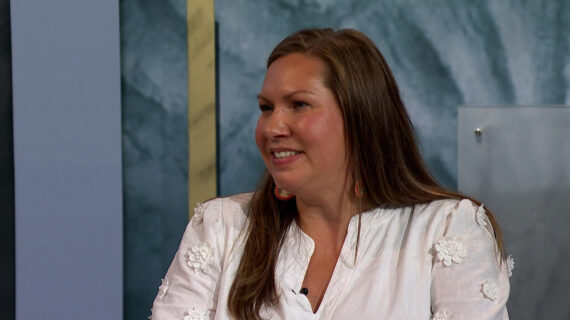
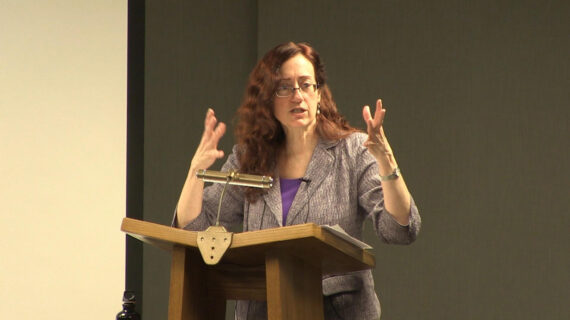
Nancy C. Unger, Professor, Department of History, Santa Clara Univeristy Nancy Unger expresses her fascination with Bob LaFollette's progressive legacy in her lecture entitled "Fighting Bob LaFollette's Progressivism, Past, Present and Future". He was recognized as one of the seven greatest senators in American history. She aims to increase understanding and appreciation for what he created.


Copy and Paste the Following Code to Embed this Video:
Fighting Bob La Follette's Progressivism
cc >> Good afternoon, and welcome to another session of History Sandwiched In. We're really happy today, because our subject is Fighting Bob LaFollette. And we have here, all the way from Santa Clara University in California, Professor Nancy Unger, who's going to talk about Fighting Bob, and talk about the book she wrote recently, "Fighting Bob LaFollette, A Righteous Reformer." We at the Wisconsin Historical Society are really proud, because our press has published it. So please welcome our speaker, Nancy Unger. ( applause ) >> What a wonderful series this is. I really want to thank you for taking time in the middle of your busy work day to come to this wonderful museum, in order to celebrate Wisconsin's past, and its present, and its future. And I really want to thank the Wisconsin Historical Society Press for producing, I think really this very handsome book. I am frequently asked, especially by puzzled Wisconsinites why I, a Californian, with no ties to the Badger state, am so dedicated to the study of the LaFollette family dynasty. Now, you people of Wisconsin have every right to proudly claim Bob LaFollette, tireless fighter for the people, as your native son. But LaFollette was also a player on the national stage. He belongs to me, too. He belongs to all Americans. In the year 2000, a Senate resolution recognized him as one of the seven greatest senators in American history. LaFollette's progressive legacy is woven into the very fabric of this nation. Now I've titled this talk, "Fighting Bob LaFollette's Progressivism, Past, Present and Future," because not only is his life story fascinating in its own right, especially to history geeks, like me, but also because it seems to me that there is an increasing urgency that we understand and appreciate this progressive legacy, in large part, created by Bob LaFollette. For those of you who've never heard of him, or are a little hazy on the details, here are the basics. LaFollette was born in the proverbial log cabin in Primrose, Wisconsin, in 1855. He attended the University of Wisconsin for both undergrad and law school. And he served as a US Representative from 1885-1891, Governor from 1901-1906, and in the US Senate from 1906 until his death in 1925. But who was he? LaFollette was only ten months old when his father died. His mother, deeply impressed in the mind of young Bob, the vision of his father as a completely righteous man. He must, she insisted, never do anything to dishonor his father's name, but instead, always demonstrate integrity, and do right without fail. Wasn't he a cute little kid? In his youth, LaFollette thought of his father constantly. "Oh, my idolized father," he wrote, "what I would not give to have known the sound of your voice, to have received your approval when it was merited." His relentless quest to know more about his phantom father culminated when he was 39 years old. He had his father's grave exhumed, personally accompanying the grave digger to the cemetery. LaFollette personally gathered up the remains and brought them to his family physician to help lay them out for careful study. From an early age, LaFollette set out to merit approval by doing right. He found his opportunity within the progressive movement, which rose in response to conditions of the gilded age, from roughly the end of reconstruction to the end of World War I. See if any of this sounds familiar in today's America. The guilt, or gold plating of that remarkable period was glittering indeed. It is perhaps best represented by the fantastic lifestyles of the rich and famous, who made enormous profits providing steel, oil, meat, beer, timber, and all the other raw materials, manufactured goods and services vital to a burgeoning nation. But beneath that dazzling exterior, chock-a-block with such modern marvels as street cars, telephones, electric lights, inexpensive manufactured goods, darkness lurked. Again, look for similarities today. The gilded age economy was unregulated, unstable at best, frequently rocked by recessions and depressions. Immigrants poured in, providing much of the labor force for industrialized America. But dreams of the United States as a glorious land of opportunity, however, seemed to be realized exclusive by the already wealthy, who pulled the ladder up after themselves, rather than allow others to ascend. What remained were menial, often dangerous jobs so low-paying, that frequently the labor of an entire family was necessary for its survival. After long hours in dangerous conditions, workers returned to urban ghettos, rife with poverty, crime and disease. Precious, non-renewable resources were ripped from the earth, with no thought to their conservation, let alone preservation. And government appeared, at best, helpless to curb the harmful excesses, at worst, a willing collaborator in the profitable carnage. People who think we live in a time of unparalleled greed and corruption should take a close look at the gilded age, when politicians like New York's Boss Plunkett, George Washington Plunkett, spoke openly and approvingly of honest graft, when his seat in Congress known as the "millionaire's club," could be purchased, merely to increase a wealthy man's status. But more often, it was used to protect and promote his businesses, and when US senators were not elected by the people, but selected by state legislators, frequently through backroom deals. LaFollette and his fellow progressives, reformers dedicated to combating all the various problems of the new urban industrial age, waged what amounted to a war over the future of the nation. LaFollette's rallying cry, "The supreme issue involving all the others, is the encroachment of the powerful few upon the rights of the many." And being a determinedly righteous man with a great gift for public speaking, LaFollette set about reversing that encroachment. More than anything else, he believed in the people of Wisconsin. "The will of the people shall prevail," he promised his fellow Wisconsites. "The fight is on. It will continue to victory. There will be no halt and no compromise." In our current gilded age, it is important to appreciate that the seemingly out-of-control corruption in that first gilded age, was ultimately brought to heel by LaFollette and his fellow progressives. And at the heart of progressivism was that dedication to protecting and enhancing the rights of the many. In 1889, for example, 1889, supporting the enforcement of a free, unintimidated ballot to African Americans, Representative LaFollette lectured the white south on the floor of the US Congress. "There is nothing threatening or portentous in the Negro problem today, excepting as you make it so. The difficulty does not lie with him, but with you instead, in the blind prejudice and stubborn antagonism ever opposed to his development politically and socially as a citizen." LaFollette believed that the acceptance of racial equality would benefit whites, as well as non-whites. And he extended that logic to include issues of gender equality, as well. Asserting that men, as well as women, would benefit from feminism, yes, feminism. He advocated not only women's voting rights, but recognition of their full equality. "It is so obvious," he said, "as to hardly admit of argument, the interests of men and women are not superior or antagonistic, one to the other, but are mutual, and inseparable. Women's suffrage is but the extension of the principle of democracy, and will result in an enlightened, better, balanced citizenship." Perhaps even more impressive, for LaFollette, feminism began at home. His wife, suffrage campaigner and peace activist, Belle Case LaFollette, the first woman to graduate from the University of Wisconsin Law School, was in many ways, more radical politically than was her husband. "Because," she said, "this business of being a woman is in many ways, like being a member of a despised race." It was Belle LaFollette who publicly opposed President Woodrow Wilson's efforts to racially segregate the street cars and federal offices of Washington, DC. She protested in speeches to both and black and white audiences, and in the pages of LaFollette's magazine. "Merit, not sympathy," she declared, "demands that Negroes should not be discriminated against, and should be accorded the justice due them as citizens of democracy." LaFollette's magazine, by the way, was started by the family in 1909, and is still in publication today, as the Progressive, about to celebrate 100 years in print. Under Bob LaFollette's leadership, Wisconsin led the nation in many aspects of the fight to more equitably redistribute the nation's wealth and power. The famed Wisconsin Idea incorporating cooperation with the University of Wisconsin, was ultimately termed the fourth branch of the state's government, and credited with stimulating more genuine reform in state and national politics than any other influence in the previous 40 years. By 1906, when LaFollette left the governor's chair for a Senate seat, many of the state's reforms were eagerly adopted by progressive governors across the nation, including in my state of California. Wisconsin boasted a thorough going and efficient reform of railroads and other powerful utilities. That may not sound like so much, but railroads had a stranglehold on much of the economy of the nation. Wisconsin had civil service reform for state officials. Again, civil service reform, not a sexy topic. But in the gilded age, civil servants got their jobs because they gave the biggest bribes. Wisconsin said, hey, what if we gave tests, what if we saw that typists can actually type before we hire them to work for the government. Wisconsin had a stringent anti-lobby law, requiring lobbyists to register and to publish details of their contacts and contracts with legislators. There were stronger provisions against corrupt practices. Environmental measures, including conservation programs. Tax reforms. And nominations by primary election for all elected officials. No more backroom deals picking who would be the candidate. LaFollette brought this Wisconsin agenda to the Senate. Once there, his characteristic refusal to compromise won him many enemies, just as it had at the state level, ultimately pushing to the breaking point, his relationship with President Theodore Roosevelt. There's an incredible conversation where they're trying to get together on a coal bill. And Roosevelt says, well, you know, let's compromise. Half a loaf is better than no loaf. Bob LaFollette says, no, "No loaf is better than half a loaf. You get a half a loaf, it dulls your appetite. You don't fight for the full loaf. No loaf is better than half a loaf. No compromise." Well, certainly this unwavering righteousness contributed to the failure of LaFollette's many presidential bids. But at the same time, it also earned him the steadfast loyalty of his Wisconsin faithful. They knew he would not compromise. Moreover, he led some of the progressive movement's successes on the national level, making important gains in industrial working conditions, workers compensation, electoral reform, education, public health, and women's suffrage. But by 1917, progressives, then as now, face an enormous barrier. War. See if this sounds familiar. Prior to US entry into World War I, LaFollette had warned that war, and rumors of war, are a dreadful diversion for people's demanding just distribution of wealth. "War is the money changer's opportunity and the social reformer's doom. The war against powers abroad would supercede winning the war at home against monopolies, inhumane living and working conditions, and abuse of political power." Moreover, "This foreign war," he said, "would be financed not by the industries that stood to profit the most, but by American taxpayers, who could afford it the least." So despite news of poisonous gas, among other unspeakable horrors, chemical and otherwise, LaFollette remained convinced that the vast majority of Americans rightfully opposed US entry, and he called for a national referendum on war. Let's ask the American people if we should enter this war. The filibuster that LaFollette organized to prevent US entry into war electrified the nation. With rumors of violence swirling around the chamber, tensions were running so high that LaFollette instructed his son, an assistant, Robert LaFollette, Jr., to retrieve from his office his traveling bag. Junior fetched the bag, but opted not to volunteer the information that, fearful of his father's temper, he had removed the revolver that it normally contained. When LaFollette began his official demands for the floor, he was rushed by several democrats, led by Kentucky's Ollie James, who did carry a gun under his coat. Oregon's Harry Lane prepared to stab James with a rattail file, if James made a move to shoot LaFollette. Lane told LaFollette the next day, he had been prepared to put the file down James' collarbone, into his heart. LaFollette kept the file on his desk for many years. For his unflinching opposition to US entry into the war, LaFollette was spat upon, hung in effigy, and made the subject of a congressional investigation. Socialist and labor leader Eugene B. Debbs, sent this telegram, "Let the Wall Street wolves and their prostitute press howl, the people will sustain you, and history will vindicate you." Debates over individual rights in time of national crisis are not unique to the present day. The Espionage Act of 1917 made it a crime to aid wartime enemies. And when Gene Debbs made a speech against the draft, he was sentenced to ten years for this act of espionage. Denials of basic rights were extended by the Sedition Act, which made it illegal to "utter disloyal, profane, scurrilous, or abusive language about the flag, government, or armed forces during war." Remember Freedom Fries? It was during World War I that frankfurters became hot dogs, that sauerkraut became liberty cabbage. Terrorist attacks on American soil are also not unique to the modern period. In 1918, more than 30 prominent businessmen and government officials, including US senators and judges, were targeted by anarchists, who set bombs in eight cities, including a big one that went off on Wall Street. Attorney General A. Mitchell Palmer put into motion the first red scare. Without warning, and without warrants, union offices were raided. By 1920, at least 10,000 leftist and radicals, a large percentage foreign born, had been rounded up, among the largest mass arrest in American history. Many were deported. Then, as now, progressives protested that such acts of paranoia and fear were hindering, not helping, in the campaign for genuine security, peace and justice. They were outraged by the hypocrisy of President Woodrow Wilson's blatant disregard for basic civil liberties at home following a struggle abroad, allegedly waged to protect freedoms and to make the world safe for democracy. Warned LaFollette, "Let no man think that we can deny civil liberty to others, and retain it for ourselves." Then, as now, he and his fellow progressives were berated for their naivety, their lack of patriotism, their disloyalty. The progressive response then, the creation of the American Civil Liberties Union in 1920. Dedicated to preserving and protecting individual's constitutional rights. To this day, the ACLU maintains the position that civil liberties must be respected, even in, in fact especially in, times of national emergency. It always surprises me in my basic history courses. We talk about this, you know, limits on freedom of speech in wartime. And I say to my students, what do you think, does the country need this? Oh, it's a good idea, blah, blah, blah. The survey classes always have the Constitution in the back of the book. So, okay, let's turn to the Bill of Rights. Freedom of speech. Freedom of the press. Is there an asterisk there anywhere that says except in time of war? No, there is no asterisk. LaFollette and his fellow progressives really pushed for recognition of that. LaFollette never regretted his position on the war. But he was hardly an isolationist, a pacifist, or one to bury his head in the sand. Instead, after traveling to Europe in 1923, he spoke of the necessity of following any war, with an equitable, just, and therefore a lasting peace. He believed that Americans should be concerned with saving the lives of suffering peoples, rather than dictating other people's political systems, noting specifically, "Whether the Russian government is good or bad, according to our standards, it is not up to us to overthrow it. We have enough to do here at home." He denounced what he termed Wilson's autocratic view of executive power, and the debacle in post-war Europe that Wilson had helped negotiate, warning, "I went to Europe five years after the end of the war to end all wars, the war to make the world safe for democracy, four years after the so-called Peace of Versailles. Instead of peace, I found new wars in the making." And he goes right down the line for predicting World War II with absolute accuracy. Now, my point here in drawing all these parallels to today isn't that misery loves company, but that I get impatient with people who seem to think that our present day problems are unprecedented in their severity and that they can't be remedied, and therefore, must just be accepted. What if LaFollette and the other progressives had taken that position in view of their generation's problems? The progressives brought us the direct election of senators, workers compensation, child labor laws. Women received the vote. National parks and environmental protections were created. Controls were placed on lobbyists, businesses and banks. Progressivism should be measured, not only by what it achieved in those very real terms, but also by what it prevented. Had the gilded age excesses and abuses been allowed to proliferate unchallenged, a very different America would have been the result. Instead, much of the original progressive agenda put its emphasis on federal regulation and found its way into the New Deal. Progressive notions of equality and the power of the people championed by LaFollette were evident in the civil rights movement of the 1950s and the 1960s, and a variety of subsequent protests and reform efforts. The two votes against the Gulf of Tonkin resolution that brought us into Vietnam were both cast by former LaFollette supporters. It is undeniable that many progressive remedies to the modern urban industrial society did not last. And Bob LaFollette anticipated just such reversals of progressive gains, and counseled hope rather than despair. Near the end of his life, as an independent in the presidential campaign of 1924, in which he garnered 17% of the vote, as an independent, he proclaimed this reminder, "America is not made, it is in the making. There is an unending struggle to make and keep government representative. Mere passive citizenship is not enough. Men must be aggressive for what is right, if government is to be saved from those who are aggressive for what is wrong. There is work for everyone. The field is large. It is a glorious service, this service for the country. And every American should count it a patriotic duty to build at least a part of his life into the life of his country, to do his share in the making of America." Well, the LaFollette children certainly responded to this call to service. Phil LaFollette served three terms as Wisconsin's governor. Young Bob LaFollette, the one who took the gun out of the traveling bag, was elected to his father's Senate seat after his mother refused to run. When taunted during the special election campaign, "You ain't as good as your pa, and you never will be." Junior replied, "Oh, no one knows that better than I, my friend, no one knows that better than I." He nevertheless served with distinction in the Senate for 21 years, to his father's 19. He was forced to step down in 1946, after being defeated by Joe McCarthy. Junior's son, Bronson LaFollette, served four terms as Wisconsin's Attorney General, before retiring in 1987. And Junior's third cousin, Doug LaFollette, who was Bob LaFollette's first cousin twice removed, was elected Wisconsin's Secretary of State in 1974, a position he holds today. As congressman, governor, senator, Robert LaFollette contributed to a variety of measures in his efforts to more equitably redistribute the nation's power and wealth. The authentic progressive spirit still finds expression. "The battle is just on," LaFollette recognized, even in 1909. "It is young yet. It will be the longest and hardest ever fought for democracy." More than 150 years after his birth, Fighting Bob's unique legacy of progressive reform continues. The inheritors of the original progressive spirit continue to fight the good fight. Thank you very much. ( applause ) Thank you. Yes? ( inaudible ) The question is a very good one. This guy's a republican? How does that work? If you remember, LaFollette's born in 1855. He remembers the Civil War. They all cried the day Lincoln was shot. To LaFollette, the republicans are the party of Lincoln. You know, this is the great party. The democrats are those, you know, those slave owners, those racist, the ones who want to keep African Americans down. So the republican party is the progressive party. It's a very different republican party than we have today. But we really don't see the kind of democrats and republicans change until the New Deal with Roosevelt that's later down the road. So it's a very common question, and a good question. Yes? ( inaudible ) Well, he and his wife bought Maple Bluff farm. And that was their official residence. And it drove her absolutely insane, because they were always in debt. They had this big farm. And she said, but we spend most of our time in Washington, DC. You know, travel was very difficult, so they spent most of their time in Washington, DC. But LaFollette is so dedicated to what he's doing, so no, we have to get the word out to the people of Wisconsin, we have to do a mailer. She says, we owe everybody. Can't we kind of hold back on that? No, no, no. So they did have this Maple Bluff farm, and that's the official residence for the family. But they actually didn't get out of the red until after he died, and finally paid off their debts. Yes? ( inaudible ) What did he do between law school and becoming a US Representative? Well, he started off as-- Fred, help me. What do you do when you're the prosecuting? Thank you, very much. He ran for District Attorney and won. He was very green, just out of law school. There's a wonderful moment where his first case, the judge says, well have you arraigned your client? He had to take a recess because he didn't know what arraigned meant, and had to go look it up. So he got involved. That was his first elected office. And he just kind of grew from there. The difficult period for him is after he gets voted out of Congress. It's ten years before he becomes governor. And that's when he's trying to get back into politics. There's all kinds of backroom deals and vote buying, and so forth. And that's why he's so dedicated to direct democracy. That was really, I think, the very difficult period for him. Yes? >> You obviously mentioned that part of his support would not be the elite, or perhaps partisan supporters. But I was told that my great grandfather or great-great grandfather was a progressive, and he was a low-class at the time. Did he have a certain economic class of supporters? >> Well, he did certainly appeal to, yeah, a lot of working class people. And he'd take the buggy out, go to the farms, talk with people. He knew a little Norwegian. So he would speak a little Norwegian, a little German. He would appeal to that group of people. This was early on. I think certainly everybody in Wisconsin didn't support him. But I think as his reputation grew as someone who would not compromise, then he really was able to appeal to a lot of people, and across lines. But I don't want to give the impression that there was absolute unified support. He won most of his elections by a large majority, but there were still different people who thought differently. Yes, sir? >> How long did it take you to write the book? >> Oh, forever. I mean, absolutely forever. I was working and raising kids. I always say my writing is like a glacier. The movement is imperceptible to the human eye, but ultimately it does come along, which had some advantages. I started writing this book right out of grad school, when I knew everything, you know. And I got a little wiser, and I looked at him a little differently as I got older, faced more life's challenges, had a little more compassion. So I really feel it was kind of a good thing that it took as long as it did. ( inaudible ) Yes, there's the bust of LaFollette in the Capitol Rotunda, and there's a really bad movie called, "I Love Trouble," that stars Nick Nolte and Julia Roberts. And there's a little second that's shot in the capitol. And you can see the bust. I was in the movie theater and said, "Oh, my God, it's Bob LaFollette!" You know, because I was so excited about it. Yes? >> Was he always a reformist, or did he dabble with revolutionary ideas at all? And did the Germans that were in Wisconsin have any influence on his thinking? >> Yes, I mean, particularly in '24, when he ran for the presidency, in some places he was on the socialist ticket, although he never was a socialist. But he did, you know, he was very interested in any idea that he thought would help. When he went to Europe in '23, he went around to cooperatives to see how they worked. So, yes, he was open minded. But he was no fire-eating radical. He was also very aware of how far he could push the people of Wisconsin, too. He's a politician. And you know, his wife, who I sort of consider the Eleanor Roosevelt of Wisconsin, she, like Eleanor Roosevelt, because she wasn't in office, she could afford to be more radical. And I always thought that she was. And I don't know, you know, it's hard for me to know exactly what his true feelings were. But he was very clear on what he thought the people of Wisconsin wanted, and how far he could go with that. Yes? >> Is there something about Wisconsin that made it particularly fertile ground for a man like LaFollette to come from, or was it just like any other place and it just so happened that it was this particular man, this particular person? >> The question is, why Wisconsin. That's a really good question. LaFollette didn't just, you know, spring forth. There had been a progressive tradition. When he goes to the University of Wisconsin as an undergrad, John Bascom is the president. And he talks to Belle and Bob LaFollette about they, not just them, to all the undergraduates, you're in an elite position. You're going to college. You have an obligation to give back to the community. So he got that message, you know, very early on. I think that was really the message at the University of Wisconsin. And I think that that sort of got things going. And it was a very vital place. This is before television, before radio. We had a lot of immigrant farmers who followed politics in their home countries. They were very interested. And they could see very clearly, these weren't sort of political issues on the periphery. The railroad took their crops to market, charged them all the market will bear prices. This was a real problem. So LaFollette could explain, this is why this matters to you, and had a very personal appeal. So I think that it was a great synergy of this particular leader and this particular time and place. Yes? >> Did he campaign in German? And a related question is when he was in Germany in 1923, did he have a translator, or could he speak German well enough? >> The question is how fluent was LaFollette in German. I don't think he was fluent. I think that he had a smattering enough early in his career to talk to the German farmers. But when they were in Europe, because he was a US Senator, they had a whole sort of traveling party. He did have translators. I think it was too important to kind of trust to his German. If you're interested, I do have a two-minute clip of LaFollette giving a speech in 1924, if you want to see him in action. Now, you have to remember that this is 1924. It's before the "Jazz Singer" came out, so it's not exactly Techni-color dream stuff. And also, LaFollette is almost 70 years old here. He's going to die the following year. But you still, I think, will get a sense of that speaking ability. So let's all take a good moment and think good thoughts to make sure I can make this work. ( inaudible ) >> He does not sound a call to arms, but he is nonetheless being called to patriotism and a higher ideal in citizenship. A patriotic citizenship of the country must take each stand and demand... ( inaudible )...They shall not destroy the equality of opportunity, the right to the pursuit of happiness, guaranteed by the Constitution, that it shall keep it's powerful hands off... ( inaudible )...but that he shall obey the government that guards and protect his rights. Mere passive citizenship is not enough. Men must be aggressive for what is right if government is to be saved from those who are aggressive for what is wrong. There is work for everyone. The field is large. It is a glorious service, this service for the country. The call comes to every citizen. It is an unending struggle to make and keep government representative. Each one should count it a patriotic duty to build at least a part of his life into the life of his country, to do his share in the making of America according to the plan of the fathers. >> I don't know if you were able to hear that, but you got to see him there. And I would read that LaFollette would go speaking, and they called him a four pitcher man. That's how much water he would consume, because he would talk for so long. And I thought, who would listen to anybody for that long. And when I first saw that, I thought, oh, I kind of get it, just that little bow at the end. I think he's so charming. He could just keep audiences mesmerized for hours. And you can see, he's an old school stump speaker. He's got the big hammy gestures. And he had a voice they could really hear in the back. And I think that was a lot of his appeal, was that he really had that personal ability. The same time that they made this film, they filmed Calvin Coolidge, the three major candidates for the presidency. And Calvin Coolidge was so quiet, they had to turn the volume up really loud to get his voice. And they'd left it adjusted at that. When LaFollette came he blew out all their equipment and they had to do it all over again, because he was just such a forceful, dynamic speaker. So I want to thank you again for taking time from your busy day. It's really been a pleasure for me to talk with you. I appreciate your questions and your interest. Thank you very much. ( applause )
Search University Place Episodes
Related Stories from PBS Wisconsin's Blog






Donate to sign up. Activate and sign in to Passport. It's that easy to help PBS Wisconsin serve your community through media that educates, inspires, and entertains.
Make your membership gift today
Only for new users: Activate Passport using your code or email address
Already a member?
Look up my account
Need some help? Go to FAQ or visit PBS Passport Help
Need help accessing PBS Wisconsin anywhere?

Online Access | Platform & Device Access | Cable or Satellite Access | Over-The-Air Access
Visit Access Guide
Need help accessing PBS Wisconsin anywhere?
Visit Our
Live TV Access Guide
Online AccessPlatform & Device Access
Cable or Satellite Access
Over-The-Air Access
Visit Access Guide




Follow Us