

 Passport






Ethical Issues in Sports Medicine
04/09/14 | 25m 3s | Rating: TV-G
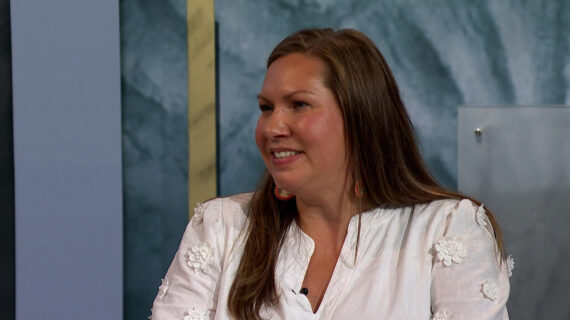
Greg Landry, Professor of Pediatric Sports Medicine, UW School of Medicine, reviews six challenging medical ethics cases from his 30 years as a team physician, with the University of Wisconsin Athletic Teams and the 1992 U.S. Olympic Committee.


Copy and Paste the Following Code to Embed this Video:
Ethical Issues in Sports Medicine
cc >> Well, thanks, Norm, for asking me to speak. This is going to be a much different talk than the other talks. Norm asked me to talk a little bit about some of the ethical dilemmas and issues that I've dealt with over almost 30 years as a team physician and sports medicine specialist. And, of course, no matter what field it is in medicine, there always seems to be some ethical issues, and there was no paucity of ethical issues in my career as a sports medicine doc. And you also need to keep in mind that sports medicine is a relatively new sub-specialty in medicine. Really the root started in terms of the CAQ and specializations in a formal way in the early '90s. So the title of my talk is Ethical Issues in Sports
Medicine
A Physician's Reflections. Basically what I'm going to share with you in the short time I have are six challenges from 30 years as a team physician. And, again, I could have chosen 50 of them, but these are some of my favorite stories. I have no relevant financial relationships with anything that I'm going to present related to these challenges. First of all, I want to comment about the term team physician. The term team physician is a potential conflict of interest by definition. You're taking care of an individual, but you're also taking care of a team or teams. And is the first loyalty to the team or to the athlete or patient? And I think this is most difficult in those individuals who choose to work with professional sports when they're totally employed by the team. And I think professional athletes are appropriately skeptical sometimes when they're working with the "team physician," and in fact who are they working for. And I think most of the individuals that do that learn to clarify that upfront with the individual that they're working with. What information is going to be shared with the owner, coach, etc, etc. But in my setting, I always try to be mindful of the doctor/patient relationship and keep the patient or the athlete care as the highest priority. And that has never served me wrong. There are times when it is more difficult, but I think that's the most important principle in being a team doctor or taking care of athletes on a team. So my first challenge came early in my career. I started on the faculty in 1984, and in 1986 the NCAA announced a drug screening program with penalties for all NCAA athletes. The University of Wisconsin administrators I think wisely decided that athletes should become familiar with the procedures by implementing their own program. The other thing that they did quite wisely is they got a group of us together, which included administrator Otto Breitenbach, head athletic trainer, lawyer, a toxicologist and me, to try to decide how we were going to go about this. Fortunately, both Danny Helwig and I had had some experience with the Olympic program and how they ran their drug testing program, and so we had some idea how it should look. But part of the problem is as a member of the planning committee, I had to decide what the team physician's role and what the athletic trainer's role were going to be in this new program. I felt strongly at that time, and I still do, that a program must not interfere with the doctor/patient relationship, and it needed to preserve the ability for an athlete to talk to a team physician, confident that the information would be kept confidential. So that was one of the things that I insisted on. And I also included the athletic trainers because I felt as health providers, they needed to be perceived as health providers and that the athletes needed to be comfortable talking to them about whatever. Fortunately, the attorney consultant recommended a random testing program rather than the one based on suspicion or cause at that time. Interestingly enough, at that time in this country, elsewhere in the country other attorneys were advising just the opposite. But at least in our domain, the attorney said let's just stick with a random program. I think we can justify that legally much more soundly. So I was able to maintain my role as a confidant and a counselor. One of the problems with that is then I begin to in fact learn things that I didn't necessarily want to know about. Many of you may not know that in the early '80s and mid-'80s steroid use was rampant in college football. Again, this was before the NCAA was testing and before the NFL was testing. So indeed many of the athletes told me they were using steroids. I urged them to stop or take lower doses. I decided it was not my business or professionally appropriate to tell anyone because if I blew the whistle, I would no longer be perceived as a physician. And it's not different than when patients share with you that they're using heroin or prostituting or anything that's illegal. It's not our obligation to play cop and discuss that with legal people. And so, again, I did that purposely to preserve my role as a team physician or as a physician. More recently, the program got revised to allow for testing based on suspicion. And my response was to specifically state in our new policy that the team physicians and athletic training staff would not be allowed to request drug testing based on suspicion. Again, trying to preserve that professional relationship between student athlete and physician, athletic trainer, and those of us that were health providers, and I think we've succeeded in doing that. So, challenge number two, also related to drug testing interestingly enough. This happens to be a fairly recent case of an NCAA positive drug test for caffeine, and is it common? Well, it turns out it's very uncommon. Since the start of the NCAA's drug testing program in 1986, there have only been two previous positives, in '92 and '98. Our athlete who tested positive was a 21-year-old Caucasian female in her third year of eligibility. She played 10 seconds of an NCAA national tournament game final and was chosen to be drug tested, post-tournament game, and the result was a positive for caffeine. It turns out any drug positive is a penalty of a 12-month suspension. And I also should remind you that the NCAA is now the only governing body that tests for caffeine. Her medication list was fairly brief. She took a daily multivitamin. She was also on an oral contraceptive pill which was prescribed by the team physician, a relatively common one, and you'll see why that's relative in a minute. So here's the day of competition She did a light workout in the morning. For whatever reason, this gal was not a big coffee drinker, but for whatever reason on the day of competition she decided, they had a lot of time to kill, it was a night game, so they go to the mall and she has some coffee. All right? So she has a 16-ounce grande, and it tasted so good she had another one.
LAUGHTER
Medicine
And then, stranger yet, what she'd never done before, she buys this energy drink, but one of the reasons she bought it is this is the machine right outside the locker room, which is obviously inappropriate for them to have this outside the locker room. But, again, what she was thinking I don't know. In the locker room during the last break of the game she consumes her Rockstar Energy Drink. And again, she was notified that she had a positive drug test some six weeks later. So, what about this caffeine business? Well, here's a bunch of the categories of drugs that are banned by the NCAA, and caffeine is considered a stimulant by them so it's under the stimulant category. And there's a whole host of stimulants in this category. And it's the only thing, definition of positive depends
on the following
for caffeine if the concentration in urine exceeds 15 micrograms per milliliter. So it's the only one where they actually measure the actual concentration. And I was always taught that this meant you had to drink at least five or six standard cups of coffee within several hours of the drug test, which would be, what, 500-600 milligrams in a standard cup of coffee. The other thing I should mention is that governing bodies with ban lists do not consider intent relevant. I think Travis would tell you, if you're positive, you took it. Never mind intent. Intent has nothing to do with whether you're positive or negative. If it's in your urine, you took it. So let's take a look at her caffeine intake. Starbucks grandes have 330 milligrams a piece. She had two. She also did the Rockstar, which is a total of 820 milligrams of caffeine. The other thing that we had learned that I did not know until this poor gal tested positive is that oral contraceptive pills as well as a lot of other medications slow caffeine metabolism. Sort of a double whammy for her. So the head athletic trainer and I felt that 12 months was an excessive penalty for a truly inadvertent ingestion. There was no way that she did this for performance because she almost certainly wasn't going to play either at all or only for a few seconds because she was a sub. She was not on the first four lines, in other words, in ice hockey. She was ignorant of the significance of the amount of caffeine ingested, and we felt somewhat responsible for that. So we felt like we didn't inform her very well, certainly didn't inform her about the problem with her oral contraceptive pill, and so therefore we appealed the positive. Here's some of our arguments. Caffeine is ubiquitous. Caffeine is the only stimulant listed by the NCAA that requires a concentration in order to test positive. With so many variations in clearance, it's impossible for an athlete to know a personal threshold. We felt that this didn't warrant the same penalty as some of the other banned stimulants like cocaine. We explained to them that she knew she was not going to play. There is no way in the world she would be taking this to enhance performance. And furthermore, she really didn't have a very good way to know how much caffeine was in a grande or that her OCP slowed metabolism. And again, we explained to them that we should take some responsibility for that.
INAUDIBLE
on the following
Still suspended for six months, but, heck, that was better than 12 months, right? And in order to do that, they had to rationalize it by saying, okay, you get a secondary violation, which is essentially a letter of reprimand for the athletic department and was of no significance in the long run. So we were glad that we defended her. It was unusual in that usually when there's a positive drug test, again, intent is not considered, but in this case I think we argued a strong enough case that they were willing to reduce her penalty. And again, I felt ethically and morally obligated to defend her since we had not informed her as well. Needless to say, since then we have a lot of discussions about caffeine with our teams. Challenge three, a sophomore starting basketball player reveals she is pregnant. She has a letter from her obstetrician that she may continue to play with no restrictions, and she will be monitoring her pregnancy. The player does not want anyone on the team or the coaches to know that she's pregnant. She agrees to inform the athletic trainer and the fellow who covers the team, who happened to be David Bernhardt at the time. The medical staff honored her wishes. She played the rest of the season and actually played quite well. At the end of the season, she informed the coach, when the season was over she finally told the coach. Both the coach and the athletic director were furious and thought they had a right to know. Did she? We didn't think so, and I still don't think so. I think we made the right call. Had it had any playability implications or medical implications, at some point we might have had to involve them, but it was like mid to late season and there were really no issues, especially since she was monitored closely by the obstetrician. By the way, since this case, not all the athletic departments in the country have policies on what to do with a pregnant athlete, but we decided we really should have one, in part to protect those young women so that they didn't fear losing their scholarship, didn't fear reprimand or any problem if they became pregnant during a season. And in fact, if they needed that information to be confidential, it would be kept confidential. Challenge number four, the star football running back develops acute prostatitis at football camp. He's febrile, has abdominal pain, is unable to run. He wants to go to bed. So he started on T&P sulfa per urology advice. The problem is the media is covering football camp. So what do we tell the media? He's the star running back, they're going to notice if he's missing. So a football trainer and I got together and said it's a lot like stomach flu, let's just tell them he has stomach flu. So we said he had stomach flu. So, sure enough, he misses two or three days of practice and there were no further questions. So the question I guess I have is, was it wrong to lie to the media? And I don't think so. I don't think they had a right to know that he had prostatitis of all things, and it was close enough to stomach flu so that's how we handled it. And I don't have any regrets. In my opinion, confidentiality trumps the media every time. Here's a little orthopedic case that we deal with from time to time, and the surgeons tell me this is not infrequent at all. Junior high school football player has a lateral meniscus tear. The surgeon determines that the tear is repairable. In other words, some of these are such that they can actually sew it back together again and salvage it. The problem is that if you take out part of the meniscus, it increases your risk of osteoarthritis, dramatically, especially in the lateral compartment. But if you repair it, he's out eight weeks, which means he's pretty much done with his season. If you do the meniscectomy, he can return in two to three weeks. It turns out several colleges are looking at him as a potential scholarship athlete, and his parents are confident he will get a scholarship offer. Aren't they always? Well, it turns out this is not a wealthy family. His parents probably cannot afford the cost of a college education. The player and the parents want the surgeon to do a meniscectomy. The surgeon knows this will increase the risk of early arthritis, and by early I mean by mid-20s, early 30s at the latest. So what should he do? My understanding is many of the surgeons I work with ask them to get a second opinion. They strongly recommend repair in almost all cases. If both athlete and both parents understand the risk, most surgeons will honor their wishes. And then I have learned of one example of one of our collegiate wrestlers where the surgeon didn't follow through on this, actually did the repair, the repair got torn fairly soon, and the athlete was absolutely furious. And, quite frankly, I don't blame him. If that was not his wish, he was a consenting adult, and the surgeon did him wrong by repairing it rather than doing the meniscectomy as he wished. But these come up in orthopedics as well. Okay, last one. A little more complicated. This is a starting football running back who's found to have a new heart systolic murmur on routine pre-participation exam. This is when we did heart exams every year on our football guys. And cardiology agreed to see him the next afternoon. He's totally asymptomatic, had been through all the summer workouts, no fainting, just absolutely no suspicion of any problem. So the first question was, do you let him participate in the next morning practice, which I did, and then his cardiology appointment was the next afternoon. Well, much to my chagrin, the electrocardiogram was markedly abnormal, his echocardiogram was markedly abnormal with wall thickness of 23 millimeters and normal is up to 12. So he's got twice the normal wall thickness of his ventricle and the diagnosis is hypertrophic cardiomyopathy, which, of course, lends to a fairly high risk of sudden death. The cardiologist recommends he not play. In all fairness to him, we sought a second opinion from one of the world's renowned experts on hypertrophic cardiomyopathy, Barry Maron, who is in Minneapolis. He said he absolutely shouldn't play, and in fact he should have an implantable defibrillator to defibrillate and potentially save his life when he goes into ventricular fibrillation. Because both cardiologists said this and clearly he was not, it wasn't just because he hypertrophic cardiomyopathy but he had rather severe cardiomyopathy, we chose to permanently disqualify him. It was one of the hardest decisions I'd ever made in my career. He was devastated. He probably could have played pro ball. Medically, I don't think there was much of a choice. We provided a lot of psych support for him. But from time to time I wonder if that was the right thing to do for him. And I know David had the same difficult decision with a basketball player. And I can't believe I got choked up. I guess it's because I haven't thought about it for a while. We allow athletes to participate in all kinds of high risk activities, like boxing, football, bungee jumping, etc, but yet we get very paternalistic with these heart conditions, and I'm not real sure why. I think partly because a group of cardiologists gets together and from time to time publishes the Bethesda guidelines for about 60 different conditions. What I think sometimes we forget is these are just guidelines, and in fact they're not in agreement at all with a similar European group. And I think every case should be dealt with on a case by case basis. I think sometimes we don't realize what's at stake. We actually, at this university, are quite fortunate to deal with some athletes who really do have a pretty good shot at making a living for some years off of their athletic talent, and unfortunately the two that David and I had to recently disqualify were actually in that category. They were probably going to play on Sundays, as we say in football, and actually potentially make a good living. But, again, medically, I think we made the right decision, it was just a really hard one. I just want to mention related to this the case of Nicholas Knapp versus Northwestern. Nicholas Knapp was a really good basketball player who was offered a scholarship to play basketball at Northwestern and before he attended Northwestern, collapsed and was resuscitated and was found to have hypertrophic cardiomyopathy. The University of Northwestern said we'll give you your scholarship but we can't let you play, and Nicholas Knapp turned around sued them. Well, it turns out this had a lot of implications for those of us that are team physicians because if they didn't uphold the team physician's decision, how are we ever going to be able to say if somebody doesn't play? Well, it turns out the court upheld Northwestern. Nicholas actually went on and played somewhere else. He had an implantable defibrillator, and when he got shocked, he quit playing basketball. So, again, probably the right call. Again, I don't know the severity of his disease, but clearly he was at risk for arrest. And again, this is both a legal issue as well as a medical issue. And again, for our athlete, I think it was the right call. For other athletes with lower risk, I think people should really think about it and consider what's at stake and also potentially give a consenting adult a chance to consider playing even if there is a fair amount of risk. Thank you for your attention.
APPLAUSE
on the following
>> Well, actually, you took less time then you were entitled to, so now we're actually back on schedule. So thank you. Questions? I'm going to just, if I may, just start you off. You asked why it is that we're so paternalistic on heart conditions and not on bungee jumping and sky diving and such. Is there anything to the question of how intuitive, how real, how kind of viscerally people appreciate the risks that they have when it comes to things that are more kind of visible, like I can imagine and see people cracking their skulls versus something that seems kind of hidden, like my heart might stop? >> Great question. My perception is that... Okay, my perception is that, in general, people overestimate things that are very low risk and underestimate things that are high risk. The classic example is riding in an airplane versus riding in an automobile. People get all wound up about the airplane, and the risk is infinitesimally small, at least in the states, of you dying in an airplane, but it's fairly significant in an automobile. And I think for medical conditions sometimes it's similar. But the risk is real. This is a condition that does cause people to die. And then furthermore, implantable defibrillators don't always work. Norm's got one. >> Norm. Was there somebody, I just want to make sure anybody who hasn't had a chance to ask a question gets a chance. Go ahead. >> Greg, in your decisions to withhold players from playing when they have the cardiomyopathy, I can think of three possible reasons, and I'm wondering which one you think is the closest. One, you really are just acting paternalistically because you think it's in his interest and he's too immature even though he may be 21, 22 years old, to make his own decisions. That would be one reason. Second is yourself, you can't stand the thought of somebody dying and you could have stopped it from happening. Or third, do you feel under some institutional pressure, either because of liability, and I'm not sure if that would actually apply, or embarrassment to the institution? They don't want to have dead people out on the playing field. >> It's not just the institution. When I talk to my colleagues who have witnessed collapses or have had deaths, it's devastating to the whole program. So it's not just institutional, but, yeah, that's part of it, I think, is fearing that might happen. >> Which of those three do you think is driving your decision? >> A little bit of all three probably, quite frankly. It's a great question. But again, and there's the legal aspect. I think we'd have trouble defending, if something happened to him, that we allowed him to play when so many other people said, two cardiologists said don't play him. >> Other questions? Yeah. >> I think all of us are struck by your last story about this person that you said couldn't play. I was in Boston around the time of Reggie Lewis' death, and there's a really neat piece that came out in the New England Journal about what it is to take care of a professional athlete and how that is a very different sort of cost benefit analysis that you make as a physician in comparison to how you would take care of a high school athlete or even a college athlete because how we add up the benefits of playing is very different in that situation. Can you think of other places where, as the team physician, you think of the benefits of playing on a different level than how you would, say, for your high school student or even a young child who is playing, not even necessarily playing sports but off doing something else that's active, like camp? >> Great question. And yes, it does come up. One of the problems that we have is we have a number of athletes who want to play who shouldn't play, and the reason they want to play is they've worked so hard and spent so many hours to play in a game, for example, that when they do get hurt, they just can't accept the fact that they shouldn't play. And so, and related to what Norm said about sometimes they act in an immature way and don't make a responsible decision, well, hey, we try to understand that and work with them and not let them play when there's excessive risk, but when the risk is reasonable, let them go a little bit and involve them in that decision. So the stakes are different at the collegiate level versus the high school level. And as you alluded to, the stakes are different at the professional level. Those guys are already making multimillion a year, so how many years do they need to make before they're good for life? And unfortunately bad things still can happen to them. But I think that, again, Reggie Lewis, I would assume, had informed consent, knew he was at risk, and chose to play.
Search University Place Episodes
Related Stories from PBS Wisconsin's Blog












Donate to sign up. Activate and sign in to Passport. It's that easy to help PBS Wisconsin serve your community through media that educates, inspires, and entertains.
Make your membership gift today
Only for new users: Activate Passport using your code or email address
Already a member?
Look up my account
Need some help? Go to FAQ or visit PBS Passport Help
Need help accessing PBS Wisconsin anywhere?

Online Access | Platform & Device Access | Cable or Satellite Access | Over-The-Air Access
Visit Access Guide
Need help accessing PBS Wisconsin anywhere?
Visit Our
Live TV Access Guide
Online AccessPlatform & Device Access
Cable or Satellite Access
Over-The-Air Access
Visit Access Guide




Follow Us