

 Passport






Ernest Hpenden's Painted Forest Murals
08/18/14 | 47m 22s | Rating: TV-G
David Smith, Art Professor, Edgewood College, introduces the murals painted by self-taught artist Ernest Hüpenden in the late 1890s. Hüpenden’s work reflects the rich tradition of folk art in Wisconsin and is painted on the walls and ceiling at The Painted Forest in Valton, Wisconsin.


Copy and Paste the Following Code to Embed this Video:
Ernest Hpenden's Painted Forest Murals
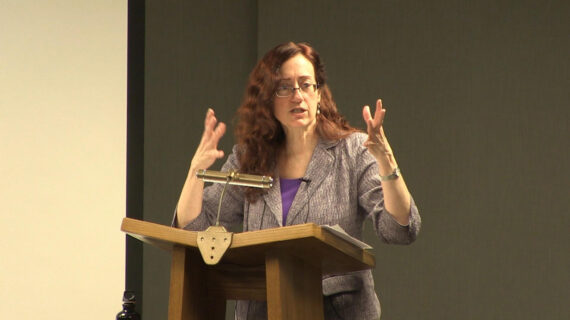
cc >> Today we are pleased to introduce David Smith as part of the Wisconsin Historical Museum's History Sandwiched In lecture series. The opinions expressed today are those of the presenter and not necessarily those of the Wisconsin Historical Society or the museum's employees. David Smith is a professor of art at Edgewood College, as well as the director of the Painted Forest. Here today to share how Ernest Hupeden's master work at the Painted Forest relates to the rich tradition of folk art in Wisconsin. Please join me in welcoming David Smith.
APPLAUSE
>> Thank you, Jenny. And I'm pleased to see all of you here. Thank you for coming. I also want to especially thank Katie Schumacher, the program director here at the museum for inviting me. This is a real honor. It's a real nice opportunity for me to share with you this Wisconsin folk art treasure. Also a thank you to Bruce. I just met Bruce for putting the production for University Place together. It's a great effort. I'll introduce myself just a little bit more. As Jenny said, I'm a professor at Edgewood College. I'm a studio artist. I'm a ceramic artist. And I've been there nearly 25 years, and in that time, of course, the small liberal arts college, you wear many hats. I've been chair of the department a couple of times. I've also been director for many years of the gallery program. And along with my teaching duties and so on, you have these other commitments. For the past five years, I've been the director of the Painted Forest, and that's what we'll be fully explaining, of course, today. And I must say, it's one of the most interesting and rich personal and professional hats that I have worn while teaching at Edgewood College. And again, I'm really excited to share it with you today. The Painted Forest is located in Valton, Wisconsin, and that's about 75 miles northwest of Madison. You go through Reedsburg and then to La Valle, jog through Ironton, and just a short distance from Ironton you'll find find the small, unincorporated town of Valton. Valton was founded in 1856 and remains an unincorporated village. Really it's just a collection of houses and two churches. Their mailing address is actually Wonewoc, if that's on anyone's radar as well.
LAUGHTER
It's in the driftless area of Wisconsin. It's absolutely beautiful, pastoral, hilly, driftless region. And it's also the home to one of the first, if not the first, Quaker church in Wisconsin. 1890 this Friends of Valton was established, and that's the church right down there, present day Valton. It's also in the Upper Baraboo Valley. And, of course, the Little Baraboo runs right through Valton. And it's just a beautiful watershed up there, as many know, and it's part of the environment is the Little Baraboo River. Of course, in many rural regions of Wisconsin, they've seen prosperous times and not so prosperous times, and it seems apparent that Valton reached a point where as many rural Wisconsin farms were being sold, family farms no longer could make it, and people moved into other urban areas or towns for employment and so on. And, as I understand it, in the 1990s, the Amish families began to move into this region. And there's a significant Amish community in this area, and they've moved into these farms and really have been incredibly prosperous. It's just a really interesting dynamic there with how successful they've been able to manage the land. And they're just a huge part of that communal mix, the mix of the community. And, of course, with that, it's kind of interesting. It's been my first real contact with Amish families and the Amish community, and it certainly is a reflection of what life, it's a reminder of what life must have been like and still remains for them of the 19th century. You're always reminded of that. Anytime you drive out there, you'll see the Amish working, and I'll have some stories here as well in terms of my actual personal interaction, which has been really rich. This is an Amish schoolhouse. Just a few more shots of the region. And just one small thing here. It took me one summer of going up there, not really seeing these or recognizing these as schoolhouses. I just didn't see it for whatever reason. And when the winter came, I went up there, I realized there were all these children in black coats and the snow was trampled, and of course they popped out like I didn't see that in the summer. Now I see it, and it was just kind of an interesting visual for me and revelation that, oh, there's one too and there's another one. So they're dotted all over the landscape. But interesting, the little schoolhouse with the boys and the girls outhouses. It was assumed for some time that this was Ernest Hupeden. He's the artist who painted the murals at the Painted Forest, which we'll be explaining today. But it turns out this is Charles Brayden --. He was the original owner of the property that the Modern Woodmen of America purchased to build their meetinghouse. His lifespan was 1854 to 1901, and so it's assumed, as you'll see, the 1897-1898 was when the meetinghouse was being built, he must have sold the property late in life. This is the meetinghouse. It was a structure that was built for the Modern Woodmen of America, and they were a fraternal order, much like the Free Masons, the Odd Fellows. One thing that did distinguish them, though, was they also offered life insurance to their members. So this is on the forefront of the whole concept of insurance. And this plays a big role not only in their sort of ideals and philosophies and so on but some of the murals that are painted relate very directly to this idea that all this uncertainty of death and dying and security, families, men in particular wanting to make sure their families will be secure in the event of their untimely or timely death. This played a key role in this particular fraternal order. This is the more clear shot of the meeting hall in 1980-1982. And just to kind of give you a little bit of a sense for how this hall has been used, 1897 to 1898 the hall was built. As you'll be seeing, Ernest Hupeden painted murals within the building. The building served as a meeting hall for the Modern Woodmen of America for nearly 20 years. There's no definitive date as to exactly when they decided no longer to use the hall, and it changed hands. Then it became a community center, a community building. And it was utilized for music events, theater events, kids roller skated there, there were all kinds of other activities that really served the community of Valton. There is actually a schoolhouse, 1928 schoolhouse that's right across the street from the meeting hall that of course was possibly the reason for building that schoolhouse at that location because then they had this hall where the children could have various activities ranging from theatrical, musical to rollerskating and such. It also throughout the years was used for social gatherings, wedding receptions and so on. And in, well, there came a point where the building came into some disrepair. There was some community talk about an individual buying it and turning it into a machine shed. Fortunately, Ron and Delores Nash, they were community members, they valued the meetinghouse so much for its artistic value in terms of the murals that they decided to purchase it and do what they could to sort of repair it. But then they could only go so far. Ultimately, the Kohler Foundation Inc became aware of this site, and that's another rich kind of story which I'll flesh out. But Ruth Kohler, spearheading the effort over all these years, and the Kohler Foundation in particular will locate folk art sites or art environments, and if they're in disrepair, they'll offer to conserve and preserve them. Oftentimes they actually purchase them and do the conservation and preservation, and then they gift them to organizations or institutions. And in 1980-1982, the Kohler Foundation purchased this property and did a full conservation preservation of it, which involved not only the structure itself but the murals inside. That's 1980. And then they gifted it at that point to Sauk County. And the Upper Baraboo Historical Society really took stewardship, actually had members of that historical society actually maintained, opened the building to public, and try to promote its exposure. This is the hall today. So a bit of growth. We've continued to maintain the building and the murals, of course. But this is a shot of it today. At one point, it was about, I'm sorry, it was about 2001, the development office at Edgewood College contacted the Kohler Foundation to see if there would be any funding possibilities for a new art building on Edgewood's campus. And, of course, the Kohler Foundation said that we do not fund bricks and mortar, but we happen to have this Wisconsin folk art site that no longer does Sauk County feel they can really maintain it in the way it should be. And they said is this something you would consider taking stewardship of? And the development office contacted the art department. We all discussed this. We thought, what a great opportunity. The historic, the artistic, the creative, and also the relationship with the Kohler Foundation, it was all a win-win situation and we were perfectly set up in many ways to take over this property. And so in 2001, that process, that discussion, was moving forward, and by 2004 the Kohler Foundation gifted the Painted Forest to Edgewood College. In celebration of that, this is Ruth Kohler. And once again, I just want to mention just what an icon she has been not only for the state but really for the nation in terms of support for the arts. And it's just wonderful here, myself as an artist can fully appreciate that and I know all of you can as well. But when a corporation that has so much resource is willing to channel that with sincerity and passion and actual resource into the creative arts and understanding how deeply central and core that is to being human. There's no better example of that than with Ruth Kohler and the Kohler company, the Kohler Foundation as well. This is Terri Yoho. She's a critical piece of this. She is the executive director of the Kohler Foundation Inc. Talk about, again, someone who has passion and energy and drive and knows how to get things done. She's been our closest contact through all these years as we've taken over the stewardship of the Painted Forest. So here's the hall once again. We open it to the public from September, I'm sorry, from Memorial Day weekend, Saturday, through the third week in September, and it's open 1:00
to 4
00. So it's limited in terms of the season and being an indoor site, unlike some of these outdoors environments which many of you have maybe visited. Being an indoor site, there's some limitation to the hours. But that's our main season. And I'll get into some other programming and so on that we've been able to grow here the near future. This gives you an idea for the hall. As you approach the building, it's a really modest white-framed building, as you can see. And there's something interesting about it. It's so understated on the exterior, and then it has this incredibly eccentric interior. These murals that we'll talk about today encompass the entire building, the entire interior surface from floor to ceiling. And also, there's something just proportional. As you approach the building, it has a certain sense of scale. Once you walk into the hall, it seems so much larger, so much more grand. And I've appreciated the fact that in the 1890s that it was a hall. It was something you roller skate in. It was a grand community space. This gives you some sense for that. I love these benches here around that could seat up to probably nearly a hundred people. But these are the original benches that were all the way around the hall. So as far as murals, I'll begin to introduce Ernest Hupeden. Who is Ernest Hupeden? He was born in Germany. And legend has it that he was wrongly imprisoned for embezzlement and that he was later exonerated by a deathbed confession, and that's when he left Germany and came over to the United States. That's about late 1870s, 1878. And he was university educated, but, again, legend has it that he did, while in prison, teach himself to paint. So in the sense, he's considered a self-taught artist, a vernacular artist. And he was transient. He was fond of the drink. He was eccentric by all accounts. And he made his way from New York, he landed in New York, of course, in 1878, and then made his way through the country bartering his skills of painting for room and lodge, room and board, sorry, and whatever else he may need at the time. And by 1897, he had wandered into Wisconsin and met up with the Modern Woodmen of America, and they were just finishing their hall, construction of their hall, and they wanted the stage screen painted. And that was very, very common in that day to have some sort of patriotic scene painted on the stage. And that's what you see in the left there. And what he painted was a current military scene, USS Olympia. It was a naval ship that had a major victory in the Battle of Manila Bay in the Spanish-American War. And he depicted that event through the stage screen. I've got some panoramics which kind of give you a sense of how the murals relate, kind of the scale of it, and then I have some details as well. So here's the stage screen. And Modern Woodmen were so pleased with that effort that they commissioned him to continue painting murals that reflected their rituals, their philosophies, and their ideals as a fraternal organization. And so from the stage you moved right, and there is somewhat of a loose narrative that I'd like to take you through here. And it begins with an assumed initiate. Someone who's not yet a part of the Modern Woodmen fraternal order. And here he is in some peril, injured, riding what seems to be a demonic goat towards his impending doom and death, which the one image that I do not have a detail of but which is closely connected to this one is right in the corner. You'll see some boys in a later picture where they're standing in front of that. It was the coolest because it had a skull and stuff.
LAUGHTER
to 4
But he's riding this demonic goat to this corner which involves a dead tree, a skull, and an owl which seems to be symbolic of death. And the next panel then moves into the natural landscape of, of course, a white pine forest, which was a native landscape of parts of Wisconsin. And the Modern Woodmen were not associated with the logging industry. They were not loggers, but it was a symbolic connection relating to the idea of loggers and their work as a road towards progress prosperity, and so on. So it was a symbolic connection to the work that loggers do and how that will build a more hopeful and positive future through their industry. And so this reflects that in this. Notice the one tree that's cut. This is the beginnings of taming the land, of the loggers work, the movement towards progress, movement towards a more productive and happy future. This gives you another, this is a nice panoramic because this the point at which we were. We move into the next mural, which is probably the most alarming, disturbing, confusing on some levels as well. But this, actually this middle mural, represents symbolically a number of things. Again, it's somewhat of a loose narrative. But this is the height of an initiation process. The initiation process that each individual had to go through some of it seems kind of silly, and some of it seems like mild hazing, but part of that process was to, of course, develop comradery, connect, but also part of it was to really check. Some of these rituals and initiation rights that they put an initiate through were actually testing their physical and emotional well being. Of course, they were offering life insurance. And one thing in particular that is really direct in terms of the physical health, it almost seems like a prank, but there's this apparatus, this instrument that we have a lot of artifacts from the Modern Woodmen from the day. And it's this apparatus with a meter and it has a trumpet mouthpiece on it and you had to blow. It's a lung testing machine. You had to blow into it to test your lungs, and if you blew hard enough and the meter hit the proper level for a healthy lung, then this cartridge would pop and blow talcum powder or flour into the face of the one who's blowing. So they even have an illustration of this. It's really hilarious. And it seems prankish, certainly, but considering tuberculosis was a disease, a real disease, that they were possibly testing for that in particular. But back to this mural, really in sort of its mixed meanings and so on, you have the initiate who's being drug by masked men into this sort of horrific scene. The thing that's most curious and I really can't specifically articulate really is the Modern Woodmen that's actually burning at the stake there. But you have, certainly, this seems to be a very direct connection in terms of the danger, the perils, the potential danger and peril of the natural world. Here we have a snag that's broken off. And oftentimes in the logging industry they'd call those widow makers. And then you have this human conflict, which is really kind of most difficult to literally make too much direct connection or sense of. But you have these masked men, some of them are wearing Prussian helmets, which, again, with Hupeden's German background and the Prussian military presence during the 1870s in Germany was obviously reflected in this. They're masked men. They have black masks and so on, which is another confusing thing for some folks. I won't segue too much on these stories, but this was really interesting and it relates to the community there. One day we had the Painted Forest open and I was talking to a few folks, explaining some of the murals and so on, and there was this woman who was standing right in front of this mural. She almost had her nose to it. And some time went by and she sat there and sat there and sat there with the mural, and once I was done with the other folks, I kind of worked over and I didn't want to startle her but I said, hello, my name is David Smith. I'm the director of the Painted Forest. She said hello, and she introduced herself as a community member, long-time community member. She lived all her life in Valton. And she said, you know, the real story really needs to be told. And I said, well, Beverly, please tell me the real story. And she went on to talk about stories that her mother would tell her and the experiences she had as a young child, which would put her back in the late 19th, early 20th century, her mother, of peering in, trying to peer into the meetinghouse and see what these men are doing. It all seemed quite odd. Of course, there were shutters on the bottom of the windows of the Painted Forest building. Just on the bottom, not on the top. They're double stacked windows, and it's just a privacy issue. It's not a weather issue. So that still remains in tact, just how they would shut those shutters and want that privacy, especially in initiation rituals I'm sure. Anyway, she inferred, back to the mother of Beverly, she inferred in stories that there were these men, and they would chase the kids away when they'd try to peer in the windows. And there were these men that were in robes burning crosses in the woods and all of that. So what she was really saying is she felt that this was a Ku Klux Klan meetinghouse. That got me to thinking. But I just went with that, just allowing her to have her story there, but that really settled in my mind. So I, ironically, happened to catch a Wisconsin Television lecture of a gentleman from UW Baraboo who was versed in the history of the Ku Klux Klan in Wisconsin. I went, oh, my gosh, I need to contact him. I got right to him. He got right back to me, and his response was that by no means were the MWA a front for the Ku Klux Klan in Wisconsin. But, undoubtedly, there were members, because there were some active Ku Klux Klan societies, there were some members of the MWA that also probably were part of the Ku Klux Klan. But I thought that was just kind of an interesting story, not so much about just defining that but the interaction I had with a native Valton resident who had these stories and how legends get passed on. I just really appreciated that interaction and followed up on it. So the next panel, and here we go, moving into this next panel, I don't have an image of this here, but that is the initiate who's now made it through the initiation process. You can tell he's really beleaguered. He's moving out of all of this to a much happier place, and that place is a group of MWA members around a fire. Obviously there's nourishment. They seem very robust. They have great comradery. And then there's this wise old sage, the elder, that's not a part of the group in a tangible sense but is overseeing it in a more spiritual sense in the edge there. You can see in the background. So he's being brought to this place from death, from peril to a much safer, securer, and hopeful place. And as we move, this is the corner of the building we just spoke of. And then the whole back wall, this is a grand scene. It's hard to tell scale. You'll see a few photographs of individuals in front of these murals. You'll get a little better sense for scale. But that whole back side is, again, the initiate being led to ultimately the MWA camp in Valton. And, of course, not of course, but he has represented the MWA camp of Valton as a Bavarian castle up on a hill and banners flying. Valton MWA Camp 6190, Valton, Wisconsin. The other banner is Peace, Safety, Light. So this is a very good place to be, to go to, and it's a very positive situation. This is a little bit of detail of that. One thing I could mention here is that all of this is original. It's been conserved professionally, but the only part of the interior that was destroyed to a point where they really could not reconfigure it accurately was the ceiling. So the ceiling is just a generic blue sky. But there was some sense that it was much more dramatic. There was a sunrise and an electrical storm. It was just much more dramatic. I had one local resident that came by who said, I think I remember. They were there in the 1970s. I think I remember the trees growing up onto the ceiling a bit more. But it's been fun to kind of work with community members and try to piece some of these other details together that we were not exactly sure of. So then we moved to the next wall, and we're kind of moving, these are the final panels. And this initiate has become part of the MWA fraternal group. As an MWA member, you lead this, you have a mural of a settlement, a very, very healthy, positive kind of settlement in which the men are very industrious and working hard. You have the home in the background. The mother and the child. One image that I just love, which you will not be able to make out, some of these, this hopefully will prompt you all, if you haven't seen the Painted Forest, to actually visit and see some of the additional detail. But this is such a great, right in the center is a little boy, and you've got to believe that he is symbolic of the future generation of the MWA, and they're just feeling we will move forward in a positive and hopeful way. We have the next generation that we're bringing into the realm of the MWA. The middle panel here has a bit of interesting elements to it. Humorous and actually very much connected to the actual community of Valton and its history and so on. This is what Hupeden, possibly the MWA members, envisioned Valton to be a hundred years into the future. So they had this vision that Valton would grow and prosper and really become and urban center. And he's depicted all these different shops and so on with specific names. The League Grocery Company. And it turns out through, again, a lot of community connection, all of the names relate to people who historically lived in the area, had some of these businesses in the late 19th century. So it's, again, another nice really strong community connection. Kind of a humorous interesting element is this cutaway. This is the bank. This is the bank of Valton, and this is a cutaway. And an MWA widow is cashing in her $2,000 life insurance policy. The detail is there. The little, you can just see the policy and it says $2,000 on it. A humorous thing, too, just in terms of their vision and hope for the future growth. You have the current exchanges, and it has New York and it has Paris. It has London. It has Hamburg, a number of German cities. They were thinking Valton's going to be on the international map here, commercially. That's interesting. This is a detail of the little home. This gives me a chance to just speak to something briefly just about the painting style. Again, this is self-taught artists, many vernacular artists. We won't get into all of that in much detail, but vernacular self-taught artists' work tends to be very expressive, having really deep spiritual connections and a lot of different things. Obviously formally, visually, very interesting, but in some cases maybe a little less well crafted, a little clunky. Maybe a little more primitive that characterized some vernacular artist's work and so on. And these murals, because of the scale of them, have sort of a looser kind of simplistic brush approach. Some of the figures, the figuration of the figures sometimes tend to be fairly awkward and so on. I think this is a nice example of just kind of the immediacy of the brushwork and sort of the technique. There are some other pieces on canvas we'll touch on that seem to, because of their scale for whatever reasons, they're not big murals, are much more highly crafted, if you will. This is that last. The last panel is actually, again, as far as this loose narrative and progress and moving forward to a more positive future, you have another landscape. And, of course, it's much more domesticated. There's much more imprint of human activity and just development, if you will. So you have, instead of the raw, natural, native white pine forest, you have this much more domesticated, much more diverse natural scene. It's a beautiful, beautiful surface. Beautiful scene. And he signed it in 1899. 12/20/1899. Suddenly I just sort of referred to briefly but here are a few images of some works on canvas. Of course, the Painted Forest is considered his master work, but he did paint on canvas. He painted on objects, bottles, glass, various things. He painted murals inside bars and restaurants and food establishments and so on and personal homes. We do have a really beautiful panel that was in the Kickapoo Lumber Company in La Farge, Wisconsin, that he painted probably in the early 20th century. Just a beautiful panel depicting the Kickapoo lumber industry and all of its activity and the rail and so on. It's very detailed, and, again, the technique, possibly partly due to the scale, is much more refined. Here are a few other scenes. Many were local farms and so on. Some were possibly referencing his environment in Germany, such as this. Of course, this is the classic local farm scene. It's interesting, I took a walk before the lecture upstairs and Paul Seifert's exhibition is just incredibly beautiful. That's another Wisconsin folk artist that was working a little earlier than Hupeden but possibly had crossed over. And I'm really curious if Paul Seifert, he was from Richland region, which is the same area of Wisconsin, whether Ernest Hupeden and Paul Seifert had crossed paths. They were both German, so we'll need to look more into that. But if you haven't seen the exhibition upstairs, it's well worth a look. They have just an incredible collection of Paul Seifert's work, much like these farmscapes here, just done in a different style. A little more illustrative as opposed to painterly. Hupeden continued to live in Wisconsin. After his time in Valton, he stayed in the region. Not exactly sure where he was at any specific time or how far he traveled, but he did stay within the Hillsboro, Richland Center, Valton area, and continued, of course, to paint. And he died in 1911. Neither here nor there, his birthdate, the stone, this is a pauper's grave near Richland Center, a community grave marker, and they have it at 1861. There's some information out there that he was born in the 1850s, but, again, that's neither here nor there. There is a definitive stone, marker stone, for Ernest Hupeden, and that does relate to the fact that he did stay in Wisconsin as opposed to moving back east after his time in Valton. I talked a little about the community, just the richness of this. It's beautiful for me to present to you the hall itself and the remarkable paintings and kind of Hupeden and who he was. But currently, with keeping it open to the public and the activity that goes on up there, it's all about community engagement. We've had people sign our registry from countries in Europe, throughout the United States and so on. So the audience is quite broad. But the community is really important, not only in terms of, and that's what the Kohler Foundation Inc is really interested, and Ruth Kohler, is community outreach and connection. And a lot of that's happening. This is Terry Wright and his children. He actually is our on-site caretaker. He mows the lawn, does the snow removal and so on. And he's also a really important person to have there as another set of eyes. We've never had one bit of vandalism there, and it's amazing. That just has such good spirit about it, to be honest with you considering. With the kids and so on in the neighborhood, we befriend them and all of that, and you take the curiosity out of it, welcome them in the doors and all of that. So I think that's played a little bit of a role. But we have, of course, Terry and his family that kind of oversees. We've had many current and past community members visit. Here are some individuals that actually went to school in the 1820s schoolhouse across the street. So they've come back and visit, and they'll come in and want to see the hall again and talk about, just reminisce and so on. We've got an incredible amount of information from folks that had grown up knowing the Painted Forest and the Painted Forest being such an important part of their experience in Valton. While I'm thinking of this, I think it's really important to mention too that this is over 115 years old, and it's just, considering, as I mentioned, how much community use this space has seen, that there wasn't some point in the 20th century where some folks said, you know, let's clean this place up. Let's whitewash this. And the community never did that. It came close to becoming a machine shed, but the Nashes, fortunately, saved it. But having said that, the value of these murals is instilled throughout all of these years and has been and to see folks come back after 50 years of not having been there. One community member came in, she said, gosh, I didn't really remember the exact murals but I remember the smell. That was a neat kind of moment too of connection. As I mentioned, the Amish community is really, really an important part of the region. And it's been an interesting, I won't get too much into that, certainly, but it's an important part of my experience, certainly, and anyone's experience that visits the Painted Forest. But I feel really privileged on some levels to have had personal interaction with a number of Amish families. And my first conduit really was when I was there on a Sunday, and I saw Steven and Benji and Melvin Ray on Sunday walking up the street. And I could tell they were a little tentative, but I just said, hey, guys, introduced myself. Do you want to come up and see the Painted Forest? And they were pretty shy at first. They came in, they started taking it in, and then I could just see them sort of get more and more relaxed, and I developed a connection. And we've had, I won't go through other stories other than to say I can't help but share this one. This was about three, four years ago, and I've continued to, when I arrive and I happen to see Benji or Steven or Melvin Ray, big smiles. Hey, how you doing and so on. We have that kind of connection. Well, we went through another project too when I was working with Alvin Miller and Robert Mast, the kids' father, regarding use of other materials that we were trying to find a home for, fence lines and stuff. So we're reaching out to the community in different ways. Say we've go these materials, could you use them? Would you like to have them? So we're making those connections. And the first time I went to the Mast's home, I'd known the kids for a couple years by now, I come up and I meet Robert, the father, and of course Steven and Melvin Ray go, hey, how you doing? They're coming up and hey, guys, how you been? And I talked business and so on and then asked Robert, so have you been to the Painted Forest? He goes, no, but I thought about going some time, but I just haven't gotten around to it. I said, well, your boys have been there. And he said, well, I think I need to be working them a little harder. And he had a big smile. He just really got it spot on. I think I'll have to work those kids a little harder. We have a laugh and stuff, but that was a nice interaction. This is Melvin Ray. Another interesting community are the German Baptist Brethren community. There are quite a few families near Hillsboro, which is just a little north of Valton. And just one other story, I'll just kind of move along here, but I met, of course, the local families, Amish families, and this wonderful couple came driving up in a brand new SUV. And I thought, hmm, there are all these different levels of mechanized life within the Amish communities and it varies and it's evolving in different ways. And I just thought this family is part of a different community. Again, this is part of my education. So they came in, they were interested in seeing the Painted Forest. They came for that reason. We had a nice tour of it, and then I just needed to ask. I said, well, what community are you a part of. And they informed me of the German Baptist Brethren. And they have a highly mechanized dairy farm, highly successful and mechanized dairy farm up near Hillsboro. So that was sort of broadening my sense of the region and the community. Of course, local kids will come in the Painted Forest and be inspired by art. We've had a number of school groups, bus tours, just to show you the kind of exposure that we continue to offer to the public and bring to the Painted Forest. Here are the school boys that found that corner. I said I'm going to get a picture of you. That's that corner of the initiate riding on the demonic goat towards his impending doom. So they thought that was pretty cool. This gives you a little sense, too, of the scale on that back wall. Some detail of the wainscoting This is an art therapy group. We've had an art therapy program. It's a real important program at Edgewood College in the art department since 1992. And so we've been connected and outreaching very, very extensively through that program in the community. We've also connected with other colleges. Alverno has an art therapy program, and this is a group that came up to the Painted Forest a couple times to have a workshop retreat. So, this being the end here, I just kind of moved through, I guess we are moving right along here in terms of time. Another portion of this, in 2004, the Kohler Company Inc built a study center just down the block from the Painted Forest. And here we promote all kinds of art workshops, retreats, meetings, artists in residencies. There was a celebration of that opening of that in 2004 with Amish pies. They had an art activity of painting on objects influenced by, again, Hupeden's interest in that approach to folk art. I'll just kind of, I realized we're running just a little short on time, so I'll just move through this just a little more quickly and get to the specific points. So these are just, again, this kind of engagement. This exposure that we offer the public, kind of engagement, appreciation for art, appreciation for art making. I offered a hands-on, for the community, I offered a hands-on throwing workshop, a pottery workshop, which was successful. That's Terry's daughter. She's always game to try anything. A sweet picture of her success there on the potter's wheel. Something that we've done the last two years that's been really successful is a plein air that Bob Terrell has been organizing. It's an on-site painting event that transpires not only at Painted Forest but other art environments throughout Wisconsin as part of a Wandering Wisconsin consortium of art environments and folk art sites. Just a few shots of our recent plein air event. This is a writing workshop for Edgewood College that was housed there. I'm showing you these just to kind of show you the range of activity. This is an art studio study center, but it's very much an interdisciplinary facility for all kinds of historic research, writing, visual art and so on. We have a lot of wonderful artifacts that have been beautifully cataloged and conserved by the Kohler Company or Kohler Foundation Inc that are housed in this facility. So for anyone interested in deeper research on the MWA, their rites and rituals and other documents, we have a really rich resource there that anyone would be welcome to spend some time, whether it be a day or a weekend, three days. We also have had a very popular, we've been really popular with the cross country team. They've been doing three-day retreats there. It's kind of a team building. Again, it's such a beautiful area. The Glacial Drumlin Trail runs through there as well. So they go out and do their runs, and then they camp on the property and utilize the study center as a home base. So that's been really successful as well. Here are a couple sites that I just want to inform you of. One is our website PaintedForest.Edgewood.edu. But there's also a really nice short piece covering the Painted Forest and the connection with Kohler Foundation Inc as well, on YouTube. It's Ernest Hupeden, Painted Forest, John Michael Kohler Art Center YouTube.
And then Ernest Hupeden
Beyond the Forest. It's a movie. It's a beautiful, really artistically, creatively done documentary of bringing a lot of people, historians, artists, representatives of the Kohler Foundation Inc that explain all of the various connections and the richness of this beautiful Wisconsin folk art site. The one last thing I just want to mention, I'd be remiss not to, in terms of our engagement in the community, we have been really sensitive to the community there and want to give credit to Bob Terrell in particular. He was the first director and he really oversaw all the initial connections of taking the properties over, of seeing the study center built and so on. And, of course, in this small community, an institution was
sort of coming into their realm
Edgewood College. To disarm any concern, Bob Terrell went around to everyone's home in Valton, introduced himself, put a face to the institution, and I think that was just a savvy thing and sensitive thing to do. And I just want to finish up by saying we've not only been excellent stewards of the property, we've had excellent partners in the Kohler Foundation Inc, and we've also been good neighbors in Valton. So, thank you very much for coming today.
APPLAUSE
Search University Place Episodes
Related Stories from PBS Wisconsin's Blog





Donate to sign up. Activate and sign in to Passport. It's that easy to help PBS Wisconsin serve your community through media that educates, inspires, and entertains.
Make your membership gift today
Only for new users: Activate Passport using your code or email address
Already a member?
Look up my account
Need some help? Go to FAQ or visit PBS Passport Help
Need help accessing PBS Wisconsin anywhere?

Online Access | Platform & Device Access | Cable or Satellite Access | Over-The-Air Access
Visit Access Guide
Need help accessing PBS Wisconsin anywhere?
Visit Our
Live TV Access Guide
Online AccessPlatform & Device Access
Cable or Satellite Access
Over-The-Air Access
Visit Access Guide




Follow Us