

 Passport






Daydreams That Changed History
08/09/11 | 41m 59s | Rating: TV-G
Pete Barnes, author of "Harley and the Davidsons: Motorcycle Legends," discusses the biographies of William Harley and Arthur Davidson, founders of Harley-Davidson Motor Co., and Richard Bong, America's Ace of Aces pilot who shot down more enemy planes than any other American pilot--dreamers whose journeys lead to fame and glory.


Copy and Paste the Following Code to Embed this Video:
Daydreams That Changed History
cc >>
Ryan Swadley
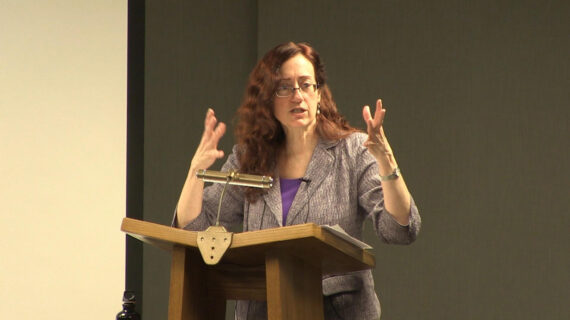
Welcome to the Wisconsin Historical Museum. I'd like to welcome our author, Pete Barnes, today. He's written two books for our Wisconsin Historical Society's Badger Biography series. One here on "Harley and the Davidsons," and the other on "Richard Bong." He's joining us here from Ohio today. So thank you very much. Welcome.
APPLAUSE
Ryan Swadley
>>
Pete Barns
Thanks a lot. Thanks so much for coming. I really appreciate everybody coming out today. I'm excited to talk to you a little bit about both of these books. I think probably most people would jump out that the name "Harley and the Davidsons" would be much better known than "Richard Bong." So I'll probably spend a little more time on that, but if we have some time I'd like to at least talk about Bong. The two are not really related. Richard Bong was an Air Force pilot that flew during World War II. But the stories are a little bit related, and that's why I try to tie them together with the theme day dreams that change history. Anyway, I'm a teacher near Columbus, Ohio. My parents live here in Wisconsin near Dodgeville. So I've always felt like it's a second home, I guess. That's kind of how I got interested in Wisconsin history. I teach fifth graders so I'm used to a kind of squirrely audience. So it's interesting to have a quiet, attentive audience. I'll do my best to adjust to that. Anyways, I'll get right in the stories. We'll start by talking about Harley and the Davidsons. I think everybody, especially in Wisconsin but around the world, is familiar with Harley-Davidson motorcycle company. And of course there are dozens of books written about Harley-Davidson. I would like to recommend one while I'm at it. If you get interested, my books are primarily meant for kids but it does give you a good overview of the creation of the company and that sort of thing in this one about World War II and Bong, in particular. But if you really get interested in the history of Harley-Davidson, especially the early history, this book is also from Wisconsin Historical Society. It's called "At the Creation." And this author is one of the only people that I know of who has really dug very deeply into the very earliest history of the company. Like a lot of companies, Harley-Davidson has an image and has a very strong culture that they want to protect and that they want to encourage, and so he really went back and took a look at where did that really begin, what's the truth behind it. Like a lot of companies, there are some things that they may have used as more of a marketing scheme, especially in the early days, that might not have been completely historically correct. I didn't really focus on that in my book, but I think it is important and it's really kind of an interesting puzzle the way he put those pieces together. At any rate, the day dream here begins with two boys, Bill Harley and Arthur Davidson. They grew up in Milwaukee. Born just a year apart. And they were buddies, they were neighbors in their early years, and they loved fishing. They loved to ride their bikes to their local lakes, and they came up with this dream going up the hills and getting tired out, probably at the end of the day particularly, what would it be like if we could have a motor on the bike we could get up and down the hills. This was an idea that was not original. They didn't invent the motorcycle. And they weren't actually even the first motorcycle company. But as we'll find out, their real skill was in finding the best ideas in finding ways to make it work and then in creating a company that became a worldwide success. At any rate, they were familiar with motorcycles and, the questioned what we'll get to in a second here is how they would have been familiar. They were also both very mechanically inclined. Particularly the Davidson family had a very strong background in that area. Arthur's father, William C., there's several Williams we'll get to, worked as a carpenter for the Milwaukee railroad. And his brother, William A., who was the oldest of the founders, also worked for the railroads. His other brother, Walter, worked in railroads in Milwaukee and also in Kansas. They were machinists, they were carpenters, so they had a lot of inclination in that regard. Not necessarily a lot of book learning but a lot of hands-on learning and a lot of drive and a lot of ability to make things work, basically. At any rate, bicycles were very common in the 1890s when they started working on this idea. There were actually 250 bicycle companies already in the United States in the late 1890s. But motorcycles was a brand new phenomenon. So the question is, how would they have come up with idea for a motorcycle or come up with the concrete knowledge to make it work? Gottlieb Daimler, Daimler is actually given the credit for the very first motorcycle in 1885, but in the United States at just the turn of the century, Indian motorcycles, their first production was around 1901. The question is, where would Harley and Davidson have seen their first motorcycle? One theory and we don't know for sure, one thing that makes researching the earliest years about these guys is they were not big on writing things down. They didn't even really like to discuss their earliest years. And so even if you look at newspaper articles about them and other things from later years, they were a little bit vague and they were not, they didn't have diaries, they didn't write letters to one another, that sort of thing. So collecting the evidence is a little bit tricky. So this is more of a postulation, what could have happened. In 1885 a man named Edward Pennington came to Milwaukee. He had a motorcycle which really is a bicycle with a very small engine attached to it. He was an inventor but also sort of an entrepreneur looking for investors, that sort of thing. So there is a lot of speculation about how well this motorcycle actually worked. But there was a huge demonstration in downtown Milwaukee. Hundreds of people came and it's very possible that maybe Bill and Arthur Davidson came to the presentation and maybe that's one of their first influences for coming up with the idea for the motorcycle. At any rate, they had to wait a few years before they could really pursue that idea. In 1896 Arthur Davidson moved to Cambridge. His family had a farm there. He lived there for several years. He worked as a pattern maker making tools and things for local companies. At that time he made kind of a interesting relationship that helped Harley and the Davidsons and another well-known person at the time and that's Ole Evinrude. Arthur and Ole Evinrude became friends and fishing buddies. Fishing is another theme that kind of carries through this story. And the story that goes there is that the two of them, Ole Evinrude and Arthur Davidson, were out fishing and thinking about it would be great if we didn't have to row all over the lake. So that's kind of the beginning that of story. Evinrude later moved back to Milwaukee as did Arthur, and the two of them stayed in very close contact and there's a lot of speculation that actually Evinrude's earliest work on engines very much influenced some of the earliest Harley-Davidsons. Even though they were working on slightly different ideas, Evinrude did work on motorcycle and automobile engines and then of course finished by working on the outboard motor engine and that's what he's best known for. At any rate, Arthur lived in Cambridge for a few years, and Bill finally convinced him just four years later, 1900, to come back to Milwaukee. There were jobs to be had. And so both of them got to working on an electric company there. Soon after, about 1819, they really get serious about this idea of building a motorcycle. And here's where it's kind of a fascinating part of the story. Neither of them had been to college. They didn't really have any books, engineering books or anything like that. They had very few tools that would really have helped them very much. And only a small bit of knowledge about motorcycles and that sort of thing. But yet just a couple years later they've got their first working motorcycle engine. So the question is, how would that have possibly have happened? It's kind of an interesting story, and of course like most great innovators they got a lot of help and they got a lot of ideas for outside places that they combined together to make theirs work. One place they got some help was from a German draftsman who worked at their company, and he had seen some different motorcycle engines. In particular, actually here's Ole Evinrude's outboard. This is just one of his early patented designs just to kind of give you an idea of what he was working on at the time. In France there were two inventors, De Dion-Bouton, who had come up with a small motorcycle engine, and this was one of first ones that was actually used in the United States. This draftsman at Bill Harley's company had seen these engines, and he had a pretty familiar, was pretty familiar with them. So he did quite a bit of help, the two of them worked out the sketches and the designs. The first evidence we have of a real concrete idea is the drawing from 1901. Unfortunately, I didn't have permission to get that image, and that's the first evidence of a Harley-Davidson engine. It's not too different than this one. A very small engine, as we'll talk about, which turned out to not quite do the trick for them. At that time we enter what you might call the tinkering phase or my basement's a mess phase or mom has had enough with our tinkering phase, whatever you want to call it. They started doing their work after work, after their full-time jobs, in the Davidson's basement. Bill was mostly the designer, Arthur was building the parts. They were tinkering, they were putting things together. They didn't have a great number of tools, and so here's where a lot of their help comes in. They had a neighbor and friend named Henry Melk who just lived a few blocks away. He had a number of tools. He had a lathe. He had a drill press, some of the others things that they needed. These were run on an old gasoline engine, and Arthur is quoted as saying the engine was persistent in quitting whenever you needed it most. So in other words, reliability was always a question mark. They're working nights, they're working weekends trying to get this thing to work. This went on for a couple years. They're receiving advice from Evinrude, they're receiving advice from this German, who we think was named Emil Kruger, this whole time. And after about two years, in 1903, they're getting close. They've got a number of parts. They think they have a good design for an engine, but it's not working the way they want it to. I do have a picture of an early lathe about 1900 just to give you an idea of some of the tools that they were working on at the time. So they decide we need some more help, who are we going to ask. Well luckily, like I said, the Davidson family had a great number of skilled people who they could rely on. They called on, didn't call on, but they wrote to Arthur's older brother Walter who they considered the most expert in this area. He was living in Kansas at the time, so Arthur kind of played a trick on him writing in the letter, their other brother William was getting married in Milwaukee in April of that year, and so they decided well we could kind of fudge a little bit about how far we've come on the motorcycle. And so in the letter it was indicating come on back, we'll give you a ride on our new motorcycle and you can help us with this new idea. So Walter actually quit his job, came back early for the wedding and got to the basement and saw pretty much a big mess of parts and that sort of thing. But fortunately for everybody involved, Walter was probably the most driven, most energetic of all the founders. Here he is in 1908 with one of their first models. He had been a bicycle rider and racer in earlier years, and the family story is that he would actually take it apart in the family kitchen, strip it down, put it back together again before going on rides. He would train by riding from Milwaukee to Madison and back. So tons of energy, very knowledgeable, and he was kind of the one who put them over the top as far as actually getting this thing to work. They continued after the wedding to work with Henry Melk and his tools. At the same time, the oldest brother, William, was working at the nearby railroad. He had access to a number of parts. He had extra materials that he could start bringing to them. It's speculated that maybe he was actually machining some of the parts at the railroad maybe after his regular hours. So that's another one of those things that Harley-Davidson probably wouldn't want advertised. But they did what they had to do to get it finished. At any rate, finally they had their first motorcycle completed. You can imagine what that must have felt like. This was in 1904 after about three years from the very first design that we know of. Before they could actually get it all put together, Mrs. Davidson, the mother, decided having not just two boys but now three tromping in and out of the house, you can imagine the grease and the dust, the noise in the basement all night long, the thing that kind of put her over the top is a family story, and a lot of these family stories actually come from a granddaughter of Walter Davidson, her name is Jean Davidson, who did some interviewing and talking to these founders. Like I said, they were not the most forthcoming about the early days. But the story goes that they were working on the carburetor experiment in the basement with gasoline. The fumes floated up the stairs. At that time in the kitchen they had open flame for cooking, and there was a pretty big explosion knocking the pots and pans all over the floor, knocking food off the shelves. And as you can imagine Mrs. Davidson wasn't too pleased by that. So at that time she said this is enough. We've got to do something about this. She got Mr. Davidson, the father, to build them a shed in the backyard. And that happened late 1903. And that's what we, most people who are Harley-Davidson fans may have seen this image. It's known as the original backyard woodshed. And they painted their company logo on the door there and got to work. The original one was only 10 feet by 15 feet. So you can imagine it was pretty cramped in there when all three and then later William, the fourth founder, got to work in there. Pretty soon they were expanding it and making it bigger. But at any rate, in the summer of 1904 they had a working engine and a working motorcycle. They were excited, sort of like the Wright brothers getting their plane off the ground. At that time, it was not an easy thing to get a motorcycle going. You had pedals like a bike and you had to pedal to get it up to speed and then you had to fiddle with your engine and get it going, get the carburetor settings right. You had a leather belt you had to tighten to connect the wheels to the engine and then off she would go. Walter, being the energetic one, sort of the leader of the group, demanded the first ride. And it did work. He have no images of this motorcycle. We don't know too much about it except for what we have the early design sketches. We know it was really small. Just seven cubic inches for the engine. That's about 116 CCs. Less than two horsepower. If you have tools at home, you know that most lawnmowers have a lot more than that. Even some leaf blowers run on more than that. So it did work but it didn't do what they wanted it to do. It couldn't get up the big hills in Milwaukee. It didn't achieve nearly the speed that they wanted. It was somewhat of a disappointment. At this time they could have given up. They could have gone and done the things that their friends were doing, maybe gone out with their friends or come up with a new hobby. But like all great innovators, this is a time when they said this is no time to give up. We've got something here. We've got to just crank up our ingenuity, crank up our work, and get back to it. So at any rate, they started on a new design. A few complications here. At this time Bill Harley decided it was time to go to college. He was only founder to make that decision. He went to the University of Madison, Wisconsin at Madison, starting in 1903. He studied engineering. But he was still very involved. He was still the designer, the engineer who was coming up with the basic ideas that they were putting into effect. And so they've stayed in very close contact. Arthur was actually going back and forth to Madison to visit them. They were sharing designs back and forth, and they were also working with Evinrude at the same time. Another problem they had was parts. So again William is bringing parts from the Milwaukee railroad. They needed more tools. So at this time they got a special donation. They were unable to buy their lathe, their own drill press. They had an uncle, the Davidson's did. He was called the honey uncle because he kind of came up with this special donation at $170, which of course at that time was quite a bit of money, which they used to buy a lathe and some of the other tools they needed. They also decided they wanted their, not just their engine to be bigger and better, they did come up pretty quickly with a new design that had more horsepower that had a bigger engine, but they wanted some of the other parts of their motorcycle to work better. One of their big innovations, although again they're not really the first to come up with this idea, was to change the basic design of the motorcycle. Hopefully we can use this mouse here. The first motorcycles, as was their very first one, were basically bicycles with a motor attached. It's what's called a diamond frame. So it has a diamond shape here. The problem with that is the engine is up pretty high, and it's harder for the rider to balance. It doesn't really fit in there very well, and it's just not a real optimum design. One of their early decisions on their first model that was actually sold and became one of their more successful innovations was to create what they called the loop frame. So the frame loops around. You have the engine here nice and low to keep a nice center of balance. Everything fits in there much more nicely. Again, this is not really their original idea. The most probably explanation for where they come up with that design is a company called Merkel. There were several Wisconsin companies that were running at that time, and Merkel was based in Milwaukee as well. And they probably saw that design in a catalog and used that as their own. They strengthened the fork to make it more cushioning and better support. They made some other innovations. At any rate, by late 1904 or early 1905 they had a working model. And this one really did the trick. It was more than three horsepower. It could get up to about 15 miles per hour. And it really did what they wanted it to do. It could get up over the hills of Milwaukee. And they said we're actually on to something here. This is something we could sell, this is something we could produce. So at this time they decided it's time to get things going. Walter quit his job. He started working full-time and pretty soon Arthur Davidson quit as well. Bill Harley, of course, was still in college through 1907. And William Davidson was the last to leave his job. He had a child at home. He was married so he was kind of the most adult and had the most responsibilities at the time. But he eventually quit his job as well. One tricky thing was to find customers for the motorcycle. At that time, the motorcycle wasn't really a popular idea for a number of the reasons. It was noisy, as is still a complaint about motorcycles. It was considered very dangerous. One problem was that the earliest models, including Harley-Davidson, they didn't have a clutch. You couldn't stop at a stoplight, for instance, and let your engine continue running. If you wanted to come to a complete stop, you had to turn the motorcycle off, start pedaling, get it going again, and then go on your way which is not real convenient if you're in a hurry to get somewhere. So one of the problems with that is a lot of riders started going around that problem by just zipping through stoplights, zipping around cars and pedestrians. There's stories about people running for the curb as soon as they heard a motorcycle coming, diving out of the way, that sort of thing. So it took some time before Harley could really convince people this is a safe, reliable machine, it works well for making deliveries, it works well for a number of different uses, and that was a long battle. But if you look at their earlier advertisements, many of them show delivery people, they show postal workers which was one of the earliest uses for it. People riding very slowly on their Sunday ride with their fanciest outfits on, that sort of thing. Another way that they really worked on advertising and getting themselves out there, of course there was no TV, there are not the mass forms of advertisement that we have today, one way that they gained a reputation was through motorcycle racing. They were in their first race in 1905. And they could really get bragging rights, not just in Milwaukee but around the Midwest and across the country, by winning these races and by proving that their product was superior to others. So here they had kind of a secret weapon. Walter, again, was the fierce competitor of the group. He was a great mechanic so if he had a breakdown or something, he was great for getting off the bike and fixing it and getting it going again. A tireless advocate for Harley-Davidson and a great racer. So he was really the one in the early years who was supporting the racing idea and won a number of races that really raised their reputation as a company. One of his specialties was what they called the endurance races which were really kind of a brutal pastime. Some of these were two- or even three-day runs, 200 to 300 miles, sometimes even 400 miles across all sorts of terrain, mountains, hills. And of course the roads at that time were pretty primitive, very bumpy, lots of animals and other things to run into. And to make it even harder they had all sorts of rules of how to run these races. A race would start with a thousand points. They raced usually in teams of two or three. You had to reach a check point not just at any time, not as you would think of most races today as fast as you can get there, but you had a schedule to follow. So you would have to be at check point number one at a certain exact minute, check point number two at another time, etc. If you got there early you would be deducted two points for every minute you were early. Every minute you were late you would be deducted one point. So you really had to be exact and precise. You obviously had to be very good at keeping your motorcycle maintained at overcoming flat tires, that sort of thing. So make it even more fun, they had these secret checks. Judges would hide behind trees and jump out with a flag as you approached and you had to be able to stop within a certain number of feet or else you would lose points. They would stand at the top of the hill and make sure the riders weren't pedaling to get up to the to of the hill, proving that your motorcycle is actually working under its own power. At any rate, Walter and his team were excellent at these. And he really proved without a shadow of a doubt that Harley-Davidson was the most reliable and the most solid quality product at the time. The first motorcycle they actually sold was to a man named Henry Meyer from Milwaukee. That was in late 1904. And the interesting thing about that motorcycle it had at least three owners. It later was bought by someone in Chicago, but they believe it ran at least 80,000, possibly as many as 100,000, miles in its lifetime. So if you think about the very first motorcycle that they're actually producing and selling to have that sort of reliability that's pretty impressive. So things start to ramp up a little bit. In 1906 they were able to sell 50 motorcycles. 1907, they actually built a new factory. They had expanded their backyard shed, here's just an early picture a little bit later, 1915, of some of the Harley-Davidson racers. Their racing team is known as the wrecking crew because they destroyed all competition and really did dominate, especially in the teens and early '20s. In 1906 they started construction on a factory that was, at that time, Chestnut Street, it's now Juneau Avenue which is still where the original factory is today. If you ever have a chance to get to Milwaukee there really is a great tour. They have an archive there and a number of their first models and that sort of thing. Not real impressive looking at that time. They were really all about the nuts and the bolts, getting things produced, getting things out there. And as it progressed, of course, they moved to a brick factory, greatly expanded the size of it and that sort of thing. At that time they also incorporated their company. They had their first company meeting on the factory floor. And here's where it's kind of interesting to think about the members, the founders and their individual skills, what they brought to the company. They voted Walter president, which wasn't a big surprise being sort of the natural leader. Bill Harley had just graduated from University of Wisconsin, became vice president. Arthur, secretary and treasurer. And William agreed to be the floor manager. He, like I said, quit his earlier job. To have three brothers and a family friend to create a company is one thing but each one to have their own individual skills that really helped make things work is kind of interesting. Walter was the president. He was excellent with numbers, great attention to detail, a strong leader. And some interesting stories about him, in the earliest years he actually personal test drove every motorcycle that was produced by the factory. So he would be out, they had a railroad track just behind the factory, and the story is that he would race along with the trains as they went up and down the street. And he was very exacting about the quality. His motto was that no parts of any motorcycle should ever be replaced with another company's parts. He fully believed in Harley-Davidson's product. And he thought if you were including some other company's parts, you were probably making your motorcycle worse. At any rate, here we have Arthur, Walter, Bill Harley, and then William A. Davidson on the far right there. I kind of like this picture because a lot of them are very formal, professional looking, but this one you can kind of see what they actually look like. They were pretty natty guys, but you can see they got a little glint in their eyes so that's why I like that particular photograph. Bill Harley was a much more reserved quiet person, but he was really the genius behind the design and continually looking for improvements. Like Walter Davidson, he really was driven by making Harley-Davidson the very best and was never satisfied with what they had and was always looking for the next big thing. An interesting way to measure that is his first application for a patent was in 1909. By the time he died, he had 90 patents under his name so definitely a great innovator. Arthur was a great worker as well, but his real strength was in his personality. He was a storyteller, he was a jokester, and so he became director of sales. He went out and pushed Harley-Davidson across the country. First Detroit, Minneapolis, Chicago, were some of their first places outside of Milwaukee. And then as we'll talk about, pushed to the east coast. By the 1920s, they had motorcycle dealerships in 60 countries, which is kind of the height actually. Since then that number has never been matched again. At any rate, he used those skills. It's said that he was kind of a practical jokester. One story, again this is from Jean Davidson, Walter's granddaughter, talks about one time he dressed up as a famous Scottish singer and actually put on a performance, advertised himself and sang these songs to a fairly large audience and they never realized that it wasn't actually the person he was supposed to be. The last founder, William A., was kind of the steady worker. He was in charge of the factory floor. He was very close with the employees, known for always having an open door at his office. The story there is that he kept a book full of notes about different loans that he had given out to different employees but that he rarely actually called in the loans and was a generous, good boss and good with the workers. So they all kind of had their own individual skills and combined together made for a really powerful team. So anyway, like we said, 1907 things really started to take off. They had sold 150 motorcycles. They're working on now a two-story factory pretty soon and it's starting in 1908. They're starting to pull ahead of the other companies, Mitchell and Merkel, which are both Wisconsin companies, are both out of business by 1910. That really leaves only one competitor in the United States and that's Indian motorcycles, Springfield, Massachusetts. And they were kind of the nemesis for Harley-Davidson all the way to 1953 when Indian finally went out of business. In 1908 they had a chance to really show the east coast what Harley-Davidson could do and to really compete with them, and so they had an endurance race in the Catskill Mountains of New York. It's a really challenging territory, very steep mountains. It compared to what Walter and his team were used to racing in. The first day Walter and his team were caught in the pouring rain. They had to stop to help a teammate. They had to fix a flat and Walter is racing down the hill, again this comes from a promotional piece so there may be a little bit of elaboration but it definitely makes a good story, he's racing to reach the check point, launched into the air by a rock, and as he's flying through the air thinking to himself is my motorcycle frame going to hold or not. Is Harley-Davidson really as reliable as I'd like it to be. The bike comes down to a very hard collision, the frame holds, he makes the check point just barely in time and continues on the race. Just to give you an idea of what some of these riders were going through, during the same race one rider was hit by a cow.
LAUGHTER
Pete Barns
One bent his wheel so badly that they had to walk it. And then they had a racer they referred to as "Never Quit --," he was hit by a milk wagon and he continued in the race. He road for about 60 miles with his nose broken. So this was not for the weak of heart. Only about half the riders finished the race. At any rate, Walter and his team finished first. They got a perfect score for hitting these check points we talked about just on time and really set the bar, on the east coast especially, where Harley-Davidson, at that time, really did not have any kind of relationship with New York City and Boston, these big cities. They showed riders in the east that Indian was second to Harley-Davidson, and at that time they started to really pull ahead. Some other additions at that time, they started to improve their design adding a chain drive instead of the leather belt to make things more reliable. A mechanical oil pump replacing what they had in the early days was actually a hand pump so the driver had to decide when he thought the engine needed more oil and then pump it in by himself. You can imagine how accurate that was. But the biggest and probably the best known addition at that time was what is referred to as the V-twin engine, a two-cylinder engine. Now again, it was not the first company, Harley-Davidson were not the first to try this model but they definitely made it their signature, and it's still the engine design that's best known today in Harley-Davidson history probably. They started this actually in 1907. They weren't really producing them until 1911. Much more powerful and more expensive but considered really one of the top of the line designs at that time. So they're expanding at a great rate. By 1914 they have two million square feet of work space. They've got 1500 employees. They're producing nearly 20,000 motorcycles a year. So if you think about 1904 to 1914, that's a pretty big jump. In 1904 it was taking them about four months to finish a motorcycle. By 1914 they're producing one about every six minutes. So that's a pretty good turnaround. They were involved with both wars, World War I and World War II. In World War I, produced about 18,000 motorcycles for the military. This really expanded their presence in Europe, and a lot of the bikes actually stayed there after the war. They got a number of dealerships going after the war as well, after World War I. And again, World War II about 90,000 motorcycles produced for the military. But like a lot of companies at that time, they went through some hard times. There was a brief world depression in 1920 that really hurt their sales badly. So they had a huge drop from the early 1920s, and then, of course, the Great Depression, as happened for most companies across the country, there was a huge drop. By 1933 producing only about 3500 motorcycles. They're laying off employees. They're thinking about having to shut down the plant and that sort of thing. But they kept things going. They really emphasized selling to police departments. They emphasized their service vehicles. They made customized side cars where you could carry, make deliveries of meat or dairy or they had even a motorcycle that delivered caskets, supposedly. I never saw an image of that but that's an interesting idea. And they came up with some pretty innovative ideas. They actually created a model starting in 1927 called the Model B. It's a very simple stripped down design. They actually were able to use some of their parts from other models which saved them a lot of money, and they sold it for $190, one of the least expensive motorcycles ever for them. A little bit more controversial decision was to sell some of their designs to the Japanese. They did that the early '30s when they were still struggling. They hated to have to sell some of their ideas and to give away some of the things they worked so hard on but they really needed the money. And one of the good things that came out of this was one of their most famous designs ever. In 1936 they started producing what's called the knucklehead engine. It's a little hard to see in this picture, but on the covers here these round sort of depressions, they're supposed to look at the knuckles on the fist, and that led to later designs, the panhead and the shovelhead, which are kind of extension on that idea. It was one of the most advanced designs that they had come up with. It used overhead valves instead of side valves which was more expensive to produce but produced a much higher performance vehicle. And this racer in 1937 actually broke the speed record on a Harley-Davidson, 136 miles per hour, which at that time, of course, was really fast. And that really kind of launched them, put them back on top, at least for a short time. Another challenge that they went through at that time was they really had to think about how are we changing our leadership over. And luckily all of their founders' sons got involved with a company at some level. And so the story goes that in 1942 when Walter was on his death bed he actually called the family into the hospital and right there they decided the future of the company, basically. William A.'s son, William H., was the most similar to Walter and he took on the role of president. And Walter's son became director of sales. Bill Harley, his son actually became the new vice president of engineering and kind of carried on that process of coming up with new designs and that sort of thing. So they were able to transfer all that knowledge and all of that that they had worked on to their family. After that they went through some rough times. There was, after World War II, of course the idea of people wanting to change their bikes and the motorcycle image changed. You have what people called choppers when you customize your bike. We are having what became known as the outlaw biker idea. And this kind of tarnished, at least in the opinion of the founders, tarnished the image of Harley-Davidson. And they worked really hard to kind of come back to the image of a reliable quality product that's not meant just for a certain type of person. One thing that hurt them in 1947, sorry here's William H. Davidson, he was the second president. And he was president for 30 years. You see 1942 to 1973. In 1947 there was a motorcycle rally in California that was covered by "Life" magazine and this is a particular image, I don't know if you can tell there. This motorcyclist is riding over about 25 beer bottles, and he looks like he's about to fall off his motorcycle. There's a lot of controversy over how bad this particular event was and how bad things actually were. And, of course, the riders at this event weren't all riding Harley-Davidsons, but it was considered a major setback in terms of the reputation and the image of the company. There were some movies that were made, The Wild One with Marlon Brando, Easy Rider is probably the best known, which came later, and again it's kind of taking them away from the image they were trying to portray. Another problem is they had a lot of competition coming in from the European bikes and later from the Japanese motorcycle companies. The Japanese, in particular, were producing smaller, more reliable, cheaper motorcycles and really, especially in the 1960s, took advantage of that gap and started to really dominate Harley-Davidson. By 1969 they decided that they couldn't keep up with the competition and they actually sold the company to a larger company called American Machine Foundry, AMF, you may have heard of them as they produce bowling balls and that sort of thing. AMF really slashed the workforce. They streamlined things, there was a labor strike, and most people agree that quality really plummeted during that period. Sales went way down and the company, Harley-Davidson almost went bankrupt. But here is again where the story kind of gets encouraging, and I think it's kind of a neat ending to it, in 1981 AMF decided to sell Harley-Davidson. Some employees, including one of the founder's grandsons, Willie G., I think I have a picture of him, we'll get to that in second. But he was a grandson of William A., one of the original founders. He was one of the people who helped buy back the company, and they come up with the slogan "The Eagle Sores Alone," kind of coming back to we're our own company again, we've reclaimed ownership of it. Coincidentally, in the '80s there was kind of a rebirth in interest in American heritage. There was, during the Reagan era, there was some tariffs that helped imports-- it helped American companies. And Harley-Davidson kind of went back to their roots by coming up with some models that were sort of a retro design. This one is called the softail, which is another one of their better known models. The idea here is in the rear of the motorcycle they're hiding the suspension back here so that it looks like one of the bikes that someone might have rode back in the '50s or '60s, but it still has the smooth ride that you would want for a more modern bike. So they really went with that return to the heritage of the past. Harley-Davidson regained their popularity and really pushed forward. Like a lot of companies, they're really struggling again today, but they're still one of the greatest companies, one of the greatest traditions of all time. I think I'm going to stop there. I went a little bit over with Harley-Davidson so I apologize about that. I think I'll stop here and thank everybody for coming. If you do have questions or if you want to stick around, I'd be happy to answer them. But thanks so much for coming out today.
APPLAUSE
Search University Place Episodes
Related Stories from PBS Wisconsin's Blog





Donate to sign up. Activate and sign in to Passport. It's that easy to help PBS Wisconsin serve your community through media that educates, inspires, and entertains.
Make your membership gift today
Only for new users: Activate Passport using your code or email address
Already a member?
Look up my account
Need some help? Go to FAQ or visit PBS Passport Help
Need help accessing PBS Wisconsin anywhere?

Online Access | Platform & Device Access | Cable or Satellite Access | Over-The-Air Access
Visit Access Guide
Need help accessing PBS Wisconsin anywhere?
Visit Our
Live TV Access Guide
Online AccessPlatform & Device Access
Cable or Satellite Access
Over-The-Air Access
Visit Access Guide




Follow Us