

 Passport






The Crusades
09/29/15 | 53m 3s | Rating: TV-G
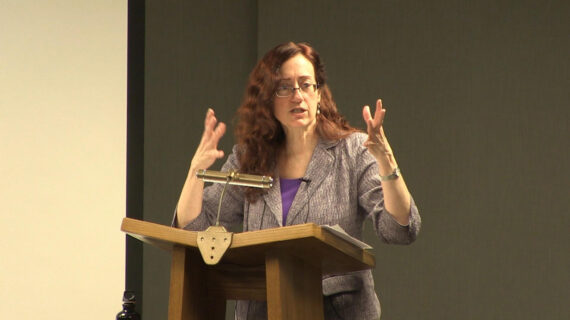
Elizabeth Lapina, Assistant Professor, Department of History, UW-Madison, joins ”University Place Presents” host Norman Gilliland to discuss the 11th century wars known as The Crusades. These wars were based on the Christians’ belief that they were fighting for God and doing God’s work.


Copy and Paste the Following Code to Embed this Video:
The Crusades
Welcome to University Place Presents. I'm Norman Gilliland. Although they happened eight or 10 centuries ago, the Crusades still have an effect on the way Muslims and Christians think about each other today, and they have an effect on our thinking about the relationship involving church and government and warfare. We're going to see how they all began and how we came to the state of legacy that we have regarding the Crusades today. With our guide, Elizabeth Lapina, who is a professor of history at UW-Madison. Welcome to University Place Presents. Hello Norman, very happy to be here. Is the Crusades something that we need to define? Absolutely, absolutely. Crusaders themselves did not call themselves Crusaders, so it's a name we've imposed upon them, and historians are still arguing what exactly Crusades were. So the basic definition of Crusades is they were wars that started in the late 11th century whose participants believed they were fighting for God, they were doing God's work, and this was actually something very new, something that emerged with the Crusades. Christianity always had a bit of an ambivalent attitude towards violence and towards warfare. There were very few pacifists, absolute pacifist Christian theologians, so most Christian theologians accepted violence, but they did so reluctantly. Well yes, that's not exactly a Christian tenet, you know, violence, unless you want to interpret the Scripture in a particular way. Yeah, absolutely, yeah, mmm-hmm, and here, St. Augustine, who is sometimes considered to be the father of the Just War theory, he is characteristic, and I'm going to quote from The City of God, his most famous work written in the 5th century, and he said, "The wise man "will wage just wars, "but if he remembers that he is a human being, "he will lament the fact that he's faced "with the necessity of waging a just war." So it's something you did, but something you were supposed to be pretty sad about. Also, even if you fought in a just war as a soldier, you were still sinning, you were still committing sin. So First Crusade, late 11th century, if we go back through they years to the conquest of England by William the Conqueror-- Battle of Hastings, I think we have it here. Battle of Hastings, yes, 1066. There, all the Normans of course, believed they were fighting a just war, and actually they had good grounds for believing this. -
Norman
When you say a just war does that imply a defensive war, that you're not striking the first blow? -
Elizabeth
They were getting back something that was their own. -
Norman
Uh-huh. -
Elizabeth
And William the Conqueror assured that his war would be seen as just, he actually managed to get Papal approval for this war, and when they invaded England, his army carried a Papal banner as they invaded. Really? So what was the connection? Well, William believed that he had the right, that Edward the Confessor made him heir to the English throne. But there was some kind of religious justification though if he was carrying the Papal banner? He received Papal approval. The Pope agreed that his claim to the throne of England was just and Harold's was not just. And the Pope would routinely get involved in what would appear to be a secular squabble? From the 11th century on the Papacy in general started getting involved more and more in lay affairs. From the 11th century on the Papacy was becoming more and more active. But still, even though it was a just war, and the Pope actually said this is a just war, Norman bishops imposed penances on Norman soldiers. So if you fought in this Battle of Hastings, you still had to do penance, you still had to go on bread and water for a few days, or pray. Even though it was endorsed by the Pope. Even though it was endorsed by the Pope. So even if you were fighting a just war it was still sinning. And with the Crusades, everything changed. Not only Crusades was a sinless war for all the participants, it was a salvific war. It was a war that erased your previous sins. It was a holy war. Who says so? Well the Papacy said so, and the participants genuinely believed that. And what inspired the Papacy suddenly to have this shift of thinking about war and its justification? Well once again the Papacy never explained clearly why Urban the Second preached the First Crusade at Clairmont so we can only guess. So the Papacy as I've mentioned was expanding its influence over lay society, so this was one way to expand its influence and also to channel knightly violence to what the Papacy believed was a worthy goal. So instead of fighting each other, they would go away and fight Muslims. And another fact that was really important, the Papacy wanted to reunify the churches. It had that split, hadn't it, back, just actually, not more than about 30 or 40 years before this, of East and West. Yeah, Eastern Christians refused to accept that the Pope was the head of all Christians, so it was a major bone of contention and the Papacy wanted somehow to incite them to accept Papal primacy. So it's always a good strategy, it's certainly a long-standing strategy when you have division at home start a war abroad, unify your people. And that was behind the strategy of Pope Urban the Second. Well it just wanted knights to fight against infidels instead of fighting each other, basically. Was it in any sense a defensive war? I mean, were the Muslims encroaching upon what were considered Christian territories? That's a good question. The catalyst for the First Crusade, the catalyst for Urban the Second preaching the First Crusade at Clairmont was a request from the Byzantine Emperor in Constantinople for help. So he asked for help, but what he wanted was 200 knights, 300 knights, 500 knights, at most, tops, because the Byzantines, like the Romans, liked to fight their wars with mercenaries, they liked foreign troops. So they asked for mercenaries, they did not ask for 100,000 people marching across their lands. So this was a catalyst but it was not a cause. There was nothing really in the Middle East, going on in the Middle East that provoked the First Crusade. Jerusalem was in Muslim hands since 637, so, for four centuries before the First Crusade. So if this was a response, this was a really delayed-- It took them 400 and some odd years to get around to. We have an image I think, representing Jerusalem or the Middle East at this time. -
Elizabeth
Yeah, so the circular vision map of Jerusalem, and the main building there for Christians, for medieval Christians, the Holy Sepulchre, of course the empty Holy Sepulchre of Christ, so this is a late 12th century image from Psalter. So even though Jerusalem was in Muslim hands, Christian pilgrims were still going to Jerusalem from the 7th century on, with very few interruptions. And without any kind of resistance from the Muslims in control. Christian pilgrims brought cash to spend. They were a major source of revenue. And in a broad sense, tourists. Absolutely, absolutely, yeah. So no ruler of Jerusalem could afford to stop this source of revenue. So pilgrims were going to Jerusalem. There were some moments of trouble, but they were moments. So the norm was pilgrims were welcome to Jerusalem. So Crusades were not defensive wars in any way. At one point did somebody say, well, as Christians, we must retake the Holy Sites of Christianity? Did anybody ever say that? Was that a goal of the Crusades? Absolutely, well when Pope Urban the Second, he preached at Clairmont he mentioned Jerusalem, yes, it was definitely a goal of the Papacy. -
Norman
To reoccupy-- Yeah, and Jerusalem was so important for Christians, such a powerful image, such a powerful rallying image. Yeah, so Jerusalem was there from the very start. Absolutely. What sort of incentives then, did Christians, individual Christians in particular, have to participate in these Crusades? I mean, was there a implied punishment if they did not participate in these Crusades? Oh, absolutely not, actually, most Christians didn't participate in Crusades, so a small percentage of Christians went on Crusades. Also it's important to note that the relations between Church and people was always that of negotiations. There were many cases when the Papacy said something and everybody just ignored it, ignored it completely. Well imagine that, that never happens today. Of course not. So, this time, the call was not ignored, so 100,000 people actually answered the call. And once again we can debate the motivations but one can never know exactly the motivations of all the people. One motivation that was secondary was desire for financial gain. That was not an important motivation. Let's go do a little looting? Or grab some territory maybe? Well nobody got rich on Crusades. It was a very, very expensive venture. It was much cheaper to stay at home. It put a huge financial burden on individual Crusaders, on their families, sometimes even on entire kingdoms. And very few people were better off financially after Crusades then before. And one could say, well, with the First Crusade, they didn't know that. -
Norman
Right. But they knew that after the First Crusade and they kept on going and going and going. What part does a sort of martyrdom play in this? Oh yeah, martyrdom, yes. So financial gain was not important, but it seems that it was really hard to make it into heaven in the Middle Ages, into paradise. It seems that most people believed that monks and nuns, most of them, many of them, went to paradise. If you were a knight or a knight's wife, most probably you did not make it to paradise. Where did you make it to? You went straight to hell. Oh, to hell. This is an image of it here, too, it doesn't look very enticing for a knight and his lady. -
Elizabeth
Yeah, and you would see those images all over Europe. All over in your parish church you would see those images, of suffering, of hell. -
Norman
Is there some implication then that by participating in the Crusade you might avoid this? Or otherwise what incentive would you have? -
Elizabeth
Oh yeah, absolutely because not all knights could join monasteries, could become monks or wanted to become monks or nuns. Here was a chance for them to continue doing what they were best at doing, fighting, and they increased their chances of making it to paradise. So this was just like becoming a monk but in a way, better. And one of the chroniclers is very clear that this was a new way to gain salvation. So this was a moment of change. So before you couldn't gain salvation by fighting, now you could. So this chronicler, Guibler of Nogent, I'll just quote him briefly, he said, "God ordained Holy Wars in our time." So something new happened in our time, Holy Wars happened, "So that the knights and the mob", so, the common people, "who were engaged in mutual slaughter "might find a new way of earning salvation." The participants, you mentioned 100,000 of these Crusaders coming from all parts of Europe I guess to the Middle East, how organized were they? I mean, and how much could a peasant hope to offer the cause? He couldn't afford to arm himself barely, let alone raise an army. Well, it was 100,000 people, maybe more, from all over Europe, from Spain, what is now France, Italy, Germany. -
Norman
Scandinavia? Scandinavia, absolutely. So in a way this was the first Pan-European enterprise, the first Western enterprise. Some say this was the time when the West was created, was born. And not only peasants particpated but women also went in very large, large numbers. -
Norman
In what capacity? As Crusaders. Really, I mean, with swords in hand? Well, a Crusading army of course included a minority of soldiers and well, as any army, an army's not just composed of fighters. -
Norman
Of course, they have those sort of so-called camp followers. Camp followers or auxillary aids of all kinds so women, poor women could work as cooks or as de-licers, or a washer. That's a job you don't see a lot today. Washer-women, etcetera, So if they couldn't pay their way to Jerusalem on their own, they could work their way, and of course there were prostitutes, as well. What kind of routes did they take across Western Europe into the Middle East? What were the favored ways of getting there? Most of the time they would actually walk, or if they were lucky ride across Balkans. So it's not an easy journey. So they would gather in Constantinople and then they would be, and they would advance into Muslim lands and walk south. I assume there was some kind of a seasonal component to this? Oh yeah, they suffered horribly from weather. There's a letter from one Crusader, I think back to his wife, he said, "Well it's supposed to be the Middle East, "it's supposed to be warm, "but we are freezing here, it's horrible!" So yeah, and it was actually very, very disorganized as well because many people went without any clear leader, and also there was no single leader, and there was a lot of squabbling among the leadership of the First Crusade who would-- You mentioned leaders though, were there actually monarchs? I mean, we know for example that Richard the Lionhearted was one who participated at some cost to his country, in the Crusades. I gather there were others, too? Not in the First Crusade, but the French monarchy really got into it, so generation after generation of Crusaders, which actually goes back to motivations, why they'd go. After the First Crusade it developed family traditions of going on Crusades. They would just go, that's all you need! So your father went or your father-in-law went, there was pressure for you to go, to be worthy of your ancestors was a very important concept-- Whatever their original motivations might have been. In the Middle Ages, to win glory, to be worthy of your fore-fathers. Was the idea then actually to come back, in the sense that you're not gonna just permanently occupy this portion of the Middle East, but you'll at least commute to the homeland occasionally? Well, it really depended. Some actually wanted to settle there, and among the people who were better off after the First Crusade were those settled in the Middle East and who established, well for example, Bohemond, who was a nobody back home, established and became a Prince of Antioch. He established the principality of Antioch. Most went back and it was a constant problem for the Latin States. They lacked man power, because Crusaders would come and then they would leave. So it was something you did for a couple of years, you wiped away your sins, and you went back to whatever you were doing before. Just pretty much whatever you did over there for a couple of years would help to wipe out your sins? Yeah, mmm-hmm, you fought for Christ, you did great sacrifices there. Now we have an image here which implies that the cause is bigger than the individual. Is that what we're seeing here? -
Elizabeth
Yeah, mmm-hmm, so, the desire to gain salvation was one very important motivation. Another important motivation was to fight in a bigger fight, in a fight that was bigger than yourself. A fight between good and evil, and this is what was characteristic of Crusades. It was really a defining moment of Crusader mentality, of us against them, good, of course us, we're good, and them being evil. -
Norman
They're evil because they're not believers. -
Elizabeth
Because they're not Latin Christians, yeah, basically, yeah, because they're not with us. And they saw this fight continuing from the beginning of time 'til the end of time. So the image on the screen is actually from an Old Testament, commissioned by King Louis the Ninth while he was on Crusade, while he was in Acre, and it depicts Mattathias Maccaabee, Mattathias Maccabeus, resisting Greek attempts to impose the worship of Greek gods on the Jews. So the Maccabees fought for the law, against this imposition of idol worship, what they say is idol worship. So here we see Mattathias Maccabeus killing a Jew who actually agreed to the sacrifice to the idols, something that Greeks imposed upon them. But what's interesting about this image is that the Jew, the apostate Jew, actually doesn't look like a Jew, he looks like a Muslim, who is worshipping an idol. So here the painter drew a parallel. Before Israelites fought wars that were pleasing to God, fought for the law against their enemies. They were the force of good, the enemies were the force of evil. Today we're fighting the same fight. Today Crusaders are fighting the same fight. Muslims are the new incarnation of Pagan Greeks, and were fighting against them, well not for the law, we're fighting for Christ, but it's part of the same battle. So it's the duty of every Christian to fight in this battle. But when you bring in the Jews, I mean it's not that they were in control of these Holy Sites, far from it, I would think. But why suddenly then the Jews are by extension an enemy just as being non-Christians? Well, there were different Jews from a Crusader's perspective. There were the real Jews, and actually who were often victims of Crusader violence. So with the First Crusade, the first instance of violence was against the Jews. There were horrible massacres of the Jews in Northern France and in the Rhineland, what is now Germany. But at the same time the Crusaders called themselves the New Jews, the New Israelites, the New Maccabees, so because they wanted to be part of history, of this continuum of history. And another moment that Crusaders looked back to was the early Christian period, when Christians were martyred by Roman persecutors. -
Norman
Right. And they saw this as a prototype of Crusades, strangely. They saw themselves as the new martyrs, and Muslims being the new incarnation of Roman persecutors. I mean it seems very strange to us, that's the way they thought. Here's one quotation from the chronicler I've quoted before, Guibert of Nogent, and he describes a typical scene of Crusader violence. So Crusaders here are pursuing fleeing Muslims and he's writing, "Swords became dull "with cutting so many limbs. "Here they cut a head, here a nose, "here a pair of ears, "here a belly sliced open", so Crusaders were really-- The idea was to kill and perhaps inflict the maximum pain in doing so. Yeah, so really, they're defeating Muslims and killing Muslims. And he's saying, "While I do not say that Crusaders "were brave as lions, they were not brave as lions, "they were brave as martyrs." Brave as martyrs? - "Brave as martyrs." Even while they're killing other people. It's in the same passage. So, before, the way to serve God was to be a martyr, to proclaim your faith, to die for your faith. Now it became possible also to kill for your faith, and the two actions, maybe strangely to us, became similar in their eyes. So, if you can kill Jews right there in France or Germany, was the Crusade even necessary? Was it even necessary to go all the way to the Middle East to get your redemption? Well with the Jews, it was never sanctioned by the Church. So the Church was always against murder of the Jews, killing of the Jews, because it was from the early Christian period, there were debates on what to do with the Jews. It was decided by theologians such as Saint Augustine that they should be allowed to live in Christian lands and they should be allowed to worship. But Crusaders did not, were not theologians, and, it really, it made sense to them, and they explained their motivations very clearly, just a quotation here... or maybe not. They were saying, well why are we going to the Holy Land to kill infidels, Right, right. Here are non-Christians right in our back yard. So yeah, they explained this by the Jews being part of them, and not part of us, and anybody who is not part of us was them and could be killed. We identify, not just one, but a series of Crusades. That implies that there was some slack time in between? How did that come about that these kind of pulsations of Crusading activity? Well the numbers are 18th or 19th century inventions, so they never numbered the Crusades, and actually some major expeditions should have been probably numbered and were not. But yeah, it took some organizing. They realized they couldn't just send people off, people shouldn't just be going off, they should organize the army, and once they started sailing across the Mediterranean you had to organize a fleet, you had to organize transport. Also, royal leaders of Crusades emerged, so it took some time organizing Crusades. So those numbered Crusades are those well-organized Crusades. Did they tend to be organized then by nobility? Well it really depended on the Crusades. Well for example, the Crusades of Louis the Ninth, they were organized by him, they were led by him. He was a clear leader, it was a very well-led, well-organized Crusade. The third Crusade, we've mentioned, there were several leaders, Richard the Lionheart and Phillip Augustus who hated each other's guts, who fought, actually, on the continent. So it really varied on Crusades who organized them. But again that does imply, Elizabeth, that these Crusades were, at least in kind of a de facto way, an organizing, a unifying principle for Europe. In other words, if you have two people who can't stand each other, who are none the less united in this common cause, it does have that effect of unifying an otherwise disjointed continent. Oh absolutely, yeah. Well in the 12th century, from the 12th century on in general, the continent was growing together. It was the beginning of Europe in a sense, with Gothic architecture for example. Where cathedrals began to look similar whether you were in France or in Prague, or with chivalry, which was a culture, was common-- We have to get into that. Common, once again, to all the nobility whether you were in London or Naples. -
Norman
Give us a history of chivalry. History of chivalry emerged in the late 12th century or so. The connection with the Crusades is still being debated, to what extent Crusades contributed to chivalry. But chivalry was a transformations of knights basically from thugs to soldiers who imposed rules upon their own behavior, who tried to follow those rules, a sort of code of conduct. Does the word honor come into play at all there in terms of chivalry, the sense of, well, to act in a noble way, to at least, toward your allies? Well, yeah, honor was very important in the Middle Ages in general, yeah, so it's not some new thing. If you read Beowulf, honor is important. -
Norman
Oh yes, right. Honor is important is there as well. But here was a new image of an individual knight on his lonely quest, the image of a knight serving a Lady, and that's-- And how does that tie in? The sort of fealty to women, in terms of chivalry and the Crusades? Where does that strain of the thinking come from? With Crusades, what was very important was service. So you're serving God, serving the Virgin, serving your Lady. Okay, so it's the connection between the Virgin Mary and the Lady at hand, and a nobleman. Yeah, mmm-hmm, or just the idea of service. And this rendered knights as elevated status, because they were serving. They were not doing it for themselves. You get in some interesting logic, don't you? Oh yeah, I love it, yeah. You're serving yourself by serving others, in effect, you're elevated by serving others. Yeah, mmm-hmm, yeah. From a military standpoint then, and we're talking over the course of a couple hundred years I realize, but, militarily how did the Crusades proceed? In terms of strategy, was there strategy? Well they conquered Jerusalem, they lost it, they tried to re-conquer it, and then they lost all their territorial possessions on the continent, so it was a complete disaster. Militarily it was a complete disaster. There was no trace of Crusaders' presence after 1291 on the continent. Were they mostly laying siege to these places like Constantinople and other sites in the Middle East? Was that essentially what was going on? I mean, the Muslims who obviously had inhabited that area, as you say, since 637 at least, had to be well-fortified and well-entrenched and fighting a defensive war. Well, they established the Latin States, several Latin States, the Kingdom of Jerusalem being the most important, and then it was just an ebb and flow. Sometimes it was successful, sometimes they would launch offensive campaigns, often there were on defensive, towards the end they were mostly or almost always on the defensive, and actually one contribution of the Crusades was the construction of castles, major technological advances in the construction of castles. Yeah, suddenly they seemed to sprout up all over England by the time you get to the 11th century, and I suppose France, too. Yeah, mmm-hmm. -
Norman
And that's an outgrowth of the Crusades? It was related to Crusades, yeah. Because when the wars became more and more defensive, increasingly defensive in the Latin States, they decided to build bigger and better castles that could withstand very long sieges. So we have castles with multiple walls, rows of walls, and that was special spaces for provisions, with cisterns, etcetera. Did we see an extensive use of things like armor and catapults and things that we associate with the Middle Ages? Oh yeah, absolutely, yeah. Well with catapults it was always the dialogue between the defensive technology and offensive technology. So these new castles were supposed to withstand better, bigger catapults, and also you could put bigger, better catapults on the walls and defend your castle in that way. Yeah, you definitely see a lot of that with the Crusades, and unfortunately, some of the castles, Crusader castles still standing, suffered some damage in the Syrian Civil War, and some of them are probably still in danger. Did this conflict then pretty much continue throughout this 200 year period? When we think about Crusades, we think about Crusades in the Middle East, but actually Crusades were a much bigger, a bigger deal, the same idea that you could fight wars for God extended to other theaters, and the Papacy actually authorized Crusades in many other areas of Europe. The first Crusades they authorized was in the Baltic Frontier, where you still had polytheists, so there was expansion in the Baltic region became Crusades. That couldn't have been too much of a contest I would think if you have these polytheists who are, they can't be nearly as numerous or well-armed as the highly technological Crusaders. They were pretty good, actually. Oh, were they? - Yeah. -
Norman
Hung on pretty well? Hung on, yeah, very well. And eventually with the Baltic frontier, eventually the Crusaders ended up fighting against the Russian Orthodox, as well. I was wondering how the Russians would play into this. That's one theater of Crusading warfare. The war in Spain, Spain is special situation because Muslims and Christians were living side by side in Spain for centuries before the First Crusade. But before Crusading started, there was still a lot of violence in Spain. It was still a very violent place, but religion did not determine whom you fought, so if you were a Christian king, you would never hesitate to go, march out, help your Muslim ally against another Christian king who was probably your cousin. Or if you were a Christian nobleman, you would go and fight for a Muslim ruler for a few years. So religion was an important factor but was not a factor that determined who your enemy was and who your friend was, or who your ally was. And with Crusades, Spain was becoming to look more and more also like a theater of Crusading warfare, of us against them, Christians against Muslims, so that's another theater of Crusading warfare. Also, the Albigensian Crusade, a crusade against heretics, fought in Southern France. It was a Crusade against heretics. Well, first of all, heretics survived those Crusades without much problem and actually were finished off by the Inquisition, later, and Christians fought on both sides of this Crusade, because knights coming from Northern France, they believed they were fighting for Christ, fighting for God, they were Crusaders, locals believed they were fighting off an invasion. So the Christians on both sides, fighting in this Crusade. So still a very fragmented Europe. Yeah, yeah, oh absolutely yeah. Despite this general sense of a common enemy to the East? Yeah, mmm-hmm, yeah. Another theater of Crusading warfare was in the south of Italy, in Sicily, and there you had Christians fighting both sides, no dogmatic differences, no non-Christians involved. So they were fighting over what? Land, territory. Just plain territory? But one side was calling themselves Crusaders, and the Papacy said these are Crusaders. So Crusaders expanded everywhere. Wherever you looked in Europe you had a crusade going on. Kind of a Crusading free-for-all? So this idea that violence could be pleasing to God was very contagious. Any miracles claimed by the Crusaders in their righteous struggle? Oh yeah, plenty, plenty! So Crusades were extremely brutal and they suffered a lot, Crusaders themselves, in the First Crusade and other Crusades. They inflicted extreme violence on others. We have descriptions of children being killed, rivers of blood running down the streets of Jerusalem, but at the same time, the more violence that was going on, the more suffering on the side of Crusaders and the more violence they inflict on others, the more they kind of became convinced that God was on their side. And one of the most important miracles was the miracle of intervention of saints. So in one of the battles, Crusaders believed that they saw saints rushing from the hills and joining into the battle. -
Norman
I think we have that image here, we have an intervention here. -
Elizabeth
Yes, so on the left we have Saint George identified by an inscription with a cross on his banner, with a cross on his shield, followed by Saint Demetrius, and they are fighting against Muslims. So if you have any doubts about your war, about the violence you're exercising, if you have saints fighting next to you, your doubts are gone. So there's no question that God is fighting for you because of course it was God who sent those saints who had been dead for hundreds of years. I think I heard you mention a couple of names, but I believe there were then some actual chroniclers of the Crusades? Oh yeah, actually we're very lucky with the sources, for the Middle Ages. We have plenty of sources of Crusades. So actually three of Crusaders wrote chronicles, three participants of the First Crusade wrote chronicles of the First Crusade. So the First Crusade was actually the best-documented event, the most chronicled event of the Middle Ages. So we're talking about the late 11th century, then. Yeah, late 11th, early 12th century, yeah. And of course we have those beautiful visual sources, such as the depiction of Saint George that we have just seen. So what kind of coloring, point of view do we get form these chroniclers? Is it all talking about this just war, or is it a more factual historical account? Well in the Middle Ages we don't have factual accounts. It's all tilted. Yeah, everybody has an agenda. Sometimes it's a well-hidden agenda, but it's our job as historians to understand what agenda they're pushing on their readers. -
Norman
And know how to interpret it then. Yeah, and when we read some of the accounts, of course of the brutality and for example massacres of babies, of suckling infants, there are historians, some historians say, well, it must be a critique of Crusades. -
Norman
That it couldn't really have happened. That it cannot be a positive description. And I'll say well actually, they're celebrating. They're celebrating the power of Crusaders. They're celebrating what the force of good has done to the force of evil. What would have caused then, after 200 years, the Crusades to come to a close? Well it's hard to say, I think Louis the Ninth is to blame, because he organized, launched a very well-organized, well-financed Crusade. it was a perfect Crusade that achieved absolutely nothing. A huge strain on the kinddom, and he was a saint himself, he became a saint, so he was a saintly person, very respected across Europe. So if he couldn't achieve anything, then that demoralized other monarchs. And plus the Hundred Years War started and things got in the way. Too many other wars, I'm sorry, I have a conflict in here, I can't do the Crusades anymore. Yeah, exactly, yeah. Did they provide then, the Crusades, it sounds as if they did, Elizabeth, this sort of vacuum in a way? I mean you have all these warriors away from the home front, it sounds like an opportunity for somebody else to come in and take advantage of the situation. In the Middle East you mean? Well, either in Europe or the Middle East. I mean anytime you have a whole force diverted in one direction, by definition they can't tend to business elsewhere. Well actually the Latin States had been struggling for awhile, and the reason why they'd been struggling is because Muslims were unified. So Crusaders were strong against a disunited enemy, but once you had Saladin emerged, Mamelukes, they had very little, very little chance. Saladin being a very strong Muslim leader with a united backing. Yeah, absolutely, yeah. And he was an effective general who was winning battles. Who was responsible for taking Jerusalem back from the Christians. And at that point it was considered, well, it's just too much trouble, too hard to take it back now, for the Christians? Oh they tried, they tried with Richard the Lionheart, they launched the Third Crusade. So after Jerusalem was taken, still Crusades lasted for another hundred years, because Acre, they still had Acre, they still had Antioch, there's still other places from which to-- Was Malta a part of this at all, out in the Mediterranean? Malta, yes, yeah, so even though continental possessions were lost in 1291, still you had a lot of Western Latin Christian presence, in Greece and on the islands, that continues, on Cyprus, for example. So that was one of the legacies of Crusades is continued presence. I think to this day, you still have what, the Knights of Malta? Absolutely, yeah. - A remnant of the Crusades. I was a little curious about Richard the Lionhearted. This would be, let's see, 1189 I think he became king, was king for only 10 years, in part because, what, they had to ransom most of the royal treasury, wherewithal, to get him out of prison. What was his story? Acre, there was a siege of Acre going on, so it was a moment, an important key moment in the history of Crusades, because after Saladin conquered Jerusalem, there was demoralization in the East. Eventually there were some attempts to rally, and to stop Saladin's advances, and he decided it was a good moment to come in and intervene. And one thing he did on the way was he took Cyprus from the Greeks, and that created a very long-lived kingdom on Cyprus, Latin Christian kingdom on Cyprus. So he campaigned very effectively in the Middle East, but he didn't try to retake Jerusalem. Well, what was he after, then? Well, he solidified the remains of the Latin States, but he didn't want to risk his army marching to Jerusalem, because it was a constant conflict. On the one hand, here with the Knights of Christ, Christ is on our side, we can expect saints to help us, but then there are no wells on the way to Jerusalem. Our lines of suppies, we'll not be able to maintain them. Actually he had a fairly pragmatic approach. Yeah, and sometimes he's blamed. He was blamed at the time by some people of not going there and trying to take it anyway. And he was captured, what, on the way back from the Crusades? On the way back, yeah. And also Jerusalem actually, it was important from the religious perspective as a symbol but actually it was not that important economically or militarily. If he would have taken it, it would have been very difficult to defend, and it would not have been a huge gain other than just of a symbol. Yeah, and on the way back he was taken captive by his former Crusader ally, and held for ransom. And it pretty much bankrupted England for a year or two, and then his, I don't know if there's a connection direct or indirect to the Crusades, but then of course after Richard the Lionhearted, you have King John who was not very adept at dealing with the people at home, and then we get from that the Magna Carta. Yeah, yeah, well you could say Magna Carta is an indirect result of Crusades, because, well, Richard bankrupted England when he was being taken prisoner. We have another image here, which seems to represent an aspect of that conflict. Yeah, this is a tympanum from a small church in England, in Fordington, and it just shows how Crusades became important all over Europe. All over Europe it excited people's imaginations. And this one, once again, shows Saint George, with his banner, with a halo, so identifying him as a saint, fighting against Muslims and defeating Muslims. So Crusades had a huge impact even on people who didn't go on Crusades. Because people were thinking, yes, once again, the struggle between good and evil is taking place in our times, and the good is winning. And actually some people believed that this was part of the last fight between the forces of good and evil, at least they hope-- Sort of like Armageddon? With the end of the world, yeah. That once they conquered Jerusalem it will usher in the Second Coming, and the end of the world. And this was actually, to go back to the motivations, might have been one of the motivations, because if Armageddon is going on, you want to be part of it. You wanted to fight for Christ in the last battle. That would account for some urgency on the part of some of these Crusaders. I know you're interested in particular in the difference between what the Crusades really were, and what the image of them became. So how would you contrast those two? In other words, the Crusades almost like as a, as an idealized sort of thing. I mean, did it become idealized in later years or was it always considered to be just sort of a bad idea? Well, it really depends. It really depends on who you were, because for example, many Protestant historians, 17th, 18th century, they criticized the Crusades, of course, as Papal wars, as a horrible Catholic thing. So it really varied. With the rise of nationalism, and with the beginning of Belgium for example, with the rise of nationalism in England in the 19th century, rise of nations, Crusades were celebrated. So we have a statue of Richard the Lionheart in front of the English Parliament. So it really varied, there was really an ebb and flow. But of course we cannot forget that they were all brutal, brutal wars. When I teach Crusades I really focus on the massacres of the Jews in the beginning, because the Jews were a civilian population, not part of the fight in any way, and they were just killed. Entire communities were destroyed. It was the first action that the Crusaders did, and some historians say, well, it's just the mob, an unruly mob. Right, and out of control. All they want is money, and the Jews had some movable wealth. But actually the ideas that spurred Crusades to kill the Jews were similar to ideas that spurred them to go to the Holy Land. So it was us against them mentality, which was actually new, it was not characteristic of the Middle Ages in general, it was new of Crusades. Now you've made a connection here between the Crusades and an event which took place about 300 years later, extending the Crusades thinking into the New World. Oh yeah, absolutely, so this miracle, this key miracle of the First Crusade was the intervention of saints in battle. And before there were some occasions of saints intervening, but now it became a very popular miracle, as you saw with the images, they were quite numerous, and this miracle became very popular in Spain. So in the Holy Land it was Saint George, in Spain Saint James began to be credited with every single victory that Christians won, or almost. So many narratives emerged of him appearing in the battlefield and helping Christians against Muslims. So it was the appearance of Saint James, the Moor Slayer. And once the conquistadors went to the New World, they took Saint James the Moor Slayer with them, but of course as you see in this image, the Moor Slayer became the Indian Slayer. So this represents the fact that the idea that God is fighting on our side, that saints are fighting on our side, that our exercise of violence is not just just, but actually a holy exercise of violence, it came to the New World, so this is a legacy of Crusades. After that, after the 16th century, the Spanish incursions into the New World, the legacy of the Crusades? How are they still with us? Well one thing is certain, even though we cannot blame Crusades for all the ills of our world, one thing is certain is that relations between Christians, well, Latin Christians and Eastern Christians, Latin Christians and Jews, and Latin Christians and Muslims, were much worse after the Crusades then before. So that's for certain. And the idea that some violence, even against civilians, could be holy, also, was very difficult to get rid of it. That wars can not only be just, but can be holy, with God fighting on our side. So now we would look at them, as the Crusades being, perhaps a very colorfully misguided couple hundred years. Well, yeah, well, very brutal, a new type of war, yeah, and it's, well, wars before were brutal, and wars after. People tell the Middle Ages were brutal, I say well you're studying the 20th century, so, talk about brutal! But just feeling people feeling good about brutality, that was something new, and something quite, quite disturbing. That came of out of the Crusades. Well, Elizabeth Lapina, thank you for walking us through the Crusades. Thank you very much. Very enlightening. My pleasure. I'm Norman Gilliland, and I hope you can join me next time around for University Place Presents.
Search University Place Episodes
Related Stories from PBS Wisconsin's Blog







Donate to sign up. Activate and sign in to Passport. It's that easy to help PBS Wisconsin serve your community through media that educates, inspires, and entertains.
Make your membership gift today
Only for new users: Activate Passport using your code or email address
Already a member?
Look up my account
Need some help? Go to FAQ or visit PBS Passport Help
Need help accessing PBS Wisconsin anywhere?

Online Access | Platform & Device Access | Cable or Satellite Access | Over-The-Air Access
Visit Access Guide
Need help accessing PBS Wisconsin anywhere?
Visit Our
Live TV Access Guide
Online AccessPlatform & Device Access
Cable or Satellite Access
Over-The-Air Access
Visit Access Guide




Follow Us