

 Passport






CRISPR: Curing Genetic Diseases
06/09/15 | 44m 47s | Rating: TV-G
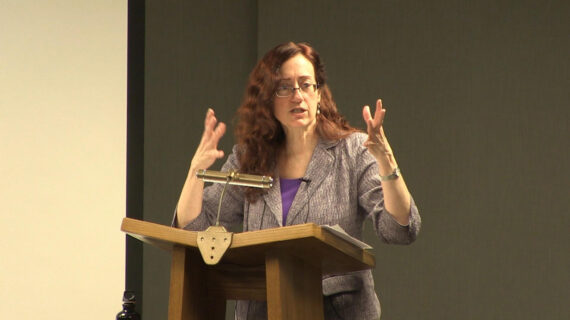
Dustin Rubinstein, Facility Director, Translational Genomics, UW-Madison, discusses the innovative CRISPR-Cas9 system being used to transform genetic research. The systems is one of the fastest growing techniques currently being used in genetics.


Copy and Paste the Following Code to Embed this Video:
CRISPR: Curing Genetic Diseases
Welcome, everyone, to Wednesday Nite at the Lab. I'm Tom Zinnen. I work here at the UW-Madison Biotechnology Center, I also work for the UW-Extension, Cooperative Extension, and on behalf of those folks and other co-organizers, Wisconsin Public Television, the Wisconsin Alumni Association, and the UW-Madison Science Alliance. Thanks again for coming to Wednesday Nite at the Lab, we do this every Wednesday night, 50 times a year. Tonight, it's my pleasure to get to introduce to you my new colleague, Dustin Rubinstein. He works here at the biotech center. He was born in Schaumburg, Illinois, went to school at Glenbard East in Illinois, went the to the University of Illinois. (laughing) Then he saw the light and went to Cornell. (laughing) And got his PhD there, and did a post doc, and then came to the University of Wisconsin-Madison. Tonight he gets to talk with us about this pretty darn amazing new technology for gene editing called CRISPR. There's so many bad jokes to go with that. I won't give you any of 'em. (laughing) Leave those to me, yeah. Please join me in welcoming Dustin at Wednesday Nite at the Lab. (audience applause) Hi everyone, thanks for coming out. How are we on sound, good? Alright, awesome. I'm really excited to be here today. I'm kind of lucky enough that I get to sort of be on the front lines of CRISPR, being at the biotech genome editing facility, being the director there. But, I'm just kinda curious, first of all, how many of you have heard the term CRISPR before reading my title? That's pretty good. Let the record show that approximately 88.3 percent of you raised your hands. (laughing) Approximately, give or take. I mean, I'm guessing if I probably threw out other, you know, fairly detailed molecular biology techniques, how many of you are familiar with those? Probably, you may not hear, I mean, the hands might not go up quite as much. So, I think that is a pretty interesting reflection that, CRISPR not only is really taking off in the research realm, but also people, I think, just I think everyone in general is sort of really interested in this topic. And it's great to see all you people here, to tell you about it. So just, in a nutshell, before we sorta get into in a more detailed sense, well, what is CRISPR? Well, let's put it this way, one of the long standing goals in biology is to be able to readily, and efficiently, and very precisely edit a genome, right? So, and I mean, and just think about what that could give you just from a pure sorta basic biology perspective. You could turn on genes, you could turn off genes, you could add things to genes and really figure out, sorta how genes work to affect traits. From a more biomedical perspective, you could ask, well, if I, does this genetic variant cause a disease or perhaps could I cure a disease just by changing a particular gene. From a sort of bioengineering perspective, you could, you know, really harness the efficient power of biological systems to generate perhaps, maybe whatever it is exactly you want. So really, what I'm trying to convince you here, is that the ability to precisely edit a genome efficiently is a really, really exciting tool and CRISPR is really bringing us one giant step closer to that goal. Before we go there, though, let's kinda take a step back and look at maybe what we could consider sorta the first genome engineering experiment. Some unknown authors, about 10,000 or so years ago, likely either in some of the dig sites in Egypt as well as Western Asia, have turned up that people were cultivating, for example, wheat, you know, many examples of this, but you're familiar with this story. Humans are growing wheat and eating wheat, they find the particular wheat strains that they really thought were particularly yummy, keep those around, and you know, keep breeding those and over time the wheat sorta takes on the traits that they're really looking for. And of course, the wheat can also be cross, can be hybridized with other, sorta similar strains to get sort of increasingly more delicious wheat, to get, you know, from some, maybe, prehistoric grain mush to a delicious croissant, for example. And, you know, that might not necessarily seem like genetic engineering when, you know, it's just sort of at first pass, but let's take a look at what's going on at the genetic level here. So here, it just, looking at the very simple, sort of the very primitive wheat strains, we see that these wheat strains just have two chromosomes, two of each chromosome, just like you and I, and so, di-diploid. But after engineering these new varieties of wheat, they were able to dramatically change the genome of this wheat by making, now the wheat has four copies of each chromosome, and again, by continually modifying wheat up to six chromosomes, six of each chromosome. So... All that is to say, so here, although, you know, they're larging focusing on the traits, and that's not necessarily on the genes or the genetics. Understandably, you know, they didn't quite understand that yet enough, I think it's sort of an early indicator of, sort of where we're trying to go. But before we sorta get to genetic engineering with sort of a modern sense of genetics, let's take a very fast, face-meltingly, blistering time machine ride through sort of modern genetics. We'll be quick, don't worry, it'll be safe, just hold on tight and we'll get there. So of course, Darwin 1859, proposed that traits are influenced by inheritance through small changes over time. Gregor Mendel showed evidence that we aren't just sort of the average mish mash of each of the genetic elements, but actually, sort of an addition of each of the copies of the rules, and for example, the offspring from each individual, you never really know exactly which copy they'll get, you know, they might get the one that makes the wrinkly peas or the full peas, you might get the attached earlobes or the, you know, the free earlobes, right? And then later in 1944, we were shown, of course, no surprise that these, that inheritances was controlled by DNA. I think that's sort of understood, and of course, Watson and Crick demonstrated that the structure of DNA is, you know, the famous double helix, which kinda gave us a good insight as to how DNA might work. So. So, now that we're sort of going through and we're kinda armed with a good sorta modern sense of genetics, the next thing that people wanna do in the second half of the 20th century is, okay, now that we know how DNA works and how it can control traits, how can we tinker with it, right? I mean, that's what every scientist wants to do, get in there and muck it up. So, the first experiment, in terms of genetic engineering, in Paul Berg's group, was, he made use of the sort of lab workhorse virus, SV40, and used DNA scissors, which at the time, was a sort of hot, new technique and opened up the genome by cutting it, then took a piece, and cut the lambda genome, so, of the lambda virus, which is a trickier virus to work with in the lab, cut out a little snippet of the lambda genome, and used some DNA glue to then stitch it together and put that back into the virus, onto the SV40 virus. So, I mean, that's pretty cool now. So, now we're been able to, so this is the first time they've been able to take a genome from one source and combine it with a genome from another, right? So, now we can really stitch, take DNA, and kinda stitch it together, sorta copy and paste it, cut and past it together. And that's all well and good from, you know, just from an achievement standpoint, we did it. But also, what it allowed, was now you could study the lambda virus much more easy by, for example, using the SV40 virus, for example. Similarly, in the next year, this isn't, you know, just viruses, but you could take a piece of animal DNA, for example, the famous, in biology labs, the African claw-toed Xenopus. A little piece of DNA was cut out from the frog and plopped into a bacterial genome. So now, not only, no, it's not just like similar organisms, for example, viruses, but you could take something as wildly different as an animal and a bacteria, and that DNA, you can mix together. So not only again, was that a nice achievement, but what that allowed was to generate whatever gene product you might be interested in, in these bacterial cells. So for example, technology like that led to the really rapid and efficient production of insulin, right? So, rather than needing to extract it from a cow, plasma or something, you could just stick it in a bacteria and make tons of it. And of course, this is, you know, not just in bacteria, you could take a piece of DNA and stick it into, for example, a animal genome, maybe you wanna put it in, take a gene for example, a transgene, and put it into a mouse genome and ask, well, what happens if I increase the expression of this particular gene, how is my trait affected? At the same time, you could take a transgene and plop it randomly somewhere into a fly genome and ask, well, what happens if it plop it in some random spot, and you kinda use it as a fishing expedition, and if you find it, you know, in different versions, you know, if the trait is perturbed in some way, you could then ask, well where did it go? And now you found a new interesting gene. So, all this is to say that, you know, during this sort of second era of genetic engineering, the ability to sort of take genomes and kind of combine them, it was great, but it was also, at the time, it was also a fairly scary notion, right? So, the idea being that, you know, you have these bacteria, and you're taking a fragment from perhaps another pathogenic, perhaps disease carrying bacteria, what could potentially be the consequences of that? Both in terms of, you know, what could potentially be the health consequences of that, what are the potential risks, but also, what are the ethics behind that? So, at the time, Maxine Singer, who had just come off of heading up a very high-profile conference on this topic, actually wrote a letter and called for a moratorium on all this research, everyone put down your pipettes and stop, we gotta talk about this. And that's kind of unthinkable now, that someone could sort of suggest this idea and everyone would sorta do it, but as far as I know, the best of my knowledge, I mean, who knows what someone was doing in their closet, but as far as, I think, is what is widely known, that people actually adhered to this, to the moratorium. And everyone took a moment, took a breath, decided to, that, hundreds of scientists and a couple lawyers would come together to asilomar, I mean, what a horrible place to be, right? (laughing) This nice beach resort in Northern California. But, get together, headed by Paul Berg, and really talk about, really think about and talk about, you know, what's at risk and what's at hand with this new technology. So as I mentioned, of course, you know, what are the risks involved and, so they quickly, they quickly sorta realized that it might be a more efficient use of the time to sorta focus on the risks, and thinking about how to move forward rather than the ethics, they were afraid that the ethics might sort of delay some more, it might be productive to focus on the risk side, rather than spend time trying to come to terms on an ethical perspective. But, what came out of it was actually a pretty powerful set of standards that, you know, the skeleton of which you can still see in a lot of the biosafety protocols that we adhere to today. For example, that biosafety should be something that isn't just something that you casually think about, but it should be a really important part of your experimental design, and that... We could consider, sort of, the risks involved with any particular type of experiment, and kind of cluster those sort of risk pools together so we can treat, you know, the really, really safe things, we can have one set of rules for, and the really, really dangerous things will have another set of guidelines for, and we could kind of preceed that way. And a lot of that, we still sort of use today, in addition to, you know, some other things. So, so... It was certainly really powerful and of course interesting, and really powerful in biological perspective now, to be able to stick these two pieces of DNA together. But, as I was saying, you know, the gold standard for biology is to really be able to come up with, you know, to make the DNA sequence whatever it is you want it to be, right? I mean, it's all well and good to copy some Shakespeare and paste it into William Burrows, but scientists want to make their own genetic pros, right? So, I mean, that was really, that's really the standard. So, that's what, I think, we could maybe refer to as genome editing. So, what might that look like? Let's say you have your gene of interest here, you have a gene and the part that actually codes for a protein, maybe this is a little more complicated than it needs to be, but to say that the part that actually codes for protein is in light gray, that's the actual recipe for the gene product itself. So, what could you do with genome editing? Well, I mean, the first thing you wanna do, of course, is just break the gene, right? So, what happens if I break it? That's everyone is always wondering when they get a new toy. So, you know, you could do something as simple as just disrupt the way that the gene is coded into the DNA, the way that the protein is coded into the DNA. Or you could just kinda go ahead and delete it, but that's a really powerful way for one to ask, well what's the function of this gene in a trait that I'm interested in? Another thing you could do is attach a piece of a little fluorescent beacon to your gene of interest and that would allow you to, if you wanted to know kind of where it's going and who it's interacting with, you know, perhaps like some less creepy version of a genetic stalker. You could perhaps just, you know, tag it with something like a green florescent protein. Or perhaps, something else that you might be interested in, let's say you've gotten genomic sequences back from hundreds of patients who unforuntely have some type of cancer and many of them seem to have a particular variation in their genome, and you might ask, well, maybe it's that change that's actually causing cancer. Well, what if you were to enduce that variant in an otherwise healthy animal, you know, you could then ask, well, what happens? And of course, this is just, I mean, really, the idea here is, you know, these are just a couple examples of things that you could do if you really had that ability to edit a genome, it was really limited by your own imagination. But these might be some of the more kinda common things that people would wanna do. Okay, so that's great, I mean, that's all well and good, but how do you do it? What's your road map? How do you actually go about editing a genome? Well, obviously, I've given away the secret, the secret is broken DNA. So, cells pay really, really careful attention to the integrity of their DNA, to their chromosomes. They spend a lot of resources making sure that everything seems to be checking out, that everything's been done right, that everything's sort of intact. So, one of the nice things about genome editing is, you can imagine that it's a really complex process that probably involves tons and tons of different proteins, but the nice thing is that most of them are already functioning in the nucleus, most of them are already working in the cell, the trick, is sort of convincing them to sort of do our bidding, and that's really... that's really the goal here. But let's start with what happens when you have broken DNA. Well, when you have broken DNA, one thing that could happen is, the cell might say, oh no, I have a, you know, a break in the DNA and think, oh no, I'll just take this end and this end and just sort of stitch it back together, and you know, maybe it adds in a few nucleotides or maybe it shaves off a few. But, in so doing, what's it gonna do is disrupt the way that the protein is coded into the DNA, and essentially, you know, break the gene. And that's one process through imperfect repair. But another really nice, really, really nice sort of precise way to edit a genome is to offer it another template for repair. So, you can see that there's the DS red portion and then there's the two regions that are on either side of it, and those are the same sequence as the area around the DNA break that you made. So, what's gonna happen is, the cells again, are gonna say, oh no, there's a DNA break. So, it's gonna try and find a similar sequence, you know, maybe it's looking for the other chromosome, or who knows what, but if it finds that similar sequence, it's gonna say, oh thank God, I found another copy of the gene, I'll just repair it off this, and everything's okay, I'm not in trouble, I won't get fired from my job (laughing) of keeping the nucleus intact. So, then what it does is it then goes through and sort of repairs out this copy, and you can see that now that, that whole gene, that portion of the gene gets replaced with whatever it is you want there, in this case, we'll say it's a red fluorescent protein. But, you could use that sort of technique to make a change, a small little edit to add in a fluorescent protein to really do anything it is that you might be interested in doing. So then of course, the next question is, okay, well that's great, well how do you make a break in the DNA exactly where you want it and nowhere else? And that is the tricky part. So, CRISPR wasn't, obviously the answer's gonna be CRISPR. But, so CRISPR wasn't the first strategy to come along and try and work this out. Zinc finger nucleases were developed by the Carroll Lab and published in 2005, it was a really nice system, and people used it effectively. The idea being here, that you can see if you, you can sort of tailor make this large protein so that you can customize each one of these little pieces of the protein, so that it will bind to whatever DNA sequence it is that you're interested in. So, that means now, for every couple of base pairs, you needed a whole large chunk of protein, and you had to stitch it exactly to this large piece of protein, which had to be stitched to this, this, and this. So, in the end, and then, so, that allows you to send this protein to that location, and then they attach to it, another piece of protein that cuts DNA. And by, you know, if this piece of protein just cuts one side of the DNA, and then you do the same thing on the other side, now you have a clean break in the DNA, and you can, you know, we can sort of rely on the cells to make the changes that we want. So, as I said, I mean, this works, and many people have made interesting mutants with it. However, the tricky thing is, is making these proteins, you know, for every couple of base pairs, you need one of these large proteins, and you have to stitch them all together. And you end up having this really, really overwhelmingly large protein. And from a technical standpoint, it just turns out it's really difficult to make this, it's really, it takes a long time, and of course, like anything else, time is money. So, it's really, really, expensive to make these, too. So, that means, you know, you can't just sort of flippantly decide, I'm gonna wake up in the morning and delete some gene, I'm gonna make some edit, I mean, it's something that you really have to, you have to have the money in the bank, you have to apply, you know, you have to have secured all the funds, all the resources have to be in place, and you know, it's a much more deliberate decision. So, that's sort of, that's Zinc fingers. It's another sort of similar idea as Talens. Again, it's the same idea, where little pieces of protein, each one is responsible for binding two nucleotides. So again, you have to stitch together chunk of protein next to chunk of protein, next to chunk of protein, and again, you attach that whole thing to a little piece of protein that cuts DNA. And again, this system, you know, worked and people use it, people used it, and some people still use it. And, it cuts DNA where you want it to cut, but, as I was saying it's very tremendously resource intensive to make these things. And that is where CRISPR comes in. So, if we start, we kind of transition now to CRISPR. Let's talk a little bit about CRISPR, and how we sort of got to this spot. It all started with a couple of seemingly-- There weren't a lot of tremendous waves generated when the first CRISPR related observations were made. So, for example, what's first noticed, the Ishino group had cloned and sequenced a little chunk of DNA from a bacteria and found, interestingly, that there are these repeating sequences, as you can see in purple, they repeat, and they're separated by some weird, random thing. But, look how there's that same exact sequence and it keeps repeating, and repeating, and repeating. And it was published, and not a whole lot was necessarily thought about it. In 2005, now we're sort of well into the genome sequencing era, right? So, we have tons of genomic DNA, genomic sequencing information. Multiple, several groups at once, sort of realized, well, those weird, there are those repeats, but those things in between aren't just sort of junk pieces of DNA, they're actually viral, that's viral DNA in a bacteria, like that's pretty strange, what's going on there? And around that time in 2005, it was proposed that, it was proposed by Eugene Cunin, that this might actually be an acquired immune defense system. So basically, similar to our antibodies in vertebrates, and in 2007 when it was indeed shown to be the case, so how does that work exactly? So, when you have a typical mean invading virus, what they do is they inject their DNA into the bacteria, in this case. So, the first player in this CRISPR system, there's a protein here that recognizes the foriegn DNA and chops it up, then some other proteins, what they do is they take those pieces of DNA, and maybe that could be really valuable, and they actually put it in their memory banks, which in this case happens to be, into their genome. So, each piece, you know, these pieces of DNA then kinda take up space and are stored. So now, whenever the bacteria wants, they can go back and kinda remember these sequences, or as Eugene Cunin in a recent radio labs podcast called it, having like a mugshot for each virus, right? So, now, you know, it has this blue mugshot, it can go around, and look around the cell, and make sure, and if it finds that similar sequence, it realizes, oh, I know you, nice try, but you're obviously a virus, and chop it up, and save the day once again. So, that's pretty cool, I mean if I had found that, I would think, wow, that's really fascinating, you know, bacteria, and also at another group archaea of bacterial acquired immune response, much like the antibodies that we have. Luckily, there are people that are much more forward thinking than me, and didn't just think, wow, that's interesting. But, Jennifer Doudna and Emmanuelle Charpentier thought about this, and thought, wait, wait, wait, wait, wait, so we have a system where we can, well, basically thought that this might be the fantastic way to target a break in the DNA right here and nowhere else. Well, how would that work, exactly? Well, I'll say that first, when it was published in 2012, that's really the big boom of the CRISPR era, showed that you could the system, well what is it that they published? So, let's start with your region in the genome that you're interested in here, right? So, you have your target region here, it needs to be adjacent to this PAM sequence, it's just a GG, happens a lot in the genome, you could imagine, there's a lot of nucleotides, GG (Global genome) happens a lot. But, you can choose a target sequence adjacent to that, all you need, rather than generating one of those massive proteins that take a long time to build, all you really need, is to generate a very, very small piece of RNA, and this is really the only varying part of the entire CRISPR system, is just the short piece of RNA. And basically, you can just have that made for 20 bucks, I can get you a piece of guide RNA. This is really cheap, and all you have to do then is just get that fuse to the in varying part. So, this now, you have the guide RNA, you have the Cas9 protein, that, and now the protein's the one that's actually doing the heavy lifting, when the Cas9 protein binds the guide RNA, it then breaks, induces the cuts, and you have a break in the DNA exactly where you want in a really readily, efficient way. Good, okay. So, using the technique I showed you from a hypothetical perspective, but, you know, as I said, these are things that people are doing all the time with CRISPR, right? I'm showing you the same slide again, but it's really easy to disrupt genes, or you could in fact just delete them, you could cut outside of a gene and it's gone, to insert in small pieces or to make small changes. But not only, I mean, again, so really, the kinds of changes that you can make are really limited by your own imagination, you can make the sequence whatever it is that you're interested in. So, not only is it tremendously flexible in terms of the kinds of changes you can make, but it's tremendously versatile in terms of the kinds of organisms that you could use it on. For example, a large number of organismal models just basically, you know, sing "Old McDonald", and you could pretty much, you could use CRISPR on those. And of course, some of the standard, really important basic research models like, fruit flies, and I'm not showing you round worms, and zebra fish, and a number of models, as well as, not just animals, but plants as well. And part of this stems from the fact that, not only is it so easy to make, but it works so efficiently, that rather than having to use an indirect method, that Talens and Zinc fingers often use, you had to sort of get it to work in the cell, and then once you had, you know, just a single cell, then you put it into an embryo, and you hoped that the embryo took up that cell, and then you hoped that that change was made throughout the animal, I mean, that took many generations and lots of time. But here, all you really need to do is simply inject an embryo with the little, the pieces of CRISPR, all the CRISPR parts that you need, and the animal, you can see your change in there. So, not only is it just organismal models, but it's tremendously versatile, as I said, so it works in, for example, cell lines. So, you know, if what you're really interested in is looking at physiology, then you know, you might wanna look at an organismal model, but one of the nice things about cell lines is that they're, for example, one thing is they're really, you can do many, many at once, you could do lots of changes in a dish that has 96 wells in it, and do tons of experiments at a single time. Additionally, you could take, let's say if you had a patient that had some sort of carcinoma, you could take that carcinoma, and you could have it revert, you know, sort of rewind its clock and go away from sort of being an epithelial cell, back to sort of being a pluripotent stem cell, an IPSE cell, and then you can have it sort of reproduce, and you can sort of keep it going in perpetuity in a dish. And then you can ask, you know, now that you have that patient's carcinoma in a dish, you can ask, well, what changes could I make that might, you know, stop the cancer, for example, right? So, it's great and it's really, you know, so, how do you do that? I mean, you could either, you could use chemicals as sort of ushered into the cell, you could zap the cell, you could directly inject it into the cell, there are a number of possible ways to get it in, and they sorta all seem to work. But yeah, so it's really versatile in terms of what, the change you could make, but also the types of cells or organisms you might wanna make it in. And this is, for me, this is sorta my job, this is sorta my job in a nutshell, as being the facility director is, I'm trying to bring this technology to as many labs as possible on campus. So, people who, you know, have their own research specializations may not necessarily be interested in learning the ins and outs of CRISPR. So, what we do here at the biotech center is we allow people then, to come to us, and help them design and execute their CRISPR modifications. So, what's the catch, right? There's always a catch. Well, one of the earlier concerns when CRISPR first came out was, well, yeah, you can induce a break in the region that you're targeting, but is it possible that it's also cutting in other similar locations in the genome. So for example, I showed you this picture, you know, you have your very nicely compact CRISPR system here, but what about, you know, another location, another chromosome where maybe there's just a single difference, is the CRISPR protein, Cas9, is it really, is it still gonna be able to cut there? And this, you know, this isn't a problem just with CRISPR. But, you know, some of the other methods that I was telling you about with Zinc fingers and Talens, this is also something that they're always interested in and concerned about. And some of the earlier studies, I think, in a nutshell, I think what we've learned up to this point is it really depends on sort of the model in which you're working in. So, for example, you know, cancerous cancer lines seem to show a much higher rate of off target cuts in lots of different places, but, for example, looking at mouse embryos, you know, looking at using an animal cell line, it seems that there's a much lower rate of off target cutting. But a lower rate is all well and good when you have a mouse model, but if what our ultimate goal is to, you know, imilurate disease and, you know, improve human health, what's the acceptable number of genes that you might, you know, destroy? You know, in effort of trying to make them healthier, right? So, I mean, it's really something, it's a really important consideration for everyone, basic scientists, biomedical scientists, everybody. But it's also something that, you know, before, we were sort of thinking about any clinical trials as something that's really important to sort of work out. So, another couple things is that, I think the first important consideration is well, just, I mean, the obvious sort of thing is to make sure that when you're choosing a target sequence, make sure that there aren't any other very similar sequences in the genome. And that's sort of the first thing you can do, and then it turns out that, for the most part, other places where CRISPR cuts DNA, are fairly predictive, right? So, as long as you kind of, it seems that you can, we can predict fairly well as to what other places might get cut, so as long as you sort of do your homework ahead of time and you choose a target sequence that is pretty unique, it seems to be less of a problem. In addition, there are all kinds of additions and sort of new fangle developments. The technology that in has the ability to just cut at one site. And I expect that those are gonna kinda continue. But I thought maybe we'd go through one particularly really kinda compelling case. I think it's a nice illustration of what CRISPR could potentially, what it does, and the kinds of things it might maybe be able to do in the future. And that is, looking at a particular liver disease, so it's referred to as Tyrosinemia Type One, it's a highly fatal genetic disease, the problem is that it leads to an inability to metabolize and break down a particular amino acid, as this amino acid accumulates, it's toxic to the cells, and one of the first places to see this is in liver cells, so you get fairly rapid liver failure and the prognosis is not good. So, it turns out that there are a strain of mice that have a similar affliction, and now if we look at sort of the gene sequence, what's supposed to happen is, you can see here that are all these little pieces of protein, and you're supposed to have the seven lead nicely into piece number eight, and that leads nicely into piece number nine. However, if there's a mutation from a G to an A, piece number eight gets skipped, and it goes from piece seven to piece nine, and now the protein that's responsible for breaking down this amino acid is no longer functional, you get the accumulation, and the lethality. So, one of the things that makes this a nice experiment is that there's a mouse that, a mouse line that has the same genetic variant, a mutation from G to A there. So, they use that mouse system. And okay, again here, so, you can see there's the genomic sequence, you can see the A in red, and sorry about the cryptic ssDNA, those are so that the sequence above it is the donor sequence, right? That's the template over which we want it to repair, so if we inject, you know, if we give this mouse the guide RNA, so the Cas9 protein knows where to go, the Cas9, so it can actually cut, and then also, this little donor sequence, so it knows what the repair is supposed to be, then hopefully, you know, you can get the repair you want. So, the application, I thought, was pretty fascinating, by simply taking those bits that we just taked about, injecting it into the tail, so now it's just sort of in the blood. What they were able to do, is actually edit the genome of cells in the liver, and they could go through and look at the liver cells, and they looked like healthier cells, and there was a pretty high rate of cells that actually were transformed from the, you know, the disease, sickly variant, to the new healthier variant, and certainly, part of that is because CRISPR worked, of course, but the other part is probably, well, I mean, they were healthier, so they kinda kept dividing, and they out competed the sick ones, but that's great, either way you have, you know, a large number of liver cells that were healthy and able to breakdown that amino acid. And when they went through and looked at a bunch of liver health assays, for example, looking at bilirubin, you know, that sort of yellow, what gives the yellow jaundice look. In mice that got the CRISPR treatment, they actually showed improvement, which is pretty amazing. So. So. So. So, just as people, you know I think there's always sort of a prudent, you know, just like with the sort of transgenic approach, the idea of sort of cutting and pasting DNA together, there was a concern about, well, you know, what are the risks involved here? There's been sort of a now, a similar set of questions asked about CRISPR, and most of it, in CRISPR at least, has been focusing on using CRISPR in, you know, the human germ line, right? So, the germ line would be like cells in, sorry, would be like eggs and sperm compared to like, skin cells. And if you induce a change in eggs and sperm, those are changes that live on for forever, in the babies, and then in their babies' babies, and then in their babies' babies. So, these are things that we really need to be cautious about. And around the same time, there were two groups that sort of published, that brought up similar concerns about being really careful and thinking about......how to proceed. One group had a much more hardline and thought under no circumstances, that we should be issuing another moratorium on editing the human germ line. The idea being, well we don't really know what the risks are, and that we could sort of have a slippery slope type effect, but we really need to discuss this further. So, but, at least what they had similar, so, you know, the similar things among them were that they both were concerned about the effects of mutating the human germ line and thought that it's really important that we have a very broad coalition of stakeholders that sort of talk about how to proceed about this, so not just scientists, which, if you remember in asilomar, it was mostly just scientists. It's hard to imagine that that would sort of fly now, I think there would be a lot of policy makers that would wanna be involved, I think there would be a lot of other interest groups that would wanna make sure that they're represented like that. And that's certainly understood, and both of them sort of address the need to have a wide conversation about it. So, as one group had a fairly hardline on it, and thought under no circumstances should we be editing the human germline, the other group thought, well, you know, we should talk about this, let's see, you know, what are really the risks, and thought, you know, under no circumstances should we make humans that are edited, right? So, they certainly weren't saying it's acceptable to make genome edited people, but at least just to take, you know, cells in a dish, eggs and sperm in a dish, and to manipulate those. So, and those are, I mean, those are still very pressing questions that aren't necessarily resolved, yet today, and I think, or, I mean, won't probably be resolved but, really need to be addressed as rapidly as possible. And one clear indication that that's a fact is, recently, as recently as in April of, you know, a couple months ago, there was a study where, a study actually doing a CRISPR genomic edit in a human stem cell, so these were cells that were, sorry, tri-polar, so these weren't viable embryos, there's no way that these were gonna turn into healthy fetuses, because they were, you know, the two sperm and a single egg, so these had three nuclei. But the idea was to......try and target and cure, in these cells in a dish, Beta-thalassemia, which is a disease involved in, so it's a mutation in hemoglobin, and they went after the three most common variants, I don't know if it's a little cryptic to see, sorry, but in red there are three different types of mutations, these are the three most popular mutations in China, where the study was done, so, they sorta focused on these. And took embryos, and injected into embryos, you know, all the parts that you need to try and convert the mutation into the healthy version. And, what they found was, in this particular case, there was a fairly low rate compared to looking at other embryos. And they also found, well what they described as a high rate of off target effects of mutations, you know, not just in the region that they're targeting, but elsewhere, and I think, well, I think, if nothing else, it suggests, obviously, that there's still a long way to go and before we can take CRISPR, and start to use it to treat humans. And I think, you know, once the study's been published, a lot of people have the volume. There's been a much more, an obvious acute need to sort of address this concern about, how do we proceed, going forward? So, you know, for example, what's next for therapeutic genome editing? How should we proceed? Do we need to have a single group of people sitting in a vacation resort? Or do we need to have, you know, several studies that we sort of, you know, people work kinda independently and then come together? Who are the stakeholders, who should be making these decisions? What are the standards that we should use? Should we sorta consider the, sort of a risk perspective, where we sort of think, well, there's a small risk, but a potentially high benefit versus a really high risk and a low benefit, or sort of the hazard idea where, you know, we consider risk across the board. And so, you know, also, how can possibly enforce this? It seems, in this sort of, it's kind of, you know, as we talked about with asilomar, it was amazing that when the moratorium was called for, that everyone sort of put down their pipette, and you know, called it a day. But it's hard to imagine with such a, sort of a dispersed parallel, you know, a not top down structure, how we could really enforce a set of standards, especially since science is so global now, you know, it's not dominated by American scientists. But in the meantime, CRISPR Cas9 is really being rapidly used, as we talked about, to learn more about basic research and biology, as it sort of applies to human disease, and the systems are, the CRISPR system is always kinda being enhanced and tinkered with. And I'm looking forward to seeing sorta what's next. And with that, I'd love to hear, you know, what thoughts and questions you guys might have. (audience applause)
Search University Place Episodes
Related Stories from PBS Wisconsin's Blog






Donate to sign up. Activate and sign in to Passport. It's that easy to help PBS Wisconsin serve your community through media that educates, inspires, and entertains.
Make your membership gift today
Only for new users: Activate Passport using your code or email address
Already a member?
Look up my account
Need some help? Go to FAQ or visit PBS Passport Help
Need help accessing PBS Wisconsin anywhere?

Online Access | Platform & Device Access | Cable or Satellite Access | Over-The-Air Access
Visit Access Guide
Need help accessing PBS Wisconsin anywhere?
Visit Our
Live TV Access Guide
Online AccessPlatform & Device Access
Cable or Satellite Access
Over-The-Air Access
Visit Access Guide




Follow Us