

 Passport






Civil War Aftermaths: Wisconsin Union Veterans
10/14/15 | 44m 33s | Rating: TV-G
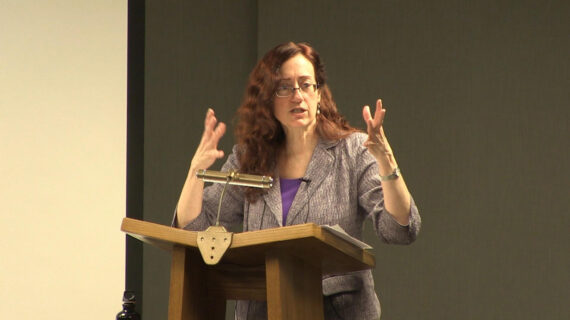
James Marten, Professor and Chair, Department of History, Marquette University, discusses issues that plagued Civil War veterans upon their return to civilian life in Wisconsin. Marten delves into medical, financial, political and cultural challenges.


Copy and Paste the Following Code to Embed this Video:
Civil War Aftermaths: Wisconsin Union Veterans
Now this evening it is my pleasure to introduce Dr. James Marten. After receiving his PhD from the University of Texas in Austin, Dr. Marten has served over 29 years as a faculty member and 11 years as chair of the history department at Marquette University. He has authored or edited 15 books on the Civil War era, including The Children's Civil War, published in 1998,
Civil War America
Voices From the Home Front, published in 2003
and Sing Not War
Civil War Veterans in Gilded Age America, published in 2011. We are happy to have him here tonight joining us in this, the 150th anniversary year of the end of the Civil War, to share with us some of his findings and stories of Wisconsin's returning Civil War veterans. Please join me in welcoming Dr. James Marten. (applause) Thank you for that. Thanks for coming out. It's good to be back here. I've been here a couple times to give talks. The title refers to the gilded age and I think you probably know what the gilded age is. It's the period that we tend to associate with the 30 or 40 years after the Civil War. It got its name from Mark Twain and others who talked about the period of economic expansion and greed and corporate plunder as that time when society was gilded on the outside and corrupt on the inside. That's what I'm going to talk about tongiht, but this age could actually also be called the age of the veteran in certainly the United States north. Veterans of the United States Army was the most recognizable single group in post-Civil War America. Almost half of the military age population had served in the army and the military age in the Civil War is about 18 to 45, not the small age we tend to associate with military service. And so a huge number of them served in the military. As it turned out, they became the most important political block in the north after the Civil War. Almost an auxiliary to the Republican party, which controlled most branches of government for most of this period during this time. A new holiday was created for veterans. Decoration Day or as we know it, Memorial Day, came out of commemorating the Civil War on behalf of the veterans. The first federal welfare system was made for veterans. US Army pensions created during the Civil War became the biggest single line item in the budget by 1900 and the sttructure of them really was copied by the Social Security system in the 1930s. The National Home for Disabled Volunteer Soldiers, founded in 1865 actually, but the soldiers' home was for federal volunteers becomes the model for the VA in the 1930s. In fact they merge into the VA at that time and so it's a lot of ramifications and a lot of ways in which Civil War veterans affected society during their lifetimes and after. What I want to talk about tonight are a few of the aftermaths of the Civil War for Wisconsin veterans. Wisconsin had several tens of thousands of veterans after the war. They came from all over the state. Returned to various places throughout the state and I think some of our best images of them, the way we think about Civil War veterans are these. There's a famous arch there in the upper right hand corner from Madison. I love this. This is an insert from a newspaper, late in the 19th century. Racine County war veterans, living and dead and they found a picture of... It can't be everybody from Racine, but a lot of men from Racine who had pictures at least taken. Here's a small reunion, Ellsworth, Wisconsin in 1909 and the Waukesha Civil War Monument. This is just a few glimpses of the kind of the way that veterans like to be remembered, liked to remember the war themselves, I think very common ways that we think of the Civil War aftermath for northern men. One of the most important ways in which Civil War veterans shaped their own aftermath is through the Grand Army of the Republic. It's the leading organization for Civil War soldiers. During an age which men were constantly joining fraternal organizations, this is the period the Odd Fellows, the Elks and other groups like that appear. It's a massive time for these community organizations that are both fraternal, often charitable. Certainly become pillars of the communities and the place that they're formed. The GAR becomes one of those organizations. It was organized as local posts, state chapters and national organizations. They had monthly meetings, sometimes bi-monthly meetings of the local organizations. There were state reunions, national encampments they were called. The GAR began immediately after the war. Actually some veterans organizations started during the war. Certainly certain divisions and units formed their own organizations. The GAR started right off the bat in the 1860s. It was very small for a long time. It was overly structured. It had lots of ranks and hierarchy. The officers kind of ran things and it just stayed a very small organization until 1880 when the national encampment was held in Milwaukee. This is a very bad print from a newspaper on the far upper left of the parade in Milwaukee in 1880. The Sunday Telegraph in Milwaukee is a paper that was run. It's a regular newspaper. It's a Sunday paper, but it features a couple of pages every week about veterans. They'd have human interest stories. They'd have little notes about so and so has gone to Texas, so and so is now living in La Crosse, whatever. Just little news about veterans and they began pushing for the national encampment in Milwaukee. One of the circulars, which is a handout, a flyer, that they sent out said comrades, attend to this at once or we shall not know whether you are dead, too proud or gone to Texas, to come to the reunion. And it was a massive success and the reunion in Milwaukee in 1880 becomes what historians recognized as the rebirth of the GAR. Within a few years there are 400,000 members, the GAR. Again it becomes a time when soldiers that built soldiers as they call themselves, they're like 45 years old by this time, this was 20, 30 years after the war, if they're in their 20s, they're not very old when they start calling themselves old soldiers. But they used the GAR to assemble, to gather, to tell stories. The favorite part of the monthly meeting and the national encampments was the campfire where they'd sit around. They'd have beans and hardtack and soldiers coffee out of tin cups and tell war stories. The GAR at the state levels often sponsored newspapers. There were about 20 veterans newspapers that were published. So the Sunday Messenger is kind of a soldiers newspaper. It had that one secion, but some were devoted entirely to veterans' issues and veterans' stories. And everybody could tell their stories in these papers. You have generals talking about grand strategy, but mainly you have soldiers who were privates or non-commissioned officers talking about that one bivouac, that one scout, that one thing that happened in camp. It was very democratic in a way. And so the encampments, the campfires, the newspapers became a way for GAR members to memorialize their own lives, their own stories, to make sure that everybody else knew about this because these were widely circulated newspapers. Anybody could come to an encampment. Families and friends were invited to them and I think what's very important about it is that the GAR and the newspapers and the events and these encampments could have 100,000 people. There were major conventions. You see in the middle that the Pabst Brewing Company paid for the programs for the 1889 encampment in Milwaukee. You just sort of see other examples of GAR activities. In the lower right hand corner is the Memorial Hall, which is now the lecture hall in the public library in Milwaukee. But the GAR, in addition to providing this place to gather, safe place we call it today, for veterans to gather, was also a place for veterans to separate themselves from everybody else. We're veterans and you're not. And they talked about it. It becomes more prevalent. I'm not going to talk that much about it because one of the things that, as a national issue, became a GAR priority, were pensions and expanding pensions. And I'm not going to get into that because it's again, not really really a state issue. But pensions became extremely controversial because they're expensive. They're not very big, but we have eventually a million guys getting pensions. That's a lot of money for the federal government. And some people really attacked veterans for these efforts to create more pensions, raise the rates for certain pensions and so forth. And so the GAR becomes a little more isolated I think from the rest of society because they're fighting for pensions and there are other elements inside that don't think that's a good idea. But that's a different thing entirely. The GAR for our purposes tonight becomes an aftermath that provides a home, provides certainly help for poor veterans. There are some GAR chapters have sort of job fairs and employment bureaus for veterans. They have burial aid. If a veteran dies and doesn't have enough money to be buried, they can help pay for that. Sometimes they'll waive the fees to belong. So there's a charitable element to it as well. The GAR is sort of the institutional aftermath for probably not quite a majority of veterans, but a huge number of veterans become members of the GAR and celebrate and commemorate their service at that way. But there were other aftermaths and I want to start instead of talking about the big structured institutions, go to one veteran, Richard Garland. Some of you may know the author Hamlin Garland. He was a short story writer and sometimes novelis, but he was one of the classic short story writers in the late 19th century and he was a little boy in western Wisconsin just outside of La Crosse during the Civil War. Richard Garland, that's him of course in the little picture and these are illustrations from his autobiography, Main-Traveled Roads, which begins with the story of his father coming home from the army. Richard Garland had voluteered. He was of an age where he probably wouldn't have had to have gone. He has three kids at home, a farm. West Salem is the name of the little town outside of La Crosse near where they lived. And he volunteered to go halfway through the war. Served with Sherman during Sherman's march. Was wounded slightly, was sick quite a bit toward the end, but he wasn't home for two years. But he survives and he comes home. And he comes home, it seems to be mid to late summer. Garland doesn't identify when it is. It seems to be summertime so this is after the Confederate Army surrendered in April and May of '65. The grand review of the Union Army is in Washington in May and then the army starts breaking up very quickly. They demobilize very quickly, but Richard comes home later than most. In fact, he arrives in La Crosse by train in the night. There's no welcoming committee. There's no parade for this unit. There's a few guys. They get off the train and start walking home. Richard sleeps, takes a little nap on the bench and then starts walking the few miles out to his farm. What's interesting is that Garland wrote about this in an autobiography. He also wrote a short story about it called Return of the Private, which is pretty much the same story. He doesn't embellish it. He extends it a little bit in the short story. But in both of them, the key moment is when the family sees the veterans. In the lower left hand corner, there's the mother. Hamlin is the middle child. He has a little brother and an older sister. And they're visiting a neighboring farm. They see this guy at the gate. The mother recognizes who it is. They race home and there's Richard Garland waiting for them and of course the wife bursts into tears and hugs him and the daughter sees him and rushes over. The little boys don't remember him. The littles one was... I mean he must have been born after he left. He's like two years old. Or was just barely born. Hamlin knows who he is, but kind of stands back. And I know about this story. I've known this story since I was writing books about children of the Civil War. That's like 25 years ago. It's one of the most heartbreaking stories because it's the thing that's soldiers wrote about the most. Don't let them forget me. Don't let the kids forget who I am. And they did. And they were scared of them. And so there's this really... This moment that Hamlin remembers very clearly, both in the memoir and in the story he writes about this. Well he... Okay he goes over and kind of hugs him shyly. His little brother cries and won't go to him until somehow Richard has gotten hold of an apple and he offers him an apple and that gets him over to him and that kind of breaks the tension and they go into the house and things seem to be fine. He stretches out on the floor, this veteran of hard service. He tells them stories. He hears about the news. A dog has died, other things has happened that he wasn't quite aware of. He's happy to be home. But as Garland writes in the story and in his memoirs, things are different. They had gotten used to the mom running things, for one thing, for a couple of years. Richard came home with the discipline of a soldier and began sort of instilling that discipline on the kids. And so Garland said we knew he loved us. He would sing songs to them sometimes and again, tell tales about Sherman's march, but if they did one little thing wrong, the whip would come out immediately. He became a very harsh disciplinarian. And moreover, and this comes out more in the story than in the autobiography, things are never quite right. He's a little bit sick all the time, which is very common. He doesn't have anything in particular, but he's worn out. And they had a pretty hard scrabble life after the Civil War. They move around a fair amount. Garland ends up buying them a house. There's a house in West Salem, which is the Garland House that he bought for them. Excuse me. And Garland ends the story with this very bitter, he's a fairly bitter guy actually. He's one of those gilded age authors who's very bitter about things, saying and thus begins the man's constant struggle against man and nature and the world basically. But this is an aftermath that is shared by untold, hundreds of thousands of men. Most men are farmers at this time. They come home. They got to kind of regroup and reacquaint themselves with their families and it's something that can't be measured. This is one of the first references to a real life veteran coming home that I came across. They stopped writing about being soldiers once they got home. They never write about being veterans really and so it's an interesting concept I think. A very different way of looking at this is again, kind of getting back to the bigger picture. This is Milwaukee in the 1890s in the upper right hand corner and on the left, what's the thing on the left? This is census, a manuscript census. A page from the manuscript census from 1890. In 1890, the federal government did a census of Union veterans on top of the regular census. Part of this was, I think, to identify potential costs of pensions. In fact, a new pension law had been passed in 1889 that basically made everybody eligible for a pension. It wasn't quite a service pension as they called it, but it was one that you didn't have to have a disability based on your service. You could have served honorably for like six months and if you were disabled now from work related thing or just disease or whatever, you could still get a pension if you're a soldier, had been a soldier. So it's a big expansion of the veterans, the pension rules and the census was one way of locating veterans, making sure everyone was covered. Critics of the pensions criticized the census as well because it seemed to be just a boondoggle for pension lawyers identifying these guys, but anyway, it's great for historians because it lists and you can't really read it here. I blew this up too big for you to be able to read it, but like all manuscript census returns, you have the guy's name and they just walked down the street. This is the order in which they lived on some street in Milwaukee. And their family members. But it lists their date of birth, but the regiment they served in, when they served, the rank, any sort of disability they might have and there's actually a notes section down below where they might describe other things. And so it's a fabulous resource for a historian. It's just really interesting to think of this, too. And what one discovers, there's about 700 veterans in Milwaukee County in 1890. About 250 of them have addresses. Others live like in Greenfield or Oak Creek, which are rural post offices. Some live with the... I'll get to this later on, the soldiers home, which is on the outskirts of Milwaukee and so they don't have an address. But there's about 250 with addresses roughly and that's Milwaukee in the lower right hand corner with the wards figured out. And you can go through there and I had a student help me with this, plot where everybody lived more or less and it's fascinating to see the pockets of veterans and what they did. Then we matched them up with the city directory. So what kind of occupations they had and what they ended up doing. On one two-block stretch of two streets just south of downtown, lived nearly two dozen Union veterans, including two lawyers, a carpenter, a dentist, a travel agent, who knew, a gardner, two business executives, an editor, a printer, a salesman and a laborer. Right there is a dozen different aftermaths for Civil War veterans. All kinds of different things they do. A few blocks south, and if you know Milwaukee, we're talking about the Third Ward more or less now. A grouping of seven veterans and four widows took up much of the 100 block and spilled over into the 200 block of Detroit Street. A few blocks father west, 20 veterans and at least two widows lived on a four-block section of Fifth. Their occupations included police officer and lawyer, laundry worker and paper hanger, grocer and baker, electrician and wire worker. The 100, 200 and 300 blocks of Jefferson, again, we're right smack in the Third Ward here, and it's alley were home to a rather hard scrabble group of a least a dozen veterans and half a dozen widows. Several of those with jobs worked as laborers while the others had low paying jobs like teamster, porter, like at a hotel, a tanner, a clerk. Not far away several boarding houses housed a number of veterans and at least one widow. Only four had jobs. Two had lost legs. Another had lost an arm. Yet another who had been a prisoner in Libby Prison. Three consecutive blocks just a few blocks away, a world away really, on Prospect Avenue, on the east side now we're talking about, physically a five-minute stroll from this little pocket, but really a world away, contained the homes of a dozen veterans, including a lieutenant colonel, three captains, two lieutenants, a brigade surgeon. They had important jobs like general manager of a company, president of an iron company, a lawyer, the publisher and the current governor of Wisconsin, George Peck. All lived right in this little pocket of Prospect. All these men and women lived within a short walk of each other on the crowded streets of one of America's rising cities in the 1890s. And we go through what they're doing and how they're doing, you see that economically and socially, geographically, there are vast differences between them. Again, I'm not sure what message to give you about this, but just to say that there are lots of difficult ways that veterans came out of the war. One of the things veterans talked about a lot is that they had lost out on the war. They were gone for three or four years. There was no rotation through. You were in for three years is probably the most common enlistment. There were other ones, too, but three was the most common one. Many reenlisted. And they were gone for a long time. And as I said, about half the men of military age served in the US Army during the Civil War. It's about 80% for the Confederate Army, by the way. It was almost all the white men of military age were gone in the south. But they complained that the men who had stayed at home got all the good jobs. They had been able to finish their education, training. They were able to take advantage of the economic boom that got rolling by about 1863 in the Civil War north and they often believed that if they'd been at home during that time, they would have done better when they got home in 1865. There's some evidence to suggest that. Certainly as I go through the city directories and the occupations of my 700 veterans of Milwaukee County, this is not a prosperous group. But this was the gilded age. Not everybody was prosperous. So I'm not quite sure. There's not been enough studies done to compare guys that went to war to guys that didnt go to war to see if that really does hold water, but it's certainly a belief that veterans had. There's a short story called Decoration Day, published in 1892, about these three old guys. Again, they're probably 50. That sounds so young to me right now. Anyway, these three veterans, please, veterans who had grown up together, were farmers together, had gone off to war together, had served together during the Civil War and it begins with them sitting around chatting about their brothers and friends. Some who got killed in the war, some were wounded, some who came home and just couldn't compete and left or had lost their fiances. It's kind of a sad sack bunch of guys. These three had done okay. But one of them and the story is about them resurrecting Decoration Day. The town had sort of gotten so that they didn't really pay attention to it. They didn't have a little ceremony and they were kind of mad about that. And so they got that started, but really what is interesting about the story is that, this remark. I don't know why it was we were so beat out, one said. They were just tired. The community noticed, but they blamed the men, not the war. The fellows that stay at home, another one says, got all the fat places and we come back, we fell dreadful behind the times. They begin to call us hero and stick in the mud at just about the same time. And so you have in one of these aftermaths, I'm talking about is veterans who are appreciated on May 30th and July 4th and ignored the rest of the time. And kind of blamed for being behind because you know in the gilded age, if you have any gumption, you'll do fine. It's the American way of course. And veterans felt that sometimes that that wasn't necessarily the case, that it wasn't their fault. It was somebody else's fault or the war's fault. Sort of an extreme version of that are the maimed and marginalized men who were the inevitable consequences of war. Now these are not Milwaukee or even Wisconsin images, but they represent the fact that something like 30,000 Union veterans were amputees who survived the war. And many others had long-term illnesses. You see a list of the men who applied for admission to the National Home in Milwaukee in the 1860s and you see, there's just lists of names and what their disability is. And sometimes you have a little echo of the great battles. A guy who lost a leg at Chickamauga or an arm at Gettysburg. Mainly you have guys who have dysentery or had malaria or has pinkeye, is one of the big things they talk about because there's no antibiotics of course. You can't cure these things. Just chronic illnesses that we would have for a week or two and get over them. They don't. Guys that fell off horses or had horses fall on them. A couple fell out of a barn, who got lost off a cliff during a night march. Just kind of these mundane accidents and things that happen to soldiers. That's the common thread in the applications for getting into the soldiers home. But you do have these kind of cases and they're begging. The two pictures on either side in the upper right appeared in the same, I think it was Harper's Weekly magazine. And it's guys begging. You see the soldier is still with his sergeant's chevrons in the upper left, with his cap asking for money from the little girl and her mother. You have the one-legged veteran on the far right with the sign behind him wounded at Gettysburg, still with some of his uniform. He was a shoelace man. He's selling shoelaces on the street. No one needs to buy shoelaces on the street. This is a way of getting people to give him money obviously. But it helps him keep his dignity because he's selling them a product. And then they sell all kinds of things that way. You have the guy on the lower right, I don't know anything about his story. It just is a haunting... It's a postcard. He had a picture made of him and I'm assuming he lost both legs. It might be kind of where he lives. He still has uniform on. He's had a picture made into a postcard that he is no doubt selling to raise money to support himself. About five to 10% of Untion veterans ended up in soldier's homes. I've been referring to the one in Milwaukee a little bit and that's the one I'll kind of focus on. In fact I started doing research on veterans long time ago. I live about five minutes from the National Home, which is right by Miller Park. If you drive into Milwaukee, Miller Park is on the right by now. It's not 41 anymore. It's called something else. Anyway, Miller Parkway and it's the gothic building overlooking the park. It was built in 1869. It's a very old building. Have any of you been up there? It's the best place in Milwaukee. There's about 20 to 25 buildings from the 1870s through the 1890s from the old National Home for Disabled Volunteer Soldiers. There were three created in the 1860s. One in Togus, Maine, one in Dayton, Ohio and one in Milwaukee. This was when... Of course this is still called Wood, Wisconsin to a point, but it's West Allis is pretty much what surrounds it and then west Milwaukee is on the other side. It's about a half hour ride out of Milwaukee at that time. And it becomes a home of about 2,000 men by the 1890s. Now we, again, think of these men having one arm or one leg and being really disabled. Most of them weren't disabled in that way. They were the guys that were sick, chronically sick. They didn't have families for the most part, although some did. Overwhelmingly they were immigrants, early on at least, and they had nowhere else to go. So the National Home system, created by what's often referred to as Abraham Lincoln's last bill he signed in March of 1865, becomes then, there are about 10 homes altogether all over the country and it's a different kind of aftermath for some Union veterans. And they represent a certain kind of of aftermath for veterans. One of the ways that it serves the veterans is of course as a safe, clean place where they are well fed. The lithograph down below was how the home ground supposedly looked in the 1870s. Eventually there are three or four lakes. There are swans and wild animals. There are several barracks. The big building you see is the main building from the highway. It's beautiful in the fall by the way if you go up there. They still have quite a few trees. They only have one lake left and no swans. There are swans sometimes, but it's a beautiful place. And there's about 10,000 graves there, too. That's the VA cemetery. Of course the Zablocki Veterans Centers is just down the hill from this. That's the connection between the home and the VA. It becomes a haven for them. They can come and go. They do wear uniforms. They're under military law more or less. If you get in trouble, you can be kicked out and then readmitted quite often. And it becomes the thing that can be very pleasant. One of my favorite books about the post-war era and veterans is called Out of the Soldier's Home by Elizabeth Corbett, who was, if you were a reader in the 1930s, a pretty famous writer. She grew up at the home. Her dad was one of the officers, the treasurer of the home and she wrote about this in a book published in 1941. And she doesn't mention Milwaukee, but this is the home in Milwaukee. And some of her novels have characters from the people who worked at the home. She describes the men very lovingly. Great eccentricities. They collect matches or they, my favorite thing, because I have a fond memory of them myself, are this one veteran who would give out cough drops to kids, the cherry cough drops. What are they called? Remember? -
Audience
and Sing Not War
Smith. - Smith Brothers, right? Cough drops. They look like the presidents from the gilded age. They all have beards and everything. Their pictures are on there. I think they're still around. They did nothing for coughs. They tasted like cherry candy. And I remember having this when I was a kid. And other things, too. She talks about the swarms of people who came out there. The soldiers' home in Milwaukee was where Milwaukee did 4th of July for 10 or 15 years and there might be 20,000 or 30,000 or 40,000 people out there for fireworks and music and dancing. The Ward Theater, which is almost abandoned now. I mean it is abandoned. It's closed. You can't go in it. It's one of the buildings that'll be refurbished, hopefully. It's where Liberace got his start, one of the first places he played piano in Milwaukee because he grew up nearby. It was the place where you could go out and watch shows and movies eventually. The city shared the grounds. It was kind of a park for Milwaukeeans. But as Crobett also noticed, many of the visitors completely ignored the veterans. And so that's... I kind of mentioned this earlier. They kind of noticed them at parades for the 4th of July and Decoration Day. Not so much on every day, even when they're out at the home enjoying the grounds. In fact, one reason, and this is something that she noticed as well and one kind of aftermath is the fact that veterans in the home turned to, almost naturally to drinking. She kind of focused on this because actually the first thing I researched on the home is the disciplinary and health issues related to drinking because the source of that were available. And in fact, it was perfectly acceptable to drink in the home for the most part. The upper picture here is not at the Milwaukee home. I think it's the Dayton home, but it's the canteen, the beer saloon, where you could start drinking at 10 in the morning and drink all day long, although it was also like three-two beer so you could drink a lot of beer and not get particularly drunk. But that wasn't necessarily the problem. The problem was that outside of the home on National Avenue, named after the National Home for Diabled Volunteer Soldiers, which is the south and main entrance. I think the entrance to the... If you've been to the VA, the main entrance is off of that. I think that was the main entrance at the time, too. It was very flowery. It was like branches and flowers were kind of what the gate looked like. And street cars would go out there eventually. Along that stretch of the home, there were about 20 bars set up and then at the north entrance. Because the freeway came through and the stadium was there and so forth, Spring Street was the... I think that's Bluemound now, which again is quite a ways. It's a big... It's about a square mile of land they had up there. There were another 18 or 20 bars up there. Some of them were just dives that had names like Sharon and Grant and Lincoln that were not very well. This is actually Milwaukee Bar, run by a veteran here, but they weren't nearly as nice as that, for the most part. The drinking becomes perhaps the most significant element of soldiers' lives in the home for some of them, not all of them. But the offense that got you in the trouble the most was drinking or things you would do while you were drinking, like disturbing the peace and wrecking your bed or coming in late. It also led to people being injured. There's a railroad that went right through there. It's the Hank Aaron Trail now, is the rail that went through, the bike trail in Milwaukee. And there was actually a little ticket station at the Ward Theater so there's a train running through these grounds every day, several times a day. And a kind of a classic and tragic thing that happened would be a guy coming up from National Avenue and getting run over by a train. Or in the winter time, getting drunk and falling asleep and freezing to death. These are unusual, but they're sort of extreme versions of the problems caused by drinking at the home. And it becomes a thing that creates a reputation for soldiers. Old soldiers during this time are thought of as being conducive to drinking. They're often seen drunk on the streets, but people complained about this. It's not really true. I don't think soldiers necessarily... We have no records to know for sure that they drank more than civilians did. This is also a time, as you might know, when the move for prohibition is really gathering steam again and they become an example. I have down here in the lower left, this is just an ad for a cure for alcoholism called the Keeley cure, which was a system but also an injection of a patent medicine with gold in it, the bichloride of gold cure by Dr Keeley. Every soldiers' home, including the one in Milwaukee had a Keeley league and a Keeley clubhouse. You'd belong. You'd get the treatment. You'd get cured. There's a 98% success rate. That wasn't true, but it was what they promoted. One of the first pieces of evidence about, and I'm going to write a book about him I believe next, because he was a Civil War surgeon and made a million dollars doing this and he's very interesting. But I was going through the disciplinary record that was available for the home and there's a guy who got drunk. He goes up the barracks, he's disturbing the peace. They're kind of carrying him down the guard house. He says you Keeley son of a bitch, he says to one of the guards because clearly this is a thing. There's a dissension about what be forced to take the Keeley cure and a commander of one of the other soldiers' homes actually is let go because he has the franchise for the Keeley cure and makes the guys take it. And so it becomes a bit of a thing. Anyway, the aftermath for some veterans is this kind of unhappy life at the home. Some are fine. Some are not. And they're anxious. They're bored. And some come in when they're 30 years old. They live 30 years in the home system with nothing to do. Now one of the... I'm going to go back one. One of the responses to the size of the home in Milwaukee and the fact that you couldn't have your wives there, most men didn't have wives, but some did, was the creation of the Wisconsin Veterans Home in King. If you've never been up there, go there. It's gorgous still today. In a historic building, it is still the Wisconsin Veterans Home with modern facilities and so forth. But it had a cottage system in addition to some barracks, so wives could stay with veterans there. And only Wisconsin veterans could go there. The National Home actually had more New Yorkers and Pennsylvanians than Wisconsin soldiers living there because it was a federal facility. Now, the soldiers' homes were not, and there are state homes, too, so every state had a home like the one in King, so that is not a representative thing in that. Again, no more than 10% of the men ever lived there, but becomes this, I think, image of the veteran in the north. And Wisconsin, this is one way that people could see veterans and it wasn't a particularly positive representation of veterans in their minds. They're idle, they're living off the federal budget and they're drunks and that's not a happy aftermath. Not a happy way to remember veterans. Well I'm going to end with a fictional veteran. This is a great book. Have anyone read "A Prayer for the Dying" by Stewart O'Nan? He's written a number of novels and books. It takes place in Wisconsin and it tells the story of Jacob Hanson, who lives in a little town called Friendship, Wisconsin, sort of north-central Wisconsin. He's the sheriff. He's the minister. He's the undertaker, an odd combination of people in the 1870s. And he's a guy who survived the war. He apparently... was part of a siege in the winter. He has these memories. He's clearly got PTSD as you'll hear in a minute, from his experience. There's something about having to slaughter a horse and get inside the carcass to keep from freezing. I'm not quite sure where that would have happened, but it's one of his memories. And so on the surface he seems to be doing just fine, but he will never ride a horse. He rides a bicycle on his rounds, which is very use of a bicycle through this little town in Wisconsin. Now the drama of the novel is that there's a diphtheria epidemic going on and as sheriff it's his responsibility to enforce a quarantine. No one in, no one out. So people are boarded up in their houses and it's pretty horrible. It's an awful responsibility and he does it. At the same time, a forest fire is approaching. Now I'm assuming it's the Peshtigo fire is kind of the inspiration so I have a little picture of the Peshtigo fire. It happened the same day as the Chicago fire. Many, many, many more people died. No one's ever heard of it outside of Wisconsin. Peshtigo? That's right. I knew that was not quite right. I'm not from Wisconsin. Anyway, and so he's got to start making some choices. And so some of the horrific images are of him boarding diphtheria victims up in their houses because of the quarantine, knowing they'd be burned alive by this approaching fire. They try to capture a train and the train burns. And through it all, he goes home and his wife and his... I think it's a daughter, are there and he talks to them and makes them dinner. We find out they're actually embalmed corpses. They're dead and he's gone nuts basically. Now, it's the fire or diphtheria that's caused him to go nuts, but clearly there is a connection to his Civil War service. You get the feeling... This doesn't sound like a very fun book, does it? It's a great book. The writing is wonderful. You get the feeling that he's been just kind of tightly wound and holding it together for 15 years or even 10 years and all these emergencies thrust on him because of his position as undertaker and minister and the law enforcement bring out all this stress, all the memories, all the trauma that he'd experienced as a soldier. He's the only one who survives, of course. It's a novel. It's extraordinary irony and if I remember right, the last scene is him sort of trudging back into the burned up town, not knowing what to do. And so this is like an extreme version and a fictional version of an aftermath for a Civil War veteran. But I think it indicates the extent to which they could return to an empty life, to an empty town sometimes. As you know with the Civil War, you go off to war with your neighbors and your cousins and your friends. If that one regiment or company has a bad day at Gettysburg, that town has a really bad day. And so a whole little village could be wiped out or at least a certain group of men could be wiped out in that village and that's kind of, I think, the metaphor that this poor man represents. Now again, that's an extreme version of a scarred Civil War veteran, but there were men like that. Just as there were many men who had what we would think of as normal lives, who may even share the ideas of the famous author Wendell Holmes Jr and if you know the Civil War, you know what I'm going to say probably, who wrote 20 years after the war, that in our youth we had the great good fortune that our lives were touched with fire. Talking about the experience of war as preparing them for the aftermaths that they would meet as veterans, but as we see, there's lots of aftermaths and that's just one of them. Thanks for coming. (applause)
Search University Place Episodes
Related Stories from PBS Wisconsin's Blog





Donate to sign up. Activate and sign in to Passport. It's that easy to help PBS Wisconsin serve your community through media that educates, inspires, and entertains.
Make your membership gift today
Only for new users: Activate Passport using your code or email address
Already a member?
Look up my account
Need some help? Go to FAQ or visit PBS Passport Help
Need help accessing PBS Wisconsin anywhere?

Online Access | Platform & Device Access | Cable or Satellite Access | Over-The-Air Access
Visit Access Guide
Need help accessing PBS Wisconsin anywhere?
Visit Our
Live TV Access Guide
Online AccessPlatform & Device Access
Cable or Satellite Access
Over-The-Air Access
Visit Access Guide




Follow Us