

 Passport






Cancer Research Milestones at McArdle Lab
10/07/14 | 48m 26s | Rating: TV-G
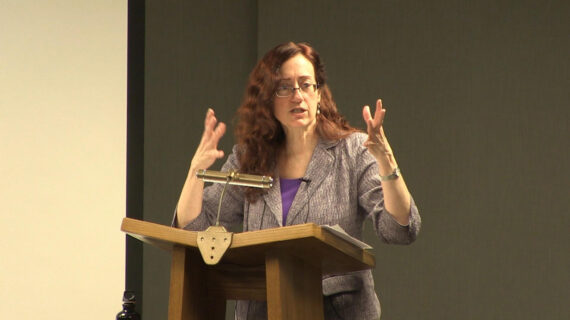
Henry Pitot, Professor Emeritus, McArdle Laboratory for Cancer Research, UW-Madison, shares the history of the lab. Pitot discusses the researchers who have worked at the 75 year old laboratory and highlights their cancer research findings.


Copy and Paste the Following Code to Embed this Video:
Cancer Research Milestones at McArdle Lab
cc >> Welcome everyone to Wednesday Nite at the Lab. I'm Tom Zinnen. I work here at the UW-Madison Biotechnology Center. I also work for UW Extension, Cooperative Extension and on behalf of those folks and our other co-organizers, Wisconsin Public Television, the Wisconsin Alumni Association and the UW-Madison Science Alliance, thanks again for coming to Wednesday Nite at the Lab. We do this every Wednesday night, fifty times a year. Tonight it's my great pleasure to get to introduce to you Professor Henry Pitot. He's a Professor Emeritus in the Department of Oncology, which also has another name called the McArdle Laboratory for Cancer Research. The McArdle Laboratory is celebrating, this coming year, its 75th anniversary. Professor Pitot will be the first of several speakers coming from McArdle. For many of you, as it is for me, cancer is a pretty personal topic. If you are in a family that hasn't had someone die of cancer, let us know. My grandfather died of lung cancer, my dad died of throat cancer, my mom's had breast cancer. One of my friends from first grade did not make it to second grade because he died of leukemia. So tonight we're going to hear something that's pretty personal to many of us. I'm looking forward to this series of talks. Professor Pitot was born in New York City. He grew up in several cities in the south including New Orleans, Montgomery and Richland. He went to the Virginia Military Institute and then he got his M.D. degree and his PhD degree at Tulane and did his Pathobiology residency at Tulane also. You'd think you'll hear it when he mentions the word New Orleans, he pronounces it differently than I do.
laughter
He was with McArdle Lab for many years and many responsibilities. He gets to lay out some of the early work in cancer research here at the McArdle Laboratory for Cancer Research. Please join me in welcoming Professor Henry Pitot to Wednesday Nite at the Lab.
applause
>> Thank you very much, Tom. He asked me how I got here but I think he pretty well did the whole job, so I'm not going to bore you with that again. What I'm-- My role, I think, in the group of lectures this year is to sort of introduce you to the McArdle Laboratory and maybe a little bit of cancer research. There will be other speakers after me that will follow and continue what I'm saying here time wise. So you're sort of seeing the beginning here. If you want to hear what happens next then you listen to Dr. Sugden, who I think is the next speaker and Dr. Burgess. Maybe others as well. So, McArdle, the McArdle Laboratory really started in the 19th century, and I say that because this is the gentleman who, unbeknownst to him, started the whole thing. This is Michael McArdle. He was a member of an Irish family who lived in Door County and there was, it was a large family. It was about seven or eight children. Michael was one of the younger ones and unfortunately, or fortunately for us, however, he was sort of the runt of the brood. He really was fairly sort of a weakling in a way. This was a farm family and so everybody was expected to pull their weight. Well, Michael couldn't do it. And I think the rest of the family very nicely realized this and so they figured, well then, Michael is going to do what he can do and that is use his head. And so they got together and I think he was either the only one or maybe there was one other member of the family who went to college. They paid his way to go to the University of Wisconsin here in Madison and get a degree and I believe, if I'm not mistaken, he ended up as a lawyer. He went west to practice law. He didn't like it. He spent a year, I think, out in Wyoming. He came back and he got a job which is a fairly menial job in a company which is in Chicago. It was called the Chicago Flexible Shaft Corporation. Now Michael, on the side, was an inventor and he particularly was interested in inventing things useful in the kitchen. And his company liked this and I think there was, I'm not sure whether there were any patents involved, but there were a number of tools and things that the Flexible Shaft Corporation ended up making which I think had Michael's mark on them. At any rate, Michael did very well and he continued and eventually ended up as president of the company. You'll notice he lived about 61 years. He never married, but I'll tell you I can't say is truthful but it's sort of a legend; apparently he was very much in love with a young woman and this young woman for some reason either had to go to Europe or was in Europe and came back and was lost at sea. And that must have hurt him tremendously because after that, as I say, he never married. And I think that's possibly the reason if that's true. I can't certify that it is. At any rate, after his rise to presidency, he did very well until he developed cancer of the stomach. Now cancer of the stomach in the 1920s, 1930s, I should say the 1920s and actually extending all the way up to the 1970s is the most common cancer in the world. A lot of people don't realize that because we don't see it very much here. In the 1930s it was very high in the United States and then it started going down. It's been going down ever since in incidence and we really don't know why. A lot of people have argued it's the refrigerator and maybe they're right. But at any rate, he died of cancer of the stomach. His family and it was his feeling, I think, while he was alive, wanted to leave something on his behalf to try to do something about this dread disease. So they left some money in the form of shares of stock in the Flexible Shaft Corporation, to the university to be used specifically for cancer research. Well, this was in the, as you can see, in the middle 30s and at that time there was some research being done, but the university really wasn't sure what to do with it so they sort of stashed it away. Well, cancer research at the university was also given a very large plug by the estate of Jonathan Bowman, a lumberman here in the state of Wisconsin. $420,000 in 1934 was a lot of money and this was used, actually I wouldn't say, not the principle but the interest on it was used, as you can see, for supporting several faculty, young faculty members in cancer research. At that time, Dr. Rusch was, I'll just jump ahead a slide, Dr. Rusch had just gotten his M.D. degree. As you can see, he was considering surgery, he was going into surgery but he didn't. He was so interested in cancer research that he did his internship and then ended up getting an instructorship in the Department of Physiology and continued his cancer research. Now his research, as you'll notice on this slide, was something which in the 1930s was very little was known about it. And I can stop and ask here, does anyone know what the most common cancer-causing entity is in our environment? >> Sunlight. >> Sunlight, ultraviolet light. And Dr. Rusch did some experiment with mice and demonstrated that a specific wavelength of ultraviolet light caused this particular thing. Now this was in the 1930s and virtually nothing was known, or a little was known maybe about the structure of DNA or nucleic acids, but very little. Today what he did at that time has been built on tremendously. Ultraviolet light is used experimentally. It is, we know now there are I'm sure many of you've been out in the sun perhaps use sun block. That sun block blocks the rays at the wavelength that Dr. Rusch discovered for its carcinogenic from getting to the important cells in the skin. So this just shows a basic component to research done at a time which nobody thought had anything to do with anything that had to do with cancer. But Dr. Rusch did and showed that it definitely was an important factor. It sort of laid fallow for a while mainly because we didn't have the background to be able to pick up on it. But Dr. Rusch was not only a good scientist, he was a phenomenal administrator. Leader and judge of character which was really, impressed me tremendously when I first came here. And we'll get back to that a little bit later. So, the McArdle Laboratory was the brainchild of Dr. Rusch. He was doing cancer research. He continued doing it in the Department of Physiology and a couple of other, or at least one other person on the campus, Dr. Baumann, was also doing some related to nutrition. And so Dr. Rusch was a friend of the deans; at that time the medical school was not as large and as extensive as it is now and everybody knew the dean, all the faculty members. And so he went in to talk to the dean one time and he said, "You know, Dr. Bardeen, that really there are several of us doing cancer research. It would be nice if we could get together in some sort of a unit or a building or something." And the dean said that would be nice. Well, he, the dean at one time was talking with the president. Now you recall at that time, the University of Wisconsin was not all over the state, it was just here in Madison and somebody remembered the shares of stock. So they decided, well, let's go back and see what's happened. Well in the meantime, the Flexible Shaft Corporation had become the Sunbeam Corporation. The shares of stock had risen in value from about $10,000 to $125,000. So what happened, Dr. Rusch, at that time there was things called the Works Project Association which is part of Roosevelt's attempt to try to get people back to work and things. They were able to obtain a grant which equivalent to that, and the original McArdle Laboratory was built. This is the one on Charter Street which some of you may be aware of or not because it's sort of been modeled or messaged a little bit since then. It's a four story building and Dr. Rusch and Dr. Baumann and Dr. Potter, who was a graduate but who had gone off to Stockholm to do post-graduate work. Dr. Rusch was smart enough to figure this gentleman is one person that I would like to have in my group and he got him back here. And so the three people that you saw on the previous slide, Rusch, Baumann and Potter and a few assistants, occupied the first two floors of this building initially, with the agreement of the dean that if other faculty members were recruited, then they would occupy the whole four floors. Well, over the years that happened but I'm going to talk as I was told by Dr. Burgess only about a couple of faculty members. There were a large number of them. I'll show you a picture of them latter on that came entirely. This, by the way, was just to look at, to see the way things are was the budget at that first year of the McArdle Laboratory. I won't do the math for you, but you can see that basically the equipment and supplies is about $13,000 and the salaries are about $10, 000. Now this basically came from the Bowman Fund. And just by way of thinking now, the budget for the McArdle Laboratory is somewhere in the neighborhood of six to seven million. So there's been slight increase. And if you include the Cancer Center, that's doubled or tripled again. So things have changed. But it was all started by Dr. Rusch. I'm going to say a few words about Dr. Potter partly because I came here to the University of Wisconsin because of him. I knew about, when I was still a medical student and I was ready to quit, I did some research in the summer with a biochemist by the name of Ernest Coon who ended up at the University of California, but he had been here at the University of Wisconsin and told me that the McArdle Laboratory had a program in cancer research. So I wrote to Dr. Potter and I asked him if it were possible to come here as a graduate student. Well, he wrote and said, "Why don't you finish medical school" and so forth, the same sort of thing that I got from another mentor who kept me that way. And so, but I did eventually end up with Dr. Potter. At the end of my training in 1959 at Tulane, I came here as a post-doctoral fellow in the McArdle Laboratory. I was going to stay here a year or two. A year or two.
laughter
But Dr. Potter was kind enough to take me on as a post-doctoral fellow partly because we were doing some research with my mentor at Tulane, Dr. Emmanuel Farber, on a certain liver cancer that Dr. Potter was working with a different liver cancer. And he was very interested in the differences between these two, so, actually that developed into a large research program which I won't go into. But before that, Dr. Potter had done some really groundbreaking research and I'm going to carry you through this and if you have questions please raise your hand or sing out because, again, I'm a pathologist by training and a biochemist as well, and I sometimes get carried away and forget that my audience is not familiar with all the terms I'm working with. So, this is the concept that Dr. Potter first thought about, that in metabolism there are different pathways to get to the same endpoint. Here you can see in each of these sort of blockades or inhibition as they call it, the endpoint is always at the right hand side. One way is to do it with several different steps. One way is to have steps that are different but they come at different angles. And finally, the third one is a little different because the product, the target is a polymer, either a protein or nucleic acid. And Dr. Potter theorized that in order for cancer to be controlled or killed by drugs, you can't just stop at looking at one particular blockage of an enzyme or some other pathway, you have to do, you have to look at several different ones. And this is basically the basis for combination chemotherapy. Combination chemotherapy is today the standard by which drugs are used to treat cancer. You don't just use one drug. There are a few exceptions to this, but by and large, 90% of combination chemotherapies, or chemotherapies are in combination, several drugs together. Of course this raises the cost and things like that, but at the moment, at that time, cost was not a consideration. It was basically a concept that became important in our understanding of how to treat cancer. So if you'll bear with me, I'm going to follow this just to show you how just a concept that Dr. Potter presented developed into, really, a very important thing. I'm going to have to mention a few things here. We are all made up of cells and our cells divide and replicate, so one cell can become two and two can become four and so forth. Well, to do this, they go through a cycle. And this is a diagram of what is called the cell cycle, and there are four parts to it, not talking about this G-zero which is an unusual thing, it occurs in the body, for example certain nerve cells, once they are made they never divide, they just sit there. But most cells can get away from that and stay in what is called G-1 which is where cells mostly rest. But then something in the cell sparks it to form DNA synthesis and the S-period which is on your left is where DNA is synthesized and there's a small period called the G-2 or the gap period, usually consisting of a very short time, maybe an hour or less. And then mitosis occurs where the chromosomes divide and you get two cells and then it starts all over again. Well, this concept was very, very important in chemotherapy because when you looked at drugs that were used in the therapy of cancer, you could actually take drugs and order them with respect to which part of the cell cycle they actually acted on. So in using Dr. Potter's concept, the logical thing would be to use drugs, one of which worked in G-1, one worked in S and one in mitosis and put those together as a combination with the idea that you were trying to get rid of this cell, basically kill it, by hitting it at various parts of the cell cycle. Well, that was critical, but there was one other critical point which was discovered not here, but actually in Alabama by Dr. Howard Skipper. Now this is a complicated slide but basically it's very simple. This is only to prove that in order to cure cancer, you have to kill every cancer cell. You cannot leave any around because they'll start growing again. This was done with the leukemia which is the easiest to quantitate. The line, the solid line up there called A, if you'll notice, is what would happen if you have an animal, you inject him with about 100,000 cells, in this case leukemic cells, and just let him sit there. Well, in a matter of a few days, maybe six or seven days, this number of cells would divide and get up three order, four orders of magnitude greater and that animal would die. If you gave a drug, now just a single drug, if you gave a drug that would kill half of the cancer cell population when you give it, but then allow it to rest, in other words you don't give it continuously, you give it one dose and a day or so later you give it a second dose and so forth, but unfortunately the cells that you didn't kill, divide and grow back again and so that second line, B, shows what happens if you give a dose that kills half the cancer cells. You see it doesn't cure the animal at all. Although in fact, initially it looks great. You could also have line C which is where a dose in which it kills 75 percent of the cancer cells. Well, you don't cure the animal. What happens is you sort of stabilize it but you can imagine the toxicity that would occur in that animal over that period of time. You can't keep it up. But, if you give a dose of the drug that kills 99 percent of the cells, then you get to line D. And what that line does, and Skipper showed it both experimentally and theoretically, it cures the animal, it kills every cancer cell in that animal. Now I'm not going to go into all the problems that you get into with solid tumors and things of that sort, but that concept of every cell being killed is still with us today and if you don't kill every cell, then you run the risk of the cancer coming back again. Well, just to give you an application, which also probably looks real complicated, this is what is called a protocol. It's an early one that was used based on combination chemotherapy because you can look at this and you can see over on the left, for example is a drug called Vincristine. Vincristine is an alkaloid. It acts during the M phase of the cell cycle. Prednisone is really something that keeps everybody happy, it doesn't, it may kill some cells but basically it's good for keeping these going. Daunomycin on the left hand side here works during the synthesis phase. It inhibits DNA synthesis. Then you'll see up at the top there is methotrexate. That's a drug which also inhibits DNA synthesis and that is given introthecally. Now introthecally means it is given into the spinal column. The reason for this is purely physical. These cancer cells get into the brain and if you just give the drug peripherally, it will kill cells in the periphery but it won't touch the ones in the brain because of something called the blood brain barrier. We know about that. So you have to give the drug into the spinal fluid, the cerebrospinal fluid which flows around through all the brain and you get that as well. So, that's part of this combination. It's a little bit, perhaps Dr. Potter didn't think that far; you had to have physical places being attacked in this at the same time. And you'll notice that there's a rest period. You can't give these toxic things and expect the individual to survive unless you give a time for the body to get back as much as it can to normal. Well during that time, just as you saw in the previous slide, the cancer cells grow. So at the very top, what I've shown here, what the authors are showing is the number of cells that are still left in the body. Now in the human ten to the twelfth cells, to give you an idea is probably about one or two pounds of cells, so leukemia doesn't form large masses but you can actually take this or determine it from the size of the leukemic cells. And then as you go to the right, you'll see you're changing by orders of magnitude. For example, this first component here, until you get to the rest period has killed about ten to the fifth. that's-- I'm sorry, ten to the fifth, that's a hundred thousand times, that's not just 100,000 cells, it's 100,000 times whatever the total initially was, so it's five orders of magnitude; an order of magnitude being multiplied by ten. Then during the interim there, you give two drugs, AraC which is an analog of a cytosine and thioguanine which is now aura guanine. These are not quite as toxic. You give them at very large, fairly frequent doses, have a rest period and the same thing, the rest period, the same thing and finally when you get down to what is estimated about 1000 cells, 1,500 in the body, then you get to the point where you begin to give doses of L-asparaginase which is actually an enzyme which acts during the G-1 period of the cell cycle, the Vincristine that we talked over here before and BCNU which is an alkylating agent which actually acts during the M period. So this is not used today. This is pretty primitive, but it shows very well, I think, the basis for combination chemotherapy. And again, it all goes back to Dr. Potter's concepts on which people have based their various drug regiments on. The ones today are much more sophisticated than this and hopefully they're more effective. Acute lymphoblastic leukemia, which this was used to treat, at the time this protocol was used, the fatality rate was 100%, of course. If you used this, you could probably save 30%-40% of the patients. By save I mean they became clinically and everything else cured. Today, we can cure well over 90% in good centers where they do this of acute lymphoblastic leukemia. Now this is a cancer which affects young children. In the older adult you don't get the same results and it's not quite sure why you get the reason. Fortunately, older adult, acute lymphoblastic leukemia is fairly rare, but in young children, it's the most common leukemia, acute leukemias that is seen. So you're saving lives here; perhaps not millions, but certainly hundreds of thousands over years. And you can see the impact of this starting with just a small concept and developing now into what you see here. Well, this is just to show that Dr. Rusch was not sitting around during the early years of McArdle Laboratory. He was looking for people that would make a difference and could combine together, one thing about McArdle, Dr. Rusch fostered this, was joint studies, studies of faculty. They didn't sit off in their little nook and just do their thing. They worked with other faculty members and once a week there was a faculty meeting and at each faculty meeting, one faculty member would get up and present their latest research, their latest findings. And then the other faculty members would discuss it, criticize it, talk about other experiments that could be done and so forth. And that is one of the major aspects that allowed cancer research to really flourish at the McArdle Laboratory, again, it was Dr. Rusch's idea to do this. Well, as I said, I'm just going to talk about the early years. You'll hear more about people, some of them are listed on here like Doctors James and Elizabeth Miller who are shown here. I say, I use this because I worked with both of them very closely. And as a matter of fact when I was in the administrative position, director of the laboratory, Dr. Elizabeth Miller was my Associate Director. Unfortunately, she died of renal cancer, kidney cancer in 1987. Her husband lived beyond and remarried to Barbara Miller but unfortunately he died of diabetes or complications due to it probably about ten years or more after Betty's death. But these two really did major research which has tremendous applications today and I'll sort of leave that with you so that you will come back when Dr. Sugden talks because he'll tell you about that. However, Dr. Heidelberger is a very interesting person. He was recruited by Dr. Rusch and I think perhaps some people were wondering why. Dr. Potter and the Millers were biochemists and so it made a lot of sense to recruit biochemists. Dr. Heidelberger was a synthetic organic chemist and his forte was to synthesize things, different organic chemicals. He got his training with Louis Fieser at Harvard and was really, he was a gem for Dr. Rusch to recruit into the McArdle Laboratory. This shows Charlie in his laboratory and you can see that he's doing what he does best. Now, Charlie's original work when he came here was concerned with chemicals called carcinogenic, polycyclic carcinogenic hydrocarbons. And if you were ever a smoker, you got a healthy dose of these things every time you took a puff. I once showed it to students. You just take a puff of cigarette smoke and blow it into a solvent and then put that solvent in a beam of ultraviolet light and it fluoresces, that's the polycyclic hydrocarbons. Well, Charlie was interested in these and how they worked. And some of his work dovetailed into what the Millers were doing but then he also became interested in metabolism. Now again, he was a synthetic organic chemist by training but you can learn other things particularly when you're working with colleagues that you get together with every week. And he and Dr. Potter and Dr. LePage who were some of the ones, if you remember an earlier slide, Dr. LePage left, unfortunately, but they were working on nucleotides, the components of DNA particularly what is called, what are called pyrimidines, the smaller, single cyclic components. And in DNA these are cytosine and thymine they're called. Now I didn't show you all the structures here because it's getting a little complicated anyway, but at any rate, what Dr. Heidelberger did was to try to dream up various structures which he thought could enter into the process of DNA synthesis and mess it up, so to speak. It's like throwing a monkey wrench into a turning wheel or something of that sort. And what he came across was, as you can see here developed is the drug 5-Fluorouracil which is still used today particularly for breast cancer, for colon cancer. The big advantage is 5-Fluorouracil can be taken as a pill. It doesn't produce a lot of toxic effects, actually it's relatively small compared to the other agents that are used today and it can maintain patients for many years. Actually there was an interesting finding; the state of Wisconsin after Dr. Heidelberger first synthesized this and it became available to treat patients, the death rate from cancer plateaued for a year, now then it continued on. But many people have wondered maybe this was because of Charlie's work. As you can see, a drug company stepped in and actually did all the scutt work, you might say, of getting this out to various people and advertising it and so forth. Wasn't that expensive either, at least in those days. This is just again a rather complicated slide, but I just, to point out to you, there are two places that 5-Fluorouracil works most effectively. One is, it produces a chemical which inhibits thymidylate synthase. If you look at the top, in the middle of the top line, that is the enzyme of the catalytic component there which this inhibits. And there's an arrow going from something called FdUMP which is 5-fluorodeoxyuridilate, that's the DNA component and it shuts that down. That means the DNA has no thymine to work with. It only has four nucleotides to work with; you shut one down, it's not going to get very far. So that's a good monkey wrench right there. The second is the third line down where you see here FUMP, fump. That's the RNA analog of this because 5-Fluorouracil is also going to be incorporated into RNA as you can see way off at the right. 5-Fluorouracil does not get incorporated into DNA because there's no mechanism for it. But it does into RNA and Charlie really didn't realize when this is first demonstrated what the problem mechanism there was. It turns out that probably it shuts down the synthesis of major cellular components called ribosomes. Ribosomes are important in making protein, keeping the cell going and everything. That's probably why 5-Fluorouracil is so generally effective. It gets into the RNA and messes up the way the cell makes itself so to speak. And, again, this is a very basic finding. It was probably one of the few examples where one determined that I'm going to do this specific thing and it should do this, and it did. Charlie predicted this would happen. Now he didn't know about the ribosomal component, but the important part, the DNA synthesis part was really a major part of it. So here two, really three good examples of basic research which when they were first done, with possible exception of Charlie's, really didn't seem to have any direct effect on cancer, but turned out to have enormous effects on our understanding of cancer and our treatment of cancer. Well what happened to the department or what happened to the McArdle the rest of the time? My block is up until about 1950 or so with one exception. I'll show you that. First of all, the McArdle Laboratory became a department. Now those of you that are faculty know the importance of being a member of a department. Before that, Dr. Rusch was in Physiology, I think Dr. Potter was in Physiological Chemistry, Dr. Baumann was in the Department of Biochemistry in the Ag School. Well, you always have to go back; you're sort of beholden to your departments. So it was very important from Harold's feeling that this had to be a department, put the togetherness of the faculty, make them all under one roof so to speak, which they were physically but not from the administrative viewpoint of the university. And so this became very important. Dr. Rusch was the first chairman and of course he was considered or had been named the Director of the McArdle Laboratory on its founding back in 1940. This is a slide just to show you, I don't have a pointer. Oh, sorry. There. This first row is the faculty. This is Dr. Heidelberger right here, this is Dr. Potter, this is Dr. Rusch, Dr. Mueller, Dr. LePage, Dr. Boutwell and Dr. James Miller and Dr. Elizabeth Miller. The other people in there were people that were both technicians and important assistants; one in particular which I'll just point out here, if I have this right, is Ilse Riegel. She's right in here because I looked at it beforehand. But she turned out to be what was called the Assistant to the Director and the little lady that came up here to help us with this instrument here followed in her footsteps and Ilsa trained Betty and Betty is just about as good as Ilsa. Betty's retired now, too, so we're sort of stuck. But at any rate, this shows the faculty in the 1950s. It wasn't that large. Again, remembering that it was only in the beginning of the 1950s that funds for cancer research from the federal government began to appear in little bits and pieces, not very much. Before that, it was all private funding either from the Bowman Fund, of course McArdle's contributions initially, and also the American Cancer Society which realized the importance of funding cancer research. And Dr. Rusch was very important in the American Cancer Society. He was president one year as I recall. He was involved in national components as well and other various societies of cancer research. This was important to be able to get sort of on the national scene and the back of his mind was, well, maybe we could get enough funds eventually to set up a training program as you see here. McArdle Laboratory was the first training program in oncology in this country. There were several in Europe but it got the funds for them from the National Cancer Institute when they first started to give funds to support graduate students. And that was a major component. This training grant is still in existence. We still support graduate students at the McArdle Laboratory from the continuation of this training grant. It's been estimated, I think, and Betty can correct me, that if you take all of the fellows and the students from the McArdle Laboratory they number well over 1,000, about 1,500 or more. And they've populated the whole world, basically. Again, started by Dr. Rusch. This is just shows a picture we, he also developed a course which is still in existence and actually it's now populated largely by undergraduates. It used to be just for graduate students but now... I used to teach in this course quite a bit and I was flabbergasted one day when I walked in September. Normally the course is about 20 students, I walked in, there were 65 students in the class so it was quite a shock at that time. But it's flourished. It's flourished since then and hopefully will continue to do so. Well Dr. Rusch was always thinking ahead and he wanted to try to recruit more people to get people into cancer research, into his group you might say, work the same way. He couldn't do it without more space. I remember when I was first recruited to the laboratory I had about 400 square feet of space, which is actually not mine; Dr. Potter lent it to me. So it was really very tight. Dr. Temin when he first came here was in the basement and the basement was a mess and he had to, he was interested in doing tissue culture. You couldn't even begin to think about doing tissue culture in the basement it was so filthy. Well, they finally cleaned it up to some extent and Howard managed to do some work, but it wasn't until Dr. Rusch, again through his knowledge of people in Washington, the way things work at the NIH and so forth, he was able to get the department on a competitive basis to obtain funds to build the McArdle Laboratory that exists now, at least the structure does. As you know, the people, the laboratory itself is moving out to the new center, has moved out to the new center so it's no longer there. The one thing about that is Harold always wanted McArdle to be part of the clinical center and the faculty, during his lifetime resisted that very resolutely. They did not want to go out to the clinical center. Well, finally, a group recommended to the dean and to the chancellor that there should be a combination of the two. They became part of one component that they are now and Dr. Paul Carbone, of course, was named as the director after Harold stepped down. I just put this up here because I really want to emphasize the importance of Harold Rusch. A lot of people don't realize that cancer research on this campus would have never existed without Harold Rusch. You stop and think about it, he built the McArdle Laboratory, literally. He got the money for it, he formed the faculty. He built the second McArdle, really, by getting funds from the NIH. And it was his wish to make the two one, that is the clinical center, so called, and the McArdle Laboratory one component. We are now and we're physically adjacent to each other and I hope Harold is looking down on us being very pleased about the whole process. So I'll stop there. Thank you very much. I think I've talked long enough.
applause
Search University Place Episodes
Related Stories from PBS Wisconsin's Blog






Donate to sign up. Activate and sign in to Passport. It's that easy to help PBS Wisconsin serve your community through media that educates, inspires, and entertains.
Make your membership gift today
Only for new users: Activate Passport using your code or email address
Already a member?
Look up my account
Need some help? Go to FAQ or visit PBS Passport Help
Need help accessing PBS Wisconsin anywhere?

Online Access | Platform & Device Access | Cable or Satellite Access | Over-The-Air Access
Visit Access Guide
Need help accessing PBS Wisconsin anywhere?
Visit Our
Live TV Access Guide
Online AccessPlatform & Device Access
Cable or Satellite Access
Over-The-Air Access
Visit Access Guide




Follow Us