

 Passport






The Brave Journey of an Orphan Train Rider
05/19/14 | 57m 56s | Rating: TV-G
Author and Historian Clark Kidder shares stories of orphans transported from New York City to the Midwest. Nearly 150,000 children were sent to live with farm families between 1853 and 1929. Kidder tells the story of his paternal grandmother, Emily Reese Kidder of Milton who was brought to Wisconsin in 1909 on an orphan train.


Copy and Paste the Following Code to Embed this Video:
The Brave Journey of an Orphan Train Rider
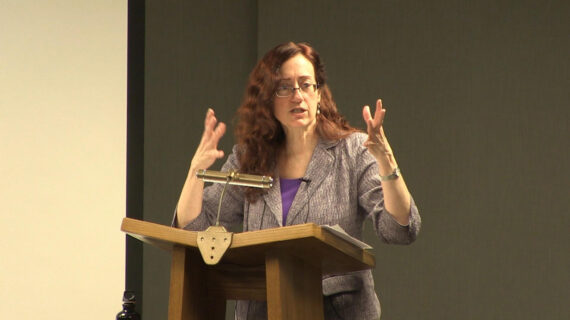
cc >> Today we are pleased to introduce Clark Kidder, author
of the book Emily's Story
The Brave Journey of an Orphan Train Rider, as part of the Wisconsin Historical Museum's History Sandwiched In lecture series. The opinions expressed today are those of the presenter and are not necessarily those of the Wisconsin Historical Society or the museum's employees. Clark Kidder is a freelance writer for international publications and has written several books and magazine articles. He was the recipient of the Hesseltine Award in 2004 for his article titled "West by Orphan Train," which appeared in the winter 2003-2004 issue of the Wisconsin Magazine of History. Here today to share the true story of the orphan train journey that his paternal grandmother Emily Reese Kidder took in the early 1900s, please join me in welcoming Clark Kidder.
APPLAUSE
of the book Emily's Story
>> Thank you, Emily. Can everybody hear me okay? Okay, good deal. It's great to see such a nice crowd. How many have heard of the orphan trains? Quite a few. Is there anybody here that had an ancestor that came out on the train? I see one hand, two. Okay. And they came to Wisconsin, did they? >> Iowa. >> Iowa. And? >> Illinois. >> Illinois. That's great. Every once in a while I'm lucky enough to have an ancestor in the crowd. I was fortunate enough to grow up on a farm in Milton, Wisconsin, with my paternal grandparents, Earl and Emily Kidder, and my grandma would often talk about how she was in an orphanage in Brooklyn, New York, and came out on a train with a minister and was placed in several homes here in the Midwest. After she passed away, I started to hear about these orphan trains and started to do research, and sure enough, I'd found out that she was one of these little kids that came out that numbered a quarter million. And they were sent out on these trains between 1854 and 1929. So my aunt was contacted by a lady in Milton, Wisconsin, in my hometown, that had the journals and scrapbooks that were kept by the minister that brought my grandma out on the train. So I visited her and then made a trip to New York City, and they still had her file at the Childern's Aid Society in New York, so I made a copy of that and began to write a book about her life story. I'll be reading from the book today, and showing you a lot of historic and family photographs. It was in the late 1840s that immigrants began to arrive in New York City by the thousands every day, primarily from Germany and Ireland. Abandoned babies were being found on the streets at the rate of one every day. This is a famous photograph by Jacob Riis in New York City. These little boys were sleeping next to a church. At the time, New York City's population was 500,000. The police estimated that 10,000 boys and girls were living on the streets. In 1849, New York City's chief of police decided to sound an alarm about what he called, "the constantly increasing number of vagrant, idle, and vicious children--
LAUGHTER
of the book Emily's Story
--of both sexes who infest our public thoroughfares, hotels, and docks." And this is a crowded street scene from New York from about the turn of the century. This photo depicts the terrible conditions the children often had to endure in the streets back then. The city began building institutions to house all of these homeless children, and they were known by names such as Almshouse, Home for Little Wanderers, and Home for Destitute Children. A New York State commission filed this report in response. They write, "The great mass of poor houses are most disgraceful memorials of the public charity. Common domestic animals are usually more humanely provided for than the paupers in some of these institutions." This is the New York juvenile asylum that so many of the little orphans were placed in and that ultimately found their way to the orphan trains. A minister named Charles Loring Brace had moved to New York from Connecticut about this time and was appalled by what he'd seen. Brace was born in 1826 in Litchfield and, when a young man, moved with his parents to Hartford, graduating from Yale in 1846. However, after completing his education, he was unsure that a church ministry would be his calling, and he found himself working at the Five Points Mission in New York City. This is the mission that he worked at. He was greatly interested in missionary work, and in 1852, at the age of 25, Brace decided that something needed to be done to alleviate New York City's problem of so many homeless and destitute children. He referred to them as the dangerous classes. In the foundling hospital, which was operated by the city, he found that nine out of 10 of the illegitimate and abandoned babies had died. "The truth seems to be," Brace observed, "that each infant needs one nurse or caretaker, and that if you'd place these delicate creatures and any companies together in any public building an immense proportion are sure to die." In response, Brace founded the Children's Aid Society in 1853. Soon after he founded it, he made this comment, "When a child of the streets stands before you in rags with a tear-stained face, you cannot easily forget him, and yet you are perplexed what to do. The human soul is difficult to interfere with. You hesitate how far you should go." One of the numerous buildings that the Children's Aid Society operated was this one, the newsboys lodging house. It held no less than 1200 boys that otherwise would have had to live on the streets. Brace made this comment about placing out children, "We hope especially to be the means of draining the city of these children by communicating with farmers, manufacturers, or families in the country whom may have need of such for employment." He later commented, "The best of all asylums for the outcast child is the farmer's home." In September 1854, Brace's dream of sending children to new homes in the rural west became a reality when the very first orphan train was sent to Dowagiac, Michigan. The society sent 47 boys and girls that year, ages seven to 15. The American Civil War also left many thousands of orphans and half orphans that ultimately made their way to the orphan trains. During the period following the Civil War, immigrants were arriving in New York at the rate of 1,000 every day. In 1869, the New York Foundling Home was founded by Sister Irene of the Sisters of Charity, seen here on the left. The very day that it opened, a baby was left on their front stoop. Eventually, so many infants were arriving anonymously that a wicker baby buggy was placed in the front lobby to receive them. And this is the buggy that was placed in the lobby. The practice of the Foundling Home differed from that of the Children's Aid Society in that they would confirm the name of the foster parents prior to sending the children out on the orphan train. Whereas the Children's Aid Society would just let people know ahead of time that they were coming and can give the kids to whomever showed up. The Foundling Hospital would pin a piece of paper on the child's chest, such as this one, and they'd actually sew a piece of cloth into the collar of their coats as well with the names of the new foster parent on it. This little girl was named Agnes Chambers and was sent to Red Lake Falls, Minnesota, in 1916. One new father made this comment, "Beats the stork all hollow. We asked for a boy of 18 months with brown hair and blue eyes, and the bill was filled to the last specification. Why, the young rascal even has my name tacked on him."
LAUGHTER
of the book Emily's Story
By the 1870s, the orphan trains of the Children's Aid Society were rolling into towns in more than 30 states. More than 3,000 children a year were making the journey westward. The peak year came in 1875 when 4,026 children made the trip west. The real story of the orphan train era is not one of institutions and policies, but rather the story of those individual children who made those journeys into places unknown, and forever changed the landscape of the American west. One of these remarkable children happened to by my grandmother, Emily Reese Kidder. Emily's story begins in Brooklyn, New York, where she was born on March, 28, 1892. She was the 10th child born to her parents Lewis and Laura Reese. This is the address she was born at. The family resided in a small apartment above a store at 1333 Myrtle Avenue in Brooklyn. Her father was a shoemaker. Because of circumstances yet unknown, Emily's father deserted the family when Emily was only a few years old. Her mother, Laura, was just simply unable to care for all of the children herself. One day, a knock at the door would change the lives of the Reese family forever. Authorities from the Brooklyn Society for the Prevention of Cruelty to Children came calling. Emily and her brother, Richard, two years her senior, were escorted to the Home for Destitute Children at 217 Sterling Place in Brooklyn. This photo depicts some little kids rounded up in Cincinnati, Ohio, from about that same time period. A rather ominous looking brick structure, the Home for Destitute Children was a branch of the Brooklyn Industrial School Association founded in 1854. Emily and her brother Richard were counted among the 300 little souls confined to the home when the US census was taken in 1900. The children ranged in age from five to 12 years. The children were all housed together, yet separately. A tall brick wall separated the boys from the girls out on the playground. The following statements in the home's annual report were made in the year 1900, "The discontinuance of pillows after a trial of over one year has been attended with very beneficial results. The first Thursday of the month is the day appointed for the visit of children's parents and friends. It is the earnest request of managers that on these visits parents should not supply the children with cake, candy, or unripe fruit. And finally, the epidemic of sore heads is now a thing of the past." One of my grandmother's fellow wards at the home was this little girl, Mamie Gunderson. When, in her late 80s, Mamie recorded many of her memories of her stay at the home in a notebook for her children. Her son, Charles, who now lives in Kansas, was kind enough to share them with me. Mamie writes, "The dining room consisted of long, narrow tables like our picnic tables. At each place was a granite cup of milk and two slices of bread. This was our meal three times a day. With one exception, on visiting days we had soup. The clothes we wore were all alike. The girls wore plaid dresses with just a plain waist and skirt, long sleeves, and an apron of blue and white check was worn over the dress.
We made one change once a week
a clean apron. The boys wore a dark suit with a checked apron over it." In this photo of the classroom, you'll notice the girls are clearly separated from the boys. The boys being over on the right. And you'll notice how closely cropped their hair is, and this was to cut down on the incidence of head lice and ringworm, as I understand it. Mamie continues, "We couldn't do any talking at any time, only on the playground and in the playroom. One day, as we were looking at our cookbooks in cooking class and following along with the teacher's recipe, I missed her say 'add vanilla.' I said to the girl near me, 'What did she say that word was?' The teacher heard me talking and sent me to the superintendent's office. I had to explain what happened and I got a good scolding but that was all. I was afraid it would be a real whipping. When I think of such a trivial thing as that, I wonder what a mother would do if her child had asked her such a question. It really wasn't the question, but I had broken a rule by talking. That was the real punishment. I was just so interested in the recipe that the words just slipped out of my mouth." Mamie continues, "We didn't observe many holidays as I remember. Thanksgiving wasn't even thought of, as that was a day of feasting. We didn't have anything special. Christmas was the day we had a special treat. Each child had an apple or an orange. No candy or other luxuries. A Christmas tree was placed in the chapel with a few gifts under it, and if the parents didn't come and bring their children a gift, then each child got a gift placed under the tree for them. I remember I got a book on birds one Christmas, and I read that book over and over until I knew it by heart. My mother didn't come to see me that year. I only remember her coming once. It was soon after she placed us in the orphanage. A girl who stayed in the reception room off from the office called my name out one day. I knew what that meant so I ran up the back hall, and at the end of the hall sitting on a bench was my mother. I ran up to her and instead of kissing her and looking at her, I laid my head in her lap and I cried. I was just so overjoyed. I thought she was so beautiful. I'd never seen her dressed up before, and I can't remember whether my brothers were there that day or not. All I can remember is her sweet face. She brought me a silk handkerchief that day, and I still carry it with me. She wrote me a letter after I left the orphanage, but I didn't receive it for several weeks and it was put in the dead letter office in the town where I was sent. By the time I got the letter, my mother had written that she was going to move in two weeks. I wrote to her right away. I don't know if she ever received my letter or not. I never heard from her again." Mamie was placed on an orphan train that was headed for Rock Port, Missouri, in 1905. My grandmother, Emily, also left the Home for Destitute Children that year, but she wasn't yet set on an orphan train. Instead she was placed here, in the Elizabeth Home for Girls in Manhattan. It was a form of girls reform school operated by the Children's Aid Society. The function of the home was once described by Reverend Clark, a placing agent for the Children's Aid Society. He writes, "This is the home where I sent girls for discipline when they could or would not keep their homes where they were sent. Here they were brought under strict control and taught trades suitable for girls." My grandma often talked about how she was taught how to sew button holes, cane brooms or make brooms and cane chairs, and this probably took place here at the Elizabeth Home. It was from this home that my grandma was sent to a lady in New Rochelle, New York, but after a short time, the woman deemed Emily unsatisfactory and sent her back to the Elizabeth Home. Emily was then sent to a Mrs. Hinley for what they called training. One can only imagine what that entailed, but it was customary for them to teach the children table manners, how to brush their teeth daily, how to bathe properly, and how to lace their shoes. On the morning of March 15, 1906, my grandmother was picked up at the Elizabeth Home and taken here to the United Charities building in Manhattan. It housed the offices of the Children's Aid Society. She was told she would be taking a train ride to a new home in Hopkinton, Iowa. Emily was to be accompanied by seven other children that had been rounded up from various orphanages in the area. The children were all bathed and fitted with a new set of clothes, as well as coats and mittens to keep them warm on the trip. They normally weren't allowed to take any keepsakes with them on these orphan trains, but my grandmother managed to conceal a little brass broach that held a precious photo of her father. Two agents would chaperone the company of children on behalf of the Children's Aid Society. Reverend HD Clark, seen here on the left, and Anna Laura Hill on the right. Reverend Clark was born in Plainfield, New York, in 1850, and, when a young man, he was blinded in his left eye while making repairs on the family farm when a nail was propelled into it. He was educated at Alfred University in New York and later held pastorates in New York, Iowa, and Minnesota. It was while he held a pastorate at Dodge Center, Minnesota, that he became interested and familiar with the orphan trains, specifically those with the Children's Aid Society. He was appointed to a local committee there, put in charge of making arrangements for a train to arrive in 1898. HD Clark would go on to play a very pivotal role in my grandmother's life. As they prepared to leave the United Charities building that morning, Reverend Clark asked Emily and the others to pause for this brief prayer "Lord, these are thy little ones in need and thou art the God of the orphan; open the way for these." And with that, they were off. They boarded the ferry boat that would take them across the North River to the ferry terminal in Jersey City, or the railroad depot in Jersey City, rather. It was about a mile across the North River from Manhattan. It would be a couple of long days and sleepless nights as they made their way to Iowa. The railroads often supplied the Children's Aid Society with special passes. This is the depot, by the way, on the Jersey side that they would have left from that day. The railroad supplied the Children's Aid Society with these special passes, like the ones seen here that Reverend Clark carried with him in the year 1904. This allowed the children one-quarter fare for all under 12 years of age and one-half for those older. The train was to stop in Chicago on the way at Union Station, and the company of children had to be transferred to another rail line where they would make their way on to Iowa. This is what Union Station looked like in 1906, the very year that my grandmother passed through. And this is an interior shot of the lobby from that very year. It so happened that Reverend Clark had been contacted in advance by two friends, Mr. and Mrs. Charles Parker of Chicago. They were looking for a young girl to take into their home, and Reverend Clark asked them to meet him at Union Station where they could take their pick. After talking a while with the Parkers, my grandmother stepped forward and declared that she'd like to go home with them. Reverend Clark gave his consent. After Emily left with the Parkers, Reverend Clark and Ms. Hill loaded the remaining children into a Parmalee bus and made their way onto the next train station where they would travel on to their final destination of Hopkinton, Iowa. The buses looked a little different back then. After arriving in Hopkinton, the itinerary was typical, and Reverend Clark immediately filed this report with the Children's Aid Society regarding my grandmother being left in Chicago. He writes, "A friend, CU Parker of Chicago, wrote to me some time ago about taking a girl. He has no children. He is a fine Christian man and wife of excellent family. He is city Inspector of Walks. Mr. and Mrs. Parker met us at Union Station, and we talked the matter over. Emily Reese wanted to go with them. I consented, and she is there on trial, subject to our further investigation. If you know of any Illinois law against it, then I can quickly remove her. Mr. Parker is a well educated man, and I have read fine articles from his pen. If there is any hitch about this procedure, let me know. Emily will have good advantages and Christian influences if she stays in that home. I know as yet nothing of Emily's disposition." This is the Hotel Hopkinton that Reverend Clark filed his report from. And the dining hall that the children were distributed at is just up the street with a little arrow above the building. After arriving in Hopkinton, the itinerary was typical for each distribution of children and
called for the following
the children would be taken to the Hotel Hopkinton where Reverend Clark and Ms. Hill would comb their hair and place ribbons in the hair of the girls.
At about 10
30 AM, the children would be marched to the Hopkinton dining hall at the Masonic Lodge where the distribution would take place. The children would then be seated in a semi-circle. Reverend Clark would speak for about an hour at this point explaining the goals and expectations of the Children's Aid Society. The children would be asked to step forward one at a time, and Reverend Clark would give their name, nationality, any traits they had, or other background information. On occasion, the children would be asked to perform for the audience. They'd sing a song or something like that. Such an event would often draw prospective foster parents from as far away as 30 miles and groups of upwards of 1500 people. This is the Hopkinton, Iowa, company of children that my grandma came out with. The photo was taken in Iowa after she'd been dropped off in Chicago already, so she's not in the photo unfortunately. But Reverend Clark is on the back left and Anna Laura Hill on the back right. One observer in an unidentified western town in 1912 made this comment, "The prairie town was as excited as if a convention were in session. Businessmen came to their doors and women hurried to join the parade. Three hundred interested people had their attention fixed on the stage, and no show troop ever commanded such attention as did the 14 somewhat frightened little kiddies who sat in a row behind the foot lights. In the eyes of many women was a glisten of tears." Reverend Clark later recorded his thoughts on placing out children in his journals. He writes, "When a child goes to an industrial school, improvement is seen. And when taken to some good farm home, they are new creatures. Their circumstance and environment is so changed that they too are changed for the better. Regular work is given them and they have the care of cows and horses. Girls have chickens to call their own. There's a natural love of animals, and there is also discipline and some religious influence, though not usually of the highest type, but enough to have much influence so that hidden tendencies are awakened to goodness. In a short time, they are new boys and girls as compared to the life they were living in the city." This little girl in the picture was placed in Iowa by Reverend Clark in 1903. Many times prospective foster parents did not have room for more than one child in their home, and because of this, it caused the tearful separation of a great many siblings. Here are some of the terms that the children were placed under by the Children's Aid Society. People had to agree to clothe the children and send them to school. This is a typical dodger that Reverend Clark would have posted around town prior to the arrival of the orphan train. There were often very unusual requests for children made to these placing agents such as Reverend Clark, and he recorded a couple in his journals. He writes, "There were freaks among those who made applications for children. Beauty seemed to be the first consideration or qualification. Especially among men. Very many people seemed desirous to have a pretty girl to show off. Not having enough children to satisfy all of the applicants at New Sharon, Iowa, in 1904, I received something like this, 'Mr. Clark, I want a little girl with curly black hair and black eyes, pleasant features, good form, a good singer, and a good memory so as to take part in Sunday school concerts. Oh, and a complexion that will not tan or freckle in the sun.' I never found the child." writes Reverend Clark.
LAUGHTER
At about 10
He continues, "People expect more of an orphan child than they do of their own. Their faults seem greater, are magnified greater. People are selfish when they take a child and expect all will be well and harmonious. And when it's not, they are too ready to send the child back to New York. The stealing of a cookie or the telling of a lie has caused some to lose their homes. I was sent for to take away a boy of 10 years of age for the awful crime of going into the cellar and sticking his fingers in some jelly. Would they send away their own child for that?" asks Reverend Clark. He also wrote about a boy named Henry Shoppy who was sent away for swatting a fly. He apparently displayed too much aggression in the eyes of his foster parents. In the meantime, my grandma Emily had settled in nicely with the Parker family back in Chicago. She called them aunt and uncle. But by summer's end, Reverend Clark was contacted by Mr. Parker and asked to come and replace Emily, as Mrs. Parker developed a heart condition and a tumor and they had to give Emily up. In August 1906, Reverend Clark placed my grandmother with Cornelius and Daisy Pelham of Malone, Iowa, and the Pelhams are seen here in their wedding photo. It was located in Clinton County, about 18 miles from the Illinois border in east central Iowa. The Pelhams farmed 120 acres and had a seven-year-old boy named Arthur. Emily spent five months at this home, and in January 1907, Reverend Clark paid them a visit. This is the farm home that the Pelhams lived in. And this is the agreement that the Pelhams had to sign when they took my grandmother in. Reverend Clark had typed in the margin that she was not to remove her to any hotel or restaurant. That was apparently a very bad thing to do back then. I imagine he was concerned about the children being made to work there. Reverend Clark filed this report after his visit to the Pelhams, "Emily was attending school and helping with the housework. A hired girl made some trouble with Emily by quizzing all about her past, which Mrs. Pelham thinks was untruthful. Emily did not seemed quite as well satisfied as at first but said she liked the place. She had some trouble with the little boy in the home. She does finely in school, says her teacher and Mrs. Pelham." This new home was not to last either. In March 1907, just two months after Reverend Clark's visit, the Pelhams asked him to come and replace Emily once again because she had quarreled so with Mr. Pelham's little boy and was saucy. Emily was then taken to the home of Sydney and Evelyn Brown of LeClaire, Iowa. And this is the little depot they would have arrived at in LeClaire that sat on the banks of the Mississippi River. It was about 18 miles southeast of Emily's former home in Malone. Mr. Brown was a carpenter, and he had two boys, Ralph, age 20, and Clyde, age 18. Reverend Clark filed this report, "Mr. Brown's home is pleasant and the girl seems pleased. Piano in home. And the grown boys appear," he underlines the word appear, "gentlemanly." "I hope the girl will do better." She didn't. In January 1908, about 10 months after Reverend Clark placed her with the Browns, he was summoned to come and replace her once again. Emily was just two months shy of her 16th birthday at this time. Reverend Clark filed this report, "In the home of the Browns at LeClaire, Emily was robbed of her year's schooling and her clothes. She promises to do her best now." Years later in his journals, Reverend Clark recorded a little bit more about this episode with the Browns. He writes, "In the third home, she was not well clothed. And again, I took her. In doing so, her foster brother, in great wrath, made terrible threats that he thought was enough to put me in silence regarding their neglecting her. Years later this young man had charge of a lighthouse in Florida, and he wrote to me asking for forgiveness for his rudeness. But he wanted to know where his only sister he ever had was. This I declined to give. But I frankly forgave him." Emily was then off to the home of Edwin and Mary Kellogg of Lansing, Iowa. It was in Allamakee County, northeastern Iowa. Another river town. The Kelloggs farmed 226 acres that they rented and were in the mid-30s. And they're in the center of the photo here. Mrs. Kellogg in the very front and Mr. behind her. Two of their three children are in the very front of the photo. They had three kids, Harold, age 11, Bernice, age six, and Cecil, age two. A year and five months would pass before Reverend Clark would next visit Emily. He arrived in May 1909 and filed this report, "The family talks of moving into Wisconsin, and they will take the girl if consent is given. I gave hardy consent. Not far from state line. Wisconsin law cannot keep a family from taking a girl into the state with them. Anyway, she's self-supporting. Emily is now a good Christian girl in present appearance and profession. It was lucky," and he underlines the word lucky, "that I removed her from two past homes and placed her here. Unless we're deceived, she will make a fine woman. She wants to take a nurse's course at a sanitarium in South Dakota, and the Kelloggs will help her." This is an example of one of the reports that Reverend Clark would type up and mail back to the Children's Aid Society. He would note the distance to the nearest railroad station, the condition of the home and the outbuildings at the farm, and the distance to the nearest school. One night in the fall of 1909, nearly two years after Emily was placed with them, the Kelloggs attended a Seventh-day Adventist camp meeting in the woods near Waukon, Iowa. All had seemed to be going well, but the Kelloggs had other plans. They decided they'd leave that night without Emily.
CROWD GASPING
At about 10
They waited until Emily was out of sight, and they quietly slipped away. Emily searched frantically for them but to no avail. Finally, one of the men at the meeting told Emily that he'd seen them riding off into the dark. Emily was taken in by one of the families at the camp, and Reverend Clark was once again called to come and replace her. In September 1909, Reverend Clark and Emily boarded the train headed for the home of Charles and May Mikkelsen of Milton Junction, Wisconsin, and this is downtown Milton Junction in the photo. Reverend Clark had many friends living in the Milton area, as it was founded by his fellow Seventh-day Baptists. This is the little farm home that the Mikkelsens lived at, midway between Milton and Milton Junction. And this is the Mikkelsen family. Their two boys are with them here. The Mikkelsens farmed 85 acres and had two boys, Harold, age 13, and Paul, age five. Reverend Clark filed this report, "Ready for high school. The family at Waukon, Iowa, were to move and had no use for Emily. This new home wanted her and will educate her right along in school. I placed her in Wisconsin as a self-supporting girl and for her better education. She thanks me much and is happy over it. Will need no more visits." Emily attended the Seventh-day Adventist church with the Mikkelsens and was befriended by another local family, the Courtneys. This is the Courtney family. In April of 1910, after living with Mrs. Mikkelsen for eight months, Emily went to work for the Courtneys, who rented a farm just southwest of Milton in Janesville Township. Reverend Clark filed this report, "I brought her into Wisconsin to another family of the same faith and later she was coaxed away from her home by a family of the same church. They urged her to go to South Dakota where their people operated a sanitarium. Emily did various chores for the Courtneys, which included hand-milking eight cows. She entered and won many baking contests with Mrs. Courtney. They all attended the nearby United Brethren Church, known to the locals as the Sandy Sink Church. It stood about a half mile north of the Courtney farm." One day, Emily had to walk to Janesville to run an errand for the Courtney family, and on her way there, she was offered a ride by a fellow named Clark Kidder, my great-grandfather.
LAUGHTER
At about 10
He was returning from Janesville where he'd gone to sell a load of cordwood to the jail. When he returned home, he made this comment to his son Earl, "I just me the sweetest young girl with the darkest eyes you've ever seen, and she's really smart. She's just a little bit of a thing. If I were a young man, I'd look her up."
LAUGHTER
At about 10
And this is what my great-grandfather Clark looked like that gave her the ride that day. One day, not long after, Mrs. Courtney asked Emily to accompany her to a Ladies Aid Society meeting at the Clark and Elma Kidder home, which was about a mile and a half to the north of the Courtney farm. This is the home here. Mrs. Kidder is out front with one of her children. It was at this meeting that Earl was able to meet the girl that his father had spoken so highly of. Earl had just purchased a new rubber-tired buggy at the Northwestern Carriage Company in Fort Atkinson, Wisconsin, and he offered to give Emily a ride around the block. Now this was a country block and amounted to about four miles.
LAUGHTER
At about 10
They dated for a short time, but Emily was soon to return to South Dakota where she'd study to become a nurse while working at a sanitarium there. This is the sanitarium that she worked at in Chamberlain, South Dakota. After a short time there, she wrote to Reverend Clark, "Do you think enough of me, Mr. Clark, to help me once more?" Reverend Clark later recorded this in his journals. He writes, "Arriving there, Emily found that she was not old enough and did not have enough money. She sent to me for help. She was studying to become a nurse. I sent her five dollars to buy books with, and she again started in school." This is downtown Chamberlain as it looked that year. Emily stayed six months and then returned to Milton in January of 1912 because the Courtney family had written to her asking her to return and help them on their farm. Emily rekindled her relationship with Earl and all was going quite well until the Courtneys once again decided that they no longer needed her on the farm and urged her to return to South Dakota to her job at the sanitarium. It was soon Sunday evening and time for church at Sandy Sink. This is the church here. About 30 people generally attended, but on this night, there were only two. Earl was the only one to attend from the north and Emily the only one to attend from the south. Services were preached by a circuit riding minister named Reverend Roberts. He's seen to the right here with the mustache. He made the trek several miles cross country from Lima Center, just east of Milton. By the time the sermon was over that evening, it had become pitch black outside. There was no moon to illuminate the night sky. It was in the dead of winter. You could scarcely see you hand in front of you face, as my grandfather would later recall. Emily was fearful of the long walk home in the dark, and she turned to Earl and asked, "Oh, Earl, could you please walk me home? It's so very dark out." "Well, sure I can," Earl replied.
LAUGHTER
At about 10
As they walked down the lane in the direction of the Courtney farm, Emily began to cry. "Why, what on Earth is wrong, Emily?" asked Earl. "I have to go back to South Dakota and work at the sanitarium, and I don't know what to do. All I do is cook, clean, and dump pots for four dollars a week. It's barely enough to buy my clothes, and I have no friends there," Emily sobbed. Earl pondered for a while, unsure of what to say. Emily continued to cry. "Can't you please think of something, Earl? Oh, please, can't you think of something?"
LAUGHTER
At about 10
Earl thought for a while as they walked.
LAUGHTER
At about 10
And was quite unsure of just what to say, but then made a startling yet fantastic suggestion. "Well, I guess the only thing I could do would be to marry ya."
LAUGHTER
At about 10
"I'll never forget it," he later recalled. "Emily threw her arms around my neck and jumped off the ground yelling, 'Oh, will ya, will ya, will ya!'"
LAUGHTER
At about 10
Her move to South Dakota could be canceled. Emily immediately mailed a postcard announcing her marriage plans back to Reverend Clark, who was taking care of an orphanage in Cincinnati, Ohio, at the time.
She writes
"Dear friend, received your letter some time ago. Will write soon. Thought I would let you know that I'm expected to be married on the 27th of this month to Mr. Earl Kidder. Of course you will be surprised. Emily Reese." March 27th happened to be Emily's birthday. Earl bought his wedding suit here at Seager's in Milton Junction. Here's an interior view of Seager's. And Emily's wedding dress was hand-sewn by Mrs. Courtney. Earl and Emily were actually married a week earlier than Emily had written on the postcard. They were married on March 20, 1912, at the United Brethren Church in Janesville, Wisconsin. Reverend Roberts officiated. Reverend Clark noted in his journals that he paid them a visit that October and found them very happy. And this is their wedding photo.
crowd 'aww's
She writes
I've got another real fun one.
LAUGHTER
She writes
Their sister-in-law Merle Kidder Garthwaite, or Merle Garthwaite Kidder rather, is on the left there.
LAUGHTER
She writes
Earl and Emily spent the first year of their married life in a tent under the Wolf River apple trees at Earl's parents' farm. Earl then converted his father's old granary into their home. The three-room former corn crib seemed like a mansion to the young couple after living in a tent for so long. And this is the little granary home that they built, and you'll notice the well worn path that led from the granary to Earl's parents' farmhouse. This is my dad in the picture with his little cousin, Richard Kidder, in front of him. Earl and Emily then moved to a farm about a half mile to the north on Kidder Road and began to raise a family. They named their farm the Ayrshire Stock Farm. Together they survived the Great Depression and a tornado that tore the west part of the roof off of their farmhouse. They had three sons and three daughters. Their seventh child, a little boy, was stillborn in 1935. Earl and Emily learned that Reverend Clark had passed away on Christmas Day 1928. And this is he as an elderly man holding one of his little granddaughters. His obituary read, in part, "Elder Clark was a man of strong convictions, deep feeling, and unswerving loyalty to his ideals. He was a loyal friend, a loving husband, and a patient, tender father. He had spent his final years at the home of his daughter Mabel in Albion, Wisconsin, spending much of his time corresponding with the many children he had placed over the years and who looked up to him for counsel and encouragement, and in whom he remained interested to the last." He was laid to rest beside his wife, Anna, in Dodge Center, Minnesota. Anna had died in 1912. By his own estimation, he had placed more than 1200 children in homes during his employment with the Children's Aid Society. One of the last entries in his journal was this, "To my dying day, I shall have the deepest interest in the work of placing and caring for orphaned and homeless children. Some dear friends say it was the greatest work of my life. The god of the orphan is the judge of that. The work has brought me great happiness and, in a few cases, great grief or misunderstanding. The thousands of letters from the children over these years testify to the success of it and to their appreciation in so many cases. They will remember him who turned the tides of their lives for the better and for eternity. If God in his mercy shall give me a place in heaven, I hope to see among those redeemed many of these souls who were snatched from poverty and woe and given a home with advantages on Earth, and grew up respectable citizens." In 1929, my grandma Emily hopped on a train and headed back to New York City. She wanted to meet her siblings that she never really knew. Her brother, Lewis, had located Richard, the older brother that was placed with her in the Home for Destitute Children, living on Long Island, but he wanted nothing to do with the family. He was just too bitter about everything that had happened. Many of the siblings were quite a bit older than my grandma and Richard at the time they were placed in the orphanage, and I think that he thought that they should have taken him in, a couple were even married at the time, instead of letting him be put in the orphanage. Richard sent this picture postcard back with his brother Lewis to be presented to Emily as a keepsake but never again attempted to make contact with her. He's wearing his World War I uniform here. Emily's brother, Lewis, visited a couple times with his family from New York after that, and as well as her sister, Jane, who had moved to Chicago. In 1935, Earl was deputized by Rock County Sheriff Jimmy Croak. He would have this job for the next 40 years. In 1937, Earl and Emily sold their farm on Kidder Road to their son Earl Jr, and Earl took a job as caretaker of the Parker Penn Estate in Milton Township. Kenneth Parker was the man he worked for at the time. Earl built two cottages and a stone house for Mr. Parker. And this is Parker here. His duties also included planting thousands of pine trees, digging ponds, maintaining an orchard, and raising hundreds of mink. And these are two of the little cottages that my grandfather built for Parker. My grandparents were middle aged here. Grandpa was six-foot-one and grandma four-foot-ten, and it really shows in this picture.
LAUGHTER
She writes
Tragedy struck in September, 1943. Earl and Emily received a telegram notifying them that their son, Don, had been killed in a plane crash while piloting a plane from California to Texas. The family was devastated. And this is Don here. And this is the telegram that they received. In the spring of 1946, Earl and Emily purchased a 174-acre farm a few miles southwest of the Parker Estate in Milton Township. Earl and Emily's son, Warren, my father, joined them in operating the Kidder Fur Company, Kidder Game Farm, and Kidder Farm Market, family businesses that would be operated for the next half century. This is my grandparents celebrating their 50th wedding anniversary. Their children in back, from left to right, are Earl Jr, or Bub as we called him, Bernice, Marian, and my father Warren. Their daughter Mildred was in the hospital at the time. This is another from their 50th.
LAUGHTER
She writes
When my grandmother applied for Social Security, she had to write and get a copy of her birth certificate. When it arrived, she was surprised to learn that she'd celebrated her birthday on the wrong day her entire life.
LAUGHTER
She writes
She was born on the 28th of March and not the 27th.
LAUGHTER
She writes
She also learned that she was a year older than she thought she was.
LAUGHTER
She writes
That didn't set real well with her.
LAUGHTER
She writes
Losing details such as the day of birth was a common problem that many orphan kids had to deal with. As they grew older, my grandparents enjoyed their many grandchildren, great-grandchildren and even great-great-grandchildren. My grandmother would never miss one of our birthdays. She'd always send a birthday card with a few dollars in it. She knew, perhaps more than most, just how precious a family was. And this is them holding a couple grandbabies in the pictures here. Even in her advanced age with her mind beginning to falter, my grandma was able to recall her childhood in the orphanage and trip on the train and never again being reunited with her brother Richard. I've got a very early video here I'm going to play for you of my grandmother talking about never seeing her brother again, and she was just beginning to get Alzheimer's at the time. You'll pick up on that, but it's still really nice to have. >> Where did you say you were born? >> In Brooklyn, New York. >> That's what I thought. That's a long way away. >> I lived there for 12 years, then I had a man that picked up infants, well, I wasn't an infant but I was in a nursing home. >> Foster home. >> Yes. And I was taken out of there when I was 12 years old. There was a minister that took out kids and placed them in homes when you got 12 years old. >> You were in an orphanage. >> My brother was 12 years old two years before I was, and he got out. A rich couple took him. My brother, Richard. Never saw him or anything after that. >> What happened to your parents? >> They both died, sometime or other. I forgot. But Richard got into a rich home. A rich couple adopted him. Then he became a lieutenant in the war. In the first world war he got to be a lieutenant, and that was the end of him. I never saw or heard anything more about him. I had a sister, Jane, who lived in Chicago. She had his picture, and she gave it to me. I've got a picture of him in my album. I got his picture, but I never saw him alive.
APPLAUSE
She writes
In 1983, on the occasion of their 71st wedding anniversary, United States Representative John Manske presented Earl and Emily with a citation from the state of Wisconsin congratulating them on their marital milestone and for their service to people and government in the Milton area. My grandma had recently fallen and broken her wrist, and you'll see it's in a cast there. This is the certificate that they received. On March 19, 1983, radio personality Paul Harvey announced Earl and Emily's 71st wedding anniversary to the world on his popular radio show. I wrote to him three years in a row, and they won all three years. They were married the longest.
LAUGHTER
She writes
I've got an audio here to play for you. >> In today's tournament of roses, Emily and Earl Kidder in Milton, Wisconsin, are celebrating 71 years on their way to forever together. >> My grandpa got the biggest kick out of that. As family and friends would stop by the farmhouse that day to help them celebrate, I tape recorded Mr. Harvey and would play it over and over.
LAUGHTER
She writes
Grandpa said, "Boy, Mr. Harvey sure is announcing our anniversary an awful lot today."
LAUGHTER
She writes
In 1985, my grandparents posed with their surviving children as they celebrated their 73rd wedding anniversary. And in back, from left to right, are my father, Warren, who was also a police officer as was his dad, Bernice, Marian, Mildred, and Earl Jr, or Bub. A few months later, my grandfather had to be hospitalized with a bad heart and other ailments. Though Emily had been suffering from moderate dementia for some time prior, she had no problem recognizing him when we took her for a surprise visit to see him at the Edgerton Hospital. Earl knew in his heart that it'd be the last time he'd ever see her again. He leaned over to give her a kiss and began to cry. I'd never seen him cry before. He wiped away his tears as Emily looked on. Earl passed away around noon on August 14, 1986. He was 93 years old. He and my grandmother had been married no less than 74 and a half years. They missed their diamond anniversary by just six months. Though Emily's mind would not enable her to remember that grandpa had died, she must had known deep in her heart, for she only lasted a few more months herself. I looked in on her on the evening of November 21, 1986, and found that she passed away peacefully in her sleep. She was 94 years old. On the dresser next to her bed was the little brass pin that she'd brought with her on the orphan train. The one that held the precious picture of her father. She'd kept it close to her for over eight decades. And that concludes my presentation.
APPLAUSE
Search University Place Episodes
Related Stories from PBS Wisconsin's Blog











Donate to sign up. Activate and sign in to Passport. It's that easy to help PBS Wisconsin serve your community through media that educates, inspires, and entertains.
Make your membership gift today
Only for new users: Activate Passport using your code or email address
Already a member?
Look up my account
Need some help? Go to FAQ or visit PBS Passport Help
Need help accessing PBS Wisconsin anywhere?

Online Access | Platform & Device Access | Cable or Satellite Access | Over-The-Air Access
Visit Access Guide
Need help accessing PBS Wisconsin anywhere?
Visit Our
Live TV Access Guide
Online AccessPlatform & Device Access
Cable or Satellite Access
Over-The-Air Access
Visit Access Guide




Follow Us