

 Passport






Behavioral and Psychological Symptoms of Dementia
02/25/14 | 48m 3s | Rating: TV-G
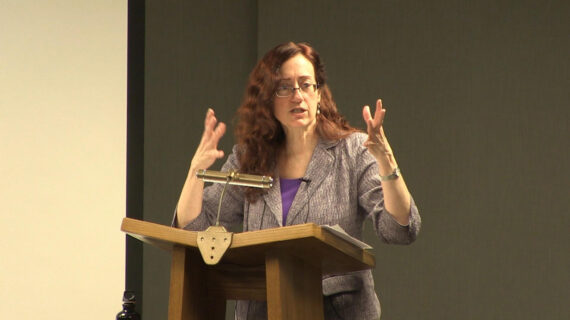
Kim Petersen, M.D., Retired Geriatrician & Dementia Specialist, delves into the common physical and behavioral changes that occur with dementia and their causes. Petersen explains specific symptoms, what to look for and what to expect.


Copy and Paste the Following Code to Embed this Video:
Behavioral and Psychological Symptoms of Dementia
cc >> Good morning. I'm Dr. Suzanna Waters-Castillo. Welcome to the University of Wisconsin Madison Division of Continuing Studies Mental Health and Older Adults Certificate Series. I am delighted to introduce Dr. Kim Petersen, my colleague and friend who will be teaching about behavioral and psychological symptoms of dementia. We have a wonderful packet of information. Dr. Petersen is a geriatrician who has significant experience in the field of dementia, has taught this seminar for other audiences, and it's going to be a great day for you. He's a wonderful speaker. You won't be bored, and you'll learn a lot. So I'd like you to welcome Dr. Kim Petersen today. Thank you.
APPLAUSE
>> I wish you'd do that at the end of my lecture that way I could escape, I don't have to perform. Thank you, Suzanna. It really is always a pleasure of being here. You're right, we have worked together for a long time, and one of the requirements of teaching courses in geriatrics is you have to be old.
LAUGHTER
So I'm working on it. Well, it's so nice to see all of you this morning braving our winter weather. You actually look relatively intact considering what a long, stressful winter this has been. Hopefully today I'm going to start with showing you some fun and interesting ideas. I am, if you haven't figured it already within five minutes, you'll get it, I try to be very lighthearted, and this is a heavy duty subject because there are problems with dementia behaviors. But I'm going to try to explain things and also share some new ideas of how to approach the person with dementia. Most of you are probably, how many of you work with people with a dementia of some kind? The audience. I got to tell you, we're not doing it right. It ain't working. I've been in this long enough. We're not getting any better. And I'm going to share what we know and what we don't know. But I'm going to challenge you, hopefully in a fun, humorous way at times but also in a deep thinking way, to rethink your approach to people with dementia because I've been in this field for a long time now, probably 35 years. I've been a medical director, I have had my own diagnostic center, I still continue to work with another clinic that does memory diagnosis, and it isn't getting any better. And so we've got to figure out a different way to approach and deal with people with dementia behaviors because the population is aging. You think it's bad now, wait until my generation of baby boomers gets demented. We're going to have a bunch of hippies running around not knowing where they are, acting like they're stoned again.
LAUGHTER
That will be kind of fun. I kind of miss that from the '60s. But I won't probably be on marijuana or LSD. I'll just be demented. The risks are high. So let me go over our agenda for today. We're going to start with a definition of what we call BPSD. Then we're going to talk about the symptoms and the various different dementias, the classical behavioral difficulties. Everybody's different of course, but there are differences. And the topic of this seminar isn't about the different dementias themselves. So hopefully you have some background, but I'll try to catch you up, the differences between Lewy body and Alzheimer's and vascular and frontal temporals. Then I'm going to share some tools with you. One of the things I realized for a long time within the whole field of geriatrics is that we've not had very effective tools to understand the older person. We're getting better. In the last 10 years they've improved, and there are some tools that you should be using to give you some objective idea about the behaviors, and in particular with what you're doing, is it working? And that's one of the real challenges because the old phrase if you're digging a hole, the first thing to do is stop digging otherwise you'll never get out, and we're tending to dig all the time. Then we're going to talk about medication guidelines, and I'm going to cover that field first because everybody wants to know about the drugs that are going to help. There are some advantages, and I'll talk about them. There are a lot of disadvantages too, but we'll cover that subject because then from there I want to move into, this afternoon, things that trigger the behavioral challenges. I think the best thing to do is prevent them because we're not doing very well once they occur. So let's try to prevent them. And I'm totally convinced that we can prevent 80% of behavioral challenges. And we can prevent 100%, if you do it right, of the severe behavioral challenges. Then we're going to end up, this afternoon, with some fun, successful activities. That's a whole seminar of its own, and I've only got an hour to do it. But I'm going to present a different approach of dealing with people with dementia in what we do with them every day, the activities that they might be interested in, and give you a flavor for what's possible. Because of our programming today, if you can remember, maybe you have to write it down, if you have questions, I promise to leave plenty of time at the end of each of the sessions to answer questions. Then we'll use the microphone so it gets recorded. Now, to begin with, because I think this whole subject is about interpersonal relationships, I would kindly ask each of you, and if you're alone at a table, turn to another one, I want you to turn to your neighbor, put a big, big smile on your face, and introduce yourself with your first name. Please do it. Come on. Get to meet each other. You're going to need to turn around.
laughter and greetings
Big smile! You got him. You get twice, okay? >> What's that? >> You get twice. You get to meet her too. How'd that feel? Yeah, you all are very nice people. You're nice looking. You have nice smiles. All right. You feel a little better? Because you're all going to be here for the next six hours, all right? And you're all awake so far. We'll see how it is at three o'clock this afternoon. All right, let's get started. What do we mean by this definition of BPSD? Well, the formal definition that was set way back in about 1996 is symptoms of disturbed perception, thought content, mood, or behavior that frequently occur in patients with dementia. Now, there's a lot there. There is perception, how they perceive the world. That's distorted with dementias. We'll get into that. It's their thinking, particularly like paranoia. There's mood, anxiety, depression, mania. And from that is external expressions in their behavior. So it encompasses all of those. And we divide it into behavioral symptoms and psychological symptoms. Most of us are very familiar with the behavioral symptoms of aggression, restlessness, wandering, rummaging and so forth. That's what we see them doing. But there's also, underlying a lot of that are psychological symptoms that oftentimes don't get recognized or dealt with effectively enough such as underlying anxiety, a preexisting depressed mood, hallucinations and delusions. So we'll cover a bunch of those in our defining of them because another schtick of mine is better communication. And I think we don't always agree on which part of the elephant we're holding on to, and that's a problem because you may have an idea of what you mean by this resident is aggressive, very different from what I may be thinking or your neighbor that you just got to meet. So we're going to go through that. I don't need to tell this audience the consequences of BPSD. They're humongous and they're going to get worse with our aging population. There's 67 million of my generation in this country alone, not to even talk about the rest of the world. And we have currently about five million Americans who have been formally diagnosed with Alzheimer's or one of the other dementias. By the time I'm 85, there's going to be three times that number. That's just diagnosed with dementia. And then those who have some mild cognitive impairment is three times that number. That's going to be approximately 50 million Americans with some sort of cognitive disorder from mild to severe. And so we're going to be placed, in some places, I don't know where they're going to be, with premature institutionalization. This is going to be expensive. We already know that. And you can bet that all world governments, including China, are terrified of the cost heading at them with the demanding population. It's disrupting families. It's destroying families. We figure for every one person with dementia there's three other people in their family structure that are affected by it, and it's taking people out of the workforce, it's changing marriages and relationships with children and so forth. Obviously, if you are a professional care provider, a nurse or a social worker or a CNA, you have a stressful job, and we don't have enough care providers. You can make more money and you don't get bitten, usually, by working at McDonald's rather than working in a nursing home or an assisted living. The person themselves has excess disability. Their quality of life as a person with dementia is diminished significantly when they have behavioral challenges. And not only do they have a poor quality of life but their care providers do too. So it's a big situation. How common are the different behaviors? And this is hard to get a handle on because a lot of research really hasn't been done. But what we do know, this was a mega study by Cummings and his partner, we think approximately 75% of people who have dementia, at some time during their dementia course have agitation. Wandering is also very common, and hopefully in your practice you'll see that this is what you're used to. Depression, at least 50%, probably higher because it's kind of hard to tell sometimes. Actually, psychosis with paranoia and delusions isn't really that common. We think about 30%. Screaming behaviors, 25%, that leads everybody else to screaming because they drive you nuts. Aggression, surprisingly, when you do formal studies isn't reported that commonly, but when it occurs, of course, it's a big issue. And then sexual disinhibition is difficult to get a handle on because is it actual physical contact sexually or is it just comments that I want you to hop in bed with me kind of thing. So we really aren't so knowledgeable about that. But the big ones at the top, the agitation, wandering, mood disorders and so forth, we think are fairly, fairly common. This is the only study I'm going to show you. I don't have this as a research-based talk. But this one is interesting, and I always talk about it. It was done way back in 1997, so it's not a new study, but it probably is what you're used to. What they did is they took, a lot of people, entering long-term care and followed them for three years and documented what the percentage were that were wandering, those that had delusions, those that were depressed, and those that had physical aggression. So they did an assessment when they moved in, and then one year later, two years later, three years later, if they were still alive. What they found by statistics is over those next three years, the percent of people wandering and agitated increased. The ones with delusions kind of went up in the second and third year, but it sort of stayed at about 35%. The ones with depression more in the first couple years and then maybe down a little bit. And although physical aggression wasn't very common, you can see that it rose in the second and third year. Why do you think that delusions, anybody got a theory of why delusions didn't keep increasing? What was that? >> They were medicated. >> They might have been medicated. That's true. Any other ideas? >> They sort of stay the same. They don't change a whole lot. >> They stay about the same. Yeah. You're both on the track. Some of them could have been medicated. The other thing that happens is that as you dement and into the later stages you actually don't have enough complex thought processes to put paranoia together. It tends to be more of a problem in the middle stages. By late stage, most people just don't have that many thoughts going on so they can't develop a delusional belief system. But I think what I want to point out is although it's not as common, physical aggression and agitation, those two behavioral challenges increase in long-term care as time goes on. So that's one thing that all providers are very much aware of and why they want or should want to know what stage of dementia the person is in. There are global causes that we're beginning to recognize. And I've got to tell you, the science of brain neural chemistry isn't where it should be yet. We're getting there and with new tools, but what we do know is that there's lots of neurotransmitter changes in the brain as dementia progression. Acetylcholine goes down. Norepinephrine, or you'll know it as adrenaline, goes up in some cases, down in others. Serotonin tends to go down and so forth. So if we could do easier brain analysis of neurochemicals, and it's difficult, we would recognize these. In addition, as cells die in the brain there are structural changes too that make a big difference in the neural pathways that are going on. And certain areas of the brain are cut off and diminished Others are impacted. But in general, there's a shrinkage. This is a loss of brain cells because of the demanding process, whatever it is. And so there's atrophy and the wiring, we call it white matter, that connects one area with another also deteriorates. And so this is the wrong season, but in the summertime I would say it's sort of like getting around Madison in the summer. You can't get here from there. They've got the roads all torn up, and that's kind of what happens with dementia. There's also biological rhythm changes, particularly circadian rhythms that have a lot to do with changes in sleep architecture.
One reason they wake up at 3
00 in the morning and their day wants to start and they sleep and nap during the day. So there are a lot of things that are happening from a chemical, anatomical point of view that we really don't have a clue about. We're guessing a lot of the time, but we're fairly accurate in guessing. There are also some basic personality and psychological changes, and you folks in the audience, many of you are in the social work psychological domains. One thing that happens to all of us as we dement is we usually accentuate our pre-dementia personality. And I say this because if you're not a very nice person right now, you better get doing something about it because you're going to be hell to take care of when you're demented. You ain't going to get any better. Almost never. There are a few exceptions, but almost never do people become really pleasant and nice as they dement when they were SOBs before, okay? So shape up. Or if this is a problem with your spouse, you better get after that person too. We tend to regress, more childlike behavior, and they become narcissistic. And I want you to remember that because one of the hallmarks of dementia person is it's all about me. Stick that in. That's really, really important It's all about me. It's like an 18- to 24- to 48-month child. It's my world, and it's about me. The other thing we do is we congregate dementia people together in long-term care. That's really a stupid idea, but it's the only thing we can come up with. Would you like to live in congregate living with a bunch of old people? No. I was medical director of Meriter Retirement Services for 14 years, and I can tell you even at the independent level when it came to mealtime and you're sitting in my chair in this dining room and I want you out, we had to call security quite often because there were fist fights. And these were supposed to be people not demented. Also, we're taking care of by younger caregivers with jewelry in funny places of their body and tattoos all over. It looks like we're dealing with African tribal folks. If you're 85 years old and you run into a 20-something-year-old care provider who looks a little different and dresses a little different, what are you going to think? And I'm not casting judgment. It is what it is. But we have big generational differences. And nobody likes to lose independence of any kind, particularly if you live to 85 years of age, you've dealt with yourself and you've lived alone and you've maybe lost your spouse and so forth, and then they put you in this place that they boss your around and tell you what to do. I have to confess, I have a problem being a baby boomer with rules and regulations. I am working on it. I really am. But I don't need to be bossed around. Do you? No. Well, what do we do? All right, so, oops, there we go. Oops, sorry about that. So, just throw out, audience, what kind of behaviors have you dealt with? And we're going to get into definitions. >> All of the above. >> Okay, all of the above. Specifically though? >> Wandering. >> Wandering. All right. What else? Yes. >> Like you've stolen things from them. >> Yeah, stealing my stuff. Absolutely. What else? >> Rigidity. >> Yeah, rigidity meaning I do it the same way over and over. Is that what you mean? Yep, okay. What else? >> False confidence. >> False confidence. I can do it, but they can't. Absolutely. All right, well those are good starts. So let's talk about some definitions. We'll cover this because it's really important as far as communication. When we talk about a delusion, that this resident has a delusion, we mean they have a false belief. They believe it. I've got to tell you, we've all got delusions. They don't impact most of us seriously, but this is usually, with dementia people, folks are out after me. The persecutory or paranoid. You've already mentioned people are stealing things. Hey, when you know you put your purse right there and you go back to find it and it isn't there, what's the obvious answer if you're living in a nursing home? Somebody took it. And somebody may have taken it. There's enough truth to that. But if you can't find your hearing aids or your glasses. Another very common one is that where you are is not your own house because you no longer remember, and oftentimes they're thinking of their childhood home and not this home that they've lived in for 10 years Or that their spouse is an imposter. Now, a lot of us may think that about our spouse anyway, but they really don't recognize their spouse. That has a lot to do, again, with not recognizing what they look like now because I'm 22 years old, they're really 88, and this old man is not my husband. My husband is a young guy. Most of us wish that were true too, but that's the delusional belief system. Infidelity. Again, if you can't remember where your spouse said they were going and they're gone for three hours and you're insecure about yourself, where did George go? He's got another woman on the side. Very common. Because of beliefs, people defend them and it's a big risk for aggression. We can see this in the mental health world too when people are delusional and paranoid, to protect yourself, you think somebody is out after you or poisoning your food, you're going to react in a very aggressive way to defend yourself. And so one of the things we're going to want to do is cut back on their delusions about things. The most common things, particularly with Alzheimer's people because they lose things, is people are stealing things. And there's some ways to deal with that. Hallucinations, on the other hand, are actually defined as a false external sensory stimulus. There's something that's in the environment that's stimulating their sensory systems, either auditory or visual, but it isn't real but their body is reacting at it. And we don't have time to talk about the Lewy body people, but it's very common with Lewy bodies. They often see little kids in the environment, and it's really real to them. We actually now have done some brain scans to find that the occipital lobe of our vision center is actually firing during these visual things. So it's real in the mind. It's real in the brain. But they aren't always visual. They can be auditory and so forth. The other thing that can happen that's sort of related to hallucinations are what we call misidentifications where the visual input is real but the interpretation of who this person is not correct. And so this is a disorder perception. Again, not recognizing the spouse or a daughter or misthinking another woman in a facility is my spouse, and of course we're going to sleep together tonight. That's not really real, and the real spouse takes umbrage at that. But the person thinks that this woman is, so it's real to him and maybe even to the other partner. One of the common things is what we call a phantom border, that there's somebody in this house who doesn't belong. I had a patient who felt this about her husband, and she didn't recognize him. He learned that if he went out for a walk for about 15 minutes when his wife was in this state and came back in, she said, Bill, there you are, where have you been? It reset it. But when it happened he couldn't convince her I'm Bill. No you're not. She thought he had an evil twin brother. He actually did have a brother but he wasn't evil and he wasn't a twin. One of the things we've got to be very careful about is using TVs or radios because if you look at, and I'll talk more about this a little later, if you look at a television, I don't care how big a screen you've got, the people in there are about this tall. Now you know that they're real people being photographed and cameraed like we're doing today, but in reality, if you looked at it literally, you got people about this big and things are happening on TV that are sometimes these days very violent. They can't tell the difference between news that has happened and stuff that's going on right now. So you'll hear me rant and rave about getting rid of televisions in long-term care. I really don't think they belong at all because they're so apt to do misperceptions and hallucinations and delusions. We could spend a whole conference on depression, and I won't spend a lot of time other than we think it's very common. One of the things you need to know when you take a history and first meet your client or your resident, have they ever been depressed before? Because a preexisting premorbid history of depression definitely increases the risk of being depressed when they're demented. It's often an early symptom of dementia also. And I teach and counsel primary care doctors to watch for a new onset of depression in a 60-plus-year-old person who didn't have it before. Because it may be a harbinger of a dementing process that's going on. We know, again, that for most dementias, Alzheimer's in particular, the pathology has been going on 15 to 20 years before first symptoms. So by the time you see memory symptoms, it's been there for a couple of decades chewing away at the brain. Making a diagnosis of depression is very difficult in the dementia person, worse in the middle stages, but even early on, because you've got to have the classic symptoms of depression by the DSM. What are we at? 87, number 87 by now? No it's actually 10. With a depressed mood and loss of pleasures. But the problem is people with dementia also have apathy of dementia, and that makes them not motivated to do anything either. One of the clues is to watch what we call the old fashioned vegetative symptoms. Loss of appetite, loss of sleep cycle, things like that that relate to the body. Even a nuance of constipation may indicate a mood disorder that's going on. So you need to put it all together, and sometimes you go 50/50, you're going to treat anyway. So sometimes the proof in the pudding is to go ahead and put them on antidepressant and see if they get better. The counter to this is apathy. This is a big one. In fact, it's very, very common in vascular dementia people and Alzheimer folks. In this case, it's not a depressed mood. It's that they're no longer interested in participating in activities, so they don't want to go. And so they say, no they don't want to go. And what you'll see is a lack of social awareness of engagement with other people. Depressed people, for the most part, if you approach them in a friendly manner, they will tend to interact with you. Apathy people do not. They just kind of are in their own world with a flat face, a flat voice. They don't have emotional responsiveness, even to things they enjoy doing. People who are depressed, they have a few things they still enjoy doing. Sometimes it's just talking. So this is hard one to separate and differentiate between depression. As I said, what you often tend to do is treat for depression but if they're not getting any better at all with your medications and exercise and improving the environment, then they may have apathy going on. There are some ways of dealing with that. People mentioned wandering. This is a big one because it's a safety issue for one thing. Wandering out of the house in the middle of the night and getting lost. Wandering into other residents' rooms and freaks them out. They sometimes follow the care provider around all the time, and that drives them nuts. They can't even go to the bathroom by themselves. And the reason that they do that is that the care provider is their rock of reality. When that person's gone, they don't know where they are, they don't know the time, they don't know what's going on. So they're desperate and they'll become very anxious when the care provider disappears or goes out of their vision. We've got sleep/wake cycle problems with dementia. So they're up at night wanting to get dressed, and what do you do? Well, you get dressed and go to
work at 3
00 in the morning. No. And of course it's really a problem in Wisconsin because many, many of our rural folks have been in the dairy business. And you actually do get up in the middle of the night because those cows generally need to be
milked by around 5
00 in the morning oftentimes. So they keep up their life habits. So we need to come up, we'll talk about how to deal with the dairy person in long-term care. Going out and we call it eloping, but they're just trying to go home. I'm done with this motel. I don't like this place. They're not very nice here. I'm going home. Common, common behavioral challenge.
INAUDIBLE
milked by around 5
>> Yes. >> Can you describe the term --. I'm not familiar with that term. >> Oh, rooting? Oh, yeah, rooting around. Digging in their closet, pulling this clothes out, or in their dresser drawer, pulling clothes out or resorting. That kind of thing. Packing to go home. Rooting around. Good question. I want to spend some time on
this girl
agitation. It's overused and poorly defined. And I'm going to share with you a tool that I have liked for decades now. I want you to learn to break down agitation into four different subtypes because it's not the same, and I'm going to show you Jessica Cohen's tool in a minute. She breaks it down into two big
categories
physical and verbal. Okay? And those are really important because you can have both, but oftentimes there's one or the other. So when it's physical and verbal aggressions, what we've learned is that these are mostly based on poor relationships. Well, what do we mean? Let's take an example. It's a lot easier to get into an argument about politics, religion, whatever, with a stranger rather than a family member. Now, you may argue to a point with a family member, but if you have a loving relationship, you kind of know where that boundary is and you're not going to push it. With a stranger, you don't care. That's what hear on the shock jock radio things. These folks are anonymous and they're talking to anonymous people. They don't give a blank about they say. It's very easy to do because you have no relationship. We'll come back to relationship. That's another key word. Narcissism is one to write down and memorize. The other one is the key word relationship. So with poor relationships you're more likely to be physically or verbally aggressive. Unfortunately, physical aggression is more common in men. That may change a little in the next few generations as men's roles in society have changed. They're a little bit more care providers, child raisers and so forth. But certainly right now the model of the older male has been the provider, the mastodon killer, the one who goes to war. They tend to resort to physical type solutions to problems. They're not necessarily very verbal. You could even see that, I'm surprised we haven't seen that more in our congress. They're all verbal right now, but I really think we're heading towards physical aggression. We used to have it there. Verbal aggression we know is often related to depression. Well now there's something we can do something about. So maybe the chronic complainer, the chronic help me, help me, help me person who says that all the time and drives everybody nuts actually might have a depression. We'll look into that. On the other side, the non-aggressive are, and we'll talk about what they mean in a minute, when you are functionally impaired, and I don't know if any of you have ever had a broken leg or not able to get around, when you're impaired in your activities of daily living you tend to be non-aggressive, either physically pushing people away, don't help me I can do this myself, or verbally complaining, griping and so forth. Nobody likes to be not independent. We also know, and particularly with women as studies have shown, they also tend to have with the verbally non-aggressive symptoms more depression health problems and pain. Well now there's something we can do something about to decrease that.
Bottom line
aggression is a signal for something either discomforting or discontenting this person. And our job is to figure out what that is, not to treat or go after the symptom of agitation and aggression. Okay, here's what Cohen-Mansfield determined are definitions.
Physically non-aggressive
the restless, repetitive behaviors. The rubbing, the pacing, the meddling with things inappropriately. Hiding things, taking clothes on, taking clothes off, getting dressed, getting undressed, repetitive sentences. Help me, help me, help me comes into that category, if you've ever been a facility that you've got one resident doing that. Now, the help me, help me, help me leads to staff becoming physically aggressive because it drives them nuts. The verbally non-aggressive are constant negative, wanting attention, verbal bossiness, complaining, interrupting people. You want attention. As I said, they're non-aggressive but they're both either physically or verbally very stressful. The ones that we're more familiar with are the ones that impair our safety. The physically aggressive person, often a man but not always, hitting, pushing, scratching, grabbing people, kicking, and biting. Those get a lot of attention because they're common and they are a safety problem. But even the verbally aggressive, the screamer who is just really yelling out, the cursor, temper outbursts, making strange repetitive noises, those are all considered verbally aggressive. So, they have different causes, they have different outcomes, and when you begin to recognize them, and this is where I'm going to ask you when you're describing the behavior of somebody with dementia and you think that they have agitation and aggression, try to tell me or tell somebody which of the four categories they belong in because the management is very, very different. What we're going to do for the physically aggressive person is not what we're going to do for the verbally non-aggressive. But if you just label it agitation and aggression, I don't know what to do about it if I'm your consultant. Does that make some sense? This has been tested out, and we need to use this tool, in my opinion, much more than we are. Break it down. At least tell me physically aggressive, verbally aggressive, physically or verbally non-aggressive. So, what can you do? Well, let's back up. We talked about, this is the same slide you saw before. The physical and verbal aggression more likely with poor social relationships. What can you do? Establish better relationships from the get-go. When the resident first moves in our job as providers is to start establishing a relationship. Not what I call SCUDFU. Do you know what SCUDFU stands for? Let's see if I can get it right. Safe, clean, up, dressed, I'm not going to get it right. But yeah, that's what we're focusing on. That doesn't matter. We don't want them dirty, but that's what we're focusing on too much. It's relationships, in my opinion, that we're not focusing or have the skills to do. And so hopefully I'm going to share some thoughts I have about how to improve your skills. Men, not much we can do about that with the physical aggression other than just being aware of it. Verbal aggression, well, related to depression we can screen for that. And maybe we're going to treat for it. And it's more than just chemicals of Zoloft or whatever you want. Depression and dementia people respond very well to more exercise, proper rest at certain times of the day. They're fatigued. A mood goes down. Diet to some degree. Actually enough calories so they're not calorie deficient. So we've got some things we can do. High levels of functional impairment. Don't take away from a dementia person something they still can do. Even if they don't do it well, the minute you do it for them they're going to give up doing it and they'll never do it again. So don't make them any more functionally impaired than they are already. And you'd be surprised, given time and coaching, many dementia people with choice of one shirt can get it on. The other thing is change the kind of shirt. If they can't get it over their head anymore, and that is kind of difficult, have you ever gotten lost in your shirt? The head goes through the arm holes and so forth? You have, haven't you? I know you have. We all have. Get rid of the over-the-head shirts and get one with the front. Get rid of the buttons. Put Velcro Works. They can still dress. The fact it's not quite lined up right, who cares? So don't make them more functionally impaired. And then, particularly with women but men too, screen for depression. Other health problems that aren't getting met, like diabetes and COPD, if you don't have enough oxygen, you're going to have mood and behavior problems. And then we'll talk about pain a little bit later. That's always a concern with elderly people of any kind, and that's manageable. So look for what's discomforting them and causing discontent. And if you focus on what that is and establish better relationships, your chance of that resident having aggression and agitation, I promise you, will go down significantly. This doesn't have to be. Look at your own life. You're no different than demented people. You just think you're not demented. There is an awareness for a long time of people who are dementing so I'm not going to promise some of you might not be on the road to dementia, but that's not my point. Look at your own life of how you get life satisfaction. One of the big ones is relationships. The other one is having your independence, being respected and so forth. So dementia people aren't any different. They just can't function quite as well as you can. Okay, the worst outcome, obviously, of agitation and aggression are catastrophic reactions. This you've lost the battle. You haven't necessarily lost the war, but you've certainly lost the battle. And it's a time, when this happens, everybody needs to regroup and say we can't have this again. Is there something we could be doing? It's a rage reaction. It's an excessive emotional response, and we'll talk a little later about why this happens. A flare of sudden anger, verbal aggression, threats. For the most part, people are kind of like rattlesnakes. We tend to shake the rattle for a while before we explode. That's not 100%, although I still say we miss the signs. They may be quite quick before they hit you, but you will see them. And one of the clues we'll talk about later is watching the face and the eyes. Human beings, primates of all kinds communicate through our face. We really don't care about the rest of the body particularly. We'll get into this a lot more later. So watch the face. So they usually start complaining. The brow is lower, eyes dilate, and then they start saying I'm going to hit you. Well, you need to take them seriously that they are planning to do that. So don't push them. At that point you've got to back off. Then we have the physical aggression again. And again, it's often triggered by hallucinations, misperceptions, delusions, but sometimes, and we'll talk in a couple seconds about delirium and pain and other drugs can sometimes trigger this too. So you have to do a Sherlock Holmes investigation of what caused the catastrophic reaction. Something failed and it wasn't the resident. It wasn't the person with dementia. They are what they are. How can we change the baseline to not have this happen again? What happens in my experience too often is that it's marked down and called into the doctor to put him on an antipsychotic or another drug to deal with it. Uh-uh, wrong treatment. Not saying that might not be a part of it, but it's a failure of our care system. We missed it. We missed the clues. We already talked about triggers. Moving into your facility. Whatever it is. New environment. When language isn't working and they get frustrated. Have you ever been in a foreign country and can't speak the language? You get real frustrated. Or you're in New York City and you can't understand what the cabbie is talking about? Yeah. Acting out psychotic distress. If you think everybody's out to poison you. Then there are some people who've always had a premorbid suspicious nasty personality. That's why I told you shape up yourself, please, before you get demented. Problematic caregiver relationships. There are some people who trigger us any way, and you're going to not want to have that caregiver, if you can do something about it, providing your care that day. And we'll get into caregiver things a little later. Noisy environment drives me nut. You ever been trapped in an elevator with elevator music? I'm about ready to go right through the door without it opening. Inadequate lighting can cause shadows and there's people over there. And then the thing that we do at least 80% of the time is we have bossy management. We got goal directed people dealing with dementia. Okay, I'm a very type A person. Although I'm working on it. I'm half B now. I'm working on it. But rules, regs, I know the state, I know all of that, but there are some ways we can deal with that better. Disinhibition, I can't even say it this morning, is defined as impulsive or inappropriate behavior. Usually due to lack of insight or judgment problems. Basically, how we define it in usual terms is we're unable to maintain appropriate social behavior. Now, that's culturally based. Even in the United States what's culturally accepted in the Midwest wouldn't fly in the south. The east or west coast would think we're nuts. There's all kinds of differences. But, basically, it's whenever people are aggressive, poor social skills, self-destructive behavior, sexually disinhibited and so forth. The bottom line, and we'll get into this in another talk a little bit, is the frontal lobe has been damaged. When we become disinhibited and we've not been that way before, there are some people who have always been disinhibited, but when it's a new change, what's really happened is the frontal lobe has taken a big hit, and this is what makes us difficult to deal with socially. A delirium, that's a whole other topic, but obviously it's a medical problem. You always have to screen for that because particularly if it's a new onset of behavior that you haven't seen in Mrs. Jones before, the first thing is you're going to say, new drug? She's sick, something's changed. So these people have fluctuation in attention. They may have visual hallucinations. It's a sudden change. It's not been occurring over weeks and months. And so the first thing to do is look at medical problems, and they can be all over the place. They can be a new vascular event. They can be a cardiac event. Very, very commonly it's due to a new med. Even those that you don't think are going to cause behavioral changes like a new cardiac drug, they could. So it's something to always screen for so you're watching for. >> What about urinary tract infections? >> Urinary tract infections, yes. We've always, because it's fairly easy to screen for them, that always should be checked out. I think we sometimes overrate that, that that's what's going on, but it's a good place to start. You don't want to miss it. It's so easy to treat. You don't want to miss something that's easy to treat. Now, very quickly I'm going to go through the behaviors of the different dementias only to give you a flavor. This isn't the nubbin of this talk.
INAUDIBLE
Physically non-aggressive
You're welcome. Alzheimer's disease is the 900-pound gorilla. 66% of everybody who has a dementia has Alzheimer's, just statistically. So whether they have a formal diagnosis of AD or not, most people have it or it's mixed in with something else. It's the 900-pound gorilla. So these folks, depending on the stage that they're in, are at high risks for delusions, misidentifications, that's not my spouse. They have mood an anxiety, particularly in the early stages to middle stages. As they dement more in the middle to later stages, they become very apathetic. I'm sure you're familiar with this if you work with them. Because they've lost way finding and don't know where their room is, and in this facility there's no identification other than a number to which is my room, they wander. I'm going to be a wanderer. I know Suzanna knows that. I'm already looking for the right place that's got this little box outside that's got stuff I'm going to recognize. They get agitated. High risk of catastrophic reactions. And they can be disinhibited. So those are the common behaviors. Not everybody has all of them, and they don't always have them at the same stage. We don't have time today to talk about the staging, but that's a very important tool that you can attend one of my other lectures and learn about that. Lewy body, how many of you are familiar with Lewy body dementia? Well, we're getting there. Parkinson's dementia is in the same family. They're actually cousins. Really close cousins. These folks have high risk for visual hallucinations, delusions, misidentifications. They're a high risk for depression symptoms. They're very sensitive for meds. The fewer, the better, including cold remedies and all kinds of stuff, particularly antipsychotics. And during a Lewy spell when they're acutely confused, they can become very agitated, particularly if you challenge them that those kids are not in this room, dad. They are. He sees them. So he's going to argue with you. Lewy bodies present some differences from Alzheimer's I think you can see on this slide. The folks with vascular stroke type problems or vascular risk factors of hypertension, heart disease, plugged up arteries other places tend to have a little different behavioral components. They tend to have a high risk for apathy. Also, depression that does that respond very well to antidepressants. They also can become agitated and explosive. Their emotional control system is very much damaged, and so they will overreact to the slightest little thing. If you've ever dealt with somebody with a vascular dementia, you'll recognize that. They're chronically anxious. They also can be disinhibited at times. When they've got to go, they've got to go, and I'm going to pee in that plant that's right over there because I need it right now. And they can be perseverative. They want to do the same thing over and over again, and they can get in a rut very easily. So they're a little different than some of the other symptoms that Alzheimer people have. I don't know how many of you are very familiar with the frontal temporal lobe dementias. We're going to see more of them because we're diagnosing them better, and they often are lost for a while because they're thought of as having another mental illness like OCD or delusional type things. But they tend to be younger. Almost 90% are under the age of 65. So a 40-year-old with a bizarre group of antisocial type of symptoms probably has frontal temporal dementia, or at least might. They have early loss of insight. That is not true of Alzheimer people, vasculars, and Lewys. They know something's wrong even if they're pretending everything is okay. But frontal temporals, they can't because the frontal lobe is where we have insight and it's damaged. So they don't get it. They absolutely don't get anything is wrong with them. It's your problem. Loss of social skills. They basically become very antisocial. They're mentally inflexible. Very easily distractible at times. They may be hyperoral. Everything goes in the mouth, sort of like kids around a year of age. Stereotyped behavior and they can be hypersexual. They have a whole different complexion to their behavioral challenges that don't do well in our current long-term care environment. Yes, ma'am. >> All the information that's coming out about the football players and people who have the head injuries... >> Yeah. >> Is that more the frontal? >> The football players, the trauma, and we're seeing it from the soldiers coming back from explosive devices in the Middle Eastern wars, they have a whole different complex that we're only beginning to study, but they may have a frontal disorder. So will people who've been in an automobile accident with frontal lobe damage. They get what we call frontal lobe syndrome, but it's not necessarily a dementia because it doesn't always progress. This is a different pathology. But the symptoms are often the same. We just don't have enough track record with the closed head injury people from wars or other sports to know how they're going to do over 20-30 years time. But they do get demented. But we're kind of thinking they may change into Alzheimer type pathology too. It's still up in the air. But they can have this. They sure can.
Search University Place Episodes
Related Stories from PBS Wisconsin's Blog












Donate to sign up. Activate and sign in to Passport. It's that easy to help PBS Wisconsin serve your community through media that educates, inspires, and entertains.
Make your membership gift today
Only for new users: Activate Passport using your code or email address
Already a member?
Look up my account
Need some help? Go to FAQ or visit PBS Passport Help
Need help accessing PBS Wisconsin anywhere?

Online Access | Platform & Device Access | Cable or Satellite Access | Over-The-Air Access
Visit Access Guide
Need help accessing PBS Wisconsin anywhere?
Visit Our
Live TV Access Guide
Online AccessPlatform & Device Access
Cable or Satellite Access
Over-The-Air Access
Visit Access Guide




Follow Us