

 Passport






Beating the Odds
11/16/10 | 1h 20m 6s | Rating: TV-G
Donald Fraynd, Chicago Office of School Improvement, UW-Madison School of Education Distinguished Alumni Achievement Award winner. Donald Fraynd talks about the approach and model being used by Chicago Public School's Office of School Improvement to turn around struggling schools.


Copy and Paste the Following Code to Embed this Video:
Beating the Odds
cc >>
Gloria Ladson-Billings
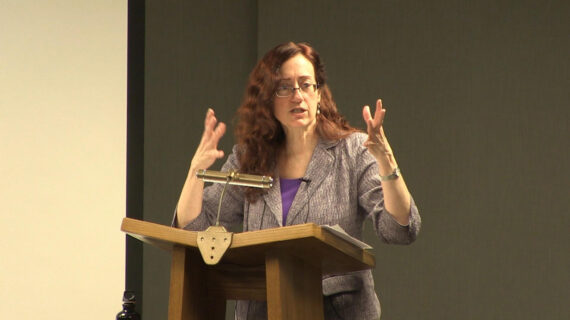
Good morning and welcome to our panel on "Beating the Odds." We're going to be talking about creating a tipping point that will ultimately disrupt the cycle of poverty. My name is Gloria Ladson-Billings. I'm the chair of the Department of Curriculum and Instruction and faculty affiliate in Educational Policy Studies. You will note, however, I don't have an office in this nice building.
LAUGHTER
Gloria Ladson-Billings
I don't think in the 20 years that I have been here at the University of Wisconsin-Madison that I have seen two education stories on the front page of the "Daily Cardinal." One of course is about this wonderful building, but the other is about DPI and the new education proposals. And I think that they are relevant to the issues that we will be grappling with in this panel on poverty and disrupting that poverty, certainly the issues of school funding and who gets what are central to our understanding of what equitable education looks like. Before the talk actually begins, I have the distinct pleasure however of presenting an award. I don't get to do that very often either. So I'm going to ask Donald Fraynd to come join me at the podium so that he can receive the 2010 Distinguished Alumni Achievement Award. Donald Fraynd began his education career in Omaha, Nebraska, in a volunteer teaching program. The North Dakota native had graduated from Creighton University with a BA in theology and planned to give a year of service back to his school before going on to medical school. But he loved education too much to leave. After six years as a teacher, an administrator at a Jesuit college preparatory school, he came to UW-Madison to work on his doctorate. After earning his PhD in educational leadership and policy analysis in 2002, he became principal at Jones College Prep, one of Chicago's selective enrollment schools. During his tenure as principal, Jones was recognized among the nation's top 100 high schools by "US News and World Report" and became the first Chicago high school to win the US Department of Education's Blue Ribbon Schools Award. He has a collaborative leadership style focused on empowering teachers to take ownership of their classrooms and to operate as independent and free thinkers. He strongly believes in challenging every student to their full potential on all levels. Arne Duncan, as CEO of Chicago Public Schools, appointed Fraynd to lead the Office of School Turnaround. Now in his third year, Fraynd oversees a bold initiative to transform chronically underperforming schools into high performing schools by using a comprehensive reform model. And I am pleased, on behalf of this University of Wisconsin School of Education, to present Donald Fraynd with the UW-Madison School of Education Distinguished Alumni Achievement Award.
APPLAUSE
Gloria Ladson-Billings
>>
Donald Fraynd
Thank you very much, Gloria. >>
Ladson-Billings
So now, in traditional UW-Madison fashion, we give you something, then we make you work.
LAUGHTER
Ladson-Billings
>>
Fraynd
Very good. I want to thank you all very much for this opportunity to be here today. I want to thank Dean Underwood, and I want to thank all of the professors that I had here in educational leadership. I think I would not have been able to do the things that I'm doing in Chicago now without the mentoring and the skill building of my professors. I even get choked up talking about it. But especially Colleen Capper, my adviser who believed in me and really pushed me hard. And so thank you very much. What I'd like to do in today's presentation is talk to you a little bit about the history of Turnaround in Chicago and a little brief walk through the turnaround work nationally, the national turnaround landscape. Talk with you about our values as an organization. We are actually now called the Office of School Improvement, and I will explain why that is. I want to talk about the cost of doing nothing, and that's really how I see this work as falling under the umbrella of disrupting the cycle of poverty when we look at some of the statistics around what happens when you do nothing about our lowest performing schools. Our audacious goal as an organization and then I'd like to dig in and become a little bit technical about how we actually do the work. So our approach and our model. And then take a look at our preliminary results and then moving forward. So I hope somewhere in here you'll find something that is of interest to you, and then we'll certainly have time for questions afterwards. So before I talk to you about this disturbing distribution curve, I wanted to give you just some bullet points on the context of Chicago Public Schools. So CPS has 409,000 students. 45% are African American, 41% Latino, 9% White and about 4% Asian. 86% of our system is on free and reduced lunch. 12% are English language learners. We have about 40,000 employees as a district and a $5.3 billion budget. 672 schools in CPS, and 122 of them are high schools. And what you're looking at in this distribution curve, which is far from even being a bell curve as you can see, is the distribution of our high schools by the meets/exceeds measure. This happens to be for 2008 but this doesn't change a whole lot if you went back several years. So you can see that a good chunk of our high schools are below 20% meets/exceeds for many, many years. And these are our high schools, as I mentioned. Our high stakes test is the Prairie State Achievement Exam which the primarily the ACT. So it's a tough nut to crack. It's not an easy exam. But you can see for many, many years we've had schools falling below 20% meets/exceeds and a good collection of them in the single digits for many, many years. So you know what that translates to in terms of the buildings where you have buildings where 2% of kids read at state standards, 2% of students know how to do math at state standards. So this is a very disturbing situation. One other context point I'll talk about with Chicago is that it's mayorally controlled. So we do not have an elected school board, we have an appointed school board. And I know we could do all kinds of deconstructing of all that but it's an important context piece. So what our district did for many, many years was what I call kind of one off. So the CEO, Arne, and Barbara Eason-Watkins, who was our chief education officer at the time, would find a great principal and would ask them will you please go do that really struggling school. So there were a lot of these kind of Arne and Barbara one offs for many years. And then I think after years of looking at this distribution curve, Arne and Barbara said no we've got to become a lot more systematic about this. So Barbara asked her staff in 2000 to start doing research on how a district might come at this systematically, and they established the office in 2008. And we started as the Office of School Turnaround, but we've expanded into a couple other models. We had our first schools in 2008, two elementary schools and three high schools, then we have one predominate partner called the Academy for School Leadership. They did one high school and four elementary schools in the 2008-2009 school year. And I remember the call, it was April of 2008, Arne and Barbara called me while I was principal at Jones College Prep, and they said the elementary stuff is going pretty well but nobody really knows what to do with the high school. Will you consider leaving your principalship and come run the high school aspects of this work? This was April for a school that was going to open in the fall. And so I got some of my good friends together, people who I felt were really smart, and we said what do we say back to them? We said CPS always screws stuff up. They never fund it right. They always forget that they did it. They stop it after one year. So let's come up with a demands list and then we won't hear from them again. And so we called them back we said okay listen, Arne and Barbara, it has to be well-funded, and not just for one year. We aren't going to do this halfway. Number two, we have to have total decision making power over the school. We're not going to do this thing where we feel like a principal needs to go and you are Barbara are going to sit on it and hem and haw and worry about aldermen making notice, etc, etc. And you've got to have our political backs because we know this is going to be one wild controversial ride. And they thought about it for a couple hours and actually called back and said okay and said where can we transfer some of our last discretionary funds from this fiscal year so you can get started. And we're like oh, no.
LAUGHTER
Fraynd
Now we're like, we've got to build this thing. And it's April. Then shortly thereafter, Arne went to DC and thankfully, that's Ron Huberman in the bottom left, has been very supportive. As you may know if you've been keeping up with Chicago news Ron will be leaving in about 15 days. Our mayor is not running again so we're in a very kind of unstable political conditions which is very new for CPS. I know that's normal for most school districts, but we've had the same board for like 15 years, and Arne was one of the longest running CEOs, Ron has just gotten established. So it's kind of a big question mark politically for us. It will be an interesting ride. But I was sure how familiar people would be with this national landscape of school turnaround so I did want to spend a little bit of time on it because there's been some significant changes from past practice. And so one of the thing that is Arne did was took a lot of what we were doing in Chicago to the federal level. And one of the pieces was the school turnaround work. So if you start up in the upper left you can see the federal role. There are two main ways that the federal government has shaped this and made this into a national priority. But let me back up and say that I often like to say that this work has three different ceilings. One of them is a political ceiling which I briefly mentioned a little while ago. The second one is a talent ceiling, and the third one is a budget ceiling. And Arne called a group of probably about 50 different groups to DC shortly after Obama took over and said, this was a group of charter providers, educational management organizations, some district leaders, and said this is the group that we think has the most potential to actually do turnaround work at scale. And we, as a school district, had been added about a year and a half and we were considered veterans in the room. Us and Green Dot, which is a charter organization in LA, and then our partner AUSL. And he said I want you all to work on how to get the talent together, I want you all to work on models and I am going to work on removing the financial excuse so that you can no longer say there's not enough money for this work. And so what you see there in the upper left are Race to the Top and then you see SIG, which the School Improvement Grant program which has actually been around for quite a while but was really willy-nilly and was at maximum $500,000 per school but usually was more like 200-some thousand dollars per school. And the states, as you can kind of see moving to the center, would just kind of give those things out willy-nilly too. It was just a really unstructured, undefined, very kind of low, relatively speaking, not that you bulk at $500,000 but relatively speaking pretty low funded. So what they did was radically increased the amount of school improve grant funding to a $2 million cap per year for three years. So now you're looking at $6 million over a three-year period for one school. A significant increase. And of course I think most of us know about Race to the Top. Additionally, the feds have given the states a lot more kind of guidelines that they have to use when giving out the school improvement grants and it has to be a competitive process. So no longer was it you just get the grant. You now have to show that you actually have a good plan, and you have to use one of the four federal intervention models. So you have turnaround, and sometimes people call all four of them turnaround, I often do that. Turnaround, technically speaking in the federal definition, is when you totally reconstitute the staff. So you can't hire back more than 50%. You radically change the programs in the building. It is the full implementation. Restart is when you do all of that except you have a partner like an AUSL or a charter management organization that you ask to lead the work. Transformation I often call turnaround light. So you don't reconstitute the staff, but you do put in a bunch of new programs and do a bunch more professional development. And then closure is pretty self-evident. Big requirement with the exception of closure is that the students who are enrolled there have to be able to come back the following year. And that's what scares off a lot of our charter friends because they're used to building schools grade by grade. This is different in that the students stay. So Office of School Improvement, we have kind of four different buckets of our work. One is portfolio management, meaning that we lead portfolios of schools, elementary schools, high schools. The second bucket over at the top is innovation and productization. So we've had the benefit, we're now going into our third year, we've had the benefit of making a lot of mistakes, and we've hopefully learned from that and we continue to learn more as an organization and we create, and a lot of folks in education don't like this terminology so you can either call it a best practice or an intervention, we call it product which bugs some people. But you call it what makes you feel good.
LAUGHTER
Fraynd
It's the packages of stuff that you actually do in the building. And you'll see when I explain the model what that looks like. Operational support just in terms of helping schools move right through the bureaucracy and not have to rely on the same "supports" that other schools get which is usually a bureaucratic mess. And then performance management. But the reason we're no longer called the Office of School Turnaround is because we've also moved into managing our relationship with our restart partners, and then also we're moving into, in the upcoming year, transformation. We haven't done transformation before, remember that's the turnaround light. And then while we don't manage school closure we do weigh in on those decisions. So currently we are in 17 schools with our systematic turnaround model. You can see how they break out 2010 us and our partners. Our partners have a good many more elementary schools, as you can see. And we have one more high school. The way we've broken it out is our partners tend to feel pretty good about their elementary strategy and not so sure on their high school strategy. So moving forward, we're taking the high schools, and we're kind of just the opposite. But approximately 10,000 students are in one of our turnaround schools either run by my office or our partners at AUSL. So this list of values is kind of the product of about a six-month kind of values jam. Many of you have read about how IBM did the values jam. So we did a lot of kind of similar activities, and this is what we came up with. One thing that I do want to point out is the accountability for tangible results, especially student test score gains. Another potentially controversial thing that is embedded in our values. And the way we talk about it is that when you have a building with 2% meets state standards, we don't have the luxury of being able to debate the merits of standardized tests. Our kids just need to learn the skills to do better on them. Once we get to the middle of that pack in the bell curve, we now can start debating whether or not this is a good measure of learning. But I'm confident that our kids can do anything they set their minds to do including do better at the ACT, even if the ACT is flawed. That's kind of how we look at it. A lot of debate about that but it's ended up in our values section. Beat the odds is probably by far the most kind of phrase that captures our values the best, and it's why it's the title of the presentation. But here's the bottom line as the brutal facts as one of the
perceive presenters said
our turnaround students are far more likely to be victims and perpetrators of gun violence more so than the rest of the students in CPS. So one of the things that Ron did when he first came into CPS was did a massive analysis with crime lab statistics, police database, Chicago Public Schools database and I think BCG or one of the big consulting firms donated time to create an algorithm to figure out which kids were most likely to either engage in gun violence or be the victim of gun violence. And that algorithm has produced a list about 250 or 300 kids who are the most likely to be the next victims. And we've created three tiers of support in the district where the kids in the top tier get 30 hours a week of mentoring support. So we've essentially bought these kids a very extensive social network of support. Mentors who eat dinner with them, drive them places, take them places, help with homework. We have more kids per capita in that top tier group than any other groups in CPS. So the odds are that our kids will be more involved with violence, odds are more than half of our kids won't graduate and out of those who do graduate only about 15% of them will make it to college but most of them will not finish college. And most of our kids will go on to be unemployed or very underemployed and the vast majority will have shortened lives and debilitating poverty. Those are the odds for the kids that we work with. So we talk a lot about how that's not acceptable. So you have to beat the odds. And that's really a rallying cry for us. Just to put a human face on it, I did want to show you a piece on CNN that featured one of our students from our first high school. Let me pull that up here. >> Bulletproof everything. >> His name is Kendall. He asked that we only use his first name. >> If I gave you money right now and said go get me a gun, how long would it take for you to come back with one? >> I couldn't answer that question. I couldn't answer that. >> You couldn't answer that or you don't want to answer? >> I can't but it would be quicker than what you think. >> He's a 16-year-old high school sophomore who says in his world the illegal gun culture is everywhere. >> How prevalent are guns in your neighborhood? We're only a block from your house. How easy is it to get a gun? >> To get a gun? >> Yeah. >> Like for a baby to get a pacifier. That easy. >> That easy. >> I mean you know somebody that knows somebody that knows somebody that's got a gun. >> Kendall shared his impressions on his two-mile walk to school one morning through
one of Chicago's toughest neighborhoods
Englewood. >> And you describe Englewood as what? >> War zone, a kill zone. >> It's that bad? >> It's that bad. >> How often do you hear gunfire? >> Out of a week? >> Yeah. >> Probably three times. People get killed going to school, man. >> In fact, 373 people were killed by guns last year in Chicago alone, one of the highest murder rates by guns per capita. >> It's something you adapt to like an animal. I'm used to it. >> Kendall says he's been offered a chance to buy a gun and refused. Says he's never owned one but has had close brushes with gun violence. >> You're 16 years old? >> Yes, sir. >> You're telling me you've been shot at before? >> That's exactly what I'm telling you. >> Does that sound normal to you, a 16-year-old that's been shot at before? >> I mean, does it sound normal to you an 11-year-old getting shot in the head? >> Not at all. >> It's reality now. >> Most of the issues with violence and guns, is it a gang issue? >> Majority of the time, not really. >> Not really. >> Just a bunch of kids with nothing to do. >> If somebody came and asked you, the mayor came and asked you how do you solve the problem, how would you answer him? >> For one I'd get these kids my age more jobs, man. >> I know some people had an eventful summer. >> For now the mayor's office and Chicago schools hope special mentoring programs in the classroom help keep teens like Kendall on the right track. >> It's just the point, man. I don't want this forever. I don't want this for the rest of my life. I want something different. I want nice things. >> So I think one of the most powerful statements is his last one there not wanting this forever. And we really see it as our role in the turnaround schools to provide these opportunities. Kendall goes to our first high school, Harper High School. And that was a walk in kind of the two- or three-block area around Harper, our first high school. Kind of pulling back up to the 10,000-foot level to talk about what powers, this is a national priority and it is a district wide priority. Some of you may already be aware of this but it's only about 2,000 high schools that produce half the nation's dropout problem. And relatively speaking, that's not very many. And that's something that we as a nation with as much as we have done, putting a man on the moon, solving complex engineering problems, etc, etc, we can handle 2,000 high schools, right? Probably in a fairly quick amount of time if we all put our minds to it. But that's the idea behind the national priority. But why care? Obviously it's the right thing to do. You could come at it, and I think I heard something else really intriguing in the last presentation about needing to put this sort of thing in terms that everyone can understand. So what you're about to see in the next few slides are actually the product of what's called the civic consulting alliance in Chicago. They take all the big consulting firms and do pro bono work for social projects that promote social welfare. So the idea of what I asked them to do is create a set of data that would show anyone, but especially business people and people who are very much into facts and figures, why they should care. And it was called The Cost of Doing Nothing. And that's kind of key question here is what are the social costs of doing nothing. And also what's great about this for use in Chicago is that this is all Chicago and Illinois data, though I bet it wouldn't vary a whole lot when you go other places. This, I'm sure many of you have seen in the research before about the difference between earning power. So lost income, lost personal income is one reason we should care. Students with no high school obviously make far less. This one I think is really intriguing. And I knew it intuitively but I'd never seen it visually about how much cash the state and federal government lose due to dropout. And the blue bar is actually the feds. And so you can see annually how much tax revenue is lost if you leave a bunch of people down here in the no high school zone. And so can you see how this is why it makes sense that this is a federal priority? Say you're just the businessperson from the congressional budget office, why an investment in school improvement, if it works, will actually pay off in the end quite substantially for the federal government? Dropouts have been twice as many years in poverty, again I don't want to be repetitive for folks who are really immersed in this work. I have a little bit of a typo at the top. It's actually $1,900, the feds and state government actually lose out. Let me make sure, I'm losing my place here too. Here's where I had the typo. It's $1,900 between no high school and high school and about $3,200 when it comes to no high school versus some college work. Public assistance, you can see that line is the average amount of public assistance aid that people get is obviously substantially higher for those without high school. So it's costing society in terms of public assistance. When you look at the criminal justice system, you can see the percent of incarcerated populations. You're far more likely to be incarcerated if you're a dropout. You also see very much of a gender and race disparity with 6% of all male dropouts being incarcerated, and 18.5% of all black male dropouts are incarcerated. So I'm talking about the financial impact here but when you talk about the broken dreams and hurt of families that's even bigger. Health considerations, you can see on the left that those who drop out report a much less or many more issues with health. High school graduates live longer than dropouts. And this just kind of summarizes the finances for each of those things. Lost income, 8508. Lost state and federal taxes, 1920. Lost state tax revenue, additional public assistance costs, additional criminal justice costs, and by the way that does not even include the Chicago police which every day that we dismiss, for example, we are pulling about five cruisers off the beat so they create a perimeter around our high schools when they release for the day. So if you added in the Chicago police costs, you can about imagine what that would total to. So about $11,600 per dropout per year. This is something I'm sure you folks already know well, but it just kind of puts it into graphical form that increasing income level has those benefits and decreases those expenses. Increasing the things on the left decreases the involvement in the criminal justice system. So I'm trying to make the connection here, not necessarily for this audience but for the audiences of folks with power who don't necessarily think about these things all that deeply that we can really make a difference, we can really do something big that will affect a lot of things if we tackle this work. So another little video here to introduce you to our model and then I'll get into some of the technical aspects. >> Students in Chicago's most underserved schools face many challenges. Neighborhoods with high crime rates, single parent households, even homelessness. Statistics are grim regarding grades and performance. Truancy, violent misconduct, graduation rates and, frankly, survival. >> My mom and my dad went to this school, and I wanted to come here. And when I got here it wasn't what I expected. >> The students yelling at the teachers, the teachers didn't know what to do. >> You would see a lot of angry kids that wanted to fight and the reason why they fought were they didn't even have a good reason. >> I was in a classroom with a lot of loud obnoxious students. >> No one ever wanted to pay attention in the class, it was not a school. >> In 2008, CPS created the Office of School Turnaround and launched the first turnaround high school and another following in 2009. The effort has resulted in an entirely new culture and climate in these schools. Along with higher expectations for academic performance. Thus began the work of ensuring that the students, despite facing social and emotional hurdles, are provided with opportunities to succeed. >> It's one thing to read about poverty and it's one thing to read about the plight of schools in New York or Chicago or LA or to read about gangs. To actually go in and see and be a part of it actually really puts a sense of urgency behind the work that we do. >> The physical environment is improved. Teachers receive extensive training that includes three weeks of professional development instruction with emphasis on classroom management, building relationships with students and raising expectations. >> The turnaround team and the support that they give to me helped, first of all, open my eyes because I think that we, as principals, we come to a table with a different mindset. So it helped me to put structures and processes in place. It helped me to look at things that I may not even have considered, for example care team and anger management groups. They also come with the wealth of expertise. So everybody that sits on that turnaround team is assigned to someone in the building. >> Turnaround is a comprehensive approach that looks at the school as a holistic organism, from human capital to culture and climate to teaching and learning, community and parent engagement. The ultimate mission of turnaround is to comprehensively change a low performing school into a high performing school without moving the students. It's the adults and the programs that change. >> Athletic programs are reenergized to create incentives for students while improving attendance, behavior and grades. >> When you try and get kids to school on time so early in the morning, you have to give them some type of incentive or something to do to keep them going and keep them coming. So we have the morning basketball. They come in, they play basketball, they have to come in and talk to me. If they have any problems the day before, I kind of help them out the next day when I see them. They sometimes wonder how do I know everything that goes on. I ask them just questions about their life that pretty much nobody's really asking them. >> During the first half of the turnaround year, known as Phase Zero, the staff spends much of their time helping students understand new and more rigorous behavior and academic standards. Teachers, administrators and all staff meet weekly to discuss and share data. They celebrate successes and develop action plans for areas where the data indicate problems. >> The curriculum of the school or just the teaching has changed. There's a lot of support for teachers. The department meetings structure are different. >> Change in human capital, we have more staff in more places. The counseling department has increased. We have a community representative, a person that her job is to actually bring in community resources. >> The principal identifies chronically misbehaving groups of students and enforces strict discipline policies. >> They're angry because of certain things at home. It's not the school that made them angry. They were angry before they even walked in the door. So we're trying to keep the battle with us winning and helping the kids at the same time. So they know that things like attendance and being to school on time and making it to class on time. So we keep the halls, we do hall sweeps and turnaround was really big on a lot of those things because it keeps the building in order. >> During the first year of turnaround, serious misconduct drops dramatically, attendance increases, there's a jump in PSAE scores and the rate of freshmen on track to graduate grows incrementally. The first year of turnaround focuses on primarily on school stabilization, culture and climate, and family engagement. Parents and members of the community are welcomed and engaged as a vital component of the turnaround process. Higher gains and test scores are expected in turnaround years two and three. Realistically, turnaround will take five to six years to complete. Stark statistics tell us that turnaround cannot afford to fail. >> The money, the resources and making sure that turnaround schools are sustainable and that the interventions and resources that they put into the school that we're building a capacity of the individuals that to be able to work and still complete, because it is a lot of work, and complete the assignments and tasks that are put before them. >> Moving forward, a challenge is to remain committed for the long haul for these schools and for the kids and families in these schools. >> I want the kids to be better than they were when they walked in the door. When they leave after four years, hopefully we created a better product than what walked in the door. >> Things just take time and I think that people say they realize that, but when it comes to the bottom line of here's the data and here's what we've got to get to they want it right away. So I would really hope for even the community to realize that things just take time. >> There are meaningful signs of progress but lasting positive change must be sustained. Our students need the support and partnership of the greater community to ensure that they become the valued citizens they aspire to be. >> I feel like everybody comes together and it's like a family in here. I be happy to come to school every day. >> It's nice to know that someone actually cares about you who's not at home. I have somewhere else to go to where I can feel safe and still learn. >> The only way a student can actually fail at this school is if they just don't try. >> I really, I like it now and I'm proud to say I graduated from here. >> So that was our propaganda video.
LAUGHTER
one of Chicago's toughest neighborhoods
Everything is not really quite that smooth when you're doing the work. Just to be totally transparent there. But I wanted to walk you through, I also wanted you to hear it from staff and students. But in terms of the technical aspects, so what exactly to you do with one of these big broken high schools? We start with human capital and we look at that. You can see the image that I'm working with here is that of a building or building blocks of a house. Human capital is at the foundation. If you don't have talented people in the right roles, none of this is going to work. And I'll get into that in a moment. School stabilization and community parent engagement are the next layer of the house there. And again, I'll get into that in a little bit more depth. Climate and culture and community resources next. And then teaching and learning built upon the foundation of those things. So then moving more into human capital, but let me back up and give you one more piece of history. So after that panicky call when Arne and Barbara said yes, one of the first things we did is took a big piece of butcher paper down to the bar at the end of the block and we got buckets of beer and we spent hours and hours there with pencils and this piece of paper and we said we are not going to be constrained by what's been done in the past or what's there now, let's totally create a school for the kids who are going there and let's just free ourselves. So we did a lot of kind of org chart things, we created different roles. For example, we don't hire a lot of traditionally trained school counselors. We tend to hire social workers with trauma informed care backgrounds. We created a position called the coordinator of logistics and master schedule building, and all logistical functions come out of the counseling center and come out of a lot of other places where there are people who are supposed to be doing kid work but they end up doing a bunch of paperwork. So we created a person who will do all paperwork and who will build the master schedule and all those sorts of things. So role clarity, org chart, recruitment and hiring of the right people which I don't know if the districts you're familiar with are like this but CPS doesn't even have clear job descriptions for every role. So we rewrote every job description that we created and we made sure that our job postings were very clear about what we wanted. We had to kind of completely remake the human capital side of the organization because it was not built for this turnaround work. We also believe strongly that you have to grow people. So when you have a brand new staff especially, you've got to put a good amount of time in the summer to getting them ready and training them in the turnaround work. And then you have to have this be ongoing. If you choose turnaround, you're going to have to hire 120, in our case about 140-150, new positions in a period of three months, and then train them up and have them ready to go. So you have three months to do a pretty big job. You end up with about 3,000 applicants if you do it right. We contract with the New Teacher Project, which is Michelle Rhee's organization, to do national recruiting for us and to do initial screening, and then we have a fairly extensive, not even fairly, it's a pretty extensive three-hour group interview with six different modules in it. If you make it out of that portion of the interview process, you then go and do a sample lesson at the school that's being turned around. Not expecting a perfect lesson because you don't know the kids there but to kind of see how you react and bounce off of the kids in the school. A family community interview. If you make it through all that, then we do a reference check and then we make you an offer. So it's a fairly extensive hiring process. Another part of the human capital piece is making sure that people understand that a portion, not all because we know the data is flawed and data systems are not perfect, but a portion of the evaluation system is related to the student outcomes which is also very clear in the job description which is also very clear in the job posting which is also very clear in the hiring process. So there's no mystery about that. School stabilization. These buildings are very, very broken. Everything is broken. So we walk into these buildings and there's no difference when you look at the hallways, there's no difference between class time versus passing period. I'm sure some of you have been in these really broken high schools. So one of our security guys talked about hall sweeps, that's what we would consider a product. There's a whole operations manual with training programs, kind of a checklist, a rubric. So what you saw with Harper's hallways there are the result of a very clear hall sweep product. Progressive discipline. We see deans and administrators just making the discipline decisions willy-nilly. So chewing gum could either get you suspended or it could get you nothing. So you've just see these crazy pieces. Another one of my favorite but very tragic examples is the seniors who, once we do their transcript analysis in Phase Zero, have two years of world language left for their senior year. Didn't take classes that were anywhere near the graduation requirements. Thought they could to take PE-3 to skip PE-2. No guidance and counseling. Completely broken transcripts. Summer grades that weren't entered. Just a mess. Attendance processes that don't work that either lead to way over-reporting attendance or not reporting attendance at all. Kids with special needs who are not only neglecting to get an inclusive environment but don't even have an up-to-date IP. So even the basic compliance functions are broken. So school stabilization is a set of strategies, products, efforts to fix all the basics. Community and parent engagement involving parents and decision making. We have a bit of a controversial arrival on the scene which we're trying to get better at in that we're doing a lot more proactive work out in communities before the turnaround decision is even discussed. But over the last few years, it's kind of been the board makes the decision and then we have to kind of react. We're trying to be a lot more proactive. But once the board does make the decision, we start monthly focus groups, we start meeting with key community groups, community agencies to figure out who's concerned about the school, who'd like to weigh in on decisions, engaging parents in what's your vision for the discipline tolerances of the school. When you walk in what do you want to see? What's interesting is parents are always much more strict. They want you suspended for cussing. I'm like have you been around here?
LAUGHTER
one of Chicago's toughest neighborhoods
We'll clear three-quarters of the place out if an F-bomb gets you suspended. Can we just wait a little while before we get that strict. But you engage parents in the decision making and then you also institutionalize these programs. These schools don't have your annual freshman parent night. They're totally devoid of these institutionalized community and family events. And so that block works on decision making and institutionalizing those things. While the school stabilization block is about kind of some of the consistent discipline consequences, the culture and climate block is about making sure that the school is warm and healing. So when you come into a turnaround school, you'll see what we call splash all over the walls advertising incentives for attendance and honor roll and most improved interim assessment scores, just trying to create motivation in kind of a warm environment. We do tier two research-based practices such as CBITS and Think First which are anger control groups and trauma recovery groups. We have a care team that was mentioned in the video that analyzes each case and decides where to route students as part of the behavioral health program. Another very important factor is that last one there. So we do an extensive amount of training in the well managed schools program. So obviously discipline, behavior is an issue in these schools, a big issue, a huge issue. It was important to us when we sketched out that grand plan that every single adult respond to behavior in a consistent fashion and using the same language and to do so not in a punitive way but in a way that builds social skills for the future. So we do an extensive amount of training in a comprehensive behavioral framework program in the school. Community resources. This is the block where we look at who in the community can provide before and after school programming that connects with the school's mission. So pardon me there. And often the people with the most positive influence in students' lives are right in the backyard of the school. And so this looks for those people and engages them and finds structure in consistent ways for partnerships. Teaching and learning, it is the most important but it is impossible without the other blocks behind it. Standards aligned, we use interim assessments that are tied to the state tests. Ultimately we would like to use computer adaptive assessments, but we aren't there yet on the high school level. We are on the elementary level so we use the Scantron Performance Series which is adapting to the last answer that the student gave which is giving you a much finer tuned sense of where the student is at. But most high schools, certainly these schools, weren't using interim or periodic assessments. We train teachers in standards based unit design. Another interesting but tragic fact, another thing we do in Phase Zero on entry is assess all of the student's reading levels. And it's been on average about a 6th grade reading level for the high school. Which means you have a fair amount of students in the third, fourth, fifth grade levels. So rather than crying about that we bring in READ 180 and we implement the heck out of it. We could bring in another one but we found some success in READ 180. And we take any student who reads below sixth grade and put them in an intensive reading program and get them caught up. We also have common planning time by department built into the school day, and then a weekly grade level pod meeting. So one discussion of what I consider kind of the vertical integration about courses and course teams and the curriculum, and the other is a student focused conversation, IE the grade level pods. And I know I've only got a couple more minutes before we want to open it up so I'm going to speed through a few more slides here, but another point I want to make is when we went into some of these schools, we found unopened packages of software and books from the past. So we actually went in and found an early 1990s edition of the READ 180 software at Harper. And how many times do we know that you pour stuff on a school, I learned this from you guys, the professors in the room, and it doesn't work. It's not an issue of resources. So we have a very tight what we call performance management system, this slide calls it focus and alignment. This was designed for a different audience. But performance system which entails a very tight weekly meeting that I go to, that my staff goes to, and the people in the building present out. So it has a different theme that's usually tied to one of the blocks. And the people actually doing that work in the building have to bring their data, put it on the a screen, it's a U-shaped table, and we talk about both fidelity metrics and student outcome metrics. And we try to create an environment where it's not bad that something's going poorly. It is bad to not have a plan but that's part of our performance management framework. We talked a little bit about this, about time, about the Jell-O theory of school reform. Trying to get your board and your district to make a four- to six-year commitment is quite a challenge. Battling it out with the budget office every year, feeling like haven't we had this conversation for the last three fiscal years, this is a four- to six-year commitment. You cannot reduce the amount of investment that goes to Harper High School. So just fighting those battles every single year to ensure that it's a four- to six-year commitment. You can kind of see the phases and how the investment goes up and then tapers back down. I know I'm rushing through it. This just kind of visually reinforces what I talked about earlier about which aspect of the model is focused on and when. And these phases aren't necessarily tied to the years. They're more tied to certain competencies. And then phase three which is the transitioning back to being kind of a regular school in the district. Another way to look at it is kind of a Maslow's hierarchy-esque sort of way of looking at the model. I'm speeding along because I know I am at my limit. Results. So our elementary schools are doing really well on the left. The top graph rank orders the district's areas by value added. You can see that our area on the far left far outranks even the second place finisher. And what I always tell my people is you have to do that because it's like a rubber band. You got to pull the kids out of this low, low spot by always being in the number one growth spot. High schools are a tougher nut to crack, but we have seen some great progress with the student attendance rate, with misconduct, freshman on track, our one year dropout rate. Harper, these are Harper's numbers, the school that was featured in the video, did double its PSAE. Now mind you that was from about 3%-ish to almost 6%-ish, but it was still a move when they hadn't had a move in about a decade. What we're most concerned about and putting all of our organizations energy on are these red spots which is a high school value added measure which is not looking so good. So nearly all of our energy is focused on the academics, particularly in Harper. Fenger, you may recognize the name of this school. This is the school where Derrion Albert was beat to death about seven blocks away. It kind of hit CNN right when the president was flying to Cologne to promote the Olympics. That's another point I would make, when something like that happens people just love to beat these schools down. You wouldn't believe the pressure on me to fire that principal, to change this, people wanted to fire me. This happened eight blocks away from the school, it's tragic, it's one of our kids but it is not the school's fault. But the politics of this stuff is crazy. And what you usually happens is these schools get beat up, and that's part of the political backs thing. Marshall is our new one, if you saw Hoop Dreams, that's Marshall. On the west side, the other two are on the south side. So in the future, continuing to scale this by pulling the red schools, kind of the most struggling ones in the areas, pulling them out for work in our office, making sure that we have the capability to scale by having all of our interventions and products and plans in scalable fashion. So there we go. I know I'm a few minutes over.
APPLAUSE
one of Chicago's toughest neighborhoods
>> I want to thank Donald again, congratulate him again for being our distinguished alumni, but also for doing the work that he's doing. I guess the simplistic answer is we have to get a Wisconsin grad in every major city.
LAUGHTER
one of Chicago's toughest neighborhoods
We have a distinguished panel here of Professor Allan Odden from the Ed Leadership and Policy Analysis Department. We have the director of the UW Institute for Research and Poverty, Timothy Smeeding, and our deputy state superintendent, Michael Thompson. Now I've probably moderated enough panels to know if I don't tell them something, they're going to tell me and tell you what they want to say. So I'm going to reign them in a little bit. >> We might do it anyway. >> Yeah, you might do it anyway, but at least I'll give you a little bit of a structure. So I'm going to ask you to imagine that you've got unlimited financial resources to transform a high school, but you can only do one thing the first year. I want you to think about what is that one thing. And I reason I'm phrasing it that way is because our tendency as academics and people who are working in schools is to have a lot of stuff we want to talk about, have that all in the newspaper and have the electorate and the citizen's eyes glaze over. So I want you to just think about if money's not the object here, if the resources are not the object, what's the one thing that you would want to do to transform a high school or turn it around? >> Let me start by saying that we all should be really, really proud of Donald. Not many people go through a university like this, end up in a tough city, in a successful high school and becomes a turnaround agent for a high school. It is unbelievable. So I'm enormously proud of him.
APPLAUSE
one of Chicago's toughest neighborhoods
And as that one, I think it was the "Sun Times," had a picture of him on the paper when he got the award, and it said how can we clone this person? So we'd have to learn how to do that. >> Send him to Milwaukee, too. >> I like the question. I have an answer for it because I've studied school improvement strategies and I've got a book 10 Strategies to Improve Student Learning and they're similar across urban, rural and suburban school districts. I've looked at the finance side and a lot of what districts and schools do to dramatically improve performance, and Donald implicitly talked about this, was to reallocate resources. Another piece of the strategy is to be relentless. No excuses. They're in a tough environment. No excuses, we heard no excuses about whatever, they're going to do it. But the one point that was going to mention and that I will mention here is his foundation which is human capital, talent. Can you imagine Bret Bielema trying to do what he's doing now without John Clay and without James White and without Monte Ball and without Lance Kendricks and without Nick Toon and without Steve Tolzien. They could do all the training, etc, etc, and they would not be ranked fifth or sixth. You need talent. And what we sort of like in education is the stories of the districts that start with pretty good talent. So the story of Montgomery County, right outside of Washington, DC, which began their trek by really do well by low income minority students who entered that system in the past 10 to 15 years. They started with a pretty good core of teacher and principal talent. And they didn't have to get involved in some of the things I'm going to talk about and that I know is going on in Chicago. Whereas places like Washington, DC, and Chicago and New York City and Atlanta had a real talent problem to begin with. They had low quality, they had some good teachers and principals. Basically, they had a very low quality talent pool of teachers and principals. So if we look at what they did and what they need to do, the question you can say is how do they get talent? Well, they begin doing some recruiting in some universities. So Chicago began recruiting at UW Madison, Michigan, Northwestern, they didn't used to recruit there. But their primary strategies have been to work with organizations outside of traditional higher education. So Donald mentioned it. What they do is they work with the New Teacher Project. And the New Teacher Project recruits early career changes from law firms, financial services, organizations that have all kinds of people with majors in math, science, statistics, kind of the shortage areas. They work with Teach for America. You can recruit some top talent in the country, UW Madison can, but you can't recruit Harvard people to Chicago until they've earned their bachelor's degree or Princeton, Yale, even Northwestern, all the top colleges. And so a major piece of the strategy of getting talent in these urban school districts, this is getting it in at the front end, is recruiting from nontraditional sources which is controversial in many higher education contexts. Then what they do is they're relentless. They want to be relentless in making sure even from that top talent pool the only people they keep are those who are effective in the classroom. And Donald had a piece in there, I don't know if you saw it, they're going to evaluate people in terms of, in part, their impact on student learning, which is controversial. Then the next piece is what do you do about all the experienced talent that's there, or people who are there, that are ineffective, many of whom are ineffective? You have to do the same thing. You start a major professional development program that gives everybody the chance. Then you have to institute the same evaluation system. You keep those are who effective and you have to move out those who are not. All of these strategies for building a human capital foundation are highly, I'm just going to end by saying, highly contested in the education community, and most of us in the education community are railing against what those places are trying to do. But when you look at what they do in Chicago and many urban school districts, which have most of the 1,000 or 2,000 schools that produce the dropouts, most of whom are low income and minority, we have to rethink that foundational piece. It takes all the other pieces but without the foundation you can't execute any other strategies. >> How long of an answer would you like? >> Well, we have about 10 minutes, well actually we started late so medium.
LAUGHTER
one of Chicago's toughest neighborhoods
>> I'm not an educator, other than being an educator and a professor. I've been doing that for 35 years. And what I'd like to talk about at some point is how to improve the odds a little bit from outside the school where I think the real problem is because, as you can see from Don, that schools are trying to do everything. But I will talk to you about a school. Our Wisconsin Idea tour, two years ago when I came here, took me to South Division High School in Milwaukee. Now South Division, immediately we were told by the kids there, we were led around by the 10 best students or 10 of the 15 that were going to college and five of them were athletes. And we were led around and we were told what's going on here and the first thing, this isn't the worst school. This is not the worst school. Okay. So we meet the principal. And this is what I think is probably what I learned from him anyway. He spent three years trying to provide a safe place. A place where teachers would feel safe and students would feel safe to learn. My Jesuit education my father took me dragging and screaming to the high school and told the prefect to discipline if he gets out of line and he did. This is different. What this guy did that was very inventive is he hired a gang banger. He literally used money to hire somebody who used to be a gang leader, and he had four guys, huge guys with him and they knew everything that was going on inside and outside of that school. They knew who was fighting with who, who was doing what wherever and they were able to use, by whatever means, to produce, after three years, a safe school. You can see these white triangles where kids could go to be safe. Kids had to be on time. You couldn't take your cell phone to class. This was really amazingly good. At the end I said this is great, now comes learning. Now we have an environment in which you can learn. He said I'm retiring in August. I said it's May, who's going to follow you? We don't know, they'll pick somebody and send somebody down in August. Who doesn't know anything about what you're trying to achieve here, doesn't know anything about where you're trying to go and what you're trying to build here. I could tell you more stories about the high school that I learned, including some of the issues a lovely young woman, African American woman led us around and her biggest problem, she said, was first of all figuring out how to take books home. Then she figured they let her do that finally. And the second thing was fighting her family because they didn't think she should study. They thought this was bologna. They thought that you're a chump by trying to study and get ahead academically. She was going to Sunny Parkside. The other woman who led us around was the valedictorian and she came here. She was the only student in this whole high school that was coming to the flagship university school in her state. One. O-N-E. So we need all the same things that you talked about I think, and especially centralized control to back up the ability to make change and to stick to it. So I shudder. I'm torn between going back to the school and seeing what's going on now versus what was going on then. You must all know that the Milwaukee school system is such a disaster we can't race to the top, we can't race anywhere. Schools in receivership, it's just a really tough situation and you need somebody like Don to come in with what I would call -- and try and make a difference. But what I'd like to talk about next, not now, next time around, is about the tough odds. Improving the odds by improving the families and the neighborhoods and the quality, not just in teachers, but of parent/student relationships and parent relationships and so forth so that when people come to school more of them are prepared to learn and you put them in this environment and you hope they'll thrive. Thank you. >> Well, thanks. >> If that was medium, I'll go short. First of all, Don, I do have a deep appreciation for what you're doing in the Chicago public schools. And as Allan said you need that relentlessness. And I have to tell you, though, Milwaukee has that relentlessness with the new staff that's in there. With Gregory Thornton as the superintendent, Naomi Watts and Heidi Ramirez and that's what they have. They're working night and day, and the descriptions of what Don gave about the turnaround schools are what's happening in Milwaukee and they're already showing some attendance rates. They've got a long way to go but they have this hope. And if you go down there and visit you'll have hope with what's going on in the Milwaukee Public School District, I can guarantee you that. And I just want to think about something as we're talking about high schools and figure, what was it 2,000 high schools where all the dropouts come from. I just want you to think about something. Is that the cause or the symptom? Because kids coming into high school reading at the fourth grade level is not a high school problem. It's an elementary and middle school problem. And so we have to go back and intervene early in kids' lives so they don't get behind. We all know the statistics about kids their drop out and their reading rate and all the people that are imprisoned, they're reading rates. It doesn't happen in high school, it happens before. And I agree with all the strategies that need to go on in a high school to continue that involvement. We're sending kids there that are that far behind, the problem is not at the high school and we always put a lot of blame there. Now, I'm going to go right to your question, Gloria, about what we would do if we could only do one thing and you had all the money in the world to do it and I'd say keep your money because there's not one thing. We can't simplify this. But if you pushed me I would take the money and I'd hire a really good principal. >> Okay, go ahead. >> My background, I guess, I run the Institute for Research on Poverty, and we believe in the Wisconsin Idea and so we have a Wisconsin poverty report we do each year, that's one thing that we do. And if you look this year you look within Milwaukee County, just within the county, one county now, we're not talking about the rich counties on the outside, in the county child poverty rate in Whitefish Bay and Brown Deer and all these other places 2%, central city of Milwaukee 50%. Within the same county. We try and help the state. One of my colleagues, Katherine Magnuson, who's incredibly well-known and respected as an early childhood educator, just completed for Tony Earl, Mike's boss, and for Reggie... >> Bicha. >> Bicha, thank you, an evaluation of the early childhood education program for Wisconsin that laid out a map of where to start early so that we can get at the problems we've got. And I have a Thursday seminar series on insecurity instability in education which will bring people here to work with WCER and others. So from all of that what I wanted to say is that the problems are big. First problem is parenting. The hardest thing to admit is that not all parents are well qualified. Now the way I usually start this talk is I say is there anybody in this room who didn't think, forget from the birth, from when you knew your child was coming, okay, the conception of your child, ever thought they weren't going to college? Raise your hand if you're one of those. No way. My kid is going to college. So parents do everything they can to help their children. This is always going to be true. They will do everything they can. But some kids get born to the wrong parents who aren't in stable situations, who aren't getting child support because the guys were in and out of jail and they don't have their rears pulled up, they don't have a job, if you don't have a job you can't pay child support. You're losing your job because your car broke down and then you're being evicted. We have a wonderful study about eviction in Milwaukee that was the whole front page of the New York Times from one of our graduate students. Can you imagine a kid when they're not eating, they're not seeing a doctor and so forth trying to go and learn. And it's just really incredibly bad. So I think we need to start with that, and if you ask me what's the most important thing to do there, I'll say one thing, to give young women and young men who aren't doing well in school something to look forward to other than having a child before they're 20. A third of the kids in this country come from mothers and fathers, mainly mothers, who dropped out of school. The median age of first birth is 19 years of age. Then they go on and have three kids. In other words, they pull up the birth rate dramatically. High school only, including GED, first kid at age 22, a little more than two kids. You go down to college graduates, first kid at 28 or 29. Two college graduate parents who have done all of the stuff that you're supposed to do. In other words they, completed schooling, they found a job, they found a partner and they made a plan. Then they had a kid. The difference here is you had a kid, you didn't finish school, you didn't have a partner, you don't have a job or a career and you never had a plan. And so this makes the odds really, really hard for a kid like that to get through school. And I think that's probably the most important thing. And we'll talk about early childhood education and other things later, but I'd like to give you better odds. I think that's all I'm trying to say. I agree with Mike that you're dealt a deck that's really hard to win a poker game with and you're doing the best you can. It should be incumbent in the rest of us to provide you with better material to work with in some sense. Thank you. >> So before I open it up, I'm going to ask Don if he wants to respond to anything that he's heard. >> That said, I think that we need to do a lot more regardless of who comes through our door. We've really screwed a lot of stuff up as the field of education, and I think there will come a time, even in my own schools, where I will feel comfortable saying we are running on all cylinders and everything is doing great, now I can turn and start criticizing other places. But as a system I don't think we're there yet to be able to do that. So that would just be the one comment that I have. But I'm eager to hear other people's questions. >> Okay, so at this point I'm happy to entertain questions from the audience. It can be directed to Don or anybody on the panel. I'll start here and then Doug. >> Hi, I just want to say that I don't believe that kids are born with the wrong parents. I don't believe that.
APPLAUSE
one of Chicago's toughest neighborhoods
And I think that some kids are born in situations where families have to struggle with the institutionalized racism that has been in place in this country for centuries. And based on that, families can't succeed. So for example, in the Latino community, the immigration status of a lot of families about 12 million or 14 million people in this country it's like a poverty trap for them and also for the kids in their family, even if the kids were born in this country because even if the kids were born here they have to work at an early age to provide to the family or stay at home and provide for and help with childcare and other situations. So my question and comment is around that, the immigration status. I believe if we are serious about narrowing the gap of, especially, Latino students, we really have to take a look at a lot of the policies. And one of those ones is immigration policies. And I really hate when people come up to me, I work at Centro Hispano, one of the main community centers here, serving the Latino community and they really care about the kids, but when we talk about immigration it's like oh, I'm sorry, they broke the law, they came here and they should be deported. So my question is for, I don't know, anyone who would like to answer, how we can take into consideration this immigration status and somehow include it into all of this vision because when that student doesn't have a social security number, that's student knows that it doesn't make sense for him or her to spend all of those years in high school and then college if that student is not going to be able to find a job in that field later on. >> So someone on the panel want to respond? >> Love to respond. I agree with you about immigration. We had another young lady who led a group around and they were all whispering behind her back. She ranked about fifth in Division High School. She's a Latino. Her mother was making her go back to Mexico and not go to college. She had to go home. That was it. That was what she was supposed to do and so forth. And it was heartbreaking the way that the teachers and the school was trying to work on the mother to let her go to college. This kid needs to go to college. And the idea was no. So I'd like to change that. This school, South Division, is an immigrant school. You can go back there and look at the basketball teams in 1915 or Polish in 1925 or Slavic and so forth and so on. But I'm telling you, I do think there's some issues with parents. 75% of the guys under age 30 in this country are fathers. Less than half of them live with their own kids. The chances of an, if you take this high school dropout group, the chances that an unmarried woman and an unmarried man have a biological child together, the chances that one parent or the other will have a child with another partner are 65%. So if you're not there you can't help. I know there's a lot of well meaning people who are trying to fight the odds and are having a tough time and we need to improve the odds is all I'm saying. I'm not saying parents are bad. I'm saying that parents need some help. They need structure. They need lots of other support so that their kids can show up at school so that they can meet with teachers, as Don was saying, and be able to interact with the school to meet their own kids needs. >> Doug.
INAUDIBLE
one of Chicago's toughest neighborhoods
>> They've got a microphone for you, because we can't hear you. >> So the first question is, we have stories of short-term turnarounds. We don't have a lot of stories of long-term turnarounds. So you mentioned this phasing out after four to six years. What do you have in mind for the long-term? The second question is, so you went through the program here and you mentioned the field of education has screwed a lot of things up, and I totally agree, but I'm wondering whether you have practical advice for us, so you've been through the program, looking back on what you did, what would you see as things that we could do better to create more of you? >> I don't know if you want to do that.
LAUGHTER
one of Chicago's toughest neighborhoods
No, thank you for the question. So the first one was about the kind of long haul. The simple answer, I don't know. Harper is our trail-blazer and so as Harper enters into something then we begin to solve it. I'm trying to get better at staying ahead of that. Those value added academic results really bugged me and so almost all my energy is on that. But then I think in another year or so I'll be able to start thinking about what that transition looks like. So I could make something up to sound cool but the answer is I don't know. My concern is that we as a district and a nation not take our focus off of this. I think that's more likely to happen than my inability to formulate a plan. I have some ideas but it's just not front burner yet. But I think the reason I have it in there as a phase is to force us to get to that transition planning because that's another thing we do horribly. We put a program in a building, the grant expires and then everything goes back to normal, and I don't want to do that. Secondly, if we can figure out a way to have this standards-based debate without graduating undergraduates who don't have a clue how to help kids learn the skills and the standards, that would be really cool because I am having to train every single undergraduate in the college readiness standards and how to do backwards design and standards-based unit, and I know those things need to be debated. There are racial issues, there are classist issues, there are learning style issues with standardized tests, but can we just spend 25% of our time in undergraduate teacher education on that and 75% on how to actually do the craft to raise the test scores but not go in there blindly thinking test scores are the only way one learns. Do you kind of get what I'm trying to say? I want to honor the debate but I also need teachers who aren't going to look at me with crossed eyes when I say, hey, English teacher, the ACT measures word choice and main idea and compare and contrast and you have to teach the students how to do this. And they look at me like I'm a literature teacher who knows how to deconstruct the standards movement. I don't need that. That's great but I just can't have that initially. So I know I am being very critical. >> We taught you to. >> And I know that we don't do enough deconstructing and asking deep questions about why things are the way they are, but at least in this work we need a little bit more practical skill building skills on the part of teacher undergraduates. >> I've been told that we have to vacate the room. I thought we actually could stay. But I've also been told that the commons is clear so I'm going to ask you, first of all, to thank the panel, and then we're going to try to migrate over to the commons so we can still ask those questions.
APPLAUSE
Search University Place Episodes
Related Stories from PBS Wisconsin's Blog










Donate to sign up. Activate and sign in to Passport. It's that easy to help PBS Wisconsin serve your community through media that educates, inspires, and entertains.
Make your membership gift today
Only for new users: Activate Passport using your code or email address
Already a member?
Look up my account
Need some help? Go to FAQ or visit PBS Passport Help
Need help accessing PBS Wisconsin anywhere?

Online Access | Platform & Device Access | Cable or Satellite Access | Over-The-Air Access
Visit Access Guide
Need help accessing PBS Wisconsin anywhere?
Visit Our
Live TV Access Guide
Online AccessPlatform & Device Access
Cable or Satellite Access
Over-The-Air Access
Visit Access Guide




Follow Us