

 Passport






The Battle of Midway
09/17/14 | 47m 26s | Rating: TV-G
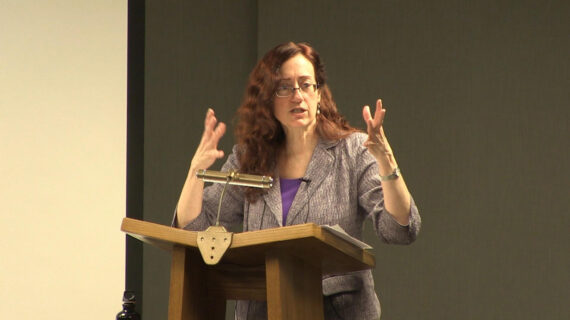
Dick Campbell, Aviation Historian, shares the story of the World War II Battle of Midway. This battle involved numerous aircraft carriers from both the American and Japanese sides. The daring and skill of the U.S. Naval leaders and the air crews resulted in a military victory, changing the course of the war. This lecture was recorded at the EAA AirVenture Museum.


Copy and Paste the Following Code to Embed this Video:
The Battle of Midway
cc >> I'd like to introduce now tonight Dick Campbell, our speaker, who reigns and hails from Indianapolis, Indiana. And he's my dad.
LAUGHTER
He is a graduate of Butler University, Indianapolis, in 1954. Married to Marilyn Campbell. Three children. Served as a military pilot in the United States Air Force from 1954 to 1957. Professional YMCA director for a total of 35 years, 1958 to 1993, in Indianapolis, Milwaukee, Racine, and then here in Oshkosh where he was the executive director for 22 years, retiring in 1993. He is a community volunteer, spends a lot of time with the Oshkosh Rotary here at EAA as a docent tour guide and presenter. He's part of the Oshkosh Chamber of Commerce score counselor, Meals on Wheels, he's a Roving Reader, heavily involved at Peace Lutheran Church, fund-raiser, and the Oshkosh United Way and the Oshkosh YMCA. Long-time student of history with nine programs to date, which he calls great moments in history. Since 1999, he has given these nine PowerPoint talks to many organizations here in Oshkosh as well as far away as Fairbanks, Alaska, which he just returned after a three-week tour up there with my sister. 5,000 miles, was it? Yeah. So, without further ado, Dick Campbell.
APPLAUSE
>> Thank you, Bob. I appreciate that introduction. He's one of our three children.
LAUGHTER
I don't always share that information.
LAUGHTER
It's good to be back with you to share another what Bob referred to as my great moments in history presentations. Because for many years I have been a student of history. And now I'd like to share one of these moments with you entitled Remembering the Battle of Midway. It has been called the greatest naval battle since Trafalgar, which incidentally took place 209 years ago on October 1805 between the British Royal Navy and the combined fleets of the French and Spanish navies, resulting in a British victory led by Admiral Horatio Nelson. On June 4, 1942, near Midway Island, located 1300 miles west of Hawaii, the course of the Pacific war changed dramatically. Before the Battle of Midway, the forces of imperial Japan seemed unstoppable. After Midway, the Japanese would never again take the offensive. The surprise Japanese attack on
Pearl Harbor at 7
55 Sunday morning December 7, 1941, seriously damaged eight US battleships, sinking four, including the Arizona which was moored on battleship row. Incidentally, this newspaper picture is copied from one of eight World War II scrapbooks, which I compiled from 1941 to 1945 when I was nine to 13 years old. 13 of them are on my display table at the left. Today, the submerged Arizona is the centerpiece of the Pearl Harbor War Memorial. If you look closely, you can make out the ghostly shape of the sunken battleship beneath the memorial and a shimmering trail of oil that some say is the tears of the 1,177 crewmen who died here. All but 229 whose bodies were recovered in the days after the attack remain entombed in this ship. Like a bridge spanning the years, the Arizona memorial has become a place of reconciliation as well as remembrance. As stunning as it was for the United States, the Japanese attack on Pearl Harbor was more a psychological setback than a military defeat. Although 21 ships were sunk or damaged, by a stroke of luck, all of the US Pacific fleet of three aircraft carriers were at sea on December 7. The US Navy had seven large aircraft carriers at the outbreak of World War II to defend both the Atlantic and Pacific Oceans. They were the Enterprise, the Hornet, the Lexington, the Ranger, the Saratoga, the Wasp, and the Yorktown. All of these seven pictures are also copies from my first World War II scrapbook. Incidentally, Japan had 10 carriers before the war, similar to this one, but lost two before the Battle of Midway, reducing their number to eight. After Pearl Harbor, the Japanese navy swept decisively east and south across the Pacific, as shown on this map. As early as December 31, 1941, the psychological tide began to turn when Admiral Chester Nimitz took over as the US commander in the Pacific. Under Nimitz's leadership, the badly outmatched Pacific fleet made the most of its scarce resources, harassing the Japanese and slowing their advance. The two adversaries did not meet head to head until the Battle of Coral Sea in early May 1942 when the American and Japanese aircraft carriers squared off in the first ever naval engagement fought entirely by carrier aircraft, as the opposing ships never saw each other. The American Coral Sea victory prevented the invasion of Port Moresby, New Guinea, while also proving they could stand up to the best of the Japanese navy. Had the Japanese invasion troops gotten through to Port Moresby, they would have almost certainly continued on to Australia. And so the stage was set for Midway. The Battle of Midway was one of the most important naval battles of World War II. The US Navy decisively defeated the Japanese attack on Midway Island, inflicting irreparable damage on their naval fleet. Military historian John Keegan called it "the most stunning and decisive glow in the history of naval warfare." It was Japan's worst naval defeat in 350 years. The Japanese plan was to lure the US aircraft carriers into a trap. Japan intended to occupy Midway as part of an overall plan to extend their defensive perimeter. This operation was also considered preparatory for further attacks against Fiji, Samoa, and Hawaii itself. The plan was handicapped by faulty Japanese assumptions of American reaction. Most significantly, American code breakers were able to determine the date and location of the attack, enabling the forewarned US Navy to set up an ambush of its own. Well, what was the background that led up to this strategic battle in World War II? Following their attack on Pearl Harbor, Japan had attained its strategic goals quickly, taking the Philippines, Malaya, Sumatra, and the Dutch East Indies. The latter with its vital oil, tin, and rubber resources was particularly important to Japan. Japan's naval leader, Admiral Isoroku Yamamoto's primary strategic goal was the elimination of American carrier forces, which he perceived as the principle threat to the overall Pacific campaign. This concern was acutely heightened by the Doolittle Tokyo raid on April 18, 1942, which involved 16 US Army Air Force B-25 bombers, shown here on the deck of the US aircraft carrier Hornet just prior to takeoff. 80 crew members were on board the 16 aircraft, five to each plane. All 16 planes, led by Lieutenant Colonel Jimmy Doolittle, launched successfully from the Hornet and bombed targets in Tokyo and other Japanese cities. This raid was a severe psychological shock to the Japanese and showed the existence of a gap in their defenses around the Japanese home islands to American bombers. After the raid, of the 15 B-25s that made it to China, the China coastline, 11 were abandoned in flight, their crews bailing out, and four crash landed or ditched off the Chinese coast. Two fliers died on crash landings and one was killed bailing out. Eight raiders from the two crews were captured by the Japanese, of which three were executed. One plane crew of five landed in Russia. Eventually, 64 of the 80 fliers made it to Chongqing, China, and safety. This historic raid, and other successful hit and run raids by American carriers in early 1942, showed that they were still a threat, although seemingly reluctant to be drawn into an all out battle. Yamamoto felt that another attack on the main US Naval base at Pearl Harbor would induce all of the American fleet to sail out to fight, including the carriers. However, given the strength of the American land based air power in Hawaii, he judged that it was too risky to attack Pearl Harbor again directly. Instead, Yamamoto selected Midway, a tiny atoll at the extreme northwest end of the Hawaiian island chain. Midway was not especially important in the larger scheme of Japan's intentions, but the Japanese felt the Americans would consider Midway a vital outpost of Pearl Harbor and would therefore be compelled to defend it vigorously. The US did consider Midway vital because after the battle, establishment of a US submarine base on Midway allowed submarines operating from Pearl Harbor to refuel and reprovision, extending their radius of operations by 1200 miles. So, what was Yamamoto's battle plan of action? Yamamoto's belief that the Americans had been demoralized by their frequent defeats in the proceeding six months felt deception would be required to lure the US fleet into a fatally compromised situation. And to this end, he spread his invasion forces so that their full extent would unlikely be discovered by the Americans prior to the battle. Critically, Yamamoto supporting two battleships, three cruisers, and 11 destroyers, would surround Vice Admiral Chuichi Nagumo's carrier striking force, which consisted of four large aircraft carriers, the Akagi, the Hiryu, the Kaga, and the Soryu, in softening Midway Island for invasion. All of these carriers participated in the Pearl Harbor attack. At the same time, a two-carrier Japanese task force would raid the Aleutian Islands of Kiska and Attu, which stretch westward from Alaska. However, the Japanese operations in the Aleutian Islands, oops, known as Operation AL, removed yet more of their ships that could otherwise have augmented their force striking Midway. Whereas many earlier historical accounts considered the Aleutians operation as a feint to draw American forces away, early 21st century research has suggested that the Aleutian attack was supposed to be launched simultaneously with the attack on Midway by the Japanese. A word about breaking the Japanese code that I mentioned earlier. Unknown to Yamamoto, he lost the advantage of surprise even before his ships left their bases in late May. With persistence and skill and US Navy intelligence located in a basement room pictured here in Pearl Harbor, not only analyzed Japanese radio traffic but even managed to crack some of Yamamoto's naval codes. As a result, US intelligence worked out the size and makeup of the various enemy forces and decided that something very big was about to happen in the Midway area. Japanese radio traffic referred to the target area simply as AF. By May 8, intelligence officer Joseph Rochefort knew that a major enemy operation whose objective was sometimes called AF was in the offing and that it would take place somewhere in the central Pacific. Well, several days later he was sure the target was Midway. His superiors in Washington weren't convinced. So Rochefort devised a test that would flush our the location of AF. The radio station in Midway dispatched an uncoded message falsely reporting that the water distillation plant on the island had broken down causing a severe water shortage. Within 48 hours, intelligence decrypted a Japanese radio transmission alerting their commanders that AF was short of water. And by May 27, Rochefort had built up such a detailed picture of their plans that he was able to predict almost precisely when and where the enemy striking force would appear. As a result, the Americans entered the battle with a very good picture of where, when, and in what strength the Japanese would appear. Nimitz knew that the Japanese had negated their numerical advantage by dividing their ships into four separate task groups, as shown on this map separated to be able to support each other. Nimitz calculated that the aircraft of his three carriers, the Enterprise, the Hornet, and the Yorktown, plus those aircraft on Midway Island airbase gave the US equality with Yamamoto's four carriers, mainly because American carrier groups were larger than Japanese ones. The Japanese by contrast remained almost totally unaware of their opponent's true strength and dispositions, even after the battle began. The Yorktown, which had been damaged in the Battle of Coral Sea in May, had limped back to Pearl Harbor on May 27, placed in dry dock where 1400 dockside workers returned her to service within a remarkable 48 hours. She then, with her escorts of two cruisers and six destroyers, moved out of Pearl Harbor on May 30, making up Task Force 17. This task force was under the command of Rear Admiral Frank Jack Fletcher. Waiting 350 miles northeast of Midway was Task Force 16, made up of the carriers Enterprise and Hornet and two cruisers and nine destroyers which had departed Pearl Harbor on May 28. This task force was under the command of Rear Admiral Raymond Spruance. Together, these ships of Task Force 16 and 17 formed the striking heart of a sizable American force, the greatest yet assembled in the first year of the war in the Pacific. On June 2, the two task forces arrived at the appointed rendezvous spot, nicknamed Point Luck, 390 miles northeast of Midway to await the enemy. Nimitz knew what sort of a gamble he was taking. If he lost his three carriers and their planes, there was nothing to take their place at that time. They planned to lie well north of Midway and rely on search planes from Midway Island to spot the Japanese. Then they would move in fast and launch a heavy airstrike at Yamamoto's carriers. The carriers were the key, as without the air cover they provided, the rest of the Japanese fleet would be wide open to attack from the sky. The stage was set for the Battle of Midway, Operation MI. Far to the north, two Japanese carriers ready to strike at American bases in the Aleutians. Admiral Kondo's Midway invasion force was some 700 miles due west of Midway. Angling in from the northwest was Nagumo's carrier striking force. About 300 miles astern of Nagumo were the heavy guns of Yamamoto's force. Unknown to the Japanese leaders, the three US carriers were circling impatiently, were circling patiently northeast of Midway. As one historian of the battle
put it
"The hunter had become the hunted." At dawn on June 3, Japanese planes bombed the Aleutian Islands at Dutch Harbor, paving the way for Japanese troops to land on two small islands, Kiska and Attu, at the very tip of the Aleutian chain. This incidentally was the first invasion on American soil since the Battle of 1812. Shortly after 0900 on June 3, an American Catalina PBY scout plane from Midway Island spotted a group of ships west of the island. Fletcher correctly decided this must be Admiral Kondo's invasion force, which he knew would mark time until American opposition had been eliminated. He saves his precious advantage of surprise for bigger gain. Nagumo's four carriers had rushed through the evening of June 3 and 4 toward Midway. Fletcher and Spruance were also on the move that night, aiming for a dawn position that would put them within striking distance of the enemy carriers. June 4 was clearly going to be the day of battle, and a good deal would depend on which side made the first sighting. At 0430 on June 4, Nagumo launched 108 aircraft from his carriers, consisting of 36 dive bombers, 36 torpedo bombers, and 36 fighters for his initial attack on Midway Island itself. Nagumo also launched several scout planes for a precautionary search to the north. As Nagumo's aircraft were taking off, American PBYs were again leaving Midway Island to run their search patterns. At 0530, the American PBY scout planes reported sighting two Japanese carriers, the Kaga and the Akagi, with empty decks, indicating an airstrike was probably in route to Midway. At 0620, Japanese carrier aircraft bombed and heavily damaged the base at Midway. The initial Japanese attack did not succeed in neutralizing Midway. American bombers could still use the air base to refuel and attack the Japanese invasion force and most of Midway's land based defenses were intact. Another Japanese aerial attack to soften Midway's defenses would be necessary if troops were to go ashore in June 7. Nagumo had kept half of his aircraft in reserve below in their carrier hangar decks. At 0715, as a result of the attacks from Midway along with the morning flight leader's recommendation of a second strike, Nagumo ordered his reserve planes to have their torpedoes replaced by heavy bombs more suited to land targets on Midway. At that moment, some 200 miles away, Admiral Spruance had made an agonizing decision, had to make an agonizing decision. If he launched immediately, he stood a chance of catching the enemy carriers when they were
most vulnerable
refueling and rearming the planes return from the Midway strike. But he also had to face the hard fact that many of his planes might not have enough fuel to make it back to their own carriers. He decided to take the risk and hit with everything he had and ordered off all the attack planes that could fly. When Nagumo's crewmen worked furiously in the hangar decks at the back-breaking job of rearming the planes with bombs, a series of very disturbing messages began to come in from one of his scout planes launched earlier. Its pilot reported at 028 that he had sited what appeared to be 10 enemy warships. While waiting impatiently for more information, Nagumo ordered work on rearming the bombers to stop. It was now 0800, and once more, he was distracted by American attack planes from Midway Island. 16 SBD Dauntless dive bombers from Midway Island flown by inexperienced marine pilots glided in to attack the Japanese carriers and were shot to pieces by Japanese zeros and aircraft fire. A few moments later, huge geysers of water erupted around the Japanese carriers as army B-17 bombers from Midway tried to hit the twisting ships from almost four miles up. Like the dive bombers, they scored no hits. As the surviving American planes disappeared in the distance back to Midway, Nagumo aboard the Akagi faced a second critical decision. His search plane had finally reported that the enemy is accompanied by what appears to be an aircraft carrier. And just as he ordered his planes to be armed once again with torpedoes so that they could attack ships, his Midway strike force was returning. Nagumo could continue rearming the bombers of the reserve force, still in the hangars below, bring them up on the flight decks, and then launch them without fighter escorts against the American carrier that the plane had sited or he could recover his Midway raiders and later send off a strong, well-balanced force to hit the enemy. He chose the second option. The returning Japanese planes from their attack on Midway Island began landing shortly after 0830, and crewmen set to work at a frantic pace. The flight decks had to be cleared, the returning planes refueled and rearmed, and a new strike force respotted for takeoff. Nagumo turned away from Midway and began steaming toward the point where the US ships had been sited. Nagumo began to feel somewhat easier. Midway Island had been heavily damaged, every enemy attack on his ships had been beaten off so far, and the Americans apparently had but one carrier to oppose his four. He hoped the change of course would throw off any more assaults for the hour that he needed to prepare his airstrike. At the time that Nagumo made his course change, 151 US carrier planes were winging across the Pacific. Spruance had practically emptied the Hornet and the Enterprise, keeping back only enough fighters for a combat air patrol over the two carriers. The first to site the Japanese carriers was John Waldron's Torpedo Squadron 8, TBD Devastators from the Hornet. Pictured here with Ensign George Gay circled. Waldron's final message to his
squadron was
"My greatest hope is that we encounter a favorable tactical situation, but if we don't, I want each of us to do our utmost to destroy the enemies. If there is only one plane to make the final run, I want that man to go on and get a hit. May God be with us." Flying low without fighter cover, the 15 TBDs were pounced on by Japanese zeros. One after another, the lumbering TBDs were torn apart or set ablaze. Every one of Torpedo Squadron 8's planes were shot down. Only one man from this squadron, George Gay, survived. On his final flight, he was preparing to drop his torpedo when he was hit by enemy fire. He lost control of his plane and wasn't sure if his torpedo was released. He was now screaming toward the Japanese carrier through a storm of flack and fighter aircraft fire with no real option but to fly right over the enemy carrier. He flew along a flight deck crowded with planes and men flying as low as possible. His plane crashed into the sea. After opening the cockpit hood, Gay crawled out of the sinking plane, inflated his life jacket, and hid under a seat cushion to watch the battle from a ringside seat in the ocean. He was picked up by an American ship 30 hours later. A few minutes later, the Enterprise's Torpedo Squadron 6 TBD planes bored in to attack. The zeros swarmed in for the kill, and they shot down 11 of these 14 TBD Devastators. At 100 hours, it was the turn of the Yorktown's Torpedo Squadron 3 TBDs. Nine of them also went crashing into the sea. Of the 41 TBD Devastators from the three squadrons, 35 had been lost and not a single one of their torpedoes had found its mark. Of the total of 82 men in the three attacking torpedo squadron planes who'd flown off to the Japanese carriers that day, 69 failed to return, an 84% loss ratio. No Japanese kamikaze pilot later in the war ever went to his death more open-eyed or with more certain foreknowledge than had these men. The TBD Devastator was never again used in combat. Throughout the failed attack by American torpedo planes, the Japanese carriers were conducting takeoff or landing operations with their combat air patrol fighter planes. At 1000, the Japanese carriers Soryu, Hiryu, Akagi, and Kaga were heading on a northeast course of 30 degrees, but by
10
15, all four of these carriers had turned and were running to the northwest in a loose line abreast formation, as shown here. Just then,
at 10
22, 15,000 feet up, pilots and gunners in 54 SBD Dauntless dive bombers were staring in amazement at the site below. They cannot understand why they had come this far without having a Japanese fighter swarming all over them. They hadn't seen a single fighter in the air and not a shot had been fired at them. Two dive bomber groups which had taken off from the Enterprise and the Yorktown arrived over the Japanese fleet at the same moment and were poised to attack just when most of the enemy fighters were flying low, and all the enemy carriers were in a state of maximum vulnerability. The stage was now set for the single most decisive aerial attack in naval history. Almost simultaneously the Kaga, the Soryu, and the Akagi came under dive bomber attack. Only the Hiryu escaped their attention at that time. It appears the first bombs hit the Kaga, striking the aft end of her flight deck. Two more bombs struck her mid-ships, engulfing the bridge in a firestorm of flaming gasoline, by which time the carrier was doomed. Kaga was simply crushed under an avalanche of explosives from squadron leader Wade McClusky's dive bombers. The Soryu was the next victim, taking at least three hits in quick succession from the Yorktown squadron and soon becoming a mass of flames. The Akagi now fell prey to the Enterprise attack by three of its dive bombers lead by Lieutenant Richard Best, whose second bomb went down the mid-ship's elevator and exploded on the hangar deck where unstowed bombs and torpedoes stoked a huge inferno. The first bomb hit the Kaga 22. The last bomb to find the Soryu
struck at about 10
28. Within this six-minute span, all three of the Japanese carriers under attack were mortally damaged. All told, the attack cost 16 American SBD dive bombers. Despite the disaster that had overtaken him, Nagumo ordered his one remaining carrier, the Hiryu, shown here in this rare Japanese photograph, to continue the fight. Hiryu's first attack wave consisting of 18 dive bombers and six fighter escorts took off
at 10
57 and followed the retreating American aircraft back to their carriers.
Shortly after 12
00 noon, they attacked the Yorktown as she was preparing to recover her returning planes, hitting her with three bombs which blew a hole in the deck, snuffed out her boilers, and destroyed several aircraft turrets. By 1430, excuse me, 1340, despite the damage, repair teams were able to flank over the flight deck and restore power to the several boilers within an hour, enabling her to resume her operations. At 1437, a second wave of Hiryu's planes plunged in, and two torpedoes ripped into the carrier's hull. The boiler rooms flooded and the Yorktown again lost power and came to a stop, this time at a 23-degree list to port. Fearing she was about to capsize, her captain, Elliott Buckmaster, pictured here in the upper right-hand corner, gave the order to abandon ship at 1500 hours. At the command abandon ship, sailors began sliding down ropes into the water, pictured here. The most seriously wounded were lowered in wire stretchers to waiting destroyers, like one here on the Yorktown's bow. Many of the Yorktown's survivors were taken aboard the destroyer Benham, shown here, and other ships standing by. In all, 2,270 men were rescued out of 2,300 on board the Yorktown. The listing Yorktown can be seen in the distance in this picture. Later salvage efforts on the Yorktown were encouraging, as she was still afloat and being towed toward Pearl Harbor. The destroyer Hammann was tied up alongside, pictured here, providing power for repair crews. Shortly after 1300 on June 6, the Japanese submarine, the I-168, fired a salvo of torpedoes. Two struck the Yorktown causing only a few casualties since most of the crew had already been evacuated. But a third struck the destroyer Hammann, which sank in five minutes. The last moments of the Hammann, shown here, were captured by a photographer who was part of the salvage party aboard the Yorktown. Many of the Hammann's crew who managed to escape the ship's sinking were killed or wounded in the water when her depth charges detonated underwater, crushing many of her survivors. Of the Hammann's 228 officers and crew, 84 died. But the Yorktown lingered on through the night. It wasn't until dawn at 0500 on June 7 that the Yorktown's flight deck disappeared beneath a giant oil slick, not to be seen again for 56 years. Within hours the Yorktown was avenged. A strike force of planes from the Enterprise and Hornet launched at 1525 and caught the Hiryu preparing to launch her remaining bombers. Once more American SBD dive bombers screamed down out of the sky at 1701 hours, and once more the effect was lethal. Four bombs slashed into the Japanese carrier, blowing the forward elevator completely out of the flight deck, splicing gasoline everywhere and turning the Hiryu into a funeral pyre. One by one, during the night and into the next day, the four carriers of the once proud Japanese carrier striking force were scuttled by Japanese torpedoes and disappeared into the depths of the Pacific Ocean. The final Japanese casual of the Battle of Midway was the cruiser Mikuma, pictured here, after her day-long battering by US carrier planes. This is another copy of a picture from my 1942 World War II scrapbook, the first one on the table to my left. 700 officers and men of her crew of 888 perished on June 6th on the Mikuma. When the remaining Japanese ships withdrew from the battle, they had lost in the course of only a few days four carriers, two cruisers, three destroyers, one transport, 332 aircraft, and 3,057 men, which included many of their finest carrier pilots, mechanics, and engineers. American losses included the carrier Yorktown and destroy Hammann, 144 aircraft, and 362 men, including 104 carrier pilots and aircrew. So ended the Battle of Midway. It had been won and won brilliantly by US carrier forces, and historians rank it as a major turning point of World War II. Its glorious success resulted not only from careful planning but from individual initiative on the part of a few splendid leaders, superior intelligence, the effective use of radar, the heroic sacrifice of the torpedo planes, and the dazzling skill of many of the diver bomber pilots. The Japanese never fully recovered from the loss of their four big fleet aircraft carriers sunk at Midway. They simply did not have the industrial capacity to produce a score of new carriers in the midst of war. Even more critically, Japan never recovered from the loss of so many of her airplanes and trained carrier pilots, mechanics, and engineers. In hindsight, it is evident that the course of the war, and with it the course of history, had tilted on the fulcrum of the Battle of Midway. Finding the Yorktown. 56 years after the conclusion of the Battle of Midway, famed underwater exploring Robert Ballard embarked on a search for the lost ships that had sunk in that historic battle. Ballard's search area was enormous, and his targets, the Yorktown, the Hammann, and the four Japanese carriers, lay over three miles down, far deeper than the Titanic. The odds against finding even one of these ships looked at least as long as the odds against an American victory 56 years earlier. Ballard's base ship, the Laney Chouest, pictured here, was their home for their month-long search in May of 1998. The Laney's dynamic positioning system allowed her to stay in one spot even in strong winds and currents. The primary piece of underwater equipment used in the search was the advanced tethered vehicle, the ATV pictured here. This 15,000-pound unmanned submersible can plunge as deep as 20,000 feet on a tether containing control cables. A pilot on the deck of the Laney flies the ATV by using a joystick to operate thrusters that send it in any direction. He also controlled video and still cameras mounted on the ATV. The search area, pictured here, included some underwater volcanoes, and to cover this area, the Laney first sailed parallel lines on a northeast/southwest axis and then sailed east/west to create detailed sonar pictures of the bottom. Equipment failures and time constraints kept working against Ballard, and it often seemed that he might return with nothing. But finally, on May 19, 1998, they located the remains of the aircraft carrier USS Yorktown. Given that it had spent 56 years on the bottom of the Pacific Ocean, the Yorktown's state of preservation, as shown on this artist's rendering, was surprising. Much of the ship is still recognizable, including the pilot house where the ship's binnacle is visible, and almost all of the wooden flight deck. The gun mounts and guns are in such good condition that some of the white rubber eye pieces on the 20-millimeter gun sights are still there. And except for where the intense heat damaged it, the original paint still covers the ship. Ballard's subsequent search for the Hammann and the Japanese carriers was ultimately unsuccessful. Midway in 1998. Midway, actually two islands pictured here back in 1998, looked quite different from the military base of 1942 when the air strip was on the smallest eastern island. In 1998, airplanes landed on the larger sand island, while eastern was a wildlife refuge, its runways overgrown with vegetation. Midway had gone back to the birds, the gooney birds to be precise. That's what the servicemen called the albatrosses that breed on the atoll. Back in 1942, the birds had been pushed aside by men in flying machines. In 1998, there were so many albatrosses, roughly 800,000 nesting birds, on these tiny islands that an airplane pilot's first duty after takeoff was to check for bird strike damage. At that time, Midway was home to 70% of the world population of Laysan albatrosses. Incidentally, the oldest wild bird in the world, documented with banding, is Wisdom. She was banded on December 10, 1956, on Sand Island, Midway. At 60-plus years old in 2012, two years ago, she was still laying eggs and hatching chicks. Her story has been documented in a children's picture book entitled Wisdom, the Midway Albatross by author Darcy Patterson 2012, which is on my table over to my left. It's an amazing story of Wisdom's survival of man-made and natural disasters for over 60 years. And now you know the rest of the story, and I thank you for your attention.
APPLAUSE
Search University Place Episodes
Related Stories from PBS Wisconsin's Blog





Donate to sign up. Activate and sign in to Passport. It's that easy to help PBS Wisconsin serve your community through media that educates, inspires, and entertains.
Make your membership gift today
Only for new users: Activate Passport using your code or email address
Already a member?
Look up my account
Need some help? Go to FAQ or visit PBS Passport Help
Need help accessing PBS Wisconsin anywhere?

Online Access | Platform & Device Access | Cable or Satellite Access | Over-The-Air Access
Visit Access Guide
Need help accessing PBS Wisconsin anywhere?
Visit Our
Live TV Access Guide
Online AccessPlatform & Device Access
Cable or Satellite Access
Over-The-Air Access
Visit Access Guide




Follow Us