

 Passport






B is for Battle Cry: A Civil War Alphabet
07/12/11 | 25m 16s | Rating: TV-G
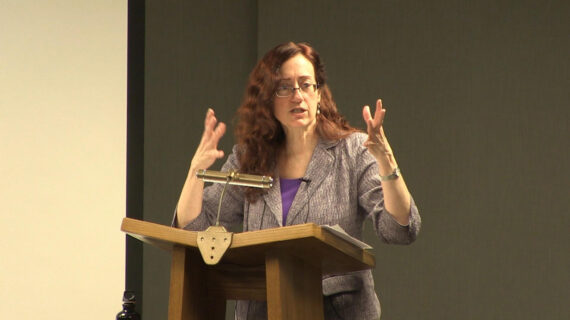
Patricia Bauer, author, and David Geister, illustrator, present a costumed reading of Civil War era Wisconsin newspapers and from their book, "B is for Battle Cry." Sherry and Don Ladig, musicians from the mid-19th century American music band "The New Pearl Buttons," provide music and accompaniment for Patricia Bauer as she sings songs from the war.


Copy and Paste the Following Code to Embed this Video:
B is for Battle Cry: A Civil War Alphabet
cc >> Good afternoon and welcome to History Sandwiched In at the Wisconsin Historical Museum. Today our program will be presented by Pat Bauer and David Geister. They'll talk about their book "B is for Battle Cry," as part of our series on the Civil War. They're accompanied by Sherry and Don Ladig, musicians from the mid-19th century American music band The New Pearl Buttons. Now the presentation will begin with clippings culled from Wisconsin newspapers during the Civil War. Thank you, and welcome our speakers and our players.
APPLAUSE
>> June 26, 1861, Prescott. The town has been alive with soldiers during the past week. Their red uniforms and military caps meet us everywhere. The streets look as if they've broken out with scarlet fever. The drum and fife play the old inspiring tunes. >> The ladies have been busy preparing uniforms. There has been a dinner, a supper, and a ball. There has been marching and countermarching through the streets, and we are the proud of the appearance in spirit of our boys. >> Secession at the north. >> The time has come when secession seems to be the ruling passion of the American people, and the times seem to justify such a movement, especially when we take into consideration that... >> Grover & Baker's sewing machine... >> Will enable any woman to secede from the close application of her needle...
LAUGHTER
And make an employment which has carried so many to an untimely grave, an amusement rather than a burden, by purchasing one of... >> Grover & Baker's noiseless family sewing machines. >> June 29, 1861, Prescott, Wisconsin. The parting was a touching scene. How could it be otherwise? When sons and brothers say goodbye to those who love them, as parents, sisters, or lovers, to brave the hardships of the camp and the perils of the battlefield. But the boys went off singing cheerily, "In Dixie land I take my stand to live in die in Dixie." >> Cephalic pills cure sick headache, cure nervous headache, cure all kinds of headache. >> By the use of these pills the periodic attacks of nervous or sick headaches may be prevented. And if taken at the commencement of an attack, immediate relief from pain and sickness will be obtained. >> They seldom fail in removing the nausea and headache, which females are subject.
LAUGHTER
They act gently upon the bowels, removing costiveness. >> For literary men, students, delicate females, and all persons of sedentary habits, they are valuable as a lucrative, improving the appetite, giving tone and vigor to the digestive organs, and restoring the natural elasticity and strength of the whole system. >> Beware of counterfeits. The genuine have five signatures of Henry Spalding on each box. >> July 3, 1861, the La Crosse Republican. Prescott City Guards, composed of young, robust men, came down on the Sucker State this morning en route for Camp Randall at Madison. Look out for fun if the Prescott boys get among the rebels. >> Here, here. A word to the boys going south. It would not be strange if, with the change of climate you will be exposed to, in the land of Dixie, you should stand in need of some valuable pain reliever. Perry Davis' Vegetable Painkiller. For the cure of colds, coughs, weak stomach and general debility, indigestions, cramp and pain in stomach, bowel complaint, colic, diarrhea, cholera, etc. >> Don't go without a bottle in your knapsacks. >> July 31, 1861. Dear girls, I write these few lines to inform you that being in Madison last week, the Prescott Guards told me to tell you that they told me to tell you that, ah, thunder, that won't do. The fact is, you know you sent down eatables to the guards by Charlie Boutin, and the guards were mighty glad of it, and came near bursting their new uniforms by the fullness of cakes and gratitude. That's the gist of it. Your kindness was appreciated by the brave boys now speeding far away to meet the uncertain issues of life or death. >> September 17, 1862. The readers of the journal know how the 6th Wisconsin has been impatient for battle. Well, they have received the baptism of fire. In the recent Bull Run battles, General Gibbon's brigade, 2,000 strong, comprising of the 6th and 7th Wisconsin and the 19th Indiana, lost 780 in killed, wounded, and missing, the heaviest percentage of loss in the campaign. The 6th lost but 14 and 64 wounded. At last, they have been laurel gathering on the bloody fields. >> How warm shall be their welcome home? >> Good cooks. Ladies, if you would be known as good cooks, and would avoid the mortification of having poor biscuits for tea when you have company, use DB DeLand & Company's Chemical Saleratus, and that only, and be careful when you buy to get the article in red papers, for there is a counterfeit put up in green.
LAUGHTER
>> December 25, 1862, from the 23rd Wisconsin. Christmas, and no roast turkey fixings, but plenty of hard bread and salt pork, rather meager fare for Christmas, but we shall have to put up with it. Ran about till daylight. Are now within 25 miles of Vicksburg. >> Letter from the Captain Ring to Mrs. Clark. From camp, the 2nd Wisconsin Volunteer Cavalry near Vicksburg, Mississippi, August 8th, 1863. >> My dear madam, it becomes my sad duty to inform you of the death of your son, James M. Clark, late a member of my company. He died at about three and a half o'clock this afternoon in the regimental hospital after a short illness. He was sensible to the last and died like a Christian soldier. You will feel his loss deeply, my dear madam, but let the thought that he died for his country and to the noblest principles ever defended by man comfort you. Although not his fate to die as a soldier always wishes to die, on the battlefield bravely fighting, yet he gave just as much, his young life for his country, as though he had fallen in the face of the enemy. A good soldier, brave and cool in the hour of danger, a warm friend, beloved by all, he has passed away. Let us trust to a better land than this, where the wicked cease from troubling and the weary are at rest. We have buried him near our camp. With respect and sympathy, I am, dear madam, yours, G.W. Ring. >> Put in the crops. Owing to the scarcity of help, it is feared that a good deal of the tillable land in this country will remain uncultivated this season. We have no wealth here, but that which springs from the Earth. Let every acre possible be placed under culture and made to contribute to the general wealth. >> May 28, 1864, the Prescott Journal. Captain Rollin P. Converse is dead. In the first of that terrible series of battles in the wilderness on the 5th of May he was shot. Fell into the enemy's hands and died two days afterward. >> No officer has ever been more loved by his men, and none was ever more deserving of love. While he won the confidence and respect of his brother officers by his undaunted courage and the coolness and judgment he always displayed in dangerous situations, loved friend, brave heart, true soldier. >> Farewell. >> Whiskers, whiskers! >> Do you want whiskers or mustache? Our Grecian compound will force them to grow on the smoothest face or chin, or hair, on bald heads, in six weeks.
LAUGHTER
>>
Price
one dollar. Sent by mail anywhere, closely sealed on receipt of price. >> January 14, 1865, Prescott Journal. A few days ago, John Wynn, minus a leg, William Douglas, minus a leg, and Ephraim Minor, minus both arms, all crippled in the army, happened to meet together in one of our stores. It was a suggestive incident, but the war has made sights, once strange, familiar. >> Welcome home. >> The return of our soldiers has brought the terrible realities of war more vividly to our minds than their departure did. They left us with full ranks, flushed with confidence and buoyant with hope. They returned with their work done, but with wasted decimated ranks. While the very many who are maimed give saddening evidence of the terrible ordeal through which they have passed. >> In the evening, dancing was the order, and so large a social party never assembled in Prescott before, 186 tickets being issued. As we looked on the merry throng, we thought of the sterner music to which they had listened. How they were formed for the deadly charge and answered the call to a very different sort of arms from those they bore just then. If you're wondering why there were a number of things from Prescott, Wisconsin, my dear husband hails from there and we've done a fair amount of research.
LAUGHTER
Price
We found some very interesting things over the years. I'd also like to thank the Historical Society, though, for having this wonderful website now, I was able to do research and find some of the other newspaper articles without actually coming down to Madison in the archives, like I usually have to do. And we live in Minneapolis, so it's a long ways to go except that my dear mother lives here, and so we do get here frequently. >> Well. >> We have this book called "B is for Battle Cry," and we were fortunate enough that I was able to write it and Dave illustrated it. Now he's illustrated a number of children's books, and we made this proposal to Sleeping Bear Press, which had done his other books before, that they really needed to have a book about the Civil War, an alphabet book about the Civil War. They weren't so sure at first. We finally convinced them and we were fortunate to get that job, because when they decided it was a good idea, a lot of other people wanted to do it as well, so we felt very fortunate. And the Sleeping Bear Press alphabet books have a poem and then text that goes into much more detail. And so when we do a read aloud or anything, we do the text, excuse me, we do the poems. The text you can do on your own. If we did all that now, that would take a long time. The poems, I decided to write to fit into Stephen Foster's song "Hard Times Come Again No More." And that song was very popular during the Civil War for obvious reasons, I think. And there was also a song that the soldiers sang, which was a parody of that. That was called "Hard Crackers Come Again No More."
LAUGHTER
Price
We've got a painting here, and in the book H is for Hardtack. You'll see that shortly. >> This is our future son-in-law, actually.
LAUGHTER
Price
He's also, if you notice, the Battle of Gettysburg painting on your way in, that's also Kevin in a variety of guises.
LAUGHTER
Price
>> So what I'm going to do first is just sing a verse and chorus of "Hard Times Come Again No More." I'm sure it will sound familiar to you. Then I'll do the same with "Hard Crackers Come Again No More." Let us pause In life's pleasures And count its many tears While we all sup Sorrow with the poor There's a song That will linger Forever in our ears Oh, hard times Come again no more 'Tis the song The sigh of the weary Hard times, hard times Come again no more Many days you have lingered Around my cabin door Oh, hard times Come again no more Now as I said, the soldiers sang a parody of that. And as you can imagine hardtack, or hard crackers, wasn't the most wonderful food in the world, but fortunately did keep them in food when they were very hungry. So they had kind of a love/hate relationship, I think. So I'm going to just sing this one quickly so you get an idea of how they did it. Let us close Our game of poker Take our tin cups in hand While we gather round The cook tent's door Where dried mummies Of hard crackers Are given to each man Oh, hard crackers Come again no more 'Tis the song The sigh of the hungry Hard crackers Hard crackers, Come again no more Many days you have lingered Upon our stomach sore
LAUGHTER
Price
Oh, hard crackers Come again no more
LAUGHTER and APPLAUSE
Price
Maybe you'd like to explain what the picture is they've been looking at the whole time. >> Yes, absolutely. >> This is not from the book. >> I would be happy to. This is a painting that I did a number of years ago purely for myself. And to be honest, it's probably my favorite Civil War painting. I had been enamored for many years the stories of soldiers north and south meeting each other across creeks, and instead of exchanging bullets, they exchanged words, and tobacco, and coffee, and newspapers, with the understanding that tomorrow, they may be back at it again. So, I painted it for myself, and it's probably my favorite of all that I've done. And largely because they're not killing each other.
LAUGHTER
Price
>> Unfortunately, it's somewhere in the south owned by someone, and we don't know where it is. >> Yeah, I sold it in a gallery. I haven't seen it. >> So if anybody sees it, let us know. >> Yes, please. >> So we're going to go through and read our book, although actually the first one, I will sing. So, A is for Abraham Lincoln. And I'll sing this, just so you get the idea. He was called Honest Abe The Rail Splitter, too But through the years He became so much more The boy who loved to read Became the president Who led our country Through the Civil War >> I will not be singing.
LAUGHTER
Price
B, well I don't know about that. "B is for Battles." Battles were fought in the north and in the south. At crossroads, creeks, and railroad towns. Cannons fired and smoke filled up the air as the soldiers charged across the ground. >> C is for the Confederacy. The Southern Cross was the symbol for the states in the south known as the Confederacy. Folks were loyal to their states and not the USA, so they formed their own country. >> D is for Diseases. Soldiers were sick with the measles and the pox. Illness struck many a courageous soul. It wasn't only guns that killed the boys and men. Diseases took a mighty toll. >> E is for Emancipation Proclamation.
Important words were written on paper by a man who had this goal in mind
sweet freedom for those who were slaves. This document Abe Lincoln did sign. >> F is for Fort Sumter. The war began in April of 1861, when shells hit Fort Sumter before dawn. The fort was short of ammunition, men, and supplies and soon the Union soldiers were gone. >> G is for Gettysburg. A three-day battle was fought in Gettysburg in Pennsylvania. It was a small town. Thousands of soldiers fell during the fight and are buried in this hallowed ground. >> H is for Hardtack. Rations of hardtack, crackers as hard as rocks. The soldiers would often break them up. They dunked them in their coffee or stirred them in their soup. Sometimes weevils floated to the top.
LAUGHTER and GROANS
Important words were written on paper by a man who had this goal in mind
>> I is for Ironclads. Sailors fought in wooden ships for many centuries, until the Civil War, when iron was placed on the outsides of the hull and the ironclad ship was born. >> J is for Jefferson Davis. Jefferson Davis was the only president of the Confederate states. He led his new country in a war against the north until the surrender on that April day. >> K is for Kepi. Men wore kepis perched upon their heads. Soldiers wore them in rain or shine. Whether they were from the north or from the south, the men looked like soldiers so fine. >> L is for Letters. Dearest papa, we wish that you were home. We missed you more than words can say. Mama's helping me to spell and she sends her love. We pray you'll walk through the door some day. >> M is for Music. Soldiers marched to the beat Of the fife and the drum Or whistled As they stood in line Some had tears in their eyes As they sang Of home sweet home And the girls That they had left behind >> Very nice.
APPLAUSE
Important words were written on paper by a man who had this goal in mind
N is for Nurses. Women served as nurses in the Civil War. Angels of the battlefield. They cared for the sick and wounded men. Their skills helped the soldiers heal. >> O is for Officers. Officers gave orders to all the men. They told the soldiers when to fire. Captains, majors, and generals, too. The best ones were loved and admired. >> P is for Prisoners of War. Many a soldier from the north and from the south were taken as prisoners of war. Some were kept in confinement, others were exchanged, but many died before peace was restored. >> Q is for Quartermaster. The quartermaster's job was to supply the army's needs. Wagons traveled many miles over the ground. Taking rations to the soldiers and hay for the mules, ammunition must be hauled around. >> R is for Rebel Yell. Yelling like demons, I say, yelling like demons...
YELLING
Important words were written on paper by a man who had this goal in mind
Rebels went on the attack, striking terror in the enemy's eyes. Hollering, whooping and shouting through the ranks...
YELLING
Important words were written on paper by a man who had this goal in mind
The southern soldiers shrieked out their cries. >> Very good. S is for Spies. Wild Rose was a lady who spied for the south. There were more who also did the same. Harriet Tubman passed information to the north. Many others, we'll never know their names. >> T is for Trains. Trains carried soldiers to the battlefields. Tracks crisscrossed the south and the north. Telegraph wires stretched across the land, and messengers were sent back and forth. >> U is for Union. The Union was made up of the northern states. There were 23 in all. The soldiers fought to keep their country as one, and after four years the south did fall. >> V is for Vicksburg. Vicksburg families huddled inside caves. Shells were bursting and starvation was near. The Union Army had put the city under siege. For many weeks, the people lived in fear. >> W is for Women. Some disguised themselves as soldiers and fought beside the men. Some stayed home and worked upon the farms. Others nursed the sick and wounded, and scrounged for supplies. They tried to keep their families safe from harm. >> X is for Appomattox. The Civil War battles lasted four long years. The rebel soldiers had empty haversacks. General Lee surrendered to General Grant in a village called Appomattox. >> Y is for Yankee. A Yankee was a soldier who fought for the north. To preserve his country was his goal. His president was Lincoln, who wanted all to be free. The Yanks won, but it took a mighty toll. >> Z is for Zouaves. Some had jackets trimmed in yellow and baggy red pants. These brightly dressed soldiers had a name. Zouaves they were called in the north and in the south, and in the end they gained great fame. >> The end of the alphabet.
APPLAUSE
Important words were written on paper by a man who had this goal in mind
There are a couple things in here that I always like to comment on. We'll be eternally grateful that the war ended in Appomattox. That has an X in it. Xs are not easy to find, as you well know. And it really worked so well. We couldn't have done A is for Appomattox, because the end of the war at the beginning of the book just wouldn't have been very good. So I'm very happy about that. And people often wondered about Z, how you come up with Zs, and Zouave worked much better than zebra would have, that's for certain. And there were Zouaves in the north and in the south. We tried very hard when we did this book to balance between north and south, so that there would be no complaints from southerners, in particular. No, but that it would be a good balance. We felt that was very important to do when we did that. We're going to do a reading, and hopefully get a few volunteers to join us, of the Gettysburg Address. What we'll do, is we've got copies of it here, with a line or two that is highlighted. What we'd love to do is get some people who would be willing to volunteer to do that. >> If you would be so kind. >> I'm wondering, though, gentleman in the back, do we need to bring them to the front probably? >> If they would. >> That would work best. That would be good. So if you would be willing to read a line from the Gettysburg Address. >> Any takers? Very good. >> Oh, good. >> Thank you. >> And if you could come up, I think, just so that we.. >> We have another line here. Anybody? You can do it jointly. Thank you, sir. Another one here. Very good. Excellent, yes. Ah, there we go! I'm sorry, madam. Very good. Sir, thank you. One more. Yep, yes, yep, Would you care to go, my dear? I bet you'd be quite grand at it. >> And when we're finished we will take questions if anybody has them. >> Anybody over here? We could certainly use another. Thank you, madam. How about over here? One of you perhaps? Anyone care to? Sir? >> They don't have to. >> Thank you, sir. We have just a few more. We could use one more here. Thank you so much. We're getting there, ladies and gentlemen. Would one of you care to? >> If anybody has a question before we start, I can help out. >> No? Gentlemen? >> If anybody has glasses, you can borrow my glasses. >> How about over here perhaps? We're getting very close to the end. >> Dave, I'd be happy to take one. >> I think, Don, If you would be so kind. You will be busy with that, yes. >> I'll take another one. >> Do you need another reader? >> His is extremely short. I think we may well have our assembled cast, if you will. >> And behind us, momentarily here, we recently came from a visit to Gettysburg, and while we were there, we live in Minnesota now but I'm from Wisconsin and he's from Wisconsin, so we have a special affinity there, and we visited the site at the Gettysburg cemetery where there are 73 Wisconsin men who are buried, many of whom are labeled as unknown. We thought this might work well to put it at the end with the Gettysburg address. >> Let's see how this goes, shall we? Four score and seven years ago our fathers brought forth on this continent a new nation, conceived in liberty, and dedicated to the proposition that all men are created equal. >> Now we are engaged in a great civil war, testing whether that nation, or any nation, so conceived and so dedicated, can long endure. >> We are met on a great battlefield of that war. >> We have come to dedicate a portion of that field as a final resting place for those who here gave their lives that the nation might live. >> It is altogether fitting and proper that we should do this. >> But, in a larger sense, we cannot dedicate, we cannot consecrate, we cannot hallow this ground. >> The brave men, living and dead, who struggled here, have consecrated it, far above our poor power to add or detract. >> The world will little note, nor long remember what we say here, but it can never forget what they did here. >> It is for us the living, rather, to be dedicated here to the unfinished work which they who fought here have thus far so nobly advanced. >> It is rather for us to be dedicated here to the great task remaining before us, that from those honored dead we take increased devotion to that cause for which they gave the last full measure of devotion. >> That we here highly resolve that these dead shall not have died in vain, that this nation, under God, shall have a new birth of freedom. >> And that government of the people, by the people, and for the people, shall not perish from the Earth.
APPLAUSE
Important words were written on paper by a man who had this goal in mind
>> Thank you so much. >> Thank you for your help. >> You can keep them, if you want. >> Very good. We shall, yes.
Search University Place Episodes
Related Stories from PBS Wisconsin's Blog



Donate to sign up. Activate and sign in to Passport. It's that easy to help PBS Wisconsin serve your community through media that educates, inspires, and entertains.
Make your membership gift today
Only for new users: Activate Passport using your code or email address
Already a member?
Look up my account
Need some help? Go to FAQ or visit PBS Passport Help
Need help accessing PBS Wisconsin anywhere?

Online Access | Platform & Device Access | Cable or Satellite Access | Over-The-Air Access
Visit Access Guide
Need help accessing PBS Wisconsin anywhere?
Visit Our
Live TV Access Guide
Online AccessPlatform & Device Access
Cable or Satellite Access
Over-The-Air Access
Visit Access Guide




Follow Us