

 Passport





And Then Came the Liberators
10/21/11 | 1h 7m 36s | Rating: TV-G
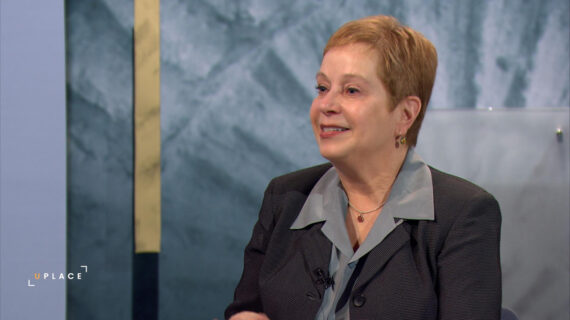
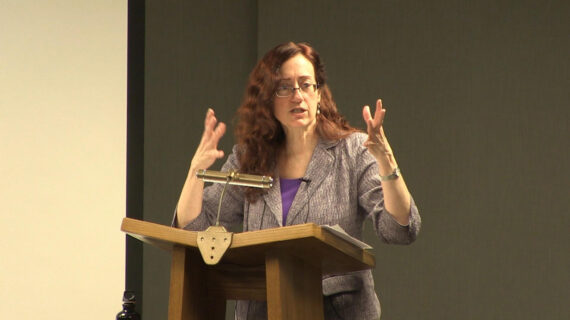
Kathleen Stokker, a professor of Scandinavian Studies at Luther College, Solveig Shavland a researcher and translator at the Norwegian American Genealogical Center & Naeseth Library, and Richard Quinney, an author and the founder of Borderland Books discuss “And Then Came the Liberators.” The book is about the occupation of Norway by Germany from 1940-1945.


Copy and Paste the Following Code to Embed this Video:
And Then Came the Liberators
cc >> I'd like to welcome you to the 2011 Wisconsin Book Festival. How many years now has the Wisconsin Book Festival been around? >> Ten. >> Ten years? And, of course, this is put on by the Wisconsin Humanities Council. I am Paul Houseman. I am standing up here today because I represent the Madison Community Foundation, and we are one of the proud sponsors of this event. They have other wonderful sponsors. So I'd like to introduce our authors who are going to be talking about, of course, "And Then Came the Liberators." Authors/editors/translators, in this case. We have with us here, let's see, from my right to left, Richard Quinney, who is the editor and publisher of the book and also several books that combine autobiography and photography. And then next, Kathleen Stokker. She said it rhymes with joker, so that's how I remember that. She is a professor of Norwegian, director of Scandinavian Studies at Luther College, and she wrote the afterward to the book. And Solveig Schavland, did I get that sort of right? She is the translator of this kind of undiscovered, at least among English speaking audiences, undiscovered work. So without further ado, they're here to talk about their book. >> This is the book that was rescued practically from a dumpster a couple years ago by Carol Bjerke and Lee Bjerke visiting their son in Portland who has a book shop. The original book in Norwegian, just a few copies were printed on a letter press, and there were only a few copies in existence. They brought it back from their trip and showed it to us, and we said immediately this book needs to be known and translated for an American audience. So we have it here, "And Then Came the Liberators." And I wanted to say this is about a particular time and place, that's obvious, but two general ideas behind it. One is the occupation of one country by another. This case, Germany occupying Norway, 1940 to 1945. But we can think of any occupation of our own country, for example. The United States occupying countries in central America, Iraq, Afghanistan. This is a story of the legacy, also, of occupation that can go on. A legacy that goes on for generations when one country occupies another. The other theme, my particular interest in this, is the role of the artist as witness. Jaern, as we'll see, documented over the five-year period, under very dangerous circumstances, what he was experiencing and, as an artist, was making woodcuts of the events. I'd like to read the end of his foreword. And we use this on the back of the dust jacket. This book is about me and mine during the war years, but this is the way it had to be. Only in this way and no other way could I write about what had happened. But I believe that most people here have experienced something similar, and therefore I hope that this journal can serve as a journal for many others. Most of all, I hope that the younger generation will find something they will always remember about tyranny and oppression. We must never forget what happened. It could happen that one or another crazy person would want to start a war again. The last part of his foreword. I'd like to read his entry for the woodcut that we have on the screen of the artist himself looking out on to the street. And this is the translation from his journal. A couple of years ago the evening paper wrote that it was not necessary for adults to get milk because all of the nutrition in the milk the cows got from plants. Why not then go further and say that we have no need for vegetables because all of the nutrition in vegetables came from the soil and the air. Eat dirt and drink air. Live simply. There's so little now. Believe in propaganda. Finally, I've been very weary and tired lately. This morning I discovered that I had a rupture. The doctors said that it was common because of the diet. Artist's witness during an occupation, during the war. I want to show the first woodcut in his journal. Number one. It's the day, the evening of the occupation in Oslo. And this is Jaern and his wife. His entry is this. It's late in the evening then, April 8th. The occupation was April 9th, 1940. April 8th, 1940. My wife and I were sitting in a cafe in the center of town at
11
30 in the evening. Suddenly all the lights went out. We walked and stumbled on the way home, and the only light we saw was in some of the windows in the German consulate. The invasion had begun. The book then has 102 woodcuts over the five years, and the story develops and we want to show and tell as much of it as we can. So we'll come back to some of the woodcuts. Kathleen Stokker at Luther College, Scandinavian studies, has written about the context of this period and the role of the artist. And we're fortunate that she has written an afterward which could be a foreword to understand an afterward in the book. And she's going to tell us some things now about the occupation and the artist. Kathleen. >> Thank you, Richard. It's I that feel honored to be a part of this project. This is really, as you've already heard, a very moving document in many ways. Humor, his mordant humor, and of course the tragedy of the situation. Well, as you've heard, the document within the covers of that book could well have cost its creator his life. In its bare bone simplicity, and that was exactly the one I was going to choose to show that, the bare bone simplicity, Albert Jaern's account captures in words and woodcuts the atrocities and indignities witnessed by Norwegians during their country's five-year long occupation by Hitler's forces. Albert Jaern was born in 1893 and lived only to be 56 years old. Lived in Norway, in Oslo, the capital city of Norway. He worked as a book illustrator for Aschehough, still Norway's largest publishing house, where he also produced the cover art for some 500 books, and about as many book plates were designed by him for special collectors and they largely have a format just like what we're seeing in the book. Jaern, as this shows us so well, favored block cuts of wood or linoleum with simplified lines and services, free of affectation or exaggeration. Even before and what was so unique about him, what he stood out for, was that through such simple means he could capture so much of the feeling of that time, as in this example. We can see them feeling their way home in this unusual atmosphere that has now descended and would last for the next 500, seemed like 500, five years because you couldn't have light escaping from windows. Those windows would not have been allowed. They would have brought a nasty rap on the door by Nazi guards saying blind those windows, the British are out there looking to attack us. No headlights on cars. No streetlights. This is pretty much how it seemed in Oslo from accounts during those next five years. But even before the German occupation, the German invasion of Norway, which happened on April 9th, 1940, Jaern had a sense of lurking danger. During a three-week auto trip through Germany in 1937, he witnessed, as he writes, a leader who loved cannons and a people who would rather have cannons than butter. When war did come to Norway, Jaern was only 46 years old. Significantly, it was this work that managed to keep his art alive and through which he managed to keep it alive for us. He expressed, he said, better through woodcuts than in words. So the words are rather small, the entries, but very pithy, and then when combined with the cuts, they're fabulous. And what he did then was to observe everyday acts of war, and number 30, please. So this is just an example of that. Some workman with his briefcase having been beaten down by the Nazi police. Keeping this record kept Jaern in great personal danger, as we heard. So he must have felt strongly compelled to express his feelings. To avoid detection, as we've heard, he scrupulously hid his day book in a secret compartment behind a removable wall panel. And there it went undiscovered, amazingly, despite repeated Nazi raids and ransacking of his home. The original audience for Jaern's day book had personally experienced or were otherwise well acquainted with the events Jaern depicted. Since then, however, the generation who knew them has fallen away, and many of the details of those years were forgotten, but, as Richard said, it was precisely so that people would not forget that he wrote this day book and because he
wanted Norwegians to remember two things especially
their own confusion and fear as well as the enemies' tyranny and oppression. And it was, therefore, that Richard and Solveig were kind enough to ask me to write an afterward that could put some of these things into context and to help us appreciate Jaern's art and artistry in preserving that context. And so some background. Before down on April 9th, 1940, Hitler's soldiers invaded several coastal Norwegian towns and cities whose citizens awoke to find German soldiers marching in their streets. Hitler planned a similar attack on Oslo, but the sinking of the battleship Blucher in the Oslo Fjord, some 20 miles south of Oslo, severely delayed the plan. The sinking killed some 600 Nazi soldiers who had been prepared to invade Oslo, and it enabled Norway's King Haakon VII to elude capture. Later dubbed The King Who Said No, Haakon VII famously refused German orders to collaborate with the Nazis. He promptly left the city and while traveling east to the town of Elverum became the target of Nazi bombs. Air attacks continued relentlessly to trace his path as he continued his journey north by northwest, eventually reaching the Arctic town of Tromso, way above the Arctic Circle. Unprepared for armed combat, Norwegian military forces had to surrender on June 10th. For one thing, they'd gotten word that France was falling and they all upped and left. And there were the Norwegians who hadn't been trained. They hadn't prepared for such an eventuality, planning to live in peace. At about this time, King Haakon and his government ministers began their escape to England. Through mine infested waters, they crossed the North Sea and subsequently established in London, Norway's legitimate government in exile and in protest to the Nazi regime that had taken control back home. Two months earlier on the evening of April 9th, the night of the invasion of his homeland, Vidkun Quisling, whose name you may know, has become synonymous for traitor in many languages including English, he made his way to the national broadcasting station in Oslo and announced to his fellow Norwegians that they must give up all resistance to the German soldiers who, he said, had come as friends to help Norway, to protect this tiny nation from British attack. Quisling had founded Norway's Nazis party. Nasjonal Samling, as it was called, or NS as you'll see it abbreviated in the book. In 1933, the very same year that Hitler came to power in Germany. Quisling lacked the hypnotic charisma of Hitler however, nor did his country face the extreme challenges of post-World War I Germany, who was then in dire need of repairing its damaged reputation and ruined economy after having been found guilty of war crimes by the Treaty of Versailles. So Hitler was kind of the right person in the right place for Germany. Most Norwegians, though, remained unmoved by Nazi ideology, especially its promise of world domination, and they did not join the Nazi party in sufficient numbers to support even a single seat in the Norwegian storting, their parliament. Norway had not gained independence in modern times until 1905, a mere 35 years before the German invasion. And as mentioned, because the nation had intended to live in peace, there was little political will to invest in armaments. When the king and some government ministers called for more spending on munitions during the second half of the 1930s, being well aware of what was brewing farther south, their urgings fell on deaf ears. Instead, they were prioritizing social concerns to narrow the enormous disparity which then existed in the '30s in living standard between Norway's wealthy and their working classes. But these early social reforms, which, of course, eventually paved the way for Norway's famed welfare state, they seemed to Quisling and other descendents of moneyed families in Norway to be communism. And they rejected these measures for precisely that reason. And here, number 18. And so Jaern writes in one of his entries, for which we'll see the image, he writes that we can't meet anymore, me and my friends, me and my pals that used to always meet at the local cafe and talk about the events of the day. Such a thing was no longer allowed. Meetings of more than three people on a street corner wasn't allowed, and this particularly wasn't allowed because, as he says, the pharmacist who has moved into town, and this was the problem, you never knew whose side people were on, and the pharmacist who had moved into town had decided that these two were communists and that they were sticking their heads together over this communist propaganda. And Jaern goes on to say, but I got him back. I told him that I'd seen his daughter hanging out with one of the Nazi soldiers. And that really got him, he said. And it really did. This was a big theme during the war of the women who, for whatever reason, and they ranged from true love affairs to, as researchers are sort of now piecing together, that there really were some relationships in this that stood the test of time. But in addition, part of Hitler's policy was that being Aryan people, the Norwegians should get their genes into the Pan-Germanic gene pool. So he actually encouraged such relationships, and of course there was great benefit in such relationships. Pretty much, people who joined the Nazi party had access to food and to jobs and to things that other people were rapidly losing access to. Anyway, Quisling also viewed with alarm, backed Quisling, the growing number of Jews seeking refuge in Norway from oppressive regimes in eastern Europe which were closing down sooner. Aiming to solve these problems, he applied and received an audience with Hitler in 1939. Quisling suggested to the Fuehrer that Norway would be better able to address these problems under Nazi rule, and he requested Quisling's help. I guess we understand why Quisling means what Quisling does. Hitler had his own strategic reasons for invading Norway and neither informed Quisling nor assigned him a role in the attack. When he saw, moreover, that Quisling could not garner widespread cooperation from the Norwegian people, Hitler sent one of his own trusted leaders, Josef Terboven, to be the power behind Quisling's puppet regime. Known as det nye Norge, the new Norway, was how the regime was known. Along with fear and confusion, the April 9th, 1940, invasion had brought strict censorship of all newspapers and radio broadcasts, the principal mass media of the day. Public meetings, as we've heard, were also forbidden as was listening to radio broadcasts from the BBC in London. And there we'd want number 13. I'll continue mentioning this. He writes in the entry that goes along with this image. We listen to London late and early,  wrote Jaern to accompany this cut. And there we see the radio to the right on top.
A daily Norwegian program was beamed towards Norway at 7
30 PM to tell the allied side of the war. These BBC broadcasts denied the barrage of reports that glorified German victories, exaggerated allied defeats and depicted King Haakon as the runaway ruler who had deserted his country in its hour of greatest need. The Nazis freely spread their ideology in the censored press such as Aftenposten, still Norway's largest paper, as well as in party-sponsored papers such as --, Free People, and Norsk Arbeidsliv, Norwegian working life. The Nazis had begun by making it illegal to listen to the London broadcasts, but when that didn't work, they confiscated the Norwegians' radios. Starting with the Jews in May 1941, continuing with the rest of the population in September. Since Norwegians were required to register all radios at purchase and subsequently had to pay an annual license fee, the sets were easy to find. Yet, a surprising number of Norwegians somehow managed to hide one. A few took the even more dangerous step of copying down illegal news broadcasts. These they then typed up after making as many mimeographed copies as they dared. This was not without danger. They circulated them as the so-called Underground Press. Getting caught during any stage of this operation would reliably lead to jail and unspeakable torture. Established journalists, too, found ways to resist, usually by sneaking anti-Nazi messages into the censored mainstream press. Jaern's son-in-law apparently did this, and like so many who took such a daring chance only to see their papers outlawed, Jaern's son-in-law desperately needed to escape his homeland like many others. Caught up in such nerve-wracking conditions, how were average Norwegians who weren't even taking these dangerous choices, how were they to behave? How would we behave? Well, the organized resistance gave guidance in this manner. They sent instructive --, or directives, via London radio and the Underground Press. Good Norwegians, they said, were advised they should show the occupiers the cold shoulder. Refuse to sit beside German soldiers in the movies or on the street cars. And those who did so were given fines, by the way. And there's a cut that shows them being told you better sit there next to that Nazi soldier or get off. They were also told to give purposely misleading directions or false information when answering even the simplest questions, and we see Jaern doing this. You could also answer I don't know in English. The diary shows Jaern while he and his family were briefly evacuated to Brandbu in Hadeland after the April 9th invasion. Asked directions to a nearby town by a cyclist, a Nazi soldier cyclist, Jaern calmly sent him three miles the other way and said he should be back here, let's see, about six hours, well, you know, he'll be back in a couple, three hours to where he started and still would need to get to where he was going. Did the Nazis have other clues to Jaern's anti-Nazi sympathies? Whether with good grounds or none at all, the Nazis arrested Jaern on June 20th, 1941, at the home of a friend. Meanwhile, other Nazis were interrogating Jaern's wife in their home. When asked if Jaern received any newspapers, his wife calmly named the Nazi papers everyone automatically received, and which, says Jaern, usually ended up as fish wrap.
LAUGHTER
A daily Norwegian program was beamed towards Norway at 7
Meanwhile, one of the couple's two daughters left to take a walk, discreetly taking along the underground newspapers the family did receive and actively read. Jaern could not escape the long interrogation and imprisonment the Nazis routinely imposed for even the slightest of crimes. For this purpose, the Nazis had established a network of prison camps throughout Norway. By far, the best known of these was Grini, a large facility located in the Oslo suburb of Baerum, which came to house many of Norway's foremost intellectuals. Jaern tells of the horrendous conditions at the -- prison near Trondheim where his friend Pierre endured torture and contracted scabies, a parasitic disease of the skin induced only by filthy surroundings. By comparison, Jaern was fairly lucky. Imprisoned near the Oslo suburb of Grorud in a facility named Bredtvet, he was released only after a few days, but you'll see in the woodcut that they were pretty sparse surroundings. Upon his release, he noticed a strange thing. Suddenly people began helping him in unexpected ways. They brought his family produce and other necessities right to their door, and cafe owners would occasionally slip Jaern and his wife fine food and drink. Jaern came to realize that this was because they now saw him, having been imprisoned by the Nazis, as a fellow Jossing. Jossing was a term that meant a good or patriotic Norwegian, one who was decidedly anti-Nazi in sympathy and work. The term originated as a Nazi slur for the cowardly Norwegians who had liberated British POWs from a German battleship in the Jossingfjord, which lies near Stavanger. The event occurred in February 1940, so before the invasion. But, of course, the invasion set the battle lines sharply. And the Jossinger themselves adopt the term as a badge of honor, and we've seen that done in other conflicts around the world too, redefining the term to mean those who actively worked to restore the Norway that had existed before the Nazi invasion. And that pretty much sums up what the goal of the resistance was. We want our country that we have worked so hard to make work. In a country 3% cultivatable, they made it a farming nation that could survive and survive very well. In some ways, what happened in Norway this summer on the 22nd of July and Norway's amazing response to it shows the same kind of ideal. You're coming in and killing Norwegians, how will we answer? With hate? No. With more love. With more democracy. We want the country back that we had before July 22nd. Jossinger advertised their views by wearing symbolic clothing such as the red stocking cap known as a nisse lave, nisse meaning barn gnome. It was warn by the barn gnome, a figure who had become a symbol of Norwegian identity during her period of national discovery a hundred years before in the 1850s. Jossinger also wore paper clips, binders as they're called in Norwegian, to signify the binding together against Nazism. Wrist watches worn with the face down declared down with the new time.
LAUGHTER
A daily Norwegian program was beamed towards Norway at 7
And combs protruding from their pockets denoted their ability to gre, which means to comb and to manage, themselves without the 'help' of the occupiers. In time, the Jossings most identifying symbol became King Haakons' royal monogram, the H7. This would be carved, scratched along ski trails with ski poles, knitted into mittens, worn on coins because it's common to put the king's monogram on coins when he becomes king. So worn on those coins around their necks, they'd been confiscated, and etched into every available surface. Haakon's monograms celebrated his unequivocal 'no' to Naziism. Meanwhile, the Nazis were not only out to gain the romantic favor of Norwegian women and monopolize the country's radically reduced wartime food supply, they also had already commanded control of Norway's finest homes and most significant public buildings. Quisling took over the royal palace for his headquarters. Terboven occupied the residence of the crown prince family at Skaugum, and the magnificent landmark known as Victoria Terrasse, with his glorious towers, turrets, and spires and now home of Norway's foreign department, was taken over by the infamous Gestapo. Most of these private homes in public buildings sustained serious damage, and Jaern has a woodcut showing this in the process, whether from carelessness or brutality. School buildings suffered too, and those not damaged in bombing raids were taken over by the Nazis for their own purposes, leaving teachers to find other, less suitable locations to teach their lessons. By late winter, 1941, the Jossings had begun protesting more boldly, augmenting their symbols with actions, ranging from outright sabotage to simply defacing the Nazi posters that had come to monopolize every public space. With radios confiscated, posters have become the primary means for spreading Nazi ideology.
One thing dominated
Norwegians could help their own country best by supporting the Nazi cause. Norwegians, one poster employed, fight for Norway, join the Waffen-SS. In other words, go fight on Hitler's side against the allies, this is how you can help your country. Who didn't want to help their country? And how could they know what to do in the fog of war? More specifically, Nazi posters urged Norwegians to fight on the eastern front against the Soviet Union, which Hitler had invaded in June 1941 in direct defiance of the mutual non-aggressive pact both countries had duly signed. In all, about 8,000 Norwegians did register to fight with the Quisling regiment Nordland, as he called it. And somewhere between 5,000 and 6,000 actually saw warfare. Those Norwegians who did not become soldiers were also expected to do their part by turning in their families' blankets, rubber boots, backpacks, coins and other metal all to support the anti-Soviet battle, which as Jaern poignantly points out, the Norwegians never asked for and did not want. Posters also pressed Norwegians to the seemingly more benign work service known as arbeidstilsynet. At first all 19-year-old males, and later females too, were urged to register for this service voluntarily. Before long, however, registration became compulsory. To counteract this development, the organized resistance reported via London radio that the work registry was actually put in order to secure young people as soldiers and nurses for the eastern front. Sign up and you're drafted. The resistance, therefore, directed young people to avoid registering for work service by all means possible. This advice proved prophetic. Jaern tells of Nazis surrounding a nearby apartment building and arresting young male residents. And that's one of the woodcuts too. It was then that Jaern's daughter, having gotten word of a similar raid, went into hiding. And this was such a typical part of the occupation. Family members left sometimes without the rest of their family knowing where they were and when or if they would return. Like Jaern's daughter, many young people avoided registration by concealing themselves. For some, this meant leaving Norway although, though escape presented its own serious challenges. But the dire necessity to get away resulted in several often reliable methods. One, the so-called Shetland bus, consisted of a series of fishing boats that would arrive from Britain to drop off trained resisters and equipment from the home front, hjemmefronten as it was known, those based in Norway. And then returned to Britain bringing escapees, many of whom received training from the SOE, or the special operatives executive, leaders of the resistance outside of Norway. A considerable number of Norwegians escaped compulsory work service by hiding in Norway's vast wilderness. Gutta i skauen, the 'guys in the woods' as they became known, became a significant part of Milorg, the military arm of the organized resistance. This body, which initially trained the new arrivals from Britain, would later bomb the building in downtown Oslo that housed the registration cards of those who had been forced to sign up for the work service. Resistance grew even further during 1941, such that the NS Nazi ordinance issued in February 1942 requiring all teachers to join the Nazi Teachers' Union met with stead fast resistance. Teachers rejected especially the demand that they sign a declaration promising to instruct their pupils in the New Spirit. The occupiers responded to the teachers' defiance by closing down all the schools in Oslo. Then, on March 20th, 1942, Quisling had 1100 teachers arrested and sent to Norwegian concentration camps. When the teachers continued to refuse Nazi demands, 500 of them were shipped off to north Norway, first by cattle car to Trondheim and from there by boat to Kirkenes, which, if you picture Norway as a spoon, were way at the top of the handle and just around the top of it. That's where Norway's border with Russia is. Crammed on board the small steamer Skjerstad, capacity 250, all 500 teachers and 50 guards traveled for 13 days along Norway's coast right on the North Sea. Though their suffering ultimately did cause many nominally to join the Teachers' Union, most continued steadfastly the demand that they indoctrinate their pupil in Nazi ideology. In late fall of 1944, Jaern at last saw a hint of the coming end of the occupation as he watched disabled German soldiers from the north arriving in Oslo. They had fought on the eastern front and been defeated by Soviet forces, who then drove them out of Russia and down through that handle of the spoon through north Norway. To prevent the pursuing Soviets from possibly deriving benefit from the people or their resources left behind in north Norway, the Nazis enforced an immediate evacuation of all citizens. Out, out, out. Some hid in caves. Some went up to the mountains to hide. Those, too, were searched and they burned down. And then they burned to the ground all that remained. Seeing the defeated German soldiers arriving in Oslo, Jaern could not help but pass along one of the many jokes that flourished during the occupation. It's a pun on the foreign minister who drew up the anti-aggression pact. His name was Ribbentrop, literally meaning rib bone, the first part of the name does. The joke reports that the burial ground at -- would soon hold these German soldiers, hence forth to be known as the Ribbentrop, the skeleton corpse. At least, Jaern could write of the last days of the occupation as seen from Oslo. On May 2nd, 1945, the Nazi controlled newspaper Aftenposten carried Hitler's obituary. It's author, no less than the Norwegian winner of the 1920 Nobel Prize for literature Knut Hamsun, whose name to this day provokes heated controversy for his loud, outspoken, I should say, support of the Nazis during the occupation. His obituary praised Hitler for taking action during his people's darkest and most difficult hour, but Jaern's accompanying woodcut, number 99, offers quite a different assessment of Hitler's legacy. That's it. On May 5th, British forces commanded by field marshal, this is 1945, May 5th, 1945, field marshal Bernard Montgomery liberated Denmark. In Norway, meanwhile, Quisling informed his fellow citizens that he intended to continue the fight. He thereby raised the specter that now haunted the allies. What would happen in a Norway still occupied by more than 300,000 undefeated German soldiers? The commander of the German garrison in Norway, General France Bohme, wondered too. And he was both ready and willing to continue the fight. So when he heard on May 7th at 2:41 AM that the German army had officially capitulated and reamed France, he found the news hard to accept.
Not until 9
00 PM did he receive his own orders from Nazi headquarters in Flensburg. Reluctantly concluding that he and his troops must obey, he announced his decision on
Norwegian radio one hour later at 10
00 PM. And so it was that as of shortly after midnight, total capitulation had come also in Norway with plans for the German soldiers to be marched across the border for internment in Sweden. Though peace didn't come officially, you may not have seen this, that's the Haakon monogram. Anyway, though peace didn't become official in Norway until May 8th, 1945, Jaern and others couldn't help celebrating early. Jaern tells of Norwegian flags
flying all over Oslo by 5
45 PM on May 7th. Many had spent the last few hours repairing their beloved banners, which suddenly were legal again. At last, after five long years of Nazi imposed disuse. Can we even imagine the relief Jaern must have felt to realize that his words and woodcuts had not fallen to enemy hands, still safe in their secret compartment. His precious and parlous account could no longer be used to threaten his life. All of us who have worked on this project hope that you, the readers, will revel in Jaern's sardonic view of his country's World War II occupation by, as he put it, or as were their self-defining characteristics, the Nazis, 'master race of cultured heroes who came as friends to liberate Norway.' Thank you.
APPLAUSE
flying all over Oslo by 5
>> Let us look at a few more woodcuts, and I would like to have some of Jaern's words in relation to the woodcuts that he made for the entries for those days. Ken Crocker designed the book, as he's designed most of the books for Borderland Books over the last eight years. And Ken is at the controls showing the images, and perhaps during question and answer, if we have time, you might ask about the design of the book if you have questions about it. Let's look at number two. April 9th then, the next day after they leave the cafe, at 6:00 in the morning, I saw for the first time a plane falling from the sky. It was over the airport in Oslo. Number seven. April 11th, in Jaern a horse came galloping, that's at his house, with a boy on his back. The boy yelled that the farmers had gathered to meet the Germans and were coming down the road. They were only two miles away. The farmers gathered with sais, axes, spades and pitchforks. These were the weapons that they had to fight the Germans with. Number eight. Forty-eight farms were burned. The livestock that were saved stood in the snow up to their bellies. Twenty-six. Many have already been shot by now, but the disgraceful numbers, murders of Hanstein and Wilkstrum cannot possibly be surpassed. Two well-known resisters. Thirty. Today when I arrived at Foss School to start teaching, there were police guards. One of the teachers had been attacked and sent to the hospital. Something like that has happened before. The attacker came in an automobile, so he must have been organized. Thirty. Excuse me, this is for Thirty. Thirty-six. November 6th, 1941. I went on a bender yesterday because I couldn't stand to stay at home. --, his horse, was put down because we could not get proper food for him. Our dear, dear --. We were all so afraid the Germans would use him to walk through the mine fields. Forty-one. I was arrested at the home of a friend on June 20th. Meanwhile, my house was being searched and my wife was interrogated. The state police asked her, among other things, if we often received newspapers. She answered yes, but not as often as before. The officer asked what papers they were, and she answered the name of the Nazi papers. These are the Nazi publications which the florist uses for wrapping paper. Probably where most of them end up.
LAUGHTER
flying all over Oslo by 5
Forty-three. After three interrogations that lasted for four hours, I was driven to the Nazi prison along with a woman and a friend of mine. It was is strange feeling to be in a room that had a door without a door knob. Just a completely plain door. Still, the worst part of a room like this is the pail. That literature was delivered to me was an old dear book, Oil! by Upton Sinclair. I reread the book and certain words had been underlined with a fingernail. Like-minded others have sat here before me. Forty-six. On the trolley, the Norwegian passengers were threaten if they refused to sit next to a German, but people would rather stand. Kathleen referred to this. Forty-seven. August 3rd, the king's birthday. Today at the market the police were clearing the place because a female vendor was selling beautiful teasing flowers in support of the king. Outside of the continental, many people were arrested because they had teasing flowers. They received a fine of 50 to 100 kronor. They came back later with a receipt for the paid fine. Many had been fined double of what the receipt said. It was a day of great celebration in town. Fifty-two. My wife is overly nervous and in need of sleep. For the most part, she is awakened by dreams. This evening she woke up after they dreamt that she had been buried in a bomb shelter. Myself, I sleep like a log. I wake up more easily from the sound of a car motor than an airplane. We know the sounds even in our sleep. We use alcohol to sleep and Benadryl to stay awake.
LAUGHTER
flying all over Oslo by 5
Fifty-nine, and this is the cover for the book. Then the apartment buildings started to burn. Hundreds of homeless people who had lost everything they owned fled in different directions away from their houses. Only the heat and the ruins were left behind. Ninety-one. I've had great joy from my secret cabinet. Twice my house has been searched, and it was not discovered. Now I have all my woodcuts secured there. It should be safe if it doesn't get bombed. And these are the woodcuts that have survived for us. Ninety-six. Now the Germans have barricaded themselves behind rolls of barbed wire. The guard has hand grenades along with other supplies. It is not safe to go out after dark. Explosions go off unexpectedly. Nearing the end of the war. Ninety-nine. Kathleen, you may have shown this. This is the entry, May 2nd. The Fuhrer has fallen. The newspapers are writing that his actions will remembered for a thousand of years, yes. We can have hope. The editorial newspaper said Adolf Hitler stepped forward during his people's hardest and darkest time when chaos and anarchy had brought them to the brink. The irony in his sardonic view. We'll go to 100, the last image. The German word, let's see, 102, the German word for peace, pardon me? >> It's the Norwegian word. >> The Norwegian word. The translator is correcting me, so I need to be corrected here. Monday, May 7th, 4:45 PM. Peace, peace, is not to be believed. It is feeling that I have never felt before. I'm not only happy, I'm delirious. I see people crying. I understand and I don't understand. There are flags all over. God only knows where they are coming from. The first flag I saw was on the University Library. Since then, they have popped up all over. It is a sea of color. Red, blue, and white. Something strange must have happened. I pinched my arm. Yes, I am alive, I am awake, and I have permission to speak out loud. We want to, at the end, go through all of the woodcuts rapidly, three or four seconds for each one, so we'll see the whole array shortly before ending. May we have the portable? Is it on? Hello. I wanted the translator to speak, and she's done her translation but I think also of interest because we can read these words now if you do not know Norwegian and also because of the uniqueness of the translator for us, Solveig. She was born on April 9th, 1940, the day of the invasion. And she was born in Stavanger and was growing up during the period and then came to the United States and immigrated in 1949. And I've wanted to ask her a question or two.
LAUGHTER
flying all over Oslo by 5
She's also my wife.
LAUGHTER
flying all over Oslo by 5
I have to be very careful.
LAUGHTER
flying all over Oslo by 5
You've told me that your house that your father had built on the edge of Stavanger, Stavanger is on the southwest coast of Norway, that the Germans, the Nazis, the army, the soldiers, the military had a camp right across the street, and I just wanted to ask you about that and what you remember. >> They had taken over, there's a farm across the street from us and they let the people live in the house but they took over the barn and they had quite a few horses and they took all their horses and used them for their own. Being so young, I don't remember much. I remember more about after the war and the anti-Nazi feeling that you never talk to anyone who had associated with a German. You never looked them in the eye. You look back at it and you think how awful it must have been for some of these young soldiers who came over who really believed that they were protecting Norway, weren't necessarily the Nazis or the SS troops that we think of. To be totally ignored. And my mother said there were many times there would be soldiers across the street, very young, looked like they were 15, 16 years old and they're crying and not understanding why they're being treated that way. But then you also had the really nasty ones too. >> Could you say something about the man that you followed. >> Yeah. There was a man in our neighborhood that was a Nazi sympathizer. And Kathleen would know about this. We had little songs that we would make up as kids to taunt them, and we would walk behind and sing these little songs behind them and taunt them all the way to the bus stop or wherever they were going to go. >> This is a great opportunity to have history with us. I can't resist Solveig's history. [LAUGHTER} Would you say something about the years after, going back to Norway, you would sail on the ship and your mother noticing the shoes. >> Oh, it wasn't my mother. It was a woman actually from a little town outside of Dekalb from Sycamore, Illinois. I happened to sit next to her on the plane going back. I'd been to Norway to visit relatives, came back to the states, and she said she had taken, there's a trip, it's called -- and you go up to the coast of Norway and she had gone on that but she said no one would talk to her. And this had to be in the '80s. And she said no one talked to her, no one acknowledged her or anything. And she heard a group of people talking and they said that German woman over there. And she said I could understand Norwegian, I couldn't speak it, and I went over and I said I'm not a German. I'm Norwegian. I came back to see where my ancestors were from and asked why they thought that. And she said the people told her only German women wear shoes like that. And that's 40 years later, 35 years later, that still is with the people. >> The legacy of occupation, for generations in Iraq or wherever we've occupied, we as Americans are going to be the Germans as in Norway in that case. Could you say a little about food and rationing during the war and after the war. >> Well, you had ration cards and everything was rationed. I think even clothing was rationed, wasn't it? Yeah. And the only way you got white bread or French bread, they called it, was if someone was sick in the family or you had very young children then you could have white bread. And they said the only reason that the Norwegian children were so healthy after the war was because they still had to take cod liver oil every day and that helped them. But I don't think I saw banana until we came over here. The first time I saw grapefruit, which I thought was a big orange, was on the way over here. It was like, I always called it Never Never Land because it was so different, so far removed from anything in Europe or what was going on in Europe. >> Could you say something about taking food over. >> Oh, yeah. We would go over with, we'd take all the clothes we could and food, coffee, canned corned beef, ham, sugar, dried fruits, anything you could take and we'd take it over and then come back with empty suitcases or usually gifts that our relatives had given to us. But we did that even into the '70s until oil was discovered in Norway. >> Alcohol at that time? >> You always bring alcohol to Norway.
LAUGHTER
flying all over Oslo by 5
So it used to be that you could take two bottles. They didn't say the size. So at that time, and I'm sure when you went with, you'd buy a gallon of vodka, a gallon of whiskey, a gallon of gin and we'd bring it over. And usually we'd give it to my uncles and my grandfather. The first time Richard came over with me, I brought the same thing. He'd never been to Norway so I'm sure he thought there's a bunch of drunks.
LAUGHTER
flying all over Oslo by 5
And then after we'd been there a couple of weeks he said whatever happened to all that stuff we brought over? We're not getting any of it. And I said they're saving it, it's not for us. But you still bring a nice bottle of liquor to Norway. It's very expensive and appreciated. >> When we go to Norway now, you had relatives that came over after the war and lived in the Midwest, Iowa, Illinois, and had a life here and then years later, as working class, and later went back to Norway as oil was being found in the North Sea. And now they're our rich relatives.
LAUGHTER
flying all over Oslo by 5
It's the other way around. Do you want to say anything at this point? We have a few more minutes. If anyone has to leave at this time, this is good. Those that are here, if you have any questions, we have a microphone that, are we distributing the microphone or should we take questions without it? I will try to repeat it. Just begin. >> First of all, a comment. I was in Norway in '73 and alcohol must have gotten in there somehow because drunkenness was a problem throughout Scandinavia, not just in Norway.
Search University Place Episodes
Related Stories from PBS Wisconsin's Blog





Donate to sign up. Activate and sign in to Passport. It's that easy to help PBS Wisconsin serve your community through media that educates, inspires, and entertains.
Make your membership gift today
Only for new users: Activate Passport using your code or email address
Already a member?
Look up my account
Need some help? Go to FAQ or visit PBS Passport Help
Need help accessing PBS Wisconsin anywhere?

Online Access | Platform & Device Access | Cable or Satellite Access | Over-The-Air Access
Visit Access Guide
Need help accessing PBS Wisconsin anywhere?
Visit Our
Live TV Access Guide
Online AccessPlatform & Device Access
Cable or Satellite Access
Over-The-Air Access
Visit Access Guide




Follow Us