

 Passport



AMA Regional Conference: Anthony Fowler
10/24/13 | 31m 13s | Rating: TV-G
Anthony Fowler, Vice President, Client Communications and Administration, GMR Marketing, explains how to connect to the consumer through experiential and emotional marketing. Fowler discusses the marketing philosophy of getting into the hearts of the consumer so you can get into their minds and stay in their lives.


Copy and Paste the Following Code to Embed this Video:
AMA Regional Conference: Anthony Fowler
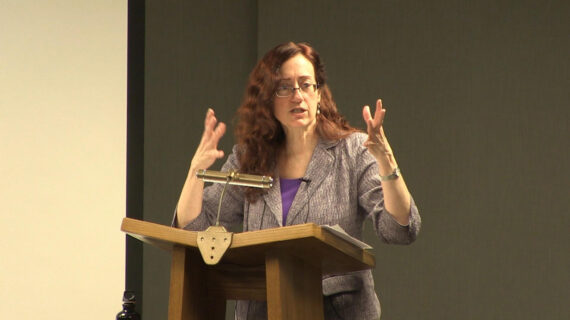
cc >> Thank you, everyone, for having me. I'm excited to be here. I want to first call out my colleague Dana --, who's a graduate of Whitewater and a former person sitting in this seat who asked me to be here with you guys today. So thanks, Dana, for inviting me out. I appreciate that. I'm not sure where you are, but I know you're out there somewhere. So I'm going to spend a little bit of time this morning, or this afternoon rather, sharing with you what GMR is, who we are, what we do, and then I'm going to talk a little bit about one particular project that really speaks to the theme of your event today, global marketing without borders. So it's a global project that we did last year that I think you probably have seen a little bit, whether you were watching TV or not during the Olympics, but you more than likely will have seen it. So I'll skip the introduction since the guys did such a great job of giving me a great one. So our ethos, if you will, at GMR is we change how people feel, think, and behave through the power of experience. So it's that idea of engaging consumers through an experience, whether that be at an event or on the street corner. So we do that in a lot of different ways, and I'll talk to you about kind of what those different ways are. Since we're talking global, I wanted to really highlight how we think about the world in terms of our footprint. We have offices all over the world, but we kind of divided up into these quadrants that you see here on the slide, utilizing sort of a hub system. And we do that for a couple of different reasons, but probably the most predominant is because that's the way many of our clients look at the world as well. So they've got their organizations divided up, so they're treating the world much in the same way we do. Actually, it's probably the reverse. We're treating it in the way that they do. So North America, obviously our global headquarters, North American headquarters are in Milwaukee, technically New Berlin. And in then in Latin America we have a hub office in Sao Paulo down in, over in EMEA. As mentioned in my bio, I spent some time in the UK, our EMEA headquarters in London. And then, finally, in Asia-Pac, our headquarters in Singapore. So we treat each one of those regions distinctly and have a key insight or understanding of the different market dynamics that are within each but we're able to address each one of them for clients separately or collectively, depending on what their particular needs are. So in the marketing world, I know you guys are learning a lot about these sorts of things so I won't belabor the point, but there are a lot of different disciplines, if you will, within the marketing space. We tend to, as that video probably made pretty clear, we tend to focus on what we call experiential or engagement. It's evolved over the 35 years we've been in business. Some people would say we were kind of on the forefront of experiential marketing. So I'm going to get into it a little bit more, but I think what's important about experiential is what makes it different or what makes it unique to that marketing mix and why does it work differently? Why do brands choose experiential as a means of marketing their products or services or that sort of thing. The first one is it's a nice and much more authentic way to create those emotional connections. And I'll talk a little bit about those emotions because we look at them through the eyes of these four pillars that we'll talk about in a minute. It's really important that our brands are able to connect with consumers on as much of a one on one kind of way, and doing that through a television advertisement is pretty difficult, as you can imagine. But when you have a, whether you're at an event or engaging people on the street, you can carry that brand message in a much more relevant and much more personal way. Secondly, I think there's a much better opportunity to get that information across to make sure your message is really, really clear and they understand what you're trying to get to. A lot of times I think brands feel trapped in the way that they are able to communicate through some of the more mass mediums. I think this allows them to really customize the message a little bit more and make sure that they're speaking to that particular consumer one on one. Which kind of leads to the third point, which is it's a very highly targeted way to do things. Rather than broadcasting very sort of generically across a mass amount of people, we can find very specific individuals in places where they're most apt to be accepting a brand message. So those three are probably the three biggest pillars or reasons why we believe experiential has a real strong place in the overall marketing mix. I will say, though, for any of my fellow agency colleagues out there, this isn't the fix all. You still need those other elements of the marketing mix. They're all important. Experiential just delivers on a different level and provides some uniqueness that maybe some of the other areas don't. So in terms of our philosophy, I think this is kind of, if you will, our tag line. The idea of getting in their hearts so you can get in their minds and stay in their lives. People are, we live by our soul or by heart, and those are the things, those are the reasons we'll be able to connect with people, if we're reaching in and identifying them in that way, that then affects their mind and the decision-making process that they use when selecting brands. So we really believe strongly in this idea of get into the heart first. That will impact or affect how people thing and behave, and then, hopefully, make sure that it stays long-term. It's not just a one hit, in and out kind of thing. We want to stay long-term. So we do that, and I mentioned this earlier, through these four passion pillars. We've identified them. Sports, music, entertainment, and lifestyle. Some may argue that music and entertainment are kind of the same thing. In some ways they are. Entertainment in our world generally refers to television, film, theater, those sorts of things. Lifestyle can be really almost anything else. Think cooking, cars, gosh, I don't know, whatever you're into. Whether it's bugs or, I don't know, just anything.
LAUGHTER
We've done a lot of different things for different clients in that space. But the idea is those passions are what people really care about, and, as a brand, if you connect to them through that passion, you've got a much better chance of getting to that sort of decision-making side of their brain. So that's where we kind of focus our efforts. So within GMR, real briefly, I won't belabor this too long, we have, basically, a full service kind of offering, which starts at the very top of sort of that insight identification which leads to the idea which then leads through to the development of the idea and delivering the program and then measuring it and then repeat, if you will, if we're lucky. Hopefully it's more than luck, but I think you get the idea. So, with that, we've got a full suite of services across a lot of different disciplines. A full creative studio doing 3D, 2D. We've got about 45-50 creatives, and then we've got an entire digital side of the house, which I'm going to spend a little bit more time on now because I also think this is, for obvious reasons, a real emerging area in the landscape of marketing in general, but for sure in our area is one way that we can differentiate from both our competitors and our brands are really tuning into how do they leverage digital media across all their programs. So whether it's creating custom apps for our events or it's putting together promotional elements that are handed out at our events. There's a lot of different digital components. And then you can get into all the social side of things, whether it be Facebook, Twitter, or such. But there's a vast opportunity for marketers these days in the digital space, but it's really key that you stick to the core of the information, core of the idea that you've started with. Sorry. So what I wanted to spend the rest of the time today is sharing with you one project that we did, it was probably a two-and-a-half-year project really, but it culminated last summer around the summer Olympics. P&G is a client of ours, actually probably going back almost 10 years now, but they began sort of dabbling in the Olympic space in 2010 when they did a USOC sponsorship and activated around the games in Vancouver. And we were involved with them and helped bring that to life, but it was really just sort of a dip in the big, huge sea of Olympic marketing and sports marketing in general. Coming out of that, it was so immensely successful and well received by them and their consumers that they made the move to do a sponsorship with the IOC. So doing an International Olympic Committee top sponsorship, which is a huge investment. And we've been on that path with them from the very start. And so what we undertook at that point, in early 2011 I guess, or late 2010 really, was to begin building the plan and the execution for the summer games last summer in 2012 in London. So that's what I'm going to talk about a little bit here. So a couple of things before we get into all the details. Obviously, this was a pretty big undertaking for us, and I'll caveat the fact that it wasn't all us. We had a lot of help along the way. We worked with many other of P&G's agency partners to deliver some of that work. So it was a massive global project that literally covered the globe. I think they're in 200-ish countries across the globe, and I think it was activated in well over half of them so that you saw that Olympic come to life whether it was at retail or otherwise. So a huge program. It's a big proof point for us and what we provide, but it's also been a real sort of blessing to us because just earlier this week P&G recognized us as a partner, as an agency at an event that they do for all of their partners. They have over 500 agencies, give or take, and recognized about 20 to 25. So it was a big coup for us to be recognized within that group of folks. But in terms of the program, kind of what they were trying to do, obviously the Thank You, Mom campaign actually had been created for Vancouver. And so they just kind of extended it. So the idea was take that campaign that initiated there and extend it across the globe. Use the athletes. They signed over almost 200 athletes and we actually were very instrumental in that process, identifying those athletes across the globe, contracting them, and then working with each one of the athletes and their representatives depending on whether it was being involved in above the line commercial type stuff or making appearances on behalf of P&G. And you heard about the Family Home there, and you'll see a little bit more as we go through this. Family Home was kind of the centerpiece of the in London activation. So the Family Home was for all of their Olympic athletes, not just the US. The US was a big portion of it, no doubt, but globally they were represented. So the athletes and their families were able to come into the Family Home over the course of those 17 days, get a meal, get their laundry done. There was plenty of Pampers for babies to get changed with, Duracell batteries and all the brands activated the space. So it was a huge component of the program. And then probably the last piece, and arguably maybe the most important from a P&G prospective, was generating that PR value, that talk value. They put a lot of emphasis on bringing their activities to light through PR. So creating stories, whether it's around the athletes or what the brands were doing on behalf of the athletes. So a lot was going into that as well. So, from our perspective, kind of where we sat at the table if you will, was we worked with them on the global sponsorship. So we were kind of the conduit between the IOC and the P&G corporate folks. We collaborated with all their advertising partners, whether it be the P&G brand advertising agencies or the brands. So I think the other thing to highlight here is the sponsorship was actually done between the IOC and P&G corporate, which was very new for P&G. They'd never gone out as P&G brand. It was always the brands themselves. Pampers, Tide, Duracell. Those were the brands that you saw that we all saw at the store, and they really talk down or kind of kept the P&G behind. It's on the bottle way at the bottom in real small print. But this was an effort for them to consolidate and really, one, create some efficiency around the spend that goes with an Olympic sponsorship. So, again, working with a lot of different partners on the PR side. Again, we identified, contracted, negotiated all the athlete and their mom, many of the athletes part of the deal was their mom was included because obviously the story was about their moms. We worked very closely with all their retail partners or their retail agencies. So there was just a massive amount of POS that was done. All of that POS has to go through an approvals process with the IOC. So our teams across the globe, we have teams in the US, in the UK, in Brazil, and in Singapore who were managing the approval processes in each one of their regions. So all that stuff had to go through us before it got to the IOC for final approval. I forgot the number, but it was on the order of tens of thousands of pieces that had to be reviewed and approved. So some of these kind of top lines results are hard to kind of put your head around, but I think a campaign message recall was pretty impressive for them. And I think when you think about the Olympic games and all the brands that are in that space, there's a lot to be overcome, if you will, so I think that was one area where they felt really, really proud that they were able to get such cut-through over the likes of Coca-Cola and McDonald's and Samsung and the like. I think, as I mentioned earlier, the digital side of things is really important. It's a growing area for them. So getting that Facebook and the Twitter things was really important. And then ultimately, of course, sales. That's the bottom line for them. It's hard to, when you're talking about a $40 billion company or whatever, there's a lot going on there and trying to really move the needle. When you say 2% that doesn't sound like much, but 2% of $40 billion is no drop in the bucket. So I think, from a result standpoint, they did pretty well. I mentioned some of the athlete pieces. I think the one thing that we were probably the most proud of as the folks who were out identifying those athletes was the fact that so many of them actually made the games and actually performed so well. Part of our job was to find athletes that not only fit brand, were on brand for P&G and their brands, but also find ones that were able to deliver on the field of play, if you will. We talked a little bit about retail. Again, there's the number, 72 countries. I overstated it slightly. But, again, worked a lot with trying to get that stuff on the shelves. It was critically important to their sales opportunities to get those opportunities in front of consumers when they're out there shopping. And then, finally, getting a lot of different things together. The multi-brand thing is interesting. In the P&G world, many of the brands go to market as themselves. Here's a Tide offer. Here's a Duracell offer. That sort of thing. But what we were able to do is bring some of those brands together and create multi-brand opportunities where you had different brands working together on a promotional level at the retail. I'll talk real quickly about the Family Home. This was probably a labor of love for us. It was a massive space that we took over for about 60 days in the heart of London. We completely, it was actually a wine showcase building. It was actually an old train station. But we basically took everything out of it and redid the entire interior of it. You can see a few pictures. We created branded experiences for a number of the brands, served a lot of food, and did a lot of, I think we did over 250 events over the course of those, whether they were PR events or celebrations. So if an athlete won a gold medal, they'd come in and there'd be a celebratory event. So there was a lot going on in that space. It was really amazing. That's it. I thought there was another slide, sorry. I got all excited.
LAUGHTER
So that's one piece of the global puzzle. I felt like it was important to kind of focus in on one. We've got a lot of amazing clients that do what I think is some pretty great work. But I think this one, more than any, really demonstrates what we're doing on a global basis and kind of gives you a snapshot of how brands are thinking on a global basis these days. So I guess I have a few minutes for some questions.
APPLAUSE
>> All right, so just like we did before. Anybody that actually has a question, just come into the aisle. Just go single file, and just do it. >> A brave soul. >> Why did you choose New Berlin or Milwaukee when you could have been in one of those big three? >> That's a great question, and it's actually a really simple answer. GMR stands for, anyone? Dana, you can't say. Gary M. Reynolds. He's the founder of the company. He is born and raised in Milwaukee, actually West Allis. And so we've been in and around West Allis, New Berlin for 35 years. >> While we're waiting for some brave AMA souls to come up here, at least from Whitewater if no one else will, last night I was watching Robin Williams' new show, actually it was on a tape delay, and did a really cool outside event that really blew up, literally blew up, and they turned that into another PR event how they marketed it. Do you have a failure that you turned into a success? >> Oh, failure. We try to forget about our failures, I think, most of the time.
LAUGHTER
Wow. I think, I'm not sure this is answering specifically the question, but I think one of the things, especially when you're dealing in sort of the live event space, you never really know what's going to happen. And so I think, especially in the world of sport, many of our brands are tied to, whether they be athletes or teams or what have you, and they're trying to leverage the success of said athlete or team. And so you put a lot of effort sometimes in planning for that success. And sometimes it doesn't materialize. And so I'm not really answering your question directly, but I think there's always room to be prepared. And we spend a lot of time preparing for what might happen when in actual fact it sometimes doesn't. >> Hi. Will you be, I guess, executing anything for the upcoming winter games in Sochi? >> We will, as a matter of fact. We'll be there with P&G. We'll have a Family Home on a slightly smaller scale. Some of our other Olympic clients include Visa, Samsung. We're working for Volkswagen Group Russia. So they're the official auto sponsor there. Who am I forgetting? We're doing some work with BP, British Petroleum. They're not an official sponsor but they're involved in the USOC Olympic side of things. I'm sure I'm forgetting someone, but those are a few of the big ones. >> Thank you, Tony, for the insightful presentation. I just want to know, what does the timeline kind of look like for a campaign as large as P&G one? How far out do you start planning for something like that? >> Well, for this particular one, it literally was a good two, two and a half years, from the time in which they signed the agreement with the IOC, they announced the agreement in July of 2010, and the games were in August of 2012. So, really, from that moment they sort of announced, there was a two-year sort of planning cycle and getting ready. A company the size of P&G and all the various brands, you can imagine there's a lot of players involved in that process. So getting a lot of things lined up, working into the retail cycles. A lot of these brands are planning their plans, literally, 12, 18, even 24 months in advance with their retailers, selling programs and that sort of thing. So for this particular one, it was two years. We have done big programs on a much tighter time frame. I wouldn't say anything of that scale. But we get called and asked to deliver on projects in two-weeks time. So we're a pretty nimble bunch. We know how to move fast when need be. >> Thank you. >> Yeah. >> I'll do this. This is easier. >> That's right. >> First of all, thanks you very much for coming. Loved the presentation. >> Sure. >> I have two questions. First of all, how do you market and promote a sports team or certain sports athletes since the game is always changing season after season? Is there any specific data? Do you look at popular team or a popular player and look at even stories, for example like Aaron Rodgers not getting a D1 scholarship. And then second curiosity, why do you love your job and what do you love about GMR so much? >> Sure. So the first question, our business, our clients, at the end of the day are most often brands. So we don't work directly for the teams or the athletes. And that's not, we do a little bit of consulting for some of them but very rarely. So our focus when we talk about the teams and the athletes is probably twofold. One is brand fit. Do those properties, do those athletes represent the core values and attributes of the brand? And then I think the other part of your question I think was sort of the timing and kind of working around that. It varies. There's no real sort of tried and true. It just depends on what the brand's goals and objectives are. What are they trying to accomplish? Some brands are more focused on seasonal times. So Miller and Coors are trying to sell beer all year long but the summer is really important. So we might focus more energy around the summer potentially. So that kind of plays into the timing question. So hopefully that kind of answers what you're looking for. As far as your question about why do I love my job, I think, well, first and foremost because what I do is so interesting and it is never ever the same. Every day is different. There's always a new challenge in front of us. At GMR, I think one of the things that really differentiates us from a lot of companies who kind of live in our space is we have an ethos, and I think Dana and Missy mentioned it earlier. It's kind of work hard, play hard. So we're always looking for people who are willing to get in and roll'em up and get your hands dirty, but at the same time be willing to work with a team. That idea of work hard, play hard is really about a team mentality and the ability to kind of get in there and take on whatever comes your way. It's being flexible with the environment. So, in short, it's just a great company. I've loved my 10, almost 11, years with it, and it's been a pretty amazing run so far. Yeah. >> Loved your presentation. My question is, when you're working with clients, how long does it usually take to come up with a plan, say like for the Family Home? >> There's no tried and true on that either. It can happen really fast, or it can happen pretty-- It could take quite a while. It just depends on what the opportunity is. Sometimes we just have to move really fast. You have to figure out what the opportunity is and what the idea is and then go with it. Sometimes there's a lot of insights that go into the idea and coming up with it. So you spend a little bit more time trying to understand what's the dynamic with the brand, with the consumer, with the target, and then putting a lot of emphasis around kind of developing that plan. So there's no tried and true. It can be very short, or it can be pretty long. >> Thank you. >> One more or was that the last one? >> We have one more. >> One more. Okay, great. Thanks. >> So what is your most challenging part of your job that you find on a day to day? It can frequently change, but what is the biggest thing? >> My role is actually pretty unique in that I don't currently work on any particular client business anymore. My first seven or eight years I did. But since I've moved to London I've been really a bit of an integrator. So that's connecting dots within our organization across borders, across departments, and making sure that people are communicating and making sure we're leveraging all the different resources we have around the globe. When you're 800 people across 20-some odd offices, it's real easy to not necessarily know who's where and who knows what. And so a big part of my job has been doing just that. It's finding that person and connecting them with that person. So I think that the long answer to a fairly easy question is it's trying to be available to everyone that's looking for help, looking for support, and identifying those opportunities and then making those connections. Sometimes it's easy; sometimes it's a little more complex. >> Great presentation. >> Cool. Thank you. I guess I'm done, so I appreciate everybody's time. Thanks so much.
APPLAUSE
Search University Place Episodes
Related Stories from PBS Wisconsin's Blog



Donate to sign up. Activate and sign in to Passport. It's that easy to help PBS Wisconsin serve your community through media that educates, inspires, and entertains.
Make your membership gift today
Only for new users: Activate Passport using your code or email address
Already a member?
Look up my account
Need some help? Go to FAQ or visit PBS Passport Help
Need help accessing PBS Wisconsin anywhere?

Online Access | Platform & Device Access | Cable or Satellite Access | Over-The-Air Access
Visit Access Guide
Need help accessing PBS Wisconsin anywhere?
Visit Our
Live TV Access Guide
Online AccessPlatform & Device Access
Cable or Satellite Access
Over-The-Air Access
Visit Access Guide




Follow Us